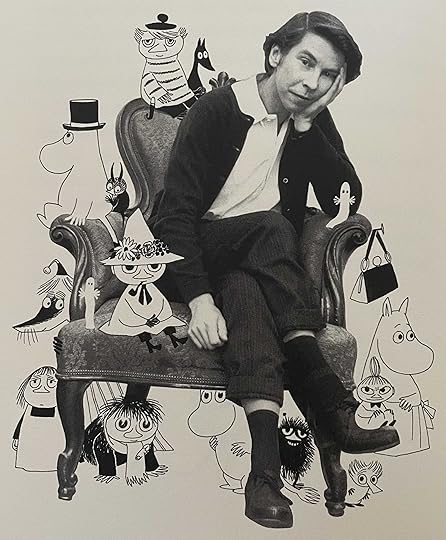
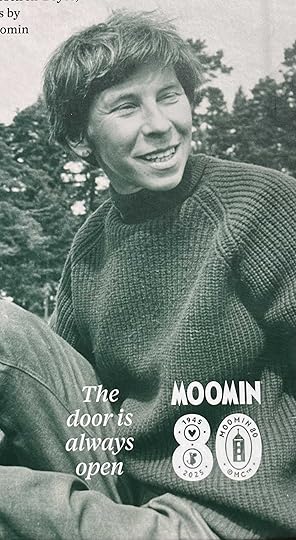
Troliai Mumiai – tai suomių-švedų kilmės rašytojos sugalvotos mažos būtybės, kurios elgiasi kaip suaugę žmonės – rūko pypkę, rašo memuarus, ūkininkauja, o žaidžia kaip vaikai. Jie visi tarytum vaidina teatre. Tai itin dori ir geraširdžiai padarėliai.
„Mažieji troliai ir didysis potvynis“ — tai pirmoji pasaulinę šlovę pelniusios rašytojos knyga apie trolius Mumius. Joje pasakojama, kaip Muminukas su mama ir draugais leidžiasi ieškoti pražuvėlio tėčio ir kaip visi suranda garsųjį trolių Mumių slėnį.
Tove Jansson was born and died in Helsinki, Finland. As a Finnish citizen whose mother tongue was Swedish, she was part of the Swedish-speaking Finns minority. Thus, all her books were originally written in Swedish.
Although known first and foremost as an author, Tove Jansson considered her careers as author and painter to be of equal importance.
Tove Jansson wrote and illustrated her first Moomin book, The Moomins and the Great Flood (1945), during World War II. She said later that the war had depressed her, and she had wanted to write something naive and innocent. Besides the Moomin novels and short stories, Tove Jansson also wrote and illustrated four original and highly popular picture books.
Jansson's Moomin books have been translated into 33 languages.
i got this wonderful book from connor for my birrrtthhddaaayyy!!!
and it is yet another book that is beautiful enough that even had its contents been crappy, i would still love just to hold it and heft it and appreciate the texture and weight of it. it is from a small publisher whose motto is "publish few but wonderful books."
this is the first ever moomin book, published in 1945. it was out of print for forever, then reprinted in 1991, and then re-reprinted in 2012. and now i has it.
the story itself is meandering and simple and dreamlike, but coupled with these amazing illustrations, it is hard not to love it like candy:
i love the way the moomin characters look in this book - they are just rough sketches of what would later evolve into the more round and sweet and familiar moomins of the later books.
from:
to:
throughout the book, the artwork is split between very simple line drawings:
to these amazing sepia watercolors:
the story takes the shape of a journey by moominmamma and baby moomintroll to find where moominpappa, last seen in the company of the hattifatteners, has gotten himself off to. along the way, they meet other characters who will later become moomin "regulars" and moomintroll will eat too much candy in a sort of willy wonka-type wonderland.
also, there will be cats:
it's just a wonderful, magical book in which all the moominroots can be seen and it is charming and sweet but also very dark, as all the best children's books are.
this is my favorite drawing on the book, because of how simple and delicate and and innocent and evocative it is. this, to me, is just lovely.
if you have never read a moomin book, change that now. they are perfect little jewels of creatures and everyone should have them in their hearts. whe!
On no account should anyone trying Tove Jansson for the first time start with this book, the original Moomin story, published in 1945 and recently translated into English for the very first time. Because of course there's a reason why it was untranslated all these years (and, additionally, out of print in the original Swedish); it's just not that good. The art work is charming, but the story, which is quite short, is just kind of random, helterskelter, and unsatisfying. That being said, it's a must for Moomin completists, and for me personally, just learning of the existence of this book was satisfying in that I finally understood what flood was being referred to at the beginning of Comet in Moominland, which used to be considered book 1. As a child I thought Jansson was referring to the one in Moominsummer Madness, a later book in the series, and was deeply confused about the time frame of the books, which, for a time, rather put me off the moomins until I was older and better able to cope with ambiguity!
This book is not atrocious. It is simply a book devoid of curves, and you cannot have twists without a curve. The book is both an exercise in oversimplification and an exercise in the absurd. But when a story is both banal and nonsensical, a little sense begins to creep in it.
What little sense crept in made, predictably, little sense. There is just one part of the book that resonated humanly with me. That was when the stork said "it is nice to help people". The comparison of Moomin #1 with Alice in Wonderland must have appeared in the papers of that time, all the way in Finland. I say papers, because I doubt whether there were magazines back then devoted to such topics and writing of critical analysis and reviews and whatnot.
Alice in Wonderland had a structure. This book was like the types of books written by a 13 year old. A clever one, but still limited by experience and artfulness and sheer inexperience. Tove Jansson was born one year later than Albert Camus, and died a full 41 years later than the man. If only it was known what kind of loss has been suffered by such vicissitudes of fate. I am reading The Myth of Sisyphus and though I am dismayed to find it obscure as most modern philosophy books ( and as obscure as ancient texts too to be fair), the glimmerings of reason and imagination exceed Moomin 1's offering.
There is one real danger in Moomin's book. There is only one display of real evil. But it came in the form of a serpent, which made sense but was disappointing all the same. Tulippa the flower child was ahead of her time - the sixties - but she had little to contribute to the book. I say book only, because it has no plot worth weighing. The most enigmatic creature is the little creature. He sounds displeased with the story he has been thrown in and I totally sympathise with him. Moominmamma and Moomintroll are bland but perhaps characters cherished by children who grew up reading this series.
I got to read this book because of a challenge, a prompt in it. It did not make a strong case for continuing the challenge next year (a country based one). If I am to be coaxed in reading fluff like this, then I would rather be rudderless in my journey in the domain of books and literature and reading and leisure. The last word trumps every other consideration. I do not suffer books like this because I can afford to dispense with any meaning I may have missed - and the odds say I have - with examining The Moomins and the Great Flood.
To conclude, I would rather welcome other books that will expand my horizons in literature, but I have by now discounted swathes of the latter discipline. I am done with 99 % of Victorian literature, because I cannot maintain my joie de vivre in the face of such rigid and immutable structure. I am done with science fiction and YA Fantasy and horror and Westerns. And I have been a non participatory frigid neutral where Romance is concerned. Romance leaves me cold and I feel manipulated whenever I read most of the books in that genre.
So the number of books is being constantly limited to me. This is a plus as well as not one. It is a plus because I am getting refined in my search for a good book to read. Like all worthy readers, I am a creature of habit. And the more the habit grows on me, the more certain I am of what I want in a book that will please me. It is a misfortune - i.e. not a plus - to me because entire genres of the system of reading are now off limits. But it is a fact of evolution that the creatures that specialises most, that deviates most from its ancestors, evolves fastest, though in totality few options are available for its next step.
I have been puzzled by my own choice in giving this book 1 star. I did not hate it. I was disappointed in it, but was not displeased by it. That is probably because little time has been expended in reading the book. It is disarmingly short and harmless in its indulgence. I do not hate Tove Jansson and this series has the reputation of being the most popular children's literature from Scandinavian countries. That is a blurb from the Afterword of the book and I must consider it true at face value. Though I wonder if Finland is part of Scandinavia. That is the type of negationism that has dogged my steps in one of the most eclectic and unsatisfactory reads of the year. Definitely short but certainly not sweet.
A wandering first adventure. A bit scattered, like a fairytale, but the language is delightful and the lovely illustrations do a lot of descriptive work.
This is my first Moomin book! What are your favorites?
Terapinis šeštadienis rereadinant pirmąją Mumių knygą - pirmą parašytą ir iliustruotą (1939), pirmą išleistą (1945), pasakojančią apie pačią pradžią. Visai neseniai, kol "Garnelis" dar nebuvo jos perleidęs lietuviškai, taip ieškojau, o galiausiai nusipirkau angliškai su sepijos tono nuostabiom Jansson iliustracijom per visą puslapį. Dabar turiu dvi, kai būsiu sena, skaitysiu lietuviškai.
Atradimai:
- pasitvirtino iš Muminukų komiksų susidarytas įspūdis, kad Muminuko Tėtis yra savita (Didžioji :D ) Asmenybė. Čia jis negeria (jei neskaitysim, kad vienoj vietoj atsiunčia laišką tuščiame butelyje; Jansson iliustracijoje butelis aiškiai alkoholinis ir atidaromas su alko atidarytuvu), tačiau gal tik dėl to, kad jo išvis nėra: pasakojimo pradžioje matome Muminuko Mamą su visai mažu Muminuku, vasaros pabaigoje klaidžiojančius ir ieškančius, kur galima prisiglausti, kol dar neatėjo žiema. Muminuko Tėtis kažkada tipo irgi buvo, bet paskui iškeliavo su Hatifnatais. Kai apie jį pasakoja, Muminuko Mama verkia ir sako, kad nu gal kada nors jį ir sutiks, bet turbūt jau nebe. Biški palikta vieniša mama su vaiku? Gal dėl to ji tolesnėse knygose tokia savarankiška ir tarsi sau pakankama, net krentančios kometos jos neišmuša iš vėžių.
- pasirodo, kitaip nei komiškuose Muminukų komiksuose, Snifo neįsivaikino kartu su Muminuku - jį miške rado Muminuko Mama su Muminuku ir pasiūlė keliauti kartu. Čia jis jau užknisa, skundžiasi ir visą laiką aiškina, kad jei kas blogo nutiks, tai ne jo reikalas, be to, jis dar neturi vardo, tėra mažas padarėlis (the little creature). Galbūt čia dar buvo neaišku, ar tai bus šuniukas / katinėlis, ar kokio kito statuso žvėrelis, ir tik vėliau jis tapo zirziančiu trimečiu bambliu, nu taip maždaug.
- Šios knygos iliustracijose mumiai dar nėra savo "prekinės" išvaizdos, bet aš vis galvojau - o kodėl jų neeksploatuoja būtent tokių, nėra jokių puodelių su būtent tokiais muminukais - šiek tiek katiniškais, šiek tiek peliukiškais, keistom ilgom nosim, išpūstom akim? Čia tikrai patikėtum, kad tai dar viena trolių rūšis, gyvenanti pas žmones užkrosnyje ir išguita į neaišku kur jiems įsivedus centrinį šildymą (tokia mumių mitologija pasakojama "Potvynyje"). Labai gražu (tas pats išliks ir Comet in Moominland, tik dekoratyviau), kaip didžiosiose iliustracijose per visą puslapį mumiai tokie mažyčiai, kažkur peizažo apačioje ar kampe, iš tiesų kaip peliukai. O visą erdvę užima didelis pasaulis, augalai, paslaptingi tuneliai ir kalnai, beveik netelpantys į puslapį.
- Šalia šeimos / draugų genealogijos, papasakojama ir apie Mumių Slėnį: tai vieta, į kurią, perplaukę per vandenyną ir audros išmesti į krantą, pakliūva visokio plauko padarai - mumrikai, snorkai, hemuliai, jūrų vaiduokliai. Taigi Mumių Slėnis - tokia tarsi Pūkuotynė, kur pasilieka senų tikėjimų, žaidimų, kultūrų personažai ir drauge sugyvena, nes o kas gi belieka. Izoliuota, gražu ir liūdna, ir, tiesą sakant, truputį nusiminiau, kad tai - savotiška užmaršties ir praeities vieta, rezervatas, o ne viso pasaulio keistuolių eldoradas, kaip galėtum pagalvoti iš kitų knygų. Na bet gal vėlesnėse knygose ji pasikeitė ir išsiplėtė :)
- Fainiausias personažas iš knygos - Hatifnatai. Jie, tiesą sakant, lygiai tokie pat kaip vėlesnėse knygose: turi savo agenda, į tave nereaguoja, nesiklauso ir nežiūri, bet ir neprieštarauja, kad kartu paplauktum jų laiveliu. Galbūt labiausiai ir žavi tai, kaip jiems tavęs nei reikia, nei nereikia, jie sau ramiai egzistuoja šalia, kaip kokia gamtos jėga, kuriai visai tas pats, ar atsidūrė užmaršties vietoje, ar kokioje kitoje, nes jie nepriklauso nuo mūsų atminties ir simpatijų. Tik nuo elektros impulsų, bzzz.
Pabaigus istoriją, kurį laiką negalėjau suprasti, ar man patinka, ar nepatinka, kad gale Muminuko Tėtis atsiranda ir pasirodo, kad jis ne šiaip girtuokliavo visus pamiršęs, bet pastatė šeimai gražų namą ir visą laiką jos laukė. Gal ir faina, kad netekties istoriją Jansson galiausiai išsprendžia ir grąžina harmoniją, leidžia šeimai toliau gyventi idealiame (netikrame???) pasaulyje Mumių Slėnyje. Gal vis dėlto - tik svajonėse (kaip Pūkuotynė). Kita vertus, gerai, kad ji nekūrė ir trauminio subjekto-palikto vaiko aka Haris Poteris (aišku, prieš 70 m. tas buvo ne tokia lengva išeitis, nu ir gerai). Bet, trečia vertus, galvoju, kad ir tas, ir anas išrišimas atrodo labai nemuminukiškai - kaip paaiškinimai ar atsakymai ten, kur nekeliami jokie klausimai. Gal todėl ir komiksuose ji paskui pasakoja anekdotines Snifo atsiradimo ir Muminuko-sūnaus paklydėlio sugrįžimo istorijas, o Mumių Slėnis tiesiog yra, kaip geriausia vieta Žemėje, niekam dėl to nediskutuojant.
I had heard of Tove Jansson and her Moomins, but that was pretty much the extent of my knowledge. It was therefore a lovely surprise to discover this fairy tale, featuring Moomintroll and Moominmamma in their search for a place to live and their long lost Moominpappa.
The writing is simple but not devoid of lyricism. Being a translation, I can but wonder at how the original text feels, and if this is even more pronounced. The story follows a ‘typical’ search with mini adventures punctuating the narrative, some more dangerous than others, introducing us to different protagonists. It is so sweet and yet, you can feel the darker undercurrent. Tove wrote it during the WWII and published it in 1945. It is therefore not surprising that this is a ‘disguised’ tale of families divided and highlights an anxious yearning for safety in all its meanings.
What did surprise me a lot was Tove’s artistic skill! I had no idea she drew at all (I know, my bad) and her illustrations totally enchanted me. Wow! So simple in some occasions but full of feeling. I’m in awe! I don’t know how this first volume compares with the rest of the series, but from a new reader, I am charmed. I’m particularly tempted now to read her The Summer Book.
Jakoś tak się uchowałam, że w całym swoim 25-letnim życiu kontakt z Muminami miałam może jakieś... 3 razy? Znam popularną czołówkę, kojarzę kukiełkowy twór Se-ma-foru i zawsze uśmiecham się do imienia jednego z bohaterów (możecie zgadywać): tyle. W każdym razie, było to moje pierwsze spotkanie z książkowym pierwowzorem. Trochę rozczarowujące, trzeba przyznać. Ciężko odnaleźć mi się w tym charakterystycznym klimacie i raczej już nigdy do niego nie powrócę. Rzesze fanów nie zyskają nowego członka, ale to jakby rozpaczać nad pustynią uboższą o ziarnko piasku. Podskórnie rozumiem, czym rozkochują w sobie fińskie trolle (dla mnie od zawsze hipki...) i mam nadzieję, że ich popularność jeszcze przez długi czas nie zazna tendencji spadkowej.
When I was a child and read Tove Jansson's evocative and adventurous tale of how a comet threatens the Moomins and their valley (Comet in Moominland, although I actually read it in German), I was rather annoyed and frustrated with and by the fact that while there were all these textual allusions and hints at the beginning of Comet in Moominland of there having previously been a massive flooding, the novel where this so-called Great Flood occurs had never been translated from its original Swedish (finally remedied in 2006 with this here English language translation by David McDuff).
And after now after having read The Moomins and the Great Flood, I can certainly and very much understand why this novel (which is considered the first Moomin tale and was orignally published in 1945, and was also for decades out of print even in its Swedish original), has only recently been translated (the simple fact being that although author and illustrator Tove Jansson's accompanying pictorial images are indeed glowingly descriptive, esoteric and for all intents and purposes wonderful, the actual text, the actual featured narrative, the story of The Moomins and the Great Flood is simply, is just not in any way en par with the other Moomin novels). For the text feels majorly choppy, uneven and often so bare bones that one might almost assume one is reading more of an outline of a novel than an actual and finished, polished end product. I mean, we as readers never really do manage to obtain all that much knowledge and information as to exactly why Moominpapa has ended up being missing. Yes, he has seemingly abandoned his family (his wife and young son) to travel with the Hatifatners, but no detailed and specific reasons as to why are ever really textually given. And even the Great Flood itself is at least in my opinion rather a non event, is presented by Jansson as being there, being a presence, but with only scant description and portrayal (which also and indeed seems to be the case with almost all of the diverse episodes of The Moomins and the Great Flood, the featured and presented nuggets of detail and of even storytelling charm, pieces of information that seem important for a short while but then like a flame, sputtering out, failing to coalesce into a harmonious whole).
And thus, while I do appreciate finally having had the opportunity to read, to experience Tove Jansson's very first Moomin book and cheer the fact that her The Moomins and the Great Flood was in 2006 translated from the original Swedish into English (as well as subsequently into other languages), is again in print and as available as the rest of the Moomin series (since it does in fact clean up some loose ends and presents how the Moomins originally reach their valley, and also how they meet and in many ways become saddled with the intriguing and sometimes a trifle frustrating kangaroo-like creature who in the later Moomin novels is known as Sniff), I still have found The Moomins and the Great Flood only rather very mildly amusing and entertaining at best, and the novel's general writing style, its textual authorial presentation too scattered, too unfinished and too unpolished to be considered with more than two stars (and leave the truth and caveat that the sequels are definitely much superior and are to be in all ways preferred and recommended above The Moomins and the Great Flood which I really would only suggest for serious Moomin series fans and completists).
Maybe the time has come for me to throw up my hands and admit that I don't get the Moomins. A few years ago I waded unhappily in the Bergmanesque melancholia that is Moominvalley in November. And, now I've wandered aimlessly through the first book in the series. Though this one didn't leave me filled with the crushing meaninglessness of life that the other title did, I still have not caught Moomin Mania.
This little tale reminded me of being a kid, and trying to have a grand adventure while your mother tags along, nagging at you to put on a sweater before you catch a nasty chill.
We loved reading this first moomin book again. Lovely to see the first tentative drawings of the moomins. We were really shocked how this book must have hugely influenced Roald Dahl, this story pre dates charlie and the chocolate factory but has too many similarities to be a coincidence.
As far as my memory goes into my childhood, I've always loved Moomins. My copy of Moominland Midwinter was not only my most prized possession when I was a child but probably the reason why I became a reader in the first place. So it's very weird for me to read this book for the first time as an adult, considering that this was the first Moomin novel ever published. I can't believe this book was published back in 1945! The difference between this and the newer volumes is very easily spotted, especially in the artstyle. This was a wholesome, beautiful tale of how The Moomins family came to be reunited and found their pretty house they will live in for the rest of their adventures. A beautiful northern fairytale with a taste of nostalgia and folklore. Just how I like it! A beautiful treasure for any Tove Jansson's fan :)))
The Moomins entered the literary world 80 years ago. In books, picture books, comic srips and on TV, they conquered the hearts and minds of children (and adults) everywhere. I, personally, first saw them on TV and didn't know about the books or the author's immense popularity. But the characters and their looks are so iconic, I don't think it matters.
So when I saw the 80th Anniversary Edition, I had to have and read it and boy, was I NOT disappointed. It is true, as mentioned in the foreword, that one can see several different influences (I, personally, even saw Willy Wonka at one point), but the way the author brought it all together was absolutely charming so even if she hadn't made the world and story more her own (which she does as in the other books), it would still have been original and uniquely adorable.
Story-wise, we follow little Moomintroll and his mother in their search for Moominpapa. Thus, we wander through all kinds of landscape, meeting all sorts of quirky characters, and learn a great deal about the world, floods - and family (the found ones at least as much as the blood-related kinds).
Don't think that just because this is a children's book, it's easy-going from start to finish. The truly great ones always teach (but do not preach) and this is no different. They don't make them like this anymore. *sighs*
The door is indeed always open so I think I'll get and read the other books, too, so I can meet all the people and creatures who follow the invitation and step right through the door.
Oh and the back has portraits of all the characters AND there is a fold-out map of the house!
I loves me some Moomins! This is the original story, coming in 1945 before the comic strip or the first of the famous novels, Comet in Moominland. It has none of the satire of either of the former but it does have the same bizarre, delightful, magical world of strange creatures and peculiar adventures, featuring everybody's favourite troll family. Speaking of delightful, Jansson's illustrations are as wonderful and playful as you would expect. This edition is an inexpensive fairly large format hardback that allows for reprinting said illustrations at a size worthy of them and in superior quality, too. It's a quick, fun read, a short story even by kiddy standards, excellent for filling in a moment when I was unable to focus sufficiently for my more demanding current reading projects.
»Die Muminfamilie, die ich zu beschreiben versuche, ist schlichtweg glücklich, ohne sich dessen bewusst zu sein. Sie haben es gemütlich miteinander, und sie gewähren sich gegenseitig volle Freiheit: Freiheit, allein zu sein, die Freiheit auf eigene Art zu denken und zu fühlen und eigene Geheimnisse zu haben, bis zu dem Moment, wo sie bereit sind, sie zu teilen. Keiner verursacht je einem anderen ein schlechtes Gewissen.« - Tove Jansson
Die Mumins. Das ist ein bißchen wie “nach Hause kommen” - vertraut, voll Wärme und Liebe, Geborgenheit und Sicherheit, bestenfalls erfüllt von den Menschen, die wir lieben.
Ich erinnere mich an die alten, etwas betulichen, Übersetzungen aus den 50’ern und 60’ern von Kurt und Vivica Bandler schon aus frühester Kindheit, als meine Eltern mir diese Ausgaben vorlasen.
Ich habe die Mumins damals geliebt und das ist nie vergangen. Über die Jahre habe ich die Bücher immer mal wieder gelesen, wenn ich etwas lesen wollte, auf dessen Qualität und Wirkung ich mich unbedingt verlassen kann.
Erst spät kam ich auf den Gedanken, mich mit Tove Jansson als Autorin auseinanderzusetzen und stellte fest, daß Jansson ein faszinierender Mensch gewesen sein muß: Schulabbrecherin mit 16, dann als junge Frau Studium an einer technischen Schule und Arbeit als Illustratorin und Malerin.
In einer Zeit als dies noch wirklich gefährlich war, hatte Jansson eine Affäre mit einer Frau - mit der eingangs erwähnten Vivica Bandler, der sie in “Eine drollige Gesellschaft” (gemeinsam mit sich selbst) in den Figuren Tofslan und Vifslan ein buchstäblich kleines Denkmal setzte. Selbst nach der Trennung verband beide eine lebenslange Freundschaft.
1956 traf Jansson dann auf Tuulikki “Tooti” Pietilä, mit der sie den Rest ihres Lebens verbrachte - 45 Jahre, in denen sie sich intensiv den Künsten widmete.
So entstanden letztlich eben auch die Mumin-Bücher, so auch “Mumins lange Reise”, in der Mumin und seine Mutter zunächst allein, im Verlauf dann aber mit weiteren Gefährten, den verschollenen Muminvater suchen. Es ist eine kurze, aber dafür buchstäblich wegweisende Erzählung, die den Weg für die anderen Mumin-Werke (Bücher, Bilderbücher, Comics, Theaterstücke, etc. etc.) ebnet. Es ist, wie üblich, gespickt mit fantasievollen, liebevoll gestalteten Illustrationen
Wer die Mumins mag oder sie kennenlernen möchte, dem sei dieser kurze Band als Einstieg empfohlen (oder alternativ auch mein Favorit: “Eine drollige Gesellschaft”).
Für alle, die vielleicht etwas mehr über das gesamte “Mumiversum” erfahren möchten, denen sei Christian “Zepe” Panses, Deutschlands führendem “Muminologen”, wundervolles “Virtuelles Muminforschungszentrum” wärmstens empfohlen.
my son, who read everything as a child (including the entire Bible just for the heck of it (he loved the story about Esau's hairy arms, and told me so many others I'd never heard of before, because they just never made it into any sermon or reading I'd ever heard) was deeply creeped out by the Moomins and didn't read more than a few pages of the set I bought him before putting the books aside, and now that I've read one myself I think I understand the feeling. Brrr.
Where do I start with this book - well I realised as I was reading the re-isssued collectors editions that there was in fact a book before the series (at least "their" series) which was about the great flood.
So I searched and discovered this book - the first in the series published in 1945 and I have to say it was fascinating - but not just for the story.
You see here how the early characters developed both in appearance and in their language and actions, for example Sniff is not mentioned by name at this point. So you can see how the various aspects (even the house) have been refined throughout the series.
But not only that you get to see a reflection of the authors life too - here you have an early Tove who is still living under the shadow of the Second World War (by her own admission) however she returns to the series through the years and as her views and life changes so you start to see subtle changes in the Moomin stories too.
At a fraction of the length of later books I think the significance of this book should not be overlook.
#2016-aty-reading-challenge-week-30: A fairytale from a culture other than your own.
The first of the Moomin fairytales by the Scandinavian author, Tove Jansson, is quite charming. Moomintroll and his mama set off on an odyssey to find a nice sunny place where they can build a house. Along the way, they make new friends, face dangers and reunite with Moominpappa. A timeless children's classic.
www.instagram.com/miciausknygos www.facebook.com/miciausknygos Pirmoji knyga apie trolių mumių gyvenimą, nors ir parašyta antrojo pasaulinio karo metu, tačiau pelniusi šlovę nuo pat pirmųjų dienų ir išlikusi iki šiol. Šioje dalyje pasakojama kaip buvo ieškomas muminuko tėtis pražuvėlis, bei kaip buvo atrastas garsusis trolių mumių slėnis. Troliai mumiai daugelį mūsų sužavi paprastumu ir nuoširdumu, kurį daugelis pamirštame užaugę, todėl tai puiki proga pasinerti į nuostabų, pasakišką muminukų pasaulį iš kurio nesinorės grįžti.
"Šitokio pasaulio širdies gelmėse trokšta kiekvienas iš mūsų"
I remember Moomintroll from TV adaptations and Jackanory readings from when I was a child, but I've never read any of Jansson's Moomin stories until now. I liked it!
The story has its interesting points, but what makes this book for me are Jansson's illustrations - very strange, phantasmagorical and other-worldly.
The slim story is a series of episodes in the journey made by Moomintroll and Moominmamma, searching for the missing Moominpappa who, for no good reason that I can discern, has left his family to go a-wandering with the rather creepy Hattifatners. The "little creature" they meet and adopt (named Sniff in later books) is reminiscent of Piglet, Winnie-the-Pooh's friend, being easily frightened and rather timorous through most of the story. Tulippa is a rather mysterious "flower-fairy", who joins their company for a while, before somewhat capriciously deciding to shack up with a lighthouse keeper (if it was a lighthouse). Then there's the old man who has created a world made out of chocolates (Fazer brand), sweets and lemonade, prefiguring Dahl's Willy Wonka, though I'm uncertain as to any direct connection.
A great story for children, and I'm sorry that I didn't come to these books in time to read them to mine - I think I've a while to wait for grandchildren, but when they arrive Moomintroll will be waiting for them!
As someone who grew up in Sweden, the Moomins have always been a part of my childhood. I watched the TV series with my parents because they were a bit too scary sometimes. I went to the library to borrow the computer games and sat in our closet, building ice castles with Moomin. I ate my cereal with a moomin-spoon, actually I still do. Even my wallet has Moomins on it. But I realised that I never read the books, therefore I decided that I should read them.
This is the first in the series and it's a really short book. I've heard a lot of people saying that this is the least good in the series. It's simply short and sweet, and the art work is lovely! But I feel like you can skip this and start on the second book as well, since this is more like a random story which brings an introduction to the Moomins.
Although I came across the moomins as a child and read a couple of the books, this first in the series, in a recent English translation, was new to me. This presents the moomintroll world in a prototype form. The illustrations show them as less well rounded than their familiar later incarnations, and the Sniff character joins them for the first time but is unnamed, and is just 'the little animal' or similar throughout. There is also a nice dryad type character who bows out before the strory ends, and who I have not encountered in the others I've read. However, some of the background is sketched in, with mentions in passing of some of the weird characters that populate moomintroll world: Hemulens and Snufkins for example.
Where the book has weaknesses, they are in both characterisation and plot. Moomintroll and his mother are on a sometimes perilous quest, but their motive changes. They start off looking for somewhere to make a warm home to hibernate over winter, but along they way their journey turns into a search for Moominpapa who went off with the Hattenfatteners, another strange creature I'd previously encountered in other tales. He seems to have left their original home, behind the stove in a human home, for no really defined reason other than wanderlust.
The other problem is that the flood of the title is a bit of a damp squib when it finally happens. However, the illustrations which include sepia paintings as well as the usual line drawings make up for that, and the production of the editon by 'Sort ofBooks' is very nicely done, so overall I'm rating this at 4 stars.
Super mooie prenten ! Voorwoord had me al veel bijgeleerd. Wist niet dat het eerste boek geschreven was tijdens de oorlogs periode en dat het pas 6 jaar nadat het geschreven was pas is gepubliceerd… leuke weetjes ..




 come to my blog!