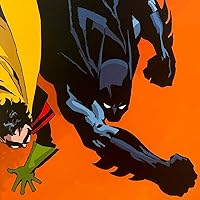
Steve Rogers is dead! Long live Captain America! He was a hero to millions, an inspiration to America's armed services and the representative of his nation's greatest ideals. He lived for his country - and now, he has given his last final measure for the nation he loved. In the aftermath of the superhuman Civil War, Captain America was shot down in cold blood. In the aftermath of his death, Cap's longtime partner the Falcon makes revenge his first order of business. Sharon Carter finds herself spiraling out of control, a captive of the Red Skull's minions. And Bucky Barnes, a.k.a. the Winter Soldier, must reconcile his own sordid past with the calling to become...the new Captain America!
Collecting: Captain America 22-42, Winter Soldier: Winter Kills
Ed Brubaker (born November 17, 1966) is an Eisner Award-winning American cartoonist and writer. He was born at the National Naval Medical Center, Bethesda, Maryland.
Brubaker is best known for his work as a comic book writer on such titles as Batman, Daredevil, Captain America, Iron Fist, Catwoman, Gotham Central and Uncanny X-Men. In more recent years, he has focused solely on creator-owned titles for Image Comics, such as Fatale, Criminal, Velvet and Kill or Be Killed.
In 2016, Brubaker ventured into television, joining the writing staff of the HBO series Westworld.
The title speaks for itself. Good action, and conspiracy. The red skull is still a great foe. Theres alot going on here. However I would have liked more Steve in the title role. Will still continue this to see where it goes.
...I have so many mixed feelings about the start of Ed Brubaker’s legendary (and infamous) run on Captain America.
For those uninitiated, Marvel killed of Steve Rogers (a.k.a. the original Captain America) in 2007. The resulting story saw The Winter Soldier taking up the mantle of the Cap, the return of the Red Skull, and the continued division of the superhero community. It was basically an epilogue to Marvel’s Civil War storyline - a very extended, confusing, and drawn out epilogue.
BREAK IT DOWN ONCE MORE, BIG DADDY
The Death of Captain America started out with the obvious; after Steve Rogers turned himself in and surrendered to the Pro-Registration superheroes in Civil War, he was assassinated on live television by an unknown sniper just before his first “criminal” hearing. The fatal blows actually came from two people - the supervillain known as Crossbones and Steve Rogers’ own brainwashed girlfriend, Sharon Carter (a.k.a. Agent 13 of S.H.I.E.L.D.). Both were acting under the combined command of the Red Skull, Doctor Faustus, and Arnim Zola.
Following the assassination, the country as well as the already divided superhero community was left reeling. Tony Stark (Iron Man), now the lead director of S.H.I.E.L.D., felt directly responsible for the death of his rival and old friend. Bucky (Winter Soldier), Rogers’ partner, was constantly on the run, as he’s an unregistered superhero. Determined to stay in the shadows, Bucky decides to conduct his own investigation into Rogers’ murder (and possibly kill Tony Stark for being such an asshole).
What follows is a weaving, complicated psychological thriller of a murder mystery, one told from three sides: the investigation from Winter Soldier and Falcon’s point of view, the investigation from Iron Man and Black Widow’s point of view, and the behind-the-scenes scheming of Red Skull and company.
While Bucky eventually takes up the mantle of the “new” Captain America and unofficially joins forces with S.H.I.E.L.D. and the other heroes, Red Skull attempts to put a corrupt senator in the White House during the 2008 presidential election to assist him in his goals. Doing so - for whatever reason(s) - involves kidnapping Agent 13, resurrecting a former Steve Rogers impersonator and second Nomad clone, crashing the Chinese stock market, and transferring his conscious mind into another person’s body.
During the climax, the new Captain America and other heroes foiled Red Skull’s plan, seemingly destroyed Zola, and restored relative peace to the country and the all-important 2008 election. Bucky is now the new Captain America, he operates off-the-record, and he’s been almost universally accepted as such by an adoring American public.
TURNER’S TAKE
At first, I really hated The Death of Captain America. I read through the “Complete Collection” TPB, so the first few chapters felt like a lot of filler and additional content left over from the Civil War storyline. But when I really started to get deep into the actual current plot, I got a bit more attached. But all in all, I have generally mixed to negative opinions on the book.
ROGERS’ DEATH
I’ll be honest, Steve Rogers’ death left me wanting so much more. I wrote during several Turner’s Two Cents reviews that I am intensely interested in superhero deaths, so reading this book was an absolute must for me. But when compared to Superman’s pummeling at the hands of Doomsday, Batman’s time-warp “death” in Final Crisis, and even the many memorable deaths of Jean Grey and Charles Xavier, I can’t help but think Captain America’s send-off was less than stellar. Rogers was shot, it was on live TV... I get it. It’s an American tragedy. I just didn’t dig it. Captain America #25, the issue in which it actually happened, was just so-so.
But I do get it; the book and storyline itself wasn’t necessarily about the character’s death, but it was about the symbol’s demise and the economic/political ramifications that would take place thereafter. The country was in turmoil, the superhero community was left reeling, and all of Cap’s closest friends and former lovers were left to pick of the pieces. That was The Death of Captain America, not Rogers’ death in particular.
THE INVESTIGATION
The investigation itself was actually the meat of the story. I liked it, but then I didn’t, and then I did again. Why? Because - while it was probably the most interesting and interwoven aspect of the entire plot, it was also the looooongest. Bucky was on the run, Black Widow followed him, Falcon eventually joined him, they all battled each other, and then they joined forces. Bucky had some WWII flashbacks, Bucky reminisced about his relationship with Widow, Bucky thought about his history with The Falcon, and then he snapped out of it and we continued. This middle section was wayyyyyy tooooooo looooonnnnnng of a read without enough action and furthering of the plot. In short, there was a lot of filler.
On the flip side, we had Agent 13 in the middle of this whole thing, going from being a good guy to a bad guy and back again. Due to her mind-warping at the hands of Red Skull’s goons, Agent 13 was struggling within her own mind to keep her sanity (that, and she’s dealing with the guilt of murdering her lover). At one point, she was mentally commanded to kill Falcon and Bucky. Then at another point, she (physically and mentally) fought back against the bad guys enough to free herself. As soap opera-ish as this sounds, this was actually the most engaging part of the whole book, to be quite honest.
I’m not quite as much of a Cap fan as I am of other Marvel characters, so I’m hardly familiar with Peggy Carter’s granddaughter. I didn’t know if she’d eventually and permanently turn on the good guys. I didn’t know if she was truly an expendable character. These sections were actually not predictable for me.
THE FINALE
Finally, we have the final segment of the entire book, The Man Who Bought America. This is when we finally had some action scenes and some actual plot continuation. Everything comes to a head when Bucky fully embraces his role as the new Captain America and forgives Iron Man for being such a dick. It’s at this point when we see that Marvel is finally moving away from the whole Civil War story arc, and that’s a good thing after so many issues.
I liked this final chapter, not just because of the fights and the resolution finally coming to a head, but because shit finally started happening in general. Agent 13 was stabbed in the stomach, forcing the miscarriage of Steve Rogers’ unborn daughter. Then she had a psycho-showdown with Red Skull’s Harley Quinn look-alike daughter, Sin. And Skull’s Presidential Election-shattering plot was finally (and fully) revealed to the reader.
MAJOR ISSUES
There were two MAJOR things that I took issue here during the book’s final few dozen pages. For one, this book was so confusing that I did not fucking understand exactly what it was that Red Skull was trying to accomplish. It’s like, super evident at this point that you cannot just read The Death of Captain America without reading whatever book(s) came before it, pre-Civil War. I understand and acknowledge that Skull’s mind was inhabiting someone else’s body (Aleksander Lukin’s) and he was attempting to get into someone else’s body. But whose!? Was he literally trying to get inside the next potential President of the United States? Because if he was, it wasn’t clear at all.
They also seemed to try to insinuate that he may have wanted to “become” Cap’s unborn child. Was that true? Because if it was, that would’ve been awesome. Did the child retain Cap’s Super Soldier capabilities? Was the Red Skull of the future going to be female? Unfortunately, we’ll never know now, because the baby is dead and Red Skull was trapped inside Zola’s computer program/network to end the book.
Finally, my dreaded SECOND PROBLEM. Why in the blue of all fucks did Brubaker and Marvel decide to over-complicate the already hard to follow plot by throwing William Burnside into the mix!?!?!?!? I mean, they spell it out for us so that we’re not completely thrown off - Burnside was a 1950’s Captain America clone who eventually became the second (second?) Nomad - but that’s still no excuse. His inclusion (and pathetic, one-dimensional brainwashing) was strictly to prolong the story even longer and to give Marvel an excuse to show two Captain Americas battling each other.
This battle did nothing for the storyline and just oversaturated the entire thing for me. Not only was it unneeded, but it was blatantly an unfinished arc. The battle between Burnside and Bucky results in a no-contest when Bucky is thrown off the side of a building. America’s confusion over which Cap was real was teased in the “newsreel” footage at one point, but the issue is never revisited. Did Burnside die somehow? Did he just run off into the wilderness? Does he still actually think that he’s the real Steve Rogers? What the fuck did I just read!?
FINAL THOUGHTS
Basically, I can say that I enjoyed The Death of Captain America, but nowhere near as much as I thought I would’ve. I definitely think a slimmer, more abridged version would’ve whetted my thirst just as much, but it was still a cool idea (I guess).
But I will say this - The Death of Captain America was nowhere near as emotionally jolting as the other superhero deaths I’ve already listed. Plus, this story brought with it two unavoidable issues...
For one, superhero deaths have been done and redone a thousands times before. Cap’s death definitely did garner a lot of press for Marvel, and that was the point. But then again, Captain America was one of the only superheroes who had yet to die in American comics, making this story’s occurrence utterly predictable. Secondly, fucking Batman “died” in the same timeframe (in Final Crisis and Batman R.I.P.), making this story weaker in comparison. Not only was it a weaker story, but Captain America is a weaker character than Bats, which made this story feel like the second fiddle (it’s true, it’s damn true).
That’s my story, folks, and I’m stickin’ to it.
But I do have one really good thing to say about The Death of Captain America: Bucky Barnes makes a damn good Captain America and a damn good lead. What made him so good at the role was that he was so different from Steve Rogers (as evidenced by his carrying of a firearm in addition to the Shield and his lack of super strength) and he wanted to make Rogers proud. Not only that, but it wasn’t just a blatant step-in to the role for Bucky; he went so far as to make a brand new costume for the icon so the public could differentiate the two of them and to make people aware he wasn’t trying to replace him.
That’s pretty cool. And because of the lead characters’ strength, I’d definitely be interested in reading The Winter Soldier Collection and Red Menace (Brubaker’s other Cap books) in the future.
The Death of Captain America Complete Collection collects the entire saga, specifically no. 22-42, along with the Winter Soldier: Winter Kills one-shot. That's three previously published tpbs all in the same volume: Captain America: Civil War, The Death of Captain America vol. 1: the Burden of Dreams and the Death of Captain America vol. 2: the Man Who Bought America. All of this takes place after Captain America Volume 1: the Winter Soldier and CA volume 2: the Red Menace.
It would help having read Civil War by Mark Millar and Steve McNiven, but the tie-in Captain America chapters read quite well on their own and even sort of fill you in on the event. I read Civil War once and barely remember it (besides McNiven's art), but I didn't feel lost while reading this. The first few chapters take place during Civil War.
Anyway, yes. The short version is: Captain America gets shot on his way to court and so the Winter Soldier, Falcon, Black Widow and Agent 13 are off to uncover the mystery of who made it all go down. There's an interesting amount of character development in these pages and it just feels so real, in a world full of "comic book superheroes". It actually feels like these characters would do and say the things Ed Brubaker has them do. And that's good storytelling.
Sure, you could make us feel for a character and then kill them off and if you get an emotional response from us, you can sit back and say you did your job right, but Brubaker takes the long approach and doesn't just give a cheap death for the heck of it. No, things happen for a reason and every little thing that happens in this book is tied together. As it should be.
So, I do think this book deserves any and all praise it gets. The artwork is even spectacular. Though, as I've said before, art is subjective, so that's up to you to decide.
Wow, hab ja nur drei Monate gebraucht. Es schwankt um die 3,5 Sterne rum. Manche Abschnitte besser, manche nicht so. Aber insgesamt sehr unterhaltsam und woaah-ig. An die Winter Soldier Comics kommt es allerdings nicht ran.
Brubaker does it again. Really love how this one comes together-Bucky coming to grips with his past/present, building a friendship with Falcon, rekindling a past with Natalia. Watching Red Skull slowly come unhinged. Reading this in 2019 and seeing the background political story was a little “too real”. My biggest disappointment is probably Sharon Carter’s storyline. I just feel there’s a better way to write women, especially knowing how Natalia’s story will eventually end.
This came as a surprise. This book belongs in murder mystery/psychological thriller genre where a popular public figure's death is investigated by various agencies; his friends, his colleagues and the enemies. The repercussion of his death is seen in society and the impact is severe. Its not the death that's surprising but how it comes to be. A superhero, national icon, executed on the steps of a government building while on his way to testify for standing up for civil liberty and rights for privacy.
The book starts off as a rote comic book post-crisis event. The interesting turn comes when Brubaker breaks the norm and starts giving three different perspectives on investigating the death of Captain America. With this we see everything that's happening post Civil War in all the fronts including the Red Skull. Bucky/The Winter Soldier starts off along with Fury by looking into Hydra and AIM involvement. Tony Stark and Black Widow look at government corruption. And then we see Red Skull, Faustus and Zola planning.
What starts off as interesting becomes easily contrived, messy and weary. There is only so much distraction a writer can introduce till the readers catch on and want to know what exactly is happening. Brubaker takes forever to come to this point which is the crippling part of the narration. The smoothness from the start disappears and the story claws and clasps at random threads from past story lines (50s arc when Captain America went bonkers and hit everyone in sight by yelling 'Commie!') which is just lazy. After about 400 pages in, there is some breakthrough and we find out Steve Rogers wants Bucky to be the next Captain America after his death. And that's what happens.
This book is fantastic for Bucky Barnes/The Winter Soldier fans. Brubaker explores the character further by giving him his own motivations and individuality while maintaining integrity of Bucky's old self. The rhetoric Brubaker plays is consistent for only this character. Tony is suddenly sidelined after playing a severe hand in the happenings of Civil War, Sharon Carter is out of character, Natalia/Black Widow is pushed to the background for first half of this book. On that note, Life-Model-Decoy trope needs to be permanently rested. Comic book super villains need a new trope besides chaos profiteering. I am so desperate, I will take the age old "I hate your guts so wanna kill you" trope.
Having said that, Death of Captain America is still entertaining. Brubaker wrote 500+ pages of semi-engaging story without Captain America in it. He plays with the idea of a national icon who can create revolutions, political hegemony, ideological worship and iconoclastic herd mentality.
This comic did something to me. I still don't know how to get over everything that happened in it, but - different to others comics I've read -I had to put it aside for a while to breath. Literally everything hurt while reading and that is the best thing that could have happened. What a great story, brillantly written as well as the characters. I love the art work.
AMAZING, I loved the development of Bucky and Agent 13, I really liked Faustus' role, I find his mind controlling abilities really interesting. The pacing towards the end felt a little choppy to me, but it was really minor.
I specifically bought this in anticipation for the Civil War movie back in 2016 and have only now just read it. While I do remember enjoying both Winter Soldier and Red Menace, this book was an awesome roller coaster of espionage. Ed Brubaker is one of the best superhero writers ever and makes grounded gritty realism not feel cringe. Tremendous!
So, a lot of my frames of reference for this book come from the movies, as well as the few Captain America comics I've read in the past.
I liked the developing friendship between Bucky and Sam. The back-and-forth they had in the movies was great, but it's nice to see them actually seeing each other as friends and equals. Bucky's realisation that he actually wants to prove himself to Sam is a nice moment.
I do wonder whether Brubaker realised that Cap would be back soon enough. I assume so, since nobody stays dead for long in comics. It's unfortunate that these days deaths of major characters are nothing more than a way to boost sales, so that any emotional connection you might have to the characters is instantly discarded because none of it means anything.
I strangely didn't feel that during this read, perhaps because the focus was more on Bucky, Sam, Sharon Carter, Natasha Romanova and Tony Stark and the threats they had to focus on in the aftermath.
I'm still not a fan of Red Skull's daughter, but then I suppose I'm not supposed to be.
Overall another solid entry into the Marvel universe by Ed Brubaker.
After the events of Civil War, Captain America finds himself on the outs with the US Government and many of his fellow Avengers. Unfortunately, the Red Skull has his sights on something even bigger: the death of Captain America!
This is an oversized collection of nearly 20 issues, written by Ed Brubaker and drawn by a smattering of artists. The plot is very good and there are a lot of diversions along the way to keep it interesting. Brubaker obviously borrowed from the Manchurian Candidate, but it's still fresh and not too closely tied to it. He makes it his own, and it still stands up seven years later.
This volume was intense. And oh man, I had no idea I would love Bucky Cap as much as I do. The angst! The trauma! The determination! The feelings! Also loved Natasha and Sam, and don't even get me started on guilt-ridden Tony. Tooooo much.
(My only real annoyance is that I continue to find Red Skull—and Sin and Crossbones and Zola and the like—deeply boring. However, the resulting storylines re: psychic driving and politics were pretty interesting, and made up for the dull parts.)
The great story continues started in the Winter Solder. This seems to finally come to some conclusions. I'm very interested to see where Brubaker takes this series after this point.
Something that I found strongly problematic with the Civil War reading order that I used (from Marvel itself!) was that the actual death of Captain America is completely skipped. One minute he surrenders at the end of Civil War and then the next we are seeing Iron Man mourn him because it wasn't supposed to be this way. I'm not sure if the publications/packaging of the trades contributed to this, but it was very disconcerting as a reader without a lot of background. I knew that Cap died so I wasn't completed shocked, but still that's just sloppy.
That being said, I was very pleased to find this collection. It starts with Cap's Civil War run and then continues forward, showing the assassination and what befalls the Captain America mantle. I enjoyed seeing the conspiracies play out in the later issues--the Civil War comics set a lot up that isn't resolved in that specific section of the comics. It made a lot more sense than my first read. I also enjoyed the full look at the characters dealing with Captain America's death, especially those that were so close to him. There is a heavy emphasis on espionage, manipulation, and conspiracy in this collection, but there is also a lot to be said about the human element. Very compelling.
For: fans of superheroes/comics; readers wanting a comic with strong political, conspiracy theory, and governmental commentary.
Possible red flags: implied sex/sexual situations; mind control/manipulation; characters in peril; violence; blood; espionage; death; language; conspiracies; imprisonment and experimentation; pregnancy and issues related to pregnancy.
Brubaker certainly understands the character and feel of Cap's world. I couldn't put this book down, and lets be honest, it's a fairly weighty tome (much to my delight). I found the development of Bucky's character very well handled. Brubaker creates a totally different flavored Captain America which still manages to feel 100% Captain America if that makes any sense.
As for the plot, when I read this along with the Winter Soldier and Red Menace (as already mentioned by other reviewers, read those first!) it really hit me how small the scope feels for a lot of other comic book heroes compared to Cap and the world he inhabits. It's not all "Oh look, Evil maniac wants to destroy our costumed hero for what ever reason with yet another crack pot plan which hero must foil while rescuing girlfriend on route."
Cap's world is far bigger than this. State corruption, political fall out from the cold war and a cast full of Machiavellian characters manipulating things for their own agendas, often not realizing that they themselves are being manipulated via the Red Skull's multitude of schemes and plans within plans. Skull certainly is a villain you have to take seriously. Destroy our hero? Nothing as small thinking as this for the Red Skull. Destroying the U.S economy, creating unparalleled social divides and gaining full control of the country's political system, while having the nerve to use Cap's legacy as a tool to aid his plans. This is a real villain, make no mistake.
This book is worth every penny. It collects over 20 issues that form an epic arc and conclusion(?) to events laid in motion with Brubaker's first Captain America release. I had goosebumps while reading the appendix that reviewed the real world frenzy over Cap's death and at the mention of his shield being given to Stephen Colbert of the Colbert Report, the only man with the red, white, and blue balls to carry the mantle.
The story telling is masterclass. ~20 issues without the book's title character and it goes strong throughout. The political commentary (written in 2005) is timeless and surprisingly/unsurprisingly relevant to the last 4 years. Insane. Seriously epic stuff. Lovely work. Words and more words. I will say that they jump the shark ONCE when Bucky's metal-tech arm, having been removed from his shoulder and being studied by doctors, takes on a life of its own and beats down some scientists and crawls away - Ok. Fine. Sure. Give me the cheese.
Art, pencils, and colors are remarkable. Vibrant; detailed; clear; consistent.
Having been generally over superhero comics due to tiring and recycled tropes, I'm glad I gave Brubaker a chance because this is at a new level. Stellar stuff. Adjective adjective and words.
Amazing book, really enjoyed this one and so glad I got it! The book has great artwork and the darker colouring suited the mood and tone of the story. Very well-Written, I found myself reading issue after issue for hours. Instead of being a cheap and easy story to tell with no real depth, the story has constant twists and turns and things to uncover, which kept me interested and reading throughout. When you think of the “Death” of a comic hero or character, you think it could be very simple and boring, but this is far from it. Steve Rogers assassination is a very deep and dark story of unravelling horrible truths. The pacing is very good throughout and had a great selection of characters (Falcon, Red Skull etc.). The final events are not what you might expect from a story like this, and to see majority of the major plot points and tragedies stay intact was surprising and bold. You would expect from comics to have all the major changes reversed or retconned, but they weren’t (at least not yet)….. Overall I’m very pleased with the book, and will be looking into finding other similar titles to read! Would recommend.
The beginning starts with the Civil War in the superhero community,due to the Superhuman Registration Act.Sharon is conflicted between her job and her affection for Steve,while we see there is some shady stuff that goes behind the scenes with Red Skull.
For the second act of the play,we see how Steve gets murdered on his way to his trial.Everyone loses the ground beneath their feet,and the good guys find themselves floundering in the aftermath.Sharon gets taken by the bad guys after she discovers she is pregnant with Steve's baby.
For the third act,we see how Red Skull uses the corrupt system of America's politics to tear the country to the ground.Additionally,Bucky Barnes takes the mantle of Captain America and his shield to fill the void and uphold the ideals that Steve stood for.Sharon get saved by Sam and Natasha,even though she lost her baby due to Sin's(Red Skull's daughter) psychotic actions.
Cinematic, awesome, thrilling... all the superlatives.
Captain America works best as a spy thriller by Ed Brubaker and drawn by Steve Epting. Everything here just works. I was entranced.
In many ways, It felt like a movie. Not only was the action intense and well drawn, but the pacing and emotional notes were situated well, with climaxes occurring in the right places and all of the drama very satisfying.
I love Sin as a villainess. She’s a bitch in all of the ways an evil chick should be. She’s violent, rotten, mean... kind of like a (very slightly) saner Harley Quinn.
All of the personalities here were consistent. Nobody felt phoned in. Bucky, Sharon, Sam, Zola, Crossbones, Skull and Sin all felt fully fleshed out and real.
I love this collection. Truly. It’s outstanding, and an essential piece of the Marvel canon.
The biggest strength of Brubaker's run on Cap is that he has the talent to completely remove the main character and almost improve the story.
That doesn't mean that Steve being gone makes this good, it's just impressive that this story as a whole keeps improving, even when the main character dies in the first three issues of this book!
It's no secret that Steve comes back of course, comics can never kill off characters. But, Brubaker has allowed himself room to build up the supporting characters and make them leads.
Bucky is now my favourite character in this entire run. I'm invested in James Barnes as Cap. I will forever care about what happens to Buck. And that is a major feat for any writer to build up a supporting act into the main attraction, creating an interesting dynamic when Steve returns.
(3.5) After the events of Civil War, returning to Captain America after that craziness was a little pleasing. Then, as the title suggests, Cap dies. What follows is an intriguing look at how the death affects everyone, specifically Bucky Barnes who, through a long series of events, is convinced to take up the mantle by Tony Stark. It's an enjoyable continuation of the previous mayhem that is the Red Skull's plan from issues prior, a smart look at the wildness of the Marvel spy world, and some solid character building around the characters of Cap's world who were previously supporting characters now finding themselves in the lead role. If you like Cap, I recommend continuing the series here.
Ed Brubaker's Captain America stories showcase superheroes at their most intriguing, attempting to tell tales about real life where superheroes (and villains) represent different viewpoints and positions. Red Skull might appear as a ridiculously exaggerated villain, perpetually alive despite his heyday being during World War II, but he can also be seen as a symbol of fascism that refuses to die—a threat seen today from Russia and as an underlying menace in American politics. The Captain America series operates on many such levels. While not necessarily deep, as it is primarily an action-packed superhero series, it is realistic enough to feel relevant. Now, nearly 20 years after its publication, it feels even more pertinent.
that was definitely one of the best stories (probably THE best) story i have read from marvel. apart from the great antagonists and villains, I loved how much even though steve wasn't there, he was everywhere, I loved how bc of him all these people got to work together and figure it out in the end. a beautiful story about grief and love and about freedom all in one. 10/10 it is a story I will reread many many MANY times (even though I cried like a baby)
Not entirely sure on this one - it was a little bit too political for me, but still an interesting read. Trigger warnings though for murder, mind control, pregnancy, miscarriage, fatphobia and nazi's and flashbacks to world war 2.
More of the same - it’s still well written, nicely illustrated and very enjoyable!
Has great characters and character development. I don’t feel they fully delivered on the plot in the end - a bit too much deux ex machina with Faustus deciding to leave.