

What do you think?

Psychotechnic League #5
Le amazzoni
Attenzione. Attenzione a non confondere IL SEGRETO DELLE AMAZZONI di Mack Reynolds con queste AMAZZONI di Poul Anderson. Chi avendo letto quello (in Urania 471) credesse di aver già letto questo, e quindi trascurasse di acquistarlo, commetterebbe uno sbaglio grave. Mancherebbe infatti non solo uno dei più geniali e saporiti romanzi di Anderson, ma l'occasione per un confronto essenziale che ci porta nel vivo di una precisa tematica e problematica di FS contemporanea: Quali sono più carine e piccanti, o coraggiose e robuste, o romantiche e ingenue, o eleganti e smaliziate, o impetuose e sessualmente travolgenti: le amazzoni di LE AMAZZONI di Anderson, o le amazzoni dl IL SEGRETO DELLE AMAZZONI di Reynolds?
Copertina di: Karel Thole
Copertina di: Karel Thole
160 pages, Mass Market Paperback
First published January 1, 1959
About the author
Poul Anderson
1,660 books1,140 followersPseudonym A. A. Craig, Michael Karageorge, Winston P. Sanders, P. A. Kingsley.
Poul William Anderson was an American science fiction author who began his career during one of the Golden Ages of the genre and continued to write and remain popular into the 21st century. Anderson also authored several works of fantasy, historical novels, and a prodigious number of short stories. He received numerous awards for his writing, including seven Hugo Awards and three Nebula Awards.
Anderson received a degree in physics from the University of Minnesota in 1948. He married Karen Kruse in 1953. They had one daughter, Astrid, who is married to science fiction author Greg Bear. Anderson was the sixth President of Science Fiction and Fantasy Writers of America, taking office in 1972. He was a member of the Swordsmen and Sorcerers' Guild of America, a loose-knit group of Heroic Fantasy authors founded in the 1960s, some of whose works were anthologized in Lin Carter's Flashing Swords! anthologies. He was a founding member of the Society for Creative Anachronism. Robert A. Heinlein dedicated his 1985 novel The Cat Who Walks Through Walls to Anderson and eight of the other members of the Citizens' Advisory Council on National Space Policy.[2][3]
Poul Anderson died of cancer on July 31, 2001, after a month in the hospital. Several of his novels were published posthumously.
Series:
* Time Patrol
* Psychotechnic League
* Trygve Yamamura
* Harvest of Stars
* King of Ys
* Last Viking
* Hoka
* Future history of the Polesotechnic League
* Flandry
Poul William Anderson was an American science fiction author who began his career during one of the Golden Ages of the genre and continued to write and remain popular into the 21st century. Anderson also authored several works of fantasy, historical novels, and a prodigious number of short stories. He received numerous awards for his writing, including seven Hugo Awards and three Nebula Awards.
Anderson received a degree in physics from the University of Minnesota in 1948. He married Karen Kruse in 1953. They had one daughter, Astrid, who is married to science fiction author Greg Bear. Anderson was the sixth President of Science Fiction and Fantasy Writers of America, taking office in 1972. He was a member of the Swordsmen and Sorcerers' Guild of America, a loose-knit group of Heroic Fantasy authors founded in the 1960s, some of whose works were anthologized in Lin Carter's Flashing Swords! anthologies. He was a founding member of the Society for Creative Anachronism. Robert A. Heinlein dedicated his 1985 novel The Cat Who Walks Through Walls to Anderson and eight of the other members of the Citizens' Advisory Council on National Space Policy.[2][3]
Poul Anderson died of cancer on July 31, 2001, after a month in the hospital. Several of his novels were published posthumously.
Series:
* Time Patrol
* Psychotechnic League
* Trygve Yamamura
* Harvest of Stars
* King of Ys
* Last Viking
* Hoka
* Future history of the Polesotechnic League
* Flandry
Ratings & Reviews
Friends & Following
Create a free account to discover what your friends think of this book!
Community Reviews
Displaying 1 - 30 of 32 reviews

September 28, 2020
I picked up this book with a bunch of other pulp paperbacks and it was so pretty much exactly what you'd think. But with much less casual sex than I expected. Actually, pretty much none. I guess the title was accurate.

August 23, 2012
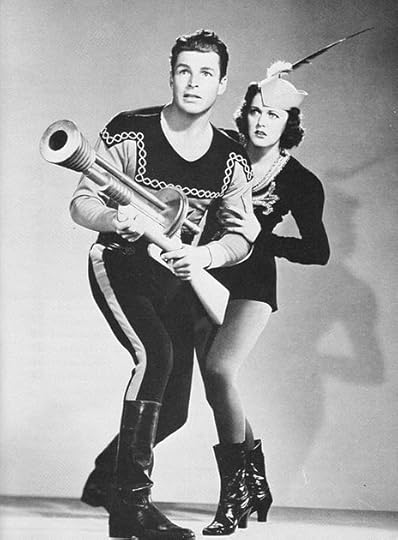
This is Poul Anderson in a lighter mood than my previous book by him (The Broken Sword), showing off a talent for risque word games and sexual innuendo. The closest comparison I can make is to cult movies / comics Barbarella and Flash Gordon .

I could also make some conections to Y: The Last Man , but the modern comic book has a totally different approach, grittier and downbeat, despite its own moments of black humor.
While the book is not explicit and crude in its presentation, there is a LOT of nudity and and what was probably considered provocative in the early 1960's. It could be said the story is the wet dream of every red blooded 14 y.o. boy : to be stranded on a planet full of gorgeous women and he the only well muscled, witty and suave representant of the "strong" sex. Of course, like the wishes granted by genies in bottles, the reality turns out to be a bit different than the dream:
"You know," answered Davis. "this is the kind of thing I used to daydream about in my teens. A world, like Earth but more beautiful, and I the only man among a million women. Well. . . I've found it now and I want out!"
Faster than Light travel is a piece of cake in this story, as are rayguns and giant birds serving as horses. Humanity has conquered the Galaxy and gallant young men in search of adventure hop of on their private spaceship to explore hidden corners of the known space. Davis Bertram (with the unfortunate nickname of Bertie, which has different connotations for me) stumbles upon a planet were three centuries ago a spaceship full of women was stranded and Men are worshipped as absent demigods while the ladies reproduce themselves through a mysterious process that doesn't involve the Y chromosome. He quickly becomes an object of contention with every local community fighting for a piece of him and a powerful elite of priestesses / geneticists trying to eliminate him for endangering their absolute rule. The whole story feels dated, and the ending was a letdown for me, but in the end, it was a good choice for a summer day, read in only one lazy afternoon.

I was going to rate this four stars for the fun quota, but then I reconsidered the way all the women characters are portrayed as either sex dolls or harpies or potential housewives, and got uncomfortable in my laughs. Even Robert Heinlein is more subtle in his chauvinism, but I guess both authors were the products of their times and reflected the dominat position in society at their time. Readers advisory: if Barbarella ticked you off, you might skip Virgin Planet, too.
I was going to make some disparaging remarks about the lack of science in this Science-Fiction novel, but then I read the afterword by Anderson and realized that my favorite parts of the book were the most well researched and well argumented examples of astrophysics regarding the planetary and satellite movements of a complex system involving two suns, a giant gaseous planet and several moons dancing across the skies of planet Atlantis. I was also going to challenge his theory of reproduction through parthenogenesys, but then I checked with wikipedia, and the process is actually observed in several invertebrate species, plus in recent years scientist have conducted experiments with mammals. So, don't dismiss too quickly Anderson's scientific credentials.
I could also make some conections to Y: The Last Man , but the modern comic book has a totally different approach, grittier and downbeat, despite its own moments of black humor.
While the book is not explicit and crude in its presentation, there is a LOT of nudity and and what was probably considered provocative in the early 1960's. It could be said the story is the wet dream of every red blooded 14 y.o. boy : to be stranded on a planet full of gorgeous women and he the only well muscled, witty and suave representant of the "strong" sex. Of course, like the wishes granted by genies in bottles, the reality turns out to be a bit different than the dream:
"You know," answered Davis. "this is the kind of thing I used to daydream about in my teens. A world, like Earth but more beautiful, and I the only man among a million women. Well. . . I've found it now and I want out!"
Faster than Light travel is a piece of cake in this story, as are rayguns and giant birds serving as horses. Humanity has conquered the Galaxy and gallant young men in search of adventure hop of on their private spaceship to explore hidden corners of the known space. Davis Bertram (with the unfortunate nickname of Bertie, which has different connotations for me) stumbles upon a planet were three centuries ago a spaceship full of women was stranded and Men are worshipped as absent demigods while the ladies reproduce themselves through a mysterious process that doesn't involve the Y chromosome. He quickly becomes an object of contention with every local community fighting for a piece of him and a powerful elite of priestesses / geneticists trying to eliminate him for endangering their absolute rule. The whole story feels dated, and the ending was a letdown for me, but in the end, it was a good choice for a summer day, read in only one lazy afternoon.
I was going to rate this four stars for the fun quota, but then I reconsidered the way all the women characters are portrayed as either sex dolls or harpies or potential housewives, and got uncomfortable in my laughs. Even Robert Heinlein is more subtle in his chauvinism, but I guess both authors were the products of their times and reflected the dominat position in society at their time. Readers advisory: if Barbarella ticked you off, you might skip Virgin Planet, too.
I was going to make some disparaging remarks about the lack of science in this Science-Fiction novel, but then I read the afterword by Anderson and realized that my favorite parts of the book were the most well researched and well argumented examples of astrophysics regarding the planetary and satellite movements of a complex system involving two suns, a giant gaseous planet and several moons dancing across the skies of planet Atlantis. I was also going to challenge his theory of reproduction through parthenogenesys, but then I checked with wikipedia, and the process is actually observed in several invertebrate species, plus in recent years scientist have conducted experiments with mammals. So, don't dismiss too quickly Anderson's scientific credentials.

July 16, 2015
Um, well this book is kind of a stinker. I don't want to slam it because it just wasn't my thing. Characters gallivant around the novel saying things like "yipes" and "ulp" and "oof" to the point of distraction. I admit that I went into the novel for some old-fashioned sci-fi pulp entertainment. Who wouldn't with a title like Virgin Planet? Yes, a planet populated entirely by women who worship the idea/memory of "MAN" who will some day return from the skies and lead them into...well that's not really clear. They seem to have gotten along for 300 years just fine.
I think Anderson really missed the boat on this one. Like, what if the stranded traveler from the stars was gay, or a dork like Barney Fife, or an old-timer long past the point of rising to the occasion? It could have been a nifty satire, or a dirty little pulp that embraced its scruffiness. Instead it just went nowhere, Dad. Two stars for the neat-o cover.
I think Anderson really missed the boat on this one. Like, what if the stranded traveler from the stars was gay, or a dork like Barney Fife, or an old-timer long past the point of rising to the occasion? It could have been a nifty satire, or a dirty little pulp that embraced its scruffiness. Instead it just went nowhere, Dad. Two stars for the neat-o cover.

September 9, 2025
2.7⭐
Read this many decades ago, when the idea of being the only male on a planet of women seemed like a good one ( i.e. I was 14 or so).
Still remember some of it. Stranded earthman explorer finds a lost colony exclusively of women who lack advanced technology ( except they're still able to clone themselves).
Earthman soon becomes the centre of a rebellion to overthrow the existing herarchy ( see what I did there). From this point on it's essentially fantasy, a quick moving and occasionally funny one. I wouldn't go out of my way to read it again but I do remember it with fondness.
Read this many decades ago, when the idea of being the only male on a planet of women seemed like a good one ( i.e. I was 14 or so).
Still remember some of it. Stranded earthman explorer finds a lost colony exclusively of women who lack advanced technology ( except they're still able to clone themselves).
Earthman soon becomes the centre of a rebellion to overthrow the existing herarchy ( see what I did there). From this point on it's essentially fantasy, a quick moving and occasionally funny one. I wouldn't go out of my way to read it again but I do remember it with fondness.

December 28, 2012
Don't understand the charges of sexism. Most of the women are strong-willed and doing fine without men. The only part I rolled my eyes at was Elinor's whining just after fleeing Freetoon. The epic battles are awesome. Throw in the unique love triangle and I'm surprised this book isn't more popular.

November 23, 2007
Male fantasy of a spaceman landing on an entire planet of women who have built up a mythology that the men will come for them some day. They war over him and they all want to sleep with him. Hilariously good read, but so puerile.

November 13, 2011
A very light, funny and not serious sci-fi book. The concept is quite interesting, but developed in a hilarious '60 way that is also quite funny.

December 30, 2019
It was a fun read. Very one sided though but what could I expect from a book called Virgin Planet.

January 30, 2011
Virgin Planet (Psychotechnic League book 5)
by Poul Anderson
1979 Grade A
2023 Grade A
Poul Anderson was one of the great SciFi masters who actually used science in his world building but wrote stories about people. In this case the world is populated only by women. Their colonization ship crashed on the planet. The scientists and doctors managed to set up a parthenogenesis process so they could colonize anyway. But with resources and education failing, and the limited source type for cloning, the world developed a cast based feudal tribal system. There were feudal style wars and the "doctors" were the uber lords. Into this lands a survey ship, with one male aboard who promptly gets captured. The women don't know if it is a monster or a man but he represents power- and another war starts!
The world building and character development are excellent. The story is an adventure tale with lots of personality clashes and is just plain fun. The Psychotechnic League is not really visible in the story. In fact, if you didn't already know it was part of the series, it would make no difference at all. I finished the 150 page paperback in 3 days. (There is no erotica if the title is worrying or luring you.)
RECOMMENDED. (Be sure you get the right book. There seems to be spurious listings on Goodreads with the author listed as Xox.)
by Poul Anderson
1979 Grade A
2023 Grade A
Poul Anderson was one of the great SciFi masters who actually used science in his world building but wrote stories about people. In this case the world is populated only by women. Their colonization ship crashed on the planet. The scientists and doctors managed to set up a parthenogenesis process so they could colonize anyway. But with resources and education failing, and the limited source type for cloning, the world developed a cast based feudal tribal system. There were feudal style wars and the "doctors" were the uber lords. Into this lands a survey ship, with one male aboard who promptly gets captured. The women don't know if it is a monster or a man but he represents power- and another war starts!
The world building and character development are excellent. The story is an adventure tale with lots of personality clashes and is just plain fun. The Psychotechnic League is not really visible in the story. In fact, if you didn't already know it was part of the series, it would make no difference at all. I finished the 150 page paperback in 3 days. (There is no erotica if the title is worrying or luring you.)
RECOMMENDED. (Be sure you get the right book. There seems to be spurious listings on Goodreads with the author listed as Xox.)

August 8, 2009
Definitely an intersting concept. A world of women who have only mythical ideas about the thing called "men." Then one arrives.
December 24, 2021
This book popped up at a used bookstore. I bought it, reluctantly, aware that the early version of the Photoshop cover carries a heavy, sexist pedigree.
The TL; dr? An SF idea executed in a sexist, instead of interesting, fashion from a naive time.
Why did I buy it? And then read it? Because I enjoyed many Poul Anderson books as a younger person. I first saw this on the town library shelves perhaps one year past my first decade. I never checked it out. Though the librarians knew me and never would have questioned it, I would not have felt comfortable if Mom saw it. And why is that? Probably because growing up Catholic, sex was taboo to talk about. Which is unhealthy in and of itself.
However, lest I digress too much, let's turn to the book, 40 odd years later.
Major Spoilers Ahead.
Without the significant social overtones, the plot is:
Protagonist finds a planet.
The inhabitants are human and they welcome him. They want something from him.
He doesn't give them what they want.
He conquers all the friendly leaders by charm.
He conquers the ruling class that opposes him by getting allies, using force and getting his blaster back.
He gets back to his ship to return home.
He'll return with friends to help exploit the planet.
It is fully mediocre as an Anderson novella - pure 19th century fiction of the unfinest Robinson Crusoe-had-a-child-with-Horatio Hornblower who beat them both up to become Emperor of the Sol System kind. I will point out this was written in 1959 - it lives up to a low standard in literature yet the author was well regarded as a storyteller in the small SF community so it does have a few redeeming values. I feel a little bad trotting out the sarcasm.
The Appendix is a somewhat interesting part of the volume because it carries Anderson's calculations on the planet, it's moons, the day and night cycles and more. That world itself has a few interesting minor guest star appearances, mostly because of the tides and the times of day. He didn't know enough science to consider how much it would differ from Earth, and how people would be affected biologically, to say little of emotionally or mentally. Yet, there was consideration for what Sir Poul knew.
Now let's look at the native society. In Anderson's words - not in this book - "the autochthons". The ~200 clans of women on the planet have been radicalized by theology - not biology - and cultural assumptions by the author. They are (logically? illogically??) dependent upon machines to reproduce and exist, which is controlled by the Doctor caste. Within this context, the natives form a full, medieval society entirely of women. Said society clings to its technology. But there are no challenges or obstacles on the planet itself that cannot be overcome.
The sole obstacle is a lack of men.
Without them, they'll eventually perish.
And when the Man arrives, he's a hero. He takes charge. And he wins.
At the end, he's in love with two essentially identical women that he can't choose between. So the women roll dice to find out who gets him. We don't even get the result.
I see why this novel languishes.
It does however at least have some good science ideas that the survivors of the crash could find a way to keep alive and expand. The author also plausibly describes the resulting places of the novel.
To be fair to Anderson, he never wrote far out of his comfort zone. The women in the societies of the planet are all manner of humans: warriors, politicians, artists, saviors. However, they pretty much desire "the Man" - consider the forced radicalization of the story - and they basically defer to him except for those natives in power whose position is threatened. It's a wet dream from the world of creative writers in the 1950s and 1960s with a thin veneer of "I'm not a bad guy!" behavior.
I see this as Anderson riffing from one of a notebook full of story ideas when he could have sat down to consider the vast and amazing possibilities . As much as his white knight survey hero feigns politeness, blushes and avoids improprieties, he behaves himself only where others are watching. The protagonist still is the rooster in the barnyard.
The human inhabitants of the planet were programmed for the Return of Man. But. BUT. I refuse to believe that a "man from the stars" who simply has a better gun will win out against a planet. And so it falls short: covert sexist behavior from the hero, and an utterly expected result.
Now at this point, I must confess that as a kid in junior high, and high school, and perhaps even older, I loved the idea of being so skilled and powerful that I could turn entire planets to my will, and avert crises across multiple solar systems. Anderson's Dominic Flandry holds back the fall of a galactic society. His tales are more believable in my aging memory. The author, for his day, was progressive. Anderson told stories that I found good. I may have also lacked a worldly context.
Perspective is fascinating.
The TL; dr? An SF idea executed in a sexist, instead of interesting, fashion from a naive time.
Why did I buy it? And then read it? Because I enjoyed many Poul Anderson books as a younger person. I first saw this on the town library shelves perhaps one year past my first decade. I never checked it out. Though the librarians knew me and never would have questioned it, I would not have felt comfortable if Mom saw it. And why is that? Probably because growing up Catholic, sex was taboo to talk about. Which is unhealthy in and of itself.
However, lest I digress too much, let's turn to the book, 40 odd years later.
Major Spoilers Ahead.
Without the significant social overtones, the plot is:
Protagonist finds a planet.
The inhabitants are human and they welcome him. They want something from him.
He doesn't give them what they want.
He conquers all the friendly leaders by charm.
He conquers the ruling class that opposes him by getting allies, using force and getting his blaster back.
He gets back to his ship to return home.
He'll return with friends to help exploit the planet.
It is fully mediocre as an Anderson novella - pure 19th century fiction of the unfinest Robinson Crusoe-had-a-child-with-Horatio Hornblower who beat them both up to become Emperor of the Sol System kind. I will point out this was written in 1959 - it lives up to a low standard in literature yet the author was well regarded as a storyteller in the small SF community so it does have a few redeeming values. I feel a little bad trotting out the sarcasm.
The Appendix is a somewhat interesting part of the volume because it carries Anderson's calculations on the planet, it's moons, the day and night cycles and more. That world itself has a few interesting minor guest star appearances, mostly because of the tides and the times of day. He didn't know enough science to consider how much it would differ from Earth, and how people would be affected biologically, to say little of emotionally or mentally. Yet, there was consideration for what Sir Poul knew.
Now let's look at the native society. In Anderson's words - not in this book - "the autochthons". The ~200 clans of women on the planet have been radicalized by theology - not biology - and cultural assumptions by the author. They are (logically? illogically??) dependent upon machines to reproduce and exist, which is controlled by the Doctor caste. Within this context, the natives form a full, medieval society entirely of women. Said society clings to its technology. But there are no challenges or obstacles on the planet itself that cannot be overcome.
The sole obstacle is a lack of men.
Without them, they'll eventually perish.
And when the Man arrives, he's a hero. He takes charge. And he wins.
At the end, he's in love with two essentially identical women that he can't choose between. So the women roll dice to find out who gets him. We don't even get the result.
I see why this novel languishes.
It does however at least have some good science ideas that the survivors of the crash could find a way to keep alive and expand. The author also plausibly describes the resulting places of the novel.
To be fair to Anderson, he never wrote far out of his comfort zone. The women in the societies of the planet are all manner of humans: warriors, politicians, artists, saviors. However, they pretty much desire "the Man" - consider the forced radicalization of the story - and they basically defer to him except for those natives in power whose position is threatened. It's a wet dream from the world of creative writers in the 1950s and 1960s with a thin veneer of "I'm not a bad guy!" behavior.
I see this as Anderson riffing from one of a notebook full of story ideas when he could have sat down to consider the vast and amazing possibilities . As much as his white knight survey hero feigns politeness, blushes and avoids improprieties, he behaves himself only where others are watching. The protagonist still is the rooster in the barnyard.
The human inhabitants of the planet were programmed for the Return of Man. But. BUT. I refuse to believe that a "man from the stars" who simply has a better gun will win out against a planet. And so it falls short: covert sexist behavior from the hero, and an utterly expected result.
Now at this point, I must confess that as a kid in junior high, and high school, and perhaps even older, I loved the idea of being so skilled and powerful that I could turn entire planets to my will, and avert crises across multiple solar systems. Anderson's Dominic Flandry holds back the fall of a galactic society. His tales are more believable in my aging memory. The author, for his day, was progressive. Anderson told stories that I found good. I may have also lacked a worldly context.
Perspective is fascinating.
This entire review has been hidden because of spoilers.

December 1, 2023
Poul Anderson put out a flipside version of Day Keene's World Without Women, entitled Virgin Planet (First published January 1, 1959), originally published by Beacon Books, a sleaze publisher, but later a Warner Paperback mainstream science fiction book. In this version of the story, the opposite happens. Davis Bertram, a solo explorer, lands on a planet where a group of women scientists crash landed three hundred years earlier, invented some kind of machine that allows them to reproduce other women, and now there is an entire planet populated only by women who have developed a mythology about the coming of men. Bertram takes advantage of the fantasies and fascination of the warlike women fighting over him. And has to fight his way across the planet with the leaders of the planet hunting him down because they do not want any challenges to their power structure.

March 1, 2026
Interesting premise and the actual writing is generally good, but it veers so far into the "classic" SF sexist tropes that it's only through dint of determination that I bothered to finish it.
There was so much story there to work with, and yet in this book Anderson chooses to drop into the harem fantasy trope so often it's just icky.
The characters are one dimensional for the most part and the story reads more like a "what weird kind of woman-only microsociety who all want to have sex with the only man to visit the planet in 300 years can I come up with next?"
Just don't bother. He's got lots better stories than this one.
There was so much story there to work with, and yet in this book Anderson chooses to drop into the harem fantasy trope so often it's just icky.
The characters are one dimensional for the most part and the story reads more like a "what weird kind of woman-only microsociety who all want to have sex with the only man to visit the planet in 300 years can I come up with next?"
Just don't bother. He's got lots better stories than this one.
Read
October 23, 2025He could see from above that this planet was inhabited. He emerged from the ship - to find himself lassoed and captured by a beautiful redhead mounted on a strange, bird-like creature. That was the first shock; the second was to realise that this world of women looked on him as a monster. For while the women of Atlantis had waited for the coming of the Men, they were certain that this creature who had landed on their planet could not possibly be a man.

December 29, 2019
Turned out to be a lot better than I expected. A fun little adventure. Although many of the women, like the main one, "Barbara" (sometimes "Babs") often fluctuate from being tough Amazon warriors to fawning over of the man Davis Bertram (or "Bert"). Good plot, but not the best execution.

April 1, 2024
3.5
What easily could have been pulpy sleaze was a fun, adventure story that felt like The Left Hand of Darkness mixed with Where Late the Sweet Birds Sang. Obviously, it is a book of its time, but it is an easy read and an interesting escape.
What easily could have been pulpy sleaze was a fun, adventure story that felt like The Left Hand of Darkness mixed with Where Late the Sweet Birds Sang. Obviously, it is a book of its time, but it is an easy read and an interesting escape.
January 19, 2026
I found this in a second hand bookshop and couldn't pass up a novel with a title like that. Very pulp vibe, quite a fun read. I assumed it would be much more of a sexed up male fantasy than it is. It obviously still is one but it's not as ridiculous as I expected.

March 27, 2019
My rating: ★★★

September 26, 2020
Njae, en ide som kanske var en bra idé för 60 år sen. Om man nu väljer att ge ut en SF bok med denna titel, varför en naken kvinnokropp på omslaget.

October 19, 2020
Another book bought in the late 70's, and kept. Anderson has an endnote explaining the star system in which the novel is set. Told in a light tone, in an interesting world.

December 29, 2021
3.5 out of 5

December 11, 2025
‘Now if only those gossipping birds would respect a man's headache ... !’
May 2, 2026
Carl Jung once said, "No tree can reach the heavens, unless roots reach down to hell". Poul's better works really do shine much brighter after exposure to this.

September 21, 2012
QUEL MASCHIO E' MIO!!!!
Negli anni '60 del secolo scorso, Poul Anderson ha dato man forte alla diffusione dell’eroe spaziale bello e fracassone, coraggioso e donnaiolo impenitente (su Dominic Flandry – mitico agente terrestre - generazioni di adolescenti hanno sospirato….).
Ma qui (Vergin Planet, 1959) è impareggiabile, almeno nella scelta della trama, che sembra fatta apposta per confermare una sua (evidente) profonda convinzione: le donne senza l’uomo non solo non vivono bene, ma diventano terribilmente cattive.
Freetoon è un pianeta popolato da sole donne, che hanno imparato a riprodursi per partogenesi e a cui le anziane hanno sempre tenuto segreto l’esistenza di esseri umani “diversi”. Il risultato è che il pianeta si è suddiviso in tanti piccoli regni, ciascuno diverso dall’altro, ma abitato da tante identiche famiglie di cloni femminili, sempre in guerra tra loro.
E poi arriva lui, con la sua astronave dallo spazio: il MASCHIO. Non solo. L’unico esemplare che si propone agli occhi di queste poveracce (a cui, questo punto, sarebbe andato bene di tutto….) è pure grandioso per i comuni standard galattici: biondo, occhi azzurri, sorriso spiazzante e malandrino, le chiama tutte “piccola” e le fa sentire principesse.
Si scatena l’ineluttabile. Mentre le anziane lo braccano, cercando di far fuori il fastidioso invasore, tutte le altre, ferocissime, lo braccano e basta. E il povero MASCHIO, improvvisamente, dall’iniziale euforia comincia a sentirsi lievemente accerchiato……
Anderson prende in giro e rimane un impunito. Lo stile è certamente datato, ma lo spirito di questo “romanzetto” di fantascienza è fresco e intatto.
Avvertenza: siccome non viene ristampato da parecchio, se volete provare a sorridere un po’, lo dovete cercare in biblioteca o ai mercatini dell’antiquariato.
Negli anni '60 del secolo scorso, Poul Anderson ha dato man forte alla diffusione dell’eroe spaziale bello e fracassone, coraggioso e donnaiolo impenitente (su Dominic Flandry – mitico agente terrestre - generazioni di adolescenti hanno sospirato….).
Ma qui (Vergin Planet, 1959) è impareggiabile, almeno nella scelta della trama, che sembra fatta apposta per confermare una sua (evidente) profonda convinzione: le donne senza l’uomo non solo non vivono bene, ma diventano terribilmente cattive.
Freetoon è un pianeta popolato da sole donne, che hanno imparato a riprodursi per partogenesi e a cui le anziane hanno sempre tenuto segreto l’esistenza di esseri umani “diversi”. Il risultato è che il pianeta si è suddiviso in tanti piccoli regni, ciascuno diverso dall’altro, ma abitato da tante identiche famiglie di cloni femminili, sempre in guerra tra loro.
E poi arriva lui, con la sua astronave dallo spazio: il MASCHIO. Non solo. L’unico esemplare che si propone agli occhi di queste poveracce (a cui, questo punto, sarebbe andato bene di tutto….) è pure grandioso per i comuni standard galattici: biondo, occhi azzurri, sorriso spiazzante e malandrino, le chiama tutte “piccola” e le fa sentire principesse.
Si scatena l’ineluttabile. Mentre le anziane lo braccano, cercando di far fuori il fastidioso invasore, tutte le altre, ferocissime, lo braccano e basta. E il povero MASCHIO, improvvisamente, dall’iniziale euforia comincia a sentirsi lievemente accerchiato……
Anderson prende in giro e rimane un impunito. Lo stile è certamente datato, ma lo spirito di questo “romanzetto” di fantascienza è fresco e intatto.
Avvertenza: siccome non viene ristampato da parecchio, se volete provare a sorridere un po’, lo dovete cercare in biblioteca o ai mercatini dell’antiquariato.

January 13, 2017
This sf novel is not as impressive as it's author thinks it is. He himself describes it as a very serious sf novel hardly based in science. But, no matter how many calculations it is based upon, it is without a doubt a pulp fiction. The premise itself is very interesting - a single man trapped on a planet filled with females - but author makes minimal effect out of it, and by that I don't mean it lacks banging. No. It lacks originality, fleshiness, believeable dialogues, character development, suspense, and overal, it lacks impressive storytelling. It is not a desaster, it is just ok. Best to read once and forget about it.
January 13, 2011
If you can swallow the 60's chauvinism, it's a pretty quick and fun read.

December 25, 2012
hurr hurr

January 13, 2015
Amusing, about what you'd expect from a male writer in 1960. Joanna Russ wrote a story that turned out very differently.

September 28, 2016
book less exciting than concept of planet of the women, simple action tale

November 13, 2007
Dream on, soldier on a planet full of strong warrior women, what's not to like.
Displaying 1 - 30 of 32 reviews