Las fuentes del afecto. Cuentos dublineses es una obra formada en realidad por tres ciclos de relatos, todos con la ciudad de Dublín como escenario: los primeros, con tintes autobiográficos, están narrados y protagonizados por una niña llamada Maeve; los siguientes se centran en la vida de dos matrimonios (los Derdon y los Bagot) y se vuelven mucho más implacables, lacerantes y claustrofóbicos, al mostrar poco a poco el declive, la soledad, el desamparo y el desencanto de unas existencias que, a través de los años, se apagan irremediablemente en la incomunicación y el vacío. La sublime nouvelle que cierra la colección y da título al libro está considerada por Alice Munro y William Maxwell una de las mejores narraciones de la literatura en lengua inglesa del siglo XX. La belleza de estas páginas inolvidables duele, es un apocalipsis a fuego lento y debería suponer la reivindicación definitiva de Maeve Brennan como autora.
Maeve Brennan (January 6, 1917-1993) was an Irish short story writer and journalist. She moved to the United States in 1934 when her father was appointed to the Irish Legation in Washington. She was an important figure in both Irish diaspora writing and in Irish writing itself. Collections of her articles, short stories, and a novella have been published.
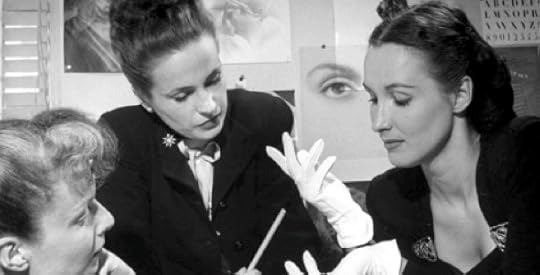
Maeve Brennan il 1 gennaio del 1945 esamina un paio di guanti.
The Springs of Affection è una raccolta di racconti che uscì postuma, Maeve Brennan era morta da cinque anni. Questa edizione BUR sembra esserne la traduzione italiana, pur se lascia per strada la maggior parte dei racconti: mancano i racconti iniziali dedicati all’infanzia di Rose; dei sei che raccontano il matrimonio di Rose e Hubert qui ne arrivano solo tre, e gli otto che si concentrano su Delia e Martin scendono ugualmente a tre nell’edizione italiana.
Il titolo originale, e anche quello del racconto più lungo, parla di ‘affection’, che è amore in senso ampio, è anche affetto, anche amicizia: sicuramente include l’affetto tra fratelli, l’amore familiare, non solo quello di coppia come invece il titolo italiano e la selezione dei racconti lascerebbe pensare.
Infatti, nel racconto più lungo, quello finale, intitolato proprio The springs of affection, la vera protagonista è Min, l’anziana sorella gemella di Martin, unica sopravvissuta alla sua famiglia di origine e a quella che Martin ha costruito con Rose (ma dove sono finite le figlie di Martin e Rose, così presenti nel racconto Storie africane? Una strana dimenticanza da parte di Brennan).
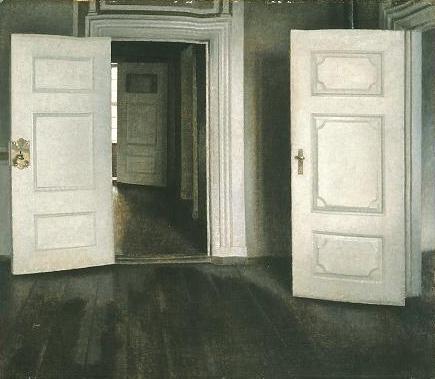
Vilhelm Hammershøi (Copenhagen 1864-1916), pittore del silenzio.
Min è un personaggio indimenticabile, una che si chiede perché i suoi fratelli, cominciando da Martin e proseguendo con le due sorelle minori, si siano sposati invece di restare con la famiglia nella quale sono nati e cresciuti (…stare insieme come una famiglia, allora, come ci era stato insegnato? A un tratto erano diventati molto egoisti e la casa pareva così vuota, come se Martin fosse morto. Dopo il matrimonio non era più tornato, se non in visita. Abitavano solo dietro l’angolo, ma non era più la stessa cosa, visto che non dormiva più nel suo letto.) Il fatto che sia l’ultima superstite e possa vivere ancora per godersi i mobili e gli oggetti che appartengono alla storia matrimoniale di suo fratello Martin e sua moglie Rose, ha l’acuto sapore della vendetta.
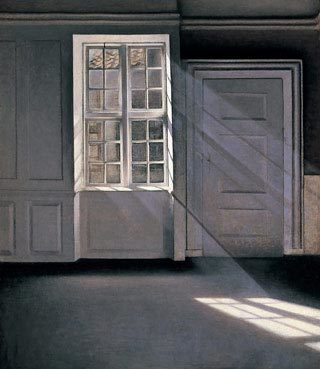
Vilhelm Hammershøi: Darkened Rooms of Summer.
Personalmente ho apprezzato di più i racconti dove è la coppia a essere protagonista, quelli dove sotto la lente di ingrandimento c’è l’amore tra una donna e un uomo, e il modo in cui si trasforma col tempo e con le circostanze, l’evoluzione di un matrimonio. Storie da un matrimonio.
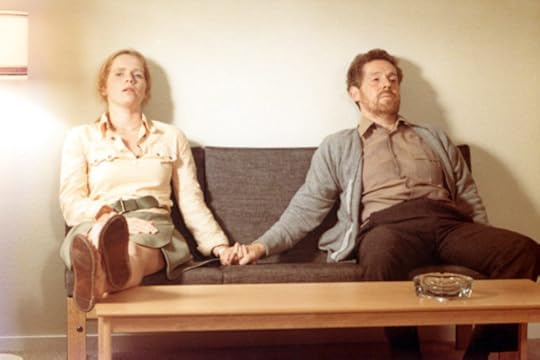
Liv Ullmann e Erland Josephson in “Scene da un matrimonio” di Ingmar Bergman, 1973.
Maeve Brennan è bravissima a trasformare momenti qualsiasi in passaggi ad alta tensione drammatica nei quali gli aspetti irrisolti, le disfunzioni di un matrimonio esplodono: per esempio, Hubert, rientra in casa e intravede sua moglie Rose chiudere la porta della cucina, e immediatamente capisce che ci sono barriere che vengono erette contro di lui sia in senso letterale che figurato. D’altronde, Hubert …si era innamorato di Rose proprio per le qualità che non possedeva affatto. Da lontano l’aveva vista brillare, ma da vicino quel luccichio si era spento.
Brennan è bravissima a descrivere quella fase dei matrimoni quando passano da open space a camere separate, quando la condivisione si trasforma in porte chiuse: chiuse da una semplice maniglia - ma la sensazione predominante è che invece ci siano giri di chiave e lucchetti e catene, quello che è chiuso non si apre più, sarebbe facile, basterebbe un gesto, una mano che si posa sulla maniglia e spinge, una parola o uno sguardo diretto, e invece gli occhi rimangono obliqui o abbassati, le bocche chiuse, cucite, secche, e le mani lontano.
Brennan dedica molta cura a descrivere gli interni irlandesi: sono case piene di piccole stanze, di tante porte, di angoli e spigoli e oggetti che bloccano e separano, che rischiano di rompersi tutte le volte, dove l’amore non ha spazio e terreno aperto, ma solo limiti e confini.
Brennan sembra più interessata a come finisce un sentimento piuttosto che a come nasce, più all’autunno e all’inverno dell’amore che alla primavera, più alla deriva che alla sorgente.
Tindar: Trittico religioni su pagine di Bibbia, Corano e Torah, 2016
I first read The Springs of Affection in 2001 (21 short stories) and gave it an A+ (my rating system back then). At some point in time after I read it, I liked it so much that I went searching for the 2 books that had been long out of print but from whence the stories in this collection came – “In and Out of Never-Never Land, 22 Stories (1969, Charles Scribner’s Sons, 1969…only 2 ratings and 1 review on GR!) and “Christmas Eve, 13 stories by Maeve Brennan” (1974, Charles Scribner’s Sons…39 ratings and 4 reviews on GR). I must say that the stories pulled out of those books and placed in The Springs of Affection were the best of the lot, although there was another one that was not put in this book that was dark and depressing, but very well written called “The Rose Garden.” It actually was the title piece of another short story collection of hers published by Counterpoint in 2001 after her death which included all the stories from “In and Out of Never-Never Land, 22 Stories” and “Christmas Eve, 13 stories by Maeve Brennan” that did not make it into this collection.
If I had to compare Maeve Brennan to another person’s style of writing I would say William Trevor, one of Ireland’s great short story writers. The majority of his stories were at least to me not “feel good” stories. They were glum, sometimes dark…but excellent in every way, shape and form. And I would say as a whole, the stories in this collection will not put one in a cheery mood, but the writing is extremely good.
The stories are all set in Ranelagh, a residential area and urban village on the south side of Dublin. A number of the stories involve the married couple, Rose and Hubert Derdon. I think if I was to describe the two, I would be giving away spoilers, because the short stories involve small incidents in their lives, that speak to their personalities…so get to know them through the stories. I will say they are unhappy 95% of the time. Well, this gives you an idea…This is Hubert talking to Rose: “…He (JimZ: “he” is their son who became a priest) was sick of you and I’m sick of you, sick of your long face and your moans and sighs-I wish you’d get out of the room, I wish you’d go, go on, go away. I don’t want any tea. All I want is to not have to look at you anymore this evening. Will you go?” Too late for a marriage counselor!!!!
A number of other stories are about another married couple, Delia and Martin Bagot. There was also some unhappiness in their marriage although there seemed to be more love between them than with the Huberts. That becomes apparent in the last story in the collection when Delia is dead, and Martin’s twin sister Min comes to take care of him in his old age. Wow, what a story. One learns of Min’s life from when she was a girl growing up to the present time. She does not come across as a god person but through delving into her life it makes me understand her much better than had I not known about her childhood. So rather than despise her I guess I pity her. There is another story in the collection, The Eldest Child, that is heart-wrenching, raw, and visceral…it was just incredibly good.
The first set of stories are about a girl, Maeve, growing up in the same Irish neighborhood as the Derdons and Bagots, and several of them are not as not as glum as the other stories.
Stories that I rated as 5 stars: A Free Choice, The Drowned Man, The Carpet with the Big Roses on It, The Eldest Child, Stories of Africa, Christmas Eve, and the Springs of Affection.
There is a wonderful Introduction by William Maxwell who knew Maeve Brennan because they both worked at The New Yorker, he as fiction editor and she as one who wrote a column, The Talk of the Town. They were friends. In the inner back cover of the dust jacket it is stated that she ceased writing in 1973, one year before “Christmas Eve” was published. William Maxwell gives a biography of her life (she had some troubled times), describes his interactions with her, and introduces the two wedded couples that make up the bulk of the stories as well as the title piece of the collection. On the back cover were comments of praise for the short story collection by 3 esteemed writers, Edna O’Brien, Alice Munro, and Mavis Gallant.
Why am I talking about a book I read in 2001? I gave away my copy of Springs of Affection several years ago because I was in a mood to reduce my library (I know, anathema, right?). But several months ago I was on the Goodreads site and I was asking around for short stories that were separate from each other (could be read as a singular unit), but connected with others in the same collection – I don’t think that style of writing short story collections grows on trees but I really like such a style. One example is “Revenge” by Yoko Ogawa. Another is “Winesburg, Ohio” by Sherwood Anderson. And a GR friend mentioned “Springs of Affection” as another example. So I wanted to re-read it again, and ordered the book recently.
Per questa lettura sono in debito con le recensioni di @Orsodimondo e di @Piperitapitta. In genere leggo racconti nei ritagli di tempo, per evitare di dover interrompere la lettura di un romanzo sul più bello. In questo caso mi sono ritrovata a prolungare la pausa libro e a tagliare il resto. A tenermi incollata alle pagine l’atmosfera a tratti claustrofobica dei racconti della Brennan, grande scrittrice di interni: quelli delle case in cui ambienta le sue storie e quelli della mente di chi li abita. Il mondo esterno esiste solo di sfuggita, intravisto dai giardini curati in modo quasi maniacale, i cui fiori sembrano simboleggiare i colori e i toni che ci si aspettava dalla vita e che la vita ha negato. L’attenzione è focalizzata su due coppie, Rose e Hubert nei primi tre racconti, Delia e Martin negli ultimi tre. Tutto ruota intorno alle stanze, ai silenzi che le riempiono come la luce nelle giornate di sole. Poche parole, ripetute automaticamente nei riti quotidiani inevitabili in cui le si incontrano, incapaci di parlarsi e di comprendersi. Per il resto, scambi di sguardi ben diversi da quelli del giorno del matrimonio. Gli occhi di Rose e di Delia sono verdi, melmosi, hanno perso la limpidezza dei primi incontri, spenta dalla quotidianità di madri di famiglia, sottomesse e timorose. Questa incomunicabilità senza remissione trova il culmine della sua espressione nello splendido “L’annegato” in cui, morta Rose, Hubert, che non riesce a piangerla, cerca tracce della sua esistenza e motivi per sentirne la mancanza nella stanza che era stata della moglie, davanti alla quale era passato per tanti anni senza mai entrarvi. E ancora in “Il dodicesimo anniversario di matrimonio”, in cui un vaso di fiori sulla scrivania scatena in Martin l’ennesima, silenziosa crisi di insofferenza nei confronti di Delia. Lucidi e spietati, sono racconti che si leggono tutti d’un fiato, per poi correre fuori in cerca d’aria.
Che meraviglia! Ho letto solo il primo racconto ed è stato come una scossa elettrica, come innamorarsi la prima volta.
-------------------
Raggelanti, così sono definiti in quarta di copertina i racconti di Maeve Brennan e secondo me non c'è aggettivo migliore per descriverli. Solo il primo racconto, quello che mi ha folgorata - ma anche gli altri sono tutti di altissimo livello - lascia intravedere un tiepido raggio di sole, uno di quei raggi che scalda più alla sola vista che non nella realtà. Le storie di Maeve Brennan sono storie di coppie, due in questi sei racconti ambientati, come spesso nei suoi scritti, in Irlanda: Rose e Hubert Derdon e Delia e Martin Baggot. Li incontriamo in varie fasi della loro vita, in momenti differenti del loro rapporto e in età differenti: all'inizio della loro storia, con i figli già grandi, alla morte di uno di loro, ma non c'è mai, mai, se non ancora una volta nel primo racconto, uno scambio diretto tra loro; le loro storie sono sempre storie di grandi solitudini, di attese vissute nella speranza di un gesto che non arriva mai, di insofferenza e di insoddisfazione, di ricerca di una parola che potrebbe dare un nuovo corso alle loro vite. Nel primo racconto Rose e Hubert ci fanno sperare in un futuro luminoso, nonostante la loro sia una storia segnata sin dall'inizio dal dramma dell'incomunicabilità, incomunicabilità che è presente in tutti i racconti e che mina sia il rapporto tra Rose e Hubert che quello tra Delia e Martin; incomunicabilità di cui è vittima anche Min, gemella di Martin, che è l'io narrante del racconto che dà il titolo alla raccolta, quello forse più sconvolgente per la sua lucida e umana follia. Ci fanno sperare in un futuro luminoso dicevo, e dall'esterno forse, per chi li avrà osservati o conosciuti, lo sarà stato: una vita insieme, la loro, così come quella dei Baggot. Maeve Brennan però non ci descrive le loro storie esteriori, ma quelle vissute dall'interno da ciascuno di loro, e dà voce ai pensieri più nascosti e alle delusioni più forti, narrandoci di attese e speranze che non finiscono mai, di giardini e case che con i loro colori e con i loro profumi sembrano essere anch'essi persone vive, di tende azzurre che racchiudono, con la loro storia, una vita intera. La sua scrittura è limpida, cristallina, tagliente, perché descrive senza indugiare su particolari inutili, ma allo stesso tempo capace, con pochi tratti, di restituire al lettore una realtà ben precisa in cui immergersi, e di trasportarlo in ambienti, atmosfere e situazioni talmente vive, di analisi talmente spietate, da lasciare alla fine spossati per l'intensità e la vividezza delle storie. Quello che stupisce, leggendo la biografia della Brennan, nata a Dublino e cresciuta da quando aveva l'età di sedici anni a New York dove il padre fu primo ambasciatore irlandese e dove poi visse fino alla morte, è la sua capacità di ricreare alla perfezione situazioni e ambienti di luoghi nei quali lei stessa aveva vissuto solo per una breve parte della sua vita. Mi viene da chiedermi se sia mai tornata in Irlanda anche se solamente in viaggio e se la sua scelta di ambientare sempre nel suo paese d'origine le sue storie non fosse in fondo un modo per continuare ad abitare quelle stesse case, quelle stesse vie, quelle stesse città. In fondo, come mi è capitato di leggere di recente, la propria casa, anche quando non c'è materialmente più, resta per sempre un luogo dell'anima al quale ricorrere e nel quale ricercare conforto e sicurezza. Devo ringraziare @SFranz per aver parlato di Maeve Brennan nel gruppo dedicato a Irène Némirovsky ( e per me qualsiasi autore venga accostato a Irène Némirovsky, per qualsiasi motivo, è sempre un autore che devo leggere :-))) e, ancora una volta, @míol mór per la sua splendida recensione che non ha fatto altro che convincermi, una volta di più, che dovevo leggere Maeve Brennan. Così come scrissi quando mi capitò di leggere Willa Cather (chissà se si conobbero mai in quei pochi anni in cui entrambe vivevano a New York!) è una consolazione, per me, sapere che nel panorama letterario mondiale c'è ancora così tanto da scoprire e da leggere.
While reading this, I kept encountering Maeve Brennan in other people’s stories. She came up as one of Phillip Larkins’ lovers, while he was in a long-term relationship with Monica Jones. But it sounds like gossip, so I take no further interest. It feels like it will diminish my reading experience. Though it does tell me Brennan was deeply part of mid 20thC literary life. Yet she doesn’t seem widely read now. She’s too good to forget, though. And I have a soft spot for writers who fall away. She was "The Long-Winded Lady" in The New Yorker for some time. Success did come to her.
The collection is grouped into the following three families – the early shorter works, revolve around the life and perceptions of a young girl living in suburban Dublin. The second, longer stories are about Rose, her family, husband, absent father. The third, also longer about Mrs Bagot, her family, husband, children. All suburban Dublin, probably the same street. But each story tells itself as though it has no connection to the one before. They exist on their own, yet form a whole. Perhaps life stages are like that, there are plenty of those here. We suddenly become a different person, same reference points, new story, like the past, but not exactly so.
I tried to describe these stories to someone and ended up using the author’s biography to explain them. I shouldn’t but it fits. They are exceptional despite the author’s biography, just a little more poignant, that’s all. Brennan moved to the USA with her family aged seventeen. Her father, a militant republican was always chased by the authorities, he was always absent either in hiding or prison. The absent father theme recurs. As does the life left behind. Most of the stories are like the recreation of the life the author might have lived if she had stayed. Perhaps exiles, immigrants are always bound to repeat the same stories about an imaginative territory.
The word 'appetite' embarrassed him, and the knowledge he had of her appetite, which was so much greater than his own, made her mysterious to him, but not in a way that aroused his interest or affection.
There’s a wonderful metaphor of the disorienting effect of time in Rose’s life. Her father died two days before her tenth birthday. The effect of this never leaves her, forty-three years on she relives it, it is as powerful as the first time, that her birthday is always wound around the death of her father. None of these stories are mawkish. They are deeply modern in styling, spare in telling, rich in narrative and language effects.
But it was no the loss of the present or the loss of the birthday, or even the loss of her father that afflicted Rose so much as the knowledge, which she alone possessed, of that lost fragment of time between the moment of his death and the moment that marked her birth. A big piece of time had been broken off and it had gone down, and maybe it had taken others besides him with it, but if it had, she did not know of them. The terrible thing was that no one besides herself seemed to notice that a piece of time, a fragment, had been shattered off their lives, and that nothing had happened during that time – no minutes or hours or anything like that.
Maeve Brennan’s writing is often a kind of third person stream of consciousness. It loops around, repeating, revisiting the exact locations or subjects - a room, floor lino, the window, the back room half way up the staircase, the laburnum tree. Places fill with the intensity of how we experience what we know – we fixate on things. The writing is wonderfully mesmerising at times as you’d expect. The narrator is never distant, but voices an intimacy.
Maeve’s life ended badly. That is worth reading up about, too. Reading about her later life makes for a destabilising after effect.
Sono buoni questi sei racconti, Maeve Brennan è brava. Il fatto è che io non ne posso più delle solite storie: mariti e mogli prigionieri di matrimoni tristi, senza amore, che si trascinano per abitudine, per convenzioni sociali… sono stufa di amori che nascono e appassiscono nel breve spazio di una giornata, di solitudini, di ipocrisie… Maeve Brennan è brava, sì, però io cercavo il nuovo, l'imprevisto, ma non è qui, purtroppo non l’ho trovato. Datemi un lieto fine! Ne ho incontrati di più nella vita che in letteratura.
To an extent, these often grindingly brilliant, merciless snapshots -- and many are like photos, peered at for hours in futile hope that they might give up their secrets -- resemble Richard Yates' mesmerically miserable stories. Here, marooned people try to make the most of their suffocation, and try and figure out what's happened to them, and look to everything in their midst for answers. Not just people but items in the rooms in which they dwell, and also those rooms, which only become more mysterious as time passes. These are people so vulnerable, so blighted with restless antennae that anything--how a dog passes them, the interpretation of a glance, how someone closes a door--can make an enormous difference, and anything can possess the power to transform. A sofa 'can make all the difference'. As can a rug, a plate, how the light sparkles on a brass rod. And despite the maddening oppression that exemplifies the best of these stories, Katherine Mansfield often came to mind. Whereas, with Mansfield, how the light fills a room can rescue a volatile mind and confer upon all else a form of compensatory majesty, that same light can also offer respite to Maeve Brennan's characters, but they never trust it, never feel they deserve it, and eventually turn to some darker matter.
As the omniscient narrator of 'The Eldest Child' states on Mrs Bagot's behalf, long after her baby son has died:
'They behaved as though what had happened was finished, as though some ordinary event had taken place and come to an end in a natural way. There had not been an ordinary event, and it had not come to an end.'
In Maeve Brennan stories there are no ordinary events, and everything is perpetual.
I wanted so much to dislike this book--I already had an inborn prejudice: I have disliked (closer to hated) being Irish American. The threads of my discontent are all woven within Ms Brennan's stories: the rural small mindedness (even tho the poverty and famine of Ireland had been left behind a century ago); the fearful expectations for life; the dusty, empty expanse of life and living; the poverty of emotion; even the holding onto the sticks of furniture for a lifetime, and the revery in the sparkling cut crystal of Waterford that I came to hate.
Despite the dullness and desperation of the feeling content of her subjects, Ms Brennan's brilliant writing brought the characters to life in a way that I could be fully engaged and compassionate, allowing me to reenter my own story with a sense of connected history, a confirmation that my intuitive understanding of my past was true despite the rejection of this perspective by my whole extended family--there it is: my emotional story in Maeve Brennan's writings! I so wanted to hate her characters, but I was captured into their world, into their rooms, vividly seeing both the superficial and the deep, living the expanse of their life, taking their last breath with them, and I was truly grateful to be there.
Not the kind of writing that everyone is going to want to read, but it is a beautifully written book for someone who likes a cogent, compassionate exploration of a complex culture and its' emotional consequences.
I am very much a latecomer to the Irish short-story writer and journalist, Maeve Brennan, only having read The Springs of Affection, a brilliant collection of her Dublin stories from the early 1950s to the early ‘70s. Virtually all of these twenty-one stories were first published by The New Yorker magazine where Brennan worked as a columnist and reviewer.
While I enjoy reading short stories, I often find them difficult to discuss, particularly if there are no apparent connections or common themes across the individual pieces. However, in this case, the situation is somewhat different as almost all of these stories are linked by virtue of their setting, a modest terraced house in the Ranelagh suburb of Dublin – a house featuring the same walled garden with a laburnum tree, the same three steps down to the kitchen, and the same linoleum on the bedroom floor. Moreover, the stories have been collated by theme rather than order of publication, an approach which adds depth to the reader’s understanding of the characters as they move from one story to another.
This has been on my shelves for almost twenty years and I read in a blur this week-- beautiful prose and insight into domestic life and human nature. Brennan excels at describing the internal workings of an individual mind as well as the way people relate to each other. So Irish and so universal at once. Brought to mind the stories of Edward P. Jones and the Mr Bridge/Mrs Bridge novels as well as the more obvious connections to Irish writers like Joyce, Trevor and more recent writers like Danielle McLaughlin.
Molte delicate e incisive queste storie, la prima serie autobiografica fino circa dodici anni, le ultime due incentrate sul rapporto di coppia. L'autrice è a suo agio nella delineazione dei caratteri femminili che rende in tutte le sfaccettature possibili in un'ambientazione prevalentemente domestica e familiare nell'Irlanda degli anni sessanta. Non si va oltre questo contesto - a parte The Springs of Affection - che dà il nome alla raccolta, che spazia anche nella descrizione della natura non più confinata tra i muri di un giardino (come del resto la vita delle protagoniste) e che prende le distanze dalle meschinità quotidiane e dalle aspettative deluse. "... Mrs. Knox, a small, red-faced, gray-haired woman who enjoyed the illusion that life had nothing to teach her."
Mellon Collie and the Infinite Sadness Ultimamente, oltre alle innumerevoli pile di libri da leggere, ho accumulato delle più che discrete torri di letture da commentare. Pigrizia o desiderio di lasciar sedimentare le impressioni? Per quanto poco utile, è una scusa per riprendere in mano alcune opere, sfogliarle di nuovo e verificare cosa sia rapidamente svanito, e cosa si sia invece impresso nella memoria.
Commenti gradevolissimi e arguti riguardo a questa raccolta (parziale) di racconti di Maeve Brennan non mancano certo: leggeteli. I racconti, intendo. Poi anche i commenti.
Riprendendo in mano il volume (la biblioteca mi punirà per averlo preso in ostaggio per tanto tempo, temo), vengo nuovamente colpito - debolezza umana maschile - dalla stupendevolezza dell'Autrice nella foto di copertina. Argomento poco letterario, invero, ma tant'è.
Ammirata la copertina, ammetto, ho anche riletto alcuni passaggi. Mi capita, talvolta, coi libri: leggerli. In ogni caso, ritorno alla nascita tormentata della relazione tra Rose e Hubert, Una scelta libera: torno a immergermi nell'insicurezza della ragazza, nella sua sensazione di sentirsi fuori posto, nei suoi dubbi. Come se non ne fossi mai uscito.
Avrebbe preferito essere senza speranze, e sapere di non avere alcuna possibilità, piuttosto che dover lottare con la piccola speranza che le restava, e di cui si vergognava, perché era così piccola e timida. Sentiva che Hubert sapeva di quella speranza - piccola e timida - e che la cosa lo divertiva, stava giocando con lei, sperava che si sarebbe tradita e poi, per qualche ragione sconosciuta a tutti, avrebbe riso di lei.
E, naturalmente, nelle corrispondenti insicurezze, paure, timori di lui. Così è. Sarei già soddisfatto di questo primo racconto. Ne seguono altri, che mostrano la non idilliaca prosecuzione della storia di Rose e Hubert, le gioie del matrimonio che non reggono il peso delle promesse e delle premesse. Essere soli quando si è in due, essere più soli perché si è in due. Il perfetto matrimonio infelice. Classico, eppure dannatamente efficace e spietato.
Tre sono i racconti dedicati alla coppia. Altrettanti sono dedicati a un altro grumo di infelicità, solitudini e tristezze che prende il nome di famiglia Bagot: l'ultimo, che da il titolo alla raccolta, ci regala uno splendido esempio di Schadenfreude in salsa irlandese, con un'indimenticabile protagonista - Min, gemella del defunto signor Bagot. Con lei compare, rinfrescante in mezzo a tanta tristezza, una sana ventata di ironia. Da leggere, davvero.
Della copertina ho detto, ai racconti ho accennato in modo altamente generico e incomprensibile, cosa manca? La colonna sonora... come non collegare questi racconti a quell'opera monumentale del genio di Billy Corgan? Per la loneliness bisognerebbe ricorrere senza fallo a Zero. Ma, a modo di ricordo del primo racconto citato, opto per Tonight, Tonight, perché, talvolta, l'impossibile sembra possibile (dopo essere sembrato impossibile, e prima di diventare indesiderabile). E c'era D'arcy al basso https://youtu.be/NOG3eus4ZSo
I think I prefer short story collections over any other type of reading. Stories are sneered at while novels are elevated. But a short story requires focus and clarity. This collection by the late Irish writer Maeve Brennan is masterful. One aspect I really enjoyed was that the stories all take place in the same house. The first few stories are actually memoir, providing small snippets of her childhood. The next several stories are about a middle-aged couple whose only son has become a priest; sometimes, the story looks back on their courtship or early marriage, and sometimes, it is locked in the present, but each provides a central emotional crisis that seems to show one of the spouses as blameable, only to switch perspectives, and show that instead, they are incapable of either opening themselves to one another or of seeing one another for who they are. Occasionally, there is a moment of grace and redemption; occasionally, there is a moment of willing oneself forward on the slimmest line of hope for the future. The next set of stories is also about the lives of a couple, in this case a couple who lost their first infant son and who have two young daughters. Again, the disconnection between the married couple is important, but there are many moments of grace. Most of all, there is beautiful, simple writing, descriptions of a room that are so remarkably simple as to be as elegant as a perfect still-life by an old master. Brennan writes quietly. She shares a slice of post-war Ireland culture that would not be particularly interesting in other hands. I loved the introduction of this book that told of Brennan at The New Yorker, and her subsequent mental difficulties. They are certainly not on display here.
"You will forget. Life is like that. Everything goes in time. Memories blur, pain diminishes."
I felt such nauseating sadness during and after reading The Springs of Affection. Perhaps it's because Maeve Brennan's life or more precisely her death haunts the pages of this book. Towards the end of her life, she was wandering from place to place, eventually ending up homeless and with psychological issues, dying in 1993 while largely forgotten. This book seems to hold the essence of that loss or absence. Absence of hope among characters suffocating within closed spaces though they seem to be performing their duties and playing their roles. Absence of emotional resilience as the characters' vulnerabilities seep through the pages. Absence of a future because they are stuck both in their pasts and their present. Also, absence of real meaning in mundane lives. Despite this sense of death, both real and metaphorical, that permeates the pages, there is also so much compassion and understanding in the way Brennan writes her characters. And yes, moments of such evocative yet fleeting beauty. Moments where the characters can see with such hopeful clarity, again fleeting but present. Think Richard Yates, William Trevor, William Maxwell, maybe some bit of Alice Munro.
Maeve Brennan has been rediscovered as one of Ireland's great literary authors, thanks to the relaunching of this collection of short stories. The stories are Beautifully written observations initially on her own early life in Dublin suburbia and then on the lives of two other families. On the surface all seems well, but underneath simmers deep discontent and tension between spouses and extended family. I found myself astonished at the level of disconnect between the partners, most especially because of the skill of the author in revealing it, peeling back layer upon layer of years of frustration and tolerance. The reader wonders if the tension between them might come to a head and end in confrontation, yet it does not. The final story which bears the title of the book is almost shocking in its honesty. I loved this book which in spite of the unhappy lives revealed in it was something of a page turner. I am delighted to have discovered Maeve Brennan and will definitely seek out further titles. She deserves to be better known.
If you go by the blurb, this collection of short stories sounds like one of the most boring things to ever exist. Which is why it's such a good thing that I am hear to tell you to ignore the blurb.
I am not usually one for stories that rely solely on emotion with very little point, but this collection pulled me in and made me care. Even the characters that I didn't like got to me and made me feel sympathy for them. Brennan explores human emotions and motivations with a style and a delicacy that is both fascinating and astounding to read.
I notice that I tend to end reviews with some sort of "if you like [fill in a kind of literature here] then give this book a shot." I'm going to do that here too, and I'm going to make it as simple as possible: if you like brilliantly written books, go read this one.
Amazing short stories. While some may start out mundane, they can get profound by the blink of an eye, and the language Brennan uses is sometimes breathtaking; sentences to savour.
What a devastating, sombre, and thoughtful book. From one line to the next the mood can change - so you think you’ve made things up, but she’s just pulling you along through all the intricacies of her characters and stories.
Usually I find it hard to review short story collections, which are often disjointed assemblies of unrelated stories, with no overlapping characters or settings or even themes. But The Springs of Affection in an exception, as editor William Maxwell has collected stories from throughout Maeve Brennan's career which are all set in Dublin. And the stories fit into three neat groups: the first is autobiographical pieces based on Brennan's youth; the second involves the married couple Rose and Hubert Derdon; and the third involves the married couple Delia and Martin Bagot.
The autobiographical stories are amusing but fairly inconsequential, and mostly useful as a glimpse at Brennan's upbringing. The Derdon stories are substantial but almost unbearably bleak, as Rose "grieves" for her son John, not because he died but because he left the family home to join the priesthood. It's a general cliche that every traditional Irish Catholic family longs for their son to become a priest, but that's not the case with Rose; she feels abandoned by John. She spent the first two decades of her marriage being devoted entirely to doting on John, but now that he's gone she has nothing left. Nothing, not even Hubert - although they still live together, she neglected their relationship as she obsessed over John for all those years, and now they have drifted far apart and have a marriage in name only. The Derdon stories are bitter and often difficult to read.
The Bagot stories also involve an unhappy marriage and a helicoptering mother, but take place earlier in life, when the Bagot children are still young and Delia Bagot realizes that you can't live exclusively for your kids and instead you must have your own life. Not that the kids should be neglected - just that there should be a balance, especially when looking ahead to when the kids have grown up and moved on to lives of their own. Showing the family at a younger stage, and Delia's realization, makes the Bagot stories somewhat more hopeful than the Derdon stories. But the Bagots will still be challenged as a couple - Martin leads a very independent life, sleeping in a separate bedroom and keeping his own hours - but at least there's a glimmer of possibility that Delia will make a meaningful life of her own and won't look back later with the same bitterness as Rose Derdon.
What really sets the Bagot stories apart is the long concluding story, the almost-novella “The Springs of Affection", which is told from the perspective of Martin's spinster sister Min, decades later, after Martin and Delia have passed away. Delia is a veritable ray of sunshine compared to Min, who never forgave Martin for marrying Delia and breaking up (in her view) the tight circle of Martin, Min, the two other Bagot sisters and their mother. (Martin married first, followed by the two sisters, leaving Min alone with her mother, and later to herself.) We never really see what kind of life Delia had after her kids grew up, but even if she felt as bitter and abandoned as Rose Derdon, and even if she never really reconciled with Martin, she still had a far happier life than Min Bagot ever had.
I came to Maeve Brennan through a friend who recommended “The Long-Winded Lady”, a collection of Brennan’s exquisite essays for The New Yorker's "Talk of the Town." Although I adored it, nothing in that book prepared me for her achievement in “The Springs of Affection.” Some of the stories in this collection rival Chekhov. In these carefully observed scenes of middle-class Irish life, Brennan uses a sharp, clean, astringent style to expose the emotional violence beneath the banal facade of married and family life. While no voice is ever raised, there is true savagery in these stories, as well as bitter irony and aching sadness. Her voice, completely unsentimental, crackles with the unexpected: “When Rose appeared in the doorway Hubert felt such dislike that he smiled.” The title story is as great as Joyce’s “The Dead”.
20 or so stories, divided into 3 sections - the first comprises autobiographical anecdotes from chidhood, the others tell of two married couples and their families. The childhood stories are lighter in tone than the other pieces, but are enjoyable and very well-written. The stories in the remaining sections are full of psychological insight : lonliness, loss, and the restarints of the family unit are covered in depth. Many of the pieces are moving, without ever being melodramatic. The psychological troubles the author suffered are clearly seen in the writing. Deserves re-reading.
IN a just world Maeve Bennan would be revered as a major Irish writer. Although she spent her adult life in America, most of it with the New Yorker, her best work is set in Ireland, and Springs of Affection is her masterpiece. She belongs in the company of Alice Munro and William Trevor.
Maeve Brennan’s world is unpleasant and queasy. These are stories of domestic women and domesticated men where no one really feels anything towards each other but contempt, even in death. I fell asleep a few times. Maeve Brennan, are you okay?
heart-aching but simply sublime. i really took my time with this collection of short stories, mainly due to feeling such a sadness at the end of certain sections that i felt i needed a little reset. i hadn’t heard about maeve brennan before starting this book and unexpectedly stumbled upon some of the finest writing i’ve read!
with so little brennan talks about so much. an almost suffocating amount at times. whether it be memories hiding deep in the past or an innate object around the house, brennan dives so incredibly deep into the fabric that holds & dismantles everything together. life & death and all the somber moments in-between. although my copy mentioned a feeling of hope within the characters on the blurb, i must say i found the majority of this book heart-breaking to read. take Rose’s stories for example, (my favourite character if i had to choose) i didn’t know i could connect to a character so much in such a short segment of time. brennan’s stories seem to teach you about a whole lifetime within 50-100 pages. my whole body sank reading the first line of ‘the drowned man’ so much so that i had to put the book down for a moment.
the writing is so intimate & claustrophobic, everything is so lifelike & painstakingly normal. nothing is extraordinary apart from the characters themselves. extraordinary in just how normal they are. the chains of domestic life hang heavy amongst every character in every story, and beauty finds its way in through some of the most menial ways, but at least it’s there for brief moments.
Cosa pensa un vescovo anziano, missionario in Africa per lunghi anni e in procinto di ritirarsi in una casa di riposo? Cosa pensa un marito dopo la morte della moglie, compagna per decine di anni? Cosa pensa una ragazza invitata alla prima festa importante da un ragazzo che le fa la corte? Cosa pensa una anziana zitella rimasta l’unica superstite a ricordare i dolori e le vicende della sua famiglia?
I racconti di questa raccolta sono tutti incredibili per il modo in cui consentono di entrare nella testa dei protagonisti, pur così diversi tra loro per età, sesso, occupazione.
Il titolo originale "Spring of affection" rende meglio il senso di "sorgente" da cui sgorga l’amore, e nonostante l’amarezza con cui viene descritto, la "spring", la sorgente dell'amore in questi racconti è proprio il matrimonio, incastro improbabile di vite e personalità apparentemente incompatibili che diventano indispensabili l’uno all’altra.
The man I bought this book from said it was a collection of romance short stories, and I think he lied to me. Sure, there’s love present in the little things these characters and families do for each other, but each story is heartbreakingly lonely. From a child’s struggle to feel attended to by her family and her teachers, to a growing discontent between a husband and wife, all the way to the stories revolving around the one seemingly happy and balanced family that is terrorized and demonized by a jealous sibling. The whole collection, I was confronted about what happiness, satisfaction, and love really amounts to, and how it all fades away.