Jump to ratings and reviews
Rate this book

The Economic Decline of Empires

Rate this book

The question of why empires decline and fall has attracted the attention of historians for centuries, but remains fundamentally unsolved. This unique collection is concerned with the purely economic aspects of decline. It can be observed of empires in the process of decline that their economies are generally faltering. Here the similarities in different cases of economic decline are identified, bearing in mind that individual histories are characterized by important elements of originality.
In his introduction, Professor Cipolla points out that improvements in standards of living brought about by a rising economy lead to more and more people demanding to share the benefits. Incomes increase and extravagances develop, as new needs begin to replace those which have been satisfied. Prosperity spreads to neighbouring countries, which may become a threat and force the empire into greater military expenditure. For these and other reasons, public consumption in mature empires has a tendency to rise sharply and outstrip productivity and, in general, empires seem to resist change.
The ten articles in this collection, first published in 1970, examine separate cases of economic decline, from Rome and Byzantium to the more recent histories of the Dutch and Chinese empires, and demonstrate both the resemblances and the peculiarly individual characteristics of each case.

Hardcover

First published January 1, 1970

4 people are currently reading
121 people want to read

About the author

Carlo M. Cipolla

82 books144 followers
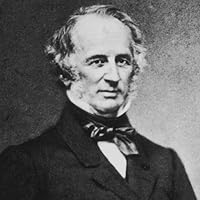
Carlo M. Cipolla (August 15, 1922 – September 5, 2000) was an Italian economic historian. He was born in Pavia, where he got his academic degree in 1944.
As a young man, Cipolla wanted to teach history and philosophy in an Italian high school, and therefore enrolled at the political science faculty at Pavia University. Whilst a student there, thanks to professor Franco Borlandi, a specialist in Medieval economic history, he discovered his passion for economic history. Subsequently he studied at the Sorbonne and the London School of Economics.

Cipolla obtained his first teaching post in economic history in Catania at the age of 27. This was to be the first stop in a long academic career in Italy (Venice, Turin, Pavia, Scuola Normale Superiore di Pisa and Fiesole) and abroad. In 1953 Cipolla left for the United States as a Fulbright fellow and in 1957 became a visiting professor at the University of California, Berkeley. Two years later he obtained a full professorship.
http://en.wikipedia.org/wiki/Carlo_M....

Ratings & Reviews

What do you think?
Rate this book

Friends & Following

Create a free account to discover what your friends think of this book!

Community Reviews

5 stars
11 (28%)
4 stars
17 (44%)
3 stars
9 (23%)
2 stars
1 (2%)
1 star
0 (0%)
Displaying 1 - 6 of 6 reviews
1,213 reviews165 followers
December 25, 2017
mixed approaches to complex subject

Over the last couple decades, it's become increasingly obvious that the USA, despite the reluctance of many of its citizens to admit it, has become a world-straddling empire, albeit with certain limitations. If you live here, as I do, you have also become aware that the country is continually hanging on the edge. OK, its military power can't be challenged by any conventional force, but it can be stretched beyond capability since it's a volunteer army with a substantial mercenary presence. We are living over our heads in debt, at least on the national level, but consumption dreams rise ever higher. Education has declined. The underclass is sunk in drugs, crime, and obesity. A lot of industry has fled to places with cheaper labor costs, service industries may or may not follow, and other countries can produce our agricultural bounty a lot cheaper. Waves of illegal immigrants flood the country--hardworking but allowing a downward spiral in wages and employment conditions. Our image abroad has never been lower. Our politicians display hubris and lack of humanity, refusing to cooperate with the rest of the world. A lot of the population is glued to the idiot box to a diet of violence, soaps, and info-tainment news. You'd have to be the proverbial ostrich not to be a bit worried. Is the American Empire in decline or is this just a bad period ? How can you tell if an empire is declining, anyway ? I decided to read Cipolla's volume because it was put together in 1970, before we recognized the full extent of American dominance.

Perhaps the most interesting part of the book is Cipolla's introduction, which addresses the question directly. Maybe each decline is a story of its own, but there also may be parallels. To answer my own question first, according to the writers in this book, the USA could not be considered an empire in decline as yet, though ghosts are already looming up in the fog of the future. [I hasten to add that no mention of the USA is made at all. This is my interpretation.] In 261 pages, nine authors discuss eight different empires in decline. Well over half the space is taken up with just Rome and Spain (17th century). The other empires discussed are Byzantium, the Arabs, Italy in the 17th century, Holland in the 18th century, the Ottomans and Chinese. The editor managed to round up several top notch authors including Bernard Lewis (the Arabs and Ottomans), M.I Finley (Rome), J.H. Elliott (Spain), and C.R. Boxer (the Dutch). I found all the articles interesting, but that peculiarity of academia which leads people to submit already written essays---originally produced for some other purpose---to volumes like Cipolla's, means that some came across as tangential. For example, the essay on China was obviously "ripped" from the pages of some other work. The author did not even bother to write a new opening sentence, much less a paragraph. We find that the majority of this article is about China's inland trade during the Ming and Qing, not about any kind of decline. Nevertheless, if the decline of empires intrigues you, or worries you as the case may be, you may find food for thought. Foreign invasions or debilitating foreign wars, failure to adapt to new times, failure to innovate, social patterns that encourage uneconomic attitudes, over-taxation, wages and industry spiralling downwards, the collapse of agriculture and waste of resources---all these and more play some part in the economic decline of empires. It's a thought-provoking book. Some essays are easier reading than others, but all are well worth it if this topic interests you. If you are American, it may be considered required.
Profile Image for Jordi García Lorenzo.
17 reviews1 follower
June 18, 2023
Al final todos los imperios suelen caer de una forma parecida.

-Descuadre entre ingresos y gastos que lleva a una asfixia fiscal.
-Aumento de la brecha de riqueza que hace acumular el poder y las decisiones en manos de pocos (proceso descentralizador)
-Burocratización excesiva que dispara un gasto público insostenible.
-Envilecimiento de la moneda (aumento la oferta o acuñando menos metales preciosos)
-Descenso de la población y acumulación de gente en grandes núcleos urbanos
-Se abandona cultivo interno y se depende de mercados internacionales cada vez más frágiles
-El aumento del coste de mano de obra impide competir en mercados globales
-Poca productividad e innovaciones
-Presencia de pestes y revoluciones internas

El libro repasa la caída del imperio romano, el bizantino, el otomano, el español, el italiano y el holandés. En todos se han repetido unos patrones que se están repitiendo en mayor o menor intensidad en los EEUU actuales.
263 reviews1 follower
August 27, 2025
A Very Interesting Collection of Essays

The reason this reviewer read this book was because it was edited by Carlo Cipolla, one of the leading economic historians of the late 20th century. There are only two essays in this book by Dr. Cipolla, the introduction (an excellent essay – the book is worth reading just for this chapter) and a chapter on the factors behind the decline of the city states of Northern Italy.

The rest of the essays in book are written by luminary economic historians of the latter part of the twentieth century. These include essays by Charles Diehl on the economic decline of the Byzantine state, M.I. Finley on the and Aurelio Bernardi on the decline of Rome, J.H. Eliot on the decline of Spain, Bernard Lewis on the decline of the Arab world and Ottoman state, among others. Due to the eminence of the writers the essays are all very much worth reading.

The reader learns of the heterogeneity of the causes of the declines, from loss of naval power for the byzantine state to increased competition for the decline of Northern Italy and the Dutch state. As the conclusion of the book states “…we must constantly remind ourselves that each decline is a stary of its own, which to be fully comprehended must be studied in its historical individuality and on its own human terms”. This is not to say there are not underlying causes affecting them all as a group. Dr. Cipolla points out the causes of all these states was known by many therein but, despite knowing this, they proved unable to reverse the course. Dr. Cipolla cites, as the main underlying theme, a quote by the Gonzales de Celorigo, “those who can will not and those who will cannot”.

In short, a four and a half star book for any student interested in a serious analysis of the economic decline of important states of the past.
341 reviews1 follower
October 12, 2025
Una recopilación de ensayos cortos acerca de las causas que llevaron a varios imperios a decaer -Roma, Bizancio, Castilla, Países Bajos...
Es un librito de Historia Económica y Social riguroso y bastante técnico desde el punto de vista historiográfico. En otras palabras, no es un libro de divulgación y precisa cierta disposición al lector.
Como suele ocurrir en las obras compendio, hay capítulos que se leen con más facilidad e interés que otros porque, además de ser todos grandes historiadores, algunos son mejores escritores que otros.
En cualquier caso, me ha gustado bastante, especialmente la parte de Países Bajos, que desconocía totalmente.
Me gusta mucho de vez en cuando retarme a leer algo de hard-science que me obligue a ir un pasito más allá de lo meramente divulgativo en alguna disciplina -prácticamente todas- en la que mi conocimiento es superficial. Es lo que tenemos los aspirantes a polímatas ;-)
Profile Image for AustrianHistorian.
41 reviews2 followers
September 18, 2024
Son muy buenos los capítulos de Bernardi sobre el Imperio Romano, H. Elliott sobre España y Boxer sobre las Provincias Unidas, pero el de Cipolla acerca del declive de las ciudades italianas en el siglo XVII es indudablemente el mejor.
Displaying 1 - 6 of 6 reviews

Can't find what you're looking for?

Get help and learn more about the design.