

What do you think?

Dream Chaser
Willow Thomas has a bad habit of running away from things that scare
her. And most recently, she quit her high school cheerleading squad
after a terrifying fall. With time on her hands, she auditions for a
musical production directed by a Broadway choreographer. Just as
things are looking up, Willow discovers she will be performing
opposite Eli McAvoy, the best friend she abandoned three years
before. To make matters worse, the kids in the musical hate her, her
singing sucks, and her dog is sick. Eli has grown up during their
years apart and now possesses confidence and good looks, as well as a
giant chip on his shoulder. He is in no hurry to play nice with
Willow, but their entwined roles in the musical lead to entwined
bodies in the backseat of his car. Just when Willow finally has her
life under control, another surprise is delivered in the form of her
greatest challenge yet. Will she run or finally stand and face her
fears? And will Eli be there to help or turn his back on her for
good?
her. And most recently, she quit her high school cheerleading squad
after a terrifying fall. With time on her hands, she auditions for a
musical production directed by a Broadway choreographer. Just as
things are looking up, Willow discovers she will be performing
opposite Eli McAvoy, the best friend she abandoned three years
before. To make matters worse, the kids in the musical hate her, her
singing sucks, and her dog is sick. Eli has grown up during their
years apart and now possesses confidence and good looks, as well as a
giant chip on his shoulder. He is in no hurry to play nice with
Willow, but their entwined roles in the musical lead to entwined
bodies in the backseat of his car. Just when Willow finally has her
life under control, another surprise is delivered in the form of her
greatest challenge yet. Will she run or finally stand and face her
fears? And will Eli be there to help or turn his back on her for
good?
Nook
First published December 4, 2011
About the author
Angie Stanton
25 books963 followersAngie Stanton is a life-long daydreamer who grew up with her hands on a book and her head in the clouds. As an adult, she’s put her talent to good use writing award winning contemporary fiction about life, love, and the adventures that follow.
Angie has a Journalism degree from the University of Wisconsin and is the best selling author of Waking in Time, If Ever, Rock and a Hard Place, Snapshot, Royally Lost, Under the Spotlight, Snowed Over, and Love ‘em or Leave ‘em.
Angie is a proud winner of a Midwest Book Award for Waking in Time.
Waking in Time is also a finalist in the National Readers Choice Awards as is her book If Ever and Love 'em or Leave 'em.
In her spare time, Angie sneaks off to New York City to enjoy the best entertainment experience on earth, Broadway. She is currently working on a series of Broadway-themed books, and is a contributing writer to BroadwayWorld.com.
Angie’s latest release is If Ever, a sexy, playful love story spanning from LA to New York and London.
For more information on Angie and her books, please visit:
www.angiestanton.com
Facebook.com/AngieStantonAuthor
Twitter: @angie_stanton
Instagram angiestanton_author.
Angie has a Journalism degree from the University of Wisconsin and is the best selling author of Waking in Time, If Ever, Rock and a Hard Place, Snapshot, Royally Lost, Under the Spotlight, Snowed Over, and Love ‘em or Leave ‘em.
Angie is a proud winner of a Midwest Book Award for Waking in Time.
Waking in Time is also a finalist in the National Readers Choice Awards as is her book If Ever and Love 'em or Leave 'em.
In her spare time, Angie sneaks off to New York City to enjoy the best entertainment experience on earth, Broadway. She is currently working on a series of Broadway-themed books, and is a contributing writer to BroadwayWorld.com.
Angie’s latest release is If Ever, a sexy, playful love story spanning from LA to New York and London.
For more information on Angie and her books, please visit:
www.angiestanton.com
Facebook.com/AngieStantonAuthor
Twitter: @angie_stanton
Instagram angiestanton_author.
Ratings & Reviews
Friends & Following
Create a free account to discover what your friends think of this book!
Community Reviews
Displaying 1 - 30 of 166 reviews

June 6, 2012
You jump, I jump
This book made me:
1.Laugh like this:
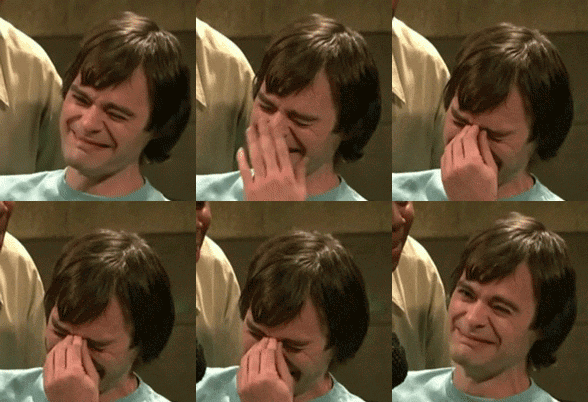
2.Felt nervous and literally had slight poundings in my chest. AHH. DON'T FREAK OUT.

3.EXCITED. As if I'm on Willow's foot.
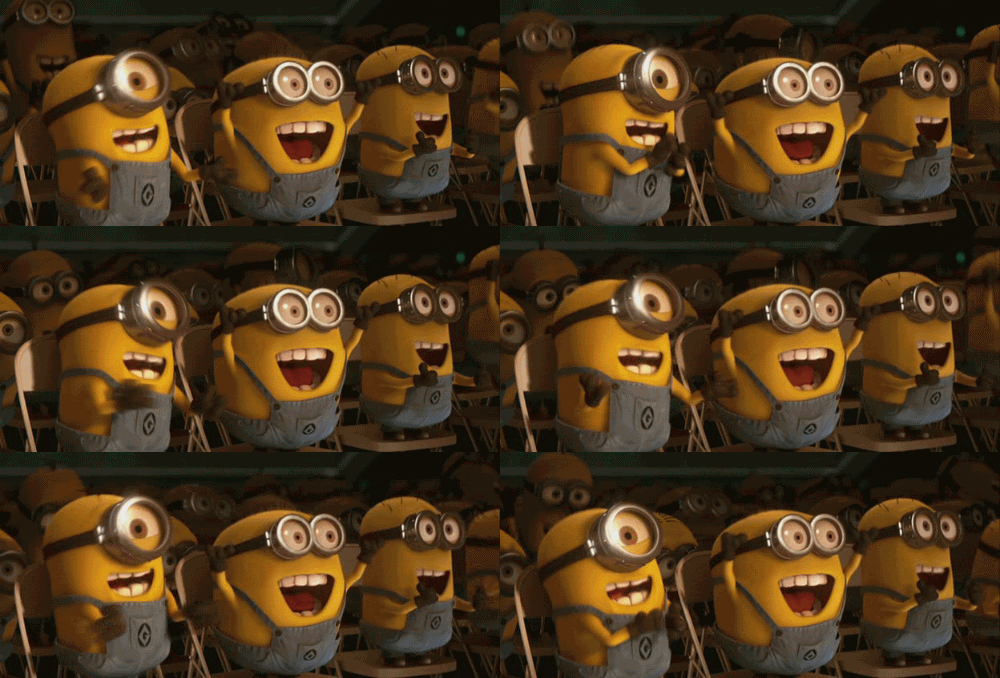
Yea. I definitely looked like one of those guys above. SRSLY.
4.Smile like an idiot. A lot.
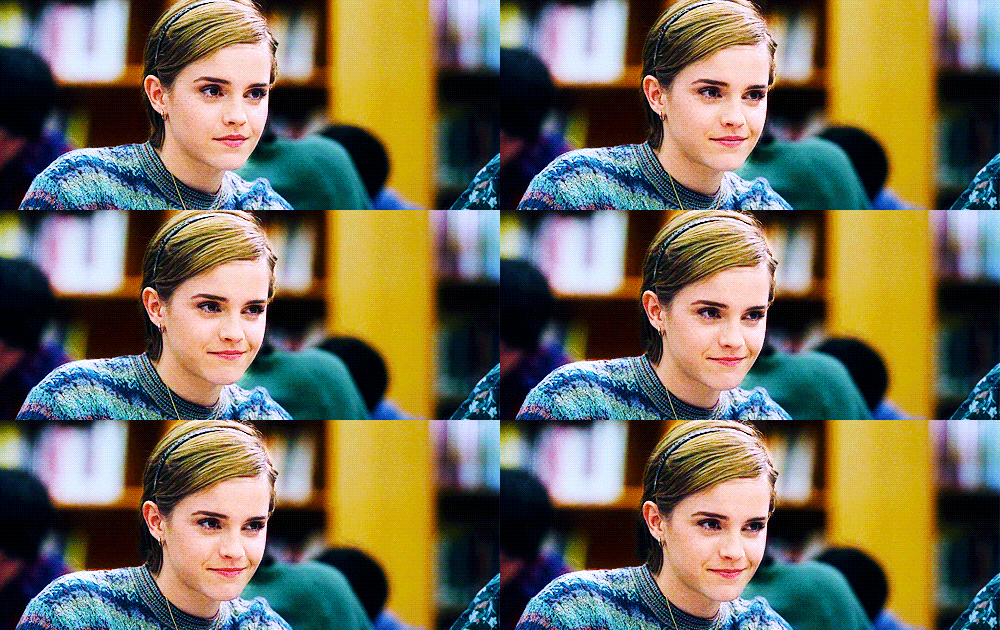
I'm not saying that I looked exactly like that. Maybe you could just pick out the way she smiles and imagined squidward doing it. Yea. That's more like it!
5.ANGRY. I wanted to launch myself toward the faces of the cast especially Chloe and land my fist on her stupid face. YES. I was really pissed.
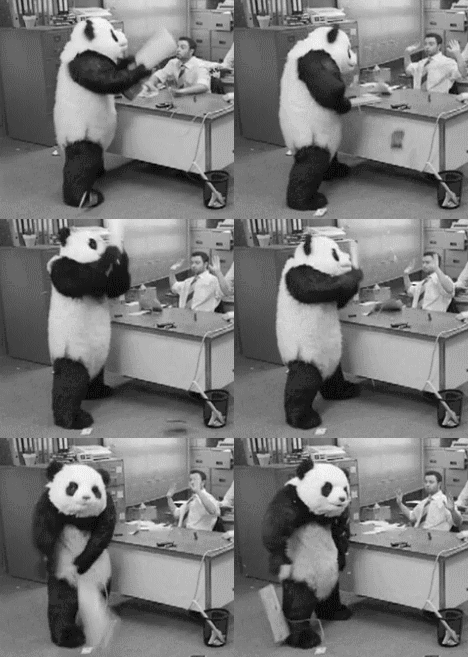
6.SAD. As in sad like a girl who found out that her celebrity crush cheated on her. Or maybe a girl who just found out that her long time crush is a GAY. Why o why?
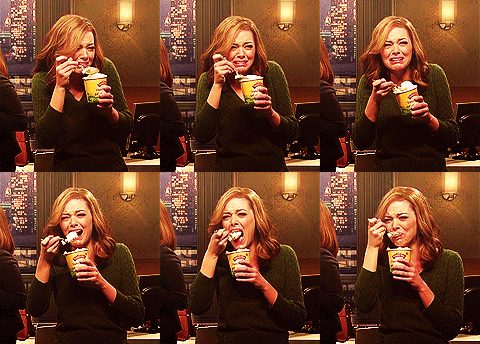
And one thing. TYSON was so damn hilarious! I was grinning and forcing not to let out a laugh (Because it was 1am and the whole neighborhood's asleep) while I'm reading the part of Eli taking off his shirt, and tyson commanding Willow to touch Eli's biceps. HAHA! Hilarious :D
- It was really good. It reminded me of a movie I happened to watch before, too bad I forgot the title. I couldn't say more, I just loved this, and I'm willing to read it one for time if I feel like reading it again. 5 stars baby! :)

November 14, 2011
I absolutely loved Angie Stanton's book 'Rock and a Hard Place.' When I saw she had a new title out, I bought it the very first day! This book is AMAZING!! I am having a hard time knowing where to start.
I'll talk about Willow. She felt so real to me. She is one of the most driven young women I've ever encountered in YA literature. She has deep, amazing, intense passion for cheer and dance. I don't know if Angie Stanton has personal experience with dance/cheer, but the details were amazing! The descriptions of Willow's feelings, apprehensions, excitement, plus her technical moves just made me feel like I went through every single grueling rehearsal and practice. By the time the big show came, I felt like I had worked right along with her, and I enjoyed every second of the performance!! I was never into dance or cheer, and I have a new, deep respect for what the people who excel in those areas have to do, day after day, hour after hour. Willow pushed herself so hard. Nothing was ever good enough for her. She was always stretching and attempting to learn more, experience more, achieve more. It was wonderful!
To balance all of Willow's crazy focus was her amazing family. Her free-spirited mom and dad were hilarious and warm, and did not even remotely fall into the 'hippy' stereotype. Their support of Willow's dreams and aspirations was blended with a perfect dash of pure silly humor. I LOVED them! And little sister Breezy made me giggle so many times in the book, as well. Best friend Jilly was also an awesome supporter...even though the girls wound up having a breakdown in their relationship, when Willow needs her, Jilly comes through and it was perfect!
Then there is Eli. He and Willow have a love/hate relationship because they had a past together that had a rocky ending. He is just as focused and determined as Willow, and they just seem made for each other. Sometimes he came off as harsh, but it was always exactly what Willow needed. I love that his character felt so true and real...you could feel his frustrations and struggles, and the way he supported and loved Willow and backed up her dream was awesome! Plus he was absolutely adorable. I laughed HARD when these two focused, serious, straight-laced kids had a backseat adventure at the local kissing overlook! And then I stopped laughing and just enjoyed, because it was pure romance!
I feel like I know and love every single character in this book. I feel like I worked with them and achieved right alongside them. I hope Angie considers doing an older YA book. I would LOVE to see them in NY, trying to make it together!
If you love dance/cheer, if you love a strong, smart heroine, if you love a great romance, if you love a wonderful, touching family story...this book is for you!!
And I was SO happy to read that Angie is continuing her Jamieson story line with Adam this spring!! She is an author I can ALWAYS rely on for a fantastic read!!
I'll talk about Willow. She felt so real to me. She is one of the most driven young women I've ever encountered in YA literature. She has deep, amazing, intense passion for cheer and dance. I don't know if Angie Stanton has personal experience with dance/cheer, but the details were amazing! The descriptions of Willow's feelings, apprehensions, excitement, plus her technical moves just made me feel like I went through every single grueling rehearsal and practice. By the time the big show came, I felt like I had worked right along with her, and I enjoyed every second of the performance!! I was never into dance or cheer, and I have a new, deep respect for what the people who excel in those areas have to do, day after day, hour after hour. Willow pushed herself so hard. Nothing was ever good enough for her. She was always stretching and attempting to learn more, experience more, achieve more. It was wonderful!
To balance all of Willow's crazy focus was her amazing family. Her free-spirited mom and dad were hilarious and warm, and did not even remotely fall into the 'hippy' stereotype. Their support of Willow's dreams and aspirations was blended with a perfect dash of pure silly humor. I LOVED them! And little sister Breezy made me giggle so many times in the book, as well. Best friend Jilly was also an awesome supporter...even though the girls wound up having a breakdown in their relationship, when Willow needs her, Jilly comes through and it was perfect!
Then there is Eli. He and Willow have a love/hate relationship because they had a past together that had a rocky ending. He is just as focused and determined as Willow, and they just seem made for each other. Sometimes he came off as harsh, but it was always exactly what Willow needed. I love that his character felt so true and real...you could feel his frustrations and struggles, and the way he supported and loved Willow and backed up her dream was awesome! Plus he was absolutely adorable. I laughed HARD when these two focused, serious, straight-laced kids had a backseat adventure at the local kissing overlook! And then I stopped laughing and just enjoyed, because it was pure romance!
I feel like I know and love every single character in this book. I feel like I worked with them and achieved right alongside them. I hope Angie considers doing an older YA book. I would LOVE to see them in NY, trying to make it together!
If you love dance/cheer, if you love a strong, smart heroine, if you love a great romance, if you love a wonderful, touching family story...this book is for you!!
And I was SO happy to read that Angie is continuing her Jamieson story line with Adam this spring!! She is an author I can ALWAYS rely on for a fantastic read!!

March 18, 2012
'If you don’t play the game of life, you’ll never win. If you turn your back on every challenge that comes along, you’ll be missing out on some awesome stuff.'
Willow, is a tenacious teenage girl who excels in everything she puts her mind into. She lead her school's cheerleading squad and is known as the most death-defying flyer on the squad. She is willing to try anything for them. But after a really bad fall and only a quick save by one of her catchers saved her from breaking her neck, she turns her back on the cheerleading squad and her fear of falling starts to surface in.
Physically, she's fine, but mentally, she knows she can never get back in the air. Her bestfriend and other team member is not about to let her walk away from the squad and she knows she needs an air-tight reason not to come back to the sqaud. That's why not only a day later, she auditions and lands the lead for a big musical production entitled < b>Dream Chaser, and the male lead is played by Eli, her one old bestfriend.
Just when Willow finally has her life under control, another surprise is delivered in the form of her greatest challenge yet. Will she run or finally stand and face her fears? And will Eli be there to help or turn his back on her for good?
I'm not really much for dancing but this story definitely fills me with it. The description of exhaustion and the pain and determination were clearly described in here. Love, Passion and Humor fills the pages of this novel.
Willow is one good character to hear. She is good at everything she does but her problem is that she isn’t good at sticking with things; she runs when she is scared. But I'm not saying that she is a quitter all through out, the story just mention two things she quit at which is Cheer and Dancing. For the cheer she definitely has a valid reason for it, but as for the dance it was a weak reason though. But in all, I could say the Willow is extremely persistent and determined to succeed in everything. She is definitely not a quitter.
Eli, on the other hand, is a very good support character for Willow. He has been there since Willow started dancing and He is one great evidence on how Willow try to runwaway from things when she is scared. But as they meet again, despite their awkwardness at their frist rehearsals, he still did his best to give Willow support and strengthen her trust with people around her.
The relationship between these two was really really sweet and very realistic. They may have some hot scencesparticularly on Messerschmidt Road, which I think is pretty hilarious but not anything too crazy. I just love their easy ways with each other.
The other characters are oh so wow! I never really had the chance to refrain myself from loving them all! I loved seeing how dynamic they are. Willow's family is one awesome one! You could clearly see how much they love each other and they have an easy camaraderie and they openly laugh, love and rely to one another.
This one is definitely about finding your passion in life, the consequences on running away from things and ultimately sticking around even at rocky times. In all, it was a pretty charming novel that definitely sweeps me off my feet and makes me dance and sing.
Willow, is a tenacious teenage girl who excels in everything she puts her mind into. She lead her school's cheerleading squad and is known as the most death-defying flyer on the squad. She is willing to try anything for them. But after a really bad fall and only a quick save by one of her catchers saved her from breaking her neck, she turns her back on the cheerleading squad and her fear of falling starts to surface in.
Physically, she's fine, but mentally, she knows she can never get back in the air. Her bestfriend and other team member is not about to let her walk away from the squad and she knows she needs an air-tight reason not to come back to the sqaud. That's why not only a day later, she auditions and lands the lead for a big musical production entitled < b>Dream Chaser, and the male lead is played by Eli, her one old bestfriend.
Just when Willow finally has her life under control, another surprise is delivered in the form of her greatest challenge yet. Will she run or finally stand and face her fears? And will Eli be there to help or turn his back on her for good?
I'm not really much for dancing but this story definitely fills me with it. The description of exhaustion and the pain and determination were clearly described in here. Love, Passion and Humor fills the pages of this novel.
Willow is one good character to hear. She is good at everything she does but her problem is that she isn’t good at sticking with things; she runs when she is scared. But I'm not saying that she is a quitter all through out, the story just mention two things she quit at which is Cheer and Dancing. For the cheer she definitely has a valid reason for it, but as for the dance it was a weak reason though. But in all, I could say the Willow is extremely persistent and determined to succeed in everything. She is definitely not a quitter.
Eli, on the other hand, is a very good support character for Willow. He has been there since Willow started dancing and He is one great evidence on how Willow try to runwaway from things when she is scared. But as they meet again, despite their awkwardness at their frist rehearsals, he still did his best to give Willow support and strengthen her trust with people around her.
The relationship between these two was really really sweet and very realistic. They may have some hot scences
The other characters are oh so wow! I never really had the chance to refrain myself from loving them all! I loved seeing how dynamic they are. Willow's family is one awesome one! You could clearly see how much they love each other and they have an easy camaraderie and they openly laugh, love and rely to one another.
This one is definitely about finding your passion in life, the consequences on running away from things and ultimately sticking around even at rocky times. In all, it was a pretty charming novel that definitely sweeps me off my feet and makes me dance and sing.

Read
April 1, 2012Love this! One of my favorite new contemps. Great job Angie. It was exactly what I needed to get me out of my funk.

November 14, 2011
CLICK HERE TO READ MORE REVIEWS AT READING, EATING AND DREAMING I WAS BLAIR WALDORF
Angie Stanton is an asset to young adult literature. She is an extremely talented author who has a knack for writing entertaining and engaging novels. I have read two novels by her so far, Rock and a Hard Place and Dream Chaser, and I loved both of them. Angie Stanton’s novels flow so well. Her writing style is fluid, entertaining and mesmerizing. At this point, I think she could write a book about purple ants, and I would enjoy it. (Please don’t. I am just saying.)
Dream Chaser was another riveting young adult romance by Angie Stanton. Willow, the main character, is a tenacious character who excels at everything she puts her mind to. Her problem is that she isn’t good at sticking with things; she runs when she is scared. In her youth she was one of the best, if not the best, competitive dancers in the state. Her freshman year, she quit dance and became the best cheerleader and flyer (those are the people that get tossed in the air) on her squad. But after a really bad fall, she turns her back on the cheerleading squad and her fear of falling. Not only 24 hours later, she auditions and lands the lead for a big musical production, and the male lead is played by Eli, the reason she ran away from dance all those years ago. Passion, love and humor fill the pages of this novel.
Yes, this story focuses on a girl who is interested in dance and cheerleading. However, that isn’t the necessarily what this story is about. In my opinion, this novel is about finding your passion in life, the cost of running away when you’re scared, and ultimately, sticking around and facing the music when things get tough.
The characters in this novel are -WOW- amazing. You won't be able to stop yourself from falling in love with Willow, Eli, Tyson, and Willow’s wacky family (basically every character in the novel). Her parents and younger sister, Breezy, put a smile on my face. You could see how much they loved one another. I must admit, I was a little envious of Willow’s relationship with her parents. They have such an easy camaraderie. They openly love, laugh, and rely on one another. Her parents are also very lenient with her and have a lot of trust in her.
The relationship between Eli and Willow was really, really sweet and also very realistic. Surprisingly, they had a few steamy moments, too. It wasn’t anything too crazy, but it was still unexpected.
I was a competitive dancer until my freshman year of high school. I practiced three or four days a week and had competitions almost every other weekend. My freshman year, I was forced to choose between dance and cheerleading; I picked cheerleading. My junior year we were the Grand National Champs at a major competition. Sound familiar? Fortunately, there aren’t any really bad falls in my past.
Unfortunately, there isn’t an Eli in my story! Regardless, I could really relate to Willow because we share some of the same passions. My connection with dance and cheerleading only increased my love for this novel. I think anyone could read and enjoy this novel, whether you are a dancer, a cheerleader, a basketball player, or don't play any sports at all.
I gave Dream Chaser by Angie Stanton 4 STARS. This young adult romance novel will sweep you off your feet. It’s a charming novel that’s quick and easy to read. I strongly recommend this novel to young adults.
-XOXO
READING, EATING AND DREAMING
Angie Stanton is an asset to young adult literature. She is an extremely talented author who has a knack for writing entertaining and engaging novels. I have read two novels by her so far, Rock and a Hard Place and Dream Chaser, and I loved both of them. Angie Stanton’s novels flow so well. Her writing style is fluid, entertaining and mesmerizing. At this point, I think she could write a book about purple ants, and I would enjoy it. (Please don’t. I am just saying.)
Dream Chaser was another riveting young adult romance by Angie Stanton. Willow, the main character, is a tenacious character who excels at everything she puts her mind to. Her problem is that she isn’t good at sticking with things; she runs when she is scared. In her youth she was one of the best, if not the best, competitive dancers in the state. Her freshman year, she quit dance and became the best cheerleader and flyer (those are the people that get tossed in the air) on her squad. But after a really bad fall, she turns her back on the cheerleading squad and her fear of falling. Not only 24 hours later, she auditions and lands the lead for a big musical production, and the male lead is played by Eli, the reason she ran away from dance all those years ago. Passion, love and humor fill the pages of this novel.
Yes, this story focuses on a girl who is interested in dance and cheerleading. However, that isn’t the necessarily what this story is about. In my opinion, this novel is about finding your passion in life, the cost of running away when you’re scared, and ultimately, sticking around and facing the music when things get tough.
The characters in this novel are -WOW- amazing. You won't be able to stop yourself from falling in love with Willow, Eli, Tyson, and Willow’s wacky family (basically every character in the novel). Her parents and younger sister, Breezy, put a smile on my face. You could see how much they loved one another. I must admit, I was a little envious of Willow’s relationship with her parents. They have such an easy camaraderie. They openly love, laugh, and rely on one another. Her parents are also very lenient with her and have a lot of trust in her.
The relationship between Eli and Willow was really, really sweet and also very realistic. Surprisingly, they had a few steamy moments, too. It wasn’t anything too crazy, but it was still unexpected.
I was a competitive dancer until my freshman year of high school. I practiced three or four days a week and had competitions almost every other weekend. My freshman year, I was forced to choose between dance and cheerleading; I picked cheerleading. My junior year we were the Grand National Champs at a major competition. Sound familiar? Fortunately, there aren’t any really bad falls in my past.
Unfortunately, there isn’t an Eli in my story! Regardless, I could really relate to Willow because we share some of the same passions. My connection with dance and cheerleading only increased my love for this novel. I think anyone could read and enjoy this novel, whether you are a dancer, a cheerleader, a basketball player, or don't play any sports at all.
I gave Dream Chaser by Angie Stanton 4 STARS. This young adult romance novel will sweep you off your feet. It’s a charming novel that’s quick and easy to read. I strongly recommend this novel to young adults.
-XOXO
READING, EATING AND DREAMING

January 29, 2012
Now this was really cute. Typical chick lit but in a good way. Nice plot (though everything comes a little too easy to Willow), cute romance and loveable side characters. I LOVED Willows parents. Scenes with them always made me smile. :-) Overall an easy and cute read. I'm definitely going to check out Angie's other book Rock and a Hard Place, too. Oh, and one more thing. I don't think the blurb on here is very favorable. It kind of gives the wrong impression about a few things and gives too much away. :-/

November 14, 2011
Dream Chaser is all the things a great YA chick-lit should be. I loved every minute I read of it and can't wait to read more by Angie Stanton.

September 12, 2012
This book is about a girl who, in the past, quit competitive dance, because she was afraid of essentially a boy liking her. Where the book starts, the girl has now been in competitive cheer for the last three years (ever since she quit dance). She is her squad's "fearless flier," willing to be thrown really high up in the air and do all sorts of crazy twists and turns. In the very first pages of the book, however, she tries a really dangerous stunt and crashes into the mat. Her doctor says she is lucky to be alive. For obvious reasons, she is now afraid of being thrown up in the air or falling. This new fear from cheering leads her back to the dance she thought she had left behind forever.
So the book is essentially about conquering fears, not letting them define you and make decisions for you. There is also a romance plot. The main character's parents are really supportive, loving, and understanding, but I think they are a little lax in taking dating seriously when their daughter does start dating, but perhaps I think making out is more serious than these fictional parents do.
There was random mild swearing throughout the novel and three F words completely out of the blue, by characters who didn't usually swear or who had never spoken before. It was annoying, and, in my opinion, unnecessary.
There is no sex, but there is making out. One couple has to perform a stage kiss in the drama play, and it is quite awkward for them, so their director actually suggests they go make out to "work out the kinks" before opening night.
There is one scene of teenage drinking, which I think sends mixed messages. The alcohol gives the teenagers courage to try something they weren't brave enough to do, so some readers might view that as a positive message. It does also show them not being able to drive home (although they might have tried it if their car battery weren't dead), having horrible headaches, and feeling awful the next day. And one of them got in trouble with their parents. But still—teenage drinking is really serious, and I did not feel like the author treated it seriously enough.
There is one character whom everyone wonders whether or not he is gay. The teenage girl says she doesn't care whether he is not—she just wants to know whether he is available. And I agree that it shouldn't matter if someone is gay in determining whether you are going to be his or her friend or not, or kind to someone, but it kept popping up.
So this book wasn't amazing or awful. Just a book right in the middle.
I read a digital copy from Amazon, and I was surprised by the amount of mistakes that editors should have caught.
"'Dad.' My voice broke a little. I hadn't realized how much I needed to see him; a weight lifted from my injured shoulder.
He approached the bed and patted my leg. That small contact brought my anxiety down a couple notches. He fixed me one of his meditative Buddha gazes. Dad believes he can solve just about anything with a calming look, a deep breath and a cup of tea. This time I welcomed it."
[The main character is talking to her mother in this conversation.]
"'What a narc! I told him not to tell. It's a dumb class and should have been an easy A.'
'Haven't you learned by now that your father and I don't do secrets?' She held out a chunk of cookie dough. I swiped it up with my finger and ate it.
'So what's going on with you and the rest of the squad?'
'I don't know . . . nothing really.'
'If you say so. I'd hate to see you quit for the wrong reasons.'"
"Jilly was right about the stunts. No one else had the nerve to even try some of them. Rick and Kyle have amazing power when they toss. Most of the girls are afraid of being teamed with them. The guys' strength gave me more time to complete all the twists and flips. Most of the girls were too chicken to try. I chewed at my lip with a combination of guilt and worry about how I'd make sure Jilly didn't twist my arm and get me back to cheer."
This was one of the things that bugged me about the book. The cheerleading squad gave the main character such a rough time about quitting the squad and being afraid to fly, because the reason they needed her so much was that they were all afraid to try what she used to do. It seemed a bit hypocritical for them to be so mad at her for not doing something she was afraid of when they were too afraid to do it, too.
"Let them gossip. That's half the fun of cheer, talking about everyone else who wasn't lucky enough to be one of us.
I mean them. If this was what the saying meant about a taste of your own medicine, I didn't like it. Having people gossip about me to my face, let alone behind my back, sucked."
"'Hey Willow, what are you doing home so early?' Dad asked.
'I'm not doing cheer anymore. Remember?' He must be the only person who didn't care one way or the other.
'That's right. You feeling okay about that?' He paused with the paint long enough to give me one of his obligatory concerned dad looks."
I really like how involved the parents are in the main character's life. I just don't understand why all of their thoughtful conversations don't extend into her dating life.
"Miss Ginny nodded. 'Tyson, you will see. She is a fabulous dancer.'
'I have no doubt,' he said. 'In all these years, you have never steered me wrong. No, that's not entirely true. There were a couple of costumes you forced me to wear that had no place on a young impressionable boy.'
'Ha, you were never a boy. You were always a man struggling to break out into the world.'
Suddenly, I recognized him as the boy in many of the old photos in Miss Ginny's office. One of the costumes made him look like a life-size piñata."
"The music ended, leaving me in the closing pose. Adrenalin pumped through me. I'd forgotten what a high I got from dance and how the energy and emotion fulfilled me. My eyes watered and threatened to embarrass me. Cheer was regimented and precise, not an artistic release. My body buzzed with the passion I'd locked away."
"The old fashioned wall phone rang!" That sentence made me feel old. I wonder when house phones won't exist anymore, and children will grow up without having seen one, like my childhood without the phones with turn dials instead of push buttons.
[This is the mother talking to her daughter.] "'Back to the point. Whatever decision you make is okay. Running away from your fears will be painful, and you will probably end up hurting some people, but something new will evolve from it. The world isn't static. Energy is always moving and changing. You and your decisions are just part of that energy. As you decide what to do, be true to your authentic self.'"
So the book is essentially about conquering fears, not letting them define you and make decisions for you. There is also a romance plot. The main character's parents are really supportive, loving, and understanding, but I think they are a little lax in taking dating seriously when their daughter does start dating, but perhaps I think making out is more serious than these fictional parents do.
There was random mild swearing throughout the novel and three F words completely out of the blue, by characters who didn't usually swear or who had never spoken before. It was annoying, and, in my opinion, unnecessary.
There is no sex, but there is making out. One couple has to perform a stage kiss in the drama play, and it is quite awkward for them, so their director actually suggests they go make out to "work out the kinks" before opening night.
There is one scene of teenage drinking, which I think sends mixed messages. The alcohol gives the teenagers courage to try something they weren't brave enough to do, so some readers might view that as a positive message. It does also show them not being able to drive home (although they might have tried it if their car battery weren't dead), having horrible headaches, and feeling awful the next day. And one of them got in trouble with their parents. But still—teenage drinking is really serious, and I did not feel like the author treated it seriously enough.
There is one character whom everyone wonders whether or not he is gay. The teenage girl says she doesn't care whether he is not—she just wants to know whether he is available. And I agree that it shouldn't matter if someone is gay in determining whether you are going to be his or her friend or not, or kind to someone, but it kept popping up.
So this book wasn't amazing or awful. Just a book right in the middle.
I read a digital copy from Amazon, and I was surprised by the amount of mistakes that editors should have caught.
"'Dad.' My voice broke a little. I hadn't realized how much I needed to see him; a weight lifted from my injured shoulder.
He approached the bed and patted my leg. That small contact brought my anxiety down a couple notches. He fixed me one of his meditative Buddha gazes. Dad believes he can solve just about anything with a calming look, a deep breath and a cup of tea. This time I welcomed it."
[The main character is talking to her mother in this conversation.]
"'What a narc! I told him not to tell. It's a dumb class and should have been an easy A.'
'Haven't you learned by now that your father and I don't do secrets?' She held out a chunk of cookie dough. I swiped it up with my finger and ate it.
'So what's going on with you and the rest of the squad?'
'I don't know . . . nothing really.'
'If you say so. I'd hate to see you quit for the wrong reasons.'"
"Jilly was right about the stunts. No one else had the nerve to even try some of them. Rick and Kyle have amazing power when they toss. Most of the girls are afraid of being teamed with them. The guys' strength gave me more time to complete all the twists and flips. Most of the girls were too chicken to try. I chewed at my lip with a combination of guilt and worry about how I'd make sure Jilly didn't twist my arm and get me back to cheer."
This was one of the things that bugged me about the book. The cheerleading squad gave the main character such a rough time about quitting the squad and being afraid to fly, because the reason they needed her so much was that they were all afraid to try what she used to do. It seemed a bit hypocritical for them to be so mad at her for not doing something she was afraid of when they were too afraid to do it, too.
"Let them gossip. That's half the fun of cheer, talking about everyone else who wasn't lucky enough to be one of us.
I mean them. If this was what the saying meant about a taste of your own medicine, I didn't like it. Having people gossip about me to my face, let alone behind my back, sucked."
"'Hey Willow, what are you doing home so early?' Dad asked.
'I'm not doing cheer anymore. Remember?' He must be the only person who didn't care one way or the other.
'That's right. You feeling okay about that?' He paused with the paint long enough to give me one of his obligatory concerned dad looks."
I really like how involved the parents are in the main character's life. I just don't understand why all of their thoughtful conversations don't extend into her dating life.
"Miss Ginny nodded. 'Tyson, you will see. She is a fabulous dancer.'
'I have no doubt,' he said. 'In all these years, you have never steered me wrong. No, that's not entirely true. There were a couple of costumes you forced me to wear that had no place on a young impressionable boy.'
'Ha, you were never a boy. You were always a man struggling to break out into the world.'
Suddenly, I recognized him as the boy in many of the old photos in Miss Ginny's office. One of the costumes made him look like a life-size piñata."
"The music ended, leaving me in the closing pose. Adrenalin pumped through me. I'd forgotten what a high I got from dance and how the energy and emotion fulfilled me. My eyes watered and threatened to embarrass me. Cheer was regimented and precise, not an artistic release. My body buzzed with the passion I'd locked away."
"The old fashioned wall phone rang!" That sentence made me feel old. I wonder when house phones won't exist anymore, and children will grow up without having seen one, like my childhood without the phones with turn dials instead of push buttons.
[This is the mother talking to her daughter.] "'Back to the point. Whatever decision you make is okay. Running away from your fears will be painful, and you will probably end up hurting some people, but something new will evolve from it. The world isn't static. Energy is always moving and changing. You and your decisions are just part of that energy. As you decide what to do, be true to your authentic self.'"

July 18, 2012
Read this and other reviews at my blog.
After a fall in cheerleading practice that almost takes her life, Willow does what she does best when things get to heavy, she runs. She quits cheerleading instead of trying to deal with the problem. When it becomes known that she has extra time on her hands, people start pushing her back into dance and theater when they talk her into auditioning for a musical that is to be held in her town. When things start looking up, she finds out that she will be performing opposite of her former best friend Eli, whom she had run from three years before. Eli hasn't forgiven her from running from him, making things between them very tense. To make matters worse, her singing is horrible, the other kids in the musical can't stand her, and her dog is dying. Just when things start to look better, a new challenge faces her, and she must decide if she will run like she usually does and let everyone down, or if she will face it.
This book was better than I thought it would be, and yet disappointing at the same time. Typically, these types of stories you can predict.
It was the obvious direction in my mind. I think that built up the drama in my mind, so when the drama didn't deliver and ended up being far more gentle, it through me off, leaving me disappointed.
This was by no means a bad book though. The characters were good. I liked them all for what they were. Willow and Eli really hold the most screentime in the book, so it is a good thing that they are quite likeable. I didn't find myself wanting to strangle either of them or anything, so that is good.
The plot is really simple, especially after you get past the fact that the challenge wasn't anything like I thought it would be. The challenge given makes more sense, but I guess the official summary for the book was misleading. The plot is played out and cleaned up very nicely.
While this wasn't an amazing book, it was a really good contemporary romance, and I did enjoy it very much. If you are looking for a good contemporary romance that is light and easy to handle, this is a good choice.
After a fall in cheerleading practice that almost takes her life, Willow does what she does best when things get to heavy, she runs. She quits cheerleading instead of trying to deal with the problem. When it becomes known that she has extra time on her hands, people start pushing her back into dance and theater when they talk her into auditioning for a musical that is to be held in her town. When things start looking up, she finds out that she will be performing opposite of her former best friend Eli, whom she had run from three years before. Eli hasn't forgiven her from running from him, making things between them very tense. To make matters worse, her singing is horrible, the other kids in the musical can't stand her, and her dog is dying. Just when things start to look better, a new challenge faces her, and she must decide if she will run like she usually does and let everyone down, or if she will face it.
This book was better than I thought it would be, and yet disappointing at the same time. Typically, these types of stories you can predict.
It was the obvious direction in my mind. I think that built up the drama in my mind, so when the drama didn't deliver and ended up being far more gentle, it through me off, leaving me disappointed.
This was by no means a bad book though. The characters were good. I liked them all for what they were. Willow and Eli really hold the most screentime in the book, so it is a good thing that they are quite likeable. I didn't find myself wanting to strangle either of them or anything, so that is good.
The plot is really simple, especially after you get past the fact that the challenge wasn't anything like I thought it would be. The challenge given makes more sense, but I guess the official summary for the book was misleading. The plot is played out and cleaned up very nicely.
While this wasn't an amazing book, it was a really good contemporary romance, and I did enjoy it very much. If you are looking for a good contemporary romance that is light and easy to handle, this is a good choice.

May 16, 2013
3 stars.
Summary: After a serious fall, Willow quits cheerleading, much to the annoyance of her teammates. She takes up dance instead, performing in a play where she has the lead female role, playing across from her ex-best friend, Eli.
To me, the story just felt a bit weak in places. I didn't believe in any of the characters and found myself more than a few times tuning out, reading on autopilot without actually taking the words in. Still, it wasn't the worst story ever. I enjoyed the characterisation of her fun family and Tyson, the director of the play.
The main girl, Willow, I was a bit unsure about. She seemed to be bordering on being a Mary-Sue... She hadn't danced for three years and then immediately received the main role? Huh? But, then again, I also found her strangely likeable.
Then there was the love-interest, Eli, who, toward the end, turned into a complete jerk. When Willow was terrified of doing the fall (and for good reason) instead of comforting her and supporting her (like her parents and about everyone else did) he just yelled at her. He yelled at her and said she was ruining everyone's life. And then when she tried her best and still couldn't do it at dress rehearsals ('cause she was probably still suffering from post-traumatic stress disorder, for god's sake) he got pissed and yelled at her again. WHAT? Is this the guy character that I'm supposed to be swooning over? I wanted to punch him.
Talking about him her friend even said, “Heck, good looks trump asshole”. Er, what? I seriously hope she was joking because what sort of a message is that to send out?? At least he had the decency to pull it together in the end and apologise, though after that I still kind of hated him.
So yes. It was okay but some plot points and characters could have been more developed. An easy read but I don't think I'll be rushing to recommend it.
Summary: After a serious fall, Willow quits cheerleading, much to the annoyance of her teammates. She takes up dance instead, performing in a play where she has the lead female role, playing across from her ex-best friend, Eli.
To me, the story just felt a bit weak in places. I didn't believe in any of the characters and found myself more than a few times tuning out, reading on autopilot without actually taking the words in. Still, it wasn't the worst story ever. I enjoyed the characterisation of her fun family and Tyson, the director of the play.
The main girl, Willow, I was a bit unsure about. She seemed to be bordering on being a Mary-Sue... She hadn't danced for three years and then immediately received the main role? Huh? But, then again, I also found her strangely likeable.
Then there was the love-interest, Eli, who, toward the end, turned into a complete jerk. When Willow was terrified of doing the fall (and for good reason) instead of comforting her and supporting her (like her parents and about everyone else did) he just yelled at her. He yelled at her and said she was ruining everyone's life. And then when she tried her best and still couldn't do it at dress rehearsals ('cause she was probably still suffering from post-traumatic stress disorder, for god's sake) he got pissed and yelled at her again. WHAT? Is this the guy character that I'm supposed to be swooning over? I wanted to punch him.
Talking about him her friend even said, “Heck, good looks trump asshole”. Er, what? I seriously hope she was joking because what sort of a message is that to send out?? At least he had the decency to pull it together in the end and apologise, though after that I still kind of hated him.
So yes. It was okay but some plot points and characters could have been more developed. An easy read but I don't think I'll be rushing to recommend it.
November 23, 2011
Once I started reading I just couldn't put it down...it was THAT good!
Willow and Eli charcaters felt so real, like an old friend, their chemistry is unquestionable. They just feel so right together that I spend half of the book anxious for the moment that they would finally give in being mad at each other. And the way it happened it was even better than I expected, it didn't seemed forced, it just felt natural.
Willow's family is another great part of the book, finally a book with different parents that know how to trust, and the best that can be fun withou being silly.
It was a book about learning to overcome the difficulties and learning how to trust yourself, but all this happening in the most human way possible with fear and insecurities.
I enjoyed every part of it, and can't wait to read what this incredible writer writes next, because two incredibly good books I can honestly say Angie Stanton became one of my favorites, and I'll read anything she writes.
Willow and Eli charcaters felt so real, like an old friend, their chemistry is unquestionable. They just feel so right together that I spend half of the book anxious for the moment that they would finally give in being mad at each other. And the way it happened it was even better than I expected, it didn't seemed forced, it just felt natural.
Willow's family is another great part of the book, finally a book with different parents that know how to trust, and the best that can be fun withou being silly.
It was a book about learning to overcome the difficulties and learning how to trust yourself, but all this happening in the most human way possible with fear and insecurities.
I enjoyed every part of it, and can't wait to read what this incredible writer writes next, because two incredibly good books I can honestly say Angie Stanton became one of my favorites, and I'll read anything she writes.
July 25, 2012
My favorite scene:
' "you said to Willow you can do this. Now she needs to believe you can. So take your shirt off"
I bit back my laughter.... [text omitted to keep spoiler free]
... "Dude, lose the shirt."...
Yowza!
..."Willow, come here and feel his arm." '
OMG this is just so funny. I was cracking up laughing :D
Anyway this is a pretty awesome book. I really love stanton's writing. The themes brought out in this story were surprisingly deep and sincere and I just raced through the novel. The main character Willow has a problem of running away from things when they become too scary, and it comes off as completely believable and inspiring. Her ex-best friend Eli has felt the brutal effects of her issues and now when they have to work together on a musical meant for broadway they've somehow got to get past the hurt that their actions caused three years ago. Sweet and compelling, this book deserves at lest 4.5 stars :-)
' "you said to Willow you can do this. Now she needs to believe you can. So take your shirt off"
I bit back my laughter.... [text omitted to keep spoiler free]
... "Dude, lose the shirt."...
Yowza!
..."Willow, come here and feel his arm." '
OMG this is just so funny. I was cracking up laughing :D
Anyway this is a pretty awesome book. I really love stanton's writing. The themes brought out in this story were surprisingly deep and sincere and I just raced through the novel. The main character Willow has a problem of running away from things when they become too scary, and it comes off as completely believable and inspiring. Her ex-best friend Eli has felt the brutal effects of her issues and now when they have to work together on a musical meant for broadway they've somehow got to get past the hurt that their actions caused three years ago. Sweet and compelling, this book deserves at lest 4.5 stars :-)
November 2, 2012
The writing in this book was technically very good (ie few grammatical errors, well drawn characters) but the story itself went nowhere. The big reason for the conflict was meh, and really the whole plot of the story was boring once it was revealed why she left dance to go to cheer. I mean...really, come on. I WOULD read another book by this author but only after talking about it with someone who had already read it so I could be sure I wasn't getting another plotless book.

February 10, 2017
This was one of the books I received in my monthly bookworm box subscription. Thanks Bookworm Box!
So I was looking for something lighthearted and easy, just to have a break from all of the intense reads I've been attacking lately. AND Dream Chaser really fit the bill, however they did sneak in a little drama, which unfortunately for me, was the worst kind of drama for me, so it kind of impacted my overall reaction of the book, because I have a strict policy of not reading book with this kind of drama in it (it's just not why I read, it hits really close to home-this is in reference to Twinkie, fyi). So, if that wasn't included the overall rating would have been higher for sure because the rest of the book was pretty good.
Willow's character was actually pretty frustrating. I dislike more than most when someone bails on an extracurricular, dance, soccer, band, if you've committed to it, you have to see it through, it's one of my BIGGEST life peeves. So I couldn't comprehend that whole concept, although I'm glad she saw reasoning...eventually.
I loved that it was mostly centered around dance though. That whole section was pretty relate-able and personal for me, so I definitely connected there.
Some great parts (esp the real life love story also!) and some not, I liked it though, definitely fit what I was angling towards.
3.5 stars.
So I was looking for something lighthearted and easy, just to have a break from all of the intense reads I've been attacking lately. AND Dream Chaser really fit the bill, however they did sneak in a little drama, which unfortunately for me, was the worst kind of drama for me, so it kind of impacted my overall reaction of the book, because I have a strict policy of not reading book with this kind of drama in it (it's just not why I read, it hits really close to home-this is in reference to Twinkie, fyi). So, if that wasn't included the overall rating would have been higher for sure because the rest of the book was pretty good.
Willow's character was actually pretty frustrating. I dislike more than most when someone bails on an extracurricular, dance, soccer, band, if you've committed to it, you have to see it through, it's one of my BIGGEST life peeves. So I couldn't comprehend that whole concept, although I'm glad she saw reasoning...eventually.
I loved that it was mostly centered around dance though. That whole section was pretty relate-able and personal for me, so I definitely connected there.
Some great parts (esp the real life love story also!) and some not, I liked it though, definitely fit what I was angling towards.
3.5 stars.

December 20, 2011
Willow was a cheerleader. A flyer.
Height and the sensation of falling were pretty much her passion
until she fell. Hard. She's lucky she didn't die.
Now she's got a fear of falling so, she quits cheer.
Her squad is upset and she's suddenly an outcast.
Because of her dancing roots, she's forcefully
offered a part in a big musical called Dream Chaser.
She passes the audition. She's rusty but she's full
of potential for the lead. Now the cast is glaring at
her for stepping into their territory and it's pretty awkward
sharing the spotlight with her old childhood friend that
things might of happened with once upon a time. He seems to hate
her and things can't get much worse. She's got to prove to herself
and everyone else she's perfect for the part. All she has to do is
overcome her fear...easy peasy, right? HA!
I loved Willow's family! They are so fun and free spirited.
Tyson. To have teachers like that...dream come true! He was so funny, hot and so...totally awesome! I would have done so much better in school! He never stopped believing in everyone! So great!
Eli- He seemed like an asshole from the start. He was constantly antagonizing her and making her feel really low. He eventually got better and then I loved him and then he pissed me off because he was a jerk again and then I loved him. It was a love-hate relationship.
There are definitely some LOL scenes! I just loved that banter and all!
The show sounded amazing! Something I would love to see. I felt like I was sort of there.
The doggy thing got to me! So sad! Never experienced that in a book before.
Anyhoo, I loved this! The wasn't a time I wanted to put it down. I was entertained to the end.
Height and the sensation of falling were pretty much her passion
until she fell. Hard. She's lucky she didn't die.
Now she's got a fear of falling so, she quits cheer.
Her squad is upset and she's suddenly an outcast.
Because of her dancing roots, she's forcefully
offered a part in a big musical called Dream Chaser.
She passes the audition. She's rusty but she's full
of potential for the lead. Now the cast is glaring at
her for stepping into their territory and it's pretty awkward
sharing the spotlight with her old childhood friend that
things might of happened with once upon a time. He seems to hate
her and things can't get much worse. She's got to prove to herself
and everyone else she's perfect for the part. All she has to do is
overcome her fear...easy peasy, right? HA!
I loved Willow's family! They are so fun and free spirited.
Tyson. To have teachers like that...dream come true! He was so funny, hot and so...totally awesome! I would have done so much better in school! He never stopped believing in everyone! So great!
Eli- He seemed like an asshole from the start. He was constantly antagonizing her and making her feel really low. He eventually got better and then I loved him and then he pissed me off because he was a jerk again and then I loved him. It was a love-hate relationship.
There are definitely some LOL scenes! I just loved that banter and all!
The show sounded amazing! Something I would love to see. I felt like I was sort of there.
The doggy thing got to me! So sad! Never experienced that in a book before.
Anyhoo, I loved this! The wasn't a time I wanted to put it down. I was entertained to the end.

November 28, 2016
https://celebrityreaders.wordpress.co...
I must say the MC’s name didn’t fit for me for some reason. I kept forgetting it. I just didn’t see her character with that name.
This book is about overcoming fear. And it was pretty transparent throughout. The romance aspect was slow going but the main plot kept my interest enough that I was fine with that. I kinda felt she was a bit immature about her fears in the beginning, but then I realized they are in HS and her supposed BFF was acting worse so I let that slide.
Her parents seemed way too lackadaisical for me. Maybe its because my mom was way more strict with me but I would not have been able to quit something then start something new within a few days. No ma’am, that would not have gone over well in my house at all.
I really liked how Willow was able to identify her fear and find a way to cope with it without letting down all the people that were counting on her. That was a shining moment for me int this book. I also liked how her love interest, Eli, calls her on her BS without seeming too much like a total dick.
Eli was a bit of an enigma to me. They had this past that kept coming up but I didn’t feel I saw enough of it to really know him. He was just….there. His character could have used more depth for me. And Willow’s BFF was too extreme in her emotions it seemed. First she was very supportive, but only if her interest aligned with Willows. Then she completely ignored her for most of the book. Then they are buddy buddy again at the end. It was a bit choppy for me. The transitions were wanting in those parts.
Those things were minor compared to the great story that unfolded. And the couch scene was THE BEST! Totally worth the money on this.
I must say the MC’s name didn’t fit for me for some reason. I kept forgetting it. I just didn’t see her character with that name.
This book is about overcoming fear. And it was pretty transparent throughout. The romance aspect was slow going but the main plot kept my interest enough that I was fine with that. I kinda felt she was a bit immature about her fears in the beginning, but then I realized they are in HS and her supposed BFF was acting worse so I let that slide.
Her parents seemed way too lackadaisical for me. Maybe its because my mom was way more strict with me but I would not have been able to quit something then start something new within a few days. No ma’am, that would not have gone over well in my house at all.
I really liked how Willow was able to identify her fear and find a way to cope with it without letting down all the people that were counting on her. That was a shining moment for me int this book. I also liked how her love interest, Eli, calls her on her BS without seeming too much like a total dick.
Eli was a bit of an enigma to me. They had this past that kept coming up but I didn’t feel I saw enough of it to really know him. He was just….there. His character could have used more depth for me. And Willow’s BFF was too extreme in her emotions it seemed. First she was very supportive, but only if her interest aligned with Willows. Then she completely ignored her for most of the book. Then they are buddy buddy again at the end. It was a bit choppy for me. The transitions were wanting in those parts.
Those things were minor compared to the great story that unfolded. And the couch scene was THE BEST! Totally worth the money on this.

February 13, 2012
Dream Chaser is the absolute most amazing book i have ever read! it's such a fun read! it will have you laughing, crying and cheering the characters on! i love that all the characters came together and worked out their problems in the end! it goes to show that nothing is impossible and we just have to put our trust in the people we care about!
Willow has gotten good at running away from things she is scared of.. when an accident from cheer leading leaves her terrified to continue she decides to quit the team... when news gets around about the lead role needing filled for a musical play being put on by Tyson.. willow's choir teacher and old dance teacher approaches her about trying out for the role.. she soon discovers her partner is her ex best friend Eli who she ran away from all those years ago because she feared the change of their relationship.. eager to make this work she gets past their issues and puts alot of hard work and dedication into preparing for her role until the final day of the show is upon them and things change when the scene she is asked to do has traumatically changed and they need her to "fall" which is the reason why she left cheer in the first place.. can she overcome her fear and make the people she worked so hard with proud and finally stop being afraid and running away?? read Dream Chaser and remember always dream big and don't be afraid to overcome your fears because anything is possible if you just believe in yourself!
Willow has gotten good at running away from things she is scared of.. when an accident from cheer leading leaves her terrified to continue she decides to quit the team... when news gets around about the lead role needing filled for a musical play being put on by Tyson.. willow's choir teacher and old dance teacher approaches her about trying out for the role.. she soon discovers her partner is her ex best friend Eli who she ran away from all those years ago because she feared the change of their relationship.. eager to make this work she gets past their issues and puts alot of hard work and dedication into preparing for her role until the final day of the show is upon them and things change when the scene she is asked to do has traumatically changed and they need her to "fall" which is the reason why she left cheer in the first place.. can she overcome her fear and make the people she worked so hard with proud and finally stop being afraid and running away?? read Dream Chaser and remember always dream big and don't be afraid to overcome your fears because anything is possible if you just believe in yourself!
March 24, 2012
You jump, I jump
One word - Amazing. After I read Rock and a Hard Place, which made me cry like a freak (in a good way), this book didn't disappoint me at all. There were points where it was just down right hilarious. Especially with the grape Power Aid, when we meet Tyson's partner scene, and the awkward yet steamy dance scene with Eli and Willow. Those are just some scenes that are LOL funny. You won't regret reading this story, that's for sure!
Eli and Willow used to be best friends. Until a , and Willow got scared. She didn't want to lose that friendship, and she cut off connections with Eli. Then three years later, Willow's scared of cheerleading after an almost fatal fall. Willow's supposedly fearless, but she's actually not. She'll run away whenever there's a fear. Throughout the novel, we see Willow work her way through the struggles with friendship, family, and love. She joined the Broadway directed musical, but will she take the fall? Eli and Willow have to face each other every day, and Willow is now the lead character with Eli. Willow has potential and talent, and she's meant to dance. The question is, will she be confident enough to sing? Can she fight and overcome her fears?
Cutting this review short, that's for you to figure out!
I hope you guys all enjoy this story as much as I did! After reading this novel and Rock and a Hard Place, I know Angie Stanton's novels won't let me down.
One word - Amazing. After I read Rock and a Hard Place, which made me cry like a freak (in a good way), this book didn't disappoint me at all. There were points where it was just down right hilarious. Especially with the grape Power Aid, when we meet Tyson's partner scene, and the awkward yet steamy dance scene with Eli and Willow. Those are just some scenes that are LOL funny. You won't regret reading this story, that's for sure!
Eli and Willow used to be best friends. Until a , and Willow got scared. She didn't want to lose that friendship, and she cut off connections with Eli. Then three years later, Willow's scared of cheerleading after an almost fatal fall. Willow's supposedly fearless, but she's actually not. She'll run away whenever there's a fear. Throughout the novel, we see Willow work her way through the struggles with friendship, family, and love. She joined the Broadway directed musical, but will she take the fall? Eli and Willow have to face each other every day, and Willow is now the lead character with Eli. Willow has potential and talent, and she's meant to dance. The question is, will she be confident enough to sing? Can she fight and overcome her fears?
Cutting this review short, that's for you to figure out!
I hope you guys all enjoy this story as much as I did! After reading this novel and Rock and a Hard Place, I know Angie Stanton's novels won't let me down.

November 16, 2011
Such a sweet sweet novel about finding courage and love.
I am so happy i got the chance to read Dream Chaser. I am a big fan of dance movies like Step Up, Save the Last Dance etc... and so i was very excited to read this. I cannot believe how much i can relate with Willow.. stage fright, fear and all. I very much admire her because she worked really friggin hard. I didn't have a hard time imagining their scenes. Her hardship with regards fear to me was understandable.. but she was able to overcome it. I lovelovelove Willow and Eli's relationship. They're just too sweet and sooo funny at times. I love how they got each other back and overcame obstacles together. I also loved Tyson's character. He's my kind of director. Haha. Willow's relationship with her family was also great to read too. Her mom and dad's soooo cool.
What i love most about this is Willow's attitude towards everybody. When everyone was pretty much ignoring her, she was still fighting and did her best. I love her confidence and her persistence, her ways to improve are just..outstanding. In the end, it all paid off and i think she became a better person.
So all in all.. I LOVE IT! ^_^
I am so happy i got the chance to read Dream Chaser. I am a big fan of dance movies like Step Up, Save the Last Dance etc... and so i was very excited to read this. I cannot believe how much i can relate with Willow.. stage fright, fear and all. I very much admire her because she worked really friggin hard. I didn't have a hard time imagining their scenes. Her hardship with regards fear to me was understandable.. but she was able to overcome it. I lovelovelove Willow and Eli's relationship. They're just too sweet and sooo funny at times. I love how they got each other back and overcame obstacles together. I also loved Tyson's character. He's my kind of director. Haha. Willow's relationship with her family was also great to read too. Her mom and dad's soooo cool.
What i love most about this is Willow's attitude towards everybody. When everyone was pretty much ignoring her, she was still fighting and did her best. I love her confidence and her persistence, her ways to improve are just..outstanding. In the end, it all paid off and i think she became a better person.
So all in all.. I LOVE IT! ^_^

October 18, 2012
It's funny how no matter how many times people are right, I still wonder if my tastes will line up with theirs. Welp, I also loved Dream Chaser. Thank you reviewers for convincing me to buy it. It had so much to it. It really was LOL funny...I mean, I recapped and told my Mom and hubby about the scene where she hears from Tyson about getting the part. Her parents and family just KILL me...they remind me of the 'rents in the movie Easy A....
And I am such a huge fan of dance movies b/c I can't dance and have no grace and those people make me jealous in a good way... So put that in a book? Oh yeah, so on top of this....boy dancers are just hot. And Eli did not disappoint.
On the too close to home front, my childhood dog developed Epilepsy and I was home alone when she had her first seizure (my Mom was on a trip). So all the stuff with Twinkie just killed me....
I guess about the only thing I was less than thrilled with was the way her cheer friends treated her...I mean, for such a long time you know?? I just really disliked Jilly...what kind of best friend behaves that way??
So yeah, that's enough babbling from me...
And I am such a huge fan of dance movies b/c I can't dance and have no grace and those people make me jealous in a good way... So put that in a book? Oh yeah, so on top of this....boy dancers are just hot. And Eli did not disappoint.
On the too close to home front, my childhood dog developed Epilepsy and I was home alone when she had her first seizure (my Mom was on a trip). So all the stuff with Twinkie just killed me....
I guess about the only thing I was less than thrilled with was the way her cheer friends treated her...I mean, for such a long time you know?? I just really disliked Jilly...what kind of best friend behaves that way??
So yeah, that's enough babbling from me...

January 28, 2017
Perhaps a lower rating because I'd just read So Over You, which promised a similar story line (old lovers, now hate each other, put together to make something work) and it was so, so good. And this wasn't.
They hardly had any emotional connection in the present (just in the past), and so it was very insta-lovey. Not to mention, there were almost too many bad things going on in Willow's life. It was overwhelming and unrealistic. (I'm thinking now of Love Story, where a character says "just because it's reality, does not mean it's realistic writing".)
All-in-all, sweet, but its plot holes and cheese made it hard to swallow. (I am, after all, a vegan.)
They hardly had any emotional connection in the present (just in the past), and so it was very insta-lovey. Not to mention, there were almost too many bad things going on in Willow's life. It was overwhelming and unrealistic. (I'm thinking now of Love Story, where a character says "just because it's reality, does not mean it's realistic writing".)
All-in-all, sweet, but its plot holes and cheese made it hard to swallow. (I am, after all, a vegan.)
March 22, 2014
It's curious that I bought this book after reading the blurb and a few reviews. Cheerleaders? 'You jump, I jump'? The cover of the book? Alarm bells should have been blaring loud enough for my entire neighbourhood to be aware of how mediocre (at the best of it's times) this book would be. Thank you Angie Stanton for creating Willow, a character which lived up to every passing preconception I've had about cheerleaders, dancers, or the drama kids at my high school. It's delightful to know that they are as annoying as I had imagined.

November 11, 2011
Amazing book!!! I loved the style of writing, enjoyed the plot and the characters, had much fun reading about musical routine. Main characters were really great, even when Eli was too harsh - he knew, when to apologize and back off, and the episode with roses before the premiere was sweet!!! I really liked many of the secondary characters, especially Tyson! I loved everything about this book!!! Highly recommended!!!
November 17, 2011
Very fun. Exactly what I expected from this author. I love Eli , he's great and Jilli is cool even when they are fighting. Miss Ginny and her sister add some sass. Very sweet, it's nice that he still loved her after 3 years. The story is inspirational, but with a mix of good teen romance too. I can't wait for Love 'Em or Leave 'Em comes out in ebook and want to hear about her new one with Adam from Rock and a Hard Place.

February 2, 2012
I almost didn't read this book because of the title. But when I read the book blurb I decided to try it out. I am so glad I read this! These characters can't be fiction! Stanton has created characters that are so real. Why did this book have an ending? Can't it just go on and on? I think these characters might be the best written I have read so far. Ever. Bravo! Encore?

November 21, 2011
Totally loved this book! Willow and Eli are very likable main characters who show that hard work and dedication does pay off. The minor characters are very well written especially Willow's crazy family! Definitely a great fun read!

November 14, 2011
Hmm...expected more. It was great in the beginning but the story kind of faded after they kiss. :(

January 23, 2012
I loved this book!!! Seriously great plot, great romance and fantastic characters!
April 8, 2012
I gobbled this up last night when I couldn't sleep. Really sweet story about a girl facing lifes challenges, with some steamy makeout sessions thrown in :)

April 30, 2012
this book was amazing!! i loved it, had some laugh out loud moments, and enjoyed reading the whole way, loved the chemistry with eli and willow. tyson was a good character also.
Displaying 1 - 30 of 166 reviews