The Big Screen tells the enthralling story of the their rise and spread, their remarkable influence in the war years, and their long, slow decline to a form that is often richly entertaining but no longer lays claim to our lives the way it once did.The Big Screen is not another history of the movies. Rather, it is a wide-ranging narrative about the movies and their signal role in modern life. At first, film was a waking dream, the gift of appearance delivered for a nickel to huddled masses sitting in the dark. But soon, and abruptly, movies began transforming our society and our perception of the world. David Thomson takes us around the globe, through time, and across many media—moving from Eadweard Muybridge to Steve Jobs, from Sunrise to I Love Lucy, from John Wayne to George Clooney, from television commercials to picture bytes on the Internet—to tell the complex, gripping, paradoxical story of the movies. He tracks the ways in which we were initially enchanted by this mesmerizing imitation of life and let movies—the stories, the stars, the look—show us how to live. But at the same time, movies, offering a seductive escape from everyday reality and its responsibilities, have made it possible for us to evade life altogether. The entranced audience has become a model for powerless and anxietyridden citizens trying to pursue happiness and dodge terror by sitting quietly in a dark room.Does the big screen take us out into the world, or merely mesmerize us? That is Thomson’s question in this grand adventure of a book. Books about the movies are often aimed at film buffs, but this passionate and provocative feat of storytelling is vital to anyone trying to make sense of the age of screens—the age that, more than ever, we are living in.
David Thomson, renowned as one of the great living authorities on the movies, is the author of The New Biographical Dictionary of Film, now in its fifth edition. His books include a biography of Nicole Kidman and The Whole Equation: A History of Hollywood. Thomson is also the author of the acclaimed "Have You Seen . . . ?": A Personal Introduction to 1,000 Films. Born in London in 1941, he now lives in San Francisco.
This is the most personal work on cinema yet written by David Thomson, a movie historian and critic whose originality of insight is matched only by Manny Farber, whose elegant style is unrivaled by all but James Agee and Dwight MacDonald, and whose comprehensive and detailed knowledge of the field is unsurpassed by anyone. His The New Biographical Dictionary of Film (Fourth Edition) is the only 1000 page reference work I have ever read with complete delight from cover-to-cover, and I hope to do the same with the fifth edition soon.
Anybody who has read Thomson knows that he is a man of strong opinion who refuses to pull any punches or follow anyone's agenda. He's not one of those self-conscious mavericks either: he likes what he likes, for good reasons, and tells you what he thinks.
This book is even more personal and eccentric than the usual Thomson, for two reasons: 1) it is not precisely about movies, but about "screens," planes of various sizes on which we view images, and how their size and the conditions for viewing (a massive screen for a multiplex, a flat screen TV for your family room, an iPhone with ear buds just for you in a crowded airport alone) affect the viewing experience, and 2) Thomson wrote this book to explore primarily how these screens have shaped his own viewing experiences, and only secondarily how they may have affected others.
Because of this dual concentration, Thomson's otherwise comprehensive and historical treatment of visual images that move contains some surprising additions and emphases. He includes treatments of the early motion photography of Muybridge, the significance of I Love Lucy, the impact of Marilyn Monroe, the narrative structure of pornography and video games, as well as a marvelous anecdote and analysis of how he once screened Minnelli's The Clock for a college class by showing the first half forward while simultaneously projecting the second half backward. He has almost nothing to say about women in film (except for actresses of course), very little about the Western, and the amount of space he accords a particular classic director is always a personal--and sometimes a seemingly arbitrary--decision.
It is an enjoyable and informative trip, however, with many entertaining detours, and--in spite his divigations--Thomson never strays far from his central theme that "the most profound subject in all movie is time and the way it passes, and resembles itself."
As good as a book that causes you to read about 400 pages over a single day without even really noticing it could be..
..especially when you finish it the next day.
Wow. So I love David Thomson anyway, having picked up on him awhile back and I was pleased to see his relatively high position in my 'most read authors' taxonomy here on GR.
It's the way he writes- informed, passionate, witty and not afraid to get dirty or poetic. There's that British thing (born in London just after the war, remembered playing amid bombed-out buildings and deprivation and such) of eloquence that doesn't overstep itself, keeps its ironic reserve and puts a finer point on it whenever possible.
Thomson says he's pretty much too English to feel totally American (he's been here long enough, he's written about the culture plenty, it's as much his as anyone else's) and a little too American to feel totally English (California ain't London, it's not even Deptford!) and so he's a bit between the two. I'm a sucker for this, especially as it applies to another, deeper "hero" who would have to be the dearly departed Mr. Hitchens.
And, to be honest, I already knew most of this stuff pretty well already. I've been obsessed with film since I went to college at a well-regarded film school, majoring in Lit and Philosophy. I'd never heard of French New Wave or realized that a million great films were made before there was color, let alone sound. Typical suburban shmuck, I guess.
I'm so very very glad that I found a rich and pretty much endless vein of cinema (after some reflection, "film" is a bit too didactic, methinks, and Thomson himself sticks with the more humble and demotic "movies" as his preferred term and I'll do the same) that has enriched my life every bit as much as books and music do, and that's saying something.
There's always been a sort of tension between movies and books. Back in the day, the erudite and refined upper classes were more than happy to sniff at the world of the big screen, wondering where the high classic tradition of prose was destined to die.
All those grubby people tossing a nickel to catch some dreadful, slaphappy nonsense or a lusty sword-and-sandal bloodbath...not to mention all those excitable youngsters, giggling and rubbing elbows before the stern usher comes over in his little hat to kill the buzz and blue the balls and blare the flashlight in those impressionable faces, luminous under that frenzied, glowing screen....
It took a while for directors to justify themselves as real artists, as auteurs, and for their creations to get the respect and appreciation they deserved. Thomson has said a couple times that he was totally going to do the Doctorate or whatever in English and close read Henry James for a living until, well, the movies claimed him.
So he's got such stellar literary chops that he writes with an academic's knowledge of the history of movies- aesthetic, yes, but also social, economic, political- and a novelist's eye for character and dramatic irony and generous helpings of lyricism, when so moved:
Derived from works by the German playwright Frank Wedekind, Pandora's Box is the story of Lulu, a prostitute and a reckless spirit in the German gloom. There is no daylight in the film, yet Lulu's white body glows like a bulb with the energy that lights her fate. She is a wanton who abandons conquests as a bored lion leaves one carcass for another. The film carries her all the way from the authority figure of Dr Schon to a pale Jack the Ripper, who rids her of her life.
Here's Thomson on Hitchcock's most personal movie (and most lusted-after heroine, which is saying something since Hitch had more than his share):
Vertigo is a necromantic rite, a story of love ruined and "direction" exposed, and a lesson in what you might call the layers of performance. If you reflect on its full story, there is this young woman, Judy Barton, has come from Kansas to San Francisco...She's sexy but not too smart. She isn't a great actress. But Gavin Elster, full of old-world charm and authority, and her lover, has taken her over and directed her to play the part of his wife, Madeline...She is the model of people in movies who are required to behave "naturally" without noticing the camera, lights, and the crew. She is acting, but she might be said to be 'presenting a self in everyday life.'
The closing paragraph on Hirsoshima Mon Amour:
The 1959 film remains. Its light has not wavered yet, though that may be thanks to the mercy of black and white and the way film emulsion has a life of its own. It looks and sounds as fresh and questioning as ever. Begin the picture, and its haunting night returns you to the underground river that flows between Nevers and Hiroshima. Yes, there was a war once that linked the two places, but the war was only the superficial bond. The more enduring tie was the way lovers touch and the woman remembers. The thing she is most afraid of is not a bigger bomb than Hiroshima but the chance that she may forget. The thing she cannot bear is the thought that life may be without links or significance in the dark..
There's plenty more where this succinct, wise, informative and engrossing prose comes from. It's from what Thomson likes to call (quoting Jean-Paul Sartre, of all people) "the frenzy on the screen". It's all up there: love, hate, life, death, desire, despair, zest and ennui.
Thomson has spent a lifetime watching, teaching and writing about film history, of course, and I really think it's perfect to call him "the Samuel Johnson of film criticism." He's got the authority and the breadth of learning, imagination to bear, and he loves to gossip as much as anybody.
Enjoy his description of Ingrid Bergman sending a flirty intercontinental telegram to Roberto Rossellini and the subsequent scandal not only in the film world but for America at large...
Again, I think it's an English thing- I don't know how to describe it, but there's a way that Thomson has of being both a critic and fan at the same time. I wouldn't even complain were one to go so far as to suggest that he's a kind of poet, too, a entirely capable enough critic to let go of the instructive and tap into the familiar and the lyrical.
He is more than happy to tell the narrative of the movies from its beginning with Lumiere and Muybridge up through the silent era (Dreyer, Von Stroheim, Pabst, Griffith) to comedies (Chaplin, Keaton) to noir (Welles, Wilder) to New Wave (Godard, Truffaut) to the movie brats (Spielberg, Coppola, Scorsese) up to Adam Sandler and Lars Von Trier. That's right- he pairs up Adam Sandler and LARS VON friggin' TRIER!
He's not kidding or being cute with his juxtapositions. Thomson knows full well that you can take the temperature of a culture or an era through its screwball comedies as much as you can its high art. He pays attention to everything. He's got his favorites, of course, and he has people he specifically wants to enlighten the reader about, but that's at least part of the critic/historian's job, innit?
I think Thomson is intending to reach the curious and interested reader rather than the raging, sun-starved cinephile and this is all to the good. I've been watching all kinds of movies for years and I didn't particularly need another refresher course on the genius of Howard Hawks or Fassbinder, but that actually made the reading experience that much sweeter.
I decided to list this book under 'biography' because, in a certain sense, that's what it is. He's writing 'a life' of the movies and like any life story it sort of changes and metamorphoses before your eyes even if you know the essential bits by heart. Chronology ripples, don't you know, and when a familiar set of facts and events is set down in a new way the insights themselves are brought into different, deeper relief.
You don't need to be a sun-starved flick freak to appreciate and enjoy this book, in other words. It helps, I guess, if you're already into movies but really this book is well-suited for somebody who wants to enrich their experience of movie watching and to get a sense of what else is out there. Thomson seems to presume some basic knowledge of the major players, so he balances the line extremely well between dry information and vigorous buttonholing.
Besides, if you're reading this and you've never seen, like, Citizen Kane or Psycho or The Seven Samurai or The Four Hundred Blows you seriously need to get in more. You don't know what you're missing. And, as the cliche goes: you ain't seen nothin' yet!
And if you already have, well, then you're in for a treat. I mean, there's so much you have yet to enjoy. Thomson's got great taste- I say this, of course, because he seems to adore a lot of my personal favorites- and he'll be more than happy to lead you to people like Preston Sturges and Hawks and Mizoguchi and and and....
One of the best things about being a film freak (and, while we're at it, one of the advantages movies have over books) is that you're not usually making a huge time investment, comparatively speaking. A novel of average length can reasonably take a couple weeks or a month to sift through while your average length movie might stretch a couple hours, at most.
If you wanted to delve into, say, Faulkner or Maugham you might well be up for a solid month. Not so with the movies- you can become a pretty well-versed fan of, say, Fellini or Dreyer or Peckinpah in a little more than a weekend or two.
This isn't to say that sheer accumulation is the goal here, but life is short and one wants to read and see and listen to as much good stuff as possible. I would suggest that books offer a deeper kind of satisfaction, a reverential solitude, that somehow eludes the world of movies but that's a debate for another time.
Thomson's really alert to the subtle overlaps between movies and books. I mean, either way the artist is trying to tell you a story and to stay in time with where they put the viewer's attention. How do they handle the different moments, the plot points that lead us from one situation to another? Dramatic tension, character development, lyrical expansion, it's all a kind of quiet architecture, whether the 'author' of the text is sitting behind a desk or a camera.
Check this out, here's Thomson on the books/movies dialectic:
"Read this:
We stood against the tall zinc bar and did not talk and looked at each other. The waiter came and said the taxi was outside. Brett pressed my hand hard. I gave the waiter a franc and we went out. "Where should I tell him?" I asked. "Oh, tell him to drive around." I told the driver to go to the Parc Montsouris, and got in, and slammed the door. Brett was leaning back in the corner, her eyes closed. I got in and sat beside her. The cab started with a jerk. "Oh, darling, I've been so miserable," said Brett.
That's chapter 3 of The Sun Also Rises, published in 1926, when movies were still silent. Not that this kind of dialogue, with its sense of the unspoken, would be heard onscreen for at least twenty years. But the moment is cinematic: the transition from "slammed the door" to "Brett was leaning back" is a cut. Hemingway didn't depend on being aware of that, but no one had yet used a sound effect to bridge two shots in a movie. But unconsciously, he was following the energy of film's editing. So many fiction writers were. The value of the movies was simple and sweeping for writers: film helped you see your own scene in your head, and you could count on readers having the same instinct. Soon enough, literature would find that dispassionate observation as almost a policy or philosophy. Seeing was so potent and immediate, you could overlook its consequence..."
Immediately after looking at it a couple of times, I saw the point he was getting at and it totally made sense to me. I sometimes used to wonder whether or not making movies was really where it's at, you know? You've got the setting, the actors, the script, the soundtrack, all that seductively immersive stuff just waiting to be used. All novelists have, by contrast, is just some thousands of words on the page. No comparison.
Then I read an interview with the great Luis Bunuel, who said that if there was any other occupation he'd like to try, it would be that of a novelist or writer, simply because of the fact that they can create within the privacy of their own heads, just their pen and a page, without all the chaos and clumsiness of all the stuff you need to make a movie. What a wonderful thing, says the master of surrealism and the subversive gesture, to dream up a world all by yourself...
That sold me, especially since it came from a guy who knew how to use cinema to tell stories and map out places of the modern soul like no other.
So, anyway, the rest of the book that isn't a brisk and witty narrative history is all wrapped up in a certain kind of film criticism. Thomson's fully aware of all the major schools of thought and crucial texts- you don't write about movies professionally for almost your entire career without knowing your Kracauer and your Molly Haskell right along with Pauline Kael and the dearly departed Roger Ebert- but he refreshingly leaves ideology and cant aside and writes like the novelist he is in his moonlighting hours.
As I said, he writes sort of the narrative history of the movies as any finely tuned storyteller would and when he wants to rhapsodize he goes ahead and does it. I love this about his work, here and across the board. Some film critics (and very good ones) tend to keep their responses crisp and tidy, laboring to stay objective and not get caught up in the diagesis or the mise-en-scene...which means that, in part, they are missing some of the spellbinding, unconscious power that movies have.
True, this is a very druggy, ambiguous, seductive thing (Goebbels and Hitler weren't chatting up Fritz Lang to be their propaganda minister for nothing. Hell, you got an unlimited budget, mega-exposure, casts of thousands...good thing Lang told them thanks but no thanks, left his a-little-too-cool-with-it wife behind, and hotfooted it to California) but still, I think if you know what you're doing as a critic you can succumb to it and still keep your reasoning faculties intact.
One term I'd like to see popularized is "lyrical criticism". I don't know if there's a term for it but it's everywhere in any kind of critical art writing. Instead of objectively describing the piece of art in a sort of dry, Kantian way, the critic instead follows his hunch, gets into it, describes his reaction to the piece as a viewer, as someone who was caught up in the spell.
It's only natural that this should happen; any critic worth their salt is going to be swept away to some extent in what they experience. And that's just it- go into it, get lyrical, get subjective, take us into your dream a little bit. I feel like there's more in an examination of one's own associations, impressions, memories and personality as it is effected by the art than by trying to lay down a blueprint by way of real estate.
Instead, why not let the critic's subjectivity, the poetry come out? Reaction is an action, after all, and there's no reason why a critic's reveries can't be as fruitful to learn from and to be enriched by when they try to bridge the gap between what the particular work of art is and what can be said about it...
Thomson's really good at this, which is why I love to read him. This isn't to suggest he's a goo-goo: he gives you a little bit of the magic of movies but plenty of the glaring realities, too. It's a business, kiddo, and everybody's hawkeyeing the bottom line: studio heads, producers, directors, actors, writers, all anxiously checking to see how many asses are in the seats, coming back to plunk down their hard-earned to sit silent under the big screen.
That's the other meaning of the title. Thomson's known for being one of the critics who can really write beautifully about the psychological experience of watching a movie (which is part of what I was trying to allude to earlier about critical lyricism). How the dark embraces you, how your own desires- the wholesome and the don't-tell-your-mother variety- are put on full display with the presences of faces, locations, colors, areas of space, flickerings of ambient, omnipotent light.
Godard used to say that "we don't think at the cinema, we ARE thought." It took me some head-scratching to try and figure out where he's coming from and I think this is sort of it. He's saying that watching a movie conditions your desires and your interpretations-to-be as part of the whole experience. The movies play with your inherited cultural baggage, as well as your own more private interests and concerns and fears and desires...in turn, changing them somewhat by changing what's shown to you on the screen.
What's going on with today's screens? Used to be that you'd have to pay your ticket price and stay in the theater to see everything. Now we've got laptops, iphones, tablets, etc. Is it the same thing, the same experience, the same frenzy?
Well...maybe. Thomson's a little bit wistful and a little bit bitter, to be sure, since he is after all an old fellow and he's seen some cinematic glory days come and go. But he really doesn't feel the need to get up on his reactionary high horse very much at all, if ever, which is such a nice surprise. If people watch Metropolis or The Godfather on a handheld device or a small laptop, eh...so it goes. I mean, the movies are still there.
Gilles Deleuze wrote a book about movies, the title of which is "The Brain Is The Screen". Thomson doesn't quote it or him at all, but I couldn't get that title out of my mind as I was reading his observations on the difference in movie watching experiences.
I haven't read the book, to be honest, though the title alone has gotten my brain working. The brain is the screen...the brain is the screen...So every movie (and, by extension, tv show and youtube clip and facebook post- more on that later) that we watch is, so to speak, projected against the tabula rasa of our imaginations? Our consciousness? Our unconscious? Our personal/cultural memory? Our souls?
Huh.
Interesting.
To take that line of thought, I guess it wouldn't make any difference what screen we used, would it? I mean, a chien andalou by any other name...
But at the same time, I definitely went out of my way to see The Tree of Life in the theater a couple of times and I was more than happy to pay a little extra to see The Master on glorious 75mm. It just wouldn't do to see these two on a piddling little ipod...
I do get a sense that Thomson would be glad to see more people seeing movies on the big screen, either new ones at the multiplex or at the revival houses, and honestly I can't blame him. I definitely haven't seen nearly as many movies this year as I used to and I haven't gone to a theater in ages. Too expensive. But I definitely feel like I need to go, soon, and I will be sure to say a prayer of gratitude for Mr. Thomson as the lights go down.
(One thing I'd really like to do is add some stills from some of the movies Thomson leans on. I know this is totally possible, but I've tried to post images in GR reviews before and failed miserably. I can't figure out these dadblam computers. Anybody out there in GR-land can help?)
Midway through David Thomson’s meandering and (self-) reflective history of world cinema, The Big Screen: The Story of the Movies and What They Did to Us, he discusses British director David Lean’s classic film Brief Encounter, a “woman’s film” about an adulterous affair. Thomson is mystified by the film’s “tacit admission of women’s tragic position, whereas in Lean’s best-loved films (The Bridge on the River Kwai and Lawrence Of Arabia), the world is dominated by active men doing big things to change history with hardly a female in sight.” For years I have appreciated Thomson’s film criticism — his book jacket claims he is “the greatest living writer on film” — and I regularly consult his The New Biographical Dictionary of Film. So it was with dismay, indeed horror, that I discovered his new book presents the history of cinema, from its origins to the present, with hardly a female in sight. I eagerly anticipated reading about some of my favorite bombshells. In early cinema these include Gloria Swanson, Lillian Gish, Louise Brooks, and Mary Pickford.
Thomson describes Pickford as having accrued “perhaps the greatest success and fortune any woman has yet achieved in the movies… the most hardworking and fiscally astute partner in United Artists, the distribution company she formed”; then ignores her, lamenting “she’s been all but forgotten.” If you, renowned and popular film critic and historian, don’t write about her, that becomes one self-fulfilling prophecy.
As Thomson provides profiles of great man upon great man — Charlie Chaplin, Buster Keaton, Louis B. Mayer, D.W. Griffith, Cecil B. DeMille, F.W. Murnau — we hear next to nothing of the era’s female superstars
– Mabel Normand, Norma Talmadge, Pola Negri, Delores Del Rio, Clara Bow, Lillian and Dorothy Gish. Thompson grants several paragraphs to Louise Brooks but primarily to emphasize how she was a “bad girl” on screen and off. Gloria Swanson gets billing only for her role as Norma Desmond, the washed-up diva in Sunset Boulevard.
I expected Thomson to give at least a cameo to some of the pioneering female film directors — Alice Guy Blaché, Ida May Park, and Lois Weber. Nothing. Nor does he mention the well-documented fact that during the silent era, because film was considered a low-class medium and a passing fancy, women controlled the industry. Most of the important stars were women; many of them had their own production companies regularly hiring women as directors, producers, editors, writers, and technicians. (Four excellent books on the subject are: Ally Acker’s Reel Women: Pioneers of the Cinema, 1896 to the Present; Women Filmmakers in Early Hollywood by Karen Ward Mahar; Early Women Directors by Anthony Slide; Without Lying Down: Frances Marion and the Powerful Women of Early Hollywood by Cari Beauchamp.)
As for the talkies, Thomson omits Dorothy Arzner, who directed a string of bankable movies starring actresses such as Rosalind Russell, Merle Oberon, Claudette Colbert, Joan Crawford, Katherine Hepburn, giving many of them their debuts. Negligible coverage goes to bombshells Greta Garbo, Marlene Dietrich, and Katherine Hepburn. Mae West? Besides creating one hell of a screen presence and persona, she was a highly successful playwright and screenwriter who brought the subject of sexuality and eroticism to the big screen in a big way. She saved Paramount from financial ruin and launched Cary Grant’s career (Thomson, of course, covers him amply). West’s name appears once in Thomson’s book on a list. Jean Harlow? Nowhere. The phenomenal fast-talking dames of ’30s comedy — Irene Dunne, Myrna Loy, Jean Arthur? Hardly noted. His pages on Ingrid Bergman exist only to describe her as a “compulsive man-izer” and revel in her public downfall following her affair with Roberto Rossellini, whom he lauds as “a collector of spectacular women.” Thomson waxes lyrical about Howard Hawks, Frank Capra, Alfred Hitchcock, King Vidor, Fritz Lang, Eisenstein, Peter Lorre, and Humphrey Bogart — all of whom are wonderfully worthy subjects but hardly alone in giving birth to the movies. And so it goes on and on and on. Women’s contribution to world cinema is virtually ignored by Thomson right up to the present.
Madly, hectically following my summary of 2017 in books comes this handy fun-sized my year in movies, which, frankly, and I probably shouldn’t say this out loud, have, pound for pound, given me more actual fun than books this year. I know, it’s mildly shocking.
24 BEST MOVIES OF THE YEAR
NEW(ISH) MOVIES
Your Name – Japanese anime, how cutting edge I am, but actually, everybody will de dazzled and emotionally wrought up with the beauty and time trippy body switching complexities. Most beautiful film for a long long while.
Our Little Sister – another Japanese movie, this one a drama in which practically nothing happens except people get on with each other really well.
The Florida Project – completes a trilogy of three brilliant performances by little kids from recent years – the other two are Jacob Tremblay in Room (aged 8) and McKenna Grace in Gifted (aged 11). Here we have Brooklynn Prince (aged 7) coping wonderfully with life at the bottom of the pile – actually all three of these kids do a lot of good coping. It almost gives you hope for the future.
Tower - this is a must see (it's on Netflix) – an animation of the Charles Whitman massacre at the University of Texas in 1966, which was the first big ticket American massacre in an ongoing series. The dazzling beauty of the graceful visuals smashes head on into the horror of the actual events; and all of this intercut with interviews from the time and interviews with survivors from the present day. Wow, I was floored by this movie.
American Honey - this is a must see – Sasha Lane could be the grown-up version of the kid in The Florida Project, all tough & sassy on the outside and not really that tough on the inside. For a quick tour of American poverty, see these two movies as a double bill.
The Disaster Artist - could have been awful but this careful, respectful homage to the worst-movie-ever (The Room, not to be confused with Room) is just right. They do tweak a couple of things, like avoiding Lisa’s nude scenes (in order to concentrate on James Franco’s bottom) but as a fan of the Disaster Artist book I had no complaints at all. You probably do need to see The Room before, though.
The Death of Stalin - well, it’s a sort-of comedy but really only makes you smile in the way that all skulls do, mirthlessly and bitterly. It’s very cartoony and has miles of style and you will like it.
Toni Erdmann - a 3 hour long German comedy with the most uncomfortable cringe making nude scene in many many years
Revanche
Hidden Figures
Hell or High water
Manchester by the Sea
Detroit
OLD MOVIES WHICH I FINALLY CAUGHT UP WITH
Celine and Julie Go Boating - all three hours of it…. Started very whimsically, lots of really silly magical realist nonsense, and then just got progressively more whimsical and hypnotised me into slithering right down the rabbit hole too. I no longer know who I am.
Pretty Baby – you couldn’t make this movie today but Louis Malle could in 1978 with 12 year old Brooke Shields as a girl growing up in a New Orleans brothel and having the madam auction off her virginity and it not being that much of a big deal. The morality of this movie, which is all about why make such a big deal about such a little thing, is guaranteed to amaze, astonish and probably distress a modern viewer. And it’s all filmed and played so gracefully, casually and beautifully too. Recommended for anyone wishing to step outside their comfort zone. When I call this one of the best movies I saw this year, I should say this is really one of the most amazing. Is it actually good? Well, not good like Goody Two Shoes, that's for sure. But then again, this year there was also a movie which challenged received opinion about sexual crime – it was Elle, starring the semi-divine Isabelle Huppert, (note - she must be the only actress to star in a movie the title of which is part of her own name) but this was a truly terrible movie, which appeared to be saying that for some women rape isn’t that bad, and maybe if you’re lucky, somebody will come in and bop the rapist with a blunt object and everything will end happily. So that was I think the worst movie of the year.
Even Dwarves Started Small The African Queen Millions Like Us Elmer Gantry The Shop on Main Street A Streetcar Named Desire I Want to Live! The Quiet man The Bridge on the River Kwai
All of these are recommended – I could go on about each one but let me for once be merciful.
You are not watching life. You are watching a movie. And if, maybe, the movie feels better than life, then that is a vast, revolutionary possibility, and no one knows yet whether it is for good or ill, because the insinuation of dreams does so much to alter or threaten our respect for life. Dissatisfaction and doubt grew in step with film's projection of happiness.
My emotional detachment to this book remained constant, even as bliss gave way to my own doubtful dissatisfaction. This isn't a history of cinema. Thomson instead gives us a primer on looking and the effect on our reality. There are two paragraphs devoted to Ozu. Two. Pages upon pages flow on I Love Lucy and The Sopranos. Apparently there is no room for Asian cinema in a 600 page book. We do have space and time to ruminate on Thomson watching porn. Thomson watching Chelsea FC on TV. Thomson on YouTube. Thomson does herald Godard and that was the only reason I didn't throw the book out into the rainy streets last night.
So what did I learn about our proclivity to watch others in the dark? Not sure, I did learn that in the 1970s Orson Welles liked to demonstrate his commitment to returning to peak form by eating steamed fish in trendy restaurants and then having steak and baked potatoes delivered to his office. I also learned that William Holden died when during a bender he fell and cut his head and bled out.
I am now on holiday and I had hoped Thomson would inspire. He failed there as he does in other areas. I was fortunate to record Strike the other day on TCM and that will begin my mainlining of hard art.
Over the years we have had many good writers tell the story of cinema. One of my favourites has always been Mark Cousins’ ‘The Story of Film’ (2004). Mark Cousins does the big, broad sweep of cinema history, and tells its global story. David Thomson, in his new book ‘The Big Screen: The Story of the Movies and What They Did to Us’ wants to tackle this story too. Thomson, though, does not have the range that Cousins has – this book has very little on Asian cinema, for instance, and I cannot recall a single mention of African cinema – but Thomson isn’t interested in telling you the history, he is interested in showing what the movies have done to you. And I can’t think of another film book that has ever done this before.
Thomson’s book does begin with the history though. He tells the story, in brief, concise chunks, how this thing we know as cinema came to be. He is knowledgeable but wears his learning lightly. When he gets to the birth of American cinema, he comes alive. You can feel his enthusiasm and love pouring out of every sentence. Here is a man in love with cinema, looking up at that silver screen and swooning. He sweeps us through how the French changed the manner in which we looked at things, how Germany turned the images into nightmare, and how America blended it all to create the perfect entertainment. The writing in this history is clear, sharp, and it will have you scurrying to whoever supplies your cinematic needs to track down all these early treasures. Then Thomson’s book changes – the second half of his subtitle comes into play: he looks at how these movies changed us, and how their legacy is changing us still.
All of this might sound as if Thomson is attempting to blend film and philosophy – it is not quite that (and there others who do that already) – but it does give his potted history of the medium a depth that other such volumes often lack. He forces you to engage with the medium, to think about it means to be sitting in that darkened movie theatre, looking up at a giant screen of projected images. During these sequences, Thomson’s writing truly comes alive. It fizzles and sparks with energy – it turns his book into one of the finest written on this medium.
If there is a flaw to The Big Screen, it is that is scope is limited: he is rocky on non-Western cinema, it barely features here, and it leaves you wondering about other nations, about the dreams cinema inspires in African children, or Asian children – or anybody who isn’t American or British and raised in a culture where we took this medium for granted from a very young age. Despite its flaws, though, it remains a powerful meditation on, and elegy to, a medium that transfixes millions, and will transfix many millions more. It is proof that there is such a thing as cinema studies and that by watching the movies we can learn about ourselves too. A fine, fine book.
There are very few writers who can write interestingly and accessibly about film history so I can put up with Thomson's occasional habit of talking down to his reader's. Yes, Mr. Thomson we get your references, that's why we have chosen to read your book.
Pes ediyorum. Bu mekanik-tatsız çeviriye daha fazla katlanamayacagim. Zaten yazar da yönetmenler ve filmleri hakkında vikipedik bilgiler dışında pek bir şey söylemiyor. Az çok sinema tarihine hakimseniz bu kitabi pas geçebilirsiniz. Eminim daha zevkli okuma vaat eden sinema tarihi kitapları vardır.
It should surprise nobody who knows Thomson's work that this grand statement on film is as idiosyncratic as it is authoritative, the work of a mystic as much as a scholar. Everyone's going to be puzzled by some of his inclusions and annoyed at some of his omissions; perhaps he would be himself if he read it back now. Though the criticism I've seen that it erases women from the story does seem unfair. Leni Riefenstahl gets treated at length; Slim Keith pretty much takes over Howard Hawks' chapter, and Ingrid Bergman gets one to herself. Are these the women we'd have preferred? Perhaps not; for myself, I think both Hepburns deserve more page time than they get, as exemplars in their different ways of what a star should or can be. But women they are, and it's not as if Thomson doesn't engage with film as male gaze, take The Godfather to task for its one great flaw of giving the women nothing to do, celebrate the greater opportunities which have (patchily) arisen for female directors as the old ways have crumbled. It's surely telling that both the films he tells us have most impressed him during the writing of the book were directed by women. And plenty of big male figures or companies only get mentioned in passing too, or omitted entirely. Neither Hammer nor Harryhausen makes the index, and stranger still, nor does James Whale - despite his line about the enthralling new world of gods and monsters being a perfect encapsulation of Thomson's thoughts on film. Early on, when he's muttering about the smaller screens which have taken the cinema's place in the hearts and eyes of the young, there's a certain sense of an old man shouting at the cloud. But as the book goes on you realise that Thomson knows those little screens were all the children of the big screen. There's a recurrent note of fascinated horror at what his own idol, the medium to which he's devoted his life, has wrought. There's a puritan lurking within the cineaste, a part of him abidingly uneasy over the moral ambivalence of a form which invites us to admire the actor playing a killer at the same time as we abhor the killer. “I have tried to show how our attitudes to love, identity, desire and responsibility have been shaped by moviegoing,” he writes, and the answer is often not a cheerful one. One has to hope that the mullahs and Mary Whitehouses never read this book, because it contains far too much they could use as ammunition. At times, he verges on the outright bonkers, as when he suggests that consciousness itself may be an outmoded term. He asks “whether we ever had a choice, or are we just helpless victims of the light?”, as if humanity were nothing more than moths who somehow contrived to start their own fire. The scary thing is - though do bear in mind that I've been reading Peter Watts' blog not long before writing this - I'm not altogether sure that he's altogether wrong.
Not that you have to buy into the big picture to find plenty of smaller insights here, of course. Whether or not you agree that "the screen is a place where all films live anyway. And they are fucking each other all the time”, you can still be intrigued by the connections that attitude has engendered in Thomson's mind. Who knew that I Love Lucy's cameraman, Karl Freund, had also worked with Murnau, on Lugosi’s Dracula, on Lang’s Metropolis? Yes, that's the sort of thing which nowadays any of us could learn from IMDB – the difference being, Thomson knows which link to click (aso on Murnau: Thomson's detailed account of his methods has the surprising effect of making me realise that, at least qua director, Shadow of the Vampire seems to have been a startlingly accurate portrait). And because he's so informed about what was - to the extent of bizarre trivia like Lewis Selznick offering the beleaguered Tsar an acting job - it has also enriched his ability to muse on what might have been - I especially enjoyed the idea of Eisenstein working with the Marx Brothers, instead of their sterner relative Karl's heirs. Equally, he sometimes questions the plausibility of what did happen, as when suggesting he may have made up Yul Brynner starring in a disastrous 1959 film of The Sound and the Fury. Alas, if he did, it has passed now into consensus reality, as such things sometimes will.
If I seem overawed by this book, then yes, I am. Though not so much so I can't quibble with bits here and there. Thomson's use of the singular 'movie' for the art form as a whole, when the rest of us might say 'movies' is, as per the explanatory footnote comparing 'music' and 'writing', certainly defensible. But it's also quite annoying, and after an early enthusiastic use (perhaps it was intended to have a distancing effect, make us think anew?) it seems to get used much more sparsely, so perhaps he realised that himself, yet had already had an argument about it so didn't feel he could entirely back down. The story starts, sensibly, not with Edison or the Lumière brothers but with the proto-films of Eadweard Muybridge - given which, and the thread running through the story of film as a monstrous creation consuming its forebears and perhaps even meaning itself, it's surprising Thomson doesn't make more of the evocative synchronicity whereby the man Muybridge murdered was, of all the careers he might have had, a theatre critic. And there's at least one thing which I'm fairly sure must be a straigh-up mistake: we're told there were 23 million theatres in late twenties America to 18 million in 1933 - but also that the population was 125 million and attendance 50 million. So there was a cinema for every six people, each of which got just over two annual visits? I can't find the figures elsewhere myself, but I suspect a decimal place has gone astray somewhere.
Still, this is probably the keystone statement by a film writer who associates and rhapsodises like few in the business. He can talk about directors with the best, while recognising how provisional and temporary it was to treat the director as the big name. He knows the classics, though seldom deals with them predictably - Kane is part of a chapter on Welles and other currents, where Ambersons gets its own - but he also exhumes Italian or Russian film-makers whose names I've never seen before (though granted, I'm not the film buff some of my friends are, especially when it comes to the artier end of things). One of the things which proves to him that films have changed the world, and not always for the better, is the fact that a mediocre movie actor became President; certainly the fact that the same role is now played by an actively terrible reality TV host seems to support many of the book's more alarmist notions, and serves as a great twist epilogue to something written in 2012. And yet for all that they may have done to corrode and ensorcel, didn't the films give us enough that we still love them for it? As Thomson says of Man With A Movie Camera - "A heart beats within it that says art is so much more important and useless than cockamamie claims for political salvation." And at the last, while continuing to sound a note of decline, he does at least have the grace to admit that cinema's death-knell has been tolled prematurely many times before, admitting that the simple, complex fascination of the moving image will likely be around for a good while yet.
David Thomson’s riffy, trippy style is not for everyone, but he manages to do something really difficult, namely, explain how the phenomenon he calls “movie” was conceived, was born, grew up, grew old, and (my phrase) turned cold--without relying on strict chronology. Each chapter, dedicated to a key building block of film history, reads like a trip down a rabbit hole populated by real-life characters (e.g., Howard Hawkes, Jean-Luc Godard, Steven Spielberg) whose stories are told in fresh, startling ways. (Example: how can you not agree that Pauline Kael, as a critical voice, “was as ready to go naked” as Maria Schneider in Last Tango in Paris?) The best parts of the book are Thomson’s meditations on the light and the screen —why and how this combination of core elements is so irresistible and compelling to humans and how the state of desire that film creates morphed into our numbing taste for violence. Thomson is not afraid to wrestle with psychology, biology, and the business of Hollywood, which makes the book honest and dreamlike at the same time. He should have spent a lot—a lot!—more time on women directors (what else is new?), but if you love film, as I do, this book will get under your skin.
Loved this book. It's a bit dense ("meaty and challenging" said the friend who gave it to me) but also very entertaining, at least in part. David Thompson is a longtime film critic--one who actually loves movies but also very sophisticated and intellectual. The book is roughly chronological in the first half, then goes all over the place (all good places) in the second half, from "I Love Lucy" to porn to Tarantino and a discussion of how screens of various sorts and sizes are part of our lives all the time, not just when we go to the movies (as fewer and fewer do). It's almost stream of consciousness--you never know quite what will pop up next or when you'll get a knowing aside from the author. Perfectly enjoyable, however. I particularly loved his insights on the many classic movies he discusses.
An examination of the screen as storytelling device. How it separates and draws us in as the same time. And all made palpable by the best philosopher/essayist-as-film journalist in the world. David Thomson is one of the most infuriatingly ponderous writers and yet, God help me, I love his work so.
You never get the idea that he is phoning it in when he writes about cinema. He never does anything by rote. This book, like his best work, was not an easy read, but so well-worth it for the leaps he makes between the age of the internet and the beginning of the moving picture. I cannot recommend it enough.
Another sprawling, knowledgeable and idiosyncratic book on film from the critic David Thomson. Highly enjoyable reading, though moviegoers looking for a more orthodox treatment of the history of cinema should still probably look elsewhere.
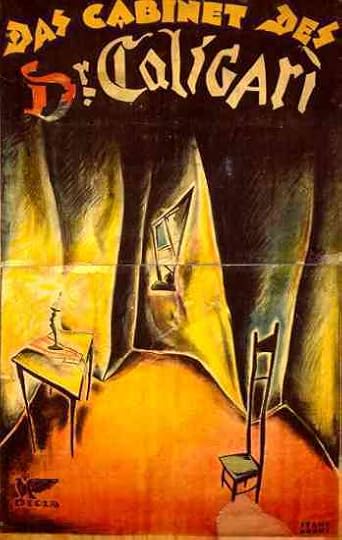
Thomson's ideas about the 'Big Screen', particularly its early history, have a Freudian undercurrent running through them. The public flocks to cinema, he says, because they want 'to be voyeurs in the dark, beholding an orgy of their own desires burning on the screen'. It's hyperbole, of course, but with his discussion of the orgasmic film editing at the end of 'Bonnie and Clyde' or the doppelganger theme in 'The Cabinet of Dr. Caligari', you come to realize there may be something to it.
There are good discussions here of the careers and films of Coppola, Spielberg, even Clint Eastwood -- nothing on the Coens, other than 'No Country For Old Men'. Thomson's range is wide, moving from the impact of TV in the fifties, particularly 'I Love Lucy', to hard-core porno in the new millenium. Considerable attention is devoted to international cinema, particularly French film; a very high percentage of Jean Luc Godard, Renoir and Rene Clair films discussed by Thomson I am not familiar with and have likely not been shown in the U.S. -- outside of a few art houses -- in some time. (I've put Renoir's 'The River' on my must see list). The discussion of English and Japanese films is also quite good.
Readers looking for more anecdotal 'pulp' material -- i.e. decisions behind casting choices, the origins of strange collaborations and tabloid style gossip -- will not be disappointed by 'The Big Screen'.
With no attempt to prioritize or measure, here are some themes, quotes, and bon mots from the text:
The metaphysics of cinema is: time, motion, space, light, skin.
Says Thomson: 'Time and again in American film -- and this is true of Chaplin in the Sierra doing 'The Gold Rush'and of John Ford in Monument Valley making Westerns -- the light is like a gift and the movie is constantly rewading our plea "Show me!". American films film the light. It is their energy, their optimism, and their happiness.
It was Margaret Herrick, the first librarian of the Academy of Motion Picture Arts and Sciences, who quipped that the award statuette looked like her Uncle 'Oscar'. The first Oscar was in 1929, the year of the crash.
F.W. Murnau worked with documentary producer and directory Robert Flaherty on Murnau's South Seas story 'Tabu'.
'Freud had elaborate theories of the screen as a psychological mechanism for observing ourselves and admitting our doubled personalities. Take as an example something more familiar than "Caligari": "Psycho", the film made by Alfred Hitchcock, the English speaking director most affected by the foreboding stylishness of German cinema'.
Fritz Lang's 'Metropolis' opened in Berlin in 1927, followed by, in subsequent years, 'M', and the Spencer Tracy film 'Fury' in 1931.
Stylish silent comedies from Cecil B. DeMille were 'Don't Change Your Husband (1919) and 'Why Change Your Wife? (1920).
Before her long history as head clothes designer on countless Hollywood films, Edith Head was the assistant to Travis Banton at Paramount from 1924-1928.
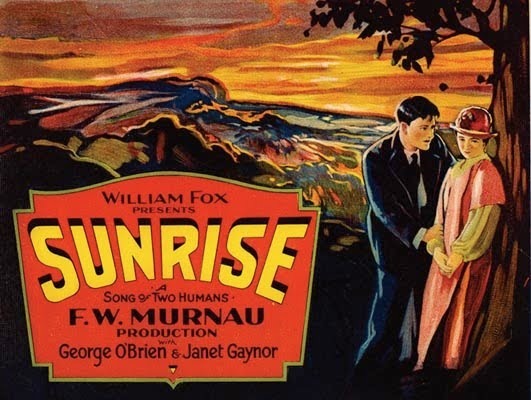
Cited often as the greatest silent movie ever made, F. R. Murnau's 'Sunrise' opened in the U.S. just two weeks before the first significant 'talkie', 'The Jazz Singer', with Al Jolson. Says Thomson: '(There is)...Thomas Elsaesser's observation that in "Sunrise" we face "the open secret of film-making itself, intensely eroticising the very act of looking, but also every object looked at by a camera." The sheen in "Sunrise" is the glow of desirability. It affects all three of the leading characters, but it is an illumination that hangs over the world. It is incandescence. People felt they had seen insight, and once glimpsed that is nothing you would ever want to lose.'
Scandals like the death of a woman at a party given by Fatty Arbuckle led to the creation of the Hays Code. Will Hays was the postmaster general in the Harding administration.
Russian film people transplanted to Hollywood include Akim Tamiroff, Maria Ouspenskaya, Lewis Selznick and Louis B. Mayer. First generation Americans with Russian parentage include David O. Selznick, George Gerschwin and Kirk Douglas.
Revolutionary Russian film school was synonomous with the technique of 'Montage'. After success and western fame with 'Strike' and 'Battleship Potemkim', Einsenstein came to Hollywood looking for projects but ultimately came away empty-handed.
During the Depression, production costs for movies doubled, largely due to the advent of sound.
The great movie musical studio MGM also produced Ted Brownings 'Freaks' in 1932.
Commenting on the Frank Capra films like 'Mr. Smith Goes to Washington', 'Mr. Deeds Goes to Town', and 'It Happened One Night', Thomson says: 'On the one hand, these pictures say they love the people, their natural decency and the way it stands for American values. On the other hand, they fear the ease with which the crowd can be carried away by the hatred and lust for melodrama.' Circa the time of another Capra film, 'The Bitter Tea of General Yen' (Pre-Hays-Code), the director conducted a torrid affair with its star, Barbara Stanwyck. Thomson was critical of Capra as a government informer.
Director Luis Bunuel helped Salvador Dali make the surrealist movie 'Un Chien Andalu' (1929), then drifted into anonymity only to reappear again some 40 years later with the hit 'The Discreet Charm of the Bourgeoisie' (1972) and later still with 'That Obscure Object of Desire (1977).
1941 was a banner year for cinema; Hollywood released 379 films for that year, including 'Citizen Kane', which lost the Oscar for Best Picture to 'How Green Was My Valley'. Other movies cited by Thomson in that year include two Stanwyck films, Howard Hawks 'Ball of Fire' and Preston Sturges' 'The Lady Eve'. Another Sturges classic, 'Sullivan's Travels', was also released in 1941. Sturges screwball comedy hit, 'The Palm Beach Story', was released in 1942.
Thomson recounts the difficulties Orson Welles had with his second major film, 'The Magnificent Ambersons' (1942). Due to contractual arrangements and because Welles was away in Latin America on a good will mission, RKO cut significant chunks of the film, causing Welles to disown it. The author gives some credence to speculation that a lost 'rough cut' print may still exist to validate Welles' superior artistic vision of the story and uncut film.
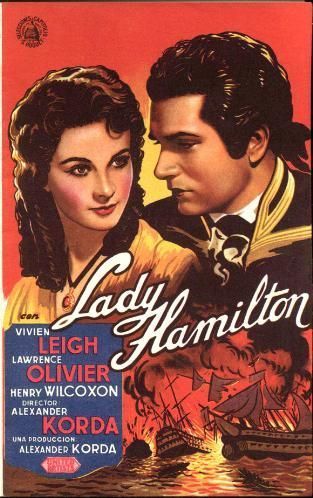
Britain's contribution to cinema includes the early work of Alfred Hitchcock, i.e. 'The Man Who Knew Too Much', 'The 39 Steps', 'Secret Agent', and 'Sabotage' (not to be confused with the later film 'Saboteur' (1942), all from the mid thirties. Another bright spot from England was Hungarian born Alexander Korda, who directed 'The Private Life of Henry VIII' and 'That Hamilton Woman' with Olivier and Vivian Leigh. Churchill was said to have written parts of the screen play for the Nelson biopic.
The rise of Italian neo-realism includes directors Luchino Visconti, Roberto Rossellini and Vittorio De Sica. Per Thomson, this style of movie-making featured less 'acting' and more 'recording' (ala Kurosawa) and was a reaction to the false sensibilities of Mussolini and the Nazis. Some say the first neo-realism film was Visconti's 'Ossessione' (1943), which was based on the James M. Cain novel, 'The Postman Always Rings Twice'. So popular was 'The Bicycle Thief' (1948) in the U.S. that, at one time, David O. Selznick had plans to re-make it, starring Cary Grant as the father.
Marilyn Monroe was the love child of Clark Gable. It seems Norma Jean's mom was working in Hollywood editing negatives in 1926 and they may have crossed paths.
Anthony Minghella, director of 'The English Patient' (1996), decodes latter-day Hollywood: 'The film community has all these redefintions of terms, often amusing: net profit means no profit, residuals mean no profit, producer equals liar, lawyer equals frustrated agent, agent equals frustrated director, director equals frustrated actor.... I have a primer of some description for understanding that when somebody rings up and says 'they're very excited', what they mean is 'hello', when somebody says 'I love your work,' what they mean is they know you're a director..."You can cast anybody you like" means you don't have casting control.'
Under the category of experiments in film watching, Thomson cites '24 Hour Psycho', Hitchcock's movie presented frame by frame at a glacier-like pace so you can examine what the camera witnesses independent of natural movement. In addition there's David Thomson's own 'The Clock' which has the author running the first and second reels of the old Judy Garland movie simultaneously, with the beginning reel running forward on one side of the screen and second reel running backwards on the other side of the screen, until they meet in the middle with converging images. This gives new meaning to 'in medias res' and reminds me of the days when some of us played Beatles records backwards to ascertain if 'the walrus was Paul' and he still could be counted among the living. But I like Thomson's daring here.
Reading this was a labor of love. David Thomson makes us realize how much we love the movies and everything about them. I took the better part of a year to read this, as I savored each era he covered; I read it more like a series of essays than a book, and I think I enjoyed it all the more by spreading it out. It's a big, ambitious book that goes deep (history, starting from the late 19th century) and wide (separate chapters on English, French, Italian and Swedish cinema). I especially liked reading about the silent era and the transition to talkies; I also liked the era that I think of as covering the classics, which is basically the 1930s through the mid 1950s (alas, the end of the black and white era). I've watched about a dozen old movies as a result of reading about them, and have at least a dozen more on my list to get through (just this weekend we watched Rear Window and On The Waterfront, both great movies). The author is very knowledgeable and offers deep insights on actors, directors and viewers. A very good book!
One of the best books of criticism I've read. Thomson doesn't pick bits and pieces to hold up as the good, nor does he quickly dismiss poor works; he enthuses over the graceful dread and obscure desire of movies. On that, the best of movies isn't just historic, international, and limited; but must be seen as the use of a screen--what television, facebook, and youtube have done to us; what video games and digital movies can do. We're lucky, though, to have things like 'The Godfather'. That's not a small point--any beloved piece of art, but especially movies, relies on all sorts of chance and mischance (no one sets out to make a disaster). So the money involved might fall through or have not been enough or too much--Actors come and go. Who's right for the role? Accidents of editing (Godard's first cut of 'Breathless' was smooth and conventional). --The deep of all movies, though, comes to 'dread' and 'desire'. To acknowledge those qualities, one gains a better sense of attention. It allows Thomson to see how contemporary pornography is without desire, a 'performed process without meaning'. Those two qualities are the ultimate perch of romance: what exactly do we desire (is it always so obscure?), and what dreadful things might come with it?
This is more than "just" a history of Film -- or "Movie," as the author prefers (more formal than calling it "the movies;" not as formal as the academic-sounding "Film"). It attempts to be a philosophical discourse on how we watch the movies, and how that has changed in the past 120 years, and continues to evolve in the era of streaming as screens go from room-sized to hand-held, and from a social activity to a private one.
As the latter, it's too long. As a history of Film (sorry, old habits die hard), it's the right length and talks briefly about a LOT of important, less-important, and nearly forgotten films ... so in short, if you're a film-fan or a "cineste," you may enjoy this ... but if you just like "the movies," it may not be for you.
I found it interesting and occasionally inspiring, but not as interesting or inspiring as other reviews led me to believe!
Starts out being a brilliant introduction to how the contemplation of big flickering shadows and light has changed our parallel realities starting with silent movies and proceeding through the current fascination with the tiny screens on our smart phones. Gets lost in the muddle of trying to include too many influential films and then recovers some of its initial strength toward the end. Some of the cinematic steps were of real consequence and deserve the loving coverage that they are given, but it deteriorates into the presentations of a proud parent showing the latest pictures of his developing child. Interesting for reinforcing some of your own delusions of development but not as revealing as you hope in the early pages.
Perhaps the best book on film I've read (and I've been reading about film and teaching it for many years). Crisp, perceptive and witty, Thomson gives us an admittedly subjective journey through the history of cinema and the philosophy of how and why we watch. And he does it all without a single bit of jargon or pretension. If you love movies, you need to read this book. You might not agree with everything he says, but you'll come away loving the art form even more. I wish all of my students had the patience and wherewithal to read this big shaggy dog of a tome. This is everything that good criticism ought to be.
Breezy, brief, and delightfully opinionated, while also remaining scholarly, expansive, and smart as hell. The book is serious at times and silly at others, and though the author obviously reveres movies and their makers, he is also deeply skeptical of the whole trashy and (occasionally) artful enterprise. To love movies is to love great trash, as Pauline Kael would say, and in that spirit, this book feels like a casual chat with the most garrulous and generous cinephile. The book made film history much more accessible than a dry and intimidating textbook would. It also added about 50 new movies to my Letterboxd watchlist. So, thanks, David Thomson 😊
Too much, and too broad, and too obvious, and too difficult to skim it and hunt out the unique insights I've come to expect from David Thomson. I much prefer some of his other books, especially "The Whole Equation," and particularly the shorter books where he lasers in on a single subject: "The Moment of Psycho" and "Nicole Kidman," for example. And I also like "Have You Seen ..." as a reference book. "The Big Screen" felt like a very overdue term paper. I started flipping around in it after about page 100.
Thomson's book is both a history and a work of extended criticism. For an example of both aspects in play at once read his discussion about Howard Hawks, or his comments on the evolution of movie violence (ruined by technology, as it were). It's a rambling, discursive, fascinating book for film buffs. Its treatment of the 30s was of particular interest to me, but much of the book was interesting. It takes a lot of chutzpah to be a film critic (above and beyond a reviewer), but so be it.
This is a brilliant, knowledgeable and hugely readable book on the history of cinema, from its origins to the present day. But this is not a textbook or exhaustive historical analysis; it's more personal and reflective, focusing on the effect of cinematic storytelling, how it may have shaped our perspective on life and the world over the century. Thomson is a thoroughly engaging writer, and this is an essential book for anyone who wants to think seriously about cinema.
Terrific book. Full of wisdom, full of insight, both into the history of cinema and the history of the humans who watched it (and what it did to them.)Plus a great resource for populating my Netflix queue.
Simply the best book on movies I've read. I like that it references (and takes much inspiration from) another favorite, Jerry Mander's Four Arguments....I just couldn't put it down.
Wow! Incredible analysis, collection, and love letter to Thomson's lifelong passion of film and its related arts. He is an incredible and beautiful writer: precise and sparkling analysis for film's technical elements, as well as observant and sentimental for the art's emotional side. His writing could be sharp, witty, responsive, questioning--at times I felt like I could've been reading a screenplay.
My favorite element of the book was how Thomson overlaid his analysis of certain films with a study on the social dynamics at that point in history. I cannot imagine the time and care invested to carefully conduct such extensive research for the art, its history, social history, and insight into its big players and drivers.
Thomson also provides a "behind-the-scenes" look into the inner workings of the Hollywood system, stripping away its laminated glamour and looking into the toxic underbelly of film production. For all this, it seems as though making movies is a gamblers game: who will take the chance to fund your script, find the right director, cast the right actor, ensure the right setting--there are so many moving pieces that must commit to the same game and take the risk. Beyond the art, politics also play a huge role in the Hollywood system, adding to the tantamount and exhausting task of film-making. You can really feel his adulation for the art, as well as his critique of the industry.
I learned so much about the history of film--how the inspiration was incepted from a desire to capture a movement of a racehorse to settle an argument and thereby required the use of camerawork and delicate frames. Thomson also slices in the history of media: during WWII the permeation of radio, TV, and film changed the technology landscape and how we perceive ongoing news and the proliferation of multiple sources of entertainment. The arrival of the TV offered stiff competition against film and delivered its own narrative structure, building a societal belief of "daily afternoon required TV" that still exists. Thomson is profound is his forecast of the future with his analysis of the past: how did we start with the biggest screen and now move onto tiny ones (smartphones) that offer bites of media and entertainment--where does this journey take us?
Thomson's key themes seem to be how film balance key tenets of the human experience: desire and dread, and artfully capture them in 1 movie to deliver good storytelling.
Thomson's collection of the key players in film history also made me think of the fragile, ice-crust/whiplash nature of fame. It seems like so much talent in the film industry suffered from its chaotic highs and lows that could be largely outside of their own control and then turned to isolation, depression, manic episodes, alcoholism, or chasing the high of a constant new lover. What was interesting was the social development of movies and how starkly it contrasts from film's place in society today: it seems as though film "suffered" from humble origins, cast aside as the less esteemed art next to theater, with its main players constantly performing debaucherous activities in their daily lives, the publicization of scandals was a relatively new phenomenon according to Thomson. To reign in this behaviour, the "Academy Awards" as the antidote, which were supposed to add esteem, prestige, control into the film world. Hollywood itself was far from the more conservative East and its supervision, which probably allowed the art to flourish for itself.
Perhaps the latter half of the book was more enjoyable and familiar due to me being more knowledgeable about the names and films mentioned. Nonetheless, I feel like I have such a long list of golden age and older movies to watch now :)
Some notes: - The Hawksian woman in WWII and post few years with more independent women (needing to take a different rolein society) ie Bacall vs Female Eunich in post-war years, ie Monroe - Directors must take a gamble on their films and someone must take a gamble on them. - Lack of resources post WW1 and Great Depression "hindered" film-making and forced filmmakers to be creative about what they used--super interesting - 1930s transition to sound; 1950s live interviews started to take place -> JFK; 1960s live broadcasting; 1970s VFX/video - Camera angels and editing/cutting are drivers of narrative and trains of thought - There are so many different factors that can influence a movies success: creators vs directors vs studio heads. Current events that are occuring and trends influence audience perception + likliness to go to the movies (ie buying power).
Every page of this comprehensive overview of Cinema exhibits Thompson’s encyclopaedic knowledge and erudition in the field. He begins more or less from the “beginning”, with Eadweard Muybridge’s photographic studies of animal and human motion, right through to the first decade of the 21st-c. In this sense, the book can be seen as an historical chronology, and this is satisfying in its own terms. However, as Thomson himself declares, this is more a series of personal meditations on a century of cinema-going and, from this perspective, it permits Thomson to range relatively freely to and fro, making connections and links across the time-frame — and the trip is always informative and entertaining.
The text is in four parts: The Shining Light and the Huddled Masses; Sunset and Change; Film Studies; and Dread and Desire. Of these, the first part (covering the first half of the 20th-c) is given the largest share. It is this section (in my opinion) that the title of this book (The Big Screen) derives. This is not to say that we no longer have Big Screens (obviously) but it does convey the way the Movies were “understood” then. By the mid-20th-c, with the advent of television (which became the “Small Screen” (and today that early television small screen has already passed into history as larger and larger television screens have blossomed with the new technologies)) the earlier understanding was more firmly established in the public mind as being the era of the Big Screen… and with it came the idea of the Big Studios and the Big Stars… and a flourishing of “scandals” to whet the appetite (still with us today).
One must not forget that this time in history covered the international Great Depression, sandwiched between two World Wars. More than anything else the devastation this caused in Europe allowed the United States to benefit, as artists, writers, directors, actors fled there (particularly to Hollywood) to establish Hollywood as the predominant global powerhouse for the Movies.
All this started to change mid-century with the emergence of a series of New Wave criticism and re-evaluation attacking what was then perceived as a stultifying effect of “traditional” cinema. New ways of seeing, recording, presenting films from other countries created a revolution in awareness and appreciation. Film Societies, Film Festivals, and Film Study courses sprouted everywhere; nothing would ever be the same again. Creativity was stimulated, aided and abetted by new technologies with lighter cameras, sound recorders and improved film stock sensitivity, allowing for a vast flourishing of film product which continues to this day.
Cinema has always been influenced by technology, and its influence has not yet ceased its relentless march. In the early days film had to find its place in competition with stage and theatre productions, develop methods of narrative peculiar to cinema, particularly with editing techniques, and deal with the problems of adding synchronised sound, and colour improvement. When a certain artistic level had been achieved, it then had to tackle the threat of emerging television technologies, then with video, laser technologies, computer generated graphics, mobile telephones with digital short movie capabilities, on-line streaming on your computer, ipad or mobile phone, etc.
Film Schools and the development of academic courses in film, communications, Information Technologies, digital manipulation, and so on, combined to create and develop new phrases and descriptive words for more in-depth analyses. One now had to learn how to “read” a film, not just watch it. Once the academics get their hands on something it does not take long before new jargon is sprouting everywhere — and not necessarily always to the edification or understanding of all. Philosophical discussions on truth, reality, authorial stances, etc. also caused more heat than light in many cases.
Awareness of just exactly how some films are made raised questions as to whether there was anyone ultimately in charge of what finally appeared on the screen, and that included the director (let alone increasing influence by actors and actresses as to whether a film enhances their reputation or not). Nowadays as a rule neither the scriptwriter nor the director appear to have absolute control — and there is some justification in the consideration as to whether they ever did — and marketing techniques have taken over much of the final say in “big” movies, ensuring that just about everybody involved in the production is covered one way or another. This actually results in “independents” being more in a position of having some greater control than the big boys — and that includes pay television giants which have managed to attract scriptwriters and directors in their droves; but which tend to result in (require?) committees of writers and their co-workers to maintain a certain “quality” to hours, months and even years for their often mammoth productions.
The combination of all these things has resulted in an exponential growth in just about every type of film genre that can be created, and that includes cross-over mixed genres. Nowadays just about anything goes, and just about anything is also available more than ever to just about everyone. Digital technology has changed the very nature of Cinema: one can hardly call their DVD a “film”, nor does the technology of the many new screens we have replicate the 24 frames per second developed for film as film (there is no blank screen between frames: some part of the video screen is always “lit up” — I have often wondered whether this physical effect actually affects the way we perceive the images on the screen (does the blank (black) screen between each frame of a film stimulate us psychologically to be more alert? does the non-blank television/monitor/computer/phone screen contribute to us becoming more soporific in our viewing habits? (maybe this might explain the increasingly erratic fast editing we seem to find occurring more and more in films today to compensate for this?)).
Our technology permits us to access our films/movies/cinema in any way we wish, to interrupt the flow whenever we wish, in any order we wish, to view them alone, on public transport, in daylight, or wherever. One can fast forward at different speeds, or even slow down to even interminably long “presentations”. Everyone can literally play around with the product in any way one pleases, regardless of the original intent (if there was one) of the product itself. On one level this represents a largesse and freedom which can be considered exciting and unpredictable, but it can also result in excesses which in the long run could prove counterproductive.
At the moment, however, that caution does not appear to be something anyone is heeding. Thomson acknowledges this in his postscript, in which he indirectly reiterates the concept of the Big Screen more applicable in the early art of the 20th-c, by positing the vast numbers of different “Small Screens” to be found everywhere today. He titled this postscript with a delightful pun “I Wake Up Screening”. Fun, in a sense, but also there is a sense of dread… Some readers might find it ironically amusing that, in my Penguin edition of this book, there is a typo in the Table of Contents which gives the title of the postscript as “I Wake Up Screaming”!
One thing was clear for me: the first part of this book came over as a kind of eulogy for the Cinema of the early half of the 20th-c. That kind of experience was unique and universal. That special shared communal feeling presented in darkened halls and theatres during the time of two World Wars and a Depression has well and truly gone. If we are lucky, we might occasionally be able to catch a glimpse of what it must have been like for the audience to feel the comfort provided by the Big Screen, by making them laugh and cry, by providing some little assurance and respite from the difficulties just about every single person in those audiences would be experiencing, and giving them the strength to carry on by making them dare to dream of better and happier times.
Of course, there were other wonders the Big Screen could provide: spectacles of history and faraway places, information about many things, provocative concepts to stimulate the mind, and so on. In a way the Cinema still provides those qualities we so love and enjoy, by entertaining us, but also by dealing more with personal problems and difficulties as they relate to our own times, as well as with the difficulties and problems of many others from different cultures and places. The potential for this remains a central aspect of Cinema today, and will probably always be so.
As mentioned above, despite following the story more or less chronologically, Thomson is not claiming historical absoluteness: he is more concerned with providing us with his own personal meditations on a century of Cinema. One does not have to agree with everything he writes (in fact I occasionally found myself in disagreement with some of his statements) but that makes this book all the more interesting. Regardless of one’s own personal predilections Thomson’s knowledge and erudition shine through this book, making it a pleasure to read.
"The Big Screen" is a David Thomson book, which means it's another re-ordering of David Thomson's obsessions. It's written as a history of movies, which means this time, his obsessions are (mostly) in chronological order (as opposed to the alphabetical-by-subject style of the "Biographical Dictionary," or the alphabetical-by-title format of "Have you Seen?). It's 500+ pages and therefore full of the Thomson bullshit we all know and love (I swear to God, he changes his final opinion on "The Godfather" three times over the course of like two (great) pages), and has once again got me asking how the hell one man can watch this many movies, AND TV shows, AND other screen entertainments he felt the need to round out the book with (i.e. video games and pornography), AND maintain his Chelsea (boo!!!!) fandom.
Anyway, it's great, as always. You can disagree with everything Thomson says (like his dumb view of "Melancholia") and still be delighted by the way he says everything. Just an unparalleled stylist, and more than that, a man capable of both sustained deep dives into single scenes and, uhh, massive broad (but complicated!) arguments about the very nature of screen entertainment. That's what this book is, truly, more than a history, right? It's a big old argument about cinema, how "the big screen" was a temporary thing, but important enough to change our ideas about ourselves and the world forever-- and maybe, for the worse? One of the best things about Thomson is how he be so simultaneously enamored with and ambivalent about film. He routinely asks if all this watching is good for us, not because he's a Puritan (for more on this, examine any sentence here on any blonde actress, especially Nicole Kidman), but because he's attentive. You can't have spent as much time watching as he has and not gotten slightly warped. Hence, this slightly warped but immensely entertaining, endlessly quote-out-loud-at-your-wife book.
Here's a short list I started keeping about halfway though (i.e. about the time movies start dying, for Thomson (i.e. the 50s?)) of all the shit I wanna see now:
- Hiroshima, Mon Amour - Kiss Me Deadly - The Sweet Smell of Success - Elevator to the Gallows - Road House (okay Thomson doesn't talk about "Road House," but writing down other movies reminds me that I still haven't seen "Road House") - Sunrise - Pandora's Box - La Notte, L'Aventurra, L'Eclisse, etc - Partie De Campagne - The Prowler - Celine and Julie Go Boating - Hitler: a Film About Germany - Damage - The Singing Detective - Godard's "Histoires Du Cinema"