Œuvre stupéfiante, inclassable, Dogra Magra est à la fois une performance d'écriture inégalée et un extraordinaire roman policier au programme paradoxal : un roman où les détectives sont les criminels. Ou plutôt, où l'assassin est la victime. Un amnésique se réveille en pleine nuit dans la chambre d'un hôpital psychiatrique. Nous le verrons se débattre au milieu d'une toile d'araignée tissée par les docteurs de l'institution, à la recherche de son identité et de son éventuel rapport avec une mystérieuse affaire criminelle. Le lecteur, entraîné dans une spirale de plus en plus serrée de coups de théâtre et de renversements de perspective, se trouve pris dans une intrigue labyrinthique où toutes les interprétations et leurs contraires sont autant de pièges tendus pour l'égarer. Chef-d'œuvre d'écriture parodique où se côtoient la doctrine bouddhiste du karma et les concepts psychanalytiques d'inconscient, ce roman dérangeant à l'extrême, publié quasi confidentiellement en 1935, fut redécouvert dans les années soixante. Depuis, il est devenu un livre culte au Japon, et les critiques et les études à son sujet se succèdent sans discontinuer. Lorsqu'on en referme la dernière page, on comprend pourquoi il est aujourd'hui considéré dans son pays comme l'un des romans majeurs du XXe siècle.
Yumeno Kyūsaku (native name: 夢野 久作) was the pen name of the early Shōwa period Japanese author Sugiyama Yasumichi. The pen name literally means "a person who always dreams." He wrote detective novels and is known for his avant-gardism and his surrealistic, wildly imaginative and fantastic, even bizarre narratives.
Kyūsaku’s first success was a nursery tale Shiraga Kozō (White Hair Boy, 1922), which was largely ignored by the public. It was not until his first novella, Ayakashi no Tsuzumi (Apparitional Hand Drum, 1924) in the literary magazine Shinseinen that his name became known.
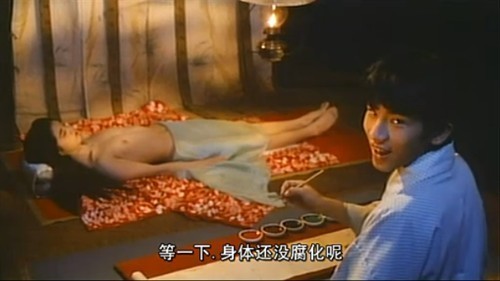
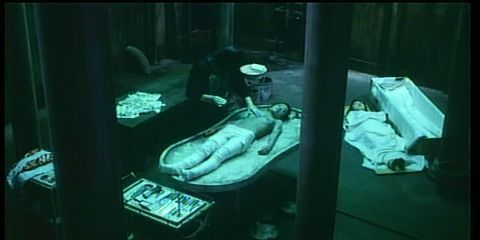
His subsequent works include Binzume jigoku (Hell in the Bottles, 1928), Kori no hate (End of the Ice, 1933) and his most significant novel Dogra Magra (ドグラマグラ, 1935), which is considered a precursor of modern Japanese science fiction and was adapted for a 1988 movie.
Kyūsaku died of a cerebral hemorrhage in 1936 while talking with a visitor at home.
Bless the people of France! They had traslated Kyusaku Yumenno's masterpiece Dogra Magra (Japanese original title: Dogura magura)!
If you had it in your mind to read Dogra Magra (Chinese translation: Encephalon Hell or Pericardium Hell, or more simply, Braincell Hell), please be careful, your brain is about to go through some really intensive and complete mind-fuck.
The story begins with a young man waking up only to find himself in an asylum, he is then checked on by a doctor, who claims he is here to help the young man to recover his lost memory, from this point onward, things take a nightmarish turn for the worse, and things go from weird to...you guessed it, weirder.
The late Kyusaku Yumemo (this pen name actually means 'A Dude Who Daydreams Too Much') was a novelist who had a reputation which is similar to Edogawa Rampo's, and both authors shared similar taste for the dark side of human nature, nightmarish events, madness, and gruesome crime.
Rampo had been known as the 'Edgar Allan Poe of Japan', then I think it's safe to say Kyusaku Yumeno was (surprisingly) some kind of a Japanese version of H P. Lovecraft as well. Like Lovercraft, Yumeno was heavily influenced by Poe, and like Lovecraft, Yumeno had a lot to express when it comes to madness and impossibility to escape fate. But at the same time, please bear in mind Yumeno's stories tend to get very gross and a lot crazier than Rampo, Poe and Lovecraft adding together. You know, Mr. Yumeno didn't get to be called 'The Monstrous Novelist' for no reason.
Dogra Magra has been named 'one of the Four Most Bewildering Books in the History of Japanese Detective Novels' (I've read all of those four books already) and this book deserves the title, every inch of it. In my opinion, calling it 'One of the Most Mind-Fucking Books in the History of Japanese Detective Novels' would be even more fitting, so...I think you can guess what reading Dogra Magra is like?
Reading Dogra Magra is like experiencing an incoherent nightmare, like being trapped in an asylum with the key thrown away...you don't want to stay inside this asylum, you think you're going crazy for real, you want to scream 'LET ME OUT! FOR GOD'S SAKE! LET ME OUT!' but no one is going to save you...and you can trust no one in the story because it's almost a certainty that people are either lying to you or they're crazy. That's what you get by reading Dogra Magra.
Do I like Dogra Magra? To an extent, yes. But do I think it's better than Edogawa Rampo's novels? No, because Rampo's stories are a lot more readable and coherent, still I enjoy what Yumeno had to offer in his books. However, if you don't like mind-fuck and narrators talking like crazy people, you probably wouldn't enjoy Yumeno's works.
All that pseudo-science and pseudo-Buddhism and pseudo-other things were tough to get into without rolling my eyes for the first half of the book, but the plot finally does pick up in the second. Most notable was the sense of intense vulnerability in being entirely at the mercy of someone else's narrative (with very questionable reliability) for one's (re)construction of total identity. I will shamelessly admit I read this only due to the song Vinushka: 'Is my existence itself a sin just because I am evil?'
I wouldn't equate Yumeno with Edogawa Rampo. Rampo is 10 times more readable and consistent, has a strong plot. Dogura-magura is more like reading someone else's inconsistent nightmare. Creative, for sure, but there is not much "story" but "theory" about how human brains work. Requires patience to read through it.
2.5 months to finish! Might be the longest I've stuck with a book and so glad I did. It's a long book, and there is apparently no good English translation, so it was even slower reading in French - oddly the one language it has been translated into outside of the original Japanese.
Thanks to Peter at the Vienna Book Club for the recommendation, and Andrea for accidentally buying the French version and then donating it to the book bin. I never would have heard of it otherwise because it's so outside my normal genre, but his description was so intriguing. After having read it, I have even more respect for how well he described it, because it's the type of book that is very difficult to explain.
Dogra Magra was written a hundred years ago, fell into obscurity, and then became a cult classic a few decades later, with a legend that reading it will make you lose your mind. It's a mystery novel, but also a treatise on psychiatry, and a psychological thriller where you don't know who is the victim and who is the killer, and perhaps one person is both at the same time. Lots of twists and turns and a very unique structure that has multiple stories within stories. Incredibly unique, so glad I read it.
Le roman a de quoi plaire, un amnésique dans un asile qui est « sujet » d’une expérience scientifique bizarre et est liée à une affaire criminelle sent savoir s’il est la victime, le criminel ou quelque chose d’autre. Et si ce n’était pas suffisant il y aussi les médecins dont on se demande quel est leur rôle dans toute cette affaire, ou s’ils ne sont pas eux-même fou. Le roman reflète cet imbroglio en étant constitué de documents divers, de dialogue et d’une typographie un peu particulière ; tout ça m’a d'ailleurs fait penser -dans une moindre mesure- à la « maison des feuilles ». Cependant je n’ai pas été vraiment convaincu par tout ça car j’ai trouvé que tous ces éléments pris un à un fonctionnait mal. Par exemple je n’ai rien contre les théories scientifiques vaseuses mais expliqué sur plus d’une centaine de pages, c’est ennuyeux. Quant à tout l’imbroglio plus que la perplexité, c’est surtout un sentiment d’inutilité qui l'a emporté face à ces mensonges, retournement de situations qui se déroule toutes les quelques pages.
Where do I even start? This book is insanely brilliant and brilliantly insane. Following an amnesiac mental patient the reader struggles to keep up as 2 doctors present conflicting stories about both themselves and the past of the narrator. The formatting is especially strange with odd punctuation, a disregard for gendering pronouns and blocks of text repeating themself for pages. In other words, it reads like the narrative of a crazy person. The narrative also serves as a scathing social commentary on the two schools of psychological thought in Japan during the 1920s: the eastern psychology based on ancestry and more spiritual models and the western psychology which was based heavily on Freuds work. The satire is biting and effective, and rather subtle if you don't know what you're looking for. Over all this is a fantastic murder mystery and look at the history of psychotherapy in Japan.
Probably the most David Lynch/The Machinist/Jacob's Ladder/The Cube ero guro nansensu mystery story ever written, I felt myself driven by the nose all the way through the narrative and each time I thought I came to a valid conclusion it gave me a finger and flipped my ideas upside down
Tout d'abord, merci à Alter Ego de m'avoir permis de découvrir cette œuvre.
Œuvre époustouflante, atypique, Yumeno Kyusaku nous fait vivre l'histoire d'un homme qui se réveille sans souvenirs dans une chambre d'hôpital psychiatrique. Seules ses pensées ainsi que le son d'une horloge semblent perturber le silence qui règne dans la pièce. Un médecin, le docteur Wakabayashi se présente à lui, déclarant vouloir aider le jeune homme à se remémorer son passé. A partir de ce point, toute l'histoire s'enchaîne tel un cauchemar sans fin, remplie de rebondissements et de révélations.
Le cauchemar. Voilà l'expérience vécue par ce narrateur amnésique, qui ne se souvient même plus de son nom, tout cela afin de répondre à une question : pour quelle raison s'est-il retrouvé ici ? Cette impression de vivre exactement tout ce que ressent ce patient est ce qui rend ce livre incroyable à mes yeux. Il nous fait voyager dans l'intimité du héros et quelque part à travers la nôtre aussi : ne pas être maître de son destin, être manipulé par les autres et avoir la sensation que les autres aussi sont victimes d'une forme de manipulation. Pages après pages, vous vous verrez dans l'incapacité d'arrêter de les tourner tant de questions se posent. Fascination sublime pour le narrateur, on ne cesse de se demander quelles décisions il prendra. Et qui peut-on réellement croire quand nous ne nous faisons même pas confiance ?
J'ai plus qu'apprécié ce roman. Loin d’être le monologue interne du narrateur, l'histoire est entrecoupée de différentes parties, de formes variées et joue avec la chronologie offrant une rupture de style. Théorie psychiatrique/psychanalyste et croyances bouddhiques se côtoient intimement et contribuent à l’intrigue plus que labyrinthique du roman.
Ce roman est aussi avec évidence une critique légitime et féroce de la pratique psychiatrique du XXème siècle. Yumeno Kyusaku dénonce ici une pratique qui résulte en des traitements absurdes, parfois violents servant à répondre à l’ego de leurs théoriciens posant la question de la finalité de la psychiatrie. Connaissances certes pseudo-scientifiques, cette œuvre met en lumière la complexité de la psychologie humaine ainsi que la difficulté à y répondre de manière logique, qui quelque part donne la sensation que l’imagination et l’interprétation peuvent être très utiles à sa compréhension tant qu’elles ne donnent pas naissances à des pratiques non éthiques.
Ce livre restera certainement une de mes expériences les plus étranges mais aussi l'une des plus fascinantes. A la limite du passage à l'introspection, cette sensation indescriptible lorsque j'ai fermé la dernière page reste encore présente de nombreux mois après.
On passe par bien des étapes avec Dogra Magra. Intrigué, on se dit à chaque fois qu'on le pose : ok, jusqu'ici tout va bien... Je ne suis toujours pas folle, et je suis (de suivre, pas être). Puis, on trouve que ça se tortille un peu. Ensuite, la curiosité piquée, on continue, même si parfois, le fait que l'auteur ait mis 10 ans à écrire son oeuvre se voit avec toutes les coutures. C'est lourd. Même quand on aime beaucoup la littérature japonaise. Et puis ça semble redécoller... Mais la sensation de légèreté ne dure pas longtemps. Avant longtemps on se demande comment un tel tissu d'inepties a pu passer pour un chef d'oeuvre suscitant autant d'hyperboles. Et 150 pages avant la fin, on n'a qu'une idée en tête : finir le bidule, parce qu'on ne s'est pas farci les 650 pages précédentes pour rien. Et quand on l'a fini : on n'en a vraiment, mais VRAIMENT rien à faire. Pourquoi ? Parce qu'il ne suffit pas d'asséner "mais tout cela vous sera évident dans quelques minutes quand je vous aurai tout expliqué" toutes les 2 pages pour que quoi que ce soit ait la moindre logique, tout est si tiré par les cheveux que ça en devient la plupart du temps ridicule. Parce que tout et son contraire ne sont pas convaincants, non, en dépit de ce que prétend ce psy qui se croit si brillant à l'oeuvre dans ce pavé, avec ses théories on ne peut plus fumeuses. Parce que la description répétitive des sensations physiologiques du malade victime coupable (qu'importe !) est lassante. Parce que la profusion de détails n'a aucun intérêt, d'autant qu'elle est si répétitive qu'elle fait plutôt penser à un radotage qu'à un réel univers mental structuré. Parce que toutes les fariboles présentes dans l'histoire montrent que l'auteur avait effectivement une imagination débordante, mais là aussi : qu'importe. Si vous n'êtes pas convaincu que les histoires les plus courtes sont les meilleures, lisez Dogra Magra. Vous comprendrez mieux ensuite pourquoi Less is More.
read this twice. both times, i was under the influence of lemon iced tea and boredom—and i do idolise Yumeno as a writer, so there’s that. perhaps reading this was an unwise decision . . . i've never been more mindblown and confused by a book in my life!
absolutely brilliant. wickedly bewildering and beautifully written. Yumeno’s dreamy and admittedly incoherent style of writing has me floored each time. from his short stories, to this novel, and to his poetry, he always shows up and gives his best writing.
j'ai pas fini le livre, je l'ai abandonné dans une boîte a livre c'était long répétitif et le scénario se devine très vite du plus aucun intérêt me semble-t-il
Mirad, yo con este libro tengo HISTORIA. Oí hablar de él y me lo vendieron como un Los renglones torcidos de Dios a la japonesa, y dije, pos veamos. Me lo empecé en 2020, nos confinaron a la semana y el libro se quedó en mi piso de Londres. Un año después lo retomé, me leí tres capítulos sobre fetos teniendo sueños de su herencia genética y dije "well that's enough", y lo volví a dejar. Ahora, en 2023, me propuse terminarlo, y he aquí mi hazaña completa.
Ahora bien, ¿me ha gustado? Pues no lo sé. ¿Lo he entendido? Pues tampoco lo sé. Es un viaje lisérgico de tres pares de narices, una mezcla de thriller policiaco con yo qué sé qué teoría filosófica y moral sobre la culpabilidad y nuestros actos. Y fetos. Muchos fetos.
Me lo he acabado, y es lo que cuenta. Sigo sin saber por qué se llama así.
Чем дальше, тем больше начинаю ценить умение признать, что книга душная, ты не хочешь тратить на нее время своей жизни, и отложить её в недочитанное как можно быстрее. Здесь — тот самый случай. Много вкусных и интригующих составляющих, много эмпатичных и близких мне тем, но скомпилированы они достаточно утомительно и уныло. Идея понятна, от этого сильнее не цепляет. Пародия на сутру в меру забавная, но тоже достаточно изнурительная, как когда экспрессивный знакомый растягивает уже давно понятную телегу в 10 раз. Круто, что такая книга существует, дочитывать её только по этой причине не обязательно.
Tôi đọc cuốn sách này từ tầm tháng 5 đến bây giờ là đúng hết tháng 7 mới hoàn thành. Khi đọc sách thì không biết tôi là người điên hay nhân vật chính là người điên hay tác giả là người điên nữa. Không thể nói là tôi không thích nó nhưng khi được giới thiệu là một trong số những cuốn kinh điển shock não nhất của văn học Nhật thì tôi đã mong muốn một thứ khác. Đọc cuốn này tốn não kinh khủng, và phải luôn tự khẳng định đây là fiction và những kiến thức tâm thần học trong này chỉ là do tác giả sáng tác ra chứ nhiều lúc cũng muốn điên đầu theo.
Yumeno's classic that never was is truly a "Nietzschean novel," if ever there was one (which there was not). From psychological depths plunged, to perspectival and genrific kaleidoscopics not witnessed in the West since Joyce, to a purely posthumous life, a tale of guilt and crime without salvation or end (Dostoievski be damned, here is he is divested of his Christianity), to the thematics of the Great Noon and the eternal return.
This work is an experience in the most literal sense of ex periri - a traversing of peril or danger, in proximity to the void of death which gives life even as it takes it in its distancing. A masterpiece weaving together in an absolutely singular fashion the detective novel cast in madness with a psychological theory at once sensible yet totally insane, a religious interpretation kept in the nearness of its distance, a classic familial tragedy, and the narration of a singular suffering repeated without end.
That this novel has been withheld from English readers for so long is a blight upon our literature. Read it if you can. And do not trust what some others have said, regarding the film adaptation - while faithful enough for the first 3/4s, the end loses all ties with what makes the narrative a singular experience, and can only be given by the narrative voice in its silent saying (not to mention the inability to portray the theories of Masaki's theoretical texts in visual form). While a good enough film, it does not stand next to the novel that it takes but the "story" from (and the story, or the content, is the least of what matters in this "novel" which is hardly a novel...).
"all men are crazy." this is one of the best books ive ever read. it drew me in from the first page and i knew that i would love it. it follows the story of a man with amnesia who wakes up in a psychiatric hospital with no memories of his past. the doctors of the institution spin a web of lies about who he truly is and what his connection to a certain criminal case is. when i read the ending from page 500-546 i was shaking so much and freaking out. i could not believe my eyes. its such a tragic story that really invokes a lot of deep thinking. there is a lot of talk of psychology and philosophy mixed with mystery. im so surprised that more people havent read this. this book is SUCH a mindfuck and i could not get enough. i will never forget it and i cant wait for the next time i read it. had me quoting "im not crazy, its just a hereditary psychological crisis" for too long for a little over half of the book its less plot focused (but still related) and more centered on doctor masaki's theories and interviews. a brief overview of some of the topics he discusses is the dream of the fetus, the brain is not the seat of thought, psychological heredity, and other such things. kyusaku perfectly displays the confusion and vulnerability of the main character throughout the book and it feels like im really inside of his head. he blindly follows the lead of the doctors and even when he tries to rebel, he still ends up doing what they want unknowingly. he is following a script that is unknown only to him. somewhere in the introduction i read a quote about how the ending is revealed at the beginning, and i didnt understand until i finished the book. even now i still think about the mental hell that every main character in this book was going through. its part fiction and non-fiction, in my opinion. masaki's theses are believable and hold ground, but are unable to be scientifically proved (thinking of the dream of the fetus here). they are entirely within the realm of possibility, so thats why id say its a form of.. fictional non-fiction. i could talk about this book for hours, but ill try to stop here.
Okay, I'm far from the type of person who writes my reviews on Goodreads (I often just rate stuff and leave when I'm done because more often than not, I keep my thoughts to mindless rambles on a blog), but I came across someone else rating the book saying "I feel like I have just been skullfucked" and I felt compelled to actually write a review on here to say that I absolutely agree with the sentiment.
This book is, for all intents and purposes, a mindfuck. You're either gonna get mindfucked because of the plot or because of the scientific and pseudo-scientific unhinged ramblings of a certain character in it, or both. That's a guarantee.
In my opinion, the book tends to be a bit too long and overstay its welcome, which often made it painful to read through while also getting blasted by stuff that made me feel like I was in the poor protagonist's place trying to understand what the fuck is going on, but I still find the book itself interesting. Disturbing, for sure, sometimes even infuriating, especially once the truth about the plot unravels, but still, interesting.
I have genuinely no idea if I'd recommend it to anyone. I don't even know HOW I'd describe it to someone if asked to talk about it or try to pitch it to someone, because everything I've told my friends about it while I was rereading it and reacting to things makes me sound genuinely unhinged.
It sure is a reading experience, that I can say. I'd say my rating is more of a 3.5 than a 4 because the length of some parts really made me groan at times, though.
Livre expérimental. Je veux vous dire que toutes les réponses sont apportées en cours de lecture ou à la fin. Ensuite il faut relire les pages 100 à 110 pour bien comprendre le livre.