Many designers enjoy the interfaces seen in science fiction films and television shows. Freed from the rigorous constraints of designing for real users, sci-fi production designers develop blue-sky interfaces that are inspiring, humorous, and even instructive. By carefully studying these "outsider" user interfaces, designers can derive lessons that make their real-world designs more cutting edge and successful.
Librarian note: This ebook shares the ISBN 9781933820989 with the paperback edition.
I heard about this book from the 99% Invisible episode "Future Screens Are Mostly Blue", which I highly recommend giving a listen. It covers some of the more fascinating topics in the book - not only why computer interfaces in science fiction tend to be blue (the most futuristic color!), but also why the first flip cell phone was a commercial failure (it flipped down, while Star Trek had primed us for decades to expect communicators to flip up), and why that super-cool gestural interface in Minority Report is actually a terrible design (turns out, waving your arms around in the air for any length of time is exhausting).
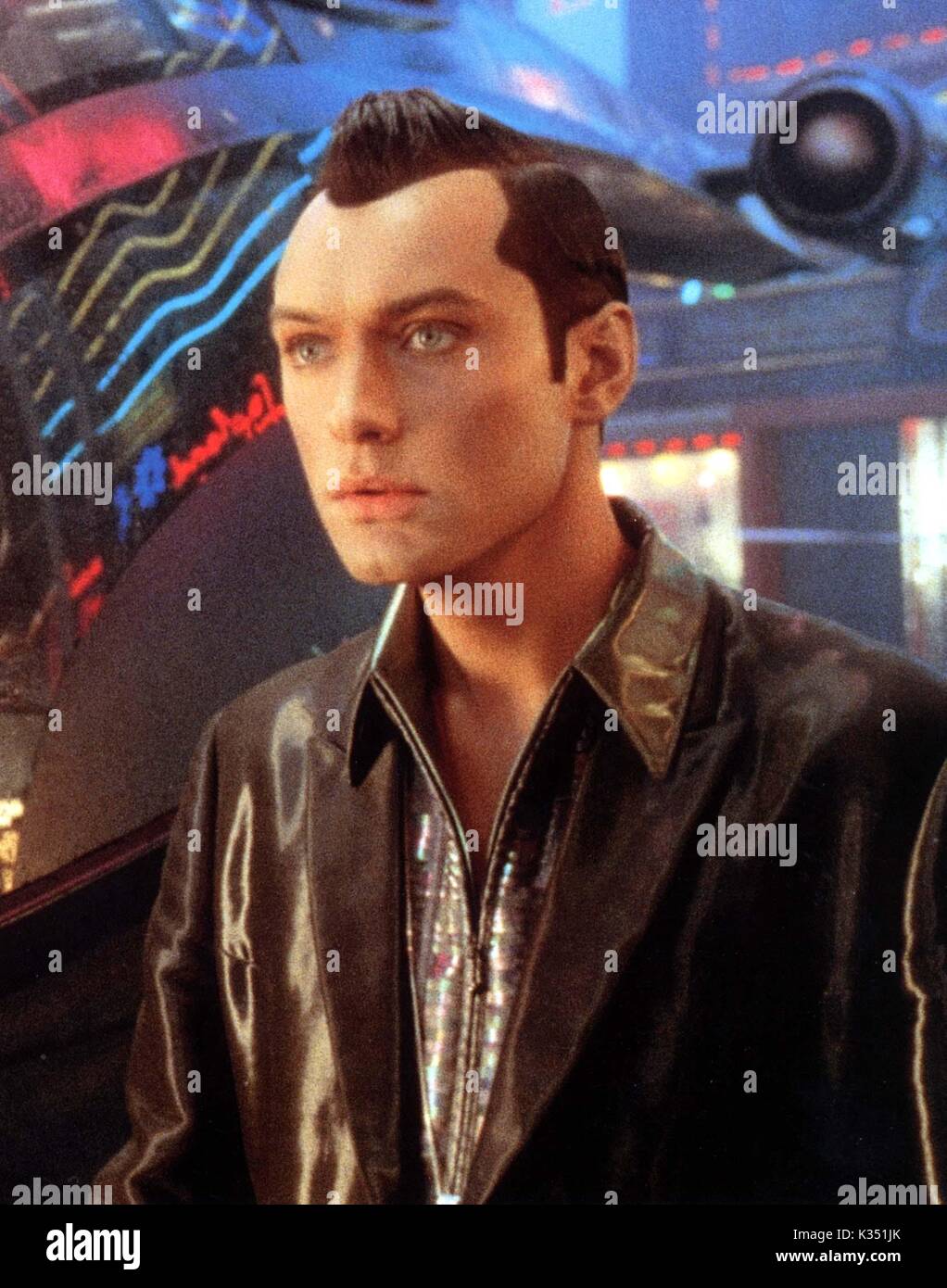
Given my interest in both real-world tech and science fiction, I definitely had to track down the book. And it turned out to be well worth the cost ($35 for a paperback, Amazon??). Thick, glossy paper; gorgeous, full-color screencaps on virtually every page; and you know a book written by designers is going to be beautifully laid-out. Divided into fourteen chapters, it looks at how, over the past hundred years or so, science fiction has defined and inspired how we design technological interfaces in the real world. It covers everything from mechanical controls (the levers and switches and blinky lights so common in 50's and 60's SF) to holograms and anthropomorphic robots and telepathic interfaces, to systems specially designed to teach, diagnose, and get you laid. If we ever do develop the technology to build a sexbot, this book tells us, science fiction has already mapped out the interface (it should look like Jude Law, for one thing).
Though most of the examples are iconic (Star Trek is heavily overrepresented, as well as The Matrix and Star Wars), there are lesser-known gems that it made me want to track down (Chrysalis, and why haven't I seen District 9 yet??) And it was always fun to see some favorites pop up here and there (the Ariel brain imager from Firefly! GERTY's happyface-based emotional indicator in Moon! That memory-sucker dome thing from Eternal Sunshine of the Spotless Mind!)
I think the most interesting sections were on apologetics - explaining apparent mistakes in a way that may actually reveal good design. For instance, in the video-phone scene in 2001, the character's young daughter is seen mashing the keypad with her hand - but it has no effect on the call. Production oversight? Or maybe the system is advanced enough to realize when input is meaningless and likely coming from a child (or a cat!), and thus disregards it. Very cool!
My main disappointment here is the book's focus on American film and television science fiction almost exclusively. Though I understand their reasons for avoiding literary SF, there are so many fascinating ideas that could be examined there. Also, their total lack of Doctor Who is inexcusable. Come on, I want to see some deconstruction of the TARDIS navigation interface, or at the very least the sonic screwdriver! Twist, twist, it's a soldering iron -- twist, twist, now it levitates shit! Talk about user-friendly!
Ah well.
Overall, this is a fun and fascinating book, though I suppose it's not for everyone. I spent ten minutes gushing about how awesome it was to a coworker, only to have her look at me skeptically and say, "I literally cannot see any appeal in reading something like that." Different strokes for different nerds, I suppose.
The subject of human interfaces and human-machine integration is an important one and bad interfaces are so common and proliferating that I thought this book might be a useful addition. To a newcomer it would be very useful and it does offer some great illustrations of interface design from SF. But the more interesting lessons of good interfaces for mission-critical tasks are not covered and I found it somewhat less than I had hoped for.
I first heard about the main ideas contained in this book on the podcast 99% Invisible. It delves into some iconic visuals from famous films and TV. It explores why screens and interfaces are coloured blue and offers fascinating apologetics for visual design that might be a mistake. (2001 video call where the main character is chatting with his daughter and she wildly mashes the keys but nothing happens, maybe the design has evolved enough to ignore random inputs as if from a child or a cat walking over the keys) One small bugbear of mine is that for such a visual idea this is very low on visual examples. This is absolutely worth your time and money. Brilliant.
This was a great book and I enjoyed reading it. It was very interesting about the celebrities and those who improved science fiction movies. Such as Alien, Wired Science and others. Learning about design lessons was very informative and it was a great read.
Great Insights for Designers Telling Stories about "Tomorrow"
I’m mildly obsessed with the design techniques that make something look futuristic. Sure, you can point to something recent, like Black Panther's sand table, and say it looks futuristic because it’s showing the edge of what’s possible. But why then do movies from decades ago — The Time Machine (1960), Alien (1979), and Weird Science (1985) — to name a few, still 'read' like they're ahead of today?
The reason is that there is a set of design principles at work, and at its greatest level of detail are the UXs that movie characters touch, talk to, and sometimes run away from. A wealth of those principles are found in “Make it So: Interaction Design Lessons from Science Fiction,” a book that you need to get right now. Authored by Nathan Shedroff and Christopher Noessel, it explains:
* Why the future is glows blue, is bitmapped, and is most definitely sans-serif * Why Hal’s calm voice sounds psychopathic while the Enterprise’s robotic voice comes across as friendly * How UX can signal the story's environment. For example, asymmetrical, jagged edges for dystopias and balanced layouts with rounded shapes for utopias
Why is this useful?
For one, if you're trying to paint a vision of the future, it's important to know the patterns of expectation already established in the audience's mind. Second, if you're creating new interfaces, sci-fi has a lot to teach. For example, what if you have a vast database and need to make it navigable by someone who has zero point of reference to start? Well then, the Fortress of Solitude's crystals, with its verbal Q&A interface, mini-documentary style of conveying information, immersive visual display, and a trusted voice would be a good start.
And finally: it's fun. Did you know Spock once gave a PowerPoint presentation on the bridge of the Enterprise?
Great opportunity for me to read this book for free in pdf format. As explained in the preface that this book will be best for the interface designers interested in learning best practices from sci-fi, understanding sci-fi’s role in design history, and using sci-fi interfaces in their work. As written I got the same learning from the book. After getting admission to engineering college I developed an interest in science fiction and sci-fi from Hollywood movies and different books and novels. So I found the book very interesting and love to read the book. This book explained the technology from the engineering field to the medical field. The augmented reality I found very interesting because I heard many things about this brilliant technology. Visual interfaces I found very interesting to learn. Visual design in Jurassic park is explained which is very relating for me because I saw the film 2-3 times. Brain interfacing is also very amazing technology I was surprised while reading about this. In the medical, the visualization of the human backbone is very important and surprising too. Because by this doctors can study parts by parts easily. There are many things to write but it will be very lengthy so I am concluding my words. For me I enjoyed this book thoroughly. Thank you for providing this book.
Outstanding exposition of the elements that have made up Science Fiction, systematically analyzing them in an illustrated, clear, entertaining and logical way; breaking down its components and giving clues to help designers develop their proposals in an organic and creative way. Although it is aimed at creators, anyone can learn and develop their ingenuity through this reading. _______ Extraordinaria exposición de los elementos que han conformado la Ciencia Ficción, analizados sistemáticamente de forma ilustrada, clara, entretenida y lógica; desmenuzando sus componentes y dando pistas para ayudar a los diseñadores a desarrollar sus propuestas de forma orgánica y creativa. Aunque está dirigida a creadores, cualquier persona puede aprender y desarrollar su ingenio a través de esta lectura.
Skype and FaceTime are my videophone. I have available to me a Star Trek style communicator that I can carry around with me that keeps me in touch with home, friends and work. and my children can ask HAL (Siri/Google Voice Search) for timely information I can look into my liquid crystal screen, point and click a few incantations and magically some item from half way around the world will appear at my door, albeit in a week or so. . My (near) Universal Translator, while not entirely transparent can supplement my high school French and, while having difficulty with cultural idioms, turn Arabic and Chinese into pidgin English that is at least semi-usable if not amusing. Major cities are covered with networks of security cameras. Big Brother really is watching what we think as we're being watched both by Google Analytics and the NSA. I use it too when planning activities (Page Rank, social media sites like Trip Advisor). And if I can believe firms like Consumer Physics by this time next year I should be able to purchase an inexpensive tricorder that uses the cloud to crowd source the composition of objects such as food, plants and soil through a digital signature read by a hand held spectrometer.
On the other hand Star Trek's hypo spray was invented before showing up on TV and used for mass vaccinations in Africa. Perhaps some remember a short lived 1970s TV series Probe where protagonist Hugh O'Brien used an early prototype of Google Glass (video pickup but audio only feedback) connected to a computer centre (Google/Yahoo/Bing) headed by Burgess Meridith (fantastic character actor BTW) which he queried to find out people's background, location related data (Maps) and identify objects (Google Goggles). And whereas that old favorite flying car is not likely to become an everyday reality, the Leap Motion Controller controller and Kinnect are practical and more important, available Minority Report style user interfaces. Recently at Toronto's Mini Maker Faire I was able to view a demo of 3D food printing. Though not even close to the speed and utility of a replicator... yet, it's technically feasible or to create a hybrid device that given a command "Tea, Earl Grey, hot" it would, 2-3 hours later, have manufactured a sturdy plastic cup with the likeness of Patrick Stewart on the side and filled it with tea. More importantly, low powered devices like solar lamps, cell phones and crank powered radios promise to bring the benefits of 20th and 21st century technology to hundreds of millions of off grid people around the world.
The book focuses mainly on the implementation of different types of user interfaces that appear in science fiction films and TV. There is quite a bit of cultural reciprocity involved, to some extent real world engineers are inspired by the creative visions of filmmakers and vica versa. But whereas film can gloss over technical difficulties, economic infrastructure required and usability issues, real world design has to not only live with these but also fill in the details. Nevertheless the authors are able to provide a number of stimulating examples where these problems have been overcome and useful products created.
Aside from providing good design advice the book is also a pleasurable romp through the history of science fiction movies, from the Georges Méliès very early Le Voyage dans la Lune ( featured recently in Hugo) to District 9 and Iron Man 2. There is also a very good summary of the evolution of UIs used in the Star Trek universe. However there are some noticeable gaps - the authors don`t consider the espionage genre . The Bond films abound in gadgetry, The The Prisoner subtlety and Get Smart`s "Cone of Silence" is a wonderful send up of technology gone wrong. Nor, 1 meagre reference to Asimov's 3 Laws of Robotics as the only exception, are written works such as Heinlein's Waldo, Pohl's Heechee spaceships or Asimov's The Foundation Trilogy consulted, even though there's terrific description of a UI for visualizing history contained therein.
Caveats aside, it's a fulfilling read, copiously illustrated with full colour slides that will jog your memory and well worth adding to your personal or corporate library.
This book, Make It So by Nathan Shedroff & Christopher Noessel, is an analysis of interfaces in sci-fi films and TV shows with lessons that interface and interaction designers can use in their real-world practice.
The first part of the book examines the elements of user interfaces in sci-fi, and the second part looks at how these interfaces are used to assist basic human activities such as communication and learning. The book has a companion website, www.scifiinterfaces.com where new material is updated regularly.
“Shedroff and Noessel have created a lucid, well-organized design textbook,” says Bruce Sterling, the well-known science-fiction writer, in his forward to the book. This book is for interface designers interested in learning best practices from sci-fi, understanding sci-fi’s role in design history, and using sci-fi interfaces in their own work. This book comprehends the benefits that science fiction can offer to designers. This book is like a textbook for designers. They could keep it as a ready reference resource for their regular designing assignments. Design lessons are included and to make them easily visible, they are set off in green type. The titles of the lessons are written as unambiguous imperatives, so their intended lesson is clear. On the other hand, for cinephiles, there are a lot of good sci-fi movie recommendations in which exciting interfaces can be studied. There are a lot of visuals and examples, making novel concepts clear, which would make movie watching more interesting. There is also a lot of history of sci-fi movies with pictures. This makes it doubly interesting for connoisseurs of cinema. The Internet Movie Database, www.imdb.com, can be used to see all the movies mentioned in the book. Some of the things that can be learned from the book, Sans serif is the typeface choice of the future, say the authors. If you want your interface or new technology to seem futuristic, it’s got to glow. An interesting fact about sci-fi interfaces is that they are mostly blue so if you’re looking to establish a futuristic interface, shades of blue are an easy bet. Use of nonrectangular-shaped screens make them look advanced.
If you are interested in user interfaces, this is a book I would highly, HIGHLY recommend reading. Not only does it touch a very important topic (for me), but does is in such a unique way in involving science-fiction that it is not only informative but very entertaining.
By mixing these two together, the book can show the true effectiveness of user interface in the design of technology in both terms of technology for us now and the technology for future sci-fi movies. The book touches such a wide variety of subjects such as mechanical controls, gestures, augmented reality. As a programmer I know how important it is to have to right interface for any technology we use, and I am actually surprised by how many others take it as something to pick last minute and not something to consider as part of the designing process. This book does show you that user interfaces, by using it correctly and efficiently, can actually improve not only user experience when it interacts with it but also its functionality and performance.
I loved how throughout the chapters it also gives random facts or lessons about the technology, or the movie being mentioned, or people being inspired from it. Learning random facts like this makes the experience for me more enjoyable.
The design of the book itself was also perfect and on point. There were a lot of movies that I am not familiar with, and I was afraid that I wouldn't be able to understand when reading about it, but the author make sure to point out clearly the things he was taking from the movie/TV series but also show different pictures of the technology itself. It made it visible and understandable for me to see what the author was talking about, even if I didn't watch the sci-fi itself.
I’ve read many computer science-related books when I was doing graduation in computer applications, but this book shows how well the book can be written irrespective of its subject. I learned the nitty-gritty of interface design which I didn’t learn in my UX design classes. I never thought of interface design in such depth. The authors have woven the past, present of interface design seamlessly on the fabric of sci-fi movies. They have chosen almost all sci-fi movies and unravel their scenes to give a wide perspective of interface design. How interface design in sci-fi movies changes the social outlook towards the technology and while some part of it lives with us. This book can be a textbook for the students who are leaning interface design and can learn different zones on the interface such as sonic and volumetric projection etc. It’s a well-written book, with full of robust information, engaging with trivia and a perfect piece. Since I am a web designer, it’s a great source of information. Well said, “Learning is important in sci-fi narratives, just as it is in life.” (Make It So). Volume projection is the most fascinating lesson of the book for me. However, I couldn’t judge the book well because I haven’t read many books of this kind, but it wouldn’t be wrong if I say there are only a few books written on this subject. So, being a computer science student, working as a web designer, and an avid reader – I loved this book. I was thrilled to read decoded scenes of my favorite sci-fi movies. You should read this book if Iron Man’s laboratory excites you, new gadgets fascinates you, want to learn more about UX, or thinking to write a book on interface design,
I will admit first off, I had no idea this book was going to contain as much information as it did. I felt like I kept reading and reading but at the same time, I was learning. If you are not familiar with Interaction Designers, they focus on everything from data visualization to interface design to exploring interaction across multiple technologies. In the world of technology, this is a highly sought out profession, and anyone considering going into this field needs to seriously absorb every word written within this book. I cannot even watch "The Good Doctor " now or any other show that uses interfacing the same. My favorite chapters were on gestural interfacing and sonic interfaces. The only reason I gave this four stars instead of five is simply that for a novice, such as myself, it was just too much information, but for someone who understands all the jargon it is a must read book. I can also see this book being an excellent resource to use if writing a thesis or essay on technology or interface designing.
I love science fiction. The endless possibilities to stretch the human imagination and make unrealistic very much real (Even if it's just on screen) Being from non designer background, I found that the language was easy to follow. Also loved few samples where they have shown how they have been able to make things similar to what was done on the science fiction series or movie. What it lacks us that at some places it get to bland. Too many things are presented but not much depth. So right now after reading this, there are lots of designer concepts floating in my mind but no real information about them. It’s a decent read.
Not one UX designer I know isn't a fan of science fiction - to a person they love to talk about their work in terms of how it affects the future. The foreseeable futures played out in science fiction movies gives them much material for speculation: how will (and should) humans interface with technology in the near and far future?
"Make It So" is an entertaining and instructive treatise on how the gadgets and systems of science fiction movies and television have been and can be adapted in the real world. One of the biggest take-aways for me is that we need more interface designers used as consultants on the sets of SF movies.
I read this book last fall, very casually. I read it again a few weeks ago at a fever pitch, because I needed to put a design together for a project at work, and the team wanted something futuristic and sci-fi. This is really exactly the book for that. I wouldn't say there are too many life lessons for interaction designers here that you haven't encountered elsewhere, but the way they are organized around topics and user goals is helpful. I'm only a casual sci-fi fan, so there are a lot of references here that were unfamiliar to me, and it was great to learn about them. All in all a really great concept for a book, and a great execution as well.
This is one of those books you should probably buy two or three copies off; if you work on a creative team this'll get everyone on the same sheet of music pretty quick.
My edition is from 2012 and in the intervening years some of these technologies have advanced quite a bit.
It's also refreshingly unprecious about fictitious technology, for instance volumetric projection is stated to be a wasteful use of power in reality that just looks cool.
It can be a little dry in places, but it's definitely an excellent reference for creating.
I expected this book to draw parallels between interface design in Sci-Fi and the real world. Surprisingly it does not talk about any interface examples in the current real world. It just focusses about different interface systems in movies.
The book does not have good content, nor any scientific/data-driven points. Its an opinion piece without making any opinion. Its more of a study of the state of the world of interfaces in science fiction.
I'm not sure the cross section of people interested in interface design and scifi is that big; in any case, that book, which compiles a comprehensive review of interfaces seen in movies and series by theme and infers lessons and perspectives from them is a resounding success in a quite unique niche.
What's more I'll keep my eyes open for any such occurrence in the future and will definitely come back to it.
What a fun book! This book takes the design aesthetics from SF and applies them to interactive design. This book is gorgeous and the photos and text make this a "coffee table" book as well. In addition the book covers the various interfaces found in various SF movies and TV shows and how they engage with the "real world." If you are an SF geek, or a UI/UX geek this book is a must for your bookshelf.
This book helps provide another possible perspective to every work of fiction you might experienced. For every sci-fi movie or show I see or book I read from now on, I'll be thinking about the real world implications of it's technology, realistic or not. I just wish this book was part of a series. Much has come out in the 9 years since this book was published and there are more lessons to learn from other realms of interactive technology I'm sure. Fun read.
An absorbing read! – It covers some of the most interesting topics, with examples of iconic films – Star Trek, The Matrix and Star Wars – It was fun meeting some of my favs!
The most spellbinding chapters are on apologetics, especially the one on the video-phone scene in 2001, (the protagonist’s daughter smashing the phone with there being no effect on the call!)
Overall, it is an intriguing read if you're into science fiction and the cinematic world.
Being a Sci fi fan this book is an interesting take on what is happening visually around us using technology in all its forms. It gives a sense of how each section of life is being infused with technology. This might be vision, life, death and more. It goes back to 1920s and now the 2010s
Informative and exciting even for a layman such as myself. I found it fascinating the way interfaces are designed to attract their audience and found myself looking for those examples everywhere. I'm giving it 4 stars.
There are some really useful insights, especially on VR and AR. It’s also interesting to see what kind of speculative interfaces the film industry has come up with, but I don’t know if they can really be applied as the book tries to argue.
This book has an intriguing premise, but no clear target audience.
The premise is to draw interaction design lessons from interfaces in scifi films and tv shows. In theory, because those interfaces visualize the future, they should be able to help designers to imagine interfaces beyond historic constraints.
The ostensible audience for these lessons is interaction designers, but the problem with writing for such an audience is that most or all of the lessons presented should already be patently obvious to most interaction designers. While a non-designer might find a lesson to "beware the uncanny valley" (written after observation of humanoid robots) to be mildly interesting, designers are likely to find such a lesson to be old news. Yet the non-designer is not likely to care enough about interaction design to want to read a full book of such lessons, so the book falls short of having any clear target audience.
The book does have a few fun examples of how scifi can be applied to the real world, such as:
An impressively thorough look at futuristic interactive systems depicted in science fiction media. I have to say that the audience for this book is probably limited to that overlapping segment in a Venn diagram of folks interested in user interaction and science fiction fans. Because it concentrates on fictional systems, the potential practical takeaways are limited (although there's a nifty anecdote about how a topographic engineer for the U.S. Army was inspired by the X-Men movie version of a technologically dynamic sand map). And although screencaps abound and are surprisingly effective at conveying the illustrated concepts -- even when they involved more movement and, well, interaction to demonstrate how they worked -- I found myself most interested when the examples were drawn from TV shows and movies I'd actually seen. (The authors did deliberately draw from a broad body of work instead of depending on the best-known works.)
I appreciated the precision with which the authors approached their study, but it may make for slightly denser reading. For example, they describe what are commonly known as holograms as "volumetric projections" instead, since holograms actually do exist in the present day (the shiny images printed, say, on your credit card). They're careful to present definitions, so you're never lost, but it also hampers the ability to flip to any page and read an interesting tidbit. And they're rightful sticklers about how media portrayals overlook real life concerns, whether it's how the Minority Report gesture-sensitive screen would lead to tired arms, or how volumetric projections as part of a larger display should probably be small, so as not to block the view of whatever's behind it, but then there are social issues with gaze-level-matching and talking to a diminutive version of, say, your boss (or Darth Vader).
I have to confess that the main use I could think of for this book was for science fiction authors (or set designers for science fiction movies, of course), so that a reasonable futuristic design could be constructed. Topics from mechanical controls to brain interfaces to anthropomorphism and sex are covered, so it's a great reference to see what's already been thought of and how it might be made better.
Interesting stuff! But slightly too dense to make it into the sort of popular nonfiction I could recommend widely.
God, I wanted to love this book but alas it was not to be.
The idea behind the book, that we can push the frontiers of UX design by looking at how UX design is done in Science Fiction TV and movies, seemed like a really great idea, and after the early chapters (particularly the first chapter on mechanical UX) seemed very promising.
In the end, however, this book felt a little bit too much like a laundry list of how SciFi has treated various categories of 'fantastic' UX, covering topics like volumetric displays and natural input. There are definitely jewels to be found in this data, and I definitely walked away with some learning, but if the authors had chosen to drill deep on a few core learnings rather then going for breadth, I think I would have walked away with more actionable data than was the case.
Hoe meer ik nadenk over ‘Make It So‘ hoe enthousiaster ik word. Van een afstand bekeken is het een introductieboek in basisprincipes in interactie-ontwerp, geïllustreerd met science-fictionplaatjes. Maar dat is niet de grootste kracht van het boek. Wat ik het belangrijkst vind is dat het boek je verder laat kijken dan de gangbare patronen van interactie. De eerste hoofdstukken zijn verdeeld over diverse interactiecategorieen, met onder meer mechanische interactie, visuele interfaces, gebareninterfaces. In elk hoofstuk laten ze zien wat er mogelijk is, wat er mogelijk kan worden en wat er waarschijnlijk nooit mogelijk zal zijn. Meer: http://wbvb.nl/make-it-so-wat-interac...