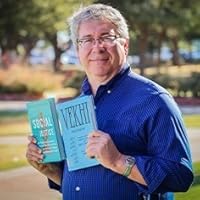
What makes a Bible translation faithful? Is one version superior to others? Do we really need more than one translation? How can answering these questions help us become better Bible readers? Dave Brunn has been involved in Bible translation work around the world for many years. From the perspective of this on-the-ground experience in different cultures he helps us sort out the many competing claims for various English Bible translations. By giving us a better understanding of the process of translation, Brunn helps us read and understand Scripture more clearly. He demonstrates how the variety of translations enables us to grasp more fully the meaning of the biblical text. This clear, readable and informative work will be of special interest to pastors, undergraduate and seminary students, missionaries, Bible translators, Bible study leaders and anyone involved in Christian ministry.
"Why are there so many versions of the Bible in English? And which of them should I read?" Those are questions I've often been asked by both believers and those exploring Christianity confronted by the bewildering array of translations you can find in the Bible section of any book store.
What is perhaps less apparent is that the answer to the second of those questions has been a source of sometimes bitter contention in certain sectors of the church. There are still "KJV only" factions. Likewise, there is contention over "literal" versus "meaning-based" or "dynamic equivalent" versions of the Bible. The former believe that one should translate word for word from Hebrew or Greek to English. The latter argue that for accuracy of meaning, translations may often resort more to "phrase by phrase" renderings.
Dave Brunn believes the divisions over translations are actually scandalous--one more way in which Christians are dividing over what should unite them. He also believes that our many translations in English are actually a blessing, allowing us to compare renderings as we seek to accurately understand a particular text.
Brunn is a Bible translator, but one who has worked in translation work in Papua New Guinea translating the Bible into Lamogai. This gives him a unique perspective on translation work in several ways. For one, he argues that most of the contention about translations is an English-based discussion, assuming that this is the only real language into which Bibles are translated. For another, Lamogai is a very differently structured language from the biblical languages as well as from English, which is actually part of the same language family as Greek. One of his contentions is that if word for word translation were God's intention, then all the languages which God brought about as a result of the tower of Babel would correspond word for word (and even prefix/suffix) to the biblical languages. The truth is that none of them do.
Brunn does not leave this on a theoretical level. Through scores of charts he shows how all of the versions, even the most "literal" often give renderings that are not word for word, and that in some instances, some of the more idiomatic translations actually give closer word for renderings than these literal translations. He builds up evidence that this occurs in hundreds if not thousands of instances in the Bible and that if word for word is the only standard for translation, ALL of our English translations fail.
Brunn actually believes that they all fail for good reasons. Sometimes, word for word renderings from one language to another result in nonsense in the translation language, or actually are misleading in terms of the meaning of the text. Sometimes the questions are as simple as grammar and may mean rendering a verb as a noun or vice versa. Sometimes the question is readability. For example, Young's translation comes as close to word for word as any, and while helpful for study, is laborious to read. Brunn points out that this isn't a characteristic of the original Hebrew or Greek, which read well, but rather a result of word for word rendering. Thus, he would argue that all "literal" translations are really "modified literal" and actually these and the translations that focus more on meaning than formal equivalence actually have much in common with the more "literal".
The author concludes by passing along the counsel of a professor that ideally, there should be a good "modified literal" and good "idiomatic" translation every twenty years and he believes we are actually blessed to have such a situation in the English language for the light each of these sheds on the other.
One quibble with the book is that I don't think the author in the end finally answers the question in the subtitle: Are all translations created equal? In saying that all the translations have much in common and are valuable when used together he does not answer this question explicitly. At most he seems to say we might dispute renderings in particular translations. In my own experience, I would not say to a new believer or seeker, pick any of them, they are all equal or all equally valuable. I would discourage starting with the KJV, because while beautiful, it is not based on the best manuscripts and the language is archaic and may be misunderstood or more difficult to understand. For a first Bible, I would probably choose readability without the idiosyncracies of paraphrase versions. For a second Bible, I would encourage getting something that is closer to word for word once they are serious about studying texts.
All in all, I think this book is a valuable contribution to understanding the issues involved in translation that hopefully will contribute to a wider appreciation of the wealth of translations available in English, more careful engagement with diverse translations, and a passion to see the scriptures translated in every 'heart language' in the world.
This book was absolutely absorbing. If you have a "dog in the fight" when it comes to the question of Bible translation (literal or idiomatic?),... if you think there is one translation that is vastly superior to others (KJV! ESV! NASB!),... you should read this book. Brunn shows that no translator is ever consistent: every translator veers from his ideal philosophy of translation. And that's OK.
Not only is this book fascinating, but it's extremely well-written and easy to read.
This left me feeling very thankful we have a selection of translations. I ended feeling none are truly literal, but we have scholars we can trust they translated both form and meaning.
I’ve seen Mr. Brunn interviewed in a couple podcasts, so I thought i should read his book. I enjoyed how he incorporated stories from his work as a missionary while doing translation work for the Lamogai. There was a short section on gender-neutral which was helpful for today’s culture. I appreciate his advice to have several translation for reading and studying. I guess you can say this validated my preferences.
I wish the NRSV was included in his tables as it’s the Catholic Bible and I’d like it to have compared with the other translations that I use. I can assume where it’d fit based on all I learned from this book.
I would recommend this if you’re a tad geeky about His Word. 🤓
Great book. This book does not aim to criticize any version (or even any translation ideal whether more literal or more idiomatic); rather, it criticizes the idols we construct from these ideals. Of particular concern to the author is the advent of a "literal-only" or "literal-primary" attitude, but he has no complaint with literalness as a goal for translators, or any of the more literal versions he considers (except the obvious weaknesses of the YLT). He makes his case with several very helpful and irenic observations. (This is a summary of the four observations that most stood out to me as I reflected on the book after reading it:) FIRST, he demonstrates that even our most literal translations can at times resort to idiomatic readings in places where other translations have had no reservations about retaining a more literal reading. Along with this, he demonstrates that more idiomatic translations sometimes include more literal readings than even their generally more literal peers. SECOND, he shows how the concern for "word-for-word" translation is a particular privilege of the English-speaking world (and that of other languages that 1. have an abundance of translations, and 2. are more closely related to the original languages of Scripture--e.g., English and Greek both being Indo-Eurpoean languages). He shows how other kinds of language often make the "word-for-word" ideal completely unworkable. With this point, he observes that the diversity of languages directly traces itself to God's work. Surely at Babel, he knew when he confused the languages that his people would one day face the challenge of translating his word into the languages of the whole world. We should be wary of making a demand on our own English translators that would consign translations into most of the world's languages to an inferior status. Put another way, if the godly labor of translating Scripture into most of the world's languages requires setting aside the adamant ideal of "word-for-word" translation, is it right for us to insist on it in our own language? THIRD, he helpfully expands our understanding of "Inspiration" to include not just the "words" of the Bible, but also the tone and emphasis, and even the readability--every aspect of the Scripture as communication is inspired by God; not merely (though definitely comprehensively including) the words. FINALLY, he gives a helpful consideration of the Bible's own use of translated quotations from itself--Greek New Testament quotations of the Hebrew Old Testament. The New Testament writers, fully inspired by God, show a fair bit of liberty (whether quoting the LXX or translating themselves or using some other source) in their handling of the Old Testament Scriptures, substituting different names or titles (including God's own name/title), changing tenses of verbs, etc. He even demonstrates this from Jesus' own use of the Old Testament. This failure of God himself to use "word-for-word" literalness (where he certainly could have had he wanted to) should do much to put us at ease about this issue. In the end, the book is very irenic in tone, encouraging us to relax about an issue that can very easily cause us to get uptight. I highly recommend it.
I almost gave this book 5 stars and would have surely given it 4.5 / 5 if I had been allowed. This is a must read for those who care about translation theory. Easy to read, engaging, and full of examples, the book also strikes that balance between smart and humble for which we all ought to strive. My reluctance in giving it 5 stars is due to the fact that it reads a bit like a defense of dynamic equivalent translations, especially the NIV. Clearly the debates between the ESV and NIV are in the background. Brunn strikes a pretty good balance, but I kept wishing that he had interacted with the NIV more, rather than just focusing on formal equivalent translations (he calls them modified literal translations). Brunn brings experience and expertise to the issue of translation. He argues that the debate between form and meaning are not as cut and dried as proponents on either side (especially the formal equivalent translators) make them out to be. He offers pages of examples where the so-called dynamic equivalent translations are more formal at times than the leading formal equivalent translations. It is practically impossible to be true to your translation ideology. He also points out that many of our translation squabbles are germane only to English translation, not most of the other languages of the world. In the end, Brunn celebrates all of the translations and the riches that multiple translations bring.
This was okay. I agree with many of his conclusions but I think the book could have been formatted much better. The author assumes all his readers are on the same page as evangelical Christians who believe in biblical inerrancy, which makes the book less of a valuable resource for others and not much of a witness to unbelievers. Also, he himself doesn't know Greek or Hebrew, which made some of his discussions of those languages hard to follow; he didn't note how much harder Hebrew is to translate into English, although he used variations in OT translations to show how interpretation is inevitable.
I did appreciate his take on non-English language translation and how different languages force us to use different constructions and interpret certain aspects of Greek which we can leave ambiguous in English.
I am a Bible translator in Cameroon. I believe all English speaking Christians should read this book. I believe it is extremely helpful in thinking through modern translations and also in thinking about missions. Read it, it’s worth it!
I grew up in a fundamentalist Baptist church. In this congregation, it was taught that the King James Version of the Bible was the only acceptable version of Scripture to read, study or accept as true. As a matter of fact, a member of a different church that I attended for part of my high school years wrote a book with this thesis entitled Valiant for Truth.
I have since come to a more reasonable, and a more intellectually grounded understanding of this issue, and have copies of most English versions in my personal library. There are some versions which I prefer, and others which I do not think do as good of a job in translating the original text, and there are other versions that I think read very poorly. Some translations I consider "devotional" and others I prefer for more in-depth study. My preferences on how the issue of gendered language also influence which text I prefer.
So, I brought some baggage with me as I began to read One Bible, Many Versions by Dave Brunn. As I ordered this book I began to wonder how the author was going to come down on the translation issue. Would the book be an apologetic for a particular type of translation? Would it rank the translations based on the author's preferences and standards? Thankfully Dave Brunn does none of these things.
Instead, what Mr. Brunn does is show that different translations, with their different goals and purposes in translation, are interdependent on one another. Some translations serve better in one context than another. And, despite the way that certain versions market themselves, nobody anywhere does a literal word for word translation. It would be to difficult to understand. One Bible, Many Versions goes deep into the translation process to show exactly how difficult the translation task is, sometimes pulling out specific passages, identifying the differences between translations, explaining the rationale for some of the differences, which are sometimes equally reasonable and biblical between sides of the debate.
What I thought was most fascinating was when Brunn identified that when Biblical writers were quoting Old Testament passages, they were not always interested in a word for word translation from Greek or Hebrew. Nor did they always stick to the Hebrew translation or the Greek translation. Perhaps, it is implied, we are a little more legalistic about matters of translation than the authors of Scripture were.
All in all, for a student of Scripture, particularly one who has had some academic training and interest, this is a really interesting and fascinating read. It is detailed, smart, understandable, and well-reasoned. While the author has his particular perspectives, he does not keep that from offering grace to other translators and other versions even when he disagrees with them on a particular manner.This book is a breathe of fresh air, and I hope it finds its way into the hands of many.
Over the past eight years I have been engaged in reading through seven different popular Bible translations. I have read through the 1984 NIV, the second edition of The New Living Translation, the TNIV, the ESV, the New Jerusalem Bible, the Good News Bible and the Contemporary English Version.
On reading through the ESV, I was particularly struck by how free the translation frequently seemed to be, despite it being touted as "literal".
I did a little informal research in the course of reading through these seven versions, and discovered that each one used a combination of free rendering and fairly formal equivalent translation.
I had intended to make a study of this and write it up. But Dave Brunn has beat me to it.
This book is a friendly invitation to appreciate the great blessing we have in the huge number of excellent English translations available.
So many Christians seem to favour one particular translation and miss out on so much they could be enjoying from the variety of versions we have been given.
Please read this book, and please join me in reading the Bible through in a variety of versions.
A few months ago, I was shopping for a new study Bible to supplement some of the translations I already own. Of course, I consulted that fount of all wisdom to garner suggestions, YouTube. One will find dozens of experts and not-so-experts expressing their opinions on my question: “What’s the best English Bible translation?” I bought two: the Legacy Standard Bible (2021), an update of the Lockman Foundation’s venerable NASB, noted for its literal, transparent translation of Hebrew and Greek manuscripts, and the NET (New English Translation) Bible (2019), a paraphrase version noted for its 60,000 textual footnotes.
I recently finished reading ONE BIBLE, MANY VERSIONS: ARE ALL TRANSLATIONS CREATED EQUAL? (2013) by theologian and linguist Dave Brunn, who argues that “what’s the best Bible translation” is the wrong question because it presumes a superiority of one style of translation, usually “word-for-word” or “formal equivalence” over “meaning-based” or “dynamic equivalence.” Drawing upon his own experience as a linguist translating the Bible into Lamogai, an indigenous language spoken in eastern New Guinea, and providing dozens of charts comparing popular English translations, Brunn shows how even literal translations such as the KJV, ESV, and NASB sometimes insert interpretive words not in the original texts, while for the same passage some paraphrase versions are more literal, word-for-word. The author recommends categorizing the two translation approaches as “modified literal” and “idiomatic” to account for compromises all translators must make given the differences between Hebrew, Greek, and English. Regardless of their approach, all translations give priority to natural English style, syntax, and meaning over literal words and phrases when necessary. Imagine, for example, translating “the preacher’s sermon was out in left field” into a language spoken by people with no understanding of American figures of speech; a similar challenge faces Bible translators. Moreover, Brunn—who affirms God’s inspiration of scripture—states that linguistic complexity and sometimes ambiguity is a good thing, part of God’s design of human languages, noting how Aramaic-speaking disciples adapted Hebrew scriptures when writing their Gospels in everyday first-century Greek. Instead of arguing over which Bible is best or supposedly most accurate, Brunn recommends that serious Bible students appreciate and take advantage of the interpretive nuances highlighted by the various teams of expert Bible scholars who have produced an amazing plethora of excellent English Bible translations.
This is truly a necessary read for those that often find themselves rather uninformed and yet debating about various English Bible translations. This is a book that any laymen can understand. This is a book that every church leader should read.
Brunn doesn't deal with textual criticism (manuscript traditions). His primary focus is translational differences between (primarily) major English Bible translations. He has a unique background for Bible translation since he is the translator of the only Bible used among the Lamogai people of Papua New Guinea. This gives him a unique insight into the subject of translation - which every reader of this book will greatly benefit from.
Not all Bible translations are created equal. And, no Bible translation is lifted above others in this book. This is more of a comparison of philosophies and difficulties between various English translations. Brunn deals in actual examples from these various translations - that is, facts. His opinion is sometimes offered, but only as that.
I highly recommend this book to people searching for honest truth concerning the difficulties in translating the Bible from Hebrew and Greek into English (or any other language).
For the student of God who wants to dig deeper into Scripture. I loved this book about the history, categories, and descriptions of the Bible. Learning that each translation has strengths & weaknesses; unless you read it in the Hebrew & Greek languages, there is no perfect version. Literal versus idiomatic, almost all versions are profitable. Chapter five shows the criteria for adjustments in translations, making it crystal clear that one who genuinely wants to learn more will use several translations in personal Bible study. Dave Brunn has no favorite version and shows how in English we have the wealth of an Indu- European language. Meaning, we have so many choices, yet we squander the wealth by arguing over a more literal, formal version or a idiomatic version with simpler , yet accurate, words. Highly recommended, especially in Christian conservative cultures, like the Bible Belt of the U.S.
This book is a needed Resource amid all the controversy over English Bible versions. With all of the irrational, nonsensical drama around things like KJVO, TRO, and the other craziness, this Bible translator puts it all in a good perspective for the believer in the pew. He does this by pointing out our bias about translating into the English language at the expense of all others. It is an eye-opening look at a problem that really isn’t a problem unless you are so shortsighted that you can’t see past your own native language.
If you were one of the believers who has been struggling to find the “perfect“ translation, or struggling with controversy around which version of the Bible is “God‘s version“ versus “conspiracies by the devil“ this book is for you. Or, if you’re just interested in how we got the English Bible and why your version is translated the way it is, you’ll find a lot of informative details in this book.
In a controversy that often has much more heat than light, David Brunn offers a well-researched and well-reasoned response based on remarkably extensive experience. Few of us, particularly from America, speak more than one language, fewer read Greek and Hebrew, and even fewer have translated the Bible in any significant portions. Brunn has done all three and in a language that is quite different from from English, Greek, and Hebrew.
Any non-specialist wishing to have a well-formed opinion about Bible translation would do well to read Brunn’s book slowly and carefully. I have benefited greatly and I’m sure you will too if you read this book.
If you want to know more about Bible translation, this book belongs on your must-read list. Brunn does an exceptional job explaining and illustrating why we can trust and benefit from all the major translations, helpfully debunking much of the charged rhetoric swirling around the issues simply by looking at actual translation decisions so we can see how translation philosophies work out practically. (Hint: there's a lot more similarity than the rhetoric would imply...) A great read...I highly recommend it!
I was only going to give this book 4 stars at the outset, but by the time I ended it, I figured it was worth the 5. Dave Brunn has a passion for the Scriptures, the authority and inspiration of the Scriptures, but also the realistic way in which we translate them. I think he approaches this subject with a lot of grace, but also truth when things go too far in a given direction. This is a book that would be a vital resource for anyone to keep in mind as they look at various modern (and not so modern) translations.
Loved how Brunn makes it clear that EVERY translation of the Bible includes literal and non-literal translation choices, and why that's OK. He very thoroughly takes the reader through the translation process and some of the choices that translators face.
I do wish that he'd included some kind of brief evaluation or description of some of the leading translations. While we get that in pieces along the way, it would be nice to have a big-picture overview at the end of the book.
One of the more worthwhile reads I’ve read in a while. Rather than focusing on the ideals of what translation should or shouldn’t be, Brunn hits the ground running with hundreds of relevant examples illustrating how translation plays out in practice and what those examples imply about our ideals. The book was concise, engaging, and extremely thought provoking. Would highly recommend to anyone curious about translation or its related theological implications.
Fantastic read for understanding more about translations of scripture and the choices made in doing so. It refrains Word for Word vs Thought for Throught into Literal vs Idiomatic which seems to make much more sense.
This is not a book about one translation being superior over another, but rather how translations come to be and how they compare to one another. So very interesting!!! Well written so even a non linguist like myself can understand it all.
Excellent little book on the practical process of Bible translation. If you want to understand how it works and the various difficulties that accompany it, I would probably recommend this book first.
This book was very informative. Whether one comes to the same conclusions as author or not, he lays out a lot of concrete data which is useful when thinking through this topic.
Short Review: This is a very good, very readable book on issues in bible translation. There are lots of arguments about how bibles are translated (word for word vs dynamic equivalence, gender, how much interpretation is appropriate, etc.). Dunn ratchets down the rhetoric and concentrates mostly on real life examples of how translation works and lots of examples from actual biblical translations. The end result is that he very convincingly shows that much of the argument is rhetoric not reality. So the translations that claim to be the most literal, use dynamic translations methods frequently. Those that claim to be very accurate about gender often use gender neutral words, etc.
Dunn asserts that this is just the nature of translation, that to translate is to interpret and that all translators must do this. He also bring in his experience as a translator of a small language from Papua New Guinea. A language that has no relationship to either Greek or Hebrew as an example of why so many of the arguments are particular to English translations.
This is a book I highly recommend. It is simple enough that it would make a good discussion group for a small group or study group but through enough that many pastors will get a lot out of it.
Excellent book running over with wisdom on the controversial area of Bible translations. Dave Brunn has been a Bible translator for a language in Papua New Guinea (Lagomai), so his book is chock full of real life examples to make his case. If you're curious, this book covers these kinds of questions: What makes a Bible translation faithful? Is one version superior to others? Do we really need more than one translation?
Dave Brunn's book changed my mind on the topic of what's the most faithful Bible translation, and I now accept his thesis that the multiple translations are complementary when used together -- like the multiple organs of the body all working together with no one superior to another part.
Also, his point is well taken that not only are the words in the original Hebrew and Greek texts inspired, but they're also inspired down to the smallest parts of meaning and forms. In this way, the author makes a good case for "inspired naturalness" in the original texts (i.e., the texts being natural and easy to read), which is a virtue that the less literal translations excel in brining to the reader.
This book should be required reading in every seminary and the first book read when "translation wars" erupt in local churches.
Brunn makes a clear, compelling, and winsome case for a multiplicity of versions being a complementary blessing to the church and the world.
He also convincingly demonstrates that the versions who have literal ideals are not nearly as consistent at their translation philosophy as one might think--and that that is a good thing! He shows that there is more to an excellent translation than literalness, and all great translations evidence that. Our strong English translations actually have much more in common than they have differences.
"In English-speaking countries, we have the huge advantage of being able to compare dozens of Bible versions side by side. In this sense, we are incredibly rich beyond the wildest dreams of most of the rest of the world. Yet sometimes, I think we squander this great wealth. Not only do we fail to take full advantage of it; we also allow it to become a source of disagreement among us" (pg. 193).
As an aspiring Bible translator, I found this book on Bible translation to be very accessible and informative for the general reader. Instead of arguing in favour of any particular translation theory, it focuses on real-life examples. There are many comparison charts between English Bible translations and he offers excellent insight from his experience of the challenges in translating the Bible into a non-Indo-European language in Papua New Guinea. He convincingly demonstrates that much of the controversy is more rhetoric than reality: NLT and NIV are surprisingly sometimes more literal (in word-form) than the ESV while the KJV and NASB can sometimes are more meaning-based than NIV. Brunn also reminds readers that the very nature of translation requires a degree of interpretation (something I realize quite early on when learning and translating Biblical Hebrew).
From now on, this is the book I will recommend people read about Bible translation. Brunn is a former missionary and Bible translator to the Lamogai people in Papua New Guinea. In full disclosure, I am an ESV user. Nevertheless, anyone one has gotten fired up about the necessity of "essentially literal" translation through reading Wayne Grudem or Leland Ryken ought to read this book before cementing themselves too dogmatically. Brunn isn't saying much that Mark Strauss and Gordon Fee don't also say in "How to Choose a Translation for All Its Worth," but he says it a little more winsomely and persuasively, in my judgment. He manages to contend with Grudem and Ryken so gently that you hardly notice the polemical edge. Plus his experience with non-Indo-European language translation and mission work gives him credibility. Read this if you care about the issue.