Jump to ratings and reviews
Rate this book

To Conquer Hell by Edward G. Lengel

Rate this book
The authoritative, dramatic, and previously untold story of the bloodiest battle in American the epic fight for the Meuse-Argonne in World War I On September 26, 1918, more than one million American soldiers prepared to assault the German-held Meuse-Argonne region of France. Their commander, General John J. Pershing, believed in the superiority of American 'guts' over barbed wire, machine guns, massed artillery, and poison gas. In thirty-six hours, he said, the Doughboys would crack the German defenses and open the road to Berlin. Six weeks later, after savage fighting across swamps, forests, towns, and rugged hills, the battle finally ended with the signing of the armistice that concluded the First World War. The Meuse-Argonne had fallen, at the cost of more than 120,000 American casualties, including 26,000 dead. In the bloodiest battle the country had ever seen, an entire generation of young Americans had been transformed forever. To Conquer Hell is gripping in its accounts of combat, studded with portraits of remarkable soldiers like Pershing, Harry Truman, George Patton, and Alvin York, and authoritative in presenting the big picture. It is military history of the first rank and, incredibly, the first in-depth account of this fascinating and important battle.

Unknown Binding

First published January 1, 2008

51 people are currently reading
509 people want to read

About the author

Edward G. Lengel

28 books126 followers
Independent historian, hiker, and voracious reader. As an author, I'm delighted to have reached the stage where I can write purely for personal enjoyment and interest, as my forthcoming works will attest!

Ratings & Reviews

What do you think?
Rate this book

Friends & Following

Create a free account to discover what your friends think of this book!

Community Reviews

5 stars
104 (38%)
4 stars
113 (42%)
3 stars
36 (13%)
2 stars
10 (3%)
1 star
5 (1%)
Displaying 1 - 30 of 35 reviews
Profile Image for Eric.
620 reviews1,143 followers
March 21, 2013
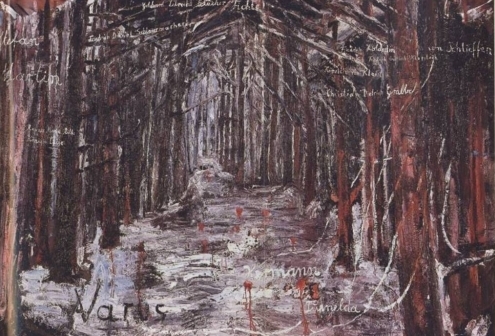
Never fight the Russians in their snow – or the Germans in a forest stronghold. In 9 AD, in the depths of the Teutoberg Forest, a confederacy of Germanic tribes ambushed and annihilated a force of three Roman legions (read about the battle in Schama’s Landscape and Memory and you will have Anselm Kiefer nightmares); in the fall and winter of 1944 a number of US divisions bled out in the Hürtgen Forest, where the Germans had nested machine gun teams in cunningly camouflaged log redoubts and artillery that fired into the treetops to make “airbursts” of razor-sharp of splinters. In the fall of 1918, the US First Army did manage to crack the three lines of German fortification – each line was named after a witch in Wagner’s Ring – laid across the steep wooded hills of the Meuse river valley and the muddy, misty ravines of the Argonne Forest; but the victory took six weeks, and cost 26,000 dead and over 100,000 wounded. (The largest US military cemetery in France isn’t in Normandy - it’s in the Meuse-Argonne.) Those are small numbers by the standards of the Western Front – the British lost 19,000 killed on the first fucking day of the Somme – but the American wastage stood out then, and stands out to historians now, because many of the casualties can be directly traced to US officers’ inexperience and ignorant, pigheaded disdain of French and British advice. The commander of the American Expeditionary Force, John J. “Black Jack” Pershing, actually thought his troops were stronger and braver than the supposedly timid, trench-cowering Europeans, and that the vaunted American rifleman, striding across No Man’s Land with his bayonet fixed and his aim sure, could overcome the barbed wire, machine guns, gas, and artillery barrages - all the innovations of war - that had stopped the British and French the previous three years (Lengel describes US troops being shot down while struggling to cut through belts of wire already hung with skeletons in tattered French uniforms). You can imagine how that went – more static butchery. Chauvinism much like Pershing’s had allowed three generations of European officers to ignore the data of the American Civil War and of their own colonial wars – namely, that the range and accuracy of the infantryman’s rifle, and the rapid fire of the machine gun, made frontal wave attacks against an entrenched defender suicidal.


I suppose the lesson or epigram is that "war is progressive" (Grant) and combat an incommunicable obscenity, revealed only to participants – and even participants forget, or pretend to. Bruce Catton wrote somewhere that he was no more aware of the realities of war for having been raised around mangled American Civil War veterans because those men, with their vast authority, had acquiesced to their celebration by mass media imagery – “the picture-book war” – that was romantically false. Charles Royster pointed out that even the grimmest war writers pull some of their punches, if only for their own sanity: If veterans did not all write of the war as Bierce did at his most scathing or if Bierce, DeForest, and other critics of romanticizing failed to draw the darkest conclusions from their portraits of war, their restraint did not necessarily arise from self-deception or cowardice. They had to live with the war. Even Bierce, connoisseur of death, did so for fifty years.


I skimmed some of this book. Reading military history I'm usually able to keep in mind topographical features and unit dispositions, but I’ve been an irritable reader recently. I didn’t abandon To Conquer Hell because I’ve always wanted to know how the US raised a million-man modern army, shipped it to France, and supplied, trained, and deployed it decisively – all in 18 months. The answer is: just barely. During the first four days of the Meuse-Argonne offensive, the frontline troops had to eat captured German rations and drink pooled rainwater. Many of the draftee replacements hadn’t been taught to fire their rifles – they were just bodies, a helpless weight of flesh, pushed against the enemy, Red Army-style. The planes, tanks, artillery, and most of the light machine guns were French-made. It seems that if it had not been for First Army chief of staff George C. Marshall, later architect of US mobilization in WWII and the nominal rebuilder of postwar Europe, the thing wouldn’t have come off at all. I’m also morbidly fascinated by forest fighting – snipers in the treetops, patrols that blunder into each other in foggy clearings and dissolve into “point-blank melees” of barking pistols, rifles swung as clubs, shotgun blasts, and the swoop of trench knives. And I never skimmed over the individual stories, many of which make the always-wounded but never incapacitated action movie hero seem not so far-fetched. Pershing was right, in a way – his soldiers were excellent, but only insofar as they ignored his tactics and adapted their killing skills to the tasks before them, belly-to-the-dirt tasks like infiltration of enemy lines and the patient outflanking and neutralization of machine gun nests. Jake Barkley, mostly bald from mustard gas burns to his scalp, picked up a German light machine gun and retreated to the hulk of a knocked-out tank; from that one-man fortress he held off an entire German battalion. Caribou hunter Samuel Woodfill crept around German machine gun nests and shot down the gunners, and jumped into a German trench where, finding his .45 jammed, he reached for the nearest implement – and began killing Germans with a pickaxe. Tennessee tavern brawler turned born again pacifist turned reluctant draftee Alvin York knew from wild turkey hunts how to shoot down the squad of Germans which suddenly rose from cover and charged him, from 25 yards away: I teched off the sixth man first; then the fifth; then the fourth; then the third; and so on. That’s the way we shoot wild turkeys at home. You see we don’t want the front ones to know that we’re getting the back ones, and then they keep on coming until we get them all. Of course, I hadn’t time to think of that. I guess I jes naturally did it. I knowed, too, that if the front ones wavered, or if I stopped them the rear ones would drop down and pump a volley into me and get me.


Profile Image for Nooilforpacifists.
987 reviews61 followers
November 2, 2015
A ok book, but it could have been far better. Endless repetition of the same stock phrases ("the attacked jumped off at 5:00am) make one thrust indistinguishable from another. This is amplified by the paucity of maps--and those included are of such poor quality as to be nearly useless.

In the first attack, General Pershing = tactical and strategic idiot, with no knowlege of modern warfare. He thought failure of will was at fault for his green Divisions' inability to break well-placed German machine gum (Maxim) nests with interlocking fields of fire.

The untried Colonels and Lieutenant Colonels were little better--if regulars, their last combat experience typically was San Juan Hill; if National Guard, their last combat experience was the stylized drama of representing clients in a Courtroom. Interestingly, the author of the attack's logistical plan was Colonel George C. Marshall. There were some brave and competent field and company grade officers who led from the front; many of them got shot in the front.

To be fair, having been handed weapons (at best) two weeks before battle, little or no training (as opposed to parading) was possible. Also, officers were given senseless orders to "attack at all costs" without knowlege of local terrain or resistance. "Flung into the attack almost as soon as they arrived, alongside officers and men who did not know their names and clutching rifles they could not load, many died without firing a shot." And no one had been trained sufficiently in attacking machine gun emplacements: sometimes, a bayonet won't do.

As a result, the Doggies and Marines had spirit--whoops, élan. And their arrival changed the balance of numbers on the Western Front, decisively. But at a frightening cost, as a Sargent of the Missouri-Kansas Division recounted:

"The outfit looked terrible and I knew just how they felt, exhausted, sleepy, hungry, worn down, and sick, worse, they didn't feel lucky any more. They'd lost the soldier's bullet-proof ego, the feeling that "others may get hit, bit I never." I know how they felt because I felt the same way. . . Not even the clowns were wisecracking any more."

Apart from Captain Harry S. Truman, American Artillery was thoroughly outclassed by the Pickelhaubes. Having the advantage of defense, the Germans had registered many points along lines of the US attack--to deadly effect from moment of any attack:

"At the beginning of the advance, [Lieutenant Maury, later San Antonio Congressman] Maverick's company numbered two hundred men. A few minutes after the attack started, half of them were dead or wounded. As the last remaining officer, he took command of the company. The next highest-ranking soldier was a corporal."

Dennis Nolan, a one star intel officer who relieved the commander of the 28th Division's 55th Brigade, comes off well.
Profile Image for Joseph.
226 reviews51 followers
December 8, 2012
This book is really important to me. First, it is the definitive account of the battle in the Meuse-Argonne. Second, and more importantly, my dad's oldest brother, Raymonde was killed in this fight. In August, Raymonde's unit the 86th Div moved to New York where its elements shipped out to France between 22 Aug and 9 Sep. There is a reference to the 343rd being at St. Loubes, France. The 86th had hoped to go into action as an integral unit. However, that was not to be and the 86th was essentially used as a manpower pool to fill other divisions which had suffered combat losses. Raymond found himself in Company K, 309th Infantry, of the 78th Division probably in late Sep or early Oct 1918. On 16 Oct, the 78th joined the fight in the Meuse Argonne at Grandpre, France on the banks of the Aire River. According to Lengel's account the 78th was ‘green’ and had not really been tested under fire. Known as the ‘Lightening’ Div, it had moved into battle lines during the night of Oct 15th and was ordered into the attack at 0600 on 16 Oct. The term ‘fog of war’ literally came into play. The 78th was to have been guided into battle lines by soldiers of the 77th Div which was already in the fight. But almost all of the 77th guides failed to carry out this assignment due to fog and rain on the night of the 15th. There were other complicating factors and the 78th probably should not have been ordered in, but the order to attack was not rescinded.

Raymond’s unit, the 309th was on the right of the attacking formation. Lengel recounts what followed:

" Crossing the Aire on footbridges near St. Juvin, they advanced across the open ground below the Bois des Logs and Champigneulle. They moved forward in short rushes, and as men fell to long-range machine-gun fire and artillery fire, their neighbors moved over to fill the gaps. The enemy fire increased as the infantry approached their objectives, obscuring the lines with the smoke and debris of exploding shells for minutes at a time as the troops retreated down slope out of the clouds, then rallied by their officers, turned and rushed back in. This went on for much of the day, until the attack stalled, on a line parallel with Hill 182, north of St. Juvin."

It is almost certain that this is the action during which Raymond was killed. So yeah, that's why this book means a lot to me. Some have criticized this book as being too detailed and as being too heavily weighted to eye witness accounts. For me, that is the book's strength. If you want to know what it was like for the 'grunts' in WW I, this is your book.
Profile Image for KOMET.
1,256 reviews143 followers
April 30, 2024
The Battle of the Meuse-Argonne ranks along with the Battle of the Bulge as two of the bloodiest battles ever fought by the U.S. Army.

In "TO CONQUER HELL: The Meuse-Argonne, 1918: The Epic Battle that Ended the First World War", Edward G. Lengel lays out for the reader the various phases of the battle as it unfolded for Pershing's Doughboys.

Coming off of the Battle of Saint Mihiel (which went off rather smoothly), the confidence of U.S. forces on the eve of battle was high. In four years of war, only once was the Meuse-Argonne attacked by the French (in 1915), who failed to make an appreciable dent in the German defensive positions there.

For more than a month, the U.S. struggled to advance against hardening German resistance. Casualties mounted. But U.S. forces managed to move forward, facing some of the most fiendishly devised fortifications such as pillboxes and poison gas attacks. What I appreciated most about this book is the way Lengel conveyed for me both the gravity and the cost (in lives) of the battle itself. On my late father's side of the family, I remember him telling me years ago that as a boy, he once listened to a couple of his uncles -- who were visiting from out of town -- speak about their experiences as soldiers in the Battle of the Meuse-Argonne. (Because they were African American, both my great uncles -- who I never knew -- had served with the all Negro 92nd Infantry Division because the U.S. Army was racially segregated in World War I and would remain so through World War II; the U.S. military would not be desegregated until July 26, 1948 via President Truman's Executive Order 9981.)

For anyone wishing to understand the costs of war, I highly recommend reading this book.
Profile Image for John Nellis.
91 reviews8 followers
April 7, 2020
This is the best book on the Muese-Argonne campaign I've read. There are a lot of first person accounts that really help you to know what the Doughboys went through. Until I read this I really had no idea some Doughboys were rushed through training so fast, they didn't even know how to shot a rifle. The doctrine preached by Pershing was the offensive. Guts got you more results than artillery or machine gun support. Pershings view was his allies were soft from spending to much time in the trenches. This philosophy led to many costly attacks, that were thrown at the German lines with heavy casualties. The AEF still had a lot to learn, and was still learning when the war ended. This book does a good job of explaining the campaign, and in large part the whole experience of the AEF in this last campaign of the war. The one drawback to the book I felt was I wish there were more maps.
Profile Image for Tony.
269 reviews
May 3, 2017
Definitely worth wading through the 400 plus pages. Detailed account of America's main battle on the western front. I thought it lacked some historical context and didn't make much reference to what had been going on for the previous three years before the Americans turned up, but that would easily have added another 100 pages. One bit in particular stands out: some American troops enter a dug out and from deep in the darkness an American soldier asks them if they have come to arrest him? No they say, they're just looking for food. He says he's a coward and is too scared to go out there any more. That's OK they replied, we understand, good luck.
Profile Image for Andrew Weitzel.
247 reviews5 followers
June 22, 2012
An addictive, readable account of US action in World War One. It presents personal accounts of soldiers, from generals to privates, which highlighted the disconnect Army leadership had from the actual conditions on the front. Like another reviewer noted, more maps would have been useful. Otherwise, a great book.
Profile Image for Elizabeth (Alaska).
1,562 reviews549 followers
September 21, 2018
I tend not to read books where I know the ending. I was well aware this was the final battle of the war, and that the Allies were victorious. As my grandfather was killed on the first day of this battle, I thought it fit that I should read this now as part of my commemoration of the centenary of the Armistice.
Fought over a period of forty-seven days, from September 26 to November 11, 1918, the Meuse-Argonne sucked in 1.2 million American soldiers, leaving 26,277 of them dead and 95,786 wounded. Almost all of these casualties came in a period of about three weeks of heavy fighting, and they amounted to about half of the total American casualties for the war.

...

No single battle in American military history, before or since, even approaches the Meuse-Argonne in size and cost, and it was without question the country’s most critical military contribution to the Allied cause in the First World War.
It may have been "the most critical military contribution" but we should recognize that by the time of the Meusse-Argonne, Germany was mostly a defeated army. Still, Germany had held this territory since 1914 despite the Allies efforts to dislodge the German army. It was important that Germany finally be defeated here, their last true stronghold.

I was disgusted at the egotism of the American generals and their failure even to try to learn from both the British and the French. Those two nations did not understand modern warfare at the beginning of the war and it took them quite some time to finally understand that sending men "over the top" into the face of machine guns and artillery would simply yield a horrendous number of dead soldiers. (The British suffered nearly 20,000 fatalities on a single day - July 1, 1916 - in the Battle of the Somme.) I was frustrated that General "Black Jack" Pershing thought himself so much better than they that he couldn't have even ventured the observation that men with rifles and bayonets and a will to win were simply not enough.
As a battlefield general, Pershing had been mediocre. His management of the Meuse-Argonne offensive had been uncreative, and his understanding of tactics remained rooted in the nineteenth century. His obsession with the cult of the offensive had shattered several American divisions and sacrificed thousands of men for victories that a little creativity and forethought might have won more cheaply.
Some of this is very dry, telling of this division attacking a hill, or that division attacking a town. But interspersed were paragraphs of stories of individuals. Some of the individuals were revisited in subsequent chapters. There were quotes from war diaries - some by the generals with the big egos, others by the rank and file whose observations were more valuable. There was a concluding chapter that told of how the soldiers faired in homecoming.

I have a hard time rating this. It was a personal read for me, even though the action took place after my personal connection ceased to exist. I learned a lot. I'm giving it 4 stars, but only just, and it wouldn't surprise me if others didn't think of it so highly.
19 reviews
April 2, 2019
This is the best book I've read on not only the Meuse Argonne, but the war as a whole

I've often wondered when thinking of the American involvement in WWI how our tactics differed from British and French tactics? How did Gen Pershing organize, train, and supply an army to fight and defeat the German Imperial Army? Prof Lengel's book provides the answers to those questions and they're unsettling. Gen Pershing was a great organizer, but he was no tactician. He employed the same tactics the Allies used in 1914-15 and thousands of Doughboys died needlessly because of it. It's hard to fathom but many of our soldiers went to the front lines without knowing how to operate a 1903 Springfield rifle! Amazing but true. Our soldiers went to their deaths untrained and often undernourished. My grandfather, a machine gunner in the 8th Machine Gun Company attached to the 3rd Division attested to always being hungry and spending an inordinate amount of time looking for food. "To Conquer Hell", is by far the best and most detailed book I've read on The Great War.
6 reviews1 follower
April 8, 2018
This bookś theme is a digust due to at the time American generals did not care for the loss of human life by throwing men at enemy lines.
Profile Image for Jennifer Bohnhoff.
Author 23 books86 followers
November 21, 2023
To Conquer Hell is a bit of a mishmashed history. In some places, Lengel offers very personal glimpses into the horror of the Meuse-Argonne campaign, and many of these are quite touching. But these vignettes are interspersed amid dry, blow by blow accounts that I found difficult to follow. I would have liked these sections to have been better linked to the maps, which I often referred back to but not to good account: the maps didn't seem label the same towns or valleys mentioned in the text.

A further disappointment for me, a New Mexican, was the fact that Lengel ignored the part my state played in the war. New Mexico hadn't been a state very long, and it only had a population of 345,000. but more than 17,000 recruits, representing all 33 New Mexican counties, stepped up to serve. Tiny as we were, New Mexico was ranked fifth in the nation for military service by the end of the first World War. Roswell's Battery A, 1st New Mexico Field Artillery, renamed Battery A, 146th Field Artillery Brigade of the 41st Infantry Division, fought at Chateau-Theirry, St. Mihiel and the Argonne Forest. The unit's four guns fired more than 14,000 rounds in combat, surpassing all other U.S. heavy artillery units, so why do they go unmentioned?

I cringed when Lengel said that Douglas MacArthur grew up at Fort Selden, Texas; Fort Selden is in New Mexico.

Although the book begins and eds with anecdotes on General Pershing and followed the battles chronologically, I found it choppy, with little thematic consistency.
Profile Image for Burton Yale Yale.
Author 8 books2 followers
March 19, 2014
Terrific. Excruciatingly researched, well-written and carefully focused. Must reading for an understanding of America's role in WWI -- and how America's contribution was essential to the defeat of Germany.
Profile Image for Thomas George Phillips.
612 reviews42 followers
July 24, 2023
"The war to end all wars" was the slogan to enter the First World War. On April 6, 1917 President Woodrow Wilson went to the Congress and asked it to declare war against Germany.

Dr. Lengel is a professor of history at the University of Virginia. His account of the battle at the Meuse-Argonne in late September 1918 is well documented. The victory for the Americans would come at a heavy cost, however. American casualties were 120,000 including 26,000 killed.

It was the Meuse-Argonne battle that would cease hostilities on November 11, 1918.

Dr. Lengel relied on his research for his book through numerous diaries of the surviving Doughboys.
Some include not only enlisted but officers as well. Including among these diaries were from Captain Harry S. Truman, General George Patton, General Douglas MacArthur and Alvin York.


Profile Image for Vic Lauterbach.
564 reviews2 followers
August 10, 2018
This narrative history is full of engrossing details and paints a vivid picture of what American soldiers experienced during two months of terrible fighting, but it lacks focus. In trying to tell the whole story, Lengel touches on everything but never masters any aspect of a huge, complex event. Concentrating on the stories of a dozen or so of the many soldiers mentioned would have given the book better narrative flow. As written, it jumps constantly from place to place for brief descriptions of action. While many of these micro-narratives are fascinating, they're just vignettes on a massive canvas. The result is a sum that's much less impressive than its parts. The maps included are detailed enough to follow the general course of the battle, so I rate them adequate even though only one shows any German dispositions. This egregious flaw is mirrored by the text, the bulk of which completely disregards the German perspective. A German unit isn't identified until page 133 and the first meaningful information about German actions occurs on page 175! No battle can be understood from the viewpoint of one side. Lengel's emphasis on all the problems faced by the Americans makes this flaw more glaring when the Doughboys finally break through and pursue von Gallwitz's retreating army to the Meuse River. The factors that led to the collapse of the German armies are given only a cursory treatment late in the book. The strongest part of this work is the final wrap-up which describes the aftermath of the war from the American perspective. This is a neglected topic, and this section is well done and quite interesting. Overall, if you're interested in a lot of detail about the Doughboys' experiences, and aren't too picky about the accuracy of technical details, you'll like this book. If you're looking for a thorough examination of this battle, you'll be disappointed.
Profile Image for Edward Champion.
1,624 reviews126 followers
March 10, 2025
I've made no secret of my aversion to military history. But I started reading this book for research when I wrote the World War I section of a massive audio drama script and found myself becoming so captivated and spellbound by Lengel's good faith and deeply researched efforts to tell the stories of these men, without sugarcoating anything, that I stopped reading this book about halfway through (my mind significantly flooded by Lengel's great work), wrote the WWI section, and then returned to finishing the assignment. Lengel not only offers what could be the definitive account of the Meuse-Argonne Offensive -- with walk-ons from the likes of Truman, James M. Cain, and Patton as he describes the battles and the often miasmic and disorienting conditions -- but also gives us useful biographical snapshots of key figures like Pershing, documentation of the way prisoners were treated (and sometimes tortured and massacred), and the heavily leveraged mental health of the men who served in the war. Any war on this scale is obviously difficult to confine into one book, but, by concentrating exclusively on the end of the war, Lengel has revealed it not only in ugly Technicolor glory, but he has given us vital tableaux of the way these men thought, felt, and worked together. A must read for any scholar of World War I.
14 reviews
April 29, 2010
Easy to read, good historical description. More maps would have aided the readers understanding. Not a lot of literary references to this particular WW1 battle, even in later day history volumes. This is possibly the result of the duration of the battle which is dwarfed by the activities of the previous 4 years and the preponderance of French and English literature covering WW1. This also may explain why it is not specifically remembered by Americans.

The unforgettable fact emerging from this piece of history is the casualty rate. It was again very high, but seemingly acceptable at the time by WW1 standards. Unfortunately history tells us that, despite the time, the casualty rate was unnecessary, and was the result of inexperience and hubris on the part of the US Army leadership particularly Pershing and his generals. They did not listen to and learn from the English and French and their experiences garnered from 4 years of war. The tactics adopted by the US Army matched those of the French in 1914, with similar disastrous results.
Profile Image for David.
139 reviews
March 29, 2015
I did not know anything about World War I, other than the American Soldiers were called Doughboys and that it started because of an assassination in Sarajevo. This book focuses on the last major battles of the Meuse-Argonne. This is not an easy read, but overall, I gained greater respect for the American Soldiers and the contribution in blood and sacrifice in this war to end all wars.

There are some amazing stories on the valor of individual soldiers (like John Lewis Barkley and Alvin C. York).

I am glad I invested my time to read and learn from this book. In the end, that is why I love to read.
Profile Image for Candy Hudziak.
57 reviews1 follower
August 25, 2015
Military histories have never been a favorite genre of mine but I gave this book a chance since I like to read about WWI. The author did a nice job interspersing personal vignettes into the text that made it much more interesting. However, I got lost in the endless military movements taking various hills and villages that made my eyes glaze over. I'm just not one of those people who finds the minutiae of battle formations fascinating.
Profile Image for Matthew Dambro.
412 reviews74 followers
December 28, 2015
Good analysis of the final offensive of World War I. Needs more maps of smaller scale to follow the tactical situation. He shows the poor training and outdated tactical concepts that cost so many lives. He is a little harsh on Pershing. Pershing was given political and military objectives by Wilson. Some were mutually exclusive. He tried to accomplish both which led to greater casualties. We still have not learned that lesson.
Profile Image for David.
387 reviews
September 2, 2008
Probably the definitive work on the definitive battle of the "war to end all wars", this scholarly work is a victim of too-scholarly writing and drags a bit at times.

For history buffs it's worth the effort.
24 reviews1 follower
September 3, 2023
This book belongs on the shelf of any military history buff. Well written and well researched Edward G. Lengel present a comprehensive book on America’s entrance into WWI and the horrendous fighting that took place against a well dug in and well-armed German foe. The First American Army came to France undertrained, poorly led, poorly armed and most of all suffered an untold number of logistical problems as the battle progressed left the “doughboys” without food, water, ammunition and above all no way to transport the wounded from the battlefield in a timely manner. Initially, the French/British command wanted in infuse the Americans into their units to shore up their depleted ranks, that would also give the green American troops tine to gain valuable combat experience. General Pershing, overall commander of the First Army said no. He wanted to keep his army as a single fighting unit. The First American Army was assigned the task of attacking into the Meuse Argonne sector as part of the major allied offensive (British, French and American) in order to deliver the knockout blow to the German Army. Quickly the American’s found themselves not only fighting the Germans but fighting the weather and terrain as well. Thick forest regions with hills, valleys, old, rusted strands and rolls of barbed wire, coupled with shell holes full of water. It rained virtually nonstop during the battle and in the early morning fog limited visibility to just several feet. This area had been fought over by the French in 1914 and the Germans held this area since 1914 – allowing them time to build defensive positions in depth, target all areas with the most accurate artillery fire along with massive numbers of the feared Maxim machine gun and untold hidden snipers. On September 26th, 1918, the green U.S. army was thrown into this caldron of carnage against machine fire and rifle fire, explosive artillery delivering not only conventional shells but gas shells as well. Pershing, who scoffed at the use of combined arms and believing in the rifle, bayonet and the “elan of the common foot soldier begin paying the price in blood. The blood of the common foot soldier who suffered the horror of death, maiming, gas and much more. Hubris of the American high command to protect their reputations cost them dearly against a well dug in, battle tested foe. Near the end of the campaign units were do depleted that enlisted men were leading platoons, Captains and Lieutenants were leading battalions. Although the combined arms concept was taught – many officers who didn’t learn them were simply too scared to remember them. Finally, small units began to cultivate these tactics of flank attacks, fire and maneuver and coordination of artillery in the attack to overcome the last of the German defenses. There were individual acts of heroism that were recognized by awarding of the Medal of Honor – one of many was Alvin York, the Tennessee farm boy who was religiously against killing but did so to save men in his outfit. This war also produced notable characters who would go on to do other things in the next World War such as Douglas McArther, George C. Marshall, George Patton, Harry S. Truman to name but a few. Of the Divisions involved in this campaign, specifically three – the 29th and 1st Infantry Divisions would go on to suffer terrible casualties on the shore of Omaha beach on 6 June 1944. The 28th Division would meet the same foe in the Hurtgen Forest in the Winter of 1944. “In the final analysis, First Army had not won the war, but it had appreciably helped to hasten its end, and it had accomplished the limits of which it, or practically any other army, was capable under the circumstances”. (Authors quote). The French and British army had been fighting nonstop since 1914 and those forces were tired, and their numbers dwindled and bled white. Now that soldiers were returning home and units being demobilized, the America they came home to was very different from when they left. All the veterans returned with scars. Physical or psychological (shell shock). The Government provided some small pensions for the veterans, but it was never enough. The medical profession was not prepared to deal with the large number of combat veterans suffering from what was known then as shell shock (PTSD in todays medical profession) so they were simply ignored to suffer the pain and anguish of what they had done and witnessed. The Black soldiers who had served their country admirably returned to the same discriminations. Some soldiers did finally begin to put their lives back in order and get on with living. They did this by putting the war behind them by tucking those painful memories into the back recesses of their minds because America was not ready or able to listen to what these young men saw, did and suffered. So why did so many Americans have to fight and die? “Morality- according to some constructions, at least- also dictated American soldiers must fight and die in the cause of right and justice. The Doughboys themselves never came up with a definitive answer. Some veterans believed they had fought the good fight. Others said it was a terrible waste. For most, it was a little of both”. (Authors quote).
Profile Image for Jason Burt.
611 reviews2 followers
March 10, 2025
This was a hard book to read - not only because of the senseless casualties on both sides (over 100,000 Americans including 26,277 deaths), but also due to the complexity of telling an expansive story. The book was well-researched but it was hard to follow because of all the different troops and people involved.

Nevertheless, it is an important story to remember because "No single battle in American military history, before or since, even approaches the Meuse-Argonne in size and cost, and it was without question the country's most critical military contribution to the Allied cause in the First World War. And yet, within a few years of its end, nobody seemed to realize that it had taken place." I am glad I got to study this (and will visit the location at the end of this month), so that I for one, can remember.
Profile Image for Bill.
359 reviews
January 11, 2021
This is a very detailed account. The author draws on more sources, especially first person accounts, than most WW1 histories have shown in recent years. My peeves:
1. Not enough maps, maps placed in the wrong places, maps hard to read.
2. Herky jerky narrative. This battle lasted two and a half months and involved more than 100,000 troops. The author jumps from one spot to another in rough chronological order, but without any organizing narrative principal.

This battle was an incredible ordeal for the American army, which was mostly untrained and poorly led. Like Vietnam, the veterans came home to a country that pretty much ignored them for the rest of their lives, and reintegration into society was no easier. In essence, the Meuse-Argonne was one long Picketts Charge with many more troops and many more casualties. This episode deserves a definitive history. This could be that history if it were better written.
137 reviews
February 15, 2024
Military strategy is not my strong suit, so it was difficult for me to understand why the various regiments moved as they did. More maps might have helped me out. After a few hundred pages, the horrible monotony of the soldier’s lives and deaths became numbing. War is hell.
3 reviews
February 4, 2020
An accurate and greasily account of the battles
Profile Image for Jeremy.
9 reviews2 followers
June 22, 2025
Really good work. This is a deep study on the final battle of 1918 and the US forces which participated. Very readable and engaging.
Profile Image for Mackay.
Author 3 books30 followers
March 3, 2009
One would think the lacunae of World War I would be so tiny as to equate to angels/heads of pins. Amazingly, not so. This story--the story of America's bloodiest foreign battle, in a most important campaign--hasn't been told before. For students of the war, it's gripping, in particular because of the portraits of the participants, from Harry S. Truman to George Patton (which one had a more significant role?? Truman) to George C. Marshall to the novelist James M. Cain ("The Postman Always Rings Twice").
Profile Image for Eric.
465 reviews11 followers
January 31, 2025
If you had any doubts about the unbridled horror of no-holds-barred, all out WAR, Ed Lengel's graphic depiction of the Battle of the Meuse-Argonne will soon set you straight. The graphic accounts of suffering, horribly mutilated soldiers and service animals is sobering. One particular account of an artillery horse with an eye blown out and hanging over its muzzle, still being driven on by the soldiers, leaves me cold. Ed makes no attempt to glorify this war that should have ended all wars. How quickly we forget!
Displaying 1 - 30 of 35 reviews

Can't find what you're looking for?

Get help and learn more about the design.