At the door the wolves step backwards into a box. My chained father attempts to wing himself with flame. His face hosts a second face seared by the mental hazards the wolves find stinky and reject. Outskirting his heart, mother dangles the sucked-out pelts of her wild children. Love hiss and sexy nightmare. Eros: an indiscriminate register. All the bones yarn up.
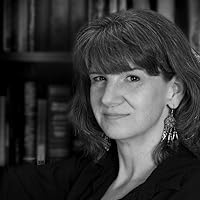
Sarah Fox co-imagines the Center for Visionary Poetics, and is a doula and teacher. She has won National Endowment for the Arts, Bush Foundation, Jerome Foundation, and Minnesota State Arts Board grants and fellowships.
The Five Star rating is in part anticipatory, but I made the click with complete confidence. "The First Flag" was handed to me by the poet yesterday evening at a reading. I'd been looking forward to this reading for months and was not in the least disappointed. A half hour passed between the last sentence and this one. I read more. This is so good. My faith, first in the process of poetry and then as a natural extension in everything else, had been renewed. If you love poetry, or would love to love poetry, get this book.
Potent mix of a dharma-punky edge (and reference), learning, and wit.
from "Daughter Object":
In his efforts to improve her, my father removed a gland from my mother's entrails.
Balancing the archetypical w/the everyday
from "Transitional Object":
"I'm sorry / you feel so sorry for putting me in this cage / made of the bones of my mother."
which is a killer poem, a vivisection of the pathetic need to be understood as a way to absolve one's own (here MAN's) violations.
O right, the everyday: "I smoked until I could not feel my body any longer. / Mama Moon, I used to sing to my baby, that's who. / I'm a Smokey Mama High. The Moon is High" ("Moms vs. Dad's" 60).
In many ways, the livid body imagery, the insistence on the subject as sticky and leaking (visqueux!) felt similar to that proposed in Aase Berg & Feng Chen's work, the difference being these poems exist in THIS world, not a symbolic/allegorical terrain. This makes them less hermetic, more pointed in their meanings. I should also say I didn't make it to the end. But this is the rare book where that didn't feel like giving up. I was simply satisfied at 100 pages. I'll save the next 50 for another year. This goes on the shelf between Carolyn Forche & Heather Fuller.
The poetry in Fox's The First Flag was a challenge for me to read. Not that I found it offensive but the richly dense prose made me take my time to soak it all in. I'm not sure if I was able to but it is definitely something I can't forget. Stories interwoven with animal, blood, bone, and human elements and even photos will tweak your senses. There are a number of essays in the middle of this volume and in fact, many of the poems read as mini-essays. I recommend that if you want to expand your idea of what poetry can be, I'd recommend this volume.
Matthew Dickman (Poetry Editor): It has been a long time since I have been so excited about a book of poems the way I am for Sarah Fox’s “The First Flag“. The poems are some of the most human-animal poems I have read, disarming and beautiful, scary because they are about us, honest and rough, intelligent and real. As I write this I am flying to Los Angeles…I am carrying The First Flag high in the air as an announcement of my arrival.
I'm not totally convinced by the whole gurlesque thing: to me, the mythology of this book is a little too obvious and familiar, the critical gestures for me a little too unprocessed, a little too straight out of the graduate seminar. But it's hard to deny the ambition of this book, a manuscript that's as dense as this one that's one hundred and fifty pages of mostly sustained argument. And while I didn't love every part of it, when the poems clicked for me as poems, like in section four, I found this a thrilling, rewarding read.
So, maybe not entirely aimed at my sweet spot, but still a pretty impressive read.
This is a brilliant, ground-breaking book that reminds me in some ways of Whitman's Leaves of Grass: it is far-reaching in its scope yet studded with intense personal moments, thoughts, and images that stick with the reader. Unfortunately, the book is so rich, so dense, that it might seem off-putting: I recommend that you dive in anywhere in the book and just start swim-reading. Innovative in both content and style, this is a terribly important book for contemporary poetry. Bravo to Sarah Fox for this brave success.
This collection flies its highest when at its most confrontational, jabbing its finger at accepted gender traditions and exploring the body as metaphor, but it also feels somewhat affected like it's running down a checklist of feminist themes. That sort of thing is fine, but it's mostly heard language and though obviously personal and emotionally draining it bounces between aesthetically daring and something that feels much more rote. It is, also, occasionally very funny, which makes it a lot more fun than the previous description seems.