Jump to ratings and reviews
Rate this book

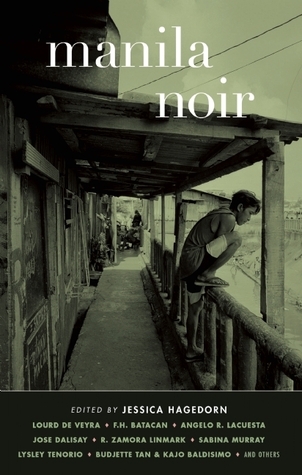
Manila Noir

Rate this book

"While certain cities in past Akashic volumes might appear to lack an obvious noir element, Manila (like Mexico City, which shares many of the same problems) practically defines it, as shown by the 14 selections in this excellent anthology. As Hagedorn points out in her insightful introduction, Manila is a city burdened with a violent and painful past, with a long heritage of foreign occupation. The specters of WWII (during which the city suffered from U.S. saturation bombing), and the oppressive 20-year reign of dictator Ferdinand Marcos live on in recent memory. The Filipino take on noir includes a liberal dose of the gothic and supernatural, with disappearance and loss being constants."
--Publishers Weekly (starred review)

"This Southeast sampler is unique, possessing an overall gritty tone. Each slice of supernatural splendor pulls the reader in with their nontraditional heroes…Ultimately, readers get a strong taste of the real Manila and all her dark secrets, wanting more of while being slightly afraid of what she might do next. Manila is the perfect place for noir scenes to occur, and it is easy to get sucked into its deadly nightshade of doom."
--Criminal Class Press

Brand-new stories by: Lourd De Veyra, Gina Apostol, Budjette Tan and Kajo Baldisimo, F.H. Batacan, Jose Dalisay Jr., Eric Gamalinda, Jessica Hagedorn, Angelo Lacuesta, R. Zamora Linmark, Rosario Cruz-Lucero, Sabina Murray, Jonas Vitman, Marianne Villanueva, and Lysley Tenorio.

Manila provides the ideal, torrid setting for an Akashic Noir series volume. It's where the rich rub shoulders with the poor, where five-star hotels coexist with informal settlements, where religious zeal coexists with superstition, and where politics is often synonymous with celebrity and corruption.

From the Introduction by Jessica Hagedorn:

Manila is not for the faint of heart. Built on water and reclaimed land, it’s an intense, congested, teeming megalopolis, the vital core of an urban network of sixteen cities and one municipality collectively known as Metro Manila. Population: over ten million and growing by the minute. Climate: tropical. Which means hot, humid, prone to torrential monsoon rains of biblical proportions.

I think of Manila as the ultimate femme fatale. Complicated and mysterious, with a tainted, painful past. She’s been invaded, plundered, raped, and pillaged, colonized for four hundred years by Spain and fifty years by the US, bombed and pretty much decimated by Japanese and American forces during an epic, month-long battle in 1945.

Yet somehow, and with no thanks to the corrupt politicians, the crime syndicates, and the indifferent rich who rule the roost, Manila bounces back. The people’s ability to endure, adapt, and forgive never ceases to amaze, whether it’s about rebuilding from the latest round of catastrophic flooding, or rebuilding from the ashes of a horrific world war, or the ashes of the brutal, twenty-year dictatorship of Ferdinand Marcos . . .

Many years have passed since the end of the Marcos dictatorship. People are free to write and say what they want, yet nothing is different. The poor are still poor, the rich are still rich, and overseas workers toil in faraway places like Saudi Arabia, Israel, Germany, and Finland. Glaring inequities are a source of dark humor to many Filipinos, but really—just another day in the life . . .

Writers from the Americas and Europe are known for a certain style of noir fiction, but the rest of the world approaches the crime story from a culturally unique perspective. In Manila Noir we find that the genre is flexible enough to incorporate flamboyant emotion and the supernatural, along with the usual elements noir fans have come to expect: moody atmospherics, terse dialogue, sudden violence, mordant humor, a fatalist vision.

237 pages, Paperback

First published January 1, 2013

79 people are currently reading
2064 people want to read

About the author

Jessica Hagedorn

39 books178 followers
Jessica Tarahata Hagedorn was born (and raised) in Manila, Philippines in 1949. With her background, a Scots-Irish-French-Filipino mother and a Filipino-Spanish father with one Chinese ancestor, Hagedorn adds a unique perspective to Asian American performance and literature. Her mixed media style often incorporates song, poetry, images, and spoken dialogue.

Moving to San Francisco in 1963, Hagedorn received her education at the American Conservatory Theater training program. To further pursue playwriting and music, she moved to New York in 1978.

Joseph Papp produced her first play Mango Tango in 1978. Hagedorn's other productions include Tenement Lover, Holy Food, and Teenytown.

In 1985, 1986, and 1988, she received Macdowell Colony Fellowships, which helped enable her to write the novel Dogeaters, which illuminates many different aspects of Filipino experience, focusing on the influence of America through radio, television, and movie theaters. She shows the complexities of the love-hate relationship many Filipinos in diaspora feel toward their past. After its publication in 1990, her novel earned a 1990 National Book Award nomination and an American Book Award. In 1998, La Jolla Playhouse produced a stage adaptation.

She lives in New York with her husband and two daughters, and continues to be a poet, storyteller, musician, playwright, and multimedia performance artist.

Ratings & Reviews

What do you think?
Rate this book

Friends & Following

Create a free account to discover what your friends think of this book!

Community Reviews

5 stars
312 (31%)
4 stars
368 (36%)
3 stars
248 (24%)
2 stars
57 (5%)
1 star
17 (1%)
Displaying 1 - 30 of 112 reviews
Profile Image for K.D. Absolutely.
1,820 reviews
March 23, 2014
"Noir" means crime fiction featuring hard-boiled cynical characters and bleak sleazy settings. Why did Akashic Books choose Manila as a milieu for crime stories? I wondered. So, I checked the The List of Cities by Murder Rate and Manila is not even in the Top 50 so it must be the hard-boiled cynical characters and bleak sleazy settings that made Akashic include us in their Noir series. Let's see...

My practice when I am enjoying an anthology of short stories is to jot down my thoughts right after reading a story or two and that was what I did for the last 3 days:

1. Aviary by Lysley Tenorio. Greenbelt Mall, Makati - 5 STARS

The story of street children who are so poor they are not allowed to enter Greenbelt, a mall for the rich people. One day, they donned their best clothes and trooped to the mall and scared the hell out of the rich families inside the mall's chapel. I did enjoy the crisp storytelling and the unexpected twist (lame, yes) in the end that reminded me of El Fili. Hah!

2. A Human Right by Rosario Cruz-Lucero. Intramuros - 4 STARS

Surprisingly, this is a love story. Well, for me. Crime noir as a love story. Story of a poor boy who is sort of adopted by a rich family like Emilie Bronte's The Wuthering Heights. The comparison stops there though because Isabel is more gutsy than Catherine.

3. Satan Has Already Bought You by Lourd de Veyra. Project 2, Quezon City - 3 STARS

This is a good reminder for people to stop using drugs because according to "some Christian station" the meaning of S.H.A.B.U. is Satan Has Already Bought U. It is not "us" for I don't use prohibited drugs hehe. There is a twist in the end of the story but I just did not care so much about this one as I was not able to relate to it. NO TO DRUGS, says me.

4. Broken Glass by Sabina Murray. New Manila - 2 STARS

Felt ordinary for me. The supposedly shocking revelation in the end did not have any effect on me. Parang okay, ganun? Fine.

5. After Midnight by Angelo R. Lacuesta. J.P. Rizal - 3 STARS

Short and sweet. Lacuesta's prose is crisp and succinct. If he writes a novel, I will surely give it a try. The way he describes that final scene is so vivid I think I will avoid remembering it when I go to sleep in the next few days.

6. Trese: Thirteen Stations by Budgette Tan and Kajo Baldisimo. EDSA - 3 STARS

The short story of Kambal is here. There is also a new character: Santelmo. What else will Tan and Baldisimo think of next? Still Alexandra has thinning hair. Time to buy a wig. The scenes inside the train station with all the souls are eerie. I am not a regular commuter of MRT so I can't picture the scenes in my mind especially at night though. The scenes when living human beings are being eaten is a bit too much though. But overall, this did not disappoint me. I am proud to have read and savored all the Trese releases. Thanks to may influential young friends.

7. Comforter of the Afflicted by F. H. Batacan. Lagro - 3 STARS

A story of murder that happened in the apartment of a single lady one New Year's Eve. The investigation is being done by a lady police and a crime-detective-priest that reminded me of Smaller and Smaller Circles that award-winning book of the author. The twist in the end tacitly reveals who the killer is.

8. The Professor's Wife by Jose Dalisay. Diliman - 4 STARS

I enjoyed this better compared to Dalisay's novel that I read a number of years ago, the Martial Law novel Killing at the Warm Place (3 stars). This is the story of a professor murdered at home that he shared with with young wife. The professor has an apprentice-driver and the couple has a plumber named Diego. The story is narrated by the apprentice-driver. The writing is skillful and direct to the point. I really enjoyed reading this as I was waiting for our number to be called at Globe SM Annex this afternoon.

9. Carino Brutal by R. Zamora Linmark. Tondo - 3 STARS

The story of two gay men who work as beauticians. Not sure if a policeman can fall for a gay beautician but Linmark says so so I don't really care. The telling is dark and sad. As usual, gay men are portrayed here as loser. Maybe they are the "sleazy" characters fit for noir?

10. The Unintended by Gina Apostol. Ali Mall, Cubao - 2 STARS

The story of a young filmmaker who is a daughter of another filmmaker during the 70's. Her father and mother got separated after the Thrilla in Manila, the boxing bout that ended the boxing career of Frazier and made Muhammad Ali a household name around the world. Ali Mall, the setting of the story was named after him. I did not feel anything sympathy for the daughter. I don't know what. The story felt a bit pretentious for me as it tried hard to incorporate so many things in the story and I thought it lost some needed focus.

11. Old Money by Jessica Hagedorn. Forbes Park - 3 STARS

My first time to read a work written by Jessica Hagedorn. Her style is nice. This is about a spoiled brat who is into drugs that he is turning crazy. The story's point-of-view is that of his friend that has to go back to the Philippines because he does not see any future in the US anymore. They seem to have an erotic relationship between the two young men but Hagedorn did not dwell on that and I don't know why.

12. Desire by Marianne Villanueva. Ermita - 2 STARS

The story of a seaman who is having a hard time getting a job - aboard a ship. He is running out of money yet one day he decides to go to a prostitution house. I am not sure if I understood this story properly because I was already tired standing the queue and I felt dizzy from reading too much today. Though if this was good, I would not missed anything, I think.

13. Darling, You Can Count on Me by Eric Galimanda. Sta. Cruz - 5 STARS

The story of Lucila Lalu otherwise known in the 90's as the "chop-chop" lady. In May 1967, she was murdered and her head, torso and appendages were found in the garbage cans around Metro Manila. I did not know the complete story behind that true-to-life landmark case and I don't have any interest even up to now to even look it up but the telling is very arresting that my reading had no letup. It was interesting and engaging through and through. Awesome because the story was told in different perspectives. It reminded me of Carlo Caparas' massacre films in the 90's but the clear prose of Galimanda awed me.

14. Norma from Norman by Jonas Vitman. Chinatown - 2 STARS

The story of a fortune teller who is saving money for his sex transplant operation in Thailand. The plot did not really interest me at all and I thought that this was the weakest story in the book. This is Vitman's first time to be published and I wish him luck.

Overall, I liked this book and I thought that we Filipinos should be proud of it. Almost all the authors here are published novelists and known Fil-Am writers and have made names for themselves. So, after reading this book, I thought that Akashic chose Manila to be part of the series because we have these talented writers and they would be able to complete a potentially great book.

Good job, Ms. Hagedorn! Why not have a Cebu Noir and Davao Noir?
Profile Image for AennA.
51 reviews33 followers
July 10, 2025
You may get your copy here: https://amzn.to/4lRH3Nv

“I “I like to think of Manila as a woman of mystery, the ultimate femme fatale, sexy, complicated,
and tainted by a dark and painful past. She’s not to be trusted.” – Jessica Hagedorn


Manila – I guess the selection of the focal place for the anthology suits it best. No matter how lively it appears, Manila has its dark side, too.

Manila Noir has the right amount of crime and violence and is sinister enough to bring life to Manila’s dark facade. An anthology of 14 short stories by different Filipino authors, written in English, the book offers the readers stories set in various areas in Metro Manila, giving us a glimpse of the city's horrid and dubious side. It speaks of the obvious that in most places, but not only in Manila, there are untold stories of hatred, greed, violence, and, at the same time, complacency about what’s happening around us. These stories fit the noir genre.

At first, the stories did not appeal to me much because I thought they were too close to home and there was no need to write about them, but as I read each story, I appreciated it more. I see the transparency, the attempt not to conceal reality, and it speaks from a Filipino heart, though not necessarily greedy, and in such menace.

Subdivided into three parts – Us Against Them, Black Pearl of the Orient, and They Live By Night – Jessica Hagedorn gave a very fitting contradiction to the expected glossy surface of the city and its other unhidden side. Each author, in their short stories, has their own style. Every story came out fresh, bringing a new flavor to the reading senses.

Let me share a line or two about the 14 stories in the book.

1. Aviary by Lysley Tenorio, Greenbelt
It is a story about discrimination between the poor and the rich. Situated in Greenbelt Mall, this talks about the rumors that went viral online regarding Greenbelt management’s assumed decision not to allow “poor” people to enter their establishment. The rumor, however, was eventually denied and was considered a faux one, but this became a good topic in Tenorio’s story, bringing the right emotion and disturbing character to the readers.

2. A Human Right by Rosario Cruz-Lucero, Intramuros
A story of Isabel and her meeting with the alleged killer of her father. The killer is said to be a member of the Davao Death Squad. Here’s a story of an effort to seek redemption and revenge simultaneously.

3. Satan Has Already Bought You by Lourd De Veyra, Project 2 Quezon City
If you have read De Veyra’s Super Panalo Sounds, you’ll notice the theme is similar. I’ve read the aforementioned title, so it’s easier for me to visualize the mood of the setting. But no, it’s not a prerequisite to read SPS; they are not interconnected stories, but it is as edgy as the other.

4. Broken Glass by Sabina Murray, New Manila

A glimpse at the world of the upper-class strata and how some people can shrug off the news of someone’s death and conceal it at the same time.

5. After Midnight by Angelo R. Lacuesta, J.P. Rizal
The story appears to be a mundane scenario on any of the roads of Manila. This tells us the story behind a seemingly simple narrative of a guy on his way home.

6. Trese: Thirteen Stations by Budjette Tan & Kajo Baldisimo, EDSA
The only story in the compilation is rendered in graphic comic format. As other stories in the anthology are focused on one location, the duo – Budjette and Kajo – took advantage of MRT’s different stations along EDSA to cover a broader range of subject venues, thus giving the readers more story points to appreciate. This is an offshoot of the two’s successfully published “Trese,” a paranormal investigative-themed comic.

7. Comforter of the Afflicted by F.H. Batacan, Lagro
The main character of the story didn’t need much of an introduction for me since Father Augusto Saenz made a comeback from Batacan’s first novel, Smaller and Smaller Circles. I realized it’s easier to appreciate stories with recurring characters from another story.

8. The Professor’s Wife by Jose Dalisay, Diliman
After reading this story, I don’t know how to describe my feelings. I think this is wicked and a bit too tragic. Well-written, indeed.

9. Cariño Brutal by R. Zamora Linmark, Tondo
What I like best about this story is the characterization, and the story flow is easy to follow. It isn’t too complicated in terms of its narrative, but it didn’t fail to disturb me.

10. The Unintended by Gina Apostol, AliMall, Cubao
Admittedly, amongst all the stories, this one is unclear to me in terms of the characters’ interconnection. I think I missed something with the story when I read it. The emotions it’s trying to give me are a blur.

11. Old Money by Jessica Hagedorn, ForbesPark
Uhmn. This brings a ’90s feel to me. The way I visualize the story as I read it keeps bringing me nostalgia. I don’t know why. Here’s about greed and vengeance, and I think this one is a bit high on emotions.

12. Desire by Marianne Villanueva, Ermita
Desire. Why does the word feel like it has something to do with anything carnal? Villanueva tells us how desire can make us do worldly things.

13. Darling, You Can Count on Me by Eric Gamalinda, Santa Cruz
I must say I am relieved I am no longer hearing any news about incidents of chop ladies, as this story tells us a story of Lucila Lalu and the tracking of who killed her and who chopped her body into parts.

14. Norma from Norman by Jonas Vitman, Chinatown
Violence begets violence. Witness the unexpected metamorphosis, not just physically, of Charmaine as she experiences cruelty from the people around her, which eventually leads her to commit the same.

Truly, this book is worth the time to read. It has the right dash of flavor of mystery and violence without having to be too bloody or graphically brutal. This anthology made me feel closer to Manila. It’s like knowing Manila intimately, understanding its murky past, and loving the city despite it.
Profile Image for Ellen.
1,588 reviews456 followers
July 15, 2013
I won Manila Noir from LibraryThing's Early Reviewer series. I was particularly wanting this book because a) I'm a big fan of the editor, Jessica Hagedorn and b) I've enjoyed some of the other "_____ Noir" series of Akashic books. I have already read and enjoyed (inconsistent quality not withstanding) Bronx Noir, Long Island Noir, and Brooklyn Noir-yes, I live in the area [the Bronx]). I love noir as a genre and I love reading place-centered stories. I have never been to the Philippines but know many people from there and so was very interested in the place.

The book was quite satisfying in its place descriptions. By the end, I definitely felt like I knew a little bit about the country, at least certain parts (and certain kinds of people). I found the stories more consistently readable than is sometimes the case, and several were outstanding. I found the story told in graphic form especially entertaining, despite the fact that is not my preferred style. The stories are written in English by authors born (although not necessarily living) in the Philippines.

There are 14 stories and a very satisfying introduction by Hagedorn (an exceptionally talented and skilled writer). True to her definition of noir, there are "no happy endings" but many satisfying ones.
Profile Image for Lynai.
569 reviews82 followers
January 2, 2015
My cravings for noir were satisfied. More thoughts soon.


***UPDATE***

Also posted in It's A Wonderful Bookworld.

Until I learned about this book, which was sometime early last year, I wasn’t aware that what I love reading – what had actually got me hooked to reading – may be aptly called noir. French for “black”, noir in fiction would refer to those stories which are bleak and dark, often about crime, with sinister and cynical characters. Perfectly my cup of tea.

I grew up in a place located several miles (which usually requires air travel) from Manila. The first time I ever set foot in my country’s capital city was when I was 25 years old, and until then, or even until now, what I know about Manila consists of what I usually see on TV and read in the news – a favorite setting for both petty and serious crimes. Why Akashic Books, the publisher of the noir series, chose Manila as the setting for one of its numerous noir anthologies is pretty much understandable.

All the fifteen stories in Manila Noir are delightful reading, although the first couple of stories didn’t immediately catch my interest. It was fascinating to read stories by Filipino authors, some unheard of, but of great writing nonetheless. My patriotic heart was full to bursting, and it didn’t matter that the stories I was reading weren’t exactly uplifting.

Unlike other anthologies that I’ve read where I only pick my top 3 or 5 favorite stories, with Manila Noir , I tried to rate each of the stories, and here are my ratings and a short line (or two) about how I felt about them:

Aviary – 3 stars. This is a story surrounding Glorietta Mall, one of my favorite malls while I was staying in Makati. Not too “noir” for my taste, but the ending was full of meanings.

A Human Right – 3 stars. This one is set on Intramuros, a place I have long wanted to visit. I loved the romance angle.

Satan Has Already Bought You – 4 stars. Written by Lourd De Veyra who is known as a ruggedly intellectual pop icon, this one of my favourites in the collection. There’s a hint of cynicism and angst in the dialogues between the main characters, and of course that ending.

Broken Glass – 4 stars. This one is very socially apt. I can’t help imagining the scenes as a TV show/telenovela.

After Midnight – 3 stars. This one’s a bit hazy for me. I have to re-read it now to get a feel of the story but I can’t still fully comprehend it. But I liked the flashback scenes of how the narrator met the girl and how they ended up where they were after midnight.

Trese: Thirteen Stations – 3 stars. Now this. I’ve heard a lot about Trese before but did not actually try to read it because I am not a big comic fan (I tend to get distracted by the words so I just don’t focus at the drawings, which actually defeats the purpose of comics, right? Right.) But after reading this, I decided to read at least the first Trese book.

Comforter of the Afflicted – 4 stars. Written by the same author who wrote Smaller and Smaller Circles (which I have yet to read), I was actually surprised to learn that F.H. Batacan is a “she”. This is one good piece of crime fiction and written by a woman at that, when male authors dominate the crime story genre. My second favorite story in the book.

The Professor’s Wife – 4 stars. Another favorite, this is the story where I felt closer to the (dead) character. History major? Yes.

Cariño Brutal – 3 stars. Really sleazy, this one. A story fit for a TV show, although the ending was a bit abrupt.

The Unintended – 3 stars. This is one story that I still cannot fully comprehend. It’s about Ali Mall, Muhammad Ali, and Leyte, I felt lost while reading it. Maybe I should do more research on the Thrilla in Manila.

Old Money – 4 stars. I’ve long wanted to read Jessica Hagedorn’s Dogeaters, but I’m glad to have a taste of her writing in this collection. I loved her style and the social relevance of the story.

Desire – 3 stars. This is a sad story of a man who was broken-hearted and the things he did to forget his misery, even to the point of wasting away his dreams.

Darling You Can Count On Me – 4 stars. If I were to pick a top favorite, this would be it. I loved the “chop-chop lady” concept and the complexities that surround the crime. I loved the different versions of the story told by the suspects and how the story wrapped up in the end.

Norma From Norman. 4 stars. This is the story that stayed long with me, maybe because this is the last in the collection. I loved the strength and resilience of the main character and how he/she was changed by the circumstances.


All in all, Manila Noir is one compelling read. I enjoyed most of the stories, and they were just the perfect break I needed after reading several literary books. I missed reading stories like this, and what’s more, they really felt so close to home. I am one proud Filipino.
Profile Image for Zai Zai.
810 reviews17 followers
October 24, 2025
I am usually cautious about buying multi-author *even single authored actually* short story collections because the quality is often inconsistent like they are not sending over/collecting their best. but this one mostly delivered and stuck to the theme. love that!
Profile Image for Nenette.
865 reviews62 followers
October 10, 2015
I rated each story and the average came up to 2.5, and I am rounding it down to 2.

I thought I'd try this genre but it's not just for me. Too dark, too cynical, too noir for my taste.

Some of the stories I liked: Aviary; The Professor's Wife; Norma From Norman; Comforter of the Afflicted - to this one I gave 5 perfect stars.

These are the ones I totally went "bleh!!!" - After Midnight; Cariño Brutal; Trese; Darling, You Can Count On Me; and the story I least liked: The Unintended. The author has got a flair for words, lots of it actually, but it did not translate to a good story. I got totally lost. For a while, I wanted it to end already, and when it did, it was so abrupt it was like I came out of a trance without having a recollection of what happened.

One thing for sure, I'm not picking up noir again.
Profile Image for Judie.
135 reviews7 followers
June 19, 2013
Simply no place like Manila, as the song goes. I love this collection of stories.
Profile Image for Ian.
101 reviews11 followers
September 1, 2013
Metro Manila is a city that never sleeps. She (as Hagedorn fondly calls this city) is a parent to millions of Filipinos striving to survive their daily ordeals. By day, she is productive at keeping her children at bay and ever-watching them pursue their daily professions, whether it be a "tambay sa kalye", a balut vendor or a senator of the government. By night, she is a witness to other outrageous acts that would seem to be beyond comprehension done by many of her sons and daughters. Hence, it can be said that she has, like many of the cities' of the world, an affinity for the "Noir".

Noir is the French word for "black". In many movies or T.V. shows, Noir contains detectives, thieves, murderers, sultry mistresses, prostitutes, gangsters and basically normal people unleashing their pent-up dark sides. The setting is mysterious, if not sinister. There will often be a fog or a mist that clouds the distance as a lone stranger walks under the dimming light of a street lamp or a congruence of sorts where gambling and prostitution are both rampant. Literature, however, takes the concept of Noir in a whole new levfel. If not, into another reality.

The novel "Manila Noir", edited by Jessica Hagedorn and given life by fourteen literary masters--she one of them--is a treat for the Filipino bibliophiles. It is rare for one to encounter a work of fiction that sticks to the harsh realities of life experienced by many of us, the struggling Pinoys in the cover of night. Of course, Filipino Literature, for the most part nowadays, deals with social issues. However, the way by which various essayists or poets or novelists do this type of analysis falls more on the critical level, never truly giving the reader a concrete idea of what they are experiencing. Showcasing the genius of people like Lourd de Veyra, Eric Gamalinda. F.H. Batacan and R. Zamora Linmark, the book touches every type of malady and imperfections of the Filipinos at a more personal level. One would see how finely tuned the details for every scene shown and how intricate and fragile every presented character seems to become at the turn of every page.

The book itself is quite short. "Adequate" as most would judge it. Each story would span at an average of 10 to 25 pages. If one has read the collection of Eros S. Atalia's dagli (stories unique to the Filipinos that tells of short scenes viewed in everyday life) in his book entitled "'Wag Lang 'Di Makaraos", one gets to acknowledge the feeling of sudden contemplation over simple tragedies and melodrama of every day living similarly unique to "Manila Noir". True. Crime and corruption have been a part of the Filipino culture. Ironically, one may find it impossible to live without any one of them hovering over as they eat pan de sal and watch the news of various murders on T.V. In short, the Filipinos have become numb to these various atrocities. Numb in the sense that their minds have conditioned themselves to think that this is a normal way of life.

"Manila Noir's" objectives are not to stir one into action to do something about these dire situations. God forbid, we, Manilenos, have had enough of that. Rather, it shows the products or the consequences of our actions in the past and how these have shaped the future we now call the present. Through the showcasing of fictitious events in Manila, Filipino readers are exposed to the other side of their motherland, her being the ultimate femme fatale. It also inculcates the aesthetic value with the unique Pinoy socialist view in a way that makes one appreciate and love the flawed beauty of this bustling and lively city many call their home.
Profile Image for Oward Bodie.
127 reviews5 followers
November 8, 2014
A mostly uneven collection of crime-related stories set in various parts of Metro Manila. Several of them, particularly the stories written by F. H. Batacan and Lysley Tenorio, are first class literature; the others fall a bit flat, or rely on the intensity of the genre (read: violence) to keep the reader's interest. It's also important to note that these stories were all written in English (no translations).

Recommended for people who want to learn more about the energy of a vibrant "third world" metropolis, but perhaps not for people who are serious fans of hard-boiled crime fiction.
Profile Image for Ivy Catherine.
143 reviews11 followers
June 5, 2013
This book has a nice collection of stories from various Filipino authors. Manila Noir showcases both the supernatural and the darkest side of the Philippines. If you like Stephen King's short stories, you'll definitely love this one too.
Profile Image for Gena.
147 reviews9 followers
November 13, 2015
Favorites:

1. Darling, You Can Count on Me
2. Trese: Thirteen Stations
3. Aviary
4. Norma from Norman
5. After Midnight
Profile Image for Ellie.
22 reviews16 followers
April 14, 2025
Manila Noir isn’t just a book—it’s an alleyway, a bar, a backseat of a rusting taxi, a whisper behind closed blinds. Hagedorn curates a gritty and electric collection of crime stories that peer into the underbelly of Manila, threading together voices that are as sharp as broken glass and as familiar as the glow of a sari-sari store lamp at midnight. Every story feels like a different district, a different ghost of Manila, and together they form a portrait that’s both fractured and whole.

Reading this felt like eavesdropping on the city’s secrets. Some stories were soaked in sorrow, others pulsed with dark humor or quiet fury—but all of them felt honest, like they’d been written under flickering neon and the pressure of rain. As someone who knows the city and its rhythms, this collection didn’t feel foreign or performative—it felt like home, or at least, like the shadow of it. Manila here isn’t sanitized or romanticized—it’s alive, angry, aching, and utterly captivating.

It’s not just a book I read—it’s a book I wandered through, wary and wide-eyed. And long after I closed its pages, the characters and corners stayed with me, like cigarette smoke clinging to a denim jacket. Manila Noir is a love letter written in red ink—a love that’s complicated, bloody, and true.
Profile Image for JC Tolentino.
21 reviews
November 24, 2018
1. Aviary
Lysley Tenorio

This story failed to get my sympathy for either side. The illustration of inequality was not successfully done but it was decent enough. Also, there were some inconsistencies with the narration. With the kind of perspective used, consistency in the narration would’ve come a long way.

Rating: 4.5

2. A Human Right
Rosario Cruz-Lucero

The plot was interesting especially the parts where IPs and the DDS were concerned. It was very timely for 2018. However, with the way it was written, it felt like reading a summary of a longer story. Perhaps, this would have been better if it were a novel.

Rating: 6

3. Satan Has Already Bought U
Lourd de Veyra

The suspense at the end was good but it could’ve been better if it weren’t that predictable. At least, something happened for the plot to move. The rest was more like a compilation of stories to kind of illustrate the various crimes involving drugs.

Rating: 5.5

4. Broken Glass
Sabina Murray

The diversity of the characters, and the mystery surrounding the story gave an overall positive effect to me as a reader. It showed a legitimate snippet of someone’s everyday life but with a tiny kiss from magical realism. However, I think this would’ve been better delivered (just like most of the stories in this anthology) if any of the local languages were used instead of English. This kind of plot would benefit so much from the choice of language.

Rating: 7

5. After Midnight
Angelo R. Lacuesta

This story was highly, excruciatingly (and I just can’t stress this enough) uninteresting. Despite the diversity of Metro Manila, the use of such milieu is just too rampant in this book and, to some extent, in contemporary Philippine literature.

Rating: 3.5

6. Trese: Thirteen Stations
Budjette Tan & Kajo Baldisimo

The perspective was interesting but the delivery wasn’t good enough. Most of the lines were too corny and painful to read. This entire thing was like an even cheaper version of Twilight.

Rating: 2.5

7. Comforter of the Afflicted
F.H. Batacan

Saenz, just like in Smaller and Smaller Circles, had no character development whatsoever (assuming this was the same Saenz). And, again, just like in Smaller and Smaller Circles, him being a priest didn’t matter. In fact, it mattered even less here and that wasn’t okay. There should at least be some tiny semblance of significance to the plot as to why a character was written in such a way.

On the other hand, the story was good. It could’ve been so much better, though. The chronology of the narration ruined the supposed effect of the revelations at the end of the story.

Rating: 4

8. The Professor’s Wife
Jose Dalisay

The use of the word “dialect” instead of language was utterly disappointing. Other than that, the story was a page-turner. How the narration started and ended with the car delivered well for the entire story. Not giving away everything about the wife’s character was effective as it left so much for the reader’s imagination. The story seemed like it could either be a prequel or a sequel of another story.

Rating: 6.5

9. Cariño Brutal
R. Zamora Linmark

The story was short but it definitely delivered the impact. The imageries used were painfully clear and successfully disturbing. In other words, they were powerful. The conversations were natural and relatable (partly because of not entirely using English). I just wish the story was longer.

Rating: 8

10. The Unintended
Gina Apostol

It was like a crossover between a badly-written essay with no fully-formed argument and a short story written by a writer who only listed her ideas for a short story because she was too lazy to think of an actual plot (and, not to mention, end it). The author’s sentence construction was also so horrible that it was comparable to Judith Butler’s. Just for the record, Judith Butler is an amazing theorist.

Rating: 2

11. Old Money
Jessica Hagedorn

This kind of theme is really starting to bum me out. It’s like almost every other contemporary Philippine literature is about drugs. This is the reason why Duterte and his blind supporters falsely believe that drugs are that big of an issue. The money and the effort of the government and the people are now focused on the wrong things while the legitimate and more pressing social issues aren’t being addressed at all.

Also, I am never a fan of not using quotation marks in conversations. Come on! This isn’t even some stream-of-consciousness piece of shit.

Worst of all, the author didn’t even bother choosing between the two endings. In some stories, that idea works. In this case, it just seemed like the author was just an incompetent and conceited writer who couldn’t choose between the two endings because she thought they were both brilliant. It would’ve been better if she chose one. And, spoiler alert, none of them were brilliant.

Rating: 3

12. Desire
Marianne Villanueva

The story fared better than most in this anthology. Each part played a significant role in the culmination of the entire plot. The narration gave the desired impact. The story also seemed fresh given how the other stories revolved around the same fucking theme.

Rating: 6.5

13. Darling, You Can Count on Me
Eric Gamalinda Cruz

I remember my Mom talking about this case some time ago. Apparently, this caught the public eye back in the day.

The way this was written and fictionalised was really commendable. The way the narration was chopped (pun intended, really sorry) into the perspectives of the victim and the suspects made this an absolute page-turner. This would have been better if this were a novel. It was like watching a Netflix series. Netflix loves this kind of stories. This made me curious about the case that happened long ago. I wonder how the justice system (the Philippine kind) dealt with this one…

Rating: 7.5

14. Norma from Norman
Jonas Vitman

The unfolding of events was disturbing. The images were brutal. But the ending was a bit underwhelming but still satisfying. Overall, the writing was very effective. This was a good piece to end the entire book. In fact, despite the bad entries, this was quite redeeming.

Rating: 7

Average rating: 5.25/10
This entire review has been hidden because of spoilers.
Profile Image for clem.
13 reviews
August 31, 2023
When Resil Mojares explored the question “Is there a Philippine Noir?” in ‘Interrogations in Philippine Cultural History: The Ateneo de Manila Lectures’, he observed how this particular anthology seems to focus more on exocitized violence and the psychological basis of the crimes portrayed in this book—its function to critique society/politics (which is an essential quality of the noir genre), according to him, is not strongly developed in the text.

But I think reading it from a postcolonial standpoint could help in revealing that strongly developed social critique that Mojares struggled to find in this book. “Norma from Norman” by Jonas Vitman, for example, is, in its surface, a strong reflection of the transphobia and brutality that transgender women suffer from violent men. A postcolonial reading, however, exposes more—it is a story about Charmaine/Norma/Norman, the transexual Other, who literally fights tooth and nail against the “normalcy” that Philippine society, so distorted by its centuries of colonial history, imposes on itself but will never succeed in doing so. There is much more to Manila Noir than postcolonial theory, though—there are stories that are postmodern and even gothic in their themes and how they were written. Overall, it was and is an enjoyable read.

Satan Has Already Bought U / 5 stars.
Profile Image for Lei.
41 reviews
July 2, 2022
A collection with more misses than hits. Each of the stories are engaging in their own right, though fall short of actually articulating the brutality of the region. Only "A Human Right" and "The Professor's Wife" seem to establish—and execute—this atmosphere well. Majority of the stories hinge less on the power relations that propagate these conditions, framing the conflicts as individual character shortcomings—a fundamental flaw in a genre where setting and atmosphere should take precedence. Instead many of the stories rely, or even indulge, on brutalizing its characters as some form of narrative compensation.

At the very least, the stories stop short of being overtly cruel. There's that!

2.5/5
Profile Image for Erin Crane.
1,171 reviews5 followers
November 24, 2021
This was pretty good overall. The first story is probably my favorite. I also really enjoyed Comforter of the Afflicted. I didn’t read the last one because I lost interest. I also didn’t read the comic one because I read this as a library ebook and it wasn’t very readable.

I enjoyed reading stories set in a different place and cultural context but which were still very accessible I thought. Themes of poverty, sexual exploitation, and abuse abound, though, so they are dark reads. To be expected with noir!
Profile Image for Mimi.
11 reviews8 followers
November 23, 2014
There were two ways in which this book disappointed me: first, in being a book about Manila, and second, in being noir. Setting seems largely inconsequential in a lot of these stories, often taking a backseat to other aspects of narration. This is forgivable of course, however, when the title itself advertises a city, one would expect that space and place would be much more prominent than it is here. The differentiation between the different cities in the stories just isn't pronounced enough to warrant the subheadings. Many of the stories could very well have been set anywhere else because Manila isn't a big feature in them.

As a noir, it just doesn't have the bite I hoped it would have. There are no charming Marlowes to provide the reader with snappy one-liners. Oddly enough, it doesn't deliver on the seedy locations either. As a former long-time resident of Metro Manila, I know how absolutely sordid some of these places are ye it seems these stories are oddly sanitary. Manila is a perfect setting for noir--an oppressive urban landscape, corrupt politics, brutes, criminals, tricksters...all are present in Manila and yet are conspicuously absent from a good portion of the book. Where is the grit?

Many of the authors are Filipino-Americans, some of whom have been living away from the Philippines for quite some time now and it shows. The first story set in a mall especially reeks of this. They just seem either out of touch with the setting (and its occupants) that they've been given to work with, or are fondly nostalgic of it. My personal tastes lean toward noir that butchers its city as well as its murder victims. Manila Noir did some butchering, indeed. Just not the kind it should have.
Profile Image for Pam Z (Pam's Shenanigans).
698 reviews102 followers
August 29, 2020
"Either nothing surprises you in Manila, or everything does."

"Manila's a city of extremes. Where the rich live in posh enclaves, guarded by men with guns. Where the poor improvise home out of wood, tin, and cardboard and live by their wits."


What an amazing anthology from notable Filipino authors Manila Noir is! It was interesting to read each story that highlights an area within the metropolis. From the mundane to the mysterious and even the supernatural, each snippet all had one thing in common: the darkly beautiful, stubborn, and unforgiving Manila.
Profile Image for Farah (learnthuman).
13 reviews4 followers
April 20, 2021
Being a city full of mystery, hardship and superstition, Manila is definitely a great location for Noir-esque narratives and crime-filled drama. The collection is subdivided into three main themes: Us Against Them, Black Pearl of the Orient, and They Live by Night and features multiple noteworthy stories. Among my favourites include 'Aviary' which tells the tale of a group of poor youths infiltrating GreenBelt Mall, whose management had officially banned "the poor" from entering. There's also 'Broken Glass' featuring mysterious gossip about a murder that occurred in an upperclass suburban community, told through the lenses of a little girl. Last but not least is 'Trese: Thirteen Stations' which is a gorgeously Komiks-esque graphic short story which is essentially Filipino lower mythology meets the classic Noir Private 'I' motif.
Profile Image for Christopher Jed.
18 reviews9 followers
October 27, 2015
Oh yes, something dark and gritty! I'm no cynic but I just like to read something sinister and graphic and sexy haha every now and then. Something that would disturb and creep me out and would make me think twice about something. Also, it's an anthology so its a plus one. Sometimes I put down a novel when its suddenly became tedious for me. Short stories are, well, short and more straightforward. Each story fascinates and surprises me. Sana they would publish another Manila Noir, sana haha
Profile Image for Geoff Hill.
12 reviews2 followers
January 4, 2014
Dark, disturbing, unreal, and realistic at the same time.

Gritty and Noir in the extreme, which is perfectly set in Manila, a place of extremes and contrasts.

Sometimes depressing, a little patchy in quality, but overall a great page turner.

Oh, and a little treat in the middle, a TRESE graphic story - a sampler of the classic supernatural Filipino series, full of urban ghosts, vampires, aswangs and gods.

I will be looking for more by some of these authors.
Profile Image for Anne.
Author 6 books44 followers
May 31, 2014
I wasn't surprised that I liked the stories of the authors who I was already familiar with. The surprising thing is how much I liked the stories of the authors I didn't know. It took me a while to finish this because some stories didn't relate all that much to me. But this is still a great anthology and a breather from the usual genres I read.
Profile Image for Aj Garchitorena.
7 reviews3 followers
Read
April 7, 2015
So far, Manila Noir is waking my muse up, urging me to write again. I will, eventually, give the fifth star after I read the whole book. Everything noir is good, mysterious, and unhappy... which in turn, makes me, somewhat, satisfied to be enclosed in his noir envelope.
Profile Image for Maan.
198 reviews9 followers
January 14, 2014
Book #1 for 2014: Of course I liked the Trese story, Comforter of the Afflicted by Batacan (the Jesuit / investigator rocks)A Human Right by Cruz-Lucero, and Satan Has Already Bought U by de Veyra. Gritty.
Profile Image for Tuxlie.
150 reviews5 followers
Read
July 29, 2015

"While certain cities in past Akashic volumes might appear to lack an obvious noir element, Manila (like Mexico City, which shares many of the same problems) practically defines it, as shown by the 14 selections in this excellent anthology. As Hagedorn points out in her insightful introduction, Manila is a city burdened with a violent and painful past, with a long heritage of foreign occupation. The specters of WWII (during which the city suffered from U.S. saturation bombing), and the oppressive 20-year reign of dictator Ferdinand Marcos live on in recent memory. The Filipino take on noir includes a liberal dose of the gothic and supernatural, with disappearance and loss being constants."
--Publishers Weekly (starred review)

"This Southeast sampler is unique, possessing an overall gritty tone. Each slice of supernatural splendor pulls the reader in with their nontraditional heroes…Ultimately, readers get a strong taste of the real Manila and all her dark secrets, wanting more of while being slightly afraid of what she might do next. Manila is the perfect place for noir scenes to occur, and it is easy to get sucked into its deadly nightshade of doom."
--Criminal Class Press

Brand-new stories by: Lourd De Veyra, Gina Apostol, Budjette Tan and Kajo Baldisimo, F.H. Batacan, Jose Dalisay Jr., Eric Gamalinda, Jessica Hagedorn, Angelo Lacuesta, R. Zamora Linmark, Rosario Cruz-Lucero, Sabina Murray, Jonas Vitman, Marianne Villanueva, and Lysley Tenorio.

Manila provides the ideal, torrid setting for an Akashic Noir series volume. It's where the rich rub shoulders with the poor, where five-star hotels coexist with informal settlements, where religious zeal coexists with superstition, and where politics is often synonymous with celebrity and corruption.

From the Introduction by Jessica Hagedorn:

Manila is not for the faint of heart. Built on water and reclaimed land, it’s an intense, congested, teeming megalopolis, the vital core of an urban network of sixteen cities and one municipality collectively known as Metro Manila. Population: over ten million and growing by the minute. Climate: tropical. Which means hot, humid, prone to torrential monsoon rains of biblical proportions.

I think of Manila as the ultimate femme fatale. Complicated and mysterious, with a tainted, painful past. She’s been invaded, plundered, raped, and pillaged, colonized for four hundred years by Spain and fifty years by the US, bombed and pretty much decimated by Japanese and American forces during an epic, month-long battle in 1945.

Yet somehow, and with no thanks to the corrupt politicians, the crime syndicates, and the indifferent rich who rule the roost, Manila bounces back. The people’s ability to endure, adapt, and forgive never ceases to amaze, whether it’s about rebuilding from the latest round of catastrophic flooding, or rebuilding from the ashes of a horrific world war, or the ashes of the brutal, twenty-year dictatorship of Ferdinand Marcos . . .

Many years have passed since the end of the Marcos dictatorship. People are free to write and say what they want, yet nothing is different. The poor are still poor, the rich are still rich, and overseas workers toil in faraway places like Saudi Arabia, Israel, Germany, and Finland. Glaring inequities are a source of dark humor to many Filipinos, but really—just another day in the life . . .

Writers from the Americas and Europe are known for a certain style of noir fiction, but the rest of the world approaches the crime story from a culturally unique perspective. In Manila Noir we find that the genre is flexible enough to incorporate flamboyant emotion and the supernatural, along with the usual elements noir fans have come to expect: moody atmospherics, terse dialogue, sudden violence, mordant humor, a fatalist vision.

Review

"For those who love travel, history, and a little bit of lore, this anthology transports you to the Philippines and is filled with riveting and sometimes dark stories of the capital city."
--Glamour (summer reading pick)

"[Manila Noir] is among the most moving, effective and altogether noir entry in the entire series."
--Bookgasm

"Suffice it to say that what the Noir series in general, and Manila Noir in particular, does so well is to create a 360-degree mosaic of a place…By including so many perspectives, from so many walks of life, Manila Noir makes Manila seem as vibrant, and dangerous, and exciting, and confounding as it really felt to live there."
--Lit Wrap

"A collection of stories like Akashic’s forthcoming Manila Noir is enough to set a crime-fiction addict’s mouth watering."
--New York Observer

"In…Manila Noir, the latest addition to Akashic Book’s series of original noir anthologies, poet, novelist, and artist Jessica Hagedorn writes of how ghosts of past occupations, buried secrets, corrupt political dealings, crime, and inequality have shaped the fabric of the Philippine capital city."
--The Margins

"Held closely to their breasts by the stories are messy, edged lives flaring out in seemingly random directions. But the 14 stories themselves are all elegant and smooth, like a bladed weapon concealed in a jacket. They strike suddenly but thoroughly, leaving you wounded. Embedded in each story is a deep acceptance of the fantastically flawed life in the big city and a step out of the ordinary…Manila Noir is a masterfully crafted anthology that reminds us that, if you truly love your city, you embrace its darkness as much as—if not more than—its brightness."
--Inquirer (Philippines)

"Excellently crafted and woven together, Jessica has compiled a series of short stories that exhibit the perfect setting and story for noir. Wonderful!"
--FMAM Magazine

About the Author

Jessica Hagedorn was born in Manila and now lives in New York. A novelist, poet, and playwright, her published works include Toxicology, The Gangster of Love, and Dogeaters, which was a finalist for the National Book Award. She also edited both volumes of the groundbreaking anthology Charlie Chan Is Dead: An Anthology of Contemporary Asian American Fiction.


"While certain cities in past Akashic volumes might appear to lack an obvious noir element, Manila (like Mexico City, which shares many of the same problems) practically defines it, as shown by the 14 selections in this excellent anthology. As Hagedorn points out in her insightful introduction, Manila is a city burdened with a violent and painful past, with a long heritage of foreign occupation. The specters of WWII (during which the city suffered from U.S. saturation bombing), and the oppressive 20-year reign of dictator Ferdinand Marcos live on in recent memory. The Filipino take on noir includes a liberal dose of the gothic and supernatural, with disappearance and loss being constants."
--Publishers Weekly (starred review)

"This Southeast sampler is unique, possessing an overall gritty tone. Each slice of supernatural splendor pulls the reader in with their nontraditional heroes…Ultimately, readers get a strong taste of the real Manila and all her dark secrets, wanting more of while being slightly afraid of what she might do next. Manila is the perfect place for noir scenes to occur, and it is easy to get sucked into its deadly nightshade of doom."
--Criminal Class Press

Brand-new stories by: Lourd De Veyra, Gina Apostol, Budjette Tan and Kajo Baldisimo, F.H. Batacan, Jose Dalisay Jr., Eric Gamalinda, Jessica Hagedorn, Angelo Lacuesta, R. Zamora Linmark, Rosario Cruz-Lucero, Sabina Murray, Jonas Vitman, Marianne Villanueva, and Lysley Tenorio.

Manila provides the ideal, torrid setting for an Akashic Noir series volume. It's where the rich rub shoulders with the poor, where five-star hotels coexist with informal settlements, where religious zeal coexists with superstition, and where politics is often synonymous with celebrity and corruption.

From the Introduction by Jessica Hagedorn:

Manila is not for the faint of heart. Built on water and reclaimed land, it’s an intense, congested, teeming megalopolis, the vital core of an urban network of sixteen cities and one municipality collectively known as Metro Manila. Population: over ten million and growing by the minute. Climate: tropical. Which means hot, humid, prone to torrential monsoon rains of biblical proportions.

I think of Manila as the ultimate femme fatale. Complicated and mysterious, with a tainted, painful past. She’s been invaded, plundered, raped, and pillaged, colonized for four hundred years by Spain and fifty years by the US, bombed and pretty much decimated by Japanese and American forces during an epic, month-long battle in 1945.

Yet somehow, and with no thanks to the corrupt politicians, the crime syndicates, and the indifferent rich who rule the roost, Manila bounces back. The people’s ability to endure, adapt, and forgive never ceases to amaze, whether it’s about rebuilding from the latest round of catastrophic flooding, or rebuilding from the ashes of a horrific world war, or the ashes of the brutal, twenty-year dictatorship of Ferdinand Marcos . . .

Many years have passed since the end of the Marcos dictatorship. People are free to write and say what they want, yet nothing is different. The poor are still poor, the rich are still rich, and overseas workers toil in faraway places like Saudi Arabia, Israel, Germany, and Finland. Glaring inequities are a source of dark humor to many Filipinos, but really—just another day in the life . . .

Writers from the Americas and Europe are known for a certain style of noir fiction, but the rest of the world approaches the crime story from a culturally unique perspective. In Manila Noir we find that the genre is flexible enough to incorporate flamboyant emotion and the supernatural, along with the usual elements noir fans have come to expect: moody atmospherics, terse dialogue, sudden violence, mordant humor, a fatalist vision.

Profile Image for Gsus.
469 reviews9 followers
February 4, 2022
I enjoyed reading most of the stories, some not so much. I read this on kindle so I was not able to read Trese because the fonts were too small and I just could not-- Which is a shame.

Based on the reviews, a lot recommended not to read the book in one sitting, to read the stories separately, let it marinate in your brain for a while before proceeding to the next. I did not do any of that. I read the book in a hazy, sleepless state.

Aviary- I liked it.

A Human Right- liked it too. I love the ending line. pause. "There is no end to the vermin needing extermination". Who is the vermin? Is it the poor living in poverty, forced by his circumstances to a life of theft and crime? or is it the wealthy who exploit this country.

Satan Has Already Bought U and Broken Glass- liked these too. short. impactful.

After Midnight- meh it was alright

Comforter of the Afflicted- I might be one of the minority here, but FH Batacan's writing does not with my brain dance in tune. I read the whole story two times because I just did not get it. I may have just scanned it. Maybe her writing is not scannable (HAHA). The second time I read it, with intent, it was actually not even that hard to understand and not as confusing as I thought. I just really read it really fast thinking my brain would be able to connect the dots in the end and form a coherent message and storyline. I was wrong. But it was good. I guess. Not my favorite out of this anthology.

The Professor's wife- it was ok. I liked it naman. The writing was easy to absorb

Cariño Brutal- It was alright. I don't get the ending though. "Learn from the Dead" Lala says. Did it mean that history repeats itself? That there is only one end to the kind of life they live?

The Unintended- this, I dreaded reading. I don't know somehow along the way I got confused. Too many things happening, too many things being mentioned that I do not have prior knowledge of. Was not as gripping. Was not willing to think the whole thing through and let sit in my mind. Unlike Batacan's Comforter of the Afflicted, I am not willing to reread it again.

Old Money- I actually liked this one. I like the narrative. A typical portrait of entitlement. Hmm why the need for two parallel endings. What is the deeper meaning behind it? How does it add to the texture of the story? I don't think giving two types of endings was that necessary (?)

Desire- a meh for me. I might have been sleepy when I read this. I don't know. I got lost with the plot. Lots of names were mentioned. Backstories and present stories. There's this pregnant girl, another, a prostitute. Did the prostitute remind him of his childhood sweetheart/ slash fuckbuddy? And whatever did happen to her? I don't know. I'm confused. I don't know if I ever really understood the story, again, not willing to reread it.

Darling, You Can Count on Me- I liked it. Except for the ending. I did not understand. Again. This is all on me. Was it supposed to be vague? because ok.If it is, I get it.

Norma from Norman- I liked this. Was satisfied with the ending actually. Was satisfied with the book because this was the last story.

All in all, it was good. Did not dread reading it too much. Left me with something to do. I don't know if Noir is for me. I think this is my first Noir? not sure.
68 reviews1 follower
August 14, 2019
Review from Asia Thrills - https://asiathrills.com/manila-noir-e...

Wow, what a great book. The fourteen stories here (one in graphic form) transport you to the heart of seedy, shady, pulsating Manila with an urgency that has you sitting wide-eyed and trembling, right on the edge of your jeepney seat.

Even the introduction by novelist, poet and playwright Jessica Hagedorn is a marvellous read, setting the scene for us and luring us into a Manila that is “a woman of mystery, the ultimate femme fatale.”

She describes the place as “a city of survivors, schemers and dreamers…a city of extremes. Where the rich live in posh enclaves, guarded by man with guns. Where the poor improvise homes out of wood, tin and cardboard and live by their wits.”

She writes about the topsy-turvy politics and the corruption that seems never to end. It is a shame that the book was published before the arrival of President Rodrigo (“Duterte Harry”) Duterte. I would love to read her comments on his war on drugs, which an Amnesty International report described as “a large-scale murdering enterprise.”

The book is segmented into three parts – Us Against Them, Black Pearl of the Orient and They Live By Night.

My two favorite stories both appeared in Part I. “Aviary” by Lysley Tenorio portrays quite graphically the rage that the underclass feels against the over-privileged elite, and shows a group of dissolute youngsters taking their revenge.

“Satan Has Already Bought U” by Lourd de Veyra is little more than a chilling conversation between two druggies, both high on shabu (crystal meth). It is one of the shortest works in the collection, but one of the most powerful.

One final note – author bios at the back of the book reveal that seven of the fifteen contributors choose to live in the US (including one who lives in both Manila and Honolulu), while an eighth lives part of the time in Berlin. Is Manila really that bad?
Profile Image for Noelle.
50 reviews24 followers
Read
January 1, 2019
ACTUAL RATING: 3.5/5 stars

BOOK COVER/DESIGN: 3/5. I feel neutral over the book cover.

GENERAL REVIEW/THOUGHTS: Wow, this took me long enough to read. I suppose life and obligations and personal issues can get in the way like that. This was actually lent to me by J during the time we would almost resort to staring at the walls to pass the time, and... Not that this is relevant.

This is actually the first fictional work I've read after almost four years (since I focused purely on Philosophy); what more a collection of fictional short stories. I gotta give props to Jessica Hagedorn, whose Introduction was intense, gritty, and gripping, that I was hooked from the start! It is because of Manila's endless contradictions and confabulations that makes this endearing abode or besmirched shit hole (take your pick!) the perfect setting for noir. As someone who was born and raised in Metro Manila - and who has lived in six of its chaotic yet colorful cities - reading the nitty-gritty of the realities of my hometown was a welcome change from Philosophical readings. I found the stories both familiar and alien (you see the many contradictions having Manila as your lived-world?!). It is familiar because I am very much acquainted with Manila's history and cultures, personalities, etc. It feels alien because I was transported into different realities involving crime, which a person from my (and most of the people I know) background would be shocked to encounter.

The stories kept me at the edge of my seat. Three stories that I liked the best are, "Darling, You Can Count On Me," "Comforter of the Afflicted," and "Norma from Norman." "Cariño Brutal" comes close. One particular story that I was not enthusiastic to read was "The Unintended," which I found dragging. Aside from that, I found most of the stories to be captivating. I couldn't put it down!

I intend to let my students read some of the stories here very soon.
Displaying 1 - 30 of 112 reviews

Can't find what you're looking for?

Get help and learn more about the design.