Jump to ratings and reviews
Rate this book

June 30th, June 30th

Rate this book
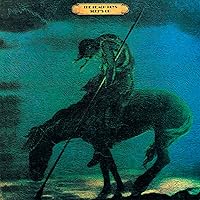
A verse account of the popular writer's first trip to Japan, in the spring of 1976, offers an out-of-the-ordinary view of Japan

97 pages, Paperback

First published January 1, 1977

4 people are currently reading
312 people want to read

About the author

Richard Brautigan

180 books2,198 followers
Richard Brautigan was an American novelist, poet, and short-story writer. Born in Tacoma, Washington, he moved to San Francisco in the 1950s and began publishing poetry in 1957. He started writing novels in 1961 and is probably best known for his early work Trout Fishing in America. He died of a self-inflicted gunshot wound in 1984.

Ratings & Reviews

What do you think?
Rate this book

Friends & Following

Create a free account to discover what your friends think of this book!

Community Reviews

5 stars
152 (29%)
4 stars
197 (38%)
3 stars
136 (26%)
2 stars
29 (5%)
1 star
4 (<1%)
Displaying 1 - 30 of 45 reviews
Profile Image for Quentin Ferrari.
28 reviews4 followers
July 28, 2025
Far more than a travelogue - B actually prioritizes time just as much as (if not more than) place at this point in his career. He describes his late-career writing better than I could when he mentions his "lonely direction of writing like a timberwolf slipping quietly through the forest." It's a great description because B's verse is natural, alert, careful, and driven. June 30th's poems stalk big ideas while trying to remain totally inconspicuous. The main thing that description neglects to mention is the haiku-esque humour peppered throughout the collection. My favourite funny poem was the American With a Broken Clock poem (#2). An incredibly inspiring book - Brautigan lives his poetry in this collection perhaps more than in any other, which says a lot given that (with a couple exceptions) he seems to live each collection extremely deeply ever since his first, Lay the Marble Tea.
Profile Image for Theo Logos.
1,296 reviews295 followers
April 19, 2022
June 30th, June 30th is Brautigan’s final poetic work, and is a stark departure from his previous poetry . Brautigan writes in his introduction:
“These poems are what happened after I got off the airplane and stepped foot onto the ground of Japan. The poems are dated and form a kind of diary.”

These poems track his observations, moods, dalliances, and drunken rages during his initial exploration of a land that would become an obsession for him. They are biographical, and far more sober than his previous poetry. The puckish fun that characterized his early poems is gone.

June 30th, June 30th doesn’t match the brilliance of Brautigan’s ‘60s poems, but in attempting something new it at least stands out from the rest of his mostly inferior 1970s poetry as unique. As a Brautigan aficionado I consider it a valuable document among his body of work that is so often biographical and darkly self referencing. I’m not sure that it holds the same value for those who are not as deeply invested in the artist.
Profile Image for Sheryl.
336 reviews10 followers
April 18, 2022
Didn't really vibe with these poems at all.
They are poems about being a stranger in a strange land, being isolated while being surrounded by millions of people.
Very little of the usual Brautigan humor, more angst than melancholy.
The three stars are more for the introductory story, which is beautiful, than any of the poems.
To top off my less than enthusiastic response---I paid more for this book than any of the ones I enjoyed much better, only to learn that it originally sold for $4, and this copy has a $1 price written in the front cover.
Not my best poetry investment.
Profile Image for B.C..
Author 9 books101 followers
July 24, 2014
Interesting more for what it is as a whole than for the poetry within. A remarkably quick read too. It felt like having fragments of memories, connected by time and place and poet, flashed before my mind's eye.
Profile Image for Sara.
332 reviews48 followers
February 11, 2013
Quietly Wonderful

There is nothing remarkable
about this book
except that it is
quietly wonderful.

Anyone can write poetry like
this and that doesn't matter.
Profile Image for Peycho Kanev.
Author 25 books318 followers
February 6, 2018
Homage to the
Japanese Haiku Poet Issa

Drunk in a Japanese
bar
I’m
OK

American Bar in Tokyo

I’m here in a bar filled with
young conservative snobbish
American men,
drinking and trying to pick up
Japanese women
who want to sleep with the likes
of these men.
It is very hard to find any poetry
here
as this poem bears witness.

The American in Tokyo with
a Broken Clock

For Shiina Takako

People stare at me—
There are millions of them.
Why is this strange American
walking the streets of early night
carrying a broken clock
in his hands?
Is he for real or is he just an illusion?
How the clock got broken is not important.
Clocks break.
Everything breaks.
People stare at me and the broken clock
that I carry like a dream
in my hands.
Profile Image for Dave.
990 reviews19 followers
June 7, 2018
Brautigan's 8th and last book of poetry from 1978 is taken from his time in Japan in 1976 and the title itself is the date that Brautigan was going to leave Tokyo to head back to America.
Brautigan spoke no Japanese and the book of poems opens with Brautigan telling the reader about his uncle who died during the bombing of Midway. So Brautigan is most likely trying to accept or at least understand Japan and why his uncle was a casualty from the bombing in some regard.
Among my favorite poems from the book:

Day for Night

The cab takes me home
through the Tokyo dawn.
I have been awake all night.
I will be asleep before the sun
rises.
I will sleep all day.
The cab is a pillow,
the streets are blankets,
the dawn is my bed.
The cab rests my head.
I'm on my way to dreams.
Tokyo
June 1, 1976

The book got mixed reviews, but I enjoyed Brautigan's short, surreal, and quirky style.
Profile Image for Hiba.
18 reviews66 followers
June 19, 2011
A must read collection of poems written during the writer's visit to Japan.


Richard Brautigan's style is simple, humorous, sarcastic, blunt and informal.

You can read the entire collection in his website: http://www.brautigan.net/june30.html

"Day for Night"
The cab takes me home
through the Tokyo dawn.
I have been awake all night.
I will be asleep before the sun
rises.
I will sleep all day.
The cab is a pillow,
the streets are blankets,
the dawn is my bed.
The cab rests my head.
I'm on my way to dreams.

Tokyo
June 1, 1976
Profile Image for Kent Winward.
1,805 reviews67 followers
May 26, 2018
This poetry journal of a trip to Japan certainly carries more weight combined than the individual poems would suggest.
Profile Image for Joshua  Gonsalves.
88 reviews
June 20, 2024
the introductory piece is among the finest most moving things Brautigan ever wrote, and one of the most powerful statements ever made about overcoming racial prejudice. his description of how American streets lit up with joy at the announcement of the Japanese surrender is an alchemical bulb of reality, and one of his finest preservations of memory.
As for the poems themselves… I often feel mixed about Brautigan’s poetry. it can be minimal to the point of vanishing in my hands. But such a bare approach does gel well with his lonesome, wandering stay in Japan and reminds me of the sparseness of ancient Japanese writings. Brautigan himself would admit these poems are far from his most striking work, but they do channel these very real, morose, lumbering feelings - as well as moments of uplift, of feeling totally at home and in love with the present moment, chimes of relief and grace.
Profile Image for Troy Schwab.
25 reviews
Read
November 5, 2023
A great slim read. I like the idea of the outsider, everyday, writer and the simple writer. I feel like Brautigan's personality really comes through in his writing and you can feel him with you. His time in Japan was filled with different feelings -- whenever an author writes away from their homeland how can one expect them to avoid that loneliness and solitude. I'm immediately reminded of Carson's writings of her time in Italy. Except with Brautigan, his loneliness feels shrouded with humor and sex. Sometimes the shroud is so convincing I feel the loneliness is truly gone; if only for a little while.

The introduction story is great. I really ought to sit down and get to Trout Fishing and the other works. All in good time.
Profile Image for Pikobouh.
472 reviews85 followers
March 19, 2021
La poésie de Brautigan est à l'image de ses romans : fragmentaire, efficace, loufoque, drôle et naïve. Pleine de sens.

L'introduction et l'oncle Edwards : du génie.
Profile Image for Corey.
Author 85 books282 followers
December 24, 2021
Maybe 3 1/2 stars. Brautigan's whimsical pen is well-suited to the travel diary/poem.
Profile Image for Magnús Jochum Pálsson.
281 reviews11 followers
February 3, 2022
Fíla konseptið með svona dagbókarljóðabók.
Þessu fylgir samt óneitanlega að sum ljóðanna verða ekki alveg jafn sterk og önnur, enn frekar en í öðrum ljóðabókum.
Samt fannst mér ekkert ljóðanna alvöru slappt og þau mynda virkilega skemmtileg heild.
Profile Image for Billy.
7 reviews2 followers
March 25, 2013
The earliest reviews of this book almost unanimously identified it as an indicator that the trout-fishing ultra-experimentalist Brautigan was losing whatever writing talent had made him a guru of PoMo Vietnam-era San Francisco. Carrie J. Knowles called the project “a case of terminal poetic pretentiousness,” and sure, there’s little here that could stand on a dais beside The World According to Garp or The Book of Laughter and Forgetting and receive the cheers of the literary spectators of 1978. But, thirty-some years later, Brautigan’s slim poetic memoir of a trip to Tokyo seems almost prescient in a couple of ways, mostly having to do with how we fail to have deep and meaningful and sustained communication with each other and with ourselves.

First, let me admit some bias. I unequivocally dig Brautigan’s writing because his style is almost precisely the opposite of my own. He notes minutiae, makes small declarative statements, and relies heavily on the reader to fill in meaning, to make sense of things. His best stuff reads like a puzzle of concrete details, waiting for you to come along and assemble the bits. Yet here’s the rub: assembling these details makes you feel something and, even better, makes you think that what you feel is probably about 90% the same thing Brautigan felt while writing. It’s an aesthetic that feels immediate, off-the-cuff. You might as well be sitting next to Brautigan and pouring beer from a shared pitcher.

Unfortunately, not everything that comes up in the average conversation will be genius, and this is a major critique of June 30th, June 30th. Essentially, this collection makes you feel as if you’ve wandered through Tokyo with Brautigan while he’s scribbled the occasional note on the back of many a receipt or bar napkin.

But not exactly. Here’s the brilliance: while, yes, this is supposed to be a travelogue in poems, it’s also the most fragmented of narratives. Brautigan spent a month and a half in Japan, and what we get here are flashes—cab rides and hangovers and TV commercials—that resemble memory more exactly than any continuous narrative might. These are not key moments of choice or connection—almost every character he encounters remains nameless—but the slow, odd moments of solitude that a writer gets used to. This solitude, moreover, allows Brautigan to connect in his imagination with the faceless urban masses, human and unreachable in really important ways. This isolation is heightened by the language barrier, which Brautigan doesn’t even try to breach. Instead, his ignorance of spoken Japanese makes him a child adrift; he has to read body language and images and clocks and weather as signs of some human interiority that he can only guess at. His position as an outsider forces him to carry out, moment by moment, with the June 30th departure deadline ever looming, the imaginative work of empathy that’s the life-blood of poetry.

As a scrapbook in words, this reminds me of Edouard Levé’s experiments, which also are generally great concepts for books that translate into hit-and-miss, half-functional writing. In this pile of Brautigan’s spare moments, there is, naturally, a lot of crap. A nice analogy, if I’m not reaching too far: reading this collection is like following the Twitter account of a Chabon or Shteyngart live-tweeting a week-long trip to Ibiza. Still, and precisely because of this inconsistency, I think this book says a lot about the impossibility of continuously reaching across the gap between your experience and mine.

If you’re interested, you can read the collection
here.
Profile Image for A.M..
Author 1 book17 followers
September 13, 2013
Of the four collections of Brautigan poetry still in print (not including Edna Webster's Undiscovered Writings, which I have not yet read), June 30th, June 30th is my favorite. Perhaps this is because it has an underlying theme and is a poetic travel journal of his first trip to Japan. (Travel writers, please take note: less is more.)

The "INTRODUCTION" is incredibly compelling - do not skip over it, because it is critical to appreciating the depth of significance Brautigan's initial trip and subsequent relationship with Japan and its culture is to him, personally, and to his writing, which I always felt had a strong Zen element to it. Actually, the realization Brautigan shares in the "INTRODUCTION" is one for humanity in general. He describes his initial hatred of Japan and its people due to growing up during World War II and the injury and eventual death of a cherished family uncle by a Japanese bomb. As a child, he would fantasize killing thousands of Japanese in revenge - 352,892 to be exact:

"... The years continued on.
I was seventeen and then eighteen and began to read Japanese haiku poetry from the Seventeenth Century. I read Basho and Issa. I liked the way they used language concentrating on emotion, detail and image until they arrived at a form of dew-like steel.
I came to realize that the Japanese people had not been subhuman creatures but had been civilized, feeling and compassionate people centuries before their encounter with us on December 7th.
The war came into focus for me.
I started to understand what happened.
I began to understand the mechanics which mean that logic and reason fail when war begins and illogic and insanity reign as long as war exists ..."

There are so many excellent poems - and even a few haiku - in this collection that it is hard to select my favorites. Here is one that spoke to me personally:

Ego Orgy on a Rainy Night in Tokyo
with Nobody to Make Love to


The night is now
half-gone; youth
goes; I am

in bed alone
--Sappho


My books have been translated
into
Norwegian, French, Danish, Romanian,
Spanish, Japanese, Dutch, Swedish,
Italian, German, Finnish, Hebrew
and published in England

but

I will sleep alone tonight in Tokyo
raining.


Here are a few more:

A Short Study in Gone

When dreams wake
life ends.
Then dreams are gone.
Life is gone.

Japan

Japan begins and ends
with Japan.

Nobody else knows the
story.

...Japanese dust
in the Milky Way

Real Estate

I have emotions
that are like newspapers that
read themselves.

I go for days at a time
trapped in the want ads.

I feel as if I am an ad
for the sale of a haunted house:

18 rooms
$37,000
I'm yours
ghosts and all.


And, finally, a funny one:

Japanese Women

If there are any unattractive
Japanese women
they must drown them at birth.


Buy the book before it goes out of print, too.


Profile Image for Phillip.
Author 2 books68 followers
April 3, 2016
I would be inclined to rate this collection higher than 4 stars, but the quality of some of the poems drags it down. The project itself is really interesting, a sort of poetry travel narrative, following almost the old exotic travel stories of DeFoe's day, except constructed through poems and poetic fragments. As I said, some of the poems aren't tremendous, but Brautigan explains in the introduction to the book that he has included all the poems he wrote while visiting Japan, even if they're poems he wouldn't normally have put into a book. So there is at least a mythos of genuinity of this poetic travel journal.

On the other hand, some of the poetry here is really incredible. Probably my two favorite poems were "Japanese Women," which I like the way one likes a Neitzschean aphorism because it expresses something one has always felt to be somehow true, and "The Red Chair," which to me is a really spectacular poem. The last image in particular is really striking and memorable.
Profile Image for Claudia Pastor.
337 reviews99 followers
January 16, 2019
Luego de amar a Brautigan por su narrativa, tenía que ocurrir lo inevitable: amarlo por su poesía.

Este libro es un diario en el que el autor recoge, digamos, algunas experiencias vividas en 1976 cuando viaja a Tokio por primera vez. Para ello, no encontró mejor forma que el lenguaje lírico y hermosas y sencillas imágenes acerca de la ciudad y su gente a manera de reflexiones, algunas profundas, otras que apuestan por lo lúdico.

Sin embargo, antes de iniciar el diario, escribió una Introducción al libro, en la cual nos cuenta sobre la historia de su tío Edward, quien murió durante la Segunda Guerra Mundial en un ataque de los japoneses. Gracias a este "relato", que puede ser real o no (no lo sé), reflexiona sobre lo absurdo de cualquier posible rencor hacia Japón, porque ambos países sufrieron de la misma manera la muerte de miles de personas. Con este viaje, él logra reconciliarse.

Nadie como Brautigan para plasmar en tan pocas palabras la vida y la atmósfera de Japón.

Profile Image for Chrissie.
76 reviews11 followers
March 20, 2014
A middling Brautigan effort. It's only for the absolute purists who will read anything and everything by Brautigan. I didn't like it but I didn't dislike it. I got it from the library, so it didn't set me back financially. I might have been pissed off had I paid actual money for it!

I still want to go back to a lot of his other prose. This was really mostly forced poetry that he seemed to do as a project while he was in Japan. I can't think of much in it that was either important or significant.

Only for the "faithful". But I do hope you enjoy it. I found it to be pretty uneventful.
Profile Image for Riley.
19 reviews1 follower
October 4, 2020
more of a diary than anything, where some of poems are quite literally just an observation with forced enjambments. i’d be lying if i said there were more than a handful of honestly good poems here, but it’s still moving in its own way. comes off like a portrait of a man struggling with loneliness, insomnia, isolation, in love with a city he can’t really interact with. idk
Profile Image for Rhys.
Author 327 books321 followers
July 18, 2021
Supposedly the weakest of Brautigan's poetry books, but I actually enjoyed it a lot. It's a sort of diary in verse covering a trip Brautigan made to Japan. Some of the 'entries' are inconsequential, yes, but others are as piquantly offbeat as anything Brautigan did, and taken together they present a strange and compelling picture of the voyage.
Profile Image for Heather.
19 reviews
May 27, 2010
I don't often find myself reading poetry, but this is absolutely one of my favorite collections. Written during his stay in Japan.
40 reviews1 follower
July 30, 2017
Brautigan's poetry still delights.
Profile Image for Sam.
329 reviews5 followers
June 2, 2025
“Watching Japanese television,
two young women in kimonos
are standing beside a biplane.
That's right:
an old timey airplane.

A man is interviewing them.
They are having a very animated
and happy conversation.

I wish I knew Japanese because
I will never know why they are
standing next
to a biplane,

but they will stand there forever
in my mind, happy pilots
in their kimonos,
waiting to take off.”

"I just ordered my first meal
curry and rice
all by myself in a Japanese restaurant.
What a triumph!
I feel like an infant taking its
first faltering step.

Watch out Mount Everest!”

"Tall, slender
dressed in black
perfect features
Egyptianesque

She is the shadow
of another planet
being photographed
in a totally white room

Her face never changes
her page-boy hair
looks as if it were cut
from black surgical jade

Her lips are so red
they make blood
seem dull, a
useless pastime”

“Every time I leave my hotel room
here in Tokyo
I do the same four things:
I make sure I have my passport
my notebook
a pen
and my English–
Japanese dictionary.

The rest of life is a total mystery.”

“All the possibilities of life,
all roads led here.

I was never going anyplace else,
41 years of life:

Tacoma, Washington
Great Falls, Montana
Oaxaca, Mexico
London, England
Bee Caves, Texas
Victoria, British Columbia
Key West, Florida
San Francisco, California
Boulder, Colorado

all led here:

Having a drink by myself
in a bar in Tokyo before
lunch,
wishing there was somebody to talk
to.”

“Don't ever ever forget
the flowers
that were rejected, made
fools of.

A very shy girl gives the
budding boy pop star a bouquet
of beautiful
flowers

between songs. What courage
it took for her to walk up to
the stage and hand him the
flowers.

He puts them garbage-like down
on the floor. They lie there.
She returns to her seat and watches
her flowers lying there.
Then she can't take it any longer.

She flees.
She is gone
but the music
plays on.

I promise.
You promise, too”

“I am the only American in this bar.
Everybody else is Japanese.
(reasonable / Tokyo)

I speak English.
They speak Japanese.
(of course)

They try to speak English. It's hard.
I can't speak any Japanese. I can't help.
We talk for a while, trying.

Then they switch totally to Japanese
for ten minutes.
They laugh. They are serious.
They pause between words.

I am alone again. I've been there before
in Japan, America, everywhere when you
don't understand what somebody is
talking about.”

“The cab takes me home
through the Tokyo dawn.
I have been awake all night.
I will be asleep before the sun
rises.
I will sleep all day.
The cab is a pillow,
the streets are blankets,
the dawn is my bed.
The cab rests my head.
I'm on my way to dreams.”

“I have emotions
that are like newspapers that
read themselves.

I go for days at a time
trapped in the want ads.

I feel as if I am an ad
for the sale of a haunted house:

18 rooms
$37,000
I'm yours
ghosts and all”

“One word

waiting . . .

leads to an
avalanche
of other words

if you are

waiting . . .

for a woman”

“My books have been translated
into
Norwegian, French, Danish, Romanian,
Spanish, Japanese, Dutch, Swedish,
Italian, German, Finnish, Hebrew
and published in England
but
I will sleep alone tonight in Tokyo
raining.”

“People stare at me—
There are millions of them.
Why is this strange American
walking the streets of early night
carrying a broken clock
in his hands?
Is he for real or is he just an illusion?
How the clock got broken is not important.
Clocks break.
Everything breaks.
People stare at me and the broken clock
that I carry like a dream

in my hands.”

“I have the five poems
that I wrote earlier today
in a notebook
in the same pocket that
I carry my passport. They
are the same thing.”

“The umbilical cord
cannot be refastened
and life flow through it
again.

Our tears never totally
dry.

Our first kiss is now a ghost,
haunting our mouths as they
fade toward
oblivion.”
Profile Image for Robert Jr..
Author 12 books2 followers
December 16, 2025

The last book of Brautigan’s poetry was not good, but this one was. I found several poems I thought were good and a few with bits I thought were clever, especially concerning some of his metaphors. It was written as a sort of memoir of his trip to Japan, like a diary of poems to commemorate his days there. I found this idea pretty neat, but frankly, I picked this one from my to-read pile because it was a thin volume, and his work is always a quick read for me.

My favorite poems were: Kitty Hawk Kimonos (it’s the third and last stanzas that really caught me; “I wish I knew Japanese because/ I will never know why they are/ standing next/ to a biplane.// but they will stand there forever/ in my mind, happy pilots/ in their kimonos,/ waiting to take off.”), Cat in Shinjuku (I like the simple but vivid imagery and esp. like the bottom of the last stanza; “The cat is happy/ in front of plastic Chinese/ food with real food/ waiting just inside the door.”), Floating Chandeliers (brief, intense, I just really liked it), Future (seems like an epitaph on a memorial to me), Day for Night (riding in a car having just stayed up all night is a familiar scenario for me and think the poem hit the bullseye of that idea), Real Estate (I loved his metaphor here: emotions like newspapers and “I feel as if I am an ad/ for the sale of a haunted house”.), On the Elevator Going Down (“I think that he is not totally aware/ that we are really going down/ and there are no clothes after you have/ been dead for a few thousand years.” – The same sort of things often rocket through my brain as well), Worms (loved the word choice delivering a visual for the feeling), The American Carrying Broken Clock in Tokyo Again (I didn’t really care for the first iteration and just generally liked this one), The Airplane (it plays to the sexual aspects of my own humor), The Red Chair (I really want to see this movie and the snakeskin metaphor was sublime; also the last line pair was just a gruesomely cool image), Taking No Chances (taking an empty but seemingly deep but overly philosophical sentiment and then realizing it), and The Past Cannot Be Returned (everything marks us and cannot be undone).

Honorable mentions go to American Bar in Tokyo (can almost apply to now) and Traveling Toward Osaka on the Freeway from Tokyo (really dig the imagery interplay with human memory). The rest are just simply not good in any way, in my opinion.

Would I recommend this one? Yes, if you’re already familiar with his wild brand of poetry, then definitely, and if you’re not, then this might be a great introduction to it.

Profile Image for Hákon Gunnarsson.
Author 29 books162 followers
July 6, 2025
This is a bit different from the rest of Brautigan's poetry collections. It has all the hallmarks of his poetry, weirdness, mundane events, humor, etc., but it has a distinct thread to it. In fact, it’s a poetic diary or a travelogue of his trip to Japan in 1976.

The introduction is quite interesting because it shows how his relationship with the idea of Japan changed from when he was an American kid in the Second World War when all Japanese people were his personal enemies. His feelings to Japan after the war started to change, and became some sort of fascination, which is evident in some of the poems.

It’s a wonderful book, even though I’m not sure if the advice at the end of “The American Carrying a Broken Clock in Tokyo Again” is a good one:

If you want to got to Iceland
and meet the people, take
a broken clock with you.
They will gather around like flies.
Tokyo
June 11, 1976

The poem is funny though, and a lot of the other poems are funny which is one of the reason why I keep coming back to Brautigan. The images are often so pure and simple, like in “Homage to the Japanese Haiku Poet Issa”:

Drunk in a Japanese
bar
I'm
OK
Tokyo
May 18, 1976

But still with a lot more there in the subtext. Some of it is sad like “The 12,000,000”

I'm depressed,
haunted by melancholy
that does not have a reflection
nor cast a shadow.
12,000,000 people live here in Tokyo.
I know I'm not alone.
Others must feel the way
I do.
Tokyo
May 26, 1976
1 P.M.

I like Brautigan and in my view this book is among his better works even though it is a bit different from the rest of his poetry collections.
762 reviews10 followers
September 10, 2021
A 1978 trip to Japan inspired this journalistic series of poems.
The introduction by Brautigan is of the most interest here.
Also, the review on the back cover by Jim Harrison who was
clearly impressed with this book. It was fun spending time in
Tokyo with the poet, but the work is only semi-clever as well
as semi-morose and semi-drunk. Okay.
Profile Image for Keith.
540 reviews70 followers
June 15, 2017
Kitty Hawk Kimonos

Watching Japanese television,
two young women in kimonos
are standing beside a biplane.
That’s right:
an old timey airplane.
A man is interviewing them.
They are having a very animated
and happy conversation.
I wish I knew Japanese because
I will never know why they are
standing next
to a biplane,
but they will stand there forever
in my mind, happy pilots
in their kimonos,
waiting to take off.

Tokyo
May 13, 1976
Profile Image for Pavlo Shchepan.
128 reviews10 followers
September 25, 2017
поетичний твіттер Бротігана, особливий акцент на подорож Японією.
Displaying 1 - 30 of 45 reviews

Can't find what you're looking for?

Get help and learn more about the design.