

What do you think?

The Universal Sense: How Hearing Shapes the Mind
Every day, we are beset by millions of sounds-ambient ones like the rumble of the train and the hum of air conditioner, as well as more pronounced sounds, such as human speech, music, and sirens. How do we know which sounds should startle us, which should engage us, and which should turn us off?
Why do we often fall asleep on train rides or in the car? Is there really a musical note that can make you sick to your stomach? Why do city folks have trouble sleeping in the country, and vice versa?In this fascinating exploration, research psychologist and sound engineer Seth Horowitz shows how our sense of hearing manipulates the way we think, consume, sleep, and feel.
Starting with the basics of the biology, Horowitz explains why we hear what we hear, and in turn, how we've learned to manipulate into music, commercial jingles, car horns, and modern inventions like cochlear implants, ultrasound scans, and the mosquito ringtone. Combining the best parts of This is Your Brain on Music and The Emotional Brain , this book gives new insight into what really makes us tick.
Why do we often fall asleep on train rides or in the car? Is there really a musical note that can make you sick to your stomach? Why do city folks have trouble sleeping in the country, and vice versa?In this fascinating exploration, research psychologist and sound engineer Seth Horowitz shows how our sense of hearing manipulates the way we think, consume, sleep, and feel.
Starting with the basics of the biology, Horowitz explains why we hear what we hear, and in turn, how we've learned to manipulate into music, commercial jingles, car horns, and modern inventions like cochlear implants, ultrasound scans, and the mosquito ringtone. Combining the best parts of This is Your Brain on Music and The Emotional Brain , this book gives new insight into what really makes us tick.
320 pages, Paperback
First published August 21, 2012
About the author
Seth S. Horowitz
4 books7 followersSeth S. Horowitz, Ph.D. is a neuroscientist and former professor at Brown University whose research into hearing, balance, sleep and multisensory integration has been funded by the National Science Foundation, the Deafness Foundation and NASA, and published in prestigious scientific journals. He is the co-founder of NeuroPop, the first sound design and consulting firm to use neurosensory and psychophysical algorithms in music, sound design, and sonic branding. He is married to sound and biomimetic artist China Blue and lives in Warwick, RI.
Ratings & Reviews
Friends & Following
Create a free account to discover what your friends think of this book!
Community Reviews
Displaying 1 - 30 of 35 reviews

October 13, 2012
When I saw this book reviewed in Publishers Weekly I immediately ordered it for the library. I was really excited about a book that might possibly talk about some of the issues and situations I've experienced growing up with a deaf parent. Unfortunately, this book doesn't ever touch on what it means for a human to be deaf and how the loss of hearing can impact a person's life. Horowitz, who is a professor at Brown, does talk about how certain animals experience deafness (particularly frogs and bats), but he focused more on his study of how animals and humans experience sound for advertising, and how certain sounds can have certain effects on different people.
After I got over my initial disappointment that the book wasn't what I was expecting, I began to realize that Horowitz is a very funny writer. There are moments when he drifts in the realm of TMS (too much science) and I tended to skim those sections. The real gems in this book are his footnotes. He will be talking about having to stalk male bullfrogs in swamps only to footnote his statement with "my doctor has told me I have the only recorded allergy to frog urine: Frog 1 Scientist 0". Horowitz also must have spent much of his youth tormenting people with sounds if any of his experiments with nausea inducing rock music can tell you anything about him as a scientist.
If you are interested in why human lose their hearing, or why are scary movie soundtracks just so damn scary? Then this is the book to pick up. I'm not sure if I agree with the tagline "a must-read for anyone with ears" because is specifically ignores talking about the group of adults and children who cannot hear yet still have ears. Yes I will admit that there is some information about advances with cochlear implants and the research into regrowing the hair cells in your ears that regulate sound waves, but nothing about the experience of deafness itself.
Personally I think this is a big hole because if there are some people who have never heard at all, then hearing really isn't a "universal sense" and it begs the question: is there really a sense that everyone and every animal can experience? I know that there are people out there who have never seen, but there are animals that have evolved without eyes. There are people who cannot smell, not sure about the animal counterpart to that however, and whether due to accident or genes people who cannot touch or taste (I do not have these senses on one half of my mouth because of an accident during my wisdom tooth removal). In all, I think this book was very interesting for what it was, but disappointing because of what it wasn't.
After I got over my initial disappointment that the book wasn't what I was expecting, I began to realize that Horowitz is a very funny writer. There are moments when he drifts in the realm of TMS (too much science) and I tended to skim those sections. The real gems in this book are his footnotes. He will be talking about having to stalk male bullfrogs in swamps only to footnote his statement with "my doctor has told me I have the only recorded allergy to frog urine: Frog 1 Scientist 0". Horowitz also must have spent much of his youth tormenting people with sounds if any of his experiments with nausea inducing rock music can tell you anything about him as a scientist.
If you are interested in why human lose their hearing, or why are scary movie soundtracks just so damn scary? Then this is the book to pick up. I'm not sure if I agree with the tagline "a must-read for anyone with ears" because is specifically ignores talking about the group of adults and children who cannot hear yet still have ears. Yes I will admit that there is some information about advances with cochlear implants and the research into regrowing the hair cells in your ears that regulate sound waves, but nothing about the experience of deafness itself.
Personally I think this is a big hole because if there are some people who have never heard at all, then hearing really isn't a "universal sense" and it begs the question: is there really a sense that everyone and every animal can experience? I know that there are people out there who have never seen, but there are animals that have evolved without eyes. There are people who cannot smell, not sure about the animal counterpart to that however, and whether due to accident or genes people who cannot touch or taste (I do not have these senses on one half of my mouth because of an accident during my wisdom tooth removal). In all, I think this book was very interesting for what it was, but disappointing because of what it wasn't.

December 18, 2012
It was way too technical (Yes, even for an audio engineer) as the technical data covered extreme extent of biological, neurological and animal related data as well.
To me it was more like a textbook, opposed to what I expected after reading the description.
I recommend it to someone who wants a very deep study on the subject, or someone interested in deep research on this topic.
The author is really very intelligent, has deep knowledge and experience on the subjects, he really amazed me by the level of study he has done.
To me it was more like a textbook, opposed to what I expected after reading the description.
I recommend it to someone who wants a very deep study on the subject, or someone interested in deep research on this topic.
The author is really very intelligent, has deep knowledge and experience on the subjects, he really amazed me by the level of study he has done.

July 18, 2021
A fun way to learn a lot about our most ubiquitous sense and a great prompt to be more engaged with the sounds of the world.

February 27, 2013
Mr. Horowitz presents an interesting and often engaging explanation of the sense of hearing. He is clearly excited about his field of research and endeavors to convey that excitement to his readers. The book and much of the material covered is quite technical. The illustrations provided for the experiments that were presented were not illuminating. The work would have been better served by inclusion of basic anatomical diagrams to help the reader get a sense of what was being discussed. Not having a nueroscience background, I wanted to know and see where the amygdala is placed in relationship to the medial genticulate. Even a diagram of the human ear would have been helpful when reading, "...the signals get segregated by frequency, phase, and amplitude, passed through the trapezoid body to the left and right superior olive to determine where the sound is coming from," p 99. This book, though fascinating and often humorous, fails to reach the broadest audience possible by remaining steadfastly in an academic realm. Ultimately, this is a shame for a subject like the universal sense.

December 4, 2012
This book was a blend of psychoacoustics (almost textbook in explanation)and descriptions of types of sound(sound as a weapon, sound in space, music). It almost felt as if it was written by two different authors as the writing style changed to be more conversational about half way through. Interesting.

October 17, 2012
Way too technical for the casual reader.

February 7, 2021
"There is no such thing as silence. We are constantly immersed in and affected by sound and vibration. This is true no matter where you go, from the deepest underwater trenches to the highest, almost airless peaks of the Himalayas. In truly quiet areas you can even hear the sound of air molecules vibrating inside your ear canals or the noise of the fluid in your ears themselves. The world we live in is full of energy acting on matter— it’s as basic as life itself..."
This one was interesting, but it may be a bit overly technical to be appreciated by the layperson.
Author Seth S. Horowitz is a Ph.D. neuroscientist whose work in comparative and human hearing, balance and sleep research has been funded by the National Institutes of Health, National Science Foundation, and NASA.
Seth S. Horowitz:
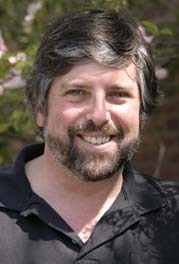
The Universal Sense takes a deep dive into the neuroscience of hearing. Horowitz covers a lot of ground in here. The book talks about many sound related topics, including:
*Underwater sound; fish and frogs.
*Airbourne sound and bats.
*Music; the Mozart effect.
*Auditory "brain hacking."
*Sonic weapons; The Jericho Trumpet, microwave weapons, piezoelectric speakers, vibroacoustic syndrome.
*Cochlear implants; hearing restoration techniques
*Sound in space and on other planets.
Despite fielding a topic that is super-interesting, I found some of the writing here a bit dry for my tastes. Although to his credit - Horowitz does pepper the book with many humorous asides.
Also, as briefly mentioned above; the writing here is also very technical. Horowitz drops a plethora of scientific and technical jargon on the unsuspecting reader without adding sufficient relevant explanatory accompaniments. This is a somewhat common issue with many of the science books I've read. I think this arises because the authors assume a certain degree of literacy by the reader of the topics they are covering. Unfortunately, however, when a book is written in a manner not accessible to the layperson, its potential reach becomes greatly restricted.
Writing a science book that is only readable by an audience comprised of decently scientifically literate people and other scientists is a bit of a failure of communication, IMO.
Some of the better science books I've read manage to convey extremely technical information in an easy-digestible and engaging format suitable to the layperson. Sadly, Horowitz did not succeed in this end here.
There's still quite a lot of interesting information presented by Horowitz here, and I would recommend this one to anyone with a basic level of scientific literacy.
3.5 stars.
This one was interesting, but it may be a bit overly technical to be appreciated by the layperson.
Author Seth S. Horowitz is a Ph.D. neuroscientist whose work in comparative and human hearing, balance and sleep research has been funded by the National Institutes of Health, National Science Foundation, and NASA.
Seth S. Horowitz:
The Universal Sense takes a deep dive into the neuroscience of hearing. Horowitz covers a lot of ground in here. The book talks about many sound related topics, including:
*Underwater sound; fish and frogs.
*Airbourne sound and bats.
*Music; the Mozart effect.
*Auditory "brain hacking."
*Sonic weapons; The Jericho Trumpet, microwave weapons, piezoelectric speakers, vibroacoustic syndrome.
*Cochlear implants; hearing restoration techniques
*Sound in space and on other planets.
Despite fielding a topic that is super-interesting, I found some of the writing here a bit dry for my tastes. Although to his credit - Horowitz does pepper the book with many humorous asides.
Also, as briefly mentioned above; the writing here is also very technical. Horowitz drops a plethora of scientific and technical jargon on the unsuspecting reader without adding sufficient relevant explanatory accompaniments. This is a somewhat common issue with many of the science books I've read. I think this arises because the authors assume a certain degree of literacy by the reader of the topics they are covering. Unfortunately, however, when a book is written in a manner not accessible to the layperson, its potential reach becomes greatly restricted.
Writing a science book that is only readable by an audience comprised of decently scientifically literate people and other scientists is a bit of a failure of communication, IMO.
Some of the better science books I've read manage to convey extremely technical information in an easy-digestible and engaging format suitable to the layperson. Sadly, Horowitz did not succeed in this end here.
There's still quite a lot of interesting information presented by Horowitz here, and I would recommend this one to anyone with a basic level of scientific literacy.
3.5 stars.

August 8, 2013
I found this book very interesting. Parts of it did get pretty technical, but overall I still found most of it comprehensible and fascinating. A few things I found interesting:
*frogs become temporarily deaf as they transition from tadpole to adult frog...as their brains are rewired to go from hearing underwater to hearing on land.
*frogs can regrow hair cells that allow then to hear while humans can't ...which leads to important implications if we can figure out how to help humans regrow their hair cells
*the whole chapter on music was fascinating and particularly reading about percussionist Evelyn Glennie
*the way an absence of sound affects us
*why nails on a chalkboard is such an almost universally hated sound
*the concept of the brain singing...and how scientists are trying to figure out the human mind
I felt that while some parts did get pretty technical, Horowitz had a sense of humor and an ability to make this subject quite fascinating. In addition, I read this as a library book and someone else had underlined various passages and written comments. Because the prior reader obviously believed in sound being used for mind control, I found reading their comments fairly entertaining as well. (Shame on them for marking up a library book! But their comments provided me with additional entertainment.)
*frogs become temporarily deaf as they transition from tadpole to adult frog...as their brains are rewired to go from hearing underwater to hearing on land.
*frogs can regrow hair cells that allow then to hear while humans can't ...which leads to important implications if we can figure out how to help humans regrow their hair cells
*the whole chapter on music was fascinating and particularly reading about percussionist Evelyn Glennie
*the way an absence of sound affects us
*why nails on a chalkboard is such an almost universally hated sound
*the concept of the brain singing...and how scientists are trying to figure out the human mind
I felt that while some parts did get pretty technical, Horowitz had a sense of humor and an ability to make this subject quite fascinating. In addition, I read this as a library book and someone else had underlined various passages and written comments. Because the prior reader obviously believed in sound being used for mind control, I found reading their comments fairly entertaining as well. (Shame on them for marking up a library book! But their comments provided me with additional entertainment.)

October 17, 2013
This book will hit non fiction lovers well, with a lot of interesting thoughts on hearing and sound communication in various species and ourselves. The author is very in love with his subject matter and this comes across on every page. I think he has the ability to connect and excite the audience in regards to sound as his experience with various sound experimentation and creation are wide. This was wonderful, and chock full of information and an emotional twinge that I found very engrossing.

September 30, 2012
This is a really good book for anyone interested in neuroscience in general or hearing in particular. The author really understands sound, as in music, noise, and as an emotion. I learned a lot and enjoyed the book. I am passing it on to a neurologist friend.

October 1, 2012
Pretty technical, don't think I would have enjoyed it at all if I didn't have the background in sound/hearing education that I have. Some really interesting stuff sprinkled throughout though.

September 14, 2013
I would say: reassuringly technical and surprisingly readable; the first non-fiction that's made me laugh out loud for a while!
May 19, 2019
A GREAT BOOK ABOUT how the brain recieves all kinds of spatial information through sound.
-fun facts, what sounds communicate depends very much on its cultural context, and what ever the sound in associated with in a person's experience. but there are general rules. the speed of the repetition of certain sounds could create the illusion of something coming closer and closer to you. and is a great way to simulate 3 dimensional sound. ( JAws theme). and the X-files bit about our brain responding to sounds not consciously perceived ( the bee hive sound spliced under the AC sound) , which then gives the listener a emoitional/viceral reaction without the listener noticing.
also a fun fact, its is easy to generate sounds that distorts out spatial perception and therefore, get car sick and nauscious. but the brown sound is still hard to get and sonic weapons, for it to be effective, might as well cook the target with high frequency. when the frequency of a sound matched the structure of a object( forgot really what this was about) it will make it vibrate .
-fun facts, what sounds communicate depends very much on its cultural context, and what ever the sound in associated with in a person's experience. but there are general rules. the speed of the repetition of certain sounds could create the illusion of something coming closer and closer to you. and is a great way to simulate 3 dimensional sound. ( JAws theme). and the X-files bit about our brain responding to sounds not consciously perceived ( the bee hive sound spliced under the AC sound) , which then gives the listener a emoitional/viceral reaction without the listener noticing.
also a fun fact, its is easy to generate sounds that distorts out spatial perception and therefore, get car sick and nauscious. but the brown sound is still hard to get and sonic weapons, for it to be effective, might as well cook the target with high frequency. when the frequency of a sound matched the structure of a object( forgot really what this was about) it will make it vibrate .

July 22, 2022
so Dr. Horowitz presents this book as “not a textbook” and says this is all broad info and anyone can take something cool from this. I truly think he forgot that he wrote that. his audience is not just scientists, but a lot of the terminology and language he uses feels like it’s just for them (or, maybe, for people who are into research — I mean I did research and studied STEM stuff in college but like ??? there could’ve been better ways that my guy could’ve explained things). his science-y language also feels more apt for a thesis (so it’s like “OK sure I get it but kinda complicated explanation, surely there was another way to explain? no? OK well carry on w the presentation”), which makes his whole thought process feel inaccessible. also hearing... isn’t a universal sense so L title
2.5 / 5 I’d probably read it again if we’re being honest after I keep studying more science🫠
2.5 / 5 I’d probably read it again if we’re being honest after I keep studying more science🫠
May 14, 2020
Here is a book to read if you have a moment to spare, or if you want to spend many moments reading it again and again. Kept it with me a lot during my school days. I read the Universal Sense for a class and gave a presentation on the audio pathways of humans, frogs, and birds. Great way to learn. A vast, deeply rich understanding is developed as the author's own experience with the mind come into play with his interpretation of our relationships with sound, complex, simple, and everything in between.
October 17, 2017
I found this book really interesting (surprise, surprise). He goes into aspects of sound and hearing, in both the human and animal world, in ways that I hadn’t thought about before. As you know, I’m not big into non-fiction, but this kept my interest in small doses. I’d read a chapter, move on to something else, and then come back to it when I felt the urge. If you’re not a hearing nerd, don’t pick it up.

January 10, 2026
I thought the book was a PhD level synopsis of Seth Horowitz's area of research, but neglected to speak more broadly about other aspects of auditory neuroscience research which solidify hearing as the universal sense. The book largely discusses evolution of hearing, so perhaps a more apt title would have been: the evolution of hearing. I also thought that the book wasn't particularly interesting until the last 1/3.

November 21, 2017
Very Informative Read
Seth Horowitz does a marvelous job describing the universal and mysterious sense of hearing. From bats, frogs, psychacoustic response, Sonic weapons, and scientific predictions, it covers a lot of ground.
Seth Horowitz does a marvelous job describing the universal and mysterious sense of hearing. From bats, frogs, psychacoustic response, Sonic weapons, and scientific predictions, it covers a lot of ground.
July 26, 2025
A little too technical for me, but overall I liked it. Loved tge funny quips. This will be a better book read in paper if you want to get into the science more as kindle missed all the graphs that the author talked about.

May 5, 2018
Awesome book I used for research to weave some sound science into a thriller. Love this book.
January 3, 2019
It is an amazing book about hearing and sensing sounds and voice.
May 17, 2022
This probably the first time I've read nonfiction without taking notes of anything.
It's still genuinely a good book, the writing style is great, not repetitive, simple and informative.
It's still genuinely a good book, the writing style is great, not repetitive, simple and informative.

January 5, 2019
This is perhaps the single most astonishing book I have ever read. Reread, actually: I have checked this out from the library multiple times, and I am buying my own copy. Some of things I learned from this book:
Part of the success of bio sonar comes from an extremely fast response time; biological systems are able to detect and process vibrations in a matter of microseconds. By comparison, sight and smell are relatively slow, since these involve a chemical conversion process. What this means to living things is that vibrations are essential for survival, and vibration processing can be achieved with biological devices that can be acquired with very small space and energy requirements.
For bats, which apply echolocation, the problem is amplified by the complexity of the task. To survive, the bat must:
• Identify flying insects, which are a very small, moving target
• Differentiate between edible and inedible insects. Do this by forming a 3D picture of the insect, based on the returning echoes
• Track them accurately enough to succeed in their capture
• Avoid crashing into moving branches, other bats, and any stationary objects
• Succeed at the task enough times a night (i.e., enough insects to approximately match the bat’s weight) to keep the bat fed. [How many successful catches would this be, every single night. Hundreds? Thousands?)]
• Do all this while making 9G turns at 25 mph. [A 9G turn is roughly equivalent to jumping out a 3rd story window. Fighter pilots generally experience 6G’s maximum, and that is while strapped into a set that gives the pilot the best-possible support.]
• Simultaneously avoid predators. Owls like to eat bats. This is probably very hard for the owl to do, since the bat’s sonar can detect an owl very distinctly and a bat is quite capable of taking evasive action.
The bat echolocation studies require extremely sensitive equipment followed by long and detailed analysis. Researchers into bat echolocation have to apply the same sort of highly sophisticated technology that would be familiar to a radar engineer or a NASA scientist. No doubt, radar engineers and NASA scientists have sometimes looked closely at the studies on bat echolocation, and have learned plenty of useful things.
Another set of studies, described by Seth Horowitz, concerned frogs. Everybody knows what a racket frogs can make at night; some curious researchers decided to find out what all the noise was about. Considering the energy expended, there have to be some good reasons for frogs to find value from the effort. No frog would invest anything in behavior that just serves to irritate humans; the frog does this only for a return on its energy investment. Studies showed that the frog’s calls are for mating. Research also showed that frogs have a well-developed hearing system, and the male systems are different from those of the female. Much study, involving spectrogram acquisition followed by Fourier analysis (which requires some of the most complex mathematical techniques known to humans), showed that a frog brain has to process the data in some surprising ways. The ears on a frog are necessarily very small, so the physics of their system does not allow them to actually hear the very low, bass frequencies. Which are exactly the frequencies of most interest to a frog. So what does the frog brain do? It applies a principle called the missing fundamental, and then “hears” the low frequency that was not actually there. Incredible! Who would ever have thought this to be possible? But there it is, well documented by decades of studies.
Humans apply the same technology, which enables the tiny speakers in a cell phone to accurately reproduce the sound of a speaker’s voice. As stated by Seth Horowitz: “The reason you are able to “hear” the low pitch of a male voice on a phone or a good deep bass lime on modestly priced speakers is that your brain is using the neural computation bestowed on us by evolution to fill in the gaps of the hardware’s capabilities.”
Part of the success of bio sonar comes from an extremely fast response time; biological systems are able to detect and process vibrations in a matter of microseconds. By comparison, sight and smell are relatively slow, since these involve a chemical conversion process. What this means to living things is that vibrations are essential for survival, and vibration processing can be achieved with biological devices that can be acquired with very small space and energy requirements.
For bats, which apply echolocation, the problem is amplified by the complexity of the task. To survive, the bat must:
• Identify flying insects, which are a very small, moving target
• Differentiate between edible and inedible insects. Do this by forming a 3D picture of the insect, based on the returning echoes
• Track them accurately enough to succeed in their capture
• Avoid crashing into moving branches, other bats, and any stationary objects
• Succeed at the task enough times a night (i.e., enough insects to approximately match the bat’s weight) to keep the bat fed. [How many successful catches would this be, every single night. Hundreds? Thousands?)]
• Do all this while making 9G turns at 25 mph. [A 9G turn is roughly equivalent to jumping out a 3rd story window. Fighter pilots generally experience 6G’s maximum, and that is while strapped into a set that gives the pilot the best-possible support.]
• Simultaneously avoid predators. Owls like to eat bats. This is probably very hard for the owl to do, since the bat’s sonar can detect an owl very distinctly and a bat is quite capable of taking evasive action.
The bat echolocation studies require extremely sensitive equipment followed by long and detailed analysis. Researchers into bat echolocation have to apply the same sort of highly sophisticated technology that would be familiar to a radar engineer or a NASA scientist. No doubt, radar engineers and NASA scientists have sometimes looked closely at the studies on bat echolocation, and have learned plenty of useful things.
Another set of studies, described by Seth Horowitz, concerned frogs. Everybody knows what a racket frogs can make at night; some curious researchers decided to find out what all the noise was about. Considering the energy expended, there have to be some good reasons for frogs to find value from the effort. No frog would invest anything in behavior that just serves to irritate humans; the frog does this only for a return on its energy investment. Studies showed that the frog’s calls are for mating. Research also showed that frogs have a well-developed hearing system, and the male systems are different from those of the female. Much study, involving spectrogram acquisition followed by Fourier analysis (which requires some of the most complex mathematical techniques known to humans), showed that a frog brain has to process the data in some surprising ways. The ears on a frog are necessarily very small, so the physics of their system does not allow them to actually hear the very low, bass frequencies. Which are exactly the frequencies of most interest to a frog. So what does the frog brain do? It applies a principle called the missing fundamental, and then “hears” the low frequency that was not actually there. Incredible! Who would ever have thought this to be possible? But there it is, well documented by decades of studies.
Humans apply the same technology, which enables the tiny speakers in a cell phone to accurately reproduce the sound of a speaker’s voice. As stated by Seth Horowitz: “The reason you are able to “hear” the low pitch of a male voice on a phone or a good deep bass lime on modestly priced speakers is that your brain is using the neural computation bestowed on us by evolution to fill in the gaps of the hardware’s capabilities.”
June 14, 2021
85% of this book is painfully boring

September 17, 2014
I really liked this book, especially as I got towards the end, though there were gems of insights and new ideas all the way through. But the closing chapter's idea of brain songs, the music of mental activity, and the earlier exploration of what the definition of music could be that everyone could agree on, really grabbed me.
For those who don't like the more technical stuff, I'd suggest reading it from back to front or just picking chapters out at random that sound intriguing. I did read it straight through, but had to review some sections several times since I have no training or expertise in this area. But I found it really fascinating. I could have pulled out several very nice ideas and phrases, but will sum it up with this from near the end:
"But the brain is no more the mind than the seed is the sunflower. It is the place from which the mind grows, develops, emerges, functions, and eventually fades."
Essentially, our understanding of the brain and its function has changed over time as technological innovations informed our understanding of reality and science. Our ideas of the nature of sound and what it means to listen have expanded as well. I've come away with a profound appreciation of my ears, my mind, and our place in the universe.
For those who don't like the more technical stuff, I'd suggest reading it from back to front or just picking chapters out at random that sound intriguing. I did read it straight through, but had to review some sections several times since I have no training or expertise in this area. But I found it really fascinating. I could have pulled out several very nice ideas and phrases, but will sum it up with this from near the end:
"But the brain is no more the mind than the seed is the sunflower. It is the place from which the mind grows, develops, emerges, functions, and eventually fades."
Essentially, our understanding of the brain and its function has changed over time as technological innovations informed our understanding of reality and science. Our ideas of the nature of sound and what it means to listen have expanded as well. I've come away with a profound appreciation of my ears, my mind, and our place in the universe.

December 20, 2016
Not quite on the level of Mary Roach but that is perhaps because the area of research is so very complex. A few good anecdotes and some thought-provoking questions.

May 18, 2013
Interesting book about hearing, the sense that is most widely shared by animals. Discussions of hearing in different animals (notably bats) and people. A light tone, with some personal anecdotes and footnote jokes. But sometimes the author pitched the science a little too high for me: I could have used a little more basic explanations of frequency, decibels, and so on. Likewise, when discussing the neurology of hearing, the author seemed to enjoy rattling off the names of brain structures without saying much about them. One of my favorite structures is the "superior olive" -- not a morsel from a Mediterranean diet but a part of the brain that integrates sound inputs.

July 5, 2013
Some good stuff in here, though admittedly it's probably not for everyone.
If the fact that tadpoles are effectively deaf for 48 hours and their brain is dramatically remapped while they transition to frogs is something you think is interesting, then this is for you.
AND you don't mind wading through perhaps overly verbose terminology like "turning stochastic noise into quantal percepts" or "femtosecond changes in thermal energy of vibrating atoms".
If the fact that tadpoles are effectively deaf for 48 hours and their brain is dramatically remapped while they transition to frogs is something you think is interesting, then this is for you.
AND you don't mind wading through perhaps overly verbose terminology like "turning stochastic noise into quantal percepts" or "femtosecond changes in thermal energy of vibrating atoms".

November 16, 2012
This is the book to read, if you want to know more about the perception of sound. The author can get kind of dry and it starts to read like a research paper in a journal, but hang in there, he always comes back to humor and cool stuff like giant amplifiers and bats.

March 20, 2013
An interesting little book on the science of how sounds affect perception and on how hearing affects cognizance. Some of the stuff was so technical it went over my head, but the few facts I did gleam I enjoyed immensely.
Displaying 1 - 30 of 35 reviews