Jump to ratings and reviews
Rate this book

Judith

Rate this book
A breathtaking novel of passion and politics, set in the hotbed of Palestine in the 1940s, by a master of twentieth-century fiction

It is the eve of Britain’s withdrawal from Palestine in 1948, a moment that will mark the beginning of a new Israel. But the course of history is uncertain, and Israel’s territorial enemies plan to smother the new country at its birth. Judith Roth has escaped the concentration camps in Germany only to be plunged into the new conflict, one with stakes just as high for her as they are for her people.

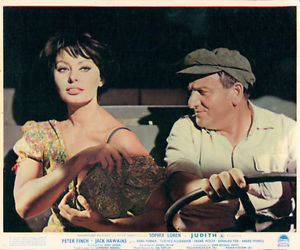
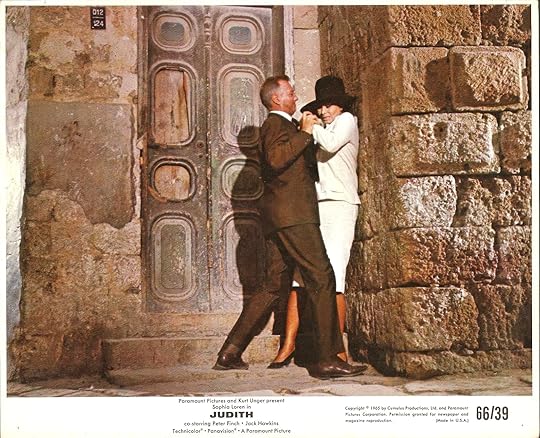
Initially conceived as a screenplay for the 1966 film starring Sophia Loren, Lawrence Durrell’s previously unpublished novel offers a thrilling portrayal of a place and time when ancient history crashed against the fragile bulwarks of the modernizing world.

This ebook features an introduction by editor Richard Pine, which puts Judith in context with Durrell’s body of work and traces the fascinating development of the novel. Also included is an illustrated biography of Lawrence Durrell containing rare images and never-before-seen documents from the author’s estate and the British Library’s modern manuscripts collection.

306 pages, Kindle Edition

First published January 1, 2012

74 people are currently reading
165 people want to read

About the author

Lawrence Durrell

324 books892 followers
Lawrence George Durrell was a critically hailed and beloved novelist, poet, humorist, and travel writer best known for The Alexandria Quartet novels, which were ranked by the Modern Library as among the greatest works of English literature in the twentieth century. A passionate and dedicated writer from an early age, Durrell’s prolific career also included the groundbreaking Avignon Quintet, whose first novel, Monsieur (1974), won the James Tait Black Memorial Prize, and whose third novel, Constance (1982), was nominated for the Booker Prize. He also penned the celebrated travel memoir Bitter Lemons of Cyprus (1957), which won the Duff Cooper Prize. Durrell corresponded with author Henry Miller for forty-five years, and Miller influenced much of his early work, including a provocative and controversial novel, The Black Book (1938). Durrell died in France in 1990.

The time Lawrence spent with his family, mother Louisa, siblings Leslie, Margaret Durrell, and Gerald Durrell, on the island of Corfu were the subject of Gerald's memoirs and have been filmed numerous times for TV.

Ratings & Reviews

What do you think?
Rate this book

Friends & Following

Create a free account to discover what your friends think of this book!

Community Reviews

5 stars
20 (21%)
4 stars
39 (41%)
3 stars
23 (24%)
2 stars
8 (8%)
1 star
3 (3%)
Displaying 1 - 18 of 18 reviews
Profile Image for Bettie.
9,976 reviews5 followers
October 29, 2015


https://www.youtube.com/watch?v=YlInc...

Description: A breathtaking novel of passion and politics, set in the hotbed of Palestine in the 1940s, by a master of twentieth-century fiction

It is the eve of Britain s withdrawal from Palestine in 1948, a moment that will mark the beginning of a new Israel. But the course of history is uncertain, and Israel s territorial enemies plan to smother the new country at its birth. Judith Roth has escaped the concentration camps in Germany only to be plunged into the new conflict, one with stakes just as high for her as they are for her people.Initially conceived as a screenplay for the 1966 film starring Sophia Loren, Lawrence Durrell s previously unpublished novel offers a thrilling portrayal of a place and time when ancient history crashed against the fragile bulwarks of the modernizing world.


4* Justine (The Alexandria Quartet, #1)
TR Balthazar (The Alexandria Quartet, #2)
TR Mountolive (The Alexandria Quartet, #3)
TR Clea (The Alexandria Quartet, #4)

WL Bitter Lemons of Cyprus
3* Judith
Profile Image for Laura.
4,244 reviews93 followers
July 20, 2013
Years ago (about 20, now that I think about it), a colleague recommended Justine, the first of the Alexandria Quartet by Durrell. I read it... and at that point I was a "clean plate" reader, so I slogged through the first 50 pages... the first 100 pages... but somewhere in the 150 range, I got it. Then I raced through to the end and grabbed the next three books. So when I saw Judith at BEA, I was thrilled.

Durrell was not Jewish, so that he was able to really convey the energy and conflict of life in was then Palestine under the British Mandate is pretty amazing. The people here are human: filled with failings, a sense of purpose, broken, driven, etc.. The only one we meet who isn't well rounded is Doud, but perhaps that might have changed. This isn't a truly complete book, in that Durrell didn't finish it. The impetus was his screenplay(s) for Hollywood, one of which turned into a movie starring Sophia Loren; this is a blend of that one and his original idea. There are some awkward word choices (the refrectory is always referred to as "gaunt") and phrasings, but I'm sure that had he edited this, it would have been up to his usual standard.

Copy provided by publisher.
Profile Image for Tadzio Koelb.
Author 3 books32 followers
August 9, 2017
From an essay I wrote for Tablet:

Lawrence Durrell’s relationship with the Jews was complex, problematic, even contradictory, both in fiction and in life. Durrell was twice married to Jewish women (and became the father in this way of an ostensibly Jewish daughter); of the four celebrated novels known collectively as The Alexandria Quartet, two – Justine and Balthazar – are named for central Jewish characters. From Justine on, Jewish characters are prominent in and even pivotal to Durrell’s art, forming an important aspect of what he called the “Heraldic Universe” of his fiction, although they are somejtimes forced by this to play a restrictive symbolic role.

The recent release of Judith, Durrell’s unfinished novel based on the treatment he wrote for the 1966 Sophia Loren vehicle of the same name, is an opportunity to revisit Durrell’s relationship to his Jewish characters, just as the writing of it was an opportunity for Durrell himself to revisit that relationship, with some great changes.

Durrell was a recidivist outsider, and his own allegiances were multiple, complex – even incompatible. His personal history was fertile soil for contradiction: the part of the British Empire where he was born, for example, would become India, and he was not Indian, although he missed, even yearned for, his Indian childhood throughout his life. He often spoke of his Irish heritage, but barely ever set foot in Ireland; and as his father wanted him to have an Oxford accent, young Larry was sent “home” to England, a country he didn’t know, to obtain one. Although he called himself a garden-variety Tory, he was a jazz-playing bohemian in London and, after he failed his university entrance exams, he left England for good, forced to obtain visas for his rare trips back (there was complicated paperwork for those born in the now-evaporated Empire). He far preferred the Mediterranean, where he sought to escape what he called “the English death”, a morbid mixture of class system, oppressive social conformity, sexual timidity, and grim weather: strange ideas for any Tory, however lapsed.

One of the things that makes Durrell a marginal figure among English Modernists – which he was, later writing ur-post-Modernist novels challenging the central tenets of Modernism – is partly that he revelled in his outsider status where others felt stigmatized. The “British” poet T.S. Eliot, originally of St. Louis, Missouri, called himself “an Anglo-Catholic in religion, a classicist in literature and a royalist in politics”, and spoke for much of his life in a famously unconvincing English accent (not unlike Madonna’s, but grander). W. Somerset Maugham, a lawyer’s son who grew up to rub shoulders with royalty, faced prison most of his life for his sexual preferences. Think, too, of Waugh’s Catholicism, Compton-Burnett’s closeted lesbianism, even Henry Green’s reluctance to let people know he was a writer because it didn’t fit his social status as a factory owner (Cecil Beaton, hired to shoot a portrait, had to photograph the back of Green’s head). Think, too, of that other British-American writer and early Modernist, Henry James, who wrote from deep in his closet about the closets of us all.

Durrell’s contemporaries in Britain often deployed Jewish characters as a reminder of their own need to blend, of the dangers they faced should they fail. Maugham never wrote a story about homosexuality; when he wanted to investigate marginalization, this social-climbing homosexual who became an author wrote the brilliant “The Alien Corn”, a story about social-climbing Jews, one of whom hopes to become a pianist. Eliot’s insecurities about his origins versus his pretentions wander The Waste Land and other poems in the form of seedy Jews, seedy gays, and seedy foreigners (it’s not clear Mr. Eugenides isn’t all three – Smyrna had a large Jewish population), an unholy trinity of outsiders any of which, but for the lottery of birth, he might himself have been.

To Durrell, on the other hand, the Jew was an icon of freedom – as were, to some extent, homosexuals, members of secret societies, and the physically deformed. Jews know as well as any group that the line between philo- and anti- is a very delicate one, and while the occasional gilded “orientalization” of his Jewish characters threatens to reveal a dangerous and dark verso, it is also true that Durrell’s refusal to toe the usual line is in keeping with his iconoclastic insistence on “original innocence”. He wanted to break free of Anglo-Christian morality, and he viewed the segregation these groups faced as a gift, a free ride out of the trap. Looking back at the original critical reaction to Justine, it is tempting to speculate that this, rather than his poetry-infused writing, is what prompted middlebrow critics to accuse him of charlatanism (although lush prose is still today treated by many British reviewers as a kind of trick played on the reader).

As recently as the late 1970s, the now common act of openly writing outside your own identity – as a man if you were a woman, as black if you were white – was considered audacious, something which bordered on the disrespectful. (The only third-person section in Faulkner’s The Sound and The Fury is Dilsey’s, and it is easy to imagine that this was because Faulkner couldn’t bring himself to speak on behalf of a black woman.)

In part because screenwriters – who in those days had no strong public identities, and who still today tend to work in teams or series – were less bound by this, Durrell found himself writing a “Jewish” book, and many of the systems by which Jews provided meaning in his previous fiction had to be put aside.

Set in Mandatory Palestine during the build-up to the UN partition plan and the ensuing civil war, Judith finds Durrell dealing for the first time in his career with a majority-Jewish cast, undermining completely his Jew-as-outsider symbolism – although, in a manner typical of Durrell’s search for the complexities of human allegiance, he inserts in places of prominence a British gentile widowed by a Jewish husband; a Jewish woman who before the war married a Nazi; and a British officer who falls in love with a Haganah spy. Indeed, throughout Judith, Durrell engages in – seems almost devoted to – a constant blurring of loyalties and commitments between the personal and the professional, the national and the sexual, the selfish and the selfless. Thus in Judith it is those who cross lines – rather than those born on the wrong side of them –who are the true outsiders, and whose situations must be plumbed for meaning.

Whether because it was to be a pot-boiler or because it was still in early stages, Judith lacks Durrell’s distinctive voice. One result is that every character – Jewish, Arab, British – speaks like a public-school boy (or occasionally like a public-school boy’s wet dream), and this odd tic inadvertently lays an even playing field over which the motivations of all the characters can achieve a similar momentum. It also offers space for doubt. Aaron, for example, a Sabra and activist dedicated to the birth of Israel – by violence if necessary – cannot imagine waging war against his childhood friend, Daud, an Arab who wants to reclaim land sold by his grandfather. Grete and Judith, both recently rescued from Germany, question their dedication to Israel: Grete would see independence lost if she could only find her missing child, and Judith wonders if she mustn’t put science before the needs of any one group of people. These are the sort of complicated dilemmas at which Durrell excelled, and which make his finest writing so deeply human. (Daud is perhaps one of the few characters not – yet – given a rounded treatment.)

Judith’s origins as a screenplay and its status as an unfinished work of course make it hard to judge. It seems likely that the completed book would not have been especially good, although certainly no worse than many other pulp thrillers published then (or now). Major historical moments are rushed, while personal moments of marginal importance are lingered over thoughtfully. The various plots don’t yet mesh, and some simply end without resolution. The things that made his best books so very good are what would ultimately make Durrell a poor thriller writer: he didn’t want to see the surface, but rather to wade deep into the water. Add to this the fact that he lived in constant need of money and often wrote very quickly, especially when boiling his pot, and it seems certain that if the novel had been published (which might not have been possible, as the screenplay was a work for hire), it would have joined his justifiably unremembered political thriller White Eagles Over Serbia on a backlist somewhere.

Released as an ebook with an informative introduction by editor Richard Pine, Judith is interesting now in ways it couldn’t have been then, perhaps precisely for how unfinished it is. In the embryonic novel we see the mind of the author at work: the plots – and Durrell could, when he wanted, be masterful with plot – growing slowly more complex as their moral ambiguity increases, the characters gradually coming to life as the story moves forward. The result, while not a great novel, is nevertheless of great interest, whether to those who enjoy Durrell, or to readers who are interested to see a previously unmarked milestone in Modernist British depictions of Jewish characters.
423 reviews2 followers
January 12, 2021
Judith is set at the time that the nation state of Israel emerged and the characters represent various people's that contributed to the act.
Judith Roth, daughter of a Nobel prize winning German Jew arrives via smuggling from a concentration camp in Germany via Cypress. Grette had also been in a camp, but left there by her ambitious Nazi husband once he realised her true cultural origins. The local Jewish Aaron is a sabra, born and raised in the valley on the border of Syria and Lebanon and deeply linked to his family home which he will defend. David Eveh is second in command in the Kibbutz.
Pete or Miss Peterson is a non Jewish English woman whose personal relationship with a Jewish scientist determines her decision to live in and defend the Kibbutz that she loves.
The story is placed historically as the English Mandate was completed and the English left the Jews to fight for their country's freedom. It explains through the relationships between English and Jew, and English and Arab the deceit that promised both sides their country. It is an interesting book and gives an insight that is not a dry lesson in geography and history but a moving picture of the people, the relationships that are invested in the events of the day.
There is sadness, especially of the stories from World War II, but this gives the sense of new hope for people who had suffered so much and their resolve in making a new life.
7 reviews
August 11, 2018
The two women, Judith and Grete are interesting to follow. It is my first read of Durrell's work, but I just purchased the Alexandria Quartet, so 1,000 pages awaits me. This was a good book even though it broke two of my long standing rules for writers. He uses about two adverbs in every paragraph and sometimes has to work to make an adverb out of a normal verb. Secondly, he tell you much, instead of showing. Since it was published after his death and apparently was supposed to be a move script, I can see some of it. I enjoyed getting back to it each evening until finished. You won't be disappointed.
Profile Image for Kilian Metcalf.
985 reviews24 followers
November 2, 2017
All the while reading this novel, I kept thinking 'This reads like a screenplay. It would make a terrific movie.' A search of IMDB revealed it was a movie, starring Sophia Loren. The book started as the screenplay, which was then turned into the movie. Whichever came first, the book or the movie, it's a good story.

With the story of Israel on the brink of nationhood, the book's focus is on two women trying to put their lives together after the holocaust. Judith, the daughter of a scientist, has brought her father's papers to the new country, resulting in scientific discovery. Grete is the Jewish wife of a Nazi officer, trying to find the truth of her son's fate.

The book reminded me of Exodus by Leon Uris, with a much smaller focus, but just as much impact.

My blog:

The Interstitial Reader
https://theinterstitialreader.com
Profile Image for Teri Heyer.
Author 4 books53 followers
September 24, 2020
The only Lawrence Durrell books I'd ever read was the Alexandria Quartet which is the best of the best. So I was pleasantly surprised to come across Judith on Amazon/Kindle. This was interesting historical fiction set in Israel during years of turmoil. Judith is definitely worth reading.
50 reviews
June 20, 2021
I agree with others that it reads more like a screenplay than a novel. What a shame it was never fully finished as a novel, as I think it could have been wonderful.
Profile Image for Yotam BM.
61 reviews
February 28, 2024
Durrell wrote much better books. I'd recommend it only to someone with a particular interest in either Durrell or this episode in the history of Israel/Palestine.
Profile Image for John Ratliffe.
112 reviews2 followers
September 23, 2017
I am a Durrellian through and through. It would be impossible for me to actually criticize anything he wrote. But "Judith" is only good for what it intended to be, a potboiler headed for a movie script. The story is just fine, but the description of characters, time, and place is thin gruel, not up to the best nor even the usual Durrell.

Even if it is not completely historically and geographically correct (and what novel is?), the story fills in gaps in one's knowledge of what happened during the British Mandate of Palestine, 1920 to 1948) and the birth of modern Israel by UN Resolution.

By this I do not mean at a global level of understanding but rather an intimate feel for the early sabras (Palestine born Jews) and immigrants (mostly Europeans) who were on the ground to face danger and uncertainty as the UN made its arguments and the British abruptly withdrew upon the Resolution to leave the Jews to deal with the Arabs as best they could. The story ends as the fighting mounts and ends without much in the way of a conclusion...as most Durrell novels do.

Durrell was accused of having an pro-Israeli bias. That could be true, but I don't believe he held an animus toward the Arabs. He lived among the Arabs for a time and had day-to-day dealings with them. Perhaps like many Westerners his view of Arabs was that they were somewhat childlike while their odd ways were off-putting in the eye of an Occidental. Well, that was then. This is now. They have to be taken very seriously now, especially by Israel.

I feel like I should disclose that I favor the creation of State of Israel, but I am very much against the way Israel keeps the Palestinians in a pressure cooker. I fear that what is going on now is just a land grab, or worse, possibly an ethnic cleansing, or the beginning of an apartheid state.
164 reviews1 follower
February 29, 2016
I loved Durrell's books that I read 30 years ago. This book was not of the same quality, but I enjoyed it, much lighter than the earlier works & very reminiscent of Leon Uris' "Exodus."
SPOILER ALERT I'm not sure if the ending was a function of the time period, or the fact that Durrell himself never completed the
novel to his satisfaction in his lifetime, but it felt false to me, just didn't ring true. If you want insight to circumstances at the start of the state of Israel, check it out.
Profile Image for Paula.
88 reviews
August 21, 2025
I enjoyed this story about two Jewish women rescued from the Nazi concentration camps prior to the end of WWII and taken to a Palestinian kibbutz, where they find a home and their place in helping Israel's beginning. However, I found Durrell's writing style slightly forced... it felt as though he sat with a thesaurus constantly at hand, seeking to impress with his vocabulary to the hindrance of the story.
Profile Image for Betsy.
37 reviews1 follower
September 4, 2013
I am a Lawrence Durrell fan, having found the Alexandria Quartet to be an amazing series of books. "Judith" is not at that standard, as it was initially a screenplay, but I enjoyed it. I am also interested in that time of history -- post WWII, and the Mideast. I could not help but like it!!
162 reviews
April 3, 2014
I was a little disappointed in this book. In the forward they kept talking about the Exodus by Leon Uris. I kept comparing the book to that. It didn't really give the characters enough depth. I also felt the book was more about Grete than Judith.
Profile Image for Elena Diaconu.
16 reviews6 followers
May 5, 2015
Such an easy going novel by Durell, so different from his Alexandria Quartet or other more serious work. Not a masterpiece, you can easily tell it was conceived as a screenplay, but nevertheless a good summer read.
Profile Image for Neil Plakcy.
Author 238 books649 followers
December 23, 2016
Not as good as the Alexandria Quartet, but still a fascinating look at early settlers of Israel
Displaying 1 - 18 of 18 reviews

Can't find what you're looking for?

Get help and learn more about the design.