Adventures come to the adventurous, and mysterious things fall in the way of those who, with wonder and imagination, are on the watch for them; but the majority of people go past the doors that are half ajar, thinking them closed, and fail to notice the faint stirrings of the great curtain that hangs ever in the form of appearances between them and the world of causes behind. For only to the few whose inner senses have been quickened, perchance by some strange suffering in the depths, or by a natural temperament bequeathed from a remote past, comes the knowledge, not too welcome, that this greater world lies ever at their elbow, and that any moment a chance combination of moods and forces may invite them to cross the shifting frontier.
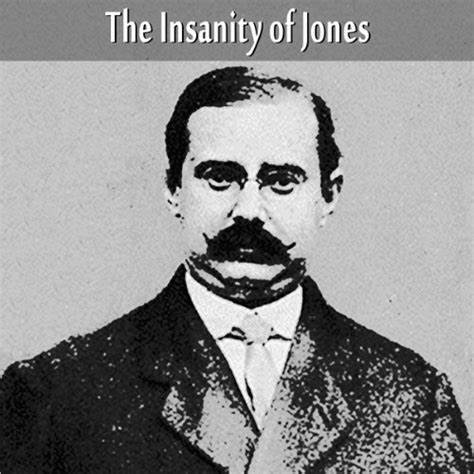
Algernon Henry Blackwood (1869–1951) was an English broadcasting narrator, journalist, novelist and short story writer, and among the most prolific ghost story writers in the history of the genre. The literary critic S. T. Joshi stated, "His work is more consistently meritorious than any weird writer's except Dunsany's" and that his short story collection Incredible Adventures (1914) "may be the premier weird collection of this or any other century".
Blackwood was born in Shooter's Hill (today part of south-east London, but then part of northwest Kent) and educated at Wellington College. His father was a Post Office administrator who, according to Peter Penzoldt, "though not devoid of genuine good-heartedness, had appallingly narrow religious ideas." Blackwood had a varied career, farming in Canada, operating a hotel, as a newspaper reporter in New York City, and, throughout his adult life, an occasional essayist for various periodicals. In his late thirties, he moved back to England and started to write stories of the supernatural. He was very successful, writing at least ten original collections of short stories and eventually appearing on both radio and television to tell them. He also wrote fourteen novels, several children's books, and a number of plays, most of which were produced but not published. He was an avid lover of nature and the outdoors, and many of his stories reflect this.
H.P. Lovecraft wrote of Blackwood: "He is the one absolute and unquestioned master of weird atmosphere." His powerful story "The Willows," which effectively describes another dimension impinging upon our own, was reckoned by Lovecraft to be not only "foremost of all" Blackwood's tales but the best "weird tale" of all time.
Among his thirty-odd books, Blackwood wrote a series of stories and short novels published as John Silence, Physician Extraordinary (1908), which featured a "psychic detective" who combined the skills of a Sherlock Holmes and a psychic medium. Blackwood also wrote light fantasy and juvenile books.
Algernon: How about we chuff a big bag of exposition, then dwell on the concept of reincarnation? Jay: I thought this was about insanity and Jones' one way trip to Loonytown. Are you saying people who believe in reincarnation are crazy? Algernon: Listen and see. . . tell, tell, tell, show, repeat. . .. Now what say you? Jay: Can you think of an item I need for sixteen dollars or more so I can get free Super Saver shipping? Algernon: The nerve! Jay: Your story auto-played after the savage ear beat down of Dune Messiah. You can't expect much of a review. Algernon: You'll regret this in the lives to come, for in worlds not so distant from ours. . ..
A story of reincarnation tells how John Enderby Jones, a clerk and private secretary at a fire insurance office in his present life was 400 years ago the victim of torture; the manager of the same office was his torturer and murderer. In this current life Jones is compelled to seek vengeance and justice for the manager's past wrongs. Madness? or the inexplicable processes of the supernatural? It is ambiguous whether the man's spiritual guide a former friend and office colleague named Thrope who is now deceased, was benevolently helping him, or if Jones was simply losing his mind and going insane.
I'm not sure how much I really liked this one as of yet. It was definitely odd and had intensely interesting moments. The imagery, again, fantastic, but for some reason this one feels a little incomplete for me.
Jones is a clerk. Jones has memories and dreams of his past lives. Jones has a debt to settle and a ghost friend who will support him settle it.
Is it a straightforward paranormal tale or a psychological one? In either case, Blackwood chose to go the route that he probably thought would excite and gratify readers more, but which I found unsatisfying to contemplate. It left me with the feeling that the story would have had more impact had he chosen a different route for his hero.
Blackwood has broad ideas of terrors like Kafka, but his execution is more accessible, like Stephen King. H.P. Lovecraft (who is way more famous) admired Blackwood. Blackwood thought Lovecraft's writing was drivel. Unlike Lovecraft, Blackwood does not regularily rely on lonely, male, racist protagonists to tell his tales.
Ever feel that you hate your boss at work so much that you wanted to kill him? Be honest. Jones the clerk has an obsessive drive to do so, and it is up to the reader to decide if it is a supernatural or a psychological reason within the man's mind.
Being somewhat generous here with my ratings. It’s well written in a way that is vivid and Blackwood is always known to make his imagery pop. It’s not so much that it’s boring, but it felt a little tedious at times. The last couple pages really kicked the plot in full gear.
I liked the philosophical nature of the beginning, but it took a very dark turn midway through, making much of the first chapter irrelevant. The conclusion was far too predictable.
Not a bad premise for a short story, but could have been much better by sticking to the inner struggle of the madman.