• Songs of Innocence
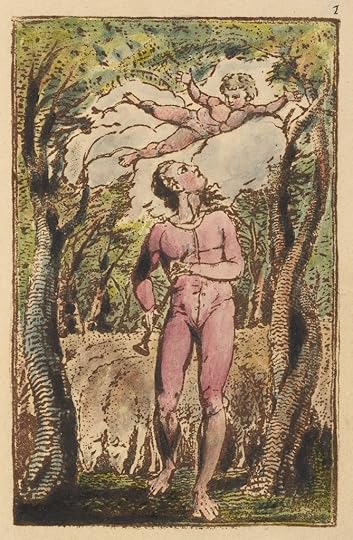
Introduction (to Songs of Innocence), William Blake *** - A Piper charms both child and cloud, e.g. “And I made a rural pen, / And I stained the water clear, / And I wrote my happy songs / Every child may joy to hear.”
The Shepherd *** - Delightful and idealistic. "How sweet is the Shepherds sweet lot, / From the morn to the evening he strays: / He shall follow his sheep all the day / And his tongue shall be filled with praise.", etc
The Echoing Green **** – Sweet memories of childhood, e.g. “The Sun does arise, / And make happy the skies” … “While our sports shall be seen / On the Ecchoing Green” … “And sport no more seen / On the darkening Green.”
The Lamb *** - There is a tenderness in Blake’s observations and writings, and the suggestion of the Divine, e.g. “Little Lamb, who made thee?”
The Little Black Boy **** - This is actually rather intense and I suspect it is a genuine early attempt at class equality. Beautiful in its imagery, e.g. “But I am black as if bereav’d of light.”
The Blossom *** - a splash of merriment.
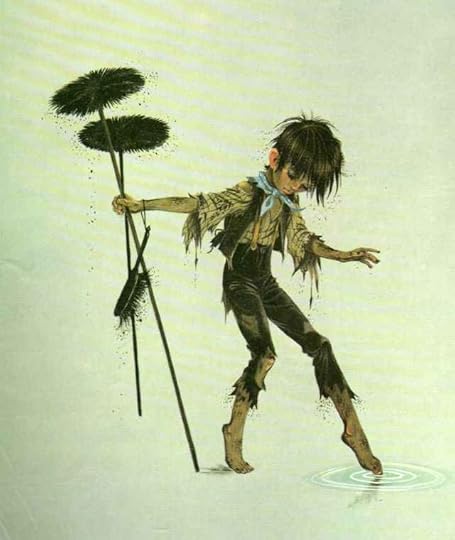
The Chimney Sweeper ***** - Wow! 5 stars simply out of respect for that generation of young people who were so badly treated by a society lacking discernment and empathy. “When my mother died I was very young, / And my father sold me while yet my tongue / Could scarcely cry 'weep! 'weep! 'weep! 'weep! / So your chimneys I sweep, and in soot I sleep..”
The Little Boy Lost **** - This poem (THE Little Boy Lost, from Songs of Innocence) is often mistaken for its corresponding one “(A Little Boy Lost, from Songs of Experience). The description on this Goodreads entry is wrong, the quote “Nought loves..” is from the other poem.
This poem (“THE..”) is heartfelt and opens with, “Father, father, where are you going?”
The Little Boy Found *** - A sequel to The Little Boy Lost, it opens with "The little boy lost in the lonely fen, / Led by the wandering light..."
Laughing Song *** - Delighting in nature, e.g. “Come live, and be merry, and join with me, / To sing the sweet chorus of 'Ha ha he!'”
A Cradle Song *** - As in The Shepherd, The Lamb, and The Laughing Song, there is a tenderness in Blake’s observations and writings, e.g. "Sleep, sleep, beauty bright, / Dreaming in the joys of night; / Sleep, sleep; in thy sleep / Little sorrows sit and weep.”
The Divine Image *** - Blake had an authentic love for God, humanity and all creation, e.g. “For all must love the human form, / In heathen, Turk, or Jew; / Where Mercy, Love, and Pity dwell / There God is dwelling too.”
Holy Thursday *** - Observing the attendees of Maundy Thursday church service in London, “.. It is eternal winter there.”
Night **** - This is an emotive and evocative poem utilising Isaiah 11:6-8. At first reading I imagine a powerful lion acting in non-conformity as a guardian angel. How about that opening stanza? “The sun descending in the West, / The evening star does shine; / The birds are silent in their nest, / And I must seek for mine…” Also, “Farewell green fields and happy groves, / Where flocks have took delight...”
Spring *** - Blake loves lambs and the gentle aspects of nature! "Merrily, merrily to welcome in the year."
Nurse’s Song *** - Blake is a complete romantic idealist! Love it! “When voices of children are heard on the green, / And laughing is heard on the hill, / My heart is at rest within my breast, / And everything else is still.”
Infant Joy *** - Blake is not as dark and melancholy as the other Romantics. There is a simple gratitude in his writings, e.g.
“'I have no name; / I am but two days old.' / What shall I call thee? / 'I happy am, / Joy is my name. / Sweet joy befall thee! … ”
A Dream **** - Blake’s tenderness is combined with lament in this beautiful poem of longing, e.g. “'I am set to light the ground, / While the beetle goes his round: / Follow now the beetle's hum / Little wanderer, hie thee home!’”
On Another's Sorrow *** - Empathy that is both human and divine are revealed in this tender poem, e.g. “Can I see another's woe, / And not be in sorrow too? / Can I see another's grief, / And not seek for kind relief?"
The Little Girl Lost *** - Lyca goes wandering, “In futurity / I prophesy / That the earth from sleep / (Grave the sentence deep)…”
The Little Girl Found *** - Part 2 of ‘The Little Girl Lost’. “All the night in woe / Lyca's parents go / Over valleys deep, / While the deserts weep.”
The Schoolboy **** - Tender with longing and joy, e.g. “I love to rise in a summer morn, / When the birds sing on every tree; / The distant huntsman winds his horn, / And the skylark sings with me: / O what sweet company!”
Is this where Maya Angelou got the concept of “How can the bird that is born for joy / Sit in a cage and sing?”?
The Voice of the Ancient Bard *** - This poem flows delightfully and almost comes across like an expanded proverb of admonition to young people contrasting wisdom and folly.
“Youth of delight, come hither,
And see the opening morn,
Image of truth new born.
Doubt is fled, & clouds of reason,
Dark disputes & artful teazing.
Folly is an endless maze,
Tangled roots perplex her ways.
How many have fallen there!
They stumble all night over bones of the dead,
And feel they know not what but care,
And wish to lead others, when they should be led.”