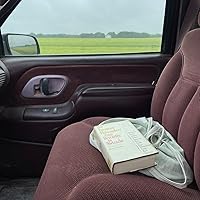
‘God is dead’, announced Nietzsche – before going on to abolish himself. For there is no Nietzsche, suggests Ronald Hayman in this stimulating, provocative just a shifting set of contradictory voices. Those envious contemporaries who smeared Nietzsche with the mark of madness came closer than the knew in characterizing a philosopher in whose thought ambivalence approximated to disintegration of the self.Yet while the nineteenth century’s coherent, consistent systems of certainty would come crashing down ingloriously a the very first touch of the twentieth, Nietzsche’s disjointed discourses survived – more modern, it seemed, than the moderns.Today his work seems more contemporary than ever, his various voices speaking compellingly to a sensibility for which paradox is the only truth, plurality the only consistency, fragmentation the only integrity. This enthralling guide reveals a new Nietzsche for a new, postmodern age.
[...]Από τη στιγμή που υπάρχει πάντα η πιθανότητά να πλανηθούμε, έχουμε αναπτύξει γλωσσολογικούς συμβατικούς όρους για να ξεγελιόμαστε με ασφάλεια. Ο Νίτσε παρομοίασε τη γλώσσα με φυλακή και με δίχτυ ο Βιτγκενστάιν απέδωσε σε αυτή το "μάγεμα της νοημοσύνης μας" και τη θεώρησε υπεύθυνη για τους "μώλωπες από τους οποίους υποφέρει η αντίληψη χτυπώντας το κεφάλι της στα όρια της γλώσσας”.[...]
Livro bem pequeno, com umas cinquentas páginas. É mais um ensaio filosófico do que um livro de introdução à obra de Nietzsche (como parece ser o propósito da coleção). Aborda um aspecto bem específico - a figura do narrador nos escritos do pensador alemão. Ele chama isso de 'vozes', ou seja, as diversas estratégias narrativas utilizadas por Nietzsche na sua escrita. Esses 'personagens' funcionam como uma máscara para o autor, uma certa poética do texto: "Sentindo-se mais do que nunca em casa numa máscara ou num estilo estranho, Nietzsche podia escrever de maneira mais autobiográfica, satisfazendo a inclinação de dramatizar sua própria situação". (p. 27). De algum modo, o autor sugere que essas 'vozes'/'personagens' teriam tido algum papel do desenvolvimento da loucura de Nietzsche: "Em vez de permitir que o ceticismo nos desoriente, continuamos a agarrar-nos à fé que nos deu estabilidade. Isto é para sugerir que só o louco está desperto, enquanto a maioria sã ainda continua sonhando" (p 7)
Interessante, mas acho que é para um público mais específico. Um ponto positivo é o uso extensivo de trechos da obra do filósofo. Copiei algumas.
"O homem do conhecimento não precisa somente amar seus inimigos, precisa também poder odiar seus amigos. Paga-se mal a um mestre quando se continua sempre a ser apenas o aluno" Assim falava Zaratustra, Primeira parte, "Da virtude que se dá". "Melhorar o estilo significa melhorar o pensamento, e nada além disso!" (Humano demasiado humano, andarilho e sua sombra, $131) "Não passa de parvo quem não julga pelas aparência" "É apenas enquanto fenômeno estético que a existência e o mundo permanentemente se justificam". "Possuimos a arte para não perecer com a verdade" "Quem tiver de ser um criador, em verdade, esse tem de ser antes um aniquilador e quebrar valores" (Assim falava Zaratustra, Segunda parte, "Da superação de si")
'The air thin and pure, danger near and the spirit full of cheerful malice: these things are in tune. I want goblins around me, for I am bold. Boldness, which scares spirits away, calls up goblins - boldness wants to laugh. I no longer share your feelings: these clouds I see under me, black and heavy, they make me laugh but for you they are thunder clouds. You look upwards when you want to be uplifted. I look downwards because I have been. Which of you can laugh and be uplifted at the same time? ...Wisdom wants us to be brave, unconcerned, playful, violent. She is a woman and loves only warriors... I would believe only in a God who could dance. And as I saw my Devil, he was serious, earnest, profound, solemn; he was the spirit of gravity - everything falls through him... I have learnt how to walk: now I can run. I have learnt how to fly: now I can move forwards without being pushed. Now I am light, I am flying, I see myself underneath me, now a God is dancing through me. Thus spoke Zarathustra.
A short, concise and interesting introduction to the thought of Nietzsche. With large quotes and good commentary it follows both his biographical life and intellectual biography with emphasis on important ideas and concept. While English translations of the German is always a pain it is well done and it seems able to convey the forceful and eclectic writing of Nietzsche.
really well written and digestible! interesting insights on his life history and the direct connections between that and his work. i wish the author would’ve explained more of Nietzsches quotes instead of just putting them in there for us to figure out alone.
فکر میکنم برای آشنایی اولیه با نیچه چندان کتاب خوبی نیست و برای مطالعات جدیتر هم آنقدر حرفی برای گفتن ندارد. روند بحث کمی مغشوش است و استدلالها و احتجاجات چندان پرداختی ندارند. اما کتاب یک موضع جالب نسبت به زندگی و فلسفهی نیچه دارند: جنون نیچه، نتیجهی اندیشه و فلسفهی او بود.
A truly mesmerising piece of work when it comes to writing an introduction about such a complex personality such as Nietzsche. Hayman opens the window towards all of Nietzsche’s philosophical works. It should be a must read for anyone who wants to begin reading Nietzsche.
Gives a good overview of the different and conflicting ‘voices’ of Nietzsche philosophy but the book lacks any structure of chapters/sections making it a bit difficult to read across sessions.