Jump to ratings and reviews
Rate this book

Garden of Stones

Rate this book
IN THE DARK DAYS WAR, A MOTHER MAKES THE ULTIMATE SACRIFICE

Lucy Takeda is just fourteen years old, living in Los Angeles in 1941, when the bombs rain down on Pearl Harbor. Within weeks, she and her mother, Miyako, are ripped from their home, rounded up—along with thousands of other innocent Japanese-Americans—and taken to the Manzanar prison camp.

Buffeted by blistering heat and choking dust, Lucy and Miyako must endure the harsh living conditions of the camp. Corruption and abuse creep into every corner of Manzanar, eventually ensnaring beautiful, vulnerable Miyako. Ruined and unwilling to surrender her daughter to the same fate, Miyako soon breaks. Her final act of desperation will stay with Lucy forever...and spur her to sins of her own.

Bestselling author Sophie Littlefield weaves a powerful tale of stolen innocence and survival that echoes through generations, reverberating between mothers and daughters. It is a moving chronicle of injustice, triumph and the unspeakable acts we commit in the name of love.

320 pages, Kindle Edition

First published February 1, 2013

245 people are currently reading
9559 people want to read

About the author

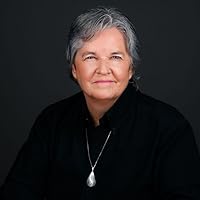
Sophie Littlefield

37 books797 followers
Called a “writing machine” by the New York Times and a “master storyteller” by the Midwest Book Review, Sophie Littlefield has written dozens of novels for adults and teens. She has won Anthony and RT Book Awards and been shortlisted for Edgar, Barry, Crimespree, Macavity, and Goodreads Choice Awards.

Sophie also writes under the pen name Sofia Grant.

Ratings & Reviews

What do you think?
Rate this book

Friends & Following

Create a free account to discover what your friends think of this book!

Community Reviews

5 stars
1,148 (24%)
4 stars
2,196 (45%)
3 stars
1,191 (24%)
2 stars
191 (4%)
1 star
48 (1%)
Displaying 1 - 30 of 568 reviews
Profile Image for Joy (joyous reads).
1,564 reviews291 followers
February 4, 2013
When we visited the Arizona Memorial Park in Oahu a couple of years ago, there are two things that immediately stood out: one, how reverent and sombre the atmosphere was despite the hoarde of tourist in attendance and two, the significant ratio of Japanese nationals that made up of those attendees. The tour also featured a twenty-minute film depicting the events of what had happened that day. And as I looked around the auditorium while the harrowing movie played out, I couldn't help but wonder what was going through the minds and the consequent emotions as they watched the film. I didn't - couldn't - hazard a guess.

I've always wondered what had happened to the Japanese-Americans in the States after Pearl Harbor. World History in High School was a little bereft. I didn't know that they were taken in internment camps. While I was reading this book, a history buff at the office told me that it also happened in Canada and the Japanese- Canadians pretty much suffered the same fates as their American counterparts.

This book tells the story of a mother and daughter whose delicate beauty made them easy targets for unwanted attention. When I picked up this book, I was already feeling the heavy dread weighing in my gut. I'm not very good at reading anything that would depict torture, abuse, and most of all, rape. I think I read this book with my eyes half-covered. Thankfully, I soon found out that I was worrying for nothing. It wasn't that disturbing, to be honest. Sure the conditions at the camp was severe, the food atrocious, and the treatment of the prisoners were what can be considered now as violations against human rights. But Sophie Littlefield didn't really delve too much into the camp life; in fact, she sort of just glanced over it.

The story of Miyako and Lucy Takeda was equal parts heartbreaking, pitiful and poignant. The then recently widowed had to endure the grief of losing the gentlest, most caring husband to uprooting what was left of her family to a place where she'd had to live out the horror of what kind of evil men would do to covet her beauty. The core of the premise is really how far and how much would a mother endure to protect her child. And Miyako did everything she could even so far as to doing the unimaginable.

Lucy Takeda's story was just as difficult but not nearly as heartbreaking as her mother's. I guess in the end, and despite the trying life Lucy has had as an orphan, Miyako's sacrifice had been fruitful nonetheless. Lucy was at a tender age when they moved to Manzanar. There, in the camp, she found and lost her first love. When the terrible tragedy struck, a nun took care of her until she begged to leave and find a life for her own. Her story, and how she found and yet again, lost her second love began at a motel owned by a feuding siblings.

I think the most frustrating of all is Lucy's lack of voice. She was like her mother - self sacrificing. But where Miyako's capitulations stemmed out of desperation, Lucy's wasn't because she lacked hope and solution. I think she could've fought for Garvey; she could've fought for her happy ending. She folded onto herself and it was because of her love for Garvey that she accepted the things that were thrown her way.

The suspense that the murder mystery the book started with will keep you turning the pages. But the mother's and daughter's past lives will keep you entranced until you find yourself no longer caring for the outcome of the crime that had happened in the beginning of the novel. Sophie Littlefield's account for the lives of the prisoners wasn't really that detailed so I can't say whether or not it was done accurately. I also couldn't discount it just because I don't know much about it. My point is, I found that aspect of the book muted because I got too caught up with Lucy's and Miyako's stories. The author also spun some pretty fascinating and surprising twists into the story but what it lacked is the ability to conjure tears and emotions for a book that tackled delicate issues.
Profile Image for Kim.
314 reviews193 followers
September 15, 2021
4 stars

This is the first book I've read about the Japanese internment camps. Wow, it's so hard to know that this happened in our own country. This is an emotional story with a couple surprise twists and turns thrown in!
Profile Image for Leea.
569 reviews70 followers
March 5, 2013
What Lucy had was a tiny seed inside her, a hard thing like a popcorn kernel. But Lucy's Kernel - she didn't know where it was located exactly, in her heart perhaps, or more likely in her spirit, wherever that might be found - would explode large as well. She didn't want much - a place of her own someday, a job of her choosing. But she meant to have it. And when she finally exploded, no one would ever be able to take her future from her again.


Garden of Stones is the story of Miyako and Lucy Takeda... what happens to them when the world shifts and Japanese Americans are put into concentration camps not long after Pearl Harbor is bombed. The day to day struggle when your life shifts from being an upper middle class citizen to having most of your belongings taken away and you freedom evoked. At the same time there is this murder mystery taking place in the more present time, 1978. The past shapes the future but what happened to Lucy that has changed her life forever?

This is not my first novel by Sophia Littlefield in fact I would call myself a fan of her work. Which is so diverse that when I saw she was writing a novel about he Japanese American experience during WWII I had to read it. I know what took place in that black mark of American History because of a family friend who was born in an internment camp. So the horrors that Miyako and Lucy would endure were not far from my mind. I was prepared to have my heart broken and believe me it did but what I was not prepared for was at the end of this book... the last page the last word to feel for Lucy in such a way that I almost felt her pain. Not even her pain, but her choices, those decisions that lead to where she ended up. Her little life carved out of pain, hurt, violence and injustice. Such a little thing, what Lucy wanted. No more than any other girl in this county or the world. But for her, it seemed like she was reaching for the stars.

Sophia Littlefield wrote Garden of Stones from the view of Lucy, 14 years old and taken for everything she knows. Her view on the world is muted by her age and her fears are those of a 14 year old girl. How will she make friends? What will she occupy her time doing? She's beautiful, pale, and smooth like her mother, Miyoko who has seen the horrors this world can give a beautiful women before. Those horrors come back to haunt Miyoko and she does everything in her power to protect her developing daughter. There is nothing a mother wont do to protect her children a theme that Ms. Littlefield has explored in her other books and that is revealed in this one. Those choices made, layed the groundwork for Lucy's whole life... She wonders the world with this quiet fire. Never letting anyone even Lucy's daughter, Patty know her truths. I found myself glued to the pages of Garden of Stones with tears in my eyes and a prayer in my heart for Lucy. In the end, I believe Lucy got what she wanted, something small for herself and I was glad for that. It was a more real life ending than anything, true to the character in this book. I cannot help but want more for Lucy but also see how this was all she ever wanted.

Garden of Stones felt like two books in one package, yes the stories are very much related but I couldn't help but feel there seporation. There was this unnatural mix of internment and taxidermy (I don't mean for this to be funny, it's true). Ms. Littlefield writes Lucy's journey from the concentration camp to her job as a maid as a sort of transition between her life of a child and the life she will make for herself. Garden of Stones is beautifully written, well researched and full of twists and turns. In the end I was left with this overwhelming feeling of sadness. For those who endured and forever where changed.

And so it was Lucy who walked with Patty today, Holding tightly to her daughter's arm, unsteady in her satin shoes, trying to ignore the people starting at her. The alter seemed a mile away. I can, I can, I can, Lucy repeated in her mind, just like a hundred other times, and before long they arrived.
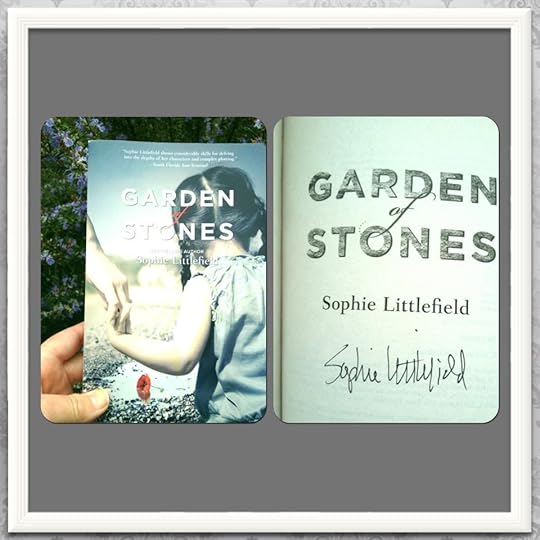


Thanks - http://badassbookreviews.com/ for this book :)

Children of the Camps and From a Silk Cocoon:

http://www.fromasilkcocoon.com/crew.html
Profile Image for Cranky Commentary (Melinda).
699 reviews30 followers
August 28, 2024
In 1941, Lucy was a 14 year old girl whose family lived a privileged life in Los Angeles, California. Her family was Japanese American. After the bombing of Pearl Harbor by the Japanese, sealing the United States involvement in WWII, internment camps were created for all people of Japanese heritage. This was done to prevent the possibility of spies, but these were American citizens, including women, children, and babies. The camps were run like prisons.

Lucy’s recently widowed mother had to sell all of their possessions at an insultingly low price to opportunists, due to all the other families having to do the same.

This is a heart wrenching family drama, with a mystery. The views alternate between Lucy’s experience at the camp (Manzanar, in Inyo county, California), and her adult daughter, Patty, 1978 San Francisco.

I couldn’t put this book down. The plot was very good, the characters well done, and I learned something about these internment camps (which were only mentioned as a side note in my school classes).

The only reason I deducted a star on my rating was due to editing. Maybe it was just the ebook, but in two different places the main female characters (there were 3) were mixed up. The first time, I read the passage only a couple of times to make sure the error was the writing and not just me. The second time there were a couple of errors like this in the same passage, which caused me more confusion.

I would still recommend this book. Four stars

Profile Image for Khris Sellin.
789 reviews7 followers
June 5, 2024
Gripping

It's 1978 San Francisco, and a man has been found dead in his basement. Was it murder or suicide?

That's only the end of the story. It begins 30+ years earlier, at the Japanese internment camp at Manzanar, where Lucy Takeda and her mother suffer daily abuse by the white men in charge.

A story about the lengths a mother will go to to protect her child.
Profile Image for Judith Starkston.
Author 8 books136 followers
January 13, 2013
When we think of internment camps and WWII, we don’t think of California, Arizona and Utah, but we should. Sophie Littlefield’s upcoming book, Garden of Stones, which moves between WWII and the 1970’s, draws us into this shameful chapter of US history after the bombing of Pearl Harbor—the rounding up, financial ruin, and forcible detention of Japanese Americans in desolate camps. I remember attending an exhibit in the early 70’s of photographs and artwork from the camps—a book of that exhibit is still around, Executive Order 9066—because my father was an historian and he’d helped put it together. I had a jarring sense that this piece didn’t work in my limited teen framework of history. How could we have done this? It stank so much of the behavior on the other side of the Atlantic we’d fought to stop.

Any good book set in this particular historical moment would be worthwhile. There have been several earlier ones such as Farewell to Manzanar. Sophie Littlefield’s novel does an outstanding job of depicting a heartbreaking view of this national failure of conscience. For example, she interweaves into her plot the orphanages that had been relocated to the camp. Did we really fear the espionage of infants so much that we endangered their well being in order to lock them up?

But Sophie’s book accomplishes more than a vivid reminder of this chapter of history. Littlefield portrays three generations of women, a mother, daughter and granddaughter, of such depth and idiosyncratic character that it would not matter when or where the book was set, we would read on to feel these three lives vibrate with tragedy, inner strength, mental delusion, and peculiar joys. Littlefield’s entwining of these particular lives within the historical details makes for smart, mind-bending reading that you can’t put down. There’s a murder mystery at its plot center, but this book is so full of human crisis and coping that the murder becomes only one of many pieces broken loose by this tale’s full-spate river. We are compelled to consider the rights and wrongs of actions so much more anguished and subtle than simply why our government locked up law-abiding citizens (valuable as that reminder alone would be). Garden of Stones tugs us along through mental illness, rape, sexual abuse, bigotry, and the ambiguous but powerful bonds between mothers and daughters. Perhaps most of all, this book provides a nuanced portrayal of the nature of forgiveness and acceptance.
Profile Image for M.J. Moore.
Author 11 books14 followers
December 28, 2013
Writing a review for this novel is difficult. Was it enjoyable? Yes. Is it well written (prose/language wise)? Yes. About these things, I'm certain. What I had a bit of a problem with was the style - more specifically, I think the author had difficulty choosing one. The first half of the book is a solid, gritty, real family drama, set mostly against the backdrop of a World War II Japanese American Internment camp. Lucy Takeda is a fourteen year old Japanese American girl who is in the middle of the eighth grade when Pearl Harbour is attacked. Just before this, her father dies suddenly, leaving her already emotionally fragile mother, who suffered traumas at her daughter's age that she never discusses with anyone, almost broken. The other children at school distance themselves from her, or openly taunt her, and on the day of her father's funeral, all people of Japanese American heritage are interned at a camp in the mountains. The abuses that her mother suffers at the hands of the American officers who run the camp tear away at what little grip Miyako has until the prospect of her daughter suffering her fate leads her to do something so unspeakable, it literally made me shriek. After this MASSIVE twist, however, the story changes tack, and descends slightly into melodrama, (ugh!). Then, right near the end (and I am talking the last chapter here), it kicks back into gear again and hits us with not one, not two, but three more plot twists, each one more astounding than the last. At first, I found this annoying (I could just picture this part of the story being read out to an astonished group of party guests by Agatha Christie's all-too-predictable Inspector Cleusau). The twists seemed tacked on and way too coincidental to believe, but then Littlefield justifies them with the real, subtly dramatic style with which she began Lucy's story. Overall, it is a very enjoyable read, but I would have to say that the first half is better executed than the second.
Profile Image for Shelleyrae at Book'd Out.
2,613 reviews558 followers
January 4, 2013

When the police come to question Lucy Takeda regarding a murder, she is forced to reveal the past she has kept secret from her daughter for nearly forty years. In 1942, Lucy was an intelligent, pretty fourteen year old mourning the recent death of her father, when the Japanese bombed Pearl Harbour and all US residents with Japanese ancestry were forcibly 'relocated' to camps established for the duration of the war. Sent with her mother, the beautiful but mercurial, Miyako, to a camp in California's desert, the mother and daughter are forced to endure the trials of corruption, injustice and tragedy.

Garden of Stones is a moving, emotional story of loss, prejudice, love and survival. Flashbacks reveal the harrowing experiences of Lucy and her mother in the poorly constructed and under resourced internment camp. While the prisoners did their best to create some semblance of a normal life during their interment, Littlefield describes overflowing toilets, badly prepared food and a shocking lack of privacy, conditions thousands of internee's were forced to endure for years. It's a confronting historical circumstance post-WW2 generations are largely ignorant of and the author portrays the situation with compassionate honesty.

After the shock of arrival at Manzanar, Lucy's natural optimism and energy asserts itself and she works as a courier while attending the camp school. Still mired in grief it is weeks before Miyako, urged on by her sister in law, shakes of her debilitative depression to begin work as a seamstress in the camp factory. Lucy is overjoyed that her mother is finally adjusting to life within the camp until her innocence is shattered when she learns the emotionally fragile Miyako, is being forced to submit to the sickening desires of the camp officials. Unable to extricate herself from the officer's attentions Miyako is led to commit a desperate act that will change everything for Lucy.

Lucy is such a lovely child, spirited, smart and resilient, so the contrast with her adult self in the dual time narrative is unbearably poignant, even though at times I felt it was intrusive. For Lucy's daughter Patty, to whom Lucy is an enigma, understanding her mother's early life becomes key to absolving her of the present murder. As she uncovers her mother's past she is stunned by the revelations, though there are still many secrets that Lucy keeps, as a mother determined to protect her child.

Well written, with wonderful characterisation and an intriguing storyline, Garden of Stones is a heartbreaking, fascinating and poignant tale of struggle and survival whose bittersweet ending haunts you long after the final page is turned.

Profile Image for مروة الجزائري.
Author 11 books195 followers
February 5, 2017
Actual rating is 3.5 stars.

I have a mixed feelings regarding this book. I liked it specially this is the first time i read about the Japanese -American war.
This book made me want to read more about this topic.

So many things covered in this book such as Motherhood, family bonds , sacrifice, rape and children abuse. And how beauty can be a curse and attract unwanted attention.
Thank god the rape and abuse scenes were very light and not descriptive because I don't have the heart to deal with those sensitive topics.

The writing was very simple and the mystery factor was unnecessary in my opinion because it was very weak and undeveloped.

I hoped to get more from this book and i feel I couldn't get the full picture.

I will be reading for the same topic very soon.

This book recommended to historical fiction fans.
Profile Image for Heidi.
1,239 reviews232 followers
December 22, 2012
4.5

Opening with a modern-day murder mystery, Garden of Stones is a rich, touching and poignant historical tale describing the fate of a Japanese-American girl caught up in the aftermath of Pearl Harbour and sent to the infamous Japanese internment camp near Manzanar, California, which will change her life and future forever.

Lucy Takeda is a pretty fourteen-year-old girl living in Los Angeles and mourning her recently deceased father when the bombing of Pearl Harbour takes place on December 7, 1941. Sharing the fate of over 120,000 other Japanese Americans, Lucy and her mother Miyako are forced to leave their home to be “relocated” to Manzanar, the first of the ten concentration camps to be established in the US to house these political prisoners. Having been born in America and growing up as the privileged single child of a wealthy American-Japanese businessman, Lucy is a Nisei, a person of Japanese ancestry born in America. She identifies strongly as American, like many other fellow camp inmates with similar backgrounds. Yet they are being treated like prisoners, having to endure harsh living conditions, a total lack of privacy and personal freedom, and being subject to abuse from senior camp officials.

Miyako, a strikingly beautiful woman who has been suffering from bouts of depression and mania as long as Lucy can remember, is finding life in the camp especially hard, often staying in bed for days. Left to her own devices, spirited and proactive Lucy soon adapts to her new circumstances and unjust internment, making friends and holding down an after-school position as delivery person in the camp. But when Miyako starts a new job and catches the eye of a cruel and corrupt camp commander, their lives change for the worse. Abused, beaten and broken, Miyako tries to save her daughter from the same fate, committing an act of desperation that will forever shadow Lucy’s future and shape her life in ways she could never have envisaged.

Garden of Stones is one of the best books I have read all year, presenting yet another completely different aspect of the effects of WW2 on members of the population. With a keen insight into historical events and human relationships, the author brings this era of history to life in ways that drew me in completely, keeping me spellbound until the last page had been turned. It is impossible not to suffer with Lucy, a plucky, intelligent and spirited child, whose life is completely derailed by large political events as well as corruption and cruelty on a local level. Camp life is realistically portrayed in a way which allowed the reader to see it through the eyes of an adolescent girl and feel the effects of the imposed hardship on Lucy’s personality, making her stronger and more resistant to adversity.

Misadventure seems to follow her mother Miyako, drawn in by her exceptional beauty and her damaged psyche. “I am cursed”, Miyako confides to her friend when Lucy’s safety is also threatened, “We are both cursed. I should never have had her.” Careful not to throw in any spoilers, I will just say that Miyako’s act of desperation to save her daughter from the “curse” is so extreme, and so unimaginable, that I reeled from the shock of it and put much of it down to Miyako’s fragile state of mind. Surely no mother in her right mind would go to such extremes – or would they? It is hard to fathom the despair of someone cornered, trying everything in their power to protect their child.

Lucy makes a wonderful protagonist, and my heart bled for her. Getting back up again after every knock, overcoming every hardship, Lucy is a person I admired greatly. Yet the older Lucy, who the reader is introduced to in the modern-day segments of the story, seems to have lost a lot of that unlimited positive energy and resilience that defines her in her youth. Only towards the end of the novel the reader is able to understand just how deeply her mother’s “curse” has affected her, shaping her life and robbing her of the future that should have been due to her young and beautiful self.

The dual-time structure of the novel worked well for me, with the modern-day murder mystery initiating the tale of Lucy’s childhood experiences. The historical events form the larger part of the novel, but its modern day components add depth to the characters and slowly reveal the mystery at the heart of the story - which ultimately solves the murder case and reveals much about the characters involved. Lucy’s daughter Patty, so different to the young Lucy we get to know, stays a bit of an enigma all along, but the series of events towards the end of the book provides the big “aha”-moment, bringing all loose threads together.

For me, Garden of Stones was an evocative, thought provoking and heart-wrenching tale of injustice, suffering, human relationships and the triumph of the human spirit. The story opened my eyes to a part of history I had given little thought to, and its haunting tale will stay with me for a long time. Highly recommended!

Thank you to Harlequin Australia for providing me with a free copy of this book in exchange for an honest review
112 reviews3 followers
July 15, 2014
Perhaps my review of this book is colored by the fact that I had just finished reading another book about the Japanese internment camps, but I did not like this book as much as I expected to. The story starts with a murder when Lucy is an adult, then flashes back to Lucy's life as a child, then flashes forward and back again several times. I found myself much more interested in Lucy's life as a child in the internment camp, and so the murder investigation in the flash-forward times seemed distracting and even unrelated until the very end of the story. And although Lucy was a strong and likeable character as a child, she didn't seem to have a voice at all in the flash-forward parts of the story, and so it was hard to get a sense of her as an adult. While I expect that the troubles Lucy and her mother encountered in the camp were depressingly possible, I found her story too bleak and the ending too hopeless to make this book enjoyable to me.
Profile Image for Karen.
2,631 reviews1,297 followers
June 17, 2023

The story opens in 1978 San Francisco when Patty Takedo is awakened from a nightmare by the ringing of the doorbell. Her mother, Lucy opens the door to a detective who is inquiring about a murder. Lucy is implicated for a murder that occurred in 1942 in Manzanar camp where 10,000 Japanese/Americans were interned following the bombing of Pearl Harbor.

Patty is baffled, and knows nothing of her mother’s past.

Thus the story goes back in forth between the 2 timelines.

Lucy is featured in both timelines, with a second murder halfway through.

The book is well plotted and moves at a brisk pace, but there were moments that it dragged a bit.

The forced removal and incarceration scenes will leave readers feeling a sense of outrage.

The mother-daughter relationships are probably the book’s strength.

Some of the historical accuracies are off, but they shouldn’t take away from the fiction story.

Bottom line…

The novel’s premise is essentially based on the philosophical question:

How far would a mother go to protect her defenseless daughter from sexual exploitation?

3.5 stars
Profile Image for BB.
1,339 reviews
November 11, 2019
An uneven book that faltered for me in the last third. Lucy is a 15 year old Japanese American interred in the camps during WW2, so there is much injustice and agony to read about. Her beautiful mother is forced to service an officer to save Lucy from his interest. Alternating sections forward to Lucy’s daughter Patty discovering her mother’s history when Lucy is suspected of the murder of a cruel former internment camp worker.
Lucy’s mothers solution to the officers interest in Lucy was extreme and unnecessary and irked me. Lucy’s life after the camp irked me. I didn’t understand her inability to ever speak the truth or defend herself. And cruelty after cruelty was depressing.
Really 2 1/2. Listened to this book and it was well read but I can’t spell Lucy’s mother’s name hence all the awkward references.
Profile Image for Susan.
1,533 reviews110 followers
June 16, 2020
I've read a few novels about Japanese internment during WWII and they're as heartbreaking as they are fascinating. GARDEN OF STONES is no exception. It's an engrossing read, although a difficult one in which lots of horrible things happen. The three women at the center of the story (three generations from the same family) are each sympathetic, although Patty gets very little page time compared to her mother and grandmother, which makes her tougher to know. Although GARDEN OF STONES is engaging, it's also super depressing. I wanted a more hopeful, uplifting end, but that doesn't really happen. If you can handle a sad book, this is definitely an intriguing, thought-provoking read. If you're already feeling down-hearted (and who isn't these days?), you might want to save it for later.
Profile Image for Susan Tunis.
1,015 reviews297 followers
April 7, 2013
Patient readers will be rewarded

Sophie Littlefield’s latest novel, Garden of Stones, opens in San Francisco in 1978. The first chapter anticipates the murder of an old man. The second chapter introduces Patty Takeda and her mother Lucy. Patty, visiting her mother in the days leading up to her (Patty’s) wedding, wakes to find Lucy having an early morning chat with a police inspector. Lucy is being questioned because she knew the victim decades prior, and neighborhood residents placed her at the scene. With her horrible facial scaring, she’s hard to miss. The third chapter is where the novel’s structure becomes apparent. It flashes us back to the Los Angeles of 1941.

Having just met the caustic older Lucy, we are now introduced to the stunningly beautiful adolescent version. This privileged young girl is about to suffer a series of blows leading up to the United States’ entry into the war. Her Japanese heritage is suddenly a huge liability. From there, the novel moves back and forth in time between the events of 1978 and those in the 1940’s—with the bulk of the tale occurring in the past. Lucy is sent to the Manzanar internment camp, along with her family, friends, and neighbors. It is events that occurred at Manzanar that directly cultivated the woman Lucy was to become—and perhaps to the murder that has occurred.

Now, I have been a fan of Ms. Littlefield’s for years, and I love the sheer breadth and depth of what she writes from comic mysteries to zombie apocalypses. The set-up above seems like another mystery, but truthfully, it’s more of a historic drama. The subject of Japanese internment strikes close to home to me—literally—having spent the past decade living a block from San Francisco’s Japantown. My neighborhood was greatly impacted by this shameful period of California’s history. I think fiction can be a powerful medium for evoking history. Through fiction, stories live on and are humanized.

I also think that a lot of research went into this novel, and yet I felt somewhat frustrated by viewing this history through the eyes of an unsophisticated teenage girl. Those flashback sections of the novel had something of a YA feel about them. Now, I have nothing against young adult fiction—I read a ton of it—but here I was hungering for a little more…detail …maturity … substance. That would be my complaint.

That said, I found myself very caught up in the story of these characters. Littlefield writes, “It was as if her mother had once been an entirely different person, and Patty faulted herself for never having seen far enough into her depths, for not being curious enough to coax out the story until now.” Lucy Takeda lived an extraordinary life in a period of great historic significance. As events led up to what felt like a climax, I realized that I was only at the center of the tale. As Lucy matured, I became more and more invested in her story. The frustration I’d felt earlier in the novel disappeared. Character development has always been Ms. Littlefield’s strength, and that is again the case here. Still, by the time I’d reached the novel’s end, she managed to truly surprise me with a couple of unexpected plot twists. One, in particular, was really cleverly done.

Ultimately, the murder that opens this novel is little more than a framing device, but as such it works well. Garden of Stones is a great choice for readers interested in mother-daughter relationships, or who are simply looking for a great story set against a historic backdrop. While it took me a little while to become fully invested in the tale, the deeper I read, the more I enjoyed this novel.
Profile Image for Eustacia Tan.
Author 15 books291 followers
November 16, 2012
I think in history class, the World War Two narratives were pretty straightforward the Nazi's were all bad (although there was Sophie, who spoke out against them and was killed for it) and the Japanese were all bad. We don't really hear about people like Sophie or Sugihara, who did some truly commendable things. Likewise, we don't hear about things like how the Americans used Japanese body parts to make, ugh, objects (I refuse to list). Or about the concentration-camp-like places that loyal Japanese-Americans were sent to just because of their origin.

Apart from Weedflower by Cyntha Kadohata, this is one of those rare books that deal with the Japanese-American experience during World War II. Using a dual-narrative structure, it tells the tale of life just before, during and a little after the concentration camps (of Lucy and her mother), and the murder of a former worker of said camp (dealing with Lucy and her daughter Patty).

The camp was horrible. Keeping in mind that these are patriotic Americans, the way they were treated was just terrible. Apart from terrible living conditions, they had to deal with sexual harrassment and obvious prejudice from the White people. I know this is a novel, but I'm pretty sure it's based on real life.

Really, this is a haunting story. The story of Lucy and her mother is obviously the main tale, and it's very well-told. The book flowed and I really couldn't put it down. In fact, what broke the flow was, ironically, the secondary plot.

The secondary plot is a sort of murder mystery, that is supposed to wrap up the events that happened so long ago. The only problem is that there were leaps that I couldn't follow, which got me confused. Plus, when compared to the power of the camp-narrative, it just lost a lot of attraction.

Character-wise, I felt a connection with Lucy much more than Patty. Lucy loved much and lost much, but Patty is just cruising in life. Yes, she does a lot to defend her mother, but she doesn't change that much during the book. She doesn't find out the true circumstances of her birth, and I expected her to come to a conclusion about her fiance in the book. I don't think she loved him (it didn't show), but she still got married to him. I guess they are a happy couple from the start, but it's not very obvious, and without any events, I can't see anything (what I thought was a conflict turned out to be a non-event).

But, this is an excellent book. It's a really good look at the infamous war, from a very different perspective.

Disclaimer: I got a copy of this book from NetGalley in exchange for a free and honest review.
Profile Image for Dawn.
238 reviews12 followers
April 1, 2013
There are stories that we Americans are fond of shouting to the sky. Tales of daring, boldness and the great courage in "making do" in order to stand on your own two feet. We tell stories of wars, of exploration and the exploits of semi-mythical figures that loom large off the page. We like the stories, they define us, they define the American Dream of making a life a success on one's one terms. But there are also stories we don't tell. Ugly stories, which we (often successfully) try to forget. This is one of those- a story set in a national shame that we have carefully swept under the carpets of time.

The internment of Americans Of Japanese Descent during World War II.

Some will be hearing of this for the first time. Some will wince away from the slightly dirty feeling memory. Some are followers of George Takei and have heard the story there, and he tells it well. As does Sophie Littlefield; although her story is more fiction than fact, it too holds power.

Garden Of Stones is about loss, on it's surface. A girl who slowly loses everything. Her beloved father dead. Her mother lost to grief, her home shut up, and herself taken away and sent to finish growing up in unfinished shacks in the middle of the desert, disconnected from the whole world, but for one boy. But underneath, it shows us faces of evil that mirror our own. The man who threatens and beats a woman to bend her to his will. Callous law enforcement, breaking in on a funeral. The woman so jealous she poisons everything she touches. The hard reality: that we look to the other as holding evil, but it's hidden in our own visages.

A well written, fast read, Littlefield evokes the confusion of adolescence perfectly, and manages not to telegraph the plot changes she throws in her protagonist's way. As for the accuracy of her setting, others will have to judge, but her characters ring true. Part of me thinks it could have been longer, with more exploration of the camp itself, but the author's choice keeps the plot from getting bogged down in side-plots. Overall, it's a good read, and worth picking up, particularly for those interested in the period, or in American History in general.
Profile Image for Michelle.
Author 13 books1,535 followers
March 30, 2013
Lucy is a Japanese teen in the Little Tokyo area of Los Angeles when Pearl Harbor is bombed and she’s moved to an internment camp. I’m fascinated by this time period as I feel American history really glosses over it. We quarantined tens of thousands of people based on race alone, with some shoddy “they might be spies/infidels/etc.” rhetoric. Meanwhile many of these folks had never been to Japan, didn’t speak Japanese, and saw themselves as nothing but American. Because they were.

The confusion young Lucy experiences leading up to her family’s relocation feels authentic (e.g. what, are they talking about? I’m American). Indeed one particularly simple but gripping part had a neighborhood shop with an “I am an American” sign in the window. The theme of identity in this book is compelling and strong, not just as it relates to being an American but in many, many other areas. Really beautifully done.

I also loved the commentary on mothers and daughters, parents and children. I definitely teared up on multiple occasions. I also like that some of it took place in Lone Pine – a town I’ve driven through many times on the way to somewhere else. I’ve always wondered about that little town and the people in it. It was cool to read a version of what might’ve been.

The narrative oscillates between Lucy as a teen and Lucy as an older woman with an about-to-be-married daughter. These late 70’s chapters are told through the daughter’s perspective as she tries to unravel the mystery of her mother’s past. I felt like there wasn’t enough here. I wanted more of Patty. She is an interesting character and we don’t get to know her very well.

There is a mid-to-late breaking reveal/twist I found fantastic – one of those turns that is completely unexpected yet makes total sense. However there is a late, late, late twist that I’m not sure about. It was certainly unexpected but I think I would’ve liked the book even more had that not happened.

Despite this, I thoroughly enjoyed this read and was caught up in the heartbreaking tales of these women. Very well done.
Profile Image for Barbara Sissel.
Author 12 books712 followers
January 22, 2013
How far would you go as a mother to keep your child safe from harm? What could you be driven to do, if like Miyako Takeda in Sophie Littlefield’s beautifully rendered and touching novel, Garden of Stones, you knew that, ultimately, you could not be there to protect your young daughter from the horrible assault you know lies in wait for her? The answers to these questions would be difficult enough under ordinary circumstances, during peace time. But for Miyako and her daughter, Lucy, who are imprisoned and subjected to the inhuman treatment those of Japanese descent endured while they were kept in the U.S. interment camps during World War II, the times are anything but ordinary. When the story opens, it is some thirty years later, and a man, an American, who was associated with the camp, is found murdered. It’s a mystery and a source of terrible concern to Patty, Lucy’s daughter, when her mother is implicated. Unaware of much of her mother’s and her grandmother’s painful history, Patty assumes her investigation into the matter will prove her mother’s innocence. But what Patty learns, through a series of shattering revelations, will alter forever her ideas about herself and her courageous and lovely mother and grandmother. In this poignant narrative, a tragic history is recounted, and the true bravery of women and mothers is explored; there is the murder of a man, too. The ending contains unexpected twists, and a haunting question: Who is really responsible? Who committed the more heinous crime?
Profile Image for Deborah Ledford.
Author 32 books223 followers
May 7, 2013
Let me first say that I am a huge Sophie Littlefield fan. I’ve read almost all of her books, from her riotous Stella Hardesty crime novels, the Aftertime series, and her young adult novels. Ms. Littlefield never fails to keep me flipping the pages. Her latest, GARDEN OF STONES, puts this talented writer on yet another genre list--that of literary author. Prowess and perfection dot these pages, filled with insightful perceptions, lyrical phrasing and most of all, captivating characters I won’t soon forget.

This is a complex, multi-cultural tale of survival during and after a terrifying time, revolving around instances I wasn’t fully aware of until now. Historians should applaud Littlefield’s efforts.

Following these fascinating multi-generational characters, we leap over any cultural boundaries as the mirror is put up to our own face--not to judge, but rather for us to remember, and dare not repeat our shameful past.

For lovers of mysteries, historical fiction, to flat out literary prose, this is a must read.
Profile Image for Keri.
2,103 reviews121 followers
May 24, 2016
Why I rated a SL 3 stars. This was a well written book, no doubt. But the subject matter made it a very tough read. The bulk of the book takes place during WWII when we see our fellow Japanese Americans taken away from their lives and put them into camps like cattle. Of course you know what happens when you get oppressed people and a completely uncaring government. You get men who think nothing of abusing the people under their care. That is the story we have here and it was very emotional as we see Lucy's world through her teenage eyes. An HEA for Lucy would have went along way with me and bumped my stars. But SL has stated before she doesn't write romance so I shouldn't have been surprised at the ending, but gosh darn it I was. Talented author, tough subject matter.
Profile Image for Donna.
4,552 reviews165 followers
November 11, 2014

3.5 stars

I liked this historical fiction novel. It centered around one Japanese family's experience as they were swept away from their comfortable, free American life and taken to the Japanese internment camps. This had a mystery twist, which added interest.

For one mother and her child, their assigned internment camp turned out to be a cruel place because of the abuse of power that went unchecked. Their bond for each other was touching, and because of their circumstances, that in turn forged strong bonds for the next generation. It showed how we are affected by what happens to us, but it does not have to define us.
Profile Image for Janet Lynch.
941 reviews15 followers
March 12, 2014
This book was very well written but heartbreaking and despairingly sad. The book seemed to almost have two halves and I think Lucy changed midstream. I loved her character and then felt she lost her fight and personality. The book had several surprising twists at the very end (don't read ahead BB!) All in all I really liked this book but wish Lucy had done things differently. BB and Rachel, read this book so I can talk to someone about it!
Profile Image for Carol.
1,370 reviews2,352 followers
June 6, 2013
Very Good! Shocking events, mystery and suspense. Unbelievable what Miyako does to 'save' daughter Lucy in the Manzanar Prison Camp. Totally did not expect

Great pick for bookclub discussion.

Profile Image for Robin.
1 review
May 17, 2021
Was anyone else confused by the ending? There were several things that left me befuddled and frustrated about this story.
34 reviews
November 4, 2024
This was a quick read. It was interesting to hear descriptions of Manzanar. I love plot twists, but feel like this story twisted without really making sense,
or supporting where it was going. I also feel as if there were parts left out, and that possibly this book needed an additional edit. There were things that were completely inconsistent with previous parts of the book. I also felt as if the characters let things happen without showing any strength or ability to change the course of their future to something that was more desirable to them. I would not recommend this book to a friend.
This entire review has been hidden because of spoilers.
Profile Image for Denise Mullins.
1,069 reviews18 followers
January 7, 2021
When 8th grader Lucy, her recently widowed mentally fragile mother, and aunt are relocated to a Japanese internment camp at the onset of WW II, they are sorely prepared for the challenging horrors that await them. With figurative language that leaves nothing to the imagination, Lucy recounts the disgusting sanitary and housing barracks cobbled together to house thousands of confused and terrified families. Without adequate food and clothing, these individuals are additionally faced with brutalizing and abusive guards who delight in humiliating and shaming their silent charges.
While previous readings made me aware of many of the atrocities the internees faced, this novel extended their story to life after the camp when some were granted work positions that ostensibly promised to benefit them.
In addition to creating a poignant story, Littlefield kept reader interest high by adding an element of mystery and several plot twists that ultimately gave clarification to some confusing elements of the narrative. Definitely a worthwhile read for historic fiction fans seeking to further learn about this shameful period of our history.
Profile Image for The Literature Ladies.
204 reviews4 followers
September 16, 2021
In this novel, we meet Lucy Takeda and her family. Within weeks of the bombing of Pearl Harbor, Lucy and her mother are thrust into the Manzanar internment camp. Lucy and her mother not only endure terrible conditions but also face multiple kinds of abuse. There is love, tragedy, mystery, and survival all woven together.

Read our full review on www.theliteratureladies.com!
Profile Image for Shawn.
844 reviews5 followers
March 22, 2024
Lucy Tekada was 14 years-old in 1942 when she and her beautiful, but mentally unstable mother were rounded up and sent to Manzanar, a Japanese internment camp in California. Her father had died the previous year and they had no one to protect them from the pack of evil, predatory guards who ruled the camp. When Lucy's mother realizes she can no longer protect her daughter, she takes drastic steps which will change Lucy's life forever.

Told in dual timelines, the story opens in 1978 when a policeman comes to Lucy's home to inquire about the death of a man at a local gym. Eyewitnesses claim to have seen Lucy in the area and Lucy admits that she knew him from the internment camp. Her daughter, Patty, is determined to find out exactly HOW her mother knew him and if she really did have anything to do with his death. What is revealed is a somber tale of loss, love, pain, and how the ties that bind from an unspeakable shared experience never break.

Every time I read about the internment of Japanese Americans during WWII, I feel like I'm reading something Orwell-ian. Surreal.
Profile Image for Ann .
44 reviews
September 28, 2025
What happened to Japanese Americans following the bombing of Pearl Harbor was shameful. I wondered, however, whether some of the more troubling aspects in the book of the how the internees were treated was accurate. Did some research which revealed the book takes significant liberties with historical facts. While it is a work of fiction, experts and historians believe the book may mislead readers into believing the sensationalized events are real. I have to agree.
Displaying 1 - 30 of 568 reviews

Join the discussion

Can't find what you're looking for?

Get help and learn more about the design.