

What do you think?

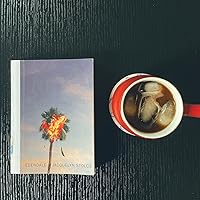
Consumed: Sustainable Food for a Finite Planet
What happens on this planet over the next four decades has the potential to fundamentally alter life as we know it. The world population is expected to reach nine billion people by 2050- that’ s nine billion hungry humans in need of food. The challenge of feeding this rapidly growing population has already been made greater by climate change, which will wreak havoc on the way we produce our food. Disruptions to industrial-scale agriculture, along with rising sea levels, will create millions of environmental refugees, fleeing their homes in search of nourishment and safety. We have also lost touch with the soil- few of us grow our own food or even know where it comes from- and we are at the mercy of the multinationals that control the crops with little foresight about the damage their methods are inflicting on the planet. This puts our very future at risk.
In Consumed, award-winning writer Sarah Elton walks fields and farms on four continents, investigating not only the potential- and very real- threats to our food, but also telling the stories of those who are working hard to preserve our future. From Bogotá to Beijing, Delhi to Rome, Nairobi to Toronto, people from all walks of life are creating an alternative to the industrial food we have grown accustomed to piling into our shopping carts, and in the process giving us hope not for a daunting future but for a future in which we can all sit at the table.
In Consumed, award-winning writer Sarah Elton walks fields and farms on four continents, investigating not only the potential- and very real- threats to our food, but also telling the stories of those who are working hard to preserve our future. From Bogotá to Beijing, Delhi to Rome, Nairobi to Toronto, people from all walks of life are creating an alternative to the industrial food we have grown accustomed to piling into our shopping carts, and in the process giving us hope not for a daunting future but for a future in which we can all sit at the table.
360 pages, Kindle Edition
First published January 1, 2013
About the author
Sarah Elton
4 books7 followersSarah Elton is an award winning and bestselling author and journalist.
Sarah has written four books and edited one anthology. Locavore: From Farmers’ Fields to Rooftop Gardens, How Canadians Are Changing the Way We Eat and Consumed: Food for a Finite Planet both explore sustainability and our food.
Her latest book is for young people and is titled Meatless? A Fresh Look at What You Eat.
The first book she worked on is an anthology of writing titled City of Words: Toronto Through her Writers' Eyes.
Visit Sarah online at sarahelton.ca or on twitter @SarahAElton.
Sarah has written four books and edited one anthology. Locavore: From Farmers’ Fields to Rooftop Gardens, How Canadians Are Changing the Way We Eat and Consumed: Food for a Finite Planet both explore sustainability and our food.
Her latest book is for young people and is titled Meatless? A Fresh Look at What You Eat.
The first book she worked on is an anthology of writing titled City of Words: Toronto Through her Writers' Eyes.
Visit Sarah online at sarahelton.ca or on twitter @SarahAElton.
Ratings & Reviews
Friends & Following
Create a free account to discover what your friends think of this book!
Community Reviews
Displaying 1 - 17 of 17 reviews

October 26, 2017
Fascinating global look at food. Ultimately hopeful.
March 27, 2014
My knowledge of the agriculture industry is extremely rudimentary, having only read a few non-fiction introductions to the industry, as well as texts regarding food waste, local growing, and supply chains. I believe the issue of food scarcity, population, and starvation are quite serious topics that tend to be lost in the shuffle of safety, weaponry, politics, and inward-facing domestic issues, which cause the average consumer to shelve the issue in the face of more tangible threats. Like a lurking medical issue, this will compound until we are socially and politically pursuing reactive solutions rather than proactive, or actually preparing for the tipping point.
Why is this information so difficult to find? We do not see these problems on headlines except in passing, and it is consistently portrayed as an outburst by the scientific community, crafted as an overreaction. How have we allowed these changes in the industry to crawl under our skin and shape our entire perspective on food, and where it comes from? This book is a wake up call to the dangers in our agricultural industry and food supply, and I guarantee it can be tied to several other social problems that, while outside the scope of Elton's works, reveal the fundamental issues shaking the foundations of a modern society. Is collapse on the horizon? I could not answer that; I do not have the knowledge of the industry to make any sort of claim or prediction. What I do believe is that the way we are engaging with our food will reach a tipping point, if it has not already. Local growing, reducing food waste, and investing in microfarming and grassroots efforts in organic farming are all viable options that are gaining traction. However, we all can recognize the enormity of the food processing giants and seed distributors. What I find most disturbing about these trends, and the tight concentration of power in the industry, is that ultimately the people that patent techniques and technologies are effectively allowed to determine the fate of thousands and millions and lack any moral scruples about it. It is not much different than the medical industry, not required to necessarily share cures and ideas, leaving people who cannot afford expensive, "new" or "trial" treatments to wither.
As much as we would like to confine this issue to households, and be able to break it down by demographics and use it as a marketing tool rather than the jolt and eye-opening social issue it should be . . . agriculture plays a part in the cycle of any society, third- or first-world, developing or in transition, or post-modern, as the United States may be called at this point. Only by accepting that we will have to turn to our neighbor, to our community, and create a new network for a pressing social issue, and make it a priority in our lives, can we take steps to reverse the disturbing trends in the industry and REALLY find out where our food comes from.
Why is this information so difficult to find? We do not see these problems on headlines except in passing, and it is consistently portrayed as an outburst by the scientific community, crafted as an overreaction. How have we allowed these changes in the industry to crawl under our skin and shape our entire perspective on food, and where it comes from? This book is a wake up call to the dangers in our agricultural industry and food supply, and I guarantee it can be tied to several other social problems that, while outside the scope of Elton's works, reveal the fundamental issues shaking the foundations of a modern society. Is collapse on the horizon? I could not answer that; I do not have the knowledge of the industry to make any sort of claim or prediction. What I do believe is that the way we are engaging with our food will reach a tipping point, if it has not already. Local growing, reducing food waste, and investing in microfarming and grassroots efforts in organic farming are all viable options that are gaining traction. However, we all can recognize the enormity of the food processing giants and seed distributors. What I find most disturbing about these trends, and the tight concentration of power in the industry, is that ultimately the people that patent techniques and technologies are effectively allowed to determine the fate of thousands and millions and lack any moral scruples about it. It is not much different than the medical industry, not required to necessarily share cures and ideas, leaving people who cannot afford expensive, "new" or "trial" treatments to wither.
As much as we would like to confine this issue to households, and be able to break it down by demographics and use it as a marketing tool rather than the jolt and eye-opening social issue it should be . . . agriculture plays a part in the cycle of any society, third- or first-world, developing or in transition, or post-modern, as the United States may be called at this point. Only by accepting that we will have to turn to our neighbor, to our community, and create a new network for a pressing social issue, and make it a priority in our lives, can we take steps to reverse the disturbing trends in the industry and REALLY find out where our food comes from.

August 2, 2020
Elton has all the smarts of a 10 year old who has read the Reverend Malthus' book. Hopefully, by the time Elton gets 15, he will get to read that although Malthus' research is good, his conclusions were proven wrong before the end of the 19th century.

December 10, 2019
Interesting but super repetitive. It could have been 100 pages shorter and still made its point. But otherwise very informative.

February 11, 2020
my favorite book I read this year! wonderful story telling interwoven in with great facts and ideas surrounding the industrial food system. I recommend it to everyone I meet.
July 18, 2026
3.5 rounded up

December 27, 2013
Anyone concerned about food, our world's increasingly broken and failing food systems, and/or independent farming should read this. Excerpt from the Seeds section, re: traditional vs. chemical rice farming: "High yields have come at a cost. Hybrid rice requires a lot of chemical fertilizers and pesticides, many found. Traditional rice doesn’t like chemicals. If you fertilize traditional varieties with nitrogen to increase yields, the plants tend to topple over under the weight of the larger seed heads. But there are benefits to growing chemical-free that can’t be measured in crop yields. In a rice field where traditional seeds are grown, there exists a whole lot of life, a whole lot of biodiversity. In the water live zooplankton and nematodes and molluscs as well as surface-dwelling insects. Because rice is grown in a wetland, you will also find amphibians, reptiles, fish, and water birds all thriving amid the growing grains, as well as other vegetation. This life becomes food for humans, and the biodiversity offers the farmers the protection of ecological resilience -- if one part of the ecosystem doesn’t do well one year, another is sure to flourish. Compare this with the hybrid rice paddy where chemicals kill all these other life forms and turn the growing area into a monoculture. And monocultures are the opposite of resilient. The ecology of the wetland is thrown out of balance by the chemicals. The pests’ natural predators are killed [by chemical pesticides], and the planthoppers that are resistant to the pesticide multiply in a way that they normally wouldn’t have the opportunity to do. Then the planthopper destroys the crop.

July 7, 2015
Here are some of my favorite clips:
Organic farming creates 30% more jobs.
Implicit subsidies – come from a failure to price things at their true cost. Fossil fuels, pesticides, fertilizers.
Food has a relative inelastic demand curve: everybody needs to eat, and they will buy food regardless of price.
It wouldn’t be good for society if farmers went out of business, so over the last 100 years, governments have stepped in to try to help with this market failure. We have agricultural subsidies. Government pays farmers an inflated price for their products. Developed countries allocate so much of their resources to supporting domestic agriculture that it has been calculated that government subsidies to farmers amount to one billion per day.
About 40% of food grown in North America is wasted somewhere along the food chain. 70% of grains provide in the US are used to feed livestock. Think about these issues before we harp on how “organic can’t feed everyone”.
Without fertilizer we could never have grown from 1.6 billion humans in 1900 to more than 7 billion today. 40% of the protein we ate in the 1990s was due to fertilizers. Without synthetic fertilizer, we would lose almost half of the protein available to humans.
Every living thing on the planet requires nitrogen to grown. Several dozen genera of soil bacteria have evolved with the ability to fix nitrogen. That is, they can break the chemical bonds in the molecule and make nitrogen available to plants so they can use it to fuel growth Legumes, rye, alfalfa all do this.
In 1950, global population was 2.5 billion.
Organic farming creates 30% more jobs.
Implicit subsidies – come from a failure to price things at their true cost. Fossil fuels, pesticides, fertilizers.
Food has a relative inelastic demand curve: everybody needs to eat, and they will buy food regardless of price.
It wouldn’t be good for society if farmers went out of business, so over the last 100 years, governments have stepped in to try to help with this market failure. We have agricultural subsidies. Government pays farmers an inflated price for their products. Developed countries allocate so much of their resources to supporting domestic agriculture that it has been calculated that government subsidies to farmers amount to one billion per day.
About 40% of food grown in North America is wasted somewhere along the food chain. 70% of grains provide in the US are used to feed livestock. Think about these issues before we harp on how “organic can’t feed everyone”.
Without fertilizer we could never have grown from 1.6 billion humans in 1900 to more than 7 billion today. 40% of the protein we ate in the 1990s was due to fertilizers. Without synthetic fertilizer, we would lose almost half of the protein available to humans.
Every living thing on the planet requires nitrogen to grown. Several dozen genera of soil bacteria have evolved with the ability to fix nitrogen. That is, they can break the chemical bonds in the molecule and make nitrogen available to plants so they can use it to fuel growth Legumes, rye, alfalfa all do this.
In 1950, global population was 2.5 billion.
This entire review has been hidden because of spoilers.

February 4, 2016
4.5
Upon first glance this book doesn't look like much. Of course the cover is rather intriguing but if it hadn't been for class I wouldn't have picked this book up and read it all the way through. Even with class I was tempted to leave it only half read. And all I have to say to that is I'm glad that I did not leave it half read.
This book really opened up my eyes about the current food systems in our world. I had always known our system was flawed being an international studies student but aside from the mistreatment of animals (which isn't even covered in this book) and workers I didn't know many said flaws. And before this book I didn't think sustainable farming would stand a chance against the industrial sort.
Now I find myself totally on the side of sustainable farming, as every argument she raised she backed with examples from around the world. And by around the world I mean from every continent save Oceania and South America, not simply Western Nations. It was these examples that gave me the hope that I did not have before, the hope that there is an alternative to industrial farming, even if the entirety of the food system in place today needs to change, because it already is changing.
I wasn't expecting this book to effect me like it did in the end, and to that I must say I'm rather glad it had such an effect on me.
Upon first glance this book doesn't look like much. Of course the cover is rather intriguing but if it hadn't been for class I wouldn't have picked this book up and read it all the way through. Even with class I was tempted to leave it only half read. And all I have to say to that is I'm glad that I did not leave it half read.
This book really opened up my eyes about the current food systems in our world. I had always known our system was flawed being an international studies student but aside from the mistreatment of animals (which isn't even covered in this book) and workers I didn't know many said flaws. And before this book I didn't think sustainable farming would stand a chance against the industrial sort.
Now I find myself totally on the side of sustainable farming, as every argument she raised she backed with examples from around the world. And by around the world I mean from every continent save Oceania and South America, not simply Western Nations. It was these examples that gave me the hope that I did not have before, the hope that there is an alternative to industrial farming, even if the entirety of the food system in place today needs to change, because it already is changing.
I wasn't expecting this book to effect me like it did in the end, and to that I must say I'm rather glad it had such an effect on me.

June 5, 2013
Thursday night. A sharp rap on my door signifies the delivery of a week’s worth of fresh fruit, vegetables, milk, and eggs from Fresh City Farms in Toronto. It feels like Christmas as I pop open the lid of an old wooden wine box to find a new selection of fruits and vegetables – many in-season and locally sourced; some even coming from rooftop gardens in Toronto. Last week, I received fresh basil, Swiss chard, celeriac, and fennel, amongst other items. Thursdays are quickly becoming my favourite day of the week.
After reading Consumed: Sustainable Food for a Finite Planet by Sarah Elton, my appreciation for my weekly fruit and vegetable box from Fresh City Farms has grown significantly. Elton describes Fresh City Farms as an important player in the new peasant movement: people who produce food on their own land and sell it however they choose.
Read the rest of Keriann's review here at the Savvy Reader.
After reading Consumed: Sustainable Food for a Finite Planet by Sarah Elton, my appreciation for my weekly fruit and vegetable box from Fresh City Farms has grown significantly. Elton describes Fresh City Farms as an important player in the new peasant movement: people who produce food on their own land and sell it however they choose.
Read the rest of Keriann's review here at the Savvy Reader.
June 25, 2014
Good survey of the issues involved local and regional food systems that have been decimated over the last several decades. We are now left with thriving international and national food systems, but we often have a hard time getting food produced locally, say within a few hundred miles, to populations who want to consume them. If you care about eating good, healthy, nutritious food, or if you care about food security, or if you want to help money stay in your area rather than sending it to large corporations, then read this book. Pay attention to the quality of the food you consume, celebrate the farmers who produce it, and become more in tune with nature and seasons.

May 20, 2013
A decent book on the case for small, sustainable, biodiverse, heritage etc. There are some decent facts and the book is well written. However, I read a lot of stuff about agriculture and food, and I felt the author clearly had an agenda here. I'm not disagreeing with her findings, but I know that there are other opinions out there too.

October 27, 2015
I saw Sarah Elton interviewed by Steve Paikin on The Agenda. This book certainly goes a long way to educating oneself on the topic of the industrial food system, and how we ended up where we are today - at risk of losing our food diversity and security. Learned a lot and re-committed to eating clean and supporting local farmers.

August 4, 2013
A solid read for anyone interested in food, farms, and sustainable growing issues. A nice compliment to Elton's previous book, Locavore. I would have liked for some sections to have gone more in-depth, like the chapter on urban farming in Detroit, but overall, a thumbs up.

May 16, 2014
Definitely worth the read. I learnt so much about so many grassroot projects that are trying to redeem the current failing food system. If you have you questions about today's food and want know more about alternate efforts this book is for you.
January 9, 2014
The global food system has to change if we want to survive.

January 4, 2016
An enjoyable read overall. She has a balanced writing style that I appreciate, analyzing more than a single side of the complex discussion around food.
Displaying 1 - 17 of 17 reviews