O K Johny's Wayanad Rekhakal unravels the history of Wayanad and its people. It also has legends, photographs, images etc. This book is a major contribution to the local history of Kerala.
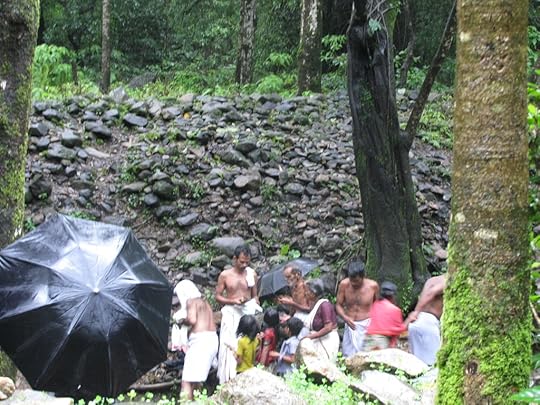
There is a place in northern Kerala called Thirunelli, in Wayanad District, where Hindus go to carry out the last rites of their dear and departed. There is a Vishnu temple and a holy stream called Papanasini("The Destroyer of Sins") where the ashes and bones are inundated: the belief is that once you do it here, yearly remembrance is not required. I also had occasion to visit this beautiful place in 2009, albeit on a sad occasion because both my mother- and father-in-law had passed away within a month of each other on the year before...
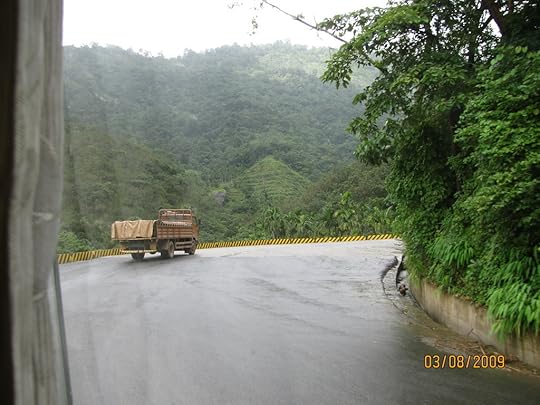
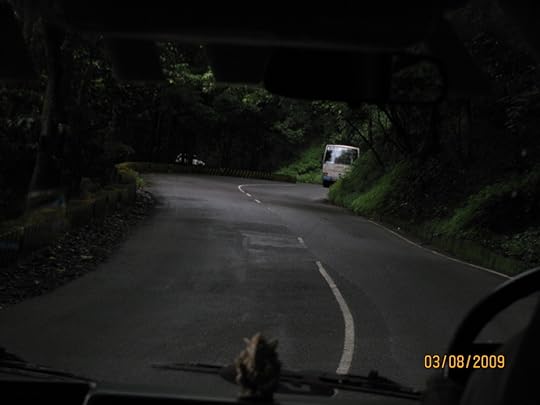
Thirunelli is located on the edge of virgin forest, and the journey was exhilarating.
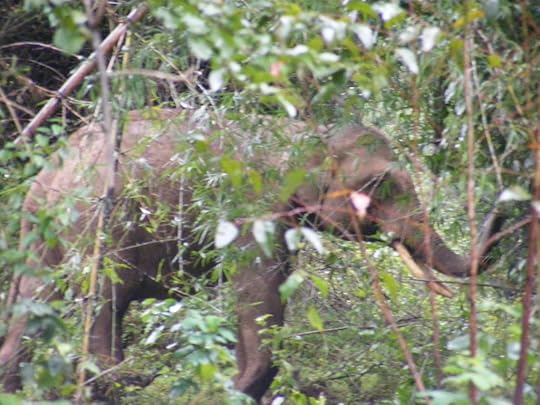
...and a bit frightening, as we met this lone tusker on the way.
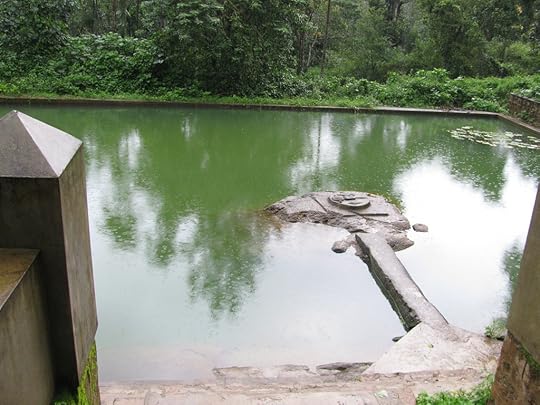
The area is ripe with myths and legends, and the forgotten history of Kerala buried literally in the mountain mists. For example, this the Padmatheertham ("Lotus Pond") where Sita is supposed to have prayed. Her "footprint" is now enshrined in concrete!
The mountain stream of Papanasini is still untouched, even with so many people depositing the earthly remains of their relatives there.
Well, I found a book sale there, near the temple (of all the godforsaken places!) and purchased this book (that is one of the advantages of Kerala - you are never very far from a book). It lay dormant on my shelves for the next six years, to be read only now. This may be a good thing, because I had the chance to look back on my visit to Thirunelli, and my memories provided a nice back-drop to the history and mythology of this beautiful place.
------------------------------------
Wayanad District, which Thirunelli is a part of, is one of the most beautiful and most impoverished areas in Kerala. The tribal people of various communities here are economically and socially backward. They have been continuously exploited - originally by feudal lords, later on by unscrupulous politicians and religious groups trying to swell their ranks - and are currently facing virtual extinction as distinct ethnic groups. O. K. Johnny, a leftist journalist, tries to draw the reader's attention to these marginalised people.
The book is split into three sections plus an appendix. The first part - Charithram (history) - gives a brief account of the history of the region, from the paleolithic cave paintings of the Edakkal Caves to the end of the colonial age. Part two (Puravrittham, "myth") is an overview of various tribal myths. The third part Varthamanam ("the present") is about recent history and sociopolitical issues.
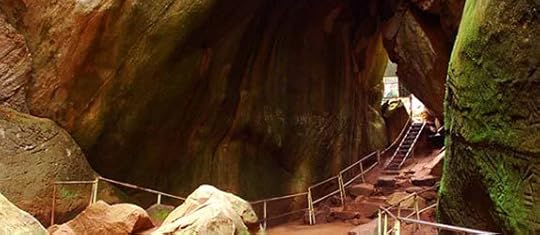
Edakkal Caves
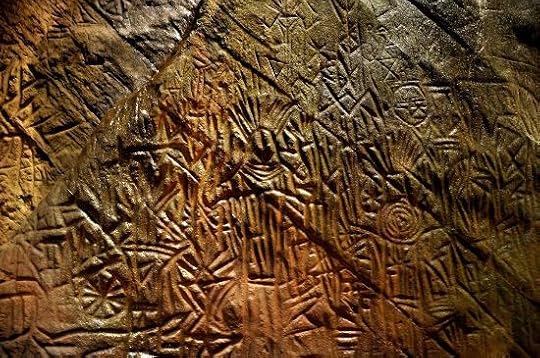
The history of Wayanad is very ancient: it starts from the Edakkal cave located in Ambukutthi hills. This cave, formed by a rock wedged into the mountain face, is filled with petroglyphs depicting human figures, hunting animals and occasional symbols which resemble writing. The antiquity of these caves are supposed to go back to 6000 B.C.E, long before even Dravidians reached here - leave alone Aryans. Fawcett, an Englishman who first explored this cave, has opined that these engravings were made by the ancestors of the current day tribe called the Mullukkurumas. However, there are some inscriptions which are of more recent neolithic origin and go back to only the third century B.C.E.
Chera Kingdoms and the Jains
In the period of Kerala history when the first Chera Dynasty is widely accepted to have ruled (100 B.C.E to 100 C.E), the whole of Wayanad is supposed have been ruled by a king called Nannan. Historians have estimated the actual time of his rule to be during 300 B.C.E. A number of stone sculptures, called "Veerakkallu" depicting warriors, gods and goddesses, which are abundant in the area, is also supposed to be from this period. There is also ample evidence to indicate that Wayanad was a part of the second Chera kingdom.
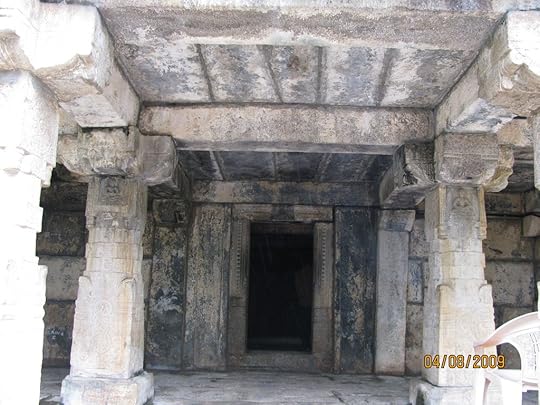
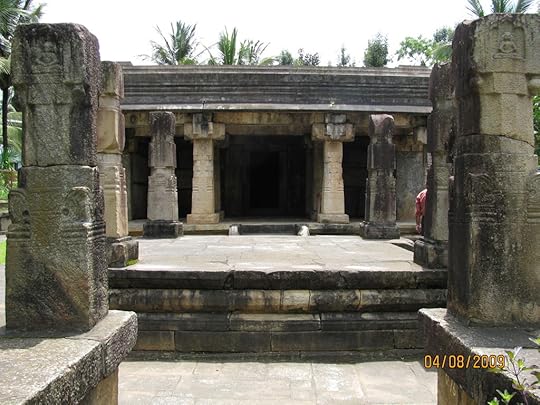
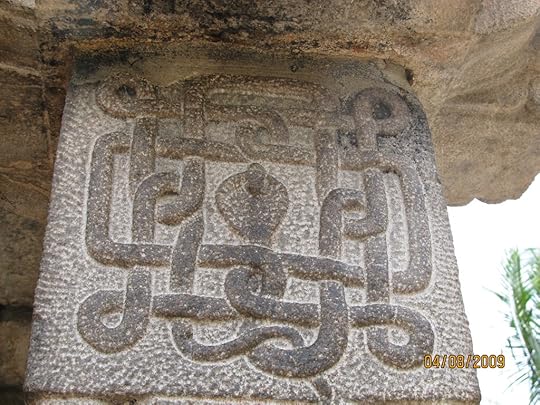
The most intriguing part of Wayanad is the evidence of its Jain past. As a religion, Jainism is virtually extinct in Kerala now: however, a number of Jain temples have survived in the district. Most of the temples are falling into ruin now, except for the one at Sulthan Batteri which is now under the Archaeological Survey of India. We were also fortunate that we could visit it, as it is not a tourist attraction and closed most of the time.
The author speculates that Jain culture must have been widespread in Kerala, until it was assimilated by the more aggressive Saiva and Vaishnava cults.
The Veta Kings
An old stone inscription, contemporary to those in the Edakkal Cave, proclaims that Wayanad was ruled by a Vishnu Varman of the Kudumbiya Dynasty. This non-Kshatriya ruler is the ancestor of the Veta kings who is supposed to have ruled the place for a long time until they were overpowered by the stronger Kottayam and Kurumbranad kings: sadly, no material evidence exists. However, matching legends from the Veta and Kottayam/ Kurumbranad viewpoints (with only the villain of the piece reversed) is evidence to the fact that there is some truth buried here.
According to the Veta version, a princess of their tribe was forcibly married off to one of the vassals of the Kurumbranad king. In a subsequent battle, the Vetas were wiped out. According to the version of the victors, the Veta king tried to marry his daughter to a captive prince of the Kumbala dynasty. The Kottayam/ Kurumbranad kings attacked the Vetas during the marriage ceremony and rescued the prince, and the girl was married off to one of the vassals.
Whatever be the truth, as recorded history takes shape, Wayanad is under the rule of the Kottayam kings. One of them is known to any schoolboy in Kerala and is a glorious icon of India's fight against colonial rule: Pazhassi Raja, the "Lion of Kerala".
Pazhassi Raja
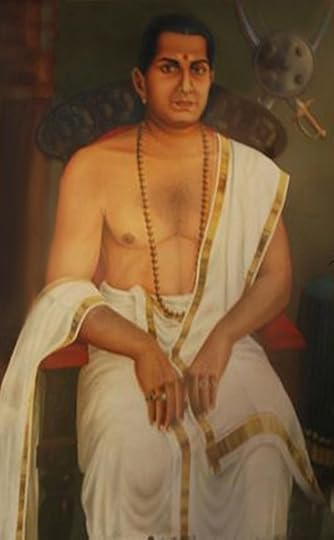
Veera Kerala Varma Pazhassi Raja, belonging to the Kottayam Royal family, is best known for carrying out a guerrilla warfare against the East India Company in the Wayanad hills and forests, aided by his loyal band of tribal warriors. He fought bravely for five years before getting killed in a pitched gun-battle. He, along with his loyal band of warriors such as Kaitheri Ambu, Edachena Kunkan and Thalakkal Chanthu (a tribal), are the stuff of legend in Kerala: as recently as 2009, a blockbuster movie was released based on his story.
According to Johnny, however, the Raja was a bit of an opportunist. He says that he first took the help of the East India Company to fight the invading Tipu, then took Tipu's help to fight the Company - he went to war only when forced to the wall. Although I agree that the king's image might have been romanticised a bit, I believe that the people really loved and stood behind him. I suspect that the author's leftist ideology may have influenced his view on the Raja, who after all, belonged to the feudal culture.