Not to be confused with the film The Last Time I Saw Paris, which was based on the short story Babylon Revisited by F. Scott Fitzgerald.
Elliot Paul was an American journalist who served in Europe during the First World War and made his home in Paris for the inter-war period. As well as working as a stringer for the Chicago Tribune, he was a central figure in the anglophone literary scene in Paris, co-founding an experimental modernist literary magazine, transitions, which published Sam Beckett, Robert Graves, Kafka and Gertrude Stein between covers by Picasso, Miro, Kandinsky & Man Ray.
The rue de la Huchette, where Paul lived, is called the Latin Quarter because of its proximity to the Sorbonne University. At one time it really was a place where the students hung out, but no more. Because it has become so touristy, the students have moved their extracurricular activities a few blocks away. This wonderful street and these people that Paul loves and brings to life for us are destroyed by the Nazi occupation of Paris during WW II.
Wade lived on the fifth floor of a tiny house on the rue de la Huchette, three rooms with a window looking out over all the tourist bars and kebab shops and close enough to the river that the bells from Notre-Dame woke him from his hangover every morning. He was in his seventies and had to pause every three steps to catch his breath when he was climbing the stairs. He had a Chicago accent and a white beard and he wore a long mac with disposable cameras in the pockets, except when he was at home, when he wore nothing except his underpants, and that was only the first problem I had with him offering to be my landlord.
I'd had one other offer of a flat, living with a Polish girl on Montorgueil who'd come to Paris to do some modelling…and looking back, I realise what a deeply foolish decision I made turning her down in favour of an American pensioner, but it was those early days when getting any estate agent in Paris to accept my money felt like a laughably hubristic ambition, so when Wade sniffed under his moustache and said he'd let me have the spare room with a month's downpayment, I handed over a roll of notes and felt lucky.
It was all transacted in a hurry because Wade that day was getting ready for a second date with someone he'd met on Craigslist after posting an advert which read: ‘Septuagenarian American artist still searching for his muse’, a cryptic offer which, inexplicably, had prompted a twenty-two-year-old Moroccan girl to ring him up the next day. ‘She likes me to lick her where the Lord God split her,’ Wade told me as he showed me my room. ‘Man, it's the best fuck of my life.’ It was a bit alarming, seeing a kindly-looking old man come out with this stuff – like finding out that Captain Birdseye was on the sex offenders register.
It wasn't the most luxurious lodgings I've ever stayed in. My room was missing a few amenities including, crucially, any interior walls or doors – instead, there was just a translucent curtain nailed to the ceiling to separate my area from the corridor which ran between the front door and the toilet. It was less a room than a concept, a shared act of faith. My bed was a large baggy mattress whose intricate network of multicoloured stains could have been used as the map for a long series of epic fantasy novels. Sometimes, at night, lying in bed, I would see through the curtain Wade's shape shuffling down the corridor to the loo, like an unimaginative but surprisingly frightening shadow-theatre.
Wade had retired years ago and lived a precarious existence in the Latin Quarter funded by hand-outs from the French government, a tiny pension from the US, and whatever he could bring in by renting out his spare room. In tough months, he would rent out both rooms and just sleep in the kitchenette, which was one reason among many why I never cooked in the flat. He was full of moneymaking schemes which never quite happened: hiring himself out as a guide, temping as a computer journalist, teaching French through the medium of musicals, and writing a hit one-man play about Joan of Arc were all ideas which he tried out but which, sadly, never seemed to come to much.
He was particularly keen on photography, went everywhere with a camera round his neck and stalked the Luxembourg Gardens, rain or shine, assessing the conjunctions of trees and joggers for potentially marketable shots. He could spend a whole afternoon waiting for the sunlight to strike the Seine just so, or all of a lunchtime in the Bouteille d’Or trying to take pictures up my fiancee's skirt from under the table. In general his idea of a well-exposed shot was one in which a female subject was well exposed.
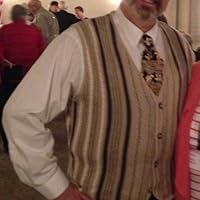
Wade was the only man who knew how to get a free lunch in Paris. On Sundays he took a dusty 1960s-era suit from a box under the sink, looped a black tie around his neck, crossed the Petit Pont, and climbed over the fence of the old people's home behind Notre Dame. They held a formal roast every Sunday lunchtime and he realised he could join the diners through the simple expedient of dressing up and occasionally dribbling over himself as he ate.
He read a lot, too, picking up countless bargains from the riverside bouqinistes on summer afternoons, and it was thanks to his recommendation that I got turned on to this book by Elliot Paul, my favourite evocation of Paris during the Second World War and one of the greatest books ever written about this city. It is set in the rue de la Huchette, where we lived, and after carefully cross-referencing and collating all the comments Paul makes about his apartment, Wade and I were able to work out that he may well have lived in the same building as us – certainly no more than one or two houses away. And, looking around, I suspected that little renovation had been conducted in the interim.
When I told Wade I was leaving he looked pained, and confused, then nodded wisely, cast around the detritus on his desk, and handed me a battered paperback copy of Atlas Shrugged. ‘Buddy in California sends me a shipment now and then,’ he said. ‘Open it.’ I flipped the cover, to find that the central pages had been cut away – oh yes! – to reveal a hidden recess within which Wade's nameless correspondent had fitted a slab of hash the size and shape of a Cadbury's Fruit & Nut bar. I sat with him to help celebrate my new lodgings and his new search for a tenant, and a couple of hours later when Ayn Rand was more or less empty and we were seeing the funny side of everything, we walked down a few blocks to a Vietnamese and drank Bia Hanois and Wade told me about the night in '72 he got drunk with Henry Miller in Big Sur, and about a girl, about the girl, and a child he had, somewhere in Malaysia, that he wasn't allowed to see.
And afterwards he caught the bus home but it was a warm night and I decided to walk, getting there somehow before he did and standing at the corner, full of Parisian Weltschmerz, or THC at any rate, watching the river rubbing its back against the moonlight. I don't know where he'd been, but it wasn't till nearly an hour later, when I was in bed, that I heard Wade coming in the courtyard five flights down, and our building was so old the stairs and landings all seemed to point in different directions, like something designed by MC Escher during a panic attack…and I lay in bed, half drunk, half asleep, listening to him slowly climb: three stairs, and breathe. Three stairs. And breathe.
A detailed 'between 2 wars' memoir by American journalist & novelist Elliot Paul. For Francophiles and social historians. Paul describes the comings-goings of the residents on one small street: rue de la Huchette in the Latin Quarter. Here you meet cafe owners, shopkeepers, storekeepers and the Madam who runs a brothel. Paris in the '30s. (The book has no relation to a movie starring Elizabeth Taylor). In the splattered sunlight are a flower maker, an accordian player and the beautiful film actress Hyacinthe whose last letter, as Paris becomes Occupied, reads: "I cannot convey to you the fear that is freezing like paralysis. You know how I wanted to live..." What endures forever, says the author, is the incomparable American toast: "Vive la France, et les pommes de terre frites!"
As described on the back cover, this is a biography of a street that brings to life a cast of characters. It is a wonderful cast of characters and they are brought to life with the most beautiful writing in the most charming (not banal) way. The description also says this is one of the great portraits of an unforgettable city. This is very true. What it doesn't say is this is the best book I've read in a long time and will take pride of place on the shelf of my all-time favorites.
It spans the years between the two great wars of the 20th century, includes a little about the Spanish Civil War because a couple of the characters from the street went there as volunteers. What started out as a charming portrait of great characters evolved into a serious description of what happened when things became difficult. What started out as a very pleasant read turned into a very sad story. The pre-war chapters were difficult for me read because they were so disturbing and I am easily upset. I had no idea that France was so fascist before WWII even began.
It was an unique and welcome experience to read a book about Paris in the 20s and 30s, written by an American, and not populated by all the famous American expatriots. None of them took part in this story except in one paragraph that named many (Hemingway, Anderson, Gertrude Stein, Fitzgerald, etc.) and said that they knew the street and had visited one or other of its restaurants or bars.
I loved many of the characters but had a favorite. I wonder if you will too. I highly recommend this book to anyone interested in Paris, in France, in interesting characters (such as described, in American version, by Sherwood Anderson -- a friend of Paul), in the history of Europe (mostly France but also Spain and the role of England) between the wars, or in beautiful writing.
Elliot Paul was in the thick of the Interwar arts scene, so I am puzzled as to why his books are largely forgotten. His earlier classic, Life and Death in a Spanish Town -- in which he explains the Spanish Civil War through the microcosm of his adopted home, a fishing village in Ibiza -- is what made me want to read this (and you either have to download it as an ebook or get an old library copy from the 1940s).
Like in Paul's earlier work, the road to Fascism is shown through the inhabitants of the tiny Rue Huchette in the Left Bank of Paris (which had yet to attract the kind of American fashionistas that were found at places like Harry's New York Bar and the Ritz Hotel). Thus he got to interact with a real cross section of Parisians while working as a journalist and magazine editor from 1923-1940 (with long interludes covering the Spanish Civil War). By being in the right places at the right time, Paul seems to have made a cottage industry of studying the point at which "people stop being polite and start being real" (to borrow a well-worn cliche).
Needless to say, the similarities to our own era are unmistakable; only instead of Spain, we have Syria. And instead of Daladier, we have "populists" like Trump (and his equivalent elsewhere). "No matter how many Frenchmen voted, or how they voted, the same predatory combination ran the country for the benefit of large employers and speculators on a colossal scale." Thus we see how the former camaraderie on the street morphed into gloating factions, animosity, and violence.
We know what happened to France during the war, but the drama lies in the stories of individuals with whom the author grew intimate.
Elliot Paul's "The Last Time I Saw Paris" is the author's memoir of the time he spent in that city between the two world wars. The first part introduces us to his neighbors on the rue de la Huchette and we get to experience the day to day life of this street of the Left Bank of Paris. The second part consists of letters sent to him in Spain, covering the civil war, by those friends and neighbors. The last parts show us how the rising fascist tide and growing Nazi menace affect the relationships between these same people who used to get along but grew apart due to differing political views. You will certainly feel for these people, develop favorites and ultimately get emotionally attached as their way of life is forever changed by circumstances out of their control or influence.
My only criticism would be the sections dealing with explaining the differences between Communism, Socialism, Social Democracy, etc. Had I read this in younger days when I was less politically aware, these bits would have been more educational and interesting. Now, in the age of Facebook politics, I just wanted to skim through those pages.
Overall, though, highly recommended for the descriptions of people, places and things that are no longer there. Be careful though, the last pages are likely to hit you like a gut punch as we learn the fates of Elliot's friends and neighbors.
I loved this book. It takes you back to the early 1900s to a little street in Paris and describes the residents and their daily life. A lot of humor mixed with sadness, as it takes you up to when the Germans occupied Paris and how that affected these residents.
Rarely do I wish to be another person. But in this instance I wish to be - to have been - Elliot Paul, during his time in post-World War I Paris. The friendships he enjoyed, the city which spoke to him in myriad ways, and all the personal and impersonal history taking place in all the moments in between, he writes about beautifully, creating a euphonious gestalt from out of the chaotic intertwining of numerous lives over numerous years. It is most telling, however, when you are able to read between the lines: through the letters his rue de la Huchette friends send him while he is in Spain (and elsewhere), the book breaks free from being a mere recounting of events and becomes something much more intimate.
I thoroughly enjoyed the time I spent with the residents of the rue de la Huchette, and am glad that I made the impulse decision to buy this book at a library book sale based solely upon a sudden, strange sentimentality toward the book's title.
Once again I find myself deeply indebted to a friend who led me to this wonderful book by Elliot Paul. Paul was a reporter for the legendary New York Herald, and others, who lived a good part of his adult life in a working class neighborhood of Paris centered on the little street of Rue de la Huchette. The tale focuses on the lives of the residents and characters in granular detail, covering a period from the end of World War I into the German occupation of Paris during World War II. He treats his characters with humor and empathy, and then toward the end with sadness as the invading Germans destroy their lives and take over their neighborhood hotels, restaurants, bars, and bordellos.
As the 1930's rolled in and Europe was awash with fears and news of the buildup of war, there was a sort of civil war contested in France between the left wing socialists/communists and the right wing fascists. This simmering hostility was overlaid by the constant bad news coming out of neighboring Spain, where a revolution against dictatorship was being carried out within a human tragedy.
The beauty of this story lies in the characters and the environment of central Paris when life was as normal as it gets in France. The author gives us a feeling for how the French lower and middle classes thought and operated at the time, with humorous accounts of their foibles and weaknesses, as well as snark thrown at low level French bureaucrats and the ultimately the entire government, which is seen as betraying the common people.
The book is well written with a light, entertaining touch at first, then gravitating toward a sorrowful description of the end of life in Paris, as they knew it. Based on this book, my first from Elliot Paul, there is no doubt that I will follow up with another one from him.
The book is divided into three parts: The Post-War Twenties, The Pre-War Thirties, and The Death of a Nation (late 1930s & early WWII). The first part is wonderful, a character study of the residents of Paris's rue de la Huchette, including residents, innkeepers, shopkeepers, prostitutes and indigents. Each character study, and the interactions of these primarily working-class Parisians is absolutely delightful. Slowly, the politics of Paris and France creep in, and though interesting because much of specialized history of the battles between the Right, Center and Left of French politics are unknown to the modern generalist reader, they start to detract from the characters. Because the reporter/author is covering the civil war in Spain, the second part is a combination of epistolary reports from the residents of the rue de la Huchette, and reports from his brief visits back to Paris. This is again entwined with the details of French politics, to a larger extent, and continues in greater detail until the war begins and we learn the sad fate of many of those delightful characters we met in the first part. For the average reader, less interested in the historical politics of France in the 1930s, I would recommend reading the first part, and skimming the rest of the book. Not only because the first part is more light-hearted, but because as later chapters focus as much on the political scene, the writing becomes less energized, drier and repetitive. If I read only the first part, this would be among my favorite nonfiction books.
I really, really enjoyed this book. I can't stop thinking about these silly characters that the writer caricatured so well, and how, outside of this book, they are simply lost to history. It does give you a glimpse into modern political fallout, but more importantly, it puts you into their shoes and into their time very well.
If you like the idea of Hemingway in Paris, but his writing doesn't hit you the right way, you should try this. This is the same Paris but much more vivid and lived in. For the most part the book is cheery and carefree until about the last quarter of it.
Interesting, but not an enticing read…many different friends are mentioned, but quickly moved on from, so it’s hard to keep track of who’s who, but then some aren’t ever mentioned again.
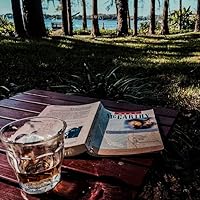
Bought for $1 because of the cover and title, while visiting friends in Dayton, Ohio (08/2022) and then took with me to Paris (stayed within a 15 min. walk of Notre Dame) and started reading in Luxembourg jardin in a green chair.
I really enjoyed this particular book. It took me back to the old world, I c=actually lived in Paris with my husband Marty and my 2 little boys=back then. The memories oh my god it was so nice but also traumatizing. Anyhow I really recommend this book to anyone who hasn't already. The detail and vocabulary is so deep that you feel like you are magically IN THE BOOK!!
This exquisitely written book transports you back to a time and place that no longer exists, taking you on a heart wrenching journey along the way. The characters and their lives jump off the page as you follow them for 18 years in the lead up to WW2. Elements of this book feel increasingly relevant to the world we find ourselves in today.
Like the Alan Brennert series on Hawaii, this book takes you right into the heart of the commoner's world. Paul was an American journalist who lived in Paris between WWI and WWII and wrote like an author. Excellent first person history of all the trials and emotions of the times as Nazism crept
Incredibly well written, heart breaking, brings the humanity of the common French people to the forefront before Word War II. One of the best memoirs I've read although too long for my liking.
This book is a forgotten gem. If you love Paris, especially the Latin Quarter, and want to read about what it was like to live there in the 20's and 30's leading up to WW2, you need to check this one out. It was the best selling book of nonfiction in the first NYT Book Review weekly listing of bestsellers, in August 1942. Recommend.
What a downer! Poor France, poor working-class French men and women. This heart-wrenching fictional account of France from the late 1920s to the beginning of World War II is a must-read.
This is an extraordinary book by a Boston area journalist who lived in Paris on rue de la Huchette, a narrow one time market street in the 6th arrondissement. It might be seen stylistically akin to Theodore White's work in American politics. It has the pulse of daily life, an amazing cast of real characters, and significant issues arising in French, European, and world life, the 2nd world war and colaborationists in particular. A neglected book that will give the reader personalized understanding in this period of our world history .
I bought this book because a friend of mine owns an apartment on Rue De La Huchette, where this story takes place. I enjoyed the descriptions of Parisian lifestyle and culture in the 1920s and 1930s. It was interesting to see what has changed and what hasn't. Unfortunately, the story itself was really slow and I lost interest before long. I chalk this up to being a good history lesson, but can't recommend it.
worst book I have read... ever. got halfway through and gave up. not to be confused with the book of the same name by Lynn Sheene that I gave 5 stars. I am dumbfounded by what book people are reading who have rated it so highly???
Wonderful book! I have never read a book with the French view of WWII. I want to read more about it. Definitely want to read more books by Elliot Paul!