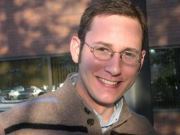
When the Danish newspaper Jyllands-Posten (Viby, Denmark) published the cartoons of the prophet Mohammed nine years ago, Denmark found itself at the center of a global battle about the freedom of speech. The paper's culture editor, Flemming Rose, defended the decision to print the 12 drawings, and he quickly came to play a central part in the debate about the limitations to freedom of speech in the 21st century. Since then, Rose has visited universities and think tanks and participated in conferences and debates around the globe in order to discuss tolerance and freedom. In The Tyranny of Silence, Flemming Rose writes about the people and experiences that have influenced the way he views the world and his understanding of the crisis, including meetings with dissidents from the former Soviet Union and ex-Muslims living in Europe. He provides a personal account of an event that has shaped the debate about what it means to be a citizen in a democracy and how to coexist in a world that is increasingly multicultural, multi-religious, and multi-ethnic.
If I call you fat, and you punch me in the face, who is guilty under the law? What if I call your mother fat and you maim me? What if instead of your mother, I say these things about your god or his prophet? Where is the line now? And who gets to decide when what I've said is insulting enough to make me rather than you the guilty party? You? Me? The law?
Hint: this isn't about fat. It's about fatwa.
This is a book about what happened when a Danish newspaper ran cartoons of Muhammad, including one showing him with a bomb in his turban. But it is about so much more than that. It's about the primacy of freedom of speech among our pantheon of rights and the forces that do not believe in this primacy, but rather in their own right not to be offended--and to retaliate violently against those who, wittingly or not, cause offense. It shows how far and how fast these forces have advanced their cause. And it suggests that those who self-censor out of fear of those forces are legitimizing them. Bad ideas must be criticized, even--perhaps especially!--when they emanate from religion. To insist otherwise in the interest of keeping the peace is a short-term expedient that will yield bitter long-term fruit.
An essential reading on the importance of free speech. Little did the author know how much worse things would get, and at what breakneck speed, in less than 5 short years after he wrote this book. This was a truly depressing re-read.
Do you remember the Danish cartoon crisis? You know those cartoons that were considered so insulting that it made killing people look like a needed solution? Well, this is by one of the editors for the newspaper. I suppose I should say here that freedom of speech is something that I consider important. I think the less said about a certain overly rich man with the initials DT the better, but he has the right to sound like the stupid idiot he is. The book at times is a bit too in detail about some things, though Flemming is as harsh on himself as he is on those who condemned the paper for showcasing the cartoons. But his point is valid – who is to decide what offensive speech is? The book is a look at the freedom of speech issue throughout the world. At the very least, the book is worth reading because it will make you think.
An eloquent book that highlights the importance of free speech in a free society. The timing of the book is propitious considering the recent attacks in Paris and the "they knew what they were doing when they published those cartoons" rhetoric that followed, but the book is actually a response to the "Cartoon Crisis" that took place after a cartoon depicting Mohammad with a bomb in his turban was published in a Danish newspaper. This book makes a far more convincing argument that I ever could against appeasing those who would respond to offended feelings with violence. My favorite line is a quote from human rights activist Natan Sharansky that appears on page 141: "The world can be divided into two kinds of society...free societies and fear societies". Self-censorship driven by fear of violent reprisal or encouraging others to stay silent and blaming them for any violence that follows the expression of their opinions makes our society far less free. I was stunned by the number of people who said that the Charlie Hebdo cartoonists brought the attack on themselves, that Sony shouldn't have made "The Interview", that Flemming Rose and his paper abused their freedom of speech, and that Salman Rushdie should be left to his fate. Instead of blaming those who were threatening the violence and standing up against them, those practicing their right to freedom of speech were vilified and criticized for having "provoked" the violent response. Sometimes I think people are so willing to give up their freedom of speech and admonish others to give up theirs because they've never lived without it and take it for granted. They don't realize that giving up a seemingly insignificant right such as the right to offend religious sentiment leads to much bigger losses in freedom. This book is a perfect summation of why we should protect our freedom of speech at all costs.
I have to say, when this book referenced the Cato Institute in its introduction, I was was leery of reading further, afraid that I would wasting my time with a fact-free, , ideology-only, far-right screed about islam, muslims, and how muslims are violent. Upon reading further, I was pleasantly surprised to find that The Tyranny of Silence is a very well reasoned and well written defense of the fundamental freedom of speech from the editor who commissioned the cartoons of the now notorious 'cartoon crisis.' Though I didn't agree with everything Rose said, the core of the book - the importance of free speech as a core value for democratic societies, and the emphasis on the individual when it comes to translating the internal world of a single person to that person's actions - is an extremely important message that everyone (especially, I am saddened to say, the otherwise liberal left) needs to hear, reflect on, respect, and defend from all who would sacrifice it in pursuit of religious, political, or other ideological agendas, no matter where on the political spectrum they hail from.
When I started Rose's book, I wasn't sure what it would be like. I thought it may be dry, not convincing, and uninteresting, but that couldn't be further from the truth. Last year, Flemming Rose visited my college and students protested his appearance, proving his argument. Nothing Rose says in his book is offensive, he doesn't lay the blame of violence at any specific group's or religion's feet, but he makes a powerful argument for free speech. Written quite a few years ago, Rose identifies problems that are prevalent in today's society and predicts issues that are currently happening, years beforehand. Even if you don't agree with his stance on these issues, it's valuable to read his perspective, especially considering his experience in communist Russia and how he sees history repeating itself.
Given the Charlie Hebdo attacks, this is an extremely timely rationale for free speech from the editor of the Danish newspaper who published a cartoon of Muhammed nearly a decade ago. Since then, he's interviewed people affected by terrorist reactions to the cartoon, and has spoken multiple times about the importance of freedom of speech. I think one can get the gist by reading only the first couple of chapters.
I've long been interested in freedom of thought but hadn't found anything discussing this issue in depth until this book. I found it through a podcast by the Cato institute and decided to read it. Flemming Rose is the person who commissioned the Muhammed cartoons which ignited a debate over freedom of speech which has been raging ever since. The book follows its author as he tries to understand himself and the values he then ends up defending.
Roses first comes to grips with the importance of free speech during his stay in the soviet union where he is confronted with a dictatorship bent on controlling the thoughts of its citizens. Dissidents protesting this violation of human rights clarify a problem for Rose which he had not been entirely conscious of earlier: external restraints on speech lead citizens to censor themselves. Why is this problematic?
One of the people interview in the book, Salman Rushdie, gives a compelling answer: [...] everyone has a right to tell their own story in any which way they wish. [...] From the moment that you begin to talk about limiting and controlling certain expressions, you step into a world where freedom no longer reigns, and from that moment on, you are only discussing what level of un-freedom you want to accept. You have already accepted the principle of not being free" (p. 5) In other words banning speech is one way of controlling who you are as a person and this leads to intolerance. If one cannot accept that we are all different and therefore have different ways of expressing ourselves, then one cannot tolerate other norms than ones own.
Now to the main event: the cartoons. Rose commissioned the cartoons (in 2005) in order to see how much Danes self-censor themselves (as he had heard that few cartoonist were willing to draw Muhammed). He could not foresee the consequences which these cartoons would have and that it would start a discussion which is still very much alive today. The critics of the cartoons say that one should be able to say whatever one wishes as long as one does not offend anyone and since these cartoons are offensive to muslims they should be banned. This is at least one argument put forward (but this begs the question: Who is to decide what is offensive and what is not?). Another way of solving the problem of free speech is through threats and Rose has received multiple threats since 2005. Should one let violence determine the boundaries of our public discourse?
Rose's book has clarified the issue for me and I agree with the following statement:
"Violence is the antithesis of speech. Through speech, we try to persuade others with the force of our ideas. Violence, on the other hand, terrorizes with the force of arms. It shuts off opposing points of view" (p. 62)
The open society is built on a free discourse and free critique of ideas; if individuals lose this opportunity to think freely they will also lose the ability to understand themselves, to search for truth and to escape the ready-made worldview of totalitarian governments.
I would recommend this book to anyone who is interested in freedom of speech or anyone who wants to understand the cartoon crisis better.
Un increíble libro para los que amamos la libertad y abogamos por ella.
La libertad de expresión está hoy bajo ataque constante en un mundo donde cada vez más personas se creen con el derecho a "no ser ofendidos".
Es un libro escrito al estilo periodístico, no cuenta solo la historia del autor, sino muchas otras que permiten una amplia visión de la importancia de la libertad, el costo de obtenerla y las terribles consecuencias de renunciar a ella.
A must read to understand the current epidemic of grievance limitations to freedom of speech. Important are the distinctions between actions and words, and between criticism and calls for violence.
The author is one of the editors at the Jyllands-Posten, the newspaper that printed the Muhammed cartoons that spurred a log way of violence by MUslims who claimed the paper committed blasphemy. Rose explains the original reason behind publishing the cartoons: Authors and illustrators were reporting self-censorship of Muslim images out of fear of violence and backlash. This was occurring upon the heels of the Theo Van Gogh murder. Jyllands-Posten wanted to call attention to the issue of self-censorship, but were caught unaware of how massive and violent the backlash would be, and how craven and cowardly the West would be in caving in to the threats.
Prior to his editorial position, Rose was a reporter in Russia before the fall of the iron curtain, and he compared the tactics of Islamacists and Western governments to be the same as the old Soviet regime in using "hate speech" laws to curtail dissident voices. I would like to think Rose's warning would serve as a wake-up call to the West about how freedom of speech is imperilled, but that is not so. Even after the Charlie Hebdo incident, the drive to curtail free speech has only snowballed.
There are very few books that even attempt to do what this book does so well - tie events to the history of the prevailing ideas held in a culture. The author fully understands that actions are the result of ideas held dear, morality in other words. And while the particular event that gave birth to this book, the publishing of the Danish cartoons mocking Mohammed is central to story, he brilliantly document a multitude of similar situation from around the world. Furthermore, he has a profound understanding of 'freedom of speech', even to the extent of its bloody history as it slowly worked its way into our thinking. He fully understand what has been forgotten by modern society - that there is a profound difference between words and actions, between being offended by an idea and killing the originator of said idea.
Truly a book all of us interested in living in a free society would do well to read.
I finished this the day before the Paris attacks, and though the book felt a bit padded I really respect Rose for standing up for free speech amidst the onslaught of death threats from Islamic extremists and the hate from so-called liberals who employed the soft bigotry of low expectations by claiming Islam was immune from ridicule because "their culture" couldn't handle the same ribbing that Christians, Hindus, Jews, atheists, Buddhists, etc. are accustomed to getting with regularity.
If you don't think you'll read the book, just take this with you,
"We know from history that if we submit to terror and threats, what we do not get is less terror and fewer threats."
No one's belief system is above ridicule, and backing down from terror by making special allowances for a single group is a recipe for things getting worse.
Liked this book a lot, and would have given it five stars except for one important thing: it spent hundreds of pages discussing a few cartoon drawings, and how important it was for there to be freedom to publish them despite offending some thereby, and how doing similar things initially got Soviet dissidents imprisoned but eventually brought down the USSR, yet somehow did not have enough courage in its own convictions to actually include any of the cartoons being discussed.
Because of that omission, I'd intended to give the book only three stars, but found myself so impressed by the rest of the book that I gave it four.
Anyone interested in the freedom of speech versus hate speech rules wars underway on US campuses in recent years will find excellent arguments for defending freedom of speech, including worldwide and historical examples of the consequences of not doing so.
As societies become increasingly multicultural, multiethnic, and multireligious, if we accept the idea that people have a right not to be offended, we will end up with a tyranny of silence, for almost any speech may be deemed offensive. The alternative is to define a minimal set of constraints on freedom of speech necessary for peaceful cohabitation. For me, the line should be drawn at inciting violence, the key issue being a clear and present danger that the speech will be followed by violence.
I was a teenager when the Danish "Cartoon Crisis" arose in 2006. It's still conspicuous in my memory through the movement to boycott Danish products that gained momentum in Pakistan as a result. This books presents the Cartoon Crisis from the perspective of the Cultural Editor of Jyllands-Posten. It highlights one of the most important differences between free and closed societies: in the former you use speech to counter speech, in the later you tell your opponent to shut up.
An important book on how the new Europe is strangled in political correctness. How authorities condemn and blame expressions given under the right of free speech because some groups collectively "are getting hurt" and answers with violence. How Muslim countries in UN are trying to invoke criticism of religion parallel to racism.
He is very passionate about the topic, and he present some compelling arguments. I like his examples the best. I find the work very complete in his defense of freedom of speech. I lack solutions for the "weak", where the strong with plenty of resources uses their freedom of speech to (non-violently) crush the identity, culture, self-esteem or similar of a group they dislike.
Eloquent and impassioned defense of the importance of free speech from the Danish newspaper editor who commissioned the infamous Muhammad cartoons. A timely and important subject, convincingly argued.
Rose approached this topic of using fear to censor those who oppose your ideas as a journalist. The book is engaging, informative and thought provoking.