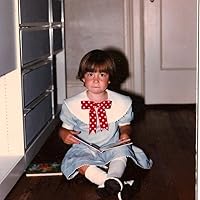
Theodore Ross was nine years old when he moved with his mother from New York City to the Mississippi Gulf Coast. Once there, his mother decided, for both personal and spiritual reasons, to have her family pretend not to be Jewish. He went to an Episcopal school, where he studied the New Testament, sang in the choir, and even took Communion. Later, as an adult, he wondered: Am I still Jewish?
Seeking an answer, Ross traveled around the country and to Israel, visiting a wide variety of Jewish communities. From "Crypto-Jews" in New Mexico and secluded ultra-devout Orthodox towns in upstate New York to a rare Classical Reform congregation in Kansas City, Ross tries to understand himself by experiencing the diversity of Judaism.
Quirky and self-aware, introspective and impassioned, Am I a Jew? is a story about the universal struggle to define a relationship (or lack thereof) with religion.
As a Jew, I found this book pretty intriguing. Within the Jewish community who actually constitutes a Jew is always a question that's up for grabs--and it always depends on who you're talking to, as the author figures out along his own spiritual way.
I appreciated the author's look into more extreme Judaism and 'lost' Judaism--especially the often hidden-under-the-rug Crypto-Jews. I also liked how he chose to look into "Classical" Reform Judaism instead of some of the more traditional Reform and Conservative tracts.
For someone who really does consider themselves to be "Jewish", this book is an interesting look at what 'else' is out there within our "Jewish" community. I'm sure there are plenty of "Jews" out there who haven't heard of many of the groups mentioned in this book.
For those that aren't Jewish, this book could be an interesting look at another culture. Please take as a grain of salt though the fact that this book does not depict a large majority of US Jews (namely, those from more traditional Reform and Conservative sects).
What I would've like out of this book is a little more of the author's story itself; he always seems to gloss over himself and his basic reasons for his own search, and even many of his feelings along his spiritual path. I questioned a couple of times how Theodore Ross was really feeling (if anything) and what he was really feeling. Parts of the book seemed a little devoid of his personal reflection. Given the title of this book, I thought there'd be more about him and a little less about others.
I received this book as a part of GoodReads First Reads program!
I received this book through a Goodreads giveaway.
I myself am not religious, in any sense of the word. Of considerable interest to me however, is the cultural significance of modern religion and the power it has.
Am I a Jew? tells the tale of the author's quest to find his own meaning in his life. The chronicles of his travels are depicted as he experiences what spirituality means to others along with his own reflections. I found Theodore Ross's odyssey to be quite entertaining yet and the same time rather empathic.
Someone who knows nothing of Judaism will have no problem in understanding and stands to gain substantial knowledge. I personally found the reading to be laden with interesting facts such as the requirement for one to belong to a Synagogue for 4 years before you can have your Bar Mitzvah there.
Some points I found particularity intriguing; the book presents the historical aspects of modern day Crypto-Judiasm in New Mexico. It describes how the people searched for these hidden clusters by asking people "if their grandparents ever light candles in the basement" and other similar questions. The story of the author's own, late and rather impulsive, Bar Mitzvah in the home of an Orthodox rabbi who hosted sabbatical youth retreats is a particularly humorous tale of camaraderie and bonding. Through reading you can even catch sight of new age Judaism from groups Ross describes as "Jewish hipsters".
"If Judaism disappears it will be because it has stopped being meaningful for it's target audience," was a strong point that I found to resonate along side my own beliefs, was the aspect that religion can only remain useful when it is still relevant and means something in the lives of those who practice it. As long as people still find importance, and as long as there is a place in people's lives to be filled, religion will never die.
I had only a small idea of what to expect when I received the book, but I'm certainly glad I was able to absorb a small glimpse into Theodore Ross's journey and the culture he searched through.
I've always been highly interested about the Jewsih faith, even though I've always viewed it not just as faith alone, but a whole other lifestyle that was unknown to me in a mysterious and fantastical way. Having never heard of "pintele yid" until reading this book, now I wonder if that is where my fascination has come from.
The first sentence gripped me and I didn't put the book down until I was finished. At first I thought the author's mother to be the typical "villain" of this story, but once I got to the part of her taped interview, I changed my mind. Perhaps she was attempting, in the way some parents do, to shield her children from bigotry and hatred; even though those attempts often have lasting impacts on the lives of the children that are unforseen at the time.
This is a book that I'll read more than once. Not only did it make me smile and laugh, but it made me look inside myself and examine a few things in my own life.
The only question I have after reading it is this: I want to know if the friends of the author's mother picked up this book (you know the author you support them by purchasing a copy, I believe) and have started questioning her? If I knew any authors I'd buy their books just to be supportive and to say "yes, I know the man/woman who wrote this book!"
I received a copy of this book for free through Goodreads First Reads
The world has some preconceived notions about Jews in general. They are thought to be smart, hardworking and rich. With the rising level of anti-Semitism in one’s own mind, other attributes like ‘wickedly clever’ and ‘cheating’ also tumble out of the closet. Jews are themselves conscious of the stereotypes in which they are represented. This creates pressure on them, forcing some to escape notice by resorting temporarily to embrace Christianity and affecting Christian names and practices. Theodore Ross and his mother were Jewish, but she enrolled him in a Christian denomination at age 9 as a precaution during his years of high school education. When he grew up, the author wanted to know about the social persuasions that forced the Jews to act like someone else. This book is a compendium of the author’s thought and travel with this aim in mind. He is the articles editor of Men’s Journal. His journalism and essays have appeared in major newspapers and he lives in New York.
Ross’ analysis of the American Jews flashes up a picture of increasing prosperity in their professional careers, but increased confusion and doubt on the religious and spiritual planes. Others ascribe Jews with smartness in their endeavours, as seen in the long lists of them leading in all walks of life. The amusing factor to note is that some of them appear to have taken this to heart, thinking themselves superior to their fellows. Their spirit of endurance is fabulous, as seen in an old Jewish joke reproduced in the book which says that “They tried to kill us. We won. Let’s eat”! This serves to entrench the notion that Judaism is more of a religion of ethnicity and code, rather than faith in god. Ideas of superiority are dangerous and are equal to anti-Semitism in its reverse context. It prevents the religion from proselytizing which it didn’t do in its entire history. Ashkenazi Jews take pride in their genetic purity. This mental separation shuts off doors of assimilation and inclusion. Ross describes about the full spectrum of religious beliefs in the numerous sects and congregations of Jewish people in America. There are those who follow strict observance of the rules of theological doctrines and adoption of Hebrew as the liturgical language, even though very few of the members understand it. Many Christians in America are in fact crypto-Jews, or at least, descendants of them. When European Jews were forcibly converted to Christianity in the Middle Ages, many secretly maintained their traditions throughout the centuries. The Edict of Grace promulgated during the Inquisition listed a set of practices the crypto-Jews were thought to be practicing, while allowing an option to repent with a minor penance. But contrary to intention, this edict became a manual of Jewish practices that were long forgotten among the converted people, who soon re-adopted them fervently. When they migrated to the U.S., they preserved the peculiar features of their worship at home and evolved into various sects based on their country or city of immigration, like the Skverist Jews who trace their origins to the Ukrainian city of Skvyra.
The book talks about a pronounced difference in the degree of assimilation exhibited by Jewish communities migrated to the U.S. before and after the Second World War. Earlier, they followed the prevailing practice of melting homogeneously to the whole in the great American Melting Pot, letting go of cultural markers like use of Yiddish or Hebrew. But after the war, American society tended to spruce up national unity by way of multicultural diversity. Ross claims that when emptiness of secular life, the insufficiency of materialistic routines and the failure to advance a reason for one’s presence were added to the mindset, the Jews began to display traits of distinctness like increased acceptance of religious symbols like the yarmulke. For the American Jews, faith is rather a culture, a sensibility, a form of humour, an array of tastes, a canon of literature and a philosophy of education, as remarked by the author.
Strange as it may seem, but some denominations of the Jews are sticklers of religious injunctions and archaic rules. Perhaps this steadfastness to religion was the raison d’etre of the continuance of the faith. But it can be amusing to read about some of the observances for Sabbath on Saturdays. Devotees stick to many rules which are incompatible in a modern society. Adherents are proscribed from carrying anything, including keys and one’s own overcoat! Doors remain unlocked for this reason. Any creative activity is shunned as also kindling and extinguishing a fire. The innovative worshipers find ingenious ways to circumvent the restrictions. They won’t use fire in a stove, but an oven can be used. Switching on and off of electrical power is taboo and necessary lighting is kept permanently on, or an electronic timer is used. Tearing of paper is banned, so toilet paper is cut into pieces and stored beforehand. Taboos extend to cleaning, writing, pushing a stroller, carrying a pot, conducting business transactions and spending money. Jewish multi-storey apartments use a clever device to bypass the restriction on electricity to use lifts in the building. The lifts will be pre-programmed to automatically stop at every floor in the building from the beginning of Sabbath with sunset on Friday to its end with sunset on Saturday. The author’s experiences with orthodox practitioners on Sabbath day make interesting reading.
As part of the research for the book, Ross had traveled to Israel as well, and presents a demographic question mark on the influx of Jews from Third World countries to it. The Jewish nation extends a larger than life helping hand to immigrants, with support at all levels. Jews in the Western world feel no compulsion, either economic or religious, to emigrate. The religion and its followers are not in peril in any developed country. The economic affluence of Jews is legendary! But Jewish people in Ethiopia, China, Manipur in India and other developing nations find it rewarding to migrate to Israel for economic reasons. This is in spite of the fact that most of them had already converted to Christianity a century ago, as a result of missionary activity. They have no compunction to convert again – this time to their original faith – when a better opportunity presented itself. Israel allows all Jews to make it their homeland and even permits converts back under the scheme Zera Israel, which literally means ‘Law of Returns’. This allows people of various races to inhabit Israel.
The book is not so easy to read as it is intended solely for an American readership with lots of cultural symbols thrown in the narrative without an explanation of what they are. This makes the reading tough for non-U.S. readers. At the end of it all, one wonders at the purpose of the book. We knew from the outset that the author had a very patchy relationship with Judaism, which remains the same in the end. He has introduced many denominations and congregations in American cities and their curious rituals, but there is no moral lesson, so to say, from this book. Ross should have included a glossary of Jewish terms used. We encounter numerous terms like bar mitzvah, but are clueless about what it means! A commendable thing is that it does not demand sympathy from the readers by extolling the martyrdom of millions of Jews who perished in the Holocaust.
I would give this book three stars, but the research and narration is good and sometimes humorous as told by the author himself. I like how the author narrated his travels and searches, which sometimes had an undertone of pure amazement and other times resentment when encountering a new Jewish group. I did initially think this book was going to be more of a self discovery of becoming a Jew, but, instead is more of a historical/ethnography of Jews within the United States. Possibly the most interesting section of the book was the Crypto Jews of New Mexico, but, I thought this section could have been researched more since it left the listener (and reader) wanting more details.
The book, however, does detail and expose the various groups of Jews within the United States and actually breaks away many misconceptions that protestant Christians or other religions (or non-religious) people may have about Jews. I would recommend this book to anyone struggling with their own religious identity as our author does, and in his own way, comes to peace with it. Shalom!
First of all, I was under the mistaken impression that the author was raised a Christian, not realizing his family was Jewish until later -- not so! His mother insisted that he, she and his brother "pass" as Christians in Mississippi where he moved at age nine; he would visit relatives in New York among whom he was Jewish. Later in the book, he hounds his mom along the lines of "How could you DO that!" I did get into his travel narrative-type description of the congregations he visited, and the families he stayed with; however, he lost me when interviewing folks from Jewish organizations. Overall, I found it well-presented as (nonfiction) journalism, but didn't keep my interest.
I was initially disappointed with this book. I was anticipating something along the lines of A.J. Jacob's My Year of Living Biblically. Once I got past the fact that this book was not going to be a semi-comic look at one man's search for identity, I got really interested in the actual material. The information about the crypto-Jews of New Mexico and Israel's program to reclaim Jews from all over the world is utterly fascinating. This isn't a light read, but it's not hard material--just a bit dry.
This is at once a memoir and a comprehensive study (through first-hand immersion) of Crypto-Jews and other people who discovered their Jewishness or became Jewish through a variety of methods.
While there were some concepts, Ross's desire to represent the whole of Judaism really ended up understanding no one. I found most of his portraits of Jewish life to be shallow and honestly, one that signaled an author who doesn't value women's perspectives. His linking of converts with having or desiring Jewish DNA was both dismissive and harmful and really showcased his lack of consideration for many Jews. Just interesting enough not to DNF, but boy did I get close.
I was skeptical about this book at first but really got into the journey the author took. I felt a connection to the book that I'm sure I'll ponder for some time. A very interesting read.
I had the unfounded expectation that this book would follow its author on a spiritual journey. It didn't. But I think that made it all the more informative. The book is a description of the various encounters/interviews/shabbos dinners/genealogical studies that Theodore Ross engages in as he seeks to answer that eternal question: "Am I a Jew?" I really did learn a lot from this book- Ross tells of Crypto-Jews in the American Southwest, communities of Orthodox in NYC, an old-school congregation of Classical Reformists, and even delves into the complicated processes by which 'lost' Jews in Africa and Asia immigrate to Israel. The picture painted here is that there is no universal definition for what is a Jew. Judaism's unique and sometimes awkward position as an ancient religion that has become for some a culture and for others a political stance is made a little clearer - although, as I think Ross would agree- no one book is ever going to cover the entirety of the Jewish experience (whatever that is). You really feel Ross's discomfort throughout the book. He treats every group with a fair amount of skepticism, and doesn't seek to define himself by any one of those group's definition of 'Jew.' I realized when I put the book down this morning that I had picked it up seeking some kind of confirmation in its pages. I wanted to see Ross embrace Judaism and feel validated in my own identity as a Jew. And Ross does embrace Judaism in the end, if only to come to an understanding that Judaism is not an end at all, but rather a process that can be markedly different for each person who embarks upon it.
Ross begins the book with his own fascinating background: after his parents divorced, his mother moved with him from NYC to Mississippi and told him to hide his being Jewish. From that point on, Ross grew up as a Christian. As an adult, however, he gave up Christianity and set forth to determine if he was a Jew. Ross explores the world of hidden Jews and others who might not know they are Jewish, while at the same time trying to grasp the basics of Judaism and the issues it is dealing with today. Ross's book might be a little too humorous for some, but I think that open-minded observant Jews should find his book fascinating. I will leave it to the reader to discover what Ross eventually decides about his Jewishness and observance, but I will not this: his conclusion is surprisingly, well, Jewish.
Recommended to anyone interested in spiritual journeys, Judaism, or Stephen Dubner's book Turbulent Souls.
let's face it. you saw it on the shelves, and you thought to yourself, "it's only a matter of time before she picks THIS one up." that's right, folks, everyone's favorite culture-shopper is back with more fuel to add to the fire. despite numerous reminders that i am happily living the life of an atheist, i've clearly had one too many shabbos dinner with friends, because i have been given no less than three copies by several suitors/concerned citizens/people that like to see me continually to do predictable things, i have decided to finally let the world poke more fun at me instead of just poking me and begin this book. if anyone is interested in the other two copies, let me know.
Full disclosure: I was close friends with both the author's parents in college and roomed with his father. I recently reestablished contact with his mother who told me about the book.
I found the book interesting on two levels. I learned more about a family that I thought that I had known. When I went to school with the author's mother, she seed to be a typical smart, New York Jewish girl like so many others at Barnard.
I found the descriptions of lost tribes and lapsed Jews fascinating. I had learned about Maronos but knew nothing of Crypto-Jews. I also knew very little about "Lost Tribes" in other parts of the world.
All in all, I found this book an interesting read.
more like 3.5 stars but i rounded up as the author's search does have similarities to mine (In that I'm half Jewish and still unclear where my faith will take me).
There are a few parts that are a little hard to read and the author does come off a little too much as a judgmental New Yorker but, again, this is part of my history too.
I don't think there is much in this book who isn't, at least tangentially, interesting in some of the more interesting aspects of Jewishness in America (with a small digression to Israel).
Fascinating, provocative read about one man's religious investigation
Superbly written, Am I a Jew is part travelogue to particular Jewish homes, people and part memoir by a man struggling to define himself as a Jew. The book falters by focusing so much on extremes in Judaism. One rabbi was so odd and a caricature. I would've liked to have seen more reporting in mainstream Jewish temples. It would've added balance. But read this book. It's wonderful writing and storytelling.
I am NOT a fan of memoirs, and had I even considered it as a memoir before I read it I likely would not have read it. But it contains a ton of interesting information about different perspectives on judaism and the personal reflection is held to a minimum. Just my kind of non-fiction book.
I was attracted to the theme of the book, but I felt disappointed with the unfocused journey he took. A lot of detours that I felt wasn't wall explained or reasoned out. Could have been so much better.