

What do you think?
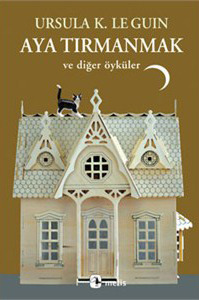
Aya Tırmanmak ve Diğer Öyküler
Bu kitaptaki on sekiz öyküde Le Guin okuru tekinsiz evlere, tekinsiz konulara, zihnin gerisinde fark edilmeyi bekleyen duygulara, hayata tutunmak için verilen ince mücadeleye, bakış açısını azıcık değiştirdiğiniz anda değişiveren gerçeklere yolculuğa çağırıyor.
Durduğu yerde durmayan ücra kasabalardan, kırılmış hayatını toplamaya çalışan yalnız insanların evlerinden, tuhaf ayinlerin yapıldığı yaz kamplarından, kürtaj kliniklerinden, herşeye rağmen doğurulan bebeklerin dünyasından, masal sayfalarından, bilge ormanlardan geçen bu yolculukta, yazarın insani olan herşeye duyduğu tutku, ilgi ve şefkat eşlik ediyor bize. Büyülü gerçekçilikten gerçeküstücülüğe farklı tarzlar denediği bu öykülerde, Le Guin ne kadar güçlü bir edebiyatçı olduğunu bir kere daha kanıtlıyor.
Durduğu yerde durmayan ücra kasabalardan, kırılmış hayatını toplamaya çalışan yalnız insanların evlerinden, tuhaf ayinlerin yapıldığı yaz kamplarından, kürtaj kliniklerinden, herşeye rağmen doğurulan bebeklerin dünyasından, masal sayfalarından, bilge ormanlardan geçen bu yolculukta, yazarın insani olan herşeye duyduğu tutku, ilgi ve şefkat eşlik ediyor bize. Büyülü gerçekçilikten gerçeküstücülüğe farklı tarzlar denediği bu öykülerde, Le Guin ne kadar güçlü bir edebiyatçı olduğunu bir kere daha kanıtlıyor.
207 pages, Paperback
First published January 1, 1996
About the author
Ursula K. Le Guin
1,048 books32.5k followersUrsula K. Le Guin published twenty-two novels, eleven volumes of short stories, four collections of essays, twelve books for children, six volumes of poetry and four of translation, and has received many awards: Hugo, Nebula, National Book Award, PEN-Malamud, etc. Her recent publications include the novel Lavinia, an essay collection, Cheek by Jowl, and The Wild Girls. She lived in Portland, Oregon.
She was known for her treatment of gender (The Left Hand of Darkness, The Matter of Seggri), political systems (The Telling, The Dispossessed) and difference/otherness in any other form. Her interest in non-Western philosophies was reflected in works such as "Solitude" and The Telling but even more interesting are her imagined societies, often mixing traits extracted from her profound knowledge of anthropology acquired from growing up with her father, the famous anthropologist, Alfred Kroeber. The Hainish Cycle reflects the anthropologist's experience of immersing themselves in new strange cultures since most of their main characters and narrators (Le Guin favoured the first-person narration) are envoys from a humanitarian organization, the Ekumen, sent to investigate or ally themselves with the people of a different world and learn their ways.
She was known for her treatment of gender (The Left Hand of Darkness, The Matter of Seggri), political systems (The Telling, The Dispossessed) and difference/otherness in any other form. Her interest in non-Western philosophies was reflected in works such as "Solitude" and The Telling but even more interesting are her imagined societies, often mixing traits extracted from her profound knowledge of anthropology acquired from growing up with her father, the famous anthropologist, Alfred Kroeber. The Hainish Cycle reflects the anthropologist's experience of immersing themselves in new strange cultures since most of their main characters and narrators (Le Guin favoured the first-person narration) are envoys from a humanitarian organization, the Ekumen, sent to investigate or ally themselves with the people of a different world and learn their ways.
Ratings & Reviews
Friends & Following
Create a free account to discover what your friends think of this book!
Community Reviews
Displaying 1 - 30 of 140 reviews

March 18, 2023
At first I thought this may be a 1 or 2 rating. Short stories are different than full length novels, and it took me a while to get used to that. The saving grace is that Ms Le Guin is such an excellent writer. She can take the most mundane everyday thing and turn it into poetry. Her use of language is what finally hooked me, and I did enjoy the 2nd half of the book. In fact, I almost want to go back and reread it with this new point of view.
Her quirkiness is what first drew me to her books. The first I read was The Lathe of Heaven. Certainly quirky, but it impressed me. I read the Earthsea trilogy also, and loved it.
"I reached my lame arms round and took off my pack. I opened it and took out all my dead one by one, the long mother, the step mother, the grand father, the hard father, the heavy, heavy baby, the broken friends, and the bad meat of my love. I laid them on the hearthstones, there where there was no fire in the ashes. That woman looked at them. She clicked her tongue. 'You wisefolk,' she said. 'What burdens you do carry! I don't know how you can stand up.'
Her quirkiness is what first drew me to her books. The first I read was The Lathe of Heaven. Certainly quirky, but it impressed me. I read the Earthsea trilogy also, and loved it.
"I reached my lame arms round and took off my pack. I opened it and took out all my dead one by one, the long mother, the step mother, the grand father, the hard father, the heavy, heavy baby, the broken friends, and the bad meat of my love. I laid them on the hearthstones, there where there was no fire in the ashes. That woman looked at them. She clicked her tongue. 'You wisefolk,' she said. 'What burdens you do carry! I don't know how you can stand up.'

February 28, 2018
Hasta olmak bana yaradı galiba.
Bir ara yorum girerim belki.
Bir ara yorum girerim belki.

October 31, 2020
Eighteen of Ursula K. Le Guin's short stories. Many are experimental. A few I had read previously in The Unreal and the Real: Selected Stories, Volume One: Where on Earth (or Volume 2). Although this was nominated ofr the Pulitzer, nothing of it really stood out for me, as so many seemed to be merely sketches.

January 20, 2022
Enfin. Enfin j'ai découvert la plume d'Ursula K. Le Guin, au travers de ce recueil de 18 nouvelles inédites que les éditions ActuSF m'ont envoyé (mercimerci), et ce fût un pur régal. Voilà pourquoi :
Ursula K. Le Guin est une autrice de nombreux textes sf/fantasy/post-apo/fantastiques (veuillez piocher) et qui a écrit beaucoup de sagas ; je ne me voyais pas me lancer dans "Terremer" ou encore le cycle de "l'Ekumen" sans avoir d'abord découvert son style par une œuvre plus courte. Mon voeu a été exaucé lorsque j'ai lu ce recueil de 18 textes très variés, sorti dans sa langue originale en 1997. Ça fait un bail.
Et pourtant, toutes ses nouvelles sont pleinement inscrites dans notre époque de par leur thématique : en effet l'autrice est anthropologue et on le sent à la lecture de cet ouvrage. Les relations et les personnages sont très bien travaillés, et cela amène des réflexions sur leurs conditions et leurs identités ("Quatre Heures et Demie", "Ruby sur la 67", "Tenir ses positions"). Beaucoup de ses nouvelles font mal au cœur car elles dénoncent des inégalités sociales sur des personnes LGBTQ+, qui sont encore d'actualité ("Saison sèche").
Et ce qui a été surprenant, c'est que l'autrice n'emploie que tardivement le fantastique et plus globalement l'imaginaire dans ce recueil (à partir de la moitié des textes seulement). Pas de sf ni de fantasy ici, mais surtout des textes ancrés dans la réalité.
Après il y a quelques récits fantastiques, dont "Ether, ou", "Le braconnier" et "La grande fille à son papa" qui font partie de mes nouvelles préférées du livre, ainsi que la nouvelle-titre, "La Clef des Airs", qui fait suite aux Chroniques orsiniennes (la seule suite de tout le recueil d'ailleurs), et que je n'ai absolument pas compris pour le coup.
Dans les autres textes, soit l'autrice m'a bluffé par sa propension à détourer la noirceur de l'âme humaine ("Une épouse enfant"), soit elle m'a fasciné par sa justesse et ses messages d'espoirs pour notre espèce dans une réalité qui n'est parfois pas bien belle à voir ("Ruby sur la 67" = gros coup de cœur, "Tenir ses positions", "Saison sèche").
Et à certains moments, Ursula laisse libre cours à sa poésie, et c'est bouleversant ("Dimanche d'été à Seatown", "Créatures de mon esprit") ; est-ce que j'ai parfois pensé à Ray Bradbury dans "Dimanche d'été à Seatown" ? C'est possible ouiouioui.
Alors certes ce n'est pas un immense coup de coeur car certains textes m'ont un peu moins touché, mais là où ce recueil est unifié, c'est par ces thématiques profondes sur notre société qui sont amenées dans chacun des récits, et cette plume qui sublime le tout.
C'est une superbe porte d'entrée dans l'oeuvre de l'autrice et je n'ai qu'une hâte, c'est découvrir plus son œuvre qui me semble être un précieux filon.
Je l'ajoute au podium des auteur.ices qu'il faut que je suive absolument. Très proche de Bradbury.
Ursula K. Le Guin est une autrice de nombreux textes sf/fantasy/post-apo/fantastiques (veuillez piocher) et qui a écrit beaucoup de sagas ; je ne me voyais pas me lancer dans "Terremer" ou encore le cycle de "l'Ekumen" sans avoir d'abord découvert son style par une œuvre plus courte. Mon voeu a été exaucé lorsque j'ai lu ce recueil de 18 textes très variés, sorti dans sa langue originale en 1997. Ça fait un bail.
Et pourtant, toutes ses nouvelles sont pleinement inscrites dans notre époque de par leur thématique : en effet l'autrice est anthropologue et on le sent à la lecture de cet ouvrage. Les relations et les personnages sont très bien travaillés, et cela amène des réflexions sur leurs conditions et leurs identités ("Quatre Heures et Demie", "Ruby sur la 67", "Tenir ses positions"). Beaucoup de ses nouvelles font mal au cœur car elles dénoncent des inégalités sociales sur des personnes LGBTQ+, qui sont encore d'actualité ("Saison sèche").
Et ce qui a été surprenant, c'est que l'autrice n'emploie que tardivement le fantastique et plus globalement l'imaginaire dans ce recueil (à partir de la moitié des textes seulement). Pas de sf ni de fantasy ici, mais surtout des textes ancrés dans la réalité.
Après il y a quelques récits fantastiques, dont "Ether, ou", "Le braconnier" et "La grande fille à son papa" qui font partie de mes nouvelles préférées du livre, ainsi que la nouvelle-titre, "La Clef des Airs", qui fait suite aux Chroniques orsiniennes (la seule suite de tout le recueil d'ailleurs), et que je n'ai absolument pas compris pour le coup.
Dans les autres textes, soit l'autrice m'a bluffé par sa propension à détourer la noirceur de l'âme humaine ("Une épouse enfant"), soit elle m'a fasciné par sa justesse et ses messages d'espoirs pour notre espèce dans une réalité qui n'est parfois pas bien belle à voir ("Ruby sur la 67" = gros coup de cœur, "Tenir ses positions", "Saison sèche").
Et à certains moments, Ursula laisse libre cours à sa poésie, et c'est bouleversant ("Dimanche d'été à Seatown", "Créatures de mon esprit") ; est-ce que j'ai parfois pensé à Ray Bradbury dans "Dimanche d'été à Seatown" ? C'est possible ouiouioui.
Alors certes ce n'est pas un immense coup de coeur car certains textes m'ont un peu moins touché, mais là où ce recueil est unifié, c'est par ces thématiques profondes sur notre société qui sont amenées dans chacun des récits, et cette plume qui sublime le tout.
C'est une superbe porte d'entrée dans l'oeuvre de l'autrice et je n'ai qu'une hâte, c'est découvrir plus son œuvre qui me semble être un précieux filon.
Je l'ajoute au podium des auteur.ices qu'il faut que je suive absolument. Très proche de Bradbury.
January 25, 2016
Okuyalı epey oldu, ama sadece yıldız verip geçmişim. Olmamış :). Hayranı olduğum, ustam olarak gördüğüm bu yazarın bir eserine neden 2 yıldız verdiğimi açıklamak gerek.
Le Guin, benim hayatımdaki dönüm noktalarından biri. Gerçekten saygı duyduğum, sadece kurmacalarına değil, makalelerine ve denemelerine de ayrı bir değer verdiğim bir usta benim için. İsterse yemek kitabı yazsın, yine okurum. Çünkü yazdığı şeylerde tür fark etmeksizin ufkumu açacak ya da beni hunharca onunla tartışmaya sürükleyecek şeyler illa ki olacak. Bu arada, kendisine o denli saygı ve sevgi duyuyor olmama rağmen, biz her zaman hemfikir de değiliz :D. Bu durum beni ayrıca mutlu ediyor, çünkü yazım tarzı nedeniyle sanki karşılıklı tartışıyormuşuz gibi de bir his veriyor.
Ama ben bu kitabını sevemedim. Sevmediğim ilk Le Guin kitabı bu olmuştu. Çıktığı gibi koşarak almış, kısa sürede bitirmiştim. Ancak o alıştığım zekayı nedense bu öykülerde göremedim. Belki de ben yanlış zamanda okudum bu eseri. Belki oturup tekrar okumalıyım, bunlar da ihtimal.
Velhasıl, şu ana dek okuyup da sevmediğim tek Le Guin eseri bu kitap oldu. Öyküler onun standardına göre bir eksikti. Mucizeler yaratan bu eleştirel kadının o sade dilindeki zekayı yeterince hissedemedim. Bu yüzdendir ki 2 yıldız vermiştim kendisine. Belki ileriki zamanlarda tekrar karşı karşıya gelip bu kitaba bir şans daha vermeliyim :).
Le Guin, benim hayatımdaki dönüm noktalarından biri. Gerçekten saygı duyduğum, sadece kurmacalarına değil, makalelerine ve denemelerine de ayrı bir değer verdiğim bir usta benim için. İsterse yemek kitabı yazsın, yine okurum. Çünkü yazdığı şeylerde tür fark etmeksizin ufkumu açacak ya da beni hunharca onunla tartışmaya sürükleyecek şeyler illa ki olacak. Bu arada, kendisine o denli saygı ve sevgi duyuyor olmama rağmen, biz her zaman hemfikir de değiliz :D. Bu durum beni ayrıca mutlu ediyor, çünkü yazım tarzı nedeniyle sanki karşılıklı tartışıyormuşuz gibi de bir his veriyor.
Ama ben bu kitabını sevemedim. Sevmediğim ilk Le Guin kitabı bu olmuştu. Çıktığı gibi koşarak almış, kısa sürede bitirmiştim. Ancak o alıştığım zekayı nedense bu öykülerde göremedim. Belki de ben yanlış zamanda okudum bu eseri. Belki oturup tekrar okumalıyım, bunlar da ihtimal.
Velhasıl, şu ana dek okuyup da sevmediğim tek Le Guin eseri bu kitap oldu. Öyküler onun standardına göre bir eksikti. Mucizeler yaratan bu eleştirel kadının o sade dilindeki zekayı yeterince hissedemedim. Bu yüzdendir ki 2 yıldız vermiştim kendisine. Belki ileriki zamanlarda tekrar karşı karşıya gelip bu kitaba bir şans daha vermeliyim :).

March 7, 2024
This was my first contact with Le Guin's writing, and perhaps I should have started with some of her science fiction rather than this sort of bland collection of short stories. The descriptions are interesting and the woman can certainly write, but I found the stories wanting in urgency and character depth. I read it because it was a Pulitzer runner-up when it came out in 1996.
Perhaps one of my commenters can suggest a better starting point. Earthsea?
Fino's Reviews of Ursula Le Guin
Hainish Cycle
 : Fino Review: https://www.goodreads.com/review/show...
 Fino Review: https://www.goodreads.com/review/show...
 Fino Review: https://www.goodreads.com/review/show...
 Fino Review: https://www.goodreads.com/review/list...#
 Fino Review: https://www.goodreads.com/review/show...
 Fino Review: https://www.goodreads.com/review/show...
 Fino Review: https://www.goodreads.com/review/show...
 Fino Review: https://www.goodreads.com/review/show...
 Fino Review: https://www.goodreads.com/review/list...#
 Fino Review: https://www.goodreads.com/review/show...
Earthsea Cycle
 Fino Review: https://www.goodreads.com/review/show...
 Fino Review: https://www.goodreads.com/review/show...
 Fino Review: https://www.goodreads.com/review/show...
 Fino Review: https://www.goodreads.com/review/show...
 Fino Review: https://www.goodreads.com/review/show...
 Fino Review: https://www.goodreads.com/review/show...
Annals of the Western Shore
 Fino Review: https://www.goodreads.com/review/show...
 Fino Review: https://www.goodreads.com/review/show...
 Fino Review: https://www.goodreads.com/review/show...
Other Novels
 Fino Review: https://www.goodreads.com/review/show...
 Fino Review: https://www.goodreads.com/review/show...
Short Stories
 Fino Review: https://www.goodreads.com/review/show...
 Fino Review: https://www.goodreads.com/review/show...
Perhaps one of my commenters can suggest a better starting point. Earthsea?
Fino's Reviews of Ursula Le Guin
Hainish Cycle
: Fino Review: https://www.goodreads.com/review/show...
Fino Review: https://www.goodreads.com/review/show...
Fino Review: https://www.goodreads.com/review/show...
Fino Review: https://www.goodreads.com/review/list...#
Fino Review: https://www.goodreads.com/review/show...
Fino Review: https://www.goodreads.com/review/show...
Fino Review: https://www.goodreads.com/review/show...
Fino Review: https://www.goodreads.com/review/show...
Fino Review: https://www.goodreads.com/review/list...#
Fino Review: https://www.goodreads.com/review/show...Earthsea Cycle
Fino Review: https://www.goodreads.com/review/show...
Fino Review: https://www.goodreads.com/review/show...
Fino Review: https://www.goodreads.com/review/show...
Fino Review: https://www.goodreads.com/review/show...
Fino Review: https://www.goodreads.com/review/show...
Fino Review: https://www.goodreads.com/review/show...Annals of the Western Shore
Fino Review: https://www.goodreads.com/review/show...
Fino Review: https://www.goodreads.com/review/show...
Fino Review: https://www.goodreads.com/review/show...Other Novels
Fino Review: https://www.goodreads.com/review/show...
Fino Review: https://www.goodreads.com/review/show...Short Stories
Fino Review: https://www.goodreads.com/review/show...
Fino Review: https://www.goodreads.com/review/show...
March 11, 2014
Finally finished this book from my shelf. I think it took so long because some of the stories are bad, so I kept putting it down and forgetting about it, then starting again at the beginning, only to be once again irritated by the first story. Like many stories, "Half Past Four" is almost like a class writing exercise, in that it explores a particular unconventional approach to the short story, in this case the shuffling of the characters (the daughter in one section is the mother in the next etc.). Ugh. Technical, mannered approaches like that leave me feeling cold and distanced from the characters. There were a few worth reading, often those with a near-fantasy element, which I think reflects where the author's true strength lies: "The Poacher," "Daddy's Big Girl," and "Spoons in the Basement."

December 16, 2018
Baska bir yazar olsa uc yildiz verirdim. Yazari cok sevdigim icin icindeki guzel hikayeler hatrina dort yaptim.

February 14, 2012
Of all of the star ratings one can give a book, 3 stars has to be the worst. Maybe not for the author but surely for other readers. 3 stars is far from a negative review, but it's nowhere near a glowing review either. It's ambiguous and generally unhelpful without extensive commentary backing it up, yet who wants to comment extensively on something that they felt so middle of the road about? However, when it comes to anthologies and other collected works, 3 stars actually seems to make sense as the standard. Of course I have read some (like the phenomenal Flannery O'Connor) that just blow me away from start to finish. More often than not though, especially when reading anthologies of stories written by a number of different authors, it's a mixed bag. 3 stars says hey - it wasn't perfect, but there are definitely a few stories more than worth reading in here. That is exactly the case with Unlocking the Air, Ursula K. Le Guin's Pulitzer Prize nominated book of short stories. While not comprised of her normal fantasy and sci-fi , there are still elements of magical realism and fairytale-like fable woven throughout. The 4 and 5 star stories balanced out the 1's and 2's, making this a solid 3 star collection. Hey - it wasn't perfect, but there are definitely a few stories more than worth reading:
Half Past Four
The Professor's Houses
In the Drought
Daddy's Big Girl
The Poacher
Half Past Four
The Professor's Houses
In the Drought
Daddy's Big Girl
The Poacher

May 29, 2023
Jeśli chodzi o nie-fantastyczne teksty Le Guin czytałam "Lavinię" (chociaż tutaj można się kłócić o przynależność gatunkową) i "Malafrenę", a tutaj pierwszy raz formy całkowicie realistyczne, chociaż nie tylko takie są w tomie. Bardzo poruszające są retellingi bajki o Śpiącej Królewnie i mitu o Persefonie. I "Ether, Oregon", opowiadanie o miasteczku, które wciąż się przemieszcza - bardzo w duchu "Night Vale" i "Alice isn't dead", jak ich zacny przodek, opowieść o kraju definiowanym przez ogrom terenu, jaki zajmuje, otwarte przestrzenie. Teksty są intrygujące i jak zawsze spotkanie z Le Guin jest wspaniałą przygodą.
April 11, 2013
It's genuinely just about impossible to rate short-story collections, isn't it? They're such a mixed bag, and so subjective in quality, even from the best authors. And this is another instance where I wish Goodreads allowed half-stars; this book occupies the 3.5-star territory in my mind, or even maybe 3.75.
Stories I liked a lot (*=favorite):
--"Half Past Four"* (interesting to see that reviews are so divided on this; some people love it, and some people thought it was dull/confusing/pointless/poorly executed)
--"The Professor's Houses"
--"Ether, OR"
--"Unlocking the Air"
--"Daddy's Big Girl"
--"Olders"*
--"The Poacher"*
Stories I didn't love, but that were still involving and atmospheric:
--"The Spoons in the Basement"
--"In the Drought"
--"A Child Bride"
Stories I found interesting but problematic:
--"Standing Ground" (particularly taken together with "Half Past Four")
Mostly forgettable:
--"Ruby on the 67"
--"Limberlost"
--"The Creatures on My Mind"
--"Sunday in Summer in Seatown"
Those odd little fables/fragments/"psychomyths" (as she calls them in the introduction to The Wind's Twelve Quarters) that Le Guin sometimes writes that really just aren't my bag:
--"Climbing to the Moon"
--"Findings"
--"The Wise Woman"
I continue to find Le Guin's sff-genre stories more compelling than her (marketed-as-)"mainstream" stories, and the more magical-realistic her mainstream work is, the more I tend to like it.
Stories I liked a lot (*=favorite):
--"Half Past Four"* (interesting to see that reviews are so divided on this; some people love it, and some people thought it was dull/confusing/pointless/poorly executed)
--"The Professor's Houses"
--"Ether, OR"
--"Unlocking the Air"
--"Daddy's Big Girl"
--"Olders"*
--"The Poacher"*
Stories I didn't love, but that were still involving and atmospheric:
--"The Spoons in the Basement"
--"In the Drought"
--"A Child Bride"
Stories I found interesting but problematic:
--"Standing Ground" (particularly taken together with "Half Past Four")
Mostly forgettable:
--"Ruby on the 67"
--"Limberlost"
--"The Creatures on My Mind"
--"Sunday in Summer in Seatown"
Those odd little fables/fragments/"psychomyths" (as she calls them in the introduction to The Wind's Twelve Quarters) that Le Guin sometimes writes that really just aren't my bag:
--"Climbing to the Moon"
--"Findings"
--"The Wise Woman"
I continue to find Le Guin's sff-genre stories more compelling than her (marketed-as-)"mainstream" stories, and the more magical-realistic her mainstream work is, the more I tend to like it.

November 29, 2023
J'aimerais commencer en lançant quelques pierres à l'édition (que j'aime habituellement).
La quatrième de couverture parle d'un recueil de 18 nouvelles de "science-fiction, d'imaginaire, de fiction spéculative et de fantasy".
C'est faux. Je me demande s'ils ne l'ont simplement pas lu, ou s'ils ont sciemment menti en se disant des nouvelles réalistes de Ursula Le Guin, ça ne vendrait pas.
Mais le manque d'amour se ressent dès la préface de trois pages, écrite par le directeur de collection. Elle se résume à : "Un jour j'ai envoyé mon premier roman à Ursula Le Guin et elle m'a envoyé une lettre de réponse pour me remercier. Quelle grande dame!"
Quelle perte d'espace!
Mais bon, parlons du livre maintenant. Il s'agit de nouvelles réalistes, riches en dialogues et en exercices de style. La plupart sont en huis clos, nous sommes dans l'intimité, dans la fragilité des personnages. J'ai eu de la difficulté à comprendre certaines d'entre elles.
On reste dans les thématiques féministes. On y parle de maternité, de charge mentale, d'inceste. La plupart des nouvelles sont des études de personnages.
Mais au final, pour moi, c'est une déception. Je sens que j'aurais pu apprécié si j'avais su dans quoi je m'embarquais, et que j'avais pu attendre d'avoir envie de lire un livre de ce genre.
Mon intention demeure toujours de lire l'intégralité de l'œuvre de Le Guin.
Bref : soyez avertis :)
La quatrième de couverture parle d'un recueil de 18 nouvelles de "science-fiction, d'imaginaire, de fiction spéculative et de fantasy".
C'est faux. Je me demande s'ils ne l'ont simplement pas lu, ou s'ils ont sciemment menti en se disant des nouvelles réalistes de Ursula Le Guin, ça ne vendrait pas.
Mais le manque d'amour se ressent dès la préface de trois pages, écrite par le directeur de collection. Elle se résume à : "Un jour j'ai envoyé mon premier roman à Ursula Le Guin et elle m'a envoyé une lettre de réponse pour me remercier. Quelle grande dame!"
Quelle perte d'espace!
Mais bon, parlons du livre maintenant. Il s'agit de nouvelles réalistes, riches en dialogues et en exercices de style. La plupart sont en huis clos, nous sommes dans l'intimité, dans la fragilité des personnages. J'ai eu de la difficulté à comprendre certaines d'entre elles.
On reste dans les thématiques féministes. On y parle de maternité, de charge mentale, d'inceste. La plupart des nouvelles sont des études de personnages.
Mais au final, pour moi, c'est une déception. Je sens que j'aurais pu apprécié si j'avais su dans quoi je m'embarquais, et que j'avais pu attendre d'avoir envie de lire un livre de ce genre.
Mon intention demeure toujours de lire l'intégralité de l'œuvre de Le Guin.
Bref : soyez avertis :)

February 3, 2018
Holy moly.
October 16, 2023
Ursula K. Le Guin is one of my top 3 favorite authors of all time. Full stop. So this is the toughest 3 star review I’ve ever given. It’s a collection of her more grounded, realism based stories—a contrast to her usual dystopian, sci-fi, or fantasy based writing. Like most short story collections, this one has hits and misses. The highs here are extremely high, and the lows are extremely low. Here are some highs, in my opinion. “Standing Ground,” about a teenager accompanying her cognitively impaired mother to an abortion clinic, hit me hard. I won’t forget it. “Half Past Four” is a masterclass on creating completely different stories with the same character templates. “Daddy’s Big Girl,” and “The Poacher” are both unique takes on popular fairytales—anything more would border on spoiler territory.
The rest ranged from ok to fragmented pieces of stories that felt more conceptual than ready for publication, but what do I know? I’m just some guy on Goodreads.
The high points saved me from outright not liking the book, so 3 stars, an OK rating feels appropriate.
The rest ranged from ok to fragmented pieces of stories that felt more conceptual than ready for publication, but what do I know? I’m just some guy on Goodreads.
The high points saved me from outright not liking the book, so 3 stars, an OK rating feels appropriate.

April 18, 2024
Une lecture nébuleuse.
Pour commencer, la quatrième de couverture vend un recueil axé sur la SF et l’imaginaire. Mais pour ma part, je qualifierais plutôt la majorité de ce que j’ai lu comme du réalisme.
Il y a des touches d’imaginaires, mais globalement peu présentes.
Ce n’est pas une mauvaise chose : c’est juste que je suis tombée des nues pendant ma lecture, parce que je ne m’attendais pas à ça.
Non, ce qui m’a posé problème c’est que je n’ai pas tout compris : je n’ai même pas compris grand chose. Les premières nouvelles en particulier m’ont complètement perdue, donc la lecture démarrait mal.
J’ai bien senti qu’il y avait quelque chose, un discours derrière tout cela, mais je suis passée complètement à côté.
J’ai bien apprécié les nouvelles « Éther ou », « La clef des airs », « Anciens » et « Le Braconnier », et c’est tout ce que je peux dire, sur 18 nouvelles.
Je ne doute pas que ça puisse plaire à d’autres, mais ce n’est pas pour moi.
Pour commencer, la quatrième de couverture vend un recueil axé sur la SF et l’imaginaire. Mais pour ma part, je qualifierais plutôt la majorité de ce que j’ai lu comme du réalisme.
Il y a des touches d’imaginaires, mais globalement peu présentes.
Ce n’est pas une mauvaise chose : c’est juste que je suis tombée des nues pendant ma lecture, parce que je ne m’attendais pas à ça.
Non, ce qui m’a posé problème c’est que je n’ai pas tout compris : je n’ai même pas compris grand chose. Les premières nouvelles en particulier m’ont complètement perdue, donc la lecture démarrait mal.
J’ai bien senti qu’il y avait quelque chose, un discours derrière tout cela, mais je suis passée complètement à côté.
J’ai bien apprécié les nouvelles « Éther ou », « La clef des airs », « Anciens » et « Le Braconnier », et c’est tout ce que je peux dire, sur 18 nouvelles.
Je ne doute pas que ça puisse plaire à d’autres, mais ce n’est pas pour moi.
July 30, 2021
Ursula LeGuin is an artist. Sometimes in her science fiction that fact gets overshadowed by her extraordinary world-building, but in this collection, none of which is set in space, her artistry is free to shine.

March 1, 2024
For this collection, Le Guin compiled her stories from the 1980s and 90s that aren't science fiction. I didn't realize that when I checked it out from the library, but I was glad for the opportunity to read a different side of her work. Unfortunately, I wasn't that taken with most of the stories. I don't want to pin my disappointment on the lack of scifi, because I'm happy to read realistic fiction, and many of these stories aren't entirely grounded in reality anyway. But my sense after reading them was usually that something was lacking, either in the follow-through of an intriguing setup or in my understanding of the point. The writing is great at a sentence and paragraph level, of course, and Le Guin develops some good characters and relationships, but I wanted more from these stories.
The opener, "Half Past Four", was one of the most interesting to read: In each scene, a set of recurring characters are remixed into different versions of lives and relationships to one another. I enjoyed figuring out all the pieces of each iteration, but the ending left me feeling like I didn't get it, a recurring experience with this collection. The most effective story for me was "Standing Ground", which depicts a tense situation at an abortion clinic from different points of view, though I was also confused by the abruptness of that ending. "Ether, OR" is about the relationships between residents of a small town that doesn't remain in a fixed location. The characters are strong, and the premise is a fascinating one, but I was surprised it mostly provides background flavor more than it impacts the events.
The opener, "Half Past Four", was one of the most interesting to read: In each scene, a set of recurring characters are remixed into different versions of lives and relationships to one another. I enjoyed figuring out all the pieces of each iteration, but the ending left me feeling like I didn't get it, a recurring experience with this collection. The most effective story for me was "Standing Ground", which depicts a tense situation at an abortion clinic from different points of view, though I was also confused by the abruptness of that ending. "Ether, OR" is about the relationships between residents of a small town that doesn't remain in a fixed location. The characters are strong, and the premise is a fascinating one, but I was surprised it mostly provides background flavor more than it impacts the events.

March 9, 2024
Creative, inventive, spanning genres from realistic to magical realism, these just aren't my type of stories. I really liked the Earthsea trilogy when I first read it as a young girl, but since then I've not found anything else by this author that works for me, but that's not a statement about her ability, only my biases.
May 18, 2024
Evet itiraf ediyorum, ilk defa Ursula okudum. Uzun zamandır tanışmak istediğim bir yazardı. Tanışmak için öykülerinden başlamak istedim. Ya benim beklentim büyük olduğu için ya da yazarın romanları daha iyi olduğu için, belki de bu kitap pek de başarılı olmayan bir kitabı olduğu için bu tanışmadan pek de memnun değilim. Mutlaka devam edeceğim. Alamatifarikası neymiş görmem lazım.
2,5/5
2,5/5

May 14, 2024
Plutôt confus par cet ensemble de nouvelles, il y a en que j'ai adoré et d'autres que je n'ai pas compris ou qui manquaient d'intérêt pour moi. Mais cela se rattrape par le style d'écriture qui est très agréable.
Je continuerai à découvrir les oeuvres de l'artiste.
Je continuerai à découvrir les oeuvres de l'artiste.

January 3, 2024
bafflingly imaginative and varied — favorite stories were Half Past Four, Standing Ground, and Olders
January 3, 2025
Très différent des Douze vents du monde que j'ai préféré. Nouvelles + réalistes mais très originales et cool aussi.

May 24, 2023
3.25 stars
Writing again does not fail to just be SO GOOD. LeGuin has a way with describing things that really gets me. Stories were hit or miss for me. Loving deep meanings in the mundane and references to Oregon. Loving alternate universes and casual queer rep and fairy tale allusions and the beach and the moon. Other parts did not hit so much. One paragraph would be breathtaking and the next a let down. All in all I really recommend.
Writing again does not fail to just be SO GOOD. LeGuin has a way with describing things that really gets me. Stories were hit or miss for me. Loving deep meanings in the mundane and references to Oregon. Loving alternate universes and casual queer rep and fairy tale allusions and the beach and the moon. Other parts did not hit so much. One paragraph would be breathtaking and the next a let down. All in all I really recommend.
July 2, 2025
“[T]he universe inside her surrounded her with distance, through which all emotions travelled so far to reach her that they became quiet and smooth, deep and soft, like the big unbreaking waves out in mid-ocean.”
“Freedom can be established only in the moment of freedom—“
This Le Guin deep cut is a collection of mostly realist and some speculative short fiction. While I found a couple of the realist stories a bit dull, overall I liked them much better than those in ‘Orsinian Tales.’ The writing is simply stellar throughout. She’s doing a lot of experimenting with language and story structure here, and I was consistently engaged and occasionally exhilerated.
“Freedom can be established only in the moment of freedom—“
This Le Guin deep cut is a collection of mostly realist and some speculative short fiction. While I found a couple of the realist stories a bit dull, overall I liked them much better than those in ‘Orsinian Tales.’ The writing is simply stellar throughout. She’s doing a lot of experimenting with language and story structure here, and I was consistently engaged and occasionally exhilerated.

August 4, 2009
Ursula K. Le Guin proves with Unlocking the Air that she’s talented across multiple genres. While this collection may not be composed of Speculative Fiction, the stories are surreal, filled with magical realism, and fantastical events that border, and sometimes cross into, the supernatural.
There’s a total of 18 previously published stories that, for the most part, left me feeling like I couldn’t interpret them even if I tried, but were beautifully expressive in ways only Le Guin can manage. She plays with themes of location and place, belonging, relationships, family, perspective, and socially conscientious issues (homosexuality, abortion). Her writing is always delicate and insightful. There wasn’t a single story I didn’t like, only stories I like better than the others. And the fact that she veers willingly into the mysticism of dream-like situations reminds me her strengths are in toying with our sense of reality. Being a fan of her writing, I don’t think I’ll ever mind that.
I did have some favorites that I wanted to share my thoughts on. It’s always hard for me to write about a collection without going into some detail on the stories themselves--the following stuck out in my mind the most:
“Half Past Four” is a story of perspective; the same characters play different roles with each other, revisiting the same time of day from other planes of existence in which a daughter can be a mother in one dimension and a sister in another.
“The Professor’s Houses” is an exercise in the illusions created to separate the stresses of our daily lives from the escape of daydreams; “Limberlost” tells of a novelist who finally discovers what she’s been looking for on a writer’s retreat as she’s leaving; “The Creatures On My Mind” projects the narrator’s guilt as literal and metaphoric in the poor, wounded animals and insects she/he finds in the everyday of life; “Ether, OR” (a dedication “For Native Americans”) is told from the voices and different perspectives of the townsfolk who live in a city constantly on the move; “Unlocking the Air”, the title story, seems to be about an Eastern European Civil War or protest that is touching despite not knowing the real politics; “A Child Bride” is a Persephone tale from the confused perspective of a daughter unsure whose decision her marriage was; in “Olders” a husband begins an arboreal transformation--issues of nature vs. humanity are brought up, trees are given emotions (jealousy, anger), and made sympathetic in this way; and “The Poacher” is a re-telling of Sleeping Beauty that vilifies the fairy tale as an exercise in belief of the dream that happy endings can only exist as such: dreams.
Unlocking the Air is a cohesive collection of stories ranging from the experimentally poetic (“Sundays in Summer in Seatown”) to the jarringly real (“Standing Ground”); all are lyrical. I think in particular, what all the stories share is a warning to remember those who we might least think of, or think the least of. Together, they are a plea to always consider another perspective, to make the effort to understand one another, lest we, and others, fall victim to memories, dreams, and intentions.
There’s a total of 18 previously published stories that, for the most part, left me feeling like I couldn’t interpret them even if I tried, but were beautifully expressive in ways only Le Guin can manage. She plays with themes of location and place, belonging, relationships, family, perspective, and socially conscientious issues (homosexuality, abortion). Her writing is always delicate and insightful. There wasn’t a single story I didn’t like, only stories I like better than the others. And the fact that she veers willingly into the mysticism of dream-like situations reminds me her strengths are in toying with our sense of reality. Being a fan of her writing, I don’t think I’ll ever mind that.
I did have some favorites that I wanted to share my thoughts on. It’s always hard for me to write about a collection without going into some detail on the stories themselves--the following stuck out in my mind the most:
“Half Past Four” is a story of perspective; the same characters play different roles with each other, revisiting the same time of day from other planes of existence in which a daughter can be a mother in one dimension and a sister in another.
“The Professor’s Houses” is an exercise in the illusions created to separate the stresses of our daily lives from the escape of daydreams; “Limberlost” tells of a novelist who finally discovers what she’s been looking for on a writer’s retreat as she’s leaving; “The Creatures On My Mind” projects the narrator’s guilt as literal and metaphoric in the poor, wounded animals and insects she/he finds in the everyday of life; “Ether, OR” (a dedication “For Native Americans”) is told from the voices and different perspectives of the townsfolk who live in a city constantly on the move; “Unlocking the Air”, the title story, seems to be about an Eastern European Civil War or protest that is touching despite not knowing the real politics; “A Child Bride” is a Persephone tale from the confused perspective of a daughter unsure whose decision her marriage was; in “Olders” a husband begins an arboreal transformation--issues of nature vs. humanity are brought up, trees are given emotions (jealousy, anger), and made sympathetic in this way; and “The Poacher” is a re-telling of Sleeping Beauty that vilifies the fairy tale as an exercise in belief of the dream that happy endings can only exist as such: dreams.
Unlocking the Air is a cohesive collection of stories ranging from the experimentally poetic (“Sundays in Summer in Seatown”) to the jarringly real (“Standing Ground”); all are lyrical. I think in particular, what all the stories share is a warning to remember those who we might least think of, or think the least of. Together, they are a plea to always consider another perspective, to make the effort to understand one another, lest we, and others, fall victim to memories, dreams, and intentions.

October 30, 2020
This is the first time I've ever been disappointed by a work by Ursula K. Le Guin. Granted, everything else I've read of hers is fantasy (her worldbuilding is phenomenal), while this is a collection of sur/realist short stories originally published singly in various magazines and other serial publications over the course of ten-plus years. There are a couple of mildly interesting stories included (dollhouses always liven things up in a creeptastic way) but for the most part, they lack the clever punch of her novels' prose and end, not subtly, but simply anti-climactically. As soon as I turned the last page I stuck the book in my to-get-rid-of-pile and moved on.

November 7, 2016
Honestly, I wasn't sure about this collection at first. I've always heard that the first story is one of the best / strongest for a collection to really hook a reader and keep you going. But for this one, it almost made me want to stop reading all together.
Still, I pressed on--and was very glad to have done so.
Like any collection, not every story resonated with me. Some were rather fleeting, both in length and in content. But others stuck with me, and I've found myself thinking about them from time to time, something that doesn't happen all to often when I'm reading a book. Rarely do I think about a story outside of when I'm reading it, but Le Guin has some wonderful stories here.
What makes them work so well is that her writing is, at times, nothing short of gorgeous. She's another author that I'd be curious to see her poetry, because her ear for sounds and rhythm clicked with me on a deeper level.
So, having not been too familiar with her work, this seems like a great intro. Perhaps it's a weaker volume, and if that's the case, I look forward to seeing what she can do when she's at her strongest.
Still, I pressed on--and was very glad to have done so.
Like any collection, not every story resonated with me. Some were rather fleeting, both in length and in content. But others stuck with me, and I've found myself thinking about them from time to time, something that doesn't happen all to often when I'm reading a book. Rarely do I think about a story outside of when I'm reading it, but Le Guin has some wonderful stories here.
What makes them work so well is that her writing is, at times, nothing short of gorgeous. She's another author that I'd be curious to see her poetry, because her ear for sounds and rhythm clicked with me on a deeper level.
So, having not been too familiar with her work, this seems like a great intro. Perhaps it's a weaker volume, and if that's the case, I look forward to seeing what she can do when she's at her strongest.

October 18, 2008
Ursula Le Guin's writing is as lovely as ever, in these stories. They're all beautiful and clever and full of her own particular brand of magic. The first one, "Half Past Four", was rather strange -- but that's not surprising, coming from the mind of Ursula Le Guin. I especially liked "A Child Bride" and "The Poacher"; I love the Demeter/Persephone/Hades legend, in the former case, and the latter is just lovely, the slow reveal, the slow realisation of what's going on. I'm really happy I finally got to read this one.

June 9, 2010
Billed a a collection of Le Guin's "mainstream" short stories, nonetheless, this includes 2 out and out fantasy stories ("Olders" and "The Poacher") and one which can only be described as a "tall tale." ("Daddy's Big Girl.") Others range around in the "magical realism" genre, and others are explorations of basic human relationships.... Le Guin, as always, is an excellent writer. (that said, I thought the first story in this collection is probably the weakest piece I've read by her - an odd choice to open the book.)

February 14, 2017
About the first half was OK, but not Herself. And then lightning struck and the last section was magical, real LeGuin. At her best, she just touches on the conclusion, veers off, touch again, then it's all gone. Except your soul has been touched and something new added.
Displaying 1 - 30 of 140 reviews