Jump to ratings and reviews
Rate this book
Rate this book
In 1942, two nations switch sides—and World War II takes a horrifying new course.
In the real world, England and France allowed Adolf Hitler to gobble up the Sudetenland in 1938. Once Hitler finished dismembering Czechoslovakia, he was ready to go to war over Poland a year later. But Hitler had always been eager to seize Czechoslovakia, no matter the consequences. So what if England and France had stood up to the Nazis from the start, and not eleven months later? That is the question behind the War That Came Early series.

Four years later, the civil war in Spain drags on, even after General Franco’s death. The United States, still neutral in Europe, fights the Japanese in the Pacific. Russia and Germany go toe-to-toe in Eastern Europe—yet while Hitler stares east, not everything behind him is going as well as he would like. But nothing feeds ingenuity like the fear of losing. The Germans wheel out new tanks and planes, Japan deploys weapons of a very different sort against China, and the United States, England, and France do what they can to strengthen themselves against imminent danger.

Seen through the eyes of ordinary citizens caught in the maelstrom, this is a you-are-there chronicle of battle on land and sea and in the air. Here are terrifying bombing raids that shatter homes, businesses, and the rule of law. Here are commanders issuing orders that, once given, cannot be taken back. And here are the seeds of rebellion sown in blood-soaked soil.

In a war in which sides are switched and allies trust one another only slightly more than they trust their mortal enemies, Nazi Germany has yet to send its Jews to death camps, and dangerous new nationalist powers arise in Eastern Europe. From thrilling submarine battles to the horror of men fighting men and machines all through Europe, Two Fronts captures every aspect of a brilliantly reimagined conflict: the strategic, the political, and the personal force of leaders bending nations to their wills.

407 pages, Hardcover

First published July 23, 2013

37 people are currently reading
476 people want to read

About the author

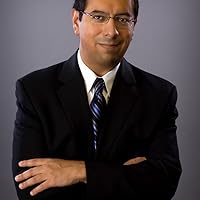
Harry Turtledove

564 books1,966 followers
Dr Harry Norman Turtledove is an American novelist, who has produced a sizeable number of works in several genres including alternate history, historical fiction, fantasy and science fiction.

Harry Turtledove attended UCLA, where he received a Ph.D. in Byzantine history in 1977.

Turtledove has been dubbed "The Master of Alternate History". Within this genre he is known both for creating original scenarios: such as survival of the Byzantine Empire; an alien invasion in the middle of the World War II; and for giving a fresh and original treatment to themes previously dealt with by other authors, such as the victory of the South in the American Civil War; and of Nazi Germany in the Second World War.

His novels have been credited with bringing alternate history into the mainstream. His style of alternate history has a strong military theme.

Ratings & Reviews

What do you think?
Rate this book

Friends & Following

Create a free account to discover what your friends think of this book!

Community Reviews

5 stars
180 (25%)
4 stars
255 (35%)
3 stars
207 (29%)
2 stars
50 (7%)
1 star
19 (2%)
Displaying 1 - 30 of 58 reviews
Profile Image for Shawn Ritchie.
66 reviews4 followers
January 2, 2014
Ugh.

I used to really enjoy Harry Turtledove. He's the original "master of alternate history", and his earliest works in this genre, such as "Guns of the South", while kind of hokey, were generally taut, fast-paced thrillers that had decent plot hooks, some good twists and turns, and ultimately made for very satisfying vacation reads.

This level of quality even held through his epic "Worldwar" Series, which ended up spanning eight novels published over a full decade. This was probably the high point of his career, in my opinion.

His next grand series, The Southern Victory series, spanned FIFTEEN (sixteen, if you count "How Few Remain", which you probably should) novels and, while not quite as good as the Worldwar run, still kept me engaged through to the very end. I definitely, however, was feeling some fatigue by the end of the run.

Now, anybody who's read his alternate history books (DISCLAIMER: I have not and do not read any of his non-alt. history stuff, so the magical/fantasy and plain fiction is a mystery to me, though I hear at least the fantasy series suffer from the same issue as his alt. history does these days) knows that Harry has a pattern when he writes: each chapter moves simply across the viewpoints of each major character, which, in his longer series, can run to a couple of dozen. It's a simple-yet-effective tactic that keeps the action moving across the various locales that need to be covered, and, in past works, I didn't mind this device.

HOWEVER... in The War That Came Early, the current series of which "Two Fronts" is a part... HOLY SHIT is this dragging. We're FIVE novels in, and nothing much of consequence has happened. Anywhere. The biggest twist [SPOILER ALERT] so far is that Britain and France, for about five minutes, decided to ally WITH Germany instead of against. This is AFTER they had already been at war with each other for a while.

Oh, and Poland has been Germany's only reliable ally so far. Really.

The end result of this MASSIVE PLOT TWIST has been to basically reset the entire goddamned war to where it stood in the first volume, with Germany and the Western Allies sitzkreiging in the West.

Oh, and the German/Polish vs. Soviet front? Yeah, that fucker hasn't moved in four novels, either.

I just don't get the essential point of this entire series: why does it exist? Worldwar was about humanity fighting back an alien invasion; that's a pretty great hook. The Southern Victory series gave us a world in which a smug CSA lorded it over a defeated USA, at least until the tide finally turned in the World War I analog. While the last chunk of that series, Settling Accounts, got a little too close to being a straight mirror of World War II, the sheer familiarity of our United States half-turned into a genocidal dictatorship carried it all forward.

NONE of these possible kinds of hooks exist in The War That Came Early. I had to look up the series on wiki to figure out how many books had been released and I'm frankly stunned that I've already read four and half novels in this series. Major characters have died and the impact on the plot and the reader has been "meh" at best.

And I think I know why.

In Worldwar and The Southern Victory, a large number of the major characters were, well, prime actors on the events happening. Worldwar had FDR, Stalin, the alien emperor, etc., all has primary characters that got their own chapters in Harry's "rotating chapter" methodology of telling a story. These characters were huge figures that made massively important decisions throughout the series, so those chapters riveted the reader and moved things along nicely.

Same thing in Southern Victory; Lincoln, Teddy Roosevelt, the southern Hitler... all got plenty of direct action and thoughts recorded in those books. You felt like you were privy to the major decisions and how they came about, and therefore were vested in how the plot rolled forth.

NONE of this exists in The War That Came Early. Five novels on, and every single goddamned character is some lowly shlub upon whom the action is just imposed, rather than them having any impact on it. The major plot points, such as "what the hell is happening in this war thingy", are mentioned via lame, forced recaps of the "So I heard that..." nature between random pairs of Primary Character Shlubs and Some Other Guy We'll Never Hear From Again. The closest we have to the characters we care about driving the action are a British Sergeant who was kinda sorta close to, but not really part of, a critical group of political plotters, and a Internationalist sniper in Spain who manages to blow the head off of someone who was VERY important in OUR timeline, but ISN'T EVEN IMPORTANT IN THE BOOK'S TIMELINE.

I just... ugh. I've started/punted this book and the last one multiple times, and I'm dragging myself through it just because I _hate_ buying books and leaving them unread, and because I have enough respect for Turtledove's past to where I hope he's got some huge fuckin' payoff planned for us at some point.

That said, it's going to take an awful lot of positive reviews of whatever he starts next for me to bite.
Profile Image for Cindy.
338 reviews
August 4, 2013
I paged through a lot of this and didn't miss anything it seems. I had thought this was the last book in the series but it isn't. Not sure how many there will be!

I'm not sure where this is going - I can't say more because SPOILERS. I really like some of the characters but don't understand why some of them are still around (Peggy comes to mind - she seems to be just there!). And I really wish some of those who died didn't since I liked them a lot!

So it's slow, it's wordy, it's repetitive but I'll still read book #6 when it comes out...
Profile Image for Eric Hunter.
84 reviews
August 31, 2015
The war goes on; people continue to say, and do, the same things. Some people die, but few people get wounded significantly. New equipment comes to the front, but so what?
401 reviews9 followers
August 2, 2013
I really can't explain my compulsion to keep reading this series. Turtledove's style has become so bland that even when something happens, it seems like nothing. At some points, I was seriously comparing this to Crossroads of Twilight. Not a good thing. However, on finishing, I have to admit it was not that bad. It's just that a lot of the important stuff happens off screen. Remember when Turtledove used to write his books using a mix of real historical characters of importance and average people so you could get both the insiders view and the view of the average person? In this series, it's nobodies all the way down, and that only feeds the repetitious droning that passes for Harry's writing these days. Of course things don't look all that different to a grunt from Germany or one from Russia.

So, anyhow, after coming to their senses and realizing that they just jumped into bed with their worst enemy in "The Big Switch", France and England switched back in "Coup d'Etat". So of course, now they're going to dither around and ever so slowly start thinking about actually kicking the Germans out of France. This whole series was irrevocably tainted by the absurdity of the Big Switch and it doesn't improve at all here. Nothing makes any sense, historical characters are replaced by ersatz counterparts who do exactly the same things.

Also, the Manhattan Project gets killed by some efficiency expert.
Profile Image for Alexander Seifert.
Author 1 book3 followers
February 18, 2014
The same exact complaints I had about the fourth book apply to the fifth one as well. While I still found it enjoyable to read about the characters I actually like, I found the pages wasted on pointless characters (come on, Peggy became useless after we found out about what Herb did to further alter history).

I read this and the fourth book within the same month, which probably was a bad thing since it may have exacerbated the issues of repetitiveness and somewhat boring viewpoints in many of the characters.

That said, I do look forward to seeing how he resolve this all in the last book.
Profile Image for Ian Hakes.
11 reviews2 followers
September 17, 2013
More of the same story, and not a whole lot of (apparent) progress in the overall plot.

I wonder if Harry T. has created too many characters in this series. The sheer number of story lines that he needs to cover makes this alternative history series unwieldy.

I'm enjoying the different points of view, for the most part, but I just don't see where this is going to go from here. This edition seems like it could be anywhere from the penultimate book, to fifteenth from the finish.
Profile Image for David R..
958 reviews1 follower
November 18, 2013
This is the fifth alternate history novel of a series that imagines WW2 began a year earlier. And this one came off like filler to me. There's a lot of the usual endless vulgar dialogue by minor figures, many of whom are dreary cardboard cutouts. There's really no action otherwise, apart from subplots involving doomsday weapons developed by the Japanese and not developed by the Americans. I assume these subplots will be developed in the sixth novel.
371 reviews2 followers
March 16, 2021
Another fun entry into this series. I've seen a lot of critiques written about this one in particular in that "nothing happens" and it's just filler...and I just can't agree.

The United States has abandoned the Manhattan Project as an outrageously expensive and "too early - maybe in a couple of decades" boondoggle. Germany has pulled back from it's advance into the Soviet Union. The French and English are pushing into Germany (well, Belgium) from the West. The Japanese have deployed their viral / bacterial bombs against Hawaii. The Wehrmacht has outright told Hitler "No!" when he ordered them to put down a protest in Germany. It's 1942 - 1943 and the United States is still not involved in the European Theater of the War. Perhaps nothing "earth-shattering" is happening, but all of these elements when looked at in context are huge!

At any rate, I still enjoyed this entry into the series. I enjoy all of Mr. Turtledove's entries into the world of speculative fiction / alternate history. I am definitely looking forward to the no doubt interesting conclusion in Book 6!
Profile Image for Stephen.
1,951 reviews140 followers
January 30, 2016
In Hitler's War, Harry Turtledove began a new alternate history of the Second World War, one in which the conflict started in 1938 when Britain and France decided Hitler was being too obvious a budding supervillain in invading Czechoslovakia, and declared war on him for want of anything better to do. The following years have seen the powers of the world enter into conflicts and alliances with one another, and drop out of them, with ease. Every dramatic derivation from real life has been reversed, to the point that the series has been a disappointment. But in Two Fronts, Turtledove has produced a military action-adventure novel that's enjoyable regardless of how similar is setting is to our own.

In 1942, the situation is thus: Germany is in the midst of a two front war, fighting Britain, France, and the Soviet Union while simultaneously throwing men and material into Africa to bail Mussolini out after Il Duce discovers his new Roman Army is still no match for the crazy Scots defending Egypt. In the east, Japan os still trying to conquer China in total, and is now merrily engaged in a war against the United States, which it initiated by sneak attack. Sound familiar? That's pretty much the situation of reality's World War 2, but with one notable exception: the United States is not at war with Germany. Two Fronts covers the year 1942 in the history of the war that came early, and is is not progressing as one might expect -- but the war which is taking place is interesting in its own right, even if it makes little sense. It is an in-between novel, in which there aren't any major obvious happenings -- though there are a few subtle happenings which will have major consequences for savvy readers -- but there is an awful lot of fighting. Turtledove's cast of characters is as strong and varied as I've yet seen from him, with viewpoints from all theaters, countries, and branches of the service: whatever military action readers look for, it's here. Tanks, infantry, sea, special operations, even a little aviation are included. (Aerial warfare isn't downplayed, but bombers are mostly in the background making everyone's lives just a bit more exciting/miserable.)

Two Fronts sees a few interesting changes hovering around the sides of the action, both involving superweapons. Not only do the Japanese begin to introduce biological warfare into their struggle with the United States (dropping rats filled with the Black Death into Hawaii), but a little project in Tennessee named after Manhattan loses its funding. The implications as the war goes are enormous, but then again I've been saying that for four novels, so who knows? I belatedly realized in reading this that The War That Came Early isn't so much about a logical series of events that builds off of the war starting in 1938: rather, that alteration is only one of many. Turtledove seems to be using the early war as a way to turn the Second World War into a sandbox, in which he can explore what-if scenarios like the failure of the Manhattan Project, or the introduction of 'secret weapons' into the field of combat. While I'd prefer the aforementioned logical buildup, this approach has its own merits: it's like the airships and steam-powered cars in The Two Georges, an interesting take at what-might have been. It is World War 2 with different toys. This is only problematic in that sometimes the plot doesn't make sense. For instance, in this 1942, the United States is only fighting Japan. While it's also sending some resources to Britain and some to Russia to help fight Hitler, the majority of its industrial capacity should be free to be focused squarely on Japan, a Japan which should be weakened by the fact that it decided to invade Russia first. And yet, instead of the United States slowly but surely checking the Japanese advance and swinging a few punches of its own, it's floundering. Maybe its industrial capacity simply hasn't hit full war-time mobilization yet since it doesn't have the added challenge of taking on Hitler, but this amateur-hour performance on their part is bothersome.

Two Fronts is perplexing because I like it. I didn't expect to like it, because it didn't address the fact that this history isn't very 'alternate' despite the early start. It may be that the differences are more subtle than I'd expected, and their consequences will take longer to be noticeable as a result. Despite the fact that the general sequence of events is unchanged I genuinely enjoyed the variety of military action presented here, especially since Turtledove didn't repeat himself too much. (The exception: he has decided infantrymen do not like artillerymen, who can kill them without risking being killed in turn. He saw fit to tell the reader this several times. I'm starting to wonder if he doesn't do this on purpose.) Perhaps this World War 2 with a twist was just the light reading I was looking for this weekend.
This entire review has been hidden because of spoilers.
Profile Image for Bjoern.
270 reviews22 followers
November 17, 2014
Mr Turtledove is undoubtedly one of the masters of military storytelling in our days.
So it shows also in this book, the experiences and opinions as seen through the eyes of the G.I.s, poilous, Landser and whatever else the "boots on the ground" may call themselves feel absolutely authentic and could have happened in any war around the middle of last century. Maybe even up to vietnam. This is his strength, here the novel shines brilliant like the light of the sun!

Still, having an authentic atmosphere and a realistic cast is not everything in writing about an imaginary variation of the Great War... Using exclusively small figures without any kind of overview (even those characters that are officers are low down in the food chain and so "theirs is not to question why") leaves it woefully obvious in this meanwhile fifth volume of the (otherweise excellent series) that Turtledove has no real way to show the bigger context of it all, the real troop movements and advantages or disadvantages of the various armies...
And why there's still so much emphasize on the front in Spain between the marionette governements for fashists and communists i really don't know.
In short... it's becoming more and more muddled what's really going on and a lot of things are shily hinted at that in another novel or series would have ended up as major points of the action (e.g. they seem to have stopped the Manhattan project due to the cost projections early in 1943, the North African Front seems to tend towards an Axis victory or that civil unrest is spreading in the Reich with Wehrmacht and Party/SS allegedly on different sides...)

A lot of lowly soldiers showing how much hell war really is, has it's good points, but this series still lacks some serious general staff input and overview, not just because the jumpy dates are tough enough to follow when whole povs are going away for months, e.g. due to a wound that first needs hospitalization for a long time, then followed up by coming back to the unit without any hint how much time really has passed... the more than one year this book spans does not feel the least bit like it.

The writing is excellent and the characters are not without merits, but still this could have ended up better with a bit less obfuscation and a little bit more of greater view in it.
This entire review has been hidden because of spoilers.
Profile Image for Ronald Tobin.
Author 2 books8 followers
September 23, 2013
I have read many novels written by Harry Turtledove. Many of those books I have found to be outstanding, well written and believable. Sadly, TWO FRONTS falls far from the mark. His alternate World War 2 grinds on, now Germany faces two fronts (hence the title, probably) because Britain and France are once again allied with the Soviet Union. Why Britain and France chose to ally with Hitler was a fairly weak premise to begin with. To have them change sides again was rather bizarre.

The story in this book was dull, which is just so unlike Turtledove. In most of his alternate history novels, the perspective of the people in the front lines, in the labs, even in the factories works well. Sadly, this time many of the battle scenes were repetitive, with just a few changes.

And enough with all the swearing! Yes, these are troops in extreme situations, and yes, some swearing does happen. All the time? C'mon! Especially when the swearing isn't accurate. I'm not familiar with Russian mat, however I do know that most Western European cursing involves animals, not sexuality. American slang, yes.

So the book starts with the Germans having to shift troops around and the Russians start advancing. A contingent of the Japanese Unit 723 bombs Oahu from captured Midway with plague carrying rats and other vectors. Is there any sort of panic in the islands? No, they just make everyone get vaccines. The Spanish Civil War drags on. Some new weapons are introduced. The book ends with the British and the French attacking into Belgium and the Russians continue to move forward.

Yes, I will read the next book. I've invested all this time already. This book is alright, but really, I expected a lot more.
Profile Image for Alberto.
318 reviews15 followers
August 12, 2013
The first book of this latest Turtledove series was weak. Then books 2-4 were better and moved the plot forward (albeit at the cost of somewhat implausible plot twists). This book is a huge step backwards. Absolutely nothing happens. The front moves a little bit (against Germany) on both fronts. As far as I can tell, not a single important military or political event takes place in any country involved in the war.

And the characters ... Ugh. Completely interchangeable cardboard cutouts. How I'm supposed to tell the difference between Awful Arno (why the hell did he get made a POV character?) and Dermange, and more importantly why I should care, is never made clear. The book suffers greatly from the lack of any higher ranking characters (there's only a couple of junior officers; almost everybody is an non-com). Morrell and Dowling added a great deal of depth to Turtledove's TL191 series. This book just plods along due to the lack of any high-level perspective.

And Peggy and Herb are having martial difficulties? Really? OH NOES! Who gives a crap? Does Turtledove really have nothing else to say? If not, simply purging these sections and leaving blank pages in their place would improve the book. I'll read the next one, because I am still mildly interested in how the series will end, but this book does nothing to increase my interest in the series or in ever reading Turtledove again.
Profile Image for Christopher.
1,278 reviews44 followers
February 10, 2017
This book perfectly encapsulates war. Or at least the boring parts of it.

So very little happens in this book I struggle to think what the point of this volume is. Every front in this novel (there are more than two) is essentially at a standstill and there's no major movement in either direction for either the Nazis or the English/French/Soviets.

I read another review the perfectly summed up why this series is so lackluster: all the characters are essentially pawns. None of them DO anything substantial. Events happen to them and decisions made by those above them have consequences, but each and every character is wholly inconsequential in themselves.

The Japanese start using biological weapons? We learn about it from the POV low-level Sergeant and the reaction is "meh." There's a military coup in Britain? We learn about it from a low-=level NCO well after the fact.

Events are recapped and summed up to these characters and then they all go back to drinking, whoring, and complaining about officers. It's tedious.
Profile Image for Georgy_kovacs.
42 reviews2 followers
October 21, 2015
Midway is firmly in Japan's control. And it is serving as launching pad to wage biological war on the US via Hawaii. Montgomery is killed in North Africa. Germany has again to fight a two-front war... and a new political coup d'état is brewing inside Germany...

While the plot keeps chugging along I was expecting more shocking what-ifs scenarios. For example, a landing of German forces on England, perhaps via Belgium and Scotland by way of Norway. Anyway, I hope the last book is a more radical one than this.
This entire review has been hidden because of spoilers.
Profile Image for Ron.
4,069 reviews11 followers
August 6, 2013
As is typical with Turtledove series, he carries the narrative via multiple viewpoints. In this volume, the Western Front is reopened and the Eastern Front is turning into a slog-fest where no one is winning, although the Soviets are slowly advancing. Spain is still mired in war. Some characters are lost while others just keep on keeping on. I foresee at least one or two more volumes in the series.
Profile Image for Rob Roy.
1,555 reviews31 followers
September 10, 2013
Classic Turtledove, here. Characters are more important than the action, and there is plenty of action. This is the fifth in this series and while there are minimal major changes, his characters through their thoughts and actions define the war and its effects. This is a series that needs to be read from the beginning. Don't start with this book!
1,668 reviews5 followers
November 25, 2014
I'm really trying to like this series, really I am. Even at his worse, I enjoy Turtledove. But five books into six, it more and more and more and more of the same. Almost like reading a catalogue of various arsenal. I'm looking forward to the conclusion...
Profile Image for Kenneth Flusche.
1,065 reviews9 followers
July 31, 2015
Getting used to this wordy series. The repetition makes it easy to put down at bed time. But I'm still hooked wondering how one little change can snowball into 1,000's I doo understand the boredom between the excitement of war.
Profile Image for Arnel Dionisio.
29 reviews
August 14, 2015
Continuation of "War that Started Early" series. More like a filler for series.
267 reviews1 follower
August 12, 2018
Having read a few of this author's series, I can state that I have enjoyed them immensely. This series, The War That Came Early, fits the profile of his other multiple books in following characters from all walks of life and nations as the Second World War unfolds very differently than our history happened.

This edition of the series, Two Fronts, keeps its focus on the characters without major surprises happening in the events of the war. I'm not sure if this is a good or bad thing, as the book moves along because if you have invested the time into the previous books it's like revisiting old friends to catch up with what has been happening in their lives. That is the attraction of these books, following the characters through their lives in different parts of the world, both in the sides of the Allies and the Axis.

That the author is able to humanize all of the different protagonists, on both sides of the lines, is one of the main drawing points of Mr. Turtledove's books. That, despite the fact there are no major war-changing events in this book, gives it four stars and two thumbs up in my opinion. Recommended.
Profile Image for Patti.
717 reviews20 followers
June 8, 2022
The European continent is suffering under a multi-front war at this point. Not only do you have Nazi Germany engaged with England, France, and Russia, but Spain is suffering under a Civil War as well. General Franco was killed by a particularly skilled sniper there, but the war still drags on. Most of the action on the European front here has to do with advances in weaponry being rolled out by the Germans as well as Russia and England.

The United States is not involved on the European front. They are dealing with Japan in the Pacific. Having taken Midway, Japan is using that as a jumping-off point for dropping biological weapons on Hawaii.

Turtledove tells his story in his usual style; jumping around from character to character and giving various viewpoints as to what is happening. The problem with this series – and it’s been there from the beginning – is there are just so many characters on the canvas. Turtledove is also very repetitive with each character, while never really advancing their story much.

To read my full review, please go to: https://thoughtsfromthemountaintop.co...
509 reviews2 followers
April 2, 2022
The differences multiply as the alternate keeps separating. This version of World War II has more trench warfare, but definitely more movement than World War I. The war proceeds. Characters get injured and recover or die. Paranoia sure does not help the totalitarian governments. I wonder if they realize how much their torture and killing of their own hurt their war efforts? No obvious Holocaust in this war, unless it is happening far away enough from the lines to be hidden from the front line characters. Germany is definitely on the edge of doing it and only a little shove will put it in full force for perceived internal enemies be they Jews or accused disloyal Germans. New weapons are coming on line. Hopefully the U.S. project that was shut down for waste was not really shut down. Geographic hints are given. I figure this war will end with a bang from one side or other. The germ warfare is not dramatic enough.
710 reviews1 follower
September 30, 2020
"What ifs?" are part of our lives; but some could alter the entire fate of the world. Many alternate realities revolve around enormous events, some around a minor detail that could change everything. In this case, the powder keg that was late 1930s Europe went off early and much of our history would have remained the same; the belligerents would have included all the big players: Japan, US, USSR, Germany, France, Britain and Italy. The fate of the minor players would change: Spain, Poland, Czechoslovakia. This all makes for a great story and the battles, the wonder weapons and the ending all are up to the decisions of men that might have still been alive or others that met their end prior to WWII would play significant parts. A great novel to read, especially for a history buff such as myself.
Profile Image for Susanb.
67 reviews
February 26, 2018
YEs another war book. But no political knowledge required to read this one.

The stories are about people in many countries trying to survive the war, a German wife, and American wife, Russian, Czech, English, Italians, Germans, tank drivers, foot soldier, pilots, submarine boats. Each person trying hard to survive another day.

Some deal with lousy politics, cheating partners, cold women, divorce, and death and dying everywhere. Food shortages, abuse of power. Machines of war for killing and being killed.

It is a very human book full of stories about good people tying to do what they are told to do.
Profile Image for James Murphy.
1,002 reviews3 followers
May 13, 2018
The war that Adolf Hitler started in 1938 with the invasion of Czechoslovakia continues. It's now 1942, and England and France, once allied with Nazi Germany, now fight against Hitler and force a second front. The United States continues its war with Imperial Japan; however, the Japanese have upped the ante by introducing a dangerous and deadly weapon. Harry Turtledove's series, "The War That Came Early," continues with "Two Fronts," and things are looking bleak. I have found this series to be both engaging and involving, and I look forward to "Last Orders," the series' final book.
Profile Image for Will Plunkett.
705 reviews1 follower
July 10, 2023
Need to know multiple cuss words in various languages, or different nationality slurs? Then this is the alternate history novel for you! I can appreciate the challenge of crafting 14 different characters and locations to show how truly "global" World War II was, and that there isn't really a true plot to this story taking place over about one year's time. War is hell; this book doesn't even bother trying to make it seem any less horrific, as everyone trudges in various vehicles through the air, or the sea, or the land.
Profile Image for Brad.
828 reviews
January 29, 2024
I started “The war that came early” series back in 2009, when the first book was first published. I then read a couple more, rested, and I read book #4 in 2013, so it has been about 10 years between books. And just like an old pair of comfy slippers, the story was easy to pick up and carry on with. Is that because it is such a slow moving one? Or because we are so familiar with the prose/style? Either way, it was easy reading, and only one more tome to go!

Slight spoilers: the war continues on all fronts, though Germany is falling back as the might of the Russian forces gather.
Profile Image for Dan.
214 reviews
July 21, 2021
Another interesting novel in this series of a slightly reimagined WW2. It feels like a lot of history is going to end up in the same place but Turtledoves ability to imagine and being to live these various characters is unmatched. There are Germans I feel bad for, which is the point of these were people even though hating what happened there were German Jews who were just trying to survive during bombings. One more book to go in the series.
Profile Image for Francis X DuFour.
599 reviews3 followers
September 8, 2021
Amazing detail

The author’s knowledge of military arms and tactics is unsurpassed. Combined with an epic yarn full of surprise developments, this is yeti another example of the author’s mastery of historical fiction.
Displaying 1 - 30 of 58 reviews

Can't find what you're looking for?

Get help and learn more about the design.