

What do you think?
Oz #2
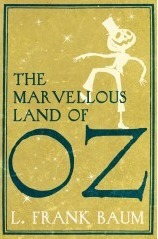
The Marvellous Land of Oz
The sequel to The Wonderful Wizard of Oz, set shortly after the events in the first book
A fantastical tale of endless imagination, this story follows the adventures of a young boy named Tip, who, for as long as he can remember has been under the guardianship of a witch named Mombi in the Land of Oz. One night he plans his escape to the Emerald City, stealing Mombi's powder of life. Along the way he meets with our old friends the Scarecrow and Tin Woodsman as well as making some new ones such as Jack Pumpkinhead, the Wooden Sawhorse, the Highly Magnified Woggle-Bug, and the amazing Gump. Can they escape Mombi and make it to the Emerald City? This story is as exciting and endearing today as it was when first published more than 80 years ago.
A fantastical tale of endless imagination, this story follows the adventures of a young boy named Tip, who, for as long as he can remember has been under the guardianship of a witch named Mombi in the Land of Oz. One night he plans his escape to the Emerald City, stealing Mombi's powder of life. Along the way he meets with our old friends the Scarecrow and Tin Woodsman as well as making some new ones such as Jack Pumpkinhead, the Wooden Sawhorse, the Highly Magnified Woggle-Bug, and the amazing Gump. Can they escape Mombi and make it to the Emerald City? This story is as exciting and endearing today as it was when first published more than 80 years ago.
155 pages, Paperback
First published January 1, 1904
About the author
L. Frank Baum
3,588 books2,846 followersalso wrote under the names:
* Edith van Dyne,
* Floyd Akers,
* Schuyler Staunton,
* John Estes Cooke,
* Suzanne Metcalf,
* Laura Bancroft,
* Louis F. Baum,
* Captain Hugh Fitzgerald
Lyman Frank Baum was an American author best known for his children's fantasy books, particularly The Wonderful Wizard of Oz, part of a series. In addition to the 14 Oz books, Baum penned 41 other novels (not including four lost, unpublished novels), 83 short stories, over 200 poems, and at least 42 scripts. He made numerous attempts to bring his works to the stage and screen; the 1939 adaptation of the first Oz book became a landmark of 20th-century cinema.
Born and raised in Chittenango, New York, Baum moved west after an unsuccessful stint as a theater producer and playwright. He and his wife opened a store in South Dakota and he edited and published a newspaper. They then moved to Chicago, where he worked as a newspaper reporter and published children's literature, coming out with the first Oz book in 1900. While continuing his writing, among his final projects he sought to establish a film studio focused on children's films in Los Angeles, California.
His works anticipated such later commonplaces as television, augmented reality, laptop computers (The Master Key), wireless telephones (Tik-Tok of Oz), women in high-risk and action-heavy occupations (Mary Louise in the Country), and the ubiquity of advertising on clothing (Aunt Jane's Nieces at Work).
* Edith van Dyne,
* Floyd Akers,
* Schuyler Staunton,
* John Estes Cooke,
* Suzanne Metcalf,
* Laura Bancroft,
* Louis F. Baum,
* Captain Hugh Fitzgerald
Lyman Frank Baum was an American author best known for his children's fantasy books, particularly The Wonderful Wizard of Oz, part of a series. In addition to the 14 Oz books, Baum penned 41 other novels (not including four lost, unpublished novels), 83 short stories, over 200 poems, and at least 42 scripts. He made numerous attempts to bring his works to the stage and screen; the 1939 adaptation of the first Oz book became a landmark of 20th-century cinema.
Born and raised in Chittenango, New York, Baum moved west after an unsuccessful stint as a theater producer and playwright. He and his wife opened a store in South Dakota and he edited and published a newspaper. They then moved to Chicago, where he worked as a newspaper reporter and published children's literature, coming out with the first Oz book in 1900. While continuing his writing, among his final projects he sought to establish a film studio focused on children's films in Los Angeles, California.
His works anticipated such later commonplaces as television, augmented reality, laptop computers (The Master Key), wireless telephones (Tik-Tok of Oz), women in high-risk and action-heavy occupations (Mary Louise in the Country), and the ubiquity of advertising on clothing (Aunt Jane's Nieces at Work).
Ratings & Reviews
Friends & Following
Create a free account to discover what your friends think of this book!
Community Reviews
Displaying 1 - 30 of 2,333 reviews

May 25, 2015
Click here to watch a video review of this book on my channel, From Beginning to Bookend.
In the northern Land of Oz, there lived a boy called Tip who was reared by a haggard old woman named Mombi. One day, Tip got the idea to startle Mombi, so he took a large pumpkin from the pumpkin patch, carved a face into it, then put it atop a body made of sticks and dressed in bright clothing. Mombi was not amused by Tip's practical joke, so she decided to concoct a spell to turn the boy into a marble statue. Determined not to spend the rest of his life as a garden ornament, Tip took the pumpkin man he created and set off on an adventure.
The Land of Oz offers the same type of topsy-turvy logic that permeates all of the Oz books.
"If I remember rightly, the penalty for chopping leaves from the royal palm-tree is to be killed seven times and afterward imprisoned for life."
Magic lovers will delight in the presence of wizards and witches, potions and powders, tonics and spells.
Tip wriggled around upon his stool and stared a while at the kettle, which was beginning to bubble. Then he would glance at the stern and wrinkled features of the witch and wish he were any place but in that dim and smoky kitchen, where even the shadows cast by the candle upon the wall were enough to give one the horrors. So an hour passed away, during which the silence was only broken by the bubbling of the pot hissing on the flames.
Tip travels with a most peculiar cast of enchanted comrades. While some familiar characters make appearances, many new characters are introduced. Among them is General Jinjur and her army of women soldiers. Jinjur feels the Emerald City has been ruled by men for too long. She plans to invade the city and use its gemstones to make sparkly jewelry and spend the treasury to buy a dozen gowns for every woman in the army.
With peculiar creatures, threat of war, boundless magic, and a surprise ending, The Land of Oz makes for a spectacular sequel.
In the northern Land of Oz, there lived a boy called Tip who was reared by a haggard old woman named Mombi. One day, Tip got the idea to startle Mombi, so he took a large pumpkin from the pumpkin patch, carved a face into it, then put it atop a body made of sticks and dressed in bright clothing. Mombi was not amused by Tip's practical joke, so she decided to concoct a spell to turn the boy into a marble statue. Determined not to spend the rest of his life as a garden ornament, Tip took the pumpkin man he created and set off on an adventure.
The Land of Oz offers the same type of topsy-turvy logic that permeates all of the Oz books.
"If I remember rightly, the penalty for chopping leaves from the royal palm-tree is to be killed seven times and afterward imprisoned for life."
Magic lovers will delight in the presence of wizards and witches, potions and powders, tonics and spells.
Tip wriggled around upon his stool and stared a while at the kettle, which was beginning to bubble. Then he would glance at the stern and wrinkled features of the witch and wish he were any place but in that dim and smoky kitchen, where even the shadows cast by the candle upon the wall were enough to give one the horrors. So an hour passed away, during which the silence was only broken by the bubbling of the pot hissing on the flames.
Tip travels with a most peculiar cast of enchanted comrades. While some familiar characters make appearances, many new characters are introduced. Among them is General Jinjur and her army of women soldiers. Jinjur feels the Emerald City has been ruled by men for too long. She plans to invade the city and use its gemstones to make sparkly jewelry and spend the treasury to buy a dozen gowns for every woman in the army.
With peculiar creatures, threat of war, boundless magic, and a surprise ending, The Land of Oz makes for a spectacular sequel.

May 1, 2012
A straw king? Transgender issues addressed? What in the heck's a wogglebug? Heaven knows what's going on here, but I like it!
Strange though it may sound, I preferred this sequel over the first book in L. Frank Baum's Oz series, The Wonderful Wizard of Oz, from which most of Dorothy's famous story was drawn from to create the fantastic film The Wizard of Oz.
I'm beginning to think my reaction to the first book may have been prejudiced! You see, having only known the land of Oz from the movie, I was expecting that Oz, but that's not what The Wonderful Wizard of Oz is, not entirely.
After getting over that slight disappointment, I was able to relax and enjoy The Marvelous Land of Oz with its storyline completely unknown to me, its numerous unfamiliar characters and its delightful surprise ending.


Just like the first book, the narrative follows a similar "road trip" path in which the principle characters must journey on and on, overcoming occasional obstacles on their way to save the day, all culminating in a very enjoyable adventure indeed!
A bit of the old under the microscope treatment...
One point I'll focus in on in particular was the sexism/feminism. For the time in which it was produced (pre-women's suffrage) I wasn't too surprised to see stereotypical depictions of women, or more specifically, girls. However, I was happy to see various forms of female empowerment balancing it out. That sort of sensitivity towards gender issues seems rare for its time. Perhaps I shouldn't be surprised. After all, Baum was writing with a female audience in mind, as that's where his fan base overwhelmingly lay.
Strange though it may sound, I preferred this sequel over the first book in L. Frank Baum's Oz series, The Wonderful Wizard of Oz, from which most of Dorothy's famous story was drawn from to create the fantastic film The Wizard of Oz.
I'm beginning to think my reaction to the first book may have been prejudiced! You see, having only known the land of Oz from the movie, I was expecting that Oz, but that's not what The Wonderful Wizard of Oz is, not entirely.
After getting over that slight disappointment, I was able to relax and enjoy The Marvelous Land of Oz with its storyline completely unknown to me, its numerous unfamiliar characters and its delightful surprise ending.
Just like the first book, the narrative follows a similar "road trip" path in which the principle characters must journey on and on, overcoming occasional obstacles on their way to save the day, all culminating in a very enjoyable adventure indeed!
A bit of the old under the microscope treatment...
One point I'll focus in on in particular was the sexism/feminism. For the time in which it was produced (pre-women's suffrage) I wasn't too surprised to see stereotypical depictions of women, or more specifically, girls. However, I was happy to see various forms of female empowerment balancing it out. That sort of sensitivity towards gender issues seems rare for its time. Perhaps I shouldn't be surprised. After all, Baum was writing with a female audience in mind, as that's where his fan base overwhelmingly lay.

April 23, 2025
The Marvelous Land of Oz is so much so that I have vowed to devour all of the subsequent Oz books in order, as they appear in my Grandmother's Oz library, bequeathed to me, but now on permanent loan to my bro's young family!
And I swear I'll never touch Pumpkin Pie again.
You see, Jack Pumpkinhead is my favourite character in this Aspie's PARADISE of Oz! Tip made him frighten the living daylights out of his Evii Witch Guardian when she vows she will
curse Tip with a life as a dumb, dead marble statue, the next day.
When she is sawing wood that night in loud snores, Tip steals her magical powder that gives life to lifeless things.
Eureka - Jack Pumpkinhead can talk!
And Tip is his Beloved Young "Dad." Yikes, says Tip - a Tweenie - but so be it. Together, they commence the long escape to Oz on foot.
They are joined by The Sawhorse, a carpenter's cutting aid - whom Tip magically makes alive. In the Audible Audiobook, which you can get for peanuts, the Sawhorse speaks English with a charming Georgia drawl!
Jack Pumpkinhead, whose wooden joints (remember, Tip has made him with wood) ache terribly after a while, sits astride the Sawhorse till they reach Oz.
Well, the Emerald City has been attacked by an Army of Feminists, who rule by reason rather than by Divine Right!
The Strawman, whom The Wizard of Oz has named King of Oz, is in exile.
He joins forces with Tip & Co to negotiate with the Rebel Girls' Leader...
All in All, the whole book is a delectable Kids' Treat!
Did I say delectable? Well, I've vowed never to touch Pumpkin Pie, ever again.
After all, it's unavailable here in Oz -
As the Girls never BAKE anymore!
And I swear I'll never touch Pumpkin Pie again.
You see, Jack Pumpkinhead is my favourite character in this Aspie's PARADISE of Oz! Tip made him frighten the living daylights out of his Evii Witch Guardian when she vows she will
curse Tip with a life as a dumb, dead marble statue, the next day.
When she is sawing wood that night in loud snores, Tip steals her magical powder that gives life to lifeless things.
Eureka - Jack Pumpkinhead can talk!
And Tip is his Beloved Young "Dad." Yikes, says Tip - a Tweenie - but so be it. Together, they commence the long escape to Oz on foot.
They are joined by The Sawhorse, a carpenter's cutting aid - whom Tip magically makes alive. In the Audible Audiobook, which you can get for peanuts, the Sawhorse speaks English with a charming Georgia drawl!
Jack Pumpkinhead, whose wooden joints (remember, Tip has made him with wood) ache terribly after a while, sits astride the Sawhorse till they reach Oz.
Well, the Emerald City has been attacked by an Army of Feminists, who rule by reason rather than by Divine Right!
The Strawman, whom The Wizard of Oz has named King of Oz, is in exile.
He joins forces with Tip & Co to negotiate with the Rebel Girls' Leader...
All in All, the whole book is a delectable Kids' Treat!
Did I say delectable? Well, I've vowed never to touch Pumpkin Pie, ever again.
After all, it's unavailable here in Oz -
As the Girls never BAKE anymore!

December 24, 2016
I loved the story and characters. My favorite was Jack Pumpkinhead. The ending was a total surprise and I just loved it! Looking forward to the other books.

August 4, 2023
Did you ever wonder what happened after “The Wonderful Wizard of Oz” story? To the characters left behind after Dorothy made her grand exit? The Emerald City is under siege and destruction! There’s a new villain! It’s up to some of our old heroes joined by new ones to rightfully repair Oz to its best and strongest state. Full of feminist undertones, this is definitely a rare piece of writing for its time! Pretty awesome considering L. Frank Baum brought this sequel to life after sharing with one little girl that if he got a thousand letters asking for a sequel, he would make it happen. Lo and behold, a thousand little girls and more all wrote letters begging for more Oz adventures. If it had been my time of existence, I would have been one of those girls.✋
The Wizard of Oz was always a favorite childhood memory of mine and such a heartwarming story. I was very excited to learn that there existed an entire book series which unlocks so much more the movie left behind to explore! The sequel far exceeded my expectations, appealing to my creativity and inner spirit. And I loved every minute I spent having adventures in Oz. The writing was very relaxed and easy to follow. A pleasantly quick read. There were new characters introduced and lots of flashbacks and nods to the first book which always made me smile.
You even get to experience different areas of Oz itself! I had no idea different parts of Oz were different colors. Though I did have a slight inkling about some of the more unique elements of Oz from watching the film, “Return to Oz” many times in my life. I am slowly learning that it seems that they took random bits and pieces from this sequel and possibly even from other books in the series to make “Return to Oz.” I always felt like it was all over the place 😂, but it always held a special place in my memory as frightening as it was at parts!
My favorite character in the sequel was Jack the Pumpkinhead. I first met him in the film Return to Oz and fell in love with his character. So I was head over heels to see him appear in this sequel! I absolutely adore him. He is just so sweet and cute! Always worrying about spoiling! Poor baby! I also loved the flying sofa with the Gump head which also took place precisely as such in the movie. It just brought back a lot of fun memories, and I’m looking forward to venturing on in the series!
Important Lessons Learned:
✓ “Everything in life is unusual until you get accustomed to it.”
✓ “For I consider brains far superior to money, in every way. You may have noticed that if one has money without brains, he cannot use it to advantage; but if one has brains without money, they will enable him to live comfortably to the end of his days.”
The Wizard of Oz was always a favorite childhood memory of mine and such a heartwarming story. I was very excited to learn that there existed an entire book series which unlocks so much more the movie left behind to explore! The sequel far exceeded my expectations, appealing to my creativity and inner spirit. And I loved every minute I spent having adventures in Oz. The writing was very relaxed and easy to follow. A pleasantly quick read. There were new characters introduced and lots of flashbacks and nods to the first book which always made me smile.
You even get to experience different areas of Oz itself! I had no idea different parts of Oz were different colors. Though I did have a slight inkling about some of the more unique elements of Oz from watching the film, “Return to Oz” many times in my life. I am slowly learning that it seems that they took random bits and pieces from this sequel and possibly even from other books in the series to make “Return to Oz.” I always felt like it was all over the place 😂, but it always held a special place in my memory as frightening as it was at parts!
My favorite character in the sequel was Jack the Pumpkinhead. I first met him in the film Return to Oz and fell in love with his character. So I was head over heels to see him appear in this sequel! I absolutely adore him. He is just so sweet and cute! Always worrying about spoiling! Poor baby! I also loved the flying sofa with the Gump head which also took place precisely as such in the movie. It just brought back a lot of fun memories, and I’m looking forward to venturing on in the series!
Important Lessons Learned:
✓ “Everything in life is unusual until you get accustomed to it.”
✓ “For I consider brains far superior to money, in every way. You may have noticed that if one has money without brains, he cannot use it to advantage; but if one has brains without money, they will enable him to live comfortably to the end of his days.”
August 12, 2007
So. Much. Weirder. Both than your memory of this stuff, and even than the first Oz book. You've got the Scarecrow set up, "brains" and all having gone to his head, as King Fool of Emerald City, you've got an antifeminist caricature (not that i mind it when it's so transparent, even for a kid in this modern era) taking over Oz and making the men do housework, you've got the Tin Man fallen into vanity and obsessed with nickel-plating himself, you've got sudden gender-switching, a roly-poly that spouts horrible puns, and even an animated flying machine made out of an animal head and household furniture that really just wants to be dead. I wish I hadn't given the first book 5 stars, because this one really is a cut above as the profound weirdness of Baum's mind really starts experimenting, all done in that same manically episodic style that works so well for Baum (just as it did for Carroll).

January 15, 2013
Originally reviewed at Bookwraiths.
Like many people my age, I actually remember when The Wizard of Oz movie being shown on network television every year was an event. I mean, we didn’t have VCRs (Let alone Netflix) back in the dark ages, so if you wanted to get a glimpse of Oz, you had to plan your social schedule around being at home in front of your television at the appropriate time, and for many years I always did. But that movie is all I knew about Oz.
I really hate to admit that I never took the time when I was growing up to try to find any other Oz stories. It wasn’t that I didn’t love Oz, because I did, but it wasn’t a priority like Star Wars, Star Trek, and Battlestar Galactica. And when I finally did discover there were other books in the Oz series, I wasn’t too terribly interested in walking the yellow brick road anymore. I was too mature. Too cool. Too … self absorbed.
Flash forward about thirty-five years.
My kids have watched The Wizard of Oz several times in their lives, then my youngest son gets really hyped (at least for a little while) about the soon-to-be-released The Great and Powerful Oz movie. So, deciding to ride the interest, I find this book and give it a go as a bedtime story.
The tale takes place a short time after Wizard, focusing on the adventures of a young boy named Tip. But things don’t start out marvelous. Instead a reader finds Tip leading a rather uneventful and arduous life on a farm, but soon he escapes from his unhappy existence and takes to the road determined to find his destiny.
Quickly, things get interesting: Tip growing close to his companion Jack Pumpkinhead and meeting some new people like the Wooden Sawhorse, the Highly Magnified Woggle-Bug, and the amazing Gump. Old friends like the Scarecrow, Tinman, and others even show up. And, naturally, we have new enemies to thwart like the evil witch Mombi and General Jinjur and her army of rebellious young women.
Never having read any of the Oz books, I have to say I was surprised by how humorous this story was. I won’t go so far as to say it was laugh out loud funny, but it had lots and lots of puns as well as humorous lines. That in itself made my kids and I enjoy reading the book together, causing it to be a fine bedtime story, but it also really helped to fan the flames of excitement for more Oz just before the release of The Great and Powerful Oz movie.
Even with that being said, the favorite parts of this read were the sections where the Tin Man and Scarecrow are the stars: the scenes of their bumbling around bringing back many good memories of watching the classic movie as a child. So if you enjoyed the classic movie, give this a try; it is worth the read.
Like many people my age, I actually remember when The Wizard of Oz movie being shown on network television every year was an event. I mean, we didn’t have VCRs (Let alone Netflix) back in the dark ages, so if you wanted to get a glimpse of Oz, you had to plan your social schedule around being at home in front of your television at the appropriate time, and for many years I always did. But that movie is all I knew about Oz.
I really hate to admit that I never took the time when I was growing up to try to find any other Oz stories. It wasn’t that I didn’t love Oz, because I did, but it wasn’t a priority like Star Wars, Star Trek, and Battlestar Galactica. And when I finally did discover there were other books in the Oz series, I wasn’t too terribly interested in walking the yellow brick road anymore. I was too mature. Too cool. Too … self absorbed.
Flash forward about thirty-five years.
My kids have watched The Wizard of Oz several times in their lives, then my youngest son gets really hyped (at least for a little while) about the soon-to-be-released The Great and Powerful Oz movie. So, deciding to ride the interest, I find this book and give it a go as a bedtime story.
The tale takes place a short time after Wizard, focusing on the adventures of a young boy named Tip. But things don’t start out marvelous. Instead a reader finds Tip leading a rather uneventful and arduous life on a farm, but soon he escapes from his unhappy existence and takes to the road determined to find his destiny.
Quickly, things get interesting: Tip growing close to his companion Jack Pumpkinhead and meeting some new people like the Wooden Sawhorse, the Highly Magnified Woggle-Bug, and the amazing Gump. Old friends like the Scarecrow, Tinman, and others even show up. And, naturally, we have new enemies to thwart like the evil witch Mombi and General Jinjur and her army of rebellious young women.
Never having read any of the Oz books, I have to say I was surprised by how humorous this story was. I won’t go so far as to say it was laugh out loud funny, but it had lots and lots of puns as well as humorous lines. That in itself made my kids and I enjoy reading the book together, causing it to be a fine bedtime story, but it also really helped to fan the flames of excitement for more Oz just before the release of The Great and Powerful Oz movie.
Even with that being said, the favorite parts of this read were the sections where the Tin Man and Scarecrow are the stars: the scenes of their bumbling around bringing back many good memories of watching the classic movie as a child. So if you enjoyed the classic movie, give this a try; it is worth the read.
September 15, 2007
This book is slightly ridiculous. It’s hard to evaluate The Marvelous Land of Oz for what it is - a children’s book and a sequel (a sequel to a great example of the genre at that) rather than just a book. But it’s a goofy, daffy book. It’s weirdly pro-women (in a way) for 1904 - everyone who makes anything happen is a woman (Jinjur, Mombi, Glinda) and the men all kind of fall into good luck and the fruits of the women’s labor. At the same time, the women who aren’t named Glinda are consistently terrible people. For example, Mombi’s just evil for evil’s sake - well, she really wants to be a witch and isn’t allowed so she’s full of misdirected, crotchety old lady anger. Jinjur’s army of girls (armed with knitting needles, see, because they’re girls) wants to storm the Emerald City so they can steal the emeralds and other gems to make jewelry (not to finance other wars or anything, but to make pretty jewelry, see, because they’re girls). Amusingly, Jinjur’s girls were actually rebelling because they wanted a little more out of their futures than to cook and clean for husbands - Betty Friedan would be proud.
In this, the second book in the Oz series, The Scarecrow, the Tin Man, and Glinda return for the festivities with a random assortment of friends, enemies, and obstacles. Their adventures are interesting if silly and laden with puns (my god the puns, some make you giggle, some make you want to rip your eyes out). The end though, is great, especially in the gender-swapping tolerance and the surprisingly just outcome of who gets to rule Oz.
In this, the second book in the Oz series, The Scarecrow, the Tin Man, and Glinda return for the festivities with a random assortment of friends, enemies, and obstacles. Their adventures are interesting if silly and laden with puns (my god the puns, some make you giggle, some make you want to rip your eyes out). The end though, is great, especially in the gender-swapping tolerance and the surprisingly just outcome of who gets to rule Oz.

June 3, 2022
This is great pro-feminist children's literature ... if anyone has noticed. Published in 1904!

March 2, 2021
The Marvellous Land of Oz is written by L. Frank Baum in 1904, i have read the new edition from 2016, this is the second book from The Wizard of Oz collection.
Tip is a young boy that escaped the evil hands of the witch Mombi. Tip and his friend are going on an adventure to the Emerald City, to the scarecrow, wich became the ruler in the first book of the wizard of Oz.
I was very found of Wizard of Oz since i was a child, so i have decided to buy the full collection of 15 books, i love to read these in the evening, a chapter at the time.
You really should read this books in order because i think if I've read this book first and than the Wizard of Oz, I'll not understand, because a lot of characters of book 1 are coming back into this one.
Tip is a young boy that escaped the evil hands of the witch Mombi. Tip and his friend are going on an adventure to the Emerald City, to the scarecrow, wich became the ruler in the first book of the wizard of Oz.
I was very found of Wizard of Oz since i was a child, so i have decided to buy the full collection of 15 books, i love to read these in the evening, a chapter at the time.
You really should read this books in order because i think if I've read this book first and than the Wizard of Oz, I'll not understand, because a lot of characters of book 1 are coming back into this one.
September 25, 2018
I've always preferred this one to 'The Wonderful Wizard...' because I love the new characters introduced here. It's great to have the Scarecrow and the Tin Man back (they were always my favourite characters from the first book, if you don't count Toto) but Jack Pumpkinhead, the Saw Horse, H.M. Woggle Bug and the Gump are all so awesome I can't read about them without a huge grin on my face!
I think the twist ending probably blew me away as a kid, too...
I think the twist ending probably blew me away as a kid, too...

April 2, 2017
Everything in life is unusual until you get accustomed to it.
I've read The Wonderful Wizard of Oz sometime last year (and really enjoyed it), and I have to say that this book was a pretty damn good sequel to it. I enjoyed being introduced to new characters, as well as following new adventures of old characters. The plot was quite enjoyable as well, and they even were a couple of twists that I did not see coming. All in all, a pretty solid book, and I can't wait to continue on with the series.
I've read The Wonderful Wizard of Oz sometime last year (and really enjoyed it), and I have to say that this book was a pretty damn good sequel to it. I enjoyed being introduced to new characters, as well as following new adventures of old characters. The plot was quite enjoyable as well, and they even were a couple of twists that I did not see coming. All in all, a pretty solid book, and I can't wait to continue on with the series.

May 12, 2024
The only other of the Oz books that I’ve read other than The Wonderful Wizard of Oz (which was the only one I knew as a child) is The Marvelous Land of Oz (1904) but on revisiting it now after many years, I was surprised to find how, besides being a fun and imaginative adventure introducing plenty of new characters as also having us catch up with old friends, the book also simply overflows with witticisms, wisdom and puns. Even more surprising were the political threads, which I didn’t at all remember and which did have me wondering what Baum really thought of the suffragettes (more on that in a bit)! A very different book from the first, a book which I think while enjoyable for young readers, has a lot more to offer for older ones, with many threads to unravel.
In The Marvelous Land of Oz (1904) we meet a young boy Tip, whose been brought up by and lives with an old quasi-witch Mombi—quasi since she is not permitted to practice proper magic by orders of the good witch of the South, Glinda. As is usual, Tip isn’t treated all that well an made to do various chores. So, to get back at Mombi and have a little fun in the process Tip manufactures a Pumpkinhead, a stick figure complete with joints and a pumpkinhead, dresses it in colourful attire and positions it at a bend in the road go give the old woman a good scare as she returns from the market. But something very different is in store for the Pumpkinhead as Mombi jus happens to be bringing back with her ‘the powder of life’ and uses Pumpkinhead to test it. With this Jack Pumpkinhead comes to life and Tip is in for a punishment, to be turned into a marble statue. To escape this fate, he decides to run away with Jack Pumpkinhead to whom he is now ‘father’ to the Emerald city to the Scarecrow, now ruler there. Jack’s joints however are not very well made and along they way, Tip who has taken with him the powder of life uses it to bring to life a saw horse whom Jack rides. But after some adventures, as they get to the Emerald City and are briefly separated, Jack and Saw Horse meeting Scarecrow and Tip left outside, the city is attacked by the all-girl army of General Jinjur, armed with knitting needles, who quite easily oust poor Scarecrow.
Now Scarecrow, accompanied by Tip, Jack Pumpkinhead and the Saw Horse journey to the land of the Winkies to seek help from the Tin Woodman, but while that is forthcoming, neither the journey back to the Emerald City nor the confrontation with Jinjur and her army turn out very easy. Our adventurers are joined by Mr H.M. Woggle Bug, TE, and must face numerous challenges and obstacles in regaining the Emerald City, with even Glinda whose help they finally seek unable to vanquish their enemies with ease. And the outcome isn’t quite what they expect with secrets revealed and things taking a very different direction one would have imagined, as Oz’s throne is restored to its rightful ruler!
I was lucky to have an edition of this book from Dover Publications which is a faithful reproduction of the original with all 120 line-illustrations and 16 colour plates. These made my reading experience all the more special of this book which is miles above (and also in that sense very different from) its predecessor.
What stands out most when reading the book is the clever writing spread across the book, for instance, in the initial chapters, in the form of a dialogue between the not-too-bright Jack Pumpkinhead and Scarecrow when they first meet—a few pages along—where Jack claims and the Scarecrow accepts that they don’t understand each other as they belong to different ‘countries’ and require an ‘interpreter’ when all the while the reader can see they perfectly understand each other. When an interpreter is called, she takes the opportunity to have some fun before pointing out the obvious, the languages they’re speaking are one and the same:
"Where on earth did you come from, and how do you happen to be alive?”
“I beg your Majesty’s pardon,” returned the Pumpkinhead; “but I do not understand you.”
“What don’t you understand?” asked the Scarecrow.
“Why, I don’t understand your language. You see, I came from the Country of the Gillikins, so that I am a foreigner.”
“Ah, to be sure!” exclaimed the Scarecrow. “I myself speak the language of the Munchkins, which is also the language of the Emerald City. But you, I suppose, speak the language of the Pumpkinheads?”
“Exactly so, your Majesty” replied the other, bowing; “so it will be impossible for us to understand one another.”
“That is unfortunate, certainly,” said the Scarecrow, thoughtfully. “We must have an interpreter.”
“What is an interpreter?” asked Jack.
“A person who understands both my language and your own. When I say anything, the interpreter can tell you what I mean; and when you say anything the interpreter can tell me what you mean. For the interpreter can speak both languages as well as understand them.”
“That is certainly clever,” said Jack, greatly pleased at finding so simple a way out of the difficulty.
The Scarecrow has doubtless retained his brains (may be not so apparent from the preceding conversation) and from him spring many of the gems in this book. Like when his one soldier-strong ‘Royal Army’ declares himself scared of the all-girl army, he remarks
“But, for my part, not being a soldier, I am fond of danger…”
And when told that the Tin Woodman is having himself plated with Nickel,
“If his wit bears the same polish, how sparkling it must be!”
The Tin Woodman himself is not far behind, when he remarks to Jack Pumpkinhead ever aware and in fear of the shortness of his life (for pumpkins must spoil someday)
“Do not, I beg of you, dampen today’s sun with the showers of tomorrow. For before your head has time to spoil you can have it canned, and in that way it may be preserved indefinitely.”
Some of my favourites though came from the mouth of the Woggle Bug. When the Saw Horse breaks its leg and must have it replaced, for instance, he is rather irked:
"It was a shame that I broke my other leg!” it growled.
“On the contrary,” airily remarked the Woggle-Bug, who was walking alongside, “you should consider the accident most fortunate. For a horse is never of much use until he has been broken.”
And as he is a rather educated Woggle Bug (more on that in a bit), he can’t resist a good pun, even when checked repeatedly:
“I myself am Thoroughly Educated, and I say that puns display genius. For instance, were I to ride upon this Saw-Horse, he would not only be an animal he would become an equipage. For he would then be a horse-and-buggy.”
But before I go overboard on just this aspect of the book of which there are so many lines I’ve marked, I really must stop.
Of old friends from the first book, we meet the Scarecrow and Tin Woodman and also Glinda, the good witch but not Dorothy or the Lion. The Queen of the Field Mice and her subjects appear as well and end up playing quite an important role, both helping our band of travellers when they are headed back to the Emerald City to face Junjur and also as a pawn in one attack, using a stereotypical tool of fear! There are also plenty of new characters including the witch Mombi and General Jinjur, but among the standouts to me was the Woggle Bug. Mr H. M. Woggle Bug TE or Mr Highly Magnified Woggle Bug, Thoroughly Educated seems straight out of Lewis Carroll and I loved his Carrollian tale—of the rather fun way he became as he did—Thoroughly Educated and Highly Magnified and in a dapper costume. There are also Jack Pumpkinhead and the Saw Horse (rather at loggerheads—no pun intended—with each other) and a curious creature the party end up manufacturing from sofas, palm leaves and a Gump which helps them more than once and shows a rather dignified side when things settle down and it must decide on its fate.
There are many themes and aspects that one could tease out from the book whether issues of gender, guardianship/parenthood, rulers and reigns or even education, but since I don’t want to ramble on and on, I’ll confine myself to one other that really struck, and this was the political thread. In Jinjur and her band we have an all-woman army who thinks Scarecrow is incapable of ruling and wish to overthrow him and take over, but when they do, their interest is in the emeralds that line the streets of the city, the gowns that the treasury can buy them and chocolate which is prepared in the kitchens for Jinjur. The men of the city are made to do the work while women simply roam the streets and gossip. This picture I was sure was somewhere inspired by the suffragettes, confirmed now by a loose search on google, but it also had me wondering what Baum actually thought of them, an idea about which I was confused because he does have women ‘rulers’ in say, Glinda the good witch also with her all-woman (and far more capable than Jinjur’s) army and Ozma, the rightful heir who eventually takes over the throne of Oz. But he is certainly poking fun at the suffragettes as well, using stereotypical images and perceptions—whether this was meant as a gentle tease as some commenters suggest or hinted at some degree of disapproval, I couldn’t really decide.
When I embarked on this revisit of this second Oz book (part of very belatedly catching up with Lory’s #Ozathon24), I had expected another entertaining fantasy adventure. And while I did get that, I also got far more from this rich and clever book!
In The Marvelous Land of Oz (1904) we meet a young boy Tip, whose been brought up by and lives with an old quasi-witch Mombi—quasi since she is not permitted to practice proper magic by orders of the good witch of the South, Glinda. As is usual, Tip isn’t treated all that well an made to do various chores. So, to get back at Mombi and have a little fun in the process Tip manufactures a Pumpkinhead, a stick figure complete with joints and a pumpkinhead, dresses it in colourful attire and positions it at a bend in the road go give the old woman a good scare as she returns from the market. But something very different is in store for the Pumpkinhead as Mombi jus happens to be bringing back with her ‘the powder of life’ and uses Pumpkinhead to test it. With this Jack Pumpkinhead comes to life and Tip is in for a punishment, to be turned into a marble statue. To escape this fate, he decides to run away with Jack Pumpkinhead to whom he is now ‘father’ to the Emerald city to the Scarecrow, now ruler there. Jack’s joints however are not very well made and along they way, Tip who has taken with him the powder of life uses it to bring to life a saw horse whom Jack rides. But after some adventures, as they get to the Emerald City and are briefly separated, Jack and Saw Horse meeting Scarecrow and Tip left outside, the city is attacked by the all-girl army of General Jinjur, armed with knitting needles, who quite easily oust poor Scarecrow.
Now Scarecrow, accompanied by Tip, Jack Pumpkinhead and the Saw Horse journey to the land of the Winkies to seek help from the Tin Woodman, but while that is forthcoming, neither the journey back to the Emerald City nor the confrontation with Jinjur and her army turn out very easy. Our adventurers are joined by Mr H.M. Woggle Bug, TE, and must face numerous challenges and obstacles in regaining the Emerald City, with even Glinda whose help they finally seek unable to vanquish their enemies with ease. And the outcome isn’t quite what they expect with secrets revealed and things taking a very different direction one would have imagined, as Oz’s throne is restored to its rightful ruler!
I was lucky to have an edition of this book from Dover Publications which is a faithful reproduction of the original with all 120 line-illustrations and 16 colour plates. These made my reading experience all the more special of this book which is miles above (and also in that sense very different from) its predecessor.
What stands out most when reading the book is the clever writing spread across the book, for instance, in the initial chapters, in the form of a dialogue between the not-too-bright Jack Pumpkinhead and Scarecrow when they first meet—a few pages along—where Jack claims and the Scarecrow accepts that they don’t understand each other as they belong to different ‘countries’ and require an ‘interpreter’ when all the while the reader can see they perfectly understand each other. When an interpreter is called, she takes the opportunity to have some fun before pointing out the obvious, the languages they’re speaking are one and the same:
"Where on earth did you come from, and how do you happen to be alive?”
“I beg your Majesty’s pardon,” returned the Pumpkinhead; “but I do not understand you.”
“What don’t you understand?” asked the Scarecrow.
“Why, I don’t understand your language. You see, I came from the Country of the Gillikins, so that I am a foreigner.”
“Ah, to be sure!” exclaimed the Scarecrow. “I myself speak the language of the Munchkins, which is also the language of the Emerald City. But you, I suppose, speak the language of the Pumpkinheads?”
“Exactly so, your Majesty” replied the other, bowing; “so it will be impossible for us to understand one another.”
“That is unfortunate, certainly,” said the Scarecrow, thoughtfully. “We must have an interpreter.”
“What is an interpreter?” asked Jack.
“A person who understands both my language and your own. When I say anything, the interpreter can tell you what I mean; and when you say anything the interpreter can tell me what you mean. For the interpreter can speak both languages as well as understand them.”
“That is certainly clever,” said Jack, greatly pleased at finding so simple a way out of the difficulty.
The Scarecrow has doubtless retained his brains (may be not so apparent from the preceding conversation) and from him spring many of the gems in this book. Like when his one soldier-strong ‘Royal Army’ declares himself scared of the all-girl army, he remarks
“But, for my part, not being a soldier, I am fond of danger…”
And when told that the Tin Woodman is having himself plated with Nickel,
“If his wit bears the same polish, how sparkling it must be!”
The Tin Woodman himself is not far behind, when he remarks to Jack Pumpkinhead ever aware and in fear of the shortness of his life (for pumpkins must spoil someday)
“Do not, I beg of you, dampen today’s sun with the showers of tomorrow. For before your head has time to spoil you can have it canned, and in that way it may be preserved indefinitely.”
Some of my favourites though came from the mouth of the Woggle Bug. When the Saw Horse breaks its leg and must have it replaced, for instance, he is rather irked:
"It was a shame that I broke my other leg!” it growled.
“On the contrary,” airily remarked the Woggle-Bug, who was walking alongside, “you should consider the accident most fortunate. For a horse is never of much use until he has been broken.”
And as he is a rather educated Woggle Bug (more on that in a bit), he can’t resist a good pun, even when checked repeatedly:
“I myself am Thoroughly Educated, and I say that puns display genius. For instance, were I to ride upon this Saw-Horse, he would not only be an animal he would become an equipage. For he would then be a horse-and-buggy.”
But before I go overboard on just this aspect of the book of which there are so many lines I’ve marked, I really must stop.
Of old friends from the first book, we meet the Scarecrow and Tin Woodman and also Glinda, the good witch but not Dorothy or the Lion. The Queen of the Field Mice and her subjects appear as well and end up playing quite an important role, both helping our band of travellers when they are headed back to the Emerald City to face Junjur and also as a pawn in one attack, using a stereotypical tool of fear! There are also plenty of new characters including the witch Mombi and General Jinjur, but among the standouts to me was the Woggle Bug. Mr H. M. Woggle Bug TE or Mr Highly Magnified Woggle Bug, Thoroughly Educated seems straight out of Lewis Carroll and I loved his Carrollian tale—of the rather fun way he became as he did—Thoroughly Educated and Highly Magnified and in a dapper costume. There are also Jack Pumpkinhead and the Saw Horse (rather at loggerheads—no pun intended—with each other) and a curious creature the party end up manufacturing from sofas, palm leaves and a Gump which helps them more than once and shows a rather dignified side when things settle down and it must decide on its fate.
There are many themes and aspects that one could tease out from the book whether issues of gender, guardianship/parenthood, rulers and reigns or even education, but since I don’t want to ramble on and on, I’ll confine myself to one other that really struck, and this was the political thread. In Jinjur and her band we have an all-woman army who thinks Scarecrow is incapable of ruling and wish to overthrow him and take over, but when they do, their interest is in the emeralds that line the streets of the city, the gowns that the treasury can buy them and chocolate which is prepared in the kitchens for Jinjur. The men of the city are made to do the work while women simply roam the streets and gossip. This picture I was sure was somewhere inspired by the suffragettes, confirmed now by a loose search on google, but it also had me wondering what Baum actually thought of them, an idea about which I was confused because he does have women ‘rulers’ in say, Glinda the good witch also with her all-woman (and far more capable than Jinjur’s) army and Ozma, the rightful heir who eventually takes over the throne of Oz. But he is certainly poking fun at the suffragettes as well, using stereotypical images and perceptions—whether this was meant as a gentle tease as some commenters suggest or hinted at some degree of disapproval, I couldn’t really decide.
When I embarked on this revisit of this second Oz book (part of very belatedly catching up with Lory’s #Ozathon24), I had expected another entertaining fantasy adventure. And while I did get that, I also got far more from this rich and clever book!

August 5, 2013
This is the second volume of this series that I read on my holiday back in June. A lovely first of this specific edition of the book. Charming line drawings and coloured illustrations by Biro accompanied by a whole series of characters both old and new made it a pleasant enough drift back into the frankly odd-ball Land of Oz.
It is once again a series of loosely knit adventures of the Tin-Man and the Scarecrow though here joined by a little farmboy called Tip, also a creature made from sticks and a pumpkin called, fairly unimaginatively, Jack Pumpkinhead and a rather obnoxiously arrogant insect which through magnification and then displaying on a flat screen has magically come to life as a huge two dimensional opinion on legs.
There is also a wooden horse, magicked to life and then towards the end of the book they create my favourite, a wonderful imaginary creature called a Gump which is constructed from all kinds of bits of furniture and vegetation and given life by the sprinkling on of a stolen magic powder. This, I know, would have totally caught the imagination of my 10 year old self and, had I read it then, I would have been an Oz fan forever.
Baum created some clever dialogue and arguments between the different characters which would enable the young reader to form a sense of each of them; or at least it did for this slightly( be quiet) older reader. And it is that ability to empathize with and appreciate the musings of a totally fantastical character which is a great and necessary gift in any reader and Baum, in my opinion, definitely would have helped in its nurturing.
Though the story is covering much the same as the original book yet it succeeds in layering the story, creating a new level of adventure and thus enabling Oz to mould itself into a real place with a real history. Having read these two children's books back to back I can well understand how Baum succeeded in creating for himself an army of fans who would follow whenever he led them back into the nuttiness that is Oz.
It is once again a series of loosely knit adventures of the Tin-Man and the Scarecrow though here joined by a little farmboy called Tip, also a creature made from sticks and a pumpkin called, fairly unimaginatively, Jack Pumpkinhead and a rather obnoxiously arrogant insect which through magnification and then displaying on a flat screen has magically come to life as a huge two dimensional opinion on legs.
There is also a wooden horse, magicked to life and then towards the end of the book they create my favourite, a wonderful imaginary creature called a Gump which is constructed from all kinds of bits of furniture and vegetation and given life by the sprinkling on of a stolen magic powder. This, I know, would have totally caught the imagination of my 10 year old self and, had I read it then, I would have been an Oz fan forever.
Baum created some clever dialogue and arguments between the different characters which would enable the young reader to form a sense of each of them; or at least it did for this slightly( be quiet) older reader. And it is that ability to empathize with and appreciate the musings of a totally fantastical character which is a great and necessary gift in any reader and Baum, in my opinion, definitely would have helped in its nurturing.
Though the story is covering much the same as the original book yet it succeeds in layering the story, creating a new level of adventure and thus enabling Oz to mould itself into a real place with a real history. Having read these two children's books back to back I can well understand how Baum succeeded in creating for himself an army of fans who would follow whenever he led them back into the nuttiness that is Oz.

September 13, 2015

I already did not enjoy The Wizard of Oz as much as I expected. The Land of Oz, however, seems to take away what little I liked and add more of what I didn't.
There are no characters I find particularly appealing. Most characters appear awfully juvenile - yes, this is a children's book, but I don't get this kind of feeling from others of its kind. There is a lot of arguing about ridiculous things and the characters make such poor decisions.
I am also surprised that people call this book 'quite unusual for its time' with its portrayal of females and transgenders. A group of girls seize the castle because they feel it's time for women to rule. Perhaps a nice sentiment at first - but all it leads to is these women being ridiculously shallow with their only interest being having more jewels and eating cake.
And we have a transgendered character - kind of. I won't go into detail to avoid spoilers but... while it turns out that one of the characters was actually of the other gender as we were made to believe, the change is so drastic that I find it hard to consider them as the same character. I mean, whilst a boy, they act as such - and whilst a girl, they suddenly act all shy and demure. I am not sure whether that is a very realistic portrayal of transgender people and not just stereotypical male/female characters.
In any case, I was set on reading the whole 14 volume series but this second volume pretty much killed my mood to even bother picking up the rest.

September 20, 2009
(Reprinted from the Chicago Center for Literature and Photography [cclapcenter.com:]. I am the original author of this essay, as well as the owner of CCLaP; it is not being reprinted here illegally. This review covers all 14 of the Baum Oz books, which is why it's found on all 14 book pages here.)
I think it's fairly safe by now to assume that nearly everyone in Western society is familiar with The Wizard of Oz, most of us because of the classic 1939 movie adaptation; and many realize as well that author L. Frank Baum ended up penning a whole series of sequels, because of the original book's astounding success back at the turn of the 20th century when it was first published -- 13 sequels altogether, before his death in 1919, which after the movie's success twenty years later became a literal merchandising empire, spawning hundreds more official sequels by various authors and hundreds more unofficial ones once the characters moved into the public domain. And like many others, I've always been interested in what these 14 "canonical" Oz books have to say; and that's why I decided this winter to sit down and read them all in a row for the first time, easy to do because of them being available for free at both Project Gutenberg and the email subscription service DailyLit (which is how I myself read them, and in fact is how I read many of the older books you see reviewed here; I'm a big fan of theirs, and highly recommend them).
But of course, to even approach these books with the right mindset, it's important to understand that like so many other one-hit-wonders, Baum was not only eluded by success in most of his other endeavors but was an active failure at them -- in the 1870s, for example, he unsuccessfully tried his hand at breeding fancy poultry (a national fad at the time), then in the 1880s opened his own theatre and became one of the first-ever Americans to produce modern-style stage musicals, apparently a little too ahead of its time, then in the 1890s moved to the Dakota Territory and opened a dry-goods store that eventually failed, as well as starting a newspaper that folded too. So it was sort of a case of random lightning in a bottle when he decided in the late 1890s to try his hand at children's literature, and ended up with his very first title being the most popular kid's book in America for two years straight, and no surprise that Baum then spent the rest of his life desperately trying to figure out how to bottle that lightning again. Because now that I've read it myself, I can confirm that the original Wonderful Wizard of Oz is astonishingly great, a sort of miraculous combination of traits that makes for an almost perfect children's story; and although most of it follows the same storyline seen in the '39 movie, there are also significant differences, making it worth your while to sit and read the book version if you have the interest. (And by the way, for some really interesting reading, check out the academic analysis that was done of this book in the 1960s, arguing that most of its details symbolically correspond almost exactly to various political and economic issues of the late 1800s, including the yellow brick road representing the much-discussed gold standard of that age, the scarecrow representing the then-hot Populist Party, Toto representing the teetotaler [prohibitionist:] movement, and a lot more.)
But of course, there are a couple of details about this book that have been forgotten over the decades too, which also help explain its record-shattering success -- it was an unusually lavish book for its time, for example, with two-toned illustrations on every page and several full-color plates, and let's also not forget that Baum himself mounted a Broadway-style musical of Oz just two years after the book was published, a huge hit which toured nationally for a decade and that was even more insanely popular than the book itself (including making national stars out of vaudeville performers Fred Stone and David Montgomery, playing the Scarecrow and Tin Man; the stage production left out the Cowardly Lion altogether, which is why he is also barely seen in any of the 13 canonical sequels). And so that's why when Baum attempted starting up other fantasy series in the wake of Oz's success, hoping to turn all of them into lucrative franchises like the original, the audience mostly responded with yawns; and that's why Baum eventually went back to writing more and more Oz books as the 20th century continued, because by now the strength of the brand far outweighed the relative writing skills of Baum when it came to any particular volume.
That's why, at least to adults, it's perhaps actually the introductions to each book that are the most fascinating thing about them; because to be frank, most of the books follow a pretty familiar formula, with a danger-filled quest involving various kooky characters that is usually finished about two-thirds of the way through, followed by a massive parade or party that lets Baum trot out the growing number of main characters added to this universe with each title. (And by the way, prepare yourself for Baum's unending love of the deus-ex-machina plot device; over half the books end along the lines of, "And then our heroes took possession of a super-duper magical device, which they waved in the air and all their troubles went away.") In fact, for those who don't know, that's why the official map of Oz and its surrounding lands eventually grew so large, because Baum still hadn't given up on his dream of having a whole series of kid-lit cash cows out there generating revenue for him, and so would use many of these Oz sequels to introduce entirely new casts of characters who live in entirely new lands, "just over the mountains" or "just past the desert" of Oz itself. By the end of the original 14 books, in fact, Baum had built up a virtual aristocracy of licensable characters, all of whom would have to be dragged out for a cameo at some point in each book to remind the audience of their existence -- not just the cast of the original book and '39 movie but also various other princesses like Ozma and Betsy Bobbin, boy characters like Ojo the Unlucky and Button Bright, adults who help them like the Shaggy Man, Cap'n Bill and Ugu the Shoemaker, and of course a whole litany of quirky fantastical sidekicks, including but not limited to Tik-Tok, Jack Pumpkinhead, the Great Jinjin, Billina the Angry Hen, Scraps the Patchwork Girl, and Polychrome the Rainbow Fairy. Whew! And so did the Great Oz Merchandising Experiment keep limping along for two decades, with each sequel selling less and less and getting lazier and lazier (for example, the tenth book in the series, 1916's Rinkitink in Oz, was actually a non-Oz book written a decade previous, published almost unchanged except for a hasty final chapter full of Oz regulars slapped onto the end); and thus did Baum's bad luck in business come back with a vengeance as well, with three more Broadway productions that were all flops, and even the establishment of a film production company in 1914 that eventually went bankrupt.
You can see the progression of all this reflected in Baum's first-person introductions to each book, which like I said is why they might be the most fascinating parts of all for adult readers -- how in the first sequel, for example, he expresses legitimately gleeful surprise and joy at how passionate his fans were, and how thousands of children had literally written to him out of the blue demanding more Oz stories, while with each subsequent sequel his tone becomes more and more snarky, ala "Well, dear and wonderful children, you've yet again demanded another Oz book like the sheep you are, so here it is, you screeching little monsters." In fact, in book six of the series, 1910's The Emerald City of Oz, Baum flat-out states that it's going to be the very last Oz book, and it's no coincidence that many fans actually consider this one to be the best of the original fourteen, because of Baum's extra attention to and enthusiasm for this particular storyline, thinking as he erroneously did that it would be the grand finale of the entire Oz universe; but after his later financial failures forced him back into the Oz business again, the gloves finally come off in his introductions, with most of the rest sounding to today's ears something like, "Well, okay, here again is the sugary teat you all apparently can't get enough of suckling, you infuriating little animals, so open wide and take your medicine." Now, of course, you shouldn't feel too bad for Baum; by the last years of his life, his combined books and plays were generating for him in today's terms roughly a quarter-million dollars a year just in personal royalties.
So all in all, an experience I'm glad I had, reading all fourteen original Oz books in a row, but not something I'd recommend to others; instead, maybe better just to read the first, then skip to the sixth, then skip straight to the 14th, 1920's Glinda of Oz, because of its unusual darkness (probably caused, many scholars agree, by Baum knowing that he was near death). As with many authors I've looked at here at CCLaP, history seems to have correctly adjusted itself in Baum's case, with most of his books now rightfully falling into the obscurity they deserve, even while his one true masterpiece is still rightfully recognized as such.
I think it's fairly safe by now to assume that nearly everyone in Western society is familiar with The Wizard of Oz, most of us because of the classic 1939 movie adaptation; and many realize as well that author L. Frank Baum ended up penning a whole series of sequels, because of the original book's astounding success back at the turn of the 20th century when it was first published -- 13 sequels altogether, before his death in 1919, which after the movie's success twenty years later became a literal merchandising empire, spawning hundreds more official sequels by various authors and hundreds more unofficial ones once the characters moved into the public domain. And like many others, I've always been interested in what these 14 "canonical" Oz books have to say; and that's why I decided this winter to sit down and read them all in a row for the first time, easy to do because of them being available for free at both Project Gutenberg and the email subscription service DailyLit (which is how I myself read them, and in fact is how I read many of the older books you see reviewed here; I'm a big fan of theirs, and highly recommend them).
But of course, to even approach these books with the right mindset, it's important to understand that like so many other one-hit-wonders, Baum was not only eluded by success in most of his other endeavors but was an active failure at them -- in the 1870s, for example, he unsuccessfully tried his hand at breeding fancy poultry (a national fad at the time), then in the 1880s opened his own theatre and became one of the first-ever Americans to produce modern-style stage musicals, apparently a little too ahead of its time, then in the 1890s moved to the Dakota Territory and opened a dry-goods store that eventually failed, as well as starting a newspaper that folded too. So it was sort of a case of random lightning in a bottle when he decided in the late 1890s to try his hand at children's literature, and ended up with his very first title being the most popular kid's book in America for two years straight, and no surprise that Baum then spent the rest of his life desperately trying to figure out how to bottle that lightning again. Because now that I've read it myself, I can confirm that the original Wonderful Wizard of Oz is astonishingly great, a sort of miraculous combination of traits that makes for an almost perfect children's story; and although most of it follows the same storyline seen in the '39 movie, there are also significant differences, making it worth your while to sit and read the book version if you have the interest. (And by the way, for some really interesting reading, check out the academic analysis that was done of this book in the 1960s, arguing that most of its details symbolically correspond almost exactly to various political and economic issues of the late 1800s, including the yellow brick road representing the much-discussed gold standard of that age, the scarecrow representing the then-hot Populist Party, Toto representing the teetotaler [prohibitionist:] movement, and a lot more.)
But of course, there are a couple of details about this book that have been forgotten over the decades too, which also help explain its record-shattering success -- it was an unusually lavish book for its time, for example, with two-toned illustrations on every page and several full-color plates, and let's also not forget that Baum himself mounted a Broadway-style musical of Oz just two years after the book was published, a huge hit which toured nationally for a decade and that was even more insanely popular than the book itself (including making national stars out of vaudeville performers Fred Stone and David Montgomery, playing the Scarecrow and Tin Man; the stage production left out the Cowardly Lion altogether, which is why he is also barely seen in any of the 13 canonical sequels). And so that's why when Baum attempted starting up other fantasy series in the wake of Oz's success, hoping to turn all of them into lucrative franchises like the original, the audience mostly responded with yawns; and that's why Baum eventually went back to writing more and more Oz books as the 20th century continued, because by now the strength of the brand far outweighed the relative writing skills of Baum when it came to any particular volume.
That's why, at least to adults, it's perhaps actually the introductions to each book that are the most fascinating thing about them; because to be frank, most of the books follow a pretty familiar formula, with a danger-filled quest involving various kooky characters that is usually finished about two-thirds of the way through, followed by a massive parade or party that lets Baum trot out the growing number of main characters added to this universe with each title. (And by the way, prepare yourself for Baum's unending love of the deus-ex-machina plot device; over half the books end along the lines of, "And then our heroes took possession of a super-duper magical device, which they waved in the air and all their troubles went away.") In fact, for those who don't know, that's why the official map of Oz and its surrounding lands eventually grew so large, because Baum still hadn't given up on his dream of having a whole series of kid-lit cash cows out there generating revenue for him, and so would use many of these Oz sequels to introduce entirely new casts of characters who live in entirely new lands, "just over the mountains" or "just past the desert" of Oz itself. By the end of the original 14 books, in fact, Baum had built up a virtual aristocracy of licensable characters, all of whom would have to be dragged out for a cameo at some point in each book to remind the audience of their existence -- not just the cast of the original book and '39 movie but also various other princesses like Ozma and Betsy Bobbin, boy characters like Ojo the Unlucky and Button Bright, adults who help them like the Shaggy Man, Cap'n Bill and Ugu the Shoemaker, and of course a whole litany of quirky fantastical sidekicks, including but not limited to Tik-Tok, Jack Pumpkinhead, the Great Jinjin, Billina the Angry Hen, Scraps the Patchwork Girl, and Polychrome the Rainbow Fairy. Whew! And so did the Great Oz Merchandising Experiment keep limping along for two decades, with each sequel selling less and less and getting lazier and lazier (for example, the tenth book in the series, 1916's Rinkitink in Oz, was actually a non-Oz book written a decade previous, published almost unchanged except for a hasty final chapter full of Oz regulars slapped onto the end); and thus did Baum's bad luck in business come back with a vengeance as well, with three more Broadway productions that were all flops, and even the establishment of a film production company in 1914 that eventually went bankrupt.
You can see the progression of all this reflected in Baum's first-person introductions to each book, which like I said is why they might be the most fascinating parts of all for adult readers -- how in the first sequel, for example, he expresses legitimately gleeful surprise and joy at how passionate his fans were, and how thousands of children had literally written to him out of the blue demanding more Oz stories, while with each subsequent sequel his tone becomes more and more snarky, ala "Well, dear and wonderful children, you've yet again demanded another Oz book like the sheep you are, so here it is, you screeching little monsters." In fact, in book six of the series, 1910's The Emerald City of Oz, Baum flat-out states that it's going to be the very last Oz book, and it's no coincidence that many fans actually consider this one to be the best of the original fourteen, because of Baum's extra attention to and enthusiasm for this particular storyline, thinking as he erroneously did that it would be the grand finale of the entire Oz universe; but after his later financial failures forced him back into the Oz business again, the gloves finally come off in his introductions, with most of the rest sounding to today's ears something like, "Well, okay, here again is the sugary teat you all apparently can't get enough of suckling, you infuriating little animals, so open wide and take your medicine." Now, of course, you shouldn't feel too bad for Baum; by the last years of his life, his combined books and plays were generating for him in today's terms roughly a quarter-million dollars a year just in personal royalties.
So all in all, an experience I'm glad I had, reading all fourteen original Oz books in a row, but not something I'd recommend to others; instead, maybe better just to read the first, then skip to the sixth, then skip straight to the 14th, 1920's Glinda of Oz, because of its unusual darkness (probably caused, many scholars agree, by Baum knowing that he was near death). As with many authors I've looked at here at CCLaP, history seems to have correctly adjusted itself in Baum's case, with most of his books now rightfully falling into the obscurity they deserve, even while his one true masterpiece is still rightfully recognized as such.

July 11, 2021
Actual rating 3.5/5 stars. This is the second instalment in the Oz series.
The reader is once again transported to the fantastical world of Oz. No characters from this reality join them but that doesn't mean there isn't an adventure to be had there.
Characters from the last, and most well-known, book in this series are peppered throughout this story but there are more new ones to make introductions to than there are well-known faces, within these pages.
The route to the Emerald City is also once again followed, but the figure who rules there now is a one made from straw. His wizard predecessor has been overthrown and the same fate may befall the Scarecrow if his all-female army has anything to do with it. But this is only one of the many issues that concern the central characters, as they travel across the lands and converse with all the individuals they meet along the way.
Featured here is the same nonsensical logic that dominated the first book and it made this just as fun of a read. The individuals who appear are also just as wacky in nature and it made for much hilarity, which I read with a silly smile on my face.
I can't say I enjoyed this book quite as much as the previous one and maybe this is due to the infamous nature of the former's contents. This story was entirely new and so I lacked any nostalgic connections to it. I had a good time with the story and found no new flaws but can't say I was quite as enamoured with the new cast, as I was with the well-known faces of those who previously appeared.
The reader is once again transported to the fantastical world of Oz. No characters from this reality join them but that doesn't mean there isn't an adventure to be had there.
Characters from the last, and most well-known, book in this series are peppered throughout this story but there are more new ones to make introductions to than there are well-known faces, within these pages.
The route to the Emerald City is also once again followed, but the figure who rules there now is a one made from straw. His wizard predecessor has been overthrown and the same fate may befall the Scarecrow if his all-female army has anything to do with it. But this is only one of the many issues that concern the central characters, as they travel across the lands and converse with all the individuals they meet along the way.
Featured here is the same nonsensical logic that dominated the first book and it made this just as fun of a read. The individuals who appear are also just as wacky in nature and it made for much hilarity, which I read with a silly smile on my face.
I can't say I enjoyed this book quite as much as the previous one and maybe this is due to the infamous nature of the former's contents. This story was entirely new and so I lacked any nostalgic connections to it. I had a good time with the story and found no new flaws but can't say I was quite as enamoured with the new cast, as I was with the well-known faces of those who previously appeared.

April 14, 2011
I adored this book! Which was a bit of a shock to me, since I enjoyed the Oz books all right when I was younger, but I was bothered by the inconsistencies from one book to the next--I had that kind of mind even then.
I saw the entire set for Kindle for a ridiculously low price, and I said, "Hey, they're classics. I'll probably read them again." And then I was away from home with no book, which is like being away from home without clothes on, for me, and there was my Kindle in my purse, and I'd read the first book a dozen times, and most of the others, and I remembered liking The Land of Oz particularly, so I decided to give it a go.
When I was younger, I took the stories at face value. A talking scarecrow, A gigantic conceited Wogglebug, a Cowardly Lion? It was just a story, easy to accept. So imagine my surprise when, from the lofty vantage point of almost-adulthood, I discovered that L. Frank Baum is insanely funny. His book is at heart a fairy story, yes, but it is bristling with satirical insights on the nature of man. He weaves a fantastic, richly peopled, romanticized fairy world and then declines to take it at all seriously. The scene where the Scarecrow calls Jellia Jamb to interpret for him and Jack? Absolutely priceless. And the Wogglebug was delicious, though I am glad he was not made into General Jinjur's goulash. Even dear Tin Man with his (figurative) heart of gold had a delightful dose of (does one call it human?) conceit.
On the subject of General Jinjur. It amuses me that half of the reviewers mention that they appreciated the feminist element of the book, and the other half complain about Baum's female stereotypes. Really, regardless of Baum's stance on women's suffrage, I don't see why a good children's book has to be dragged through disgusting political mire. Perhaps there is something to a child's way of taking things at face value that is as valuable as the insight born of worldly experience.
I saw the entire set for Kindle for a ridiculously low price, and I said, "Hey, they're classics. I'll probably read them again." And then I was away from home with no book, which is like being away from home without clothes on, for me, and there was my Kindle in my purse, and I'd read the first book a dozen times, and most of the others, and I remembered liking The Land of Oz particularly, so I decided to give it a go.
When I was younger, I took the stories at face value. A talking scarecrow, A gigantic conceited Wogglebug, a Cowardly Lion? It was just a story, easy to accept. So imagine my surprise when, from the lofty vantage point of almost-adulthood, I discovered that L. Frank Baum is insanely funny. His book is at heart a fairy story, yes, but it is bristling with satirical insights on the nature of man. He weaves a fantastic, richly peopled, romanticized fairy world and then declines to take it at all seriously. The scene where the Scarecrow calls Jellia Jamb to interpret for him and Jack? Absolutely priceless. And the Wogglebug was delicious, though I am glad he was not made into General Jinjur's goulash. Even dear Tin Man with his (figurative) heart of gold had a delightful dose of (does one call it human?) conceit.
On the subject of General Jinjur. It amuses me that half of the reviewers mention that they appreciated the feminist element of the book, and the other half complain about Baum's female stereotypes. Really, regardless of Baum's stance on women's suffrage, I don't see why a good children's book has to be dragged through disgusting political mire. Perhaps there is something to a child's way of taking things at face value that is as valuable as the insight born of worldly experience.

June 5, 2012
”And I am convinced that the only people worthy of consideration in this world are the unusual ones. For the common folk are like the leaves of a tree and live and die unnoticed.”
~The Scarecrow
When I was a kid still in grade school I discovered the Oz books, and they were my first introduction to the worlds of fantasy reading. While many people know Oz from the iconic 1939 movie, The Wonderful Wizard of Oz was originally a hugely popular children’s novel, so popular in fact that L. Frank Baum, its author eventually wrote thirteen sequels. The Marvelous Land of Oz is book two in the series, the first sequel to Baum’s smash success, demanded (or so Baum claims in his introduction) by thousands of letters he received from children.
While The Marvelous Land of Oz fails to achieve the same literary magic as its predecessor, it does have certain charms. It begins by introducing a new child protagonist, Tip, an orphan boy being raised by a nasty old witch, and proceeds to follow his adventures as he runs away to the Emerald City. Along the way we are introduced to new fantastic characters; Pumpkin Head, a living Saw Horse, and HM Woggle-Bug TE, as well as meeting old friends like the Scarecrow, the Tin Woodsman, and Glenda the Good Witch. An uprising rebellion against the Scarecrow’s rule by an army of sassy girls led by a precocious girl General is the big plot complication, and there is a surprising twist near story’s end. While rereading this story as an adult certainly failed to wow me, it had enough charm that it didn’t disappoint either.
~The Scarecrow
When I was a kid still in grade school I discovered the Oz books, and they were my first introduction to the worlds of fantasy reading. While many people know Oz from the iconic 1939 movie, The Wonderful Wizard of Oz was originally a hugely popular children’s novel, so popular in fact that L. Frank Baum, its author eventually wrote thirteen sequels. The Marvelous Land of Oz is book two in the series, the first sequel to Baum’s smash success, demanded (or so Baum claims in his introduction) by thousands of letters he received from children.
While The Marvelous Land of Oz fails to achieve the same literary magic as its predecessor, it does have certain charms. It begins by introducing a new child protagonist, Tip, an orphan boy being raised by a nasty old witch, and proceeds to follow his adventures as he runs away to the Emerald City. Along the way we are introduced to new fantastic characters; Pumpkin Head, a living Saw Horse, and HM Woggle-Bug TE, as well as meeting old friends like the Scarecrow, the Tin Woodsman, and Glenda the Good Witch. An uprising rebellion against the Scarecrow’s rule by an army of sassy girls led by a precocious girl General is the big plot complication, and there is a surprising twist near story’s end. While rereading this story as an adult certainly failed to wow me, it had enough charm that it didn’t disappoint either.

February 18, 2015
Don't read further if you haven't read to the end of book #1 since this review will spoil you about the events that took place in book #1.
This book was awesome. I have to say that after book #1 I was puzzled what this book would be about and if I would like it as much as book #1 without Dorothy or the Cowardly Lion absent from the story. However, this book I managed to even love more than book #1.
We start off with the main protagonist Tip who carves himself a man made of wood with a head of a pumpkin in order to frighten his guardian, the witch Mombi.
Mombi soon deduces what Tip has done and using a bit of powder she haggled over brings the pumpkinhead to life and promises swift retribution to Tip by telling him she will turn him into a marble statue (harshest punishment ever).
Tip escapes and takes his 'son' Jack Pumpkinhead with him.
Using some of the powder, Tip promptly brings a sawhorse to life and calls it Saw-Horse. I have to say that out of all of the characters I loved Saw-Horse. He got salty with everyone. And kept telling Jack how stupid he was.
Bless his heart, Jack Pumpkinhead is not that smart. Part of me wishes that Dorothy had been along on this journey since I would have liked to see Saw-Horse tell her off too.
Eventually our trio gets to Emerald City and finds King Scarecrow who despite being the most wise ruler ever is actually still pretty dumb. There is a scene between Scarecrow and Pumpkinhead involving an interpreter that had me cracking up. I literally said out loud "How are they not realizing they are answering each other's questions and they don't need an interpreter?"
The peaceful reign of Scarecrow's rule comes to an end though due to an army of 400 women/girls that march on Emerald City demanding to be set free from cooking and cleaning for men. There General is Jinjur. Too bad the women want to also take Emerald city to take possession of the jewels to make bracelets and sell them for gowns. Because women just love sparkly things (eyeroll).
I wish at this moment that Jinjur had been replaced by Peggy Carter so she would have kicked his butt all over Emerald City.
I quickly cheered though when the women took Emerald City and the Scarecrow flees to his friend, Emperor Tin Woodman who is ruling over the Quadlings.
Eventually we have everyone meeting up again and deciding that their quest is to remove Jinjur from the throne and put the Scarecrow back in his rightful place. Things do not go according to plan though. We meet even more characters and get an appearance by two characters from the last book, the Queen of the Mice and Glinda the good (or as I started calling her Glinda who is a worse witch than even Katrina on Sleepy Hollow.
I have to say that Scarecrow was a jerk throughout this whole story and the Tin Woodman was pretty vain. I wonder how Dorothy would feel meeting up with this duo again and seeing how changed they became. Also they seem to have short term memories since they both got prissy with anyone who mentioned the Wizard of Oz being less than what he was. You would think that one of them being so smart may have realized that the Wizard pulled one over on them as well. Ah well, maybe in the next book.
My favorite character was honestly the Saw-Horse with Tip a close second. Jack Pumpkinhead kept whining about his head and spoiling and I wish someone had turned him into a pie (man being sick has brought out an I am not in the mood attitude today).
The characters felt very real to me and I loved each one of them to pieces and had to crack up by how our merry group started working each other's nerves. I thought that was quite realistic since I probably would have peaced out a while ago and went somewhere to hang out with the China people.
Additionally, I thought that this book flowed much better than book #1. Probably because L. Frank Baum knew how he was going to end it, the trick was getting from point A to point B. The ending took me totally by surprised and I loved every minute of it. It's nice to not be spoiled by a book's ending and I was thrilled to not even guess at it. The ending makes perfect sense too and it also goes to show that the Wizard of Oz was more of a humbug than previously thought in book #1. If he ever shows up in Oz again, I hope that Glinda and crew kicks his butt.
As much as I want to start reading book #3 right now I am going to wait to start when I get two other books from my pile done.
This book was awesome. I have to say that after book #1 I was puzzled what this book would be about and if I would like it as much as book #1 without Dorothy or the Cowardly Lion absent from the story. However, this book I managed to even love more than book #1.
We start off with the main protagonist Tip who carves himself a man made of wood with a head of a pumpkin in order to frighten his guardian, the witch Mombi.
Mombi soon deduces what Tip has done and using a bit of powder she haggled over brings the pumpkinhead to life and promises swift retribution to Tip by telling him she will turn him into a marble statue (harshest punishment ever).
Tip escapes and takes his 'son' Jack Pumpkinhead with him.
Using some of the powder, Tip promptly brings a sawhorse to life and calls it Saw-Horse. I have to say that out of all of the characters I loved Saw-Horse. He got salty with everyone. And kept telling Jack how stupid he was.
Bless his heart, Jack Pumpkinhead is not that smart. Part of me wishes that Dorothy had been along on this journey since I would have liked to see Saw-Horse tell her off too.
Eventually our trio gets to Emerald City and finds King Scarecrow who despite being the most wise ruler ever is actually still pretty dumb. There is a scene between Scarecrow and Pumpkinhead involving an interpreter that had me cracking up. I literally said out loud "How are they not realizing they are answering each other's questions and they don't need an interpreter?"
The peaceful reign of Scarecrow's rule comes to an end though due to an army of 400 women/girls that march on Emerald City demanding to be set free from cooking and cleaning for men. There General is Jinjur. Too bad the women want to also take Emerald city to take possession of the jewels to make bracelets and sell them for gowns. Because women just love sparkly things (eyeroll).
Still you must surrender! exclaimed the General, fiercely. We are revolting!
You don't look it, said the Guardian, gazing from one to another, admiringly.
But we are! cried Jinjur, stamping her foot, impatiently; and we mean to conquer the Emerald City.
Good gracious! returned the surprised Guardian of the Gates; what a nonsensical idea!
Go home to your mothers, my good girls, and milk the cows, and bake the bread. Don't you know it's a dangerous thing to conquer a city?
I wish at this moment that Jinjur had been replaced by Peggy Carter so she would have kicked his butt all over Emerald City.
I quickly cheered though when the women took Emerald City and the Scarecrow flees to his friend, Emperor Tin Woodman who is ruling over the Quadlings.
Eventually we have everyone meeting up again and deciding that their quest is to remove Jinjur from the throne and put the Scarecrow back in his rightful place. Things do not go according to plan though. We meet even more characters and get an appearance by two characters from the last book, the Queen of the Mice and Glinda the good (or as I started calling her Glinda who is a worse witch than even Katrina on Sleepy Hollow.
I have to say that Scarecrow was a jerk throughout this whole story and the Tin Woodman was pretty vain. I wonder how Dorothy would feel meeting up with this duo again and seeing how changed they became. Also they seem to have short term memories since they both got prissy with anyone who mentioned the Wizard of Oz being less than what he was. You would think that one of them being so smart may have realized that the Wizard pulled one over on them as well. Ah well, maybe in the next book.
My favorite character was honestly the Saw-Horse with Tip a close second. Jack Pumpkinhead kept whining about his head and spoiling and I wish someone had turned him into a pie (man being sick has brought out an I am not in the mood attitude today).
The characters felt very real to me and I loved each one of them to pieces and had to crack up by how our merry group started working each other's nerves. I thought that was quite realistic since I probably would have peaced out a while ago and went somewhere to hang out with the China people.
Additionally, I thought that this book flowed much better than book #1. Probably because L. Frank Baum knew how he was going to end it, the trick was getting from point A to point B. The ending took me totally by surprised and I loved every minute of it. It's nice to not be spoiled by a book's ending and I was thrilled to not even guess at it. The ending makes perfect sense too and it also goes to show that the Wizard of Oz was more of a humbug than previously thought in book #1. If he ever shows up in Oz again, I hope that Glinda and crew kicks his butt.
As much as I want to start reading book #3 right now I am going to wait to start when I get two other books from my pile done.

January 22, 2013
Before I discovered that there was a girl named Dorothy with a dog called Toto I discovered the land of Oz. I never understood as a child the rules of series. That you 'had' to read the previous books before reading the second or third books. This was due to my age at the time (things seem rather muddled as a 7 year old when you have a voracious appetite for reading) and the fact that I had the tendency to grab whatever was on my bookshelf.
As far as stepping into the world of Oz went, this was not the worst place I could have begun. Though it takes place after The Wonderful Wizard of Oz this book easily stands alone, albeit that there are references which one would not understand without knowledge of the predecessor novel. That aside, before I read The Wonderful Wizard of Oz I had read this several times over, enjoying it very much.
The plot, in which our male protagonist Tip, travels through Oz with a bunch of magical creatures and finds his way through several adventures is an interesting one. It certainly kept me enthralled several times as a child. However I missed out on all the metaphors and symbolism that Baum put into his work. Perhaps later I shall re-read the first few Oz novels in order to see them from an adult perspective (as I need to re-read Alice in Wonderland, Watership Down, Peter Pan and The Wind in the Willows).
When all is said and done as a child I loved this book. I certainly have no problems with allowing children of 6 or 7 to read them. Often many parents and adults will raise a fuss and claim that such novels will provide children with the wrong impressions. However I've found through experience that children are much more conscious than we realise and understand far more than given credit for. Children's novels like these are what they should be reading in my view.

April 28, 2020
Again a great story of oz. Growing up I never knew there were a lot more stories about oz. Good writing, would have loved some drawings in the book about how the weird animals would have looked like. Good characters and also a good read for grown ups.

February 2, 2013
I was surprised at how much I enjoyed this. It had some very interesting touches which, to my mind, made it more modern than perhaps it was intended to be.
For instance, the whole role reversal thing which takes place in the Emerald City. Another example was the Woggle Bug--easily my favourite character, and anyone who knows me well and has read the book can guess why! And please note that this appearance of this gigantic sentient insect predates that of Gregor Samsa in The Metamorphosis by more than a decade. The scene where Mombi is captured reminded me of the first time Frodo and Sam encounter Gollum in The Lord of the Rings. And finally, I was rather startled by the way in which Glinda administers a lie-detector test.
For instance, the whole role reversal thing which takes place in the Emerald City. Another example was the Woggle Bug--easily my favourite character, and anyone who knows me well and has read the book can guess why! And please note that this appearance of this gigantic sentient insect predates that of Gregor Samsa in The Metamorphosis by more than a decade. The scene where Mombi is captured reminded me of the first time Frodo and Sam encounter Gollum in The Lord of the Rings. And finally, I was rather startled by the way in which Glinda administers a lie-detector test.

March 3, 2017
If you ever wanted to know more about Oz after Dorothy leaves, then read what else Frank Baum has to share. This was a tale concerning a boy named Tip that built a frightful smiling pumpkin man that was bright to life. Together he and Tip head off across Oz meeting old friends of ours and making new friends and foes. Written in a clever way to hold the interest of children as well as this adult. Magic the Emerald city and memories of Oz abound in this follow up book.

September 10, 2026
Book 2 in the Wizard of Oz series, no Dorothy. We do get to see how things are going in Oz after Dorothy's visit. I've noticed that classic children's books are much more wordy than children's books are today. Its like they trusted kids to be able to handle complex thought.
I find these books to be a bit dry but im still interested in them solely for their weirdness.
Its a classic I dont need to recommend it but if you like weird classic literature its a thumbs up.
I find these books to be a bit dry but im still interested in them solely for their weirdness.
Its a classic I dont need to recommend it but if you like weird classic literature its a thumbs up.

March 8, 2019
Originally published in 1904, this second of L. Frank Baum's fourteen Oz novels opens in the Gillikin Country, in the north of Oz. Here a mischievous young boy named Tip chafes against the rule of his less-than-benevolent guardian, the witch Mombi. When Tip's prank, in creating a pumpkin-headed man to frighten Mombi backfires, and he is threatened with the terrible fate of being made into a statue as punishment, the young boy runs away, taking the now living Jack Pumpkinhead with him. Heading for the Emerald City, now ruled by the Scarecrow, Tip also brings to life a wooden sawhorse, and eventually meets up with a rebellious young woman named Jinjur, intent on fomenting a girls' revolt. When General Jinjur's army conquers the Emerald City, the Scarecrow must flee, taking Tip and his companions with him. They head for the Winkie Country, in the west of Oz, there to enlist the aid of the Tin Woodman, who rules that kingdom at the invitation of its residents. After a number of adventures - they meet a thoroughly educated Woogle Bug, are captured by General Jinjur, before subsequently escaping in a strange portmanteau creation called the Gump - the companions find their way to Glinda, who helps them to see that neither the Scarecrow nor General Jinjur are entitled to rule Oz. That honor belongs to the missing Princess Ozma, whose father was the last king of Oz. But where is Ozma, and what does it have to do with Tip…?
Although I grew up reading the Oz books, both those written by Baum, and then those written by Ruth Plumly Thompson, The Marvelous Land of Oz has never been a particular favorite of mine. I always find the story a little bit scattered, with the main characters seemingly running back and forth across Oz, and I never feel particularly attached to their struggles. I have also always found the plot involving General Jinjur and her army of rebellious girls somewhat distasteful. It always rather confused me that Baum seemed to be taking aim at feminist activists, who would, at the time of publication, have been publicly working for women's suffrage. How does this parody he offers fit in with the characters' claim, later in the book, when Tip , that girls are every bit as good as boys, and sometimes even make better students? Satire is frequently to be found in the pages of Baum's Oz books - in the next title, Ozma of Oz , there are some rather pointed depictions of the military, in the form of the largely incompetent officers in Ozma's army - but this instance of it always seems to me to fall flat. It is only on this latest reread, armed with the knowledge that Baum wrote The Marvelous Land of Oz, not so much as a stand-alone story meant for children, but as a spring-board for a musical featuring the two best-beloved characters from stage adaptations of The Wonderful Wizard of Oz , that I began to have a better understanding of the girl-rebellion plot-line. Apparently, when creating General Jinjur and her army of attractive girls, he was thinking of the possibility of a chorus-line of young dancers in the stage production! Although this knowledge didn't make this aspect of the story any more successful, in my estimation, it did explain something that had long puzzled me.
Despite its flaws, this is a book well worth reading, even if only to get to the far superior Ozma of Oz , and I would recommend it to young fantasy lovers, with the proviso that they must read The Wonderful Wizard of Oz first.
Although I grew up reading the Oz books, both those written by Baum, and then those written by Ruth Plumly Thompson, The Marvelous Land of Oz has never been a particular favorite of mine. I always find the story a little bit scattered, with the main characters seemingly running back and forth across Oz, and I never feel particularly attached to their struggles. I have also always found the plot involving General Jinjur and her army of rebellious girls somewhat distasteful. It always rather confused me that Baum seemed to be taking aim at feminist activists, who would, at the time of publication, have been publicly working for women's suffrage. How does this parody he offers fit in with the characters' claim, later in the book, when Tip , that girls are every bit as good as boys, and sometimes even make better students? Satire is frequently to be found in the pages of Baum's Oz books - in the next title, Ozma of Oz , there are some rather pointed depictions of the military, in the form of the largely incompetent officers in Ozma's army - but this instance of it always seems to me to fall flat. It is only on this latest reread, armed with the knowledge that Baum wrote The Marvelous Land of Oz, not so much as a stand-alone story meant for children, but as a spring-board for a musical featuring the two best-beloved characters from stage adaptations of The Wonderful Wizard of Oz , that I began to have a better understanding of the girl-rebellion plot-line. Apparently, when creating General Jinjur and her army of attractive girls, he was thinking of the possibility of a chorus-line of young dancers in the stage production! Although this knowledge didn't make this aspect of the story any more successful, in my estimation, it did explain something that had long puzzled me.
Despite its flaws, this is a book well worth reading, even if only to get to the far superior Ozma of Oz , and I would recommend it to young fantasy lovers, with the proviso that they must read The Wonderful Wizard of Oz first.

April 10, 2021
From the blurb "The Marvelous Land of Oz is the story of the wonderful adventures of the young boy named Tip as he travels throughout the many lands of Oz. Here he meets with our old friends the Scarecrow and Tin Woodman, as well as some new friends like Jack Pumpkinhead, the Wooden Sawhorse, the Highly Magnified Woggle-Bug, and the amazing Gump. How they thwart the wicked plans of the evil witch Mombi and overcome the rebellion of General Jinjur and her army of young women."
"The Marvelous Land of Oz is the second book in the "Wizard of Oz" collection. This is a great read,as fun as the first with a new cast of characters and the return of old friends. I thought this book had a few more laughs than the first, but like the first the adventure(s) are plenty-full.
Smoothly written the story flows well and makes for easy reading that will have the reader whisking though the pages. The end of the story introduces Princess Ozma (whom features prominently in the next story) and who she turns out to be came as a complete surprise.
Well worth the time to read (as are all the books), and worthy on the shelf of any library.
"The Marvelous Land of Oz is the second book in the "Wizard of Oz" collection. This is a great read,as fun as the first with a new cast of characters and the return of old friends. I thought this book had a few more laughs than the first, but like the first the adventure(s) are plenty-full.
Smoothly written the story flows well and makes for easy reading that will have the reader whisking though the pages. The end of the story introduces Princess Ozma (whom features prominently in the next story) and who she turns out to be came as a complete surprise.
Well worth the time to read (as are all the books), and worthy on the shelf of any library.

May 19, 2008
As a little girl I did a lot of reading. As a grown woman I still do a lot of reading, but without the sense of strident purpose that would envelop me whenever I was able to return from the library with stacks of books piled high in my arms. These days I read for the same reason most people keep breathing, because it simply would just never occur to them to do otherwise, but when I was a kid I read with the desperate urgency of a drowning sailor trying to reach a lifeboat. Getting to the end of the page, chapter, or book was a matter of life or death for young Chloe.
One of the very first series I fell in love with, L. Frank Baum’s Oz books have been a touchstone for me nearly as long as I can remember. I loved reading of Dorothy’s adventures with her madcap cast of companions and watched the film so many times that the tape grew thin and stretched in places. Once I learned that there were sequels to The Wizard of Oz I devoured them with the rapacious hunger of one just released from long term confinement. There are 14 total books in the Oz canon, but the one I’ve always had the biggest love for was the sequel, published in 1904, called The Marvelous Land of Oz.
Within its pages we are treated to the adventures of the young boy Tip, there’s no Dorothy in this followup (though she reappears in a few of the later books), who is forced to go on the run from his guardian, the evil witch Mombi, who was planning on turning him into a marble statue. His companions in flight are the noble Jack Pumpkinhead, a creature brought to life by Mombi’s magics, and the Saw Horse, who comes to life after Tip spills a potion on him. Fleeing Mombi, the trio runs for the Emerald City where they find an Oz ruled over by our familiar friend, the Scarecrow.
There are grumblings of discontent from among the women of Oz, though, who are tired of being ruled by one man after another. From these grumblings a rebellion grows when General Jinjur leads an army of knitting needle-armed women to sac the Emerald City of its namesake jewels and leave the drudgery of housework to the hapless menfolk. Tip and his companions must embark on a quest to restore the Scarecrow to power, a quest that will inevitably lead to Tip finding out some very interesting news pertaining to both him and the future of Oz.
I pause here to note that spoilers are ahead and should you be wanting to read this book and be surprised you should just stop reading. Spoiler warnings for books that have been in print for over a century may seem unnecessary, but it’s a courtesy I like to extend to readers. Regardless, if you’re still reading, Glinda the Good Witch of the North eventually encounters Tip and reveals that he’s been trapped under an illusion that Mombi had cast for years and that he is, in fact, the rightful ruler of Oz, Ozma. The spell is removed and Ozma retakes her throne, keeping the grateful Scarecrow on as a loyal advisor.
Yes. You read that right. The rightful ruler of Oz is a princess trapped in a boy’s body. When younger Chloe read that my imagination was ensnared. Maybe I’m trapped under a spell, I’d daydream, and all I need to do is find Glinda and I could return to normal. From one of the most innocent of sources I had found a role model and touchstone. I would read a lot more books over the years and relate to a lot of different aspects of characters, but Ozma was the first character I can remember who presented an alternative way of understanding gender and the first I can think of who lit the fire under the idea that I didn’t have to be stuck as Tip forever. For that she will always be my favorite trans heroine.
One of the very first series I fell in love with, L. Frank Baum’s Oz books have been a touchstone for me nearly as long as I can remember. I loved reading of Dorothy’s adventures with her madcap cast of companions and watched the film so many times that the tape grew thin and stretched in places. Once I learned that there were sequels to The Wizard of Oz I devoured them with the rapacious hunger of one just released from long term confinement. There are 14 total books in the Oz canon, but the one I’ve always had the biggest love for was the sequel, published in 1904, called The Marvelous Land of Oz.
Within its pages we are treated to the adventures of the young boy Tip, there’s no Dorothy in this followup (though she reappears in a few of the later books), who is forced to go on the run from his guardian, the evil witch Mombi, who was planning on turning him into a marble statue. His companions in flight are the noble Jack Pumpkinhead, a creature brought to life by Mombi’s magics, and the Saw Horse, who comes to life after Tip spills a potion on him. Fleeing Mombi, the trio runs for the Emerald City where they find an Oz ruled over by our familiar friend, the Scarecrow.
There are grumblings of discontent from among the women of Oz, though, who are tired of being ruled by one man after another. From these grumblings a rebellion grows when General Jinjur leads an army of knitting needle-armed women to sac the Emerald City of its namesake jewels and leave the drudgery of housework to the hapless menfolk. Tip and his companions must embark on a quest to restore the Scarecrow to power, a quest that will inevitably lead to Tip finding out some very interesting news pertaining to both him and the future of Oz.
I pause here to note that spoilers are ahead and should you be wanting to read this book and be surprised you should just stop reading. Spoiler warnings for books that have been in print for over a century may seem unnecessary, but it’s a courtesy I like to extend to readers. Regardless, if you’re still reading, Glinda the Good Witch of the North eventually encounters Tip and reveals that he’s been trapped under an illusion that Mombi had cast for years and that he is, in fact, the rightful ruler of Oz, Ozma. The spell is removed and Ozma retakes her throne, keeping the grateful Scarecrow on as a loyal advisor.
Yes. You read that right. The rightful ruler of Oz is a princess trapped in a boy’s body. When younger Chloe read that my imagination was ensnared. Maybe I’m trapped under a spell, I’d daydream, and all I need to do is find Glinda and I could return to normal. From one of the most innocent of sources I had found a role model and touchstone. I would read a lot more books over the years and relate to a lot of different aspects of characters, but Ozma was the first character I can remember who presented an alternative way of understanding gender and the first I can think of who lit the fire under the idea that I didn’t have to be stuck as Tip forever. For that she will always be my favorite trans heroine.

March 22, 2017
An Emporer says to an unusual character, "...you are certainly unusual, and therefore worthy to become a member of our select society." The Scarecrow says, "...don't let us quarrel. We all have our weaknesses, dear friends; so we must strive to be considerate of others." When a boy is changed to a girl, the Tin Woodman says, "...we will all remain your faithful friends..." Women are empowered to take over Emerald City using only knitting needles as weapons. There is a singular rifle mentioned, but the user isn't allowed to load the gun with ammunition because that might be dangerous. This book hits so many notes that are current, and it has us celebrating differences while at the same time appreciating that everyone is equal. I liked this book as much as the first in the series (from which the 1939 movie was made, which I've seen probably dozens of times: often at film festivals or art theatres, this is presented on the big screen every now and then and if you have the chance, see it in all its massive color, sets, etc.) and even though the story line isn't as strong as in the first book, the messages to children of today, and everyone, are great. So, four stars to Baum for his prescient messages he sends to us over 100 years into the future, 2 stars to the plot (which was a goofier one than the first book and almost felt as if the author wasn't sure where he was going with the story for the first half of this work), for an average of 3 stars.

March 15, 2022
Яко продължение
Displaying 1 - 30 of 2,333 reviews