Jump to ratings and reviews
Rate this book

Superman: The Unauthorized Biography

Rate this book
A celebration of Superman's life and history—in time for his 75th birthday

How has the Big Blue Boy Scout stayed so popular for so long? How has he changed with the times, and what essential aspects of him have remained constant? This fascinating biography examines Superman as a cultural phenomenon through 75 years of action-packed adventures, from his early years as a social activist in circus tights to his growth into the internationally renowned demigod he is today.

Written by NPR book critic, blogger, and resident comic book expert, Glen Weldon

368 pages, Hardcover

First published February 14, 2013

73 people are currently reading
1290 people want to read

About the author

Glen Weldon

12 books182 followers
Glen Weldon is a contributor to NPR's pop culture blog Monkey See, where he posts weekly about comics and comics culture. He also reviews books and movies for NPR.org and is a regular panelist on NPR's Pop Culture Happy Hour podcast.

Over the course of his career, he has spent time as a theater critic, a science writer, an oral historian, a writing teacher, a bookstore clerk, a PR flack, a seriously terrible marine biologist and a slightly better-than-average competitive swimmer.

Weldon is the author of Superman: The Unauthorized Biography, a cultural history of the iconic characte. His fiction and criticism have appeared in The Philadelphia Inquirer Magazine, Story, The Iowa Review, McSweeney's Internet Tendency, The Dallas Morning-News, Washington City Paper, Quarterly West, the American Literary Review and many other publications. He received an NEA Arts Journalism Fellowship, a Ragdale Writing Fellowship and a PEW Fellowship in the Arts for Fiction.

Ratings & Reviews

What do you think?
Rate this book

Friends & Following

Create a free account to discover what your friends think of this book!

Community Reviews

5 stars
303 (25%)
4 stars
527 (44%)
3 stars
294 (25%)
2 stars
43 (3%)
1 star
9 (<1%)
Displaying 1 - 30 of 182 reviews
Profile Image for Mike.
572 reviews451 followers
February 7, 2017
So a confession first: I find Superman utterly boring as a character. He is absurdly powerful, is good to a fault (he is often described as a "big blue boy scout"), and generally hasn't done anything to ever capture my attention. As the author put it:
Superman is every handsome, athletic, trust-fund kid who roars his convertible into the high school parking lot as the sweater around his neck flutters in the breeze. Why has a schmuck like that endured for 75 years?"
But he is, indisputably, a part of the American fabric having been fighting for truth, justice, and the American way for 75 years. Even people who don't read comics know who Superman is, where he comes from, what his weaknesses are, and who his main squeeze is. He is, at the very least, a fascinating piece of American culture.
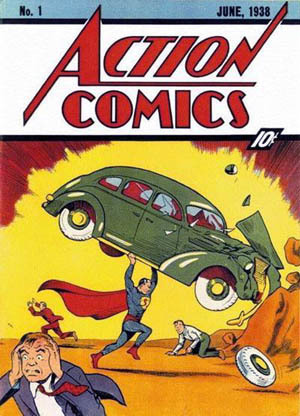
It is with this mindset that I delved into this comprehensive history of the character. The fact that it was written by Glen Weldon of NPR (who also wrote an excellent book about Batman called The Caped Crusade) just added to my anticipation.

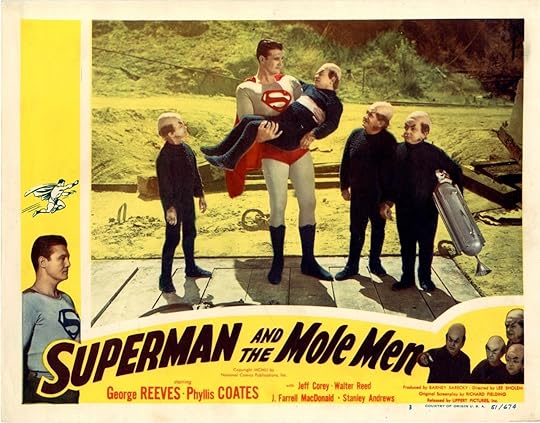
So Superman. You know, this guy:

description

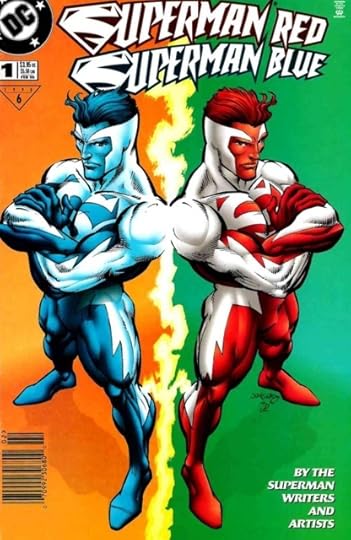
Or maybe this guy:

description

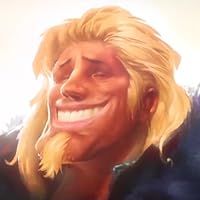
Perhaps this guy:

description

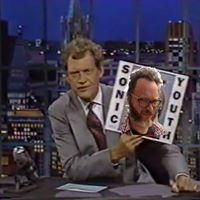
Or even this guy(s):

description

Yes, much like his fellow DC caped do-gooder Batman, Superman has been through A LOT of changes over his existence:
Yet the world around him was about to expand and enrich itself as an unprecedented pace. The Last Son of Krypton would suddenly find himself the harried patriarch of an extended, obstreperous family, all clad in tight long johns. New loves would entice him, new enemies would dedicate themselves to his utter destruction,.

And where once there were no monkeys, now there would be monkeys. In abundance.
Yes, you read that right, monkeys (pet sidekicks were a thing for a while in superhero comics. Weird, I know).

Much like Batman (who debuted a year after the first appearance of Superman), Superman was an amalgamation of different, existing characters in the comics (see also: under the sun, there is nothing new). He initially fought gangsters and swindlers and crooks for the sake of the little guy, the working man, the average Joe. He was very much a New Deal Democrat, pursuing social justice along with legal justice. But with the advent of the 50's and the strict comics code Superman changed, transforming into an Eisenhower Republican, an exemplar of stability, proper decorum, and due deference to authorities. Superman would go through many such changes over his existence (including ::shudder:: a mullet). It was quite fascinating to see how the prevailing culture would impact how writers and drawers portrayed and changed Superman and Weldon does an excellent job guiding the reader through the changes in time.

Another fascinating theme of Superman is just who is he. Is he Superman who assumes the role of Clark Kent as a disguise? Is he Clark Kent with Superman as an alter ego? Is he just Clark from Smallville who assumes both roles because that is what is needed to be a superman among mere men? The answer is...Yes. He has been all of those depending on the writer. I think it is interesting trying to come to grips with the fundamental question of identity of such a character and there are valid interpretations of all of the above. In addition to that there is a constant push and pull within Superman/Clark between his Kryptonian-ness and his Humanity. Much as immigrants to America struggle with how much of their old culture they will continue to identify with and much much will they assimilate. Superman is the ultimate immigrant and the struggle he faces has been faced by countless people across time.

But this book covered more than the comics, it also covered Superman's many other media manifestations. From radio, to theatre shorts, to full blown movies and TV shows Superman has been beamed into our head holes from multiple sources. And, like the comics, it isn't one cohesive character. Different writers and actors had their own take on the character, some of it from the comics some of it new that bled into the comic's continuity. Each just as much a legitimate Superman as the last, but each with its own take on the character as constrained by the medium he was being represented in (not shockingly 1950's special effects didn't do much to convincingly show a man flying).

This book also delved into comics culture. Specifically the development of the idea of continuity, the transition from the old guard of writers to a newer generation that grew up reading the character, and the growth (for better or for worse) of fanboy/girlism (fanpersonism?). It is quite interesting to see how the change in generations altered how readers viewed comics. Transitioning from something pre-teens would read for a dime and then throw away to adults who would have a conniption if there was some problem in the continuity (and then complain about it on the Internet) is quite stark. In light of these developments Weldon explains why DC made the decisions it did regarding the Superman character and his many comics (yes, there wasn't just one Superman comic, there were a bunch all running at the same time under different writers and artists).

This was a great book that even non-Superman fans (like myself) can enjoy.

But there were some shortcomings. The most glaring one (but not really Weldon's fault) was the lack of comic images. Yes, a history book about a comic character and not a picture to be found. This is, after all, the unauthorized biography of the character. Weldon does use some very descriptive prose to get his points across but man, a picture really is worth a thousand words.

The other major one (in my opinion) was he sometimes got bogged down in minutia. I don't think the book was necessarily enhanced by reviewing every major comic plot arc, especially by the end. I would have preferred Weldon to pontificate about the larger trends that Superman was exposed to instead of learning about some less than well received set of Superman stories.

But, in the grand scheme of things, this do not do much to reduce the quality of the book and the story Weldon is telling.

But that still leaves the question: why has a schmuck like Superman survived 75 years?

Throughout all his many, many, MANY transformations Superman has remained true to some basic, bedrock principles that define him much more than the cape, or the giant S, or the red underwear he wears outside of his pants: he puts the needs of others over those of himself and he never gives up.

This the reason he is the moral center of the DC universe. He is a moral rock of Gibraltar, the one constant in a turbulent and dangerous world. Through all his zany adventures and costume changes (thanks 1990's -_-) and deaths he always strives to fulfill these principles. As boring as he is, I think if we all strive to be more like Superman* the world would be a much better place. That is why he has persisted and become as American as apple pie. That is why now, more than ever, he is an ideal to strive for, a light to push back against the darkness we find in the world not by punching it, but by lending a helping to any who need it.

*This is in no way intended to condone jumping off high buildings with a towel for a cape. That is dangerous and it WILL kill/maim you.
Profile Image for Tasha.
671 reviews140 followers
February 22, 2013
I was never particularly interested in Superman as a character, but I love the author, Glen Weldon, who I know from his acid wit on the NPR podcast Pop Culture Happy Hour. (Essential listening for fans of pop-culture, podcasts, insightful criticism, and general good humor.) So I read this, his first book, largely out of a sense of loyalty. And it's unsurprisingly hugely interesting, even for a non-Superman fan. Weldon tracks how Superman has changed over the decades: visually, under a wide variety of artists; narratively, under a wide variety of writers; and culturally, in response to what was going on in comics as a whole during various eras. He also tracks the character's changes through radio, TV, films, and merchandising, and ties it all into a sort of Unified Field Theory of the various cultural purposes of Superman. I grew up with some of the comics he describes; a lot more of this history happened during my lifetime as I wasn't paying attention to comics. So it's terrific to have it all summarized and brought together, with humor and insight. I do wish there was more of Weldon's distinctive "voice" in the material — he comes through in little sardonic moments, often in tiny parentheticals—sometimes just a simple "(heh)"—but overall, he seems to be working for a gentle authority rather than the full-on sardonicism he's so capable of. Still, he lets his inner comic-book geek out and goes into a lot of close detail about fan response and continuity changes, while still keeping the material accessible for non-comics fans who are just interested in a cultural phenomenon. This was a fascinating book.
Profile Image for Brian Eshleman.
847 reviews134 followers
January 24, 2020
The author offers an intriguing thesis that Superman's seeming imperviousness to change is an illusion. His creators' ability to change him suddenly with the culture is one of the reasons for his endurance.

Weldon stays true to that thesis, pointing out Superman's New Deal sympathies, as World War II lockstep with those in power, his 1950s likeness to a Life With Father figure. The author probably could have kept the ball in that fairway and with some tight editing shortened the book. At least for a waiter who hasn't followed the comic books, he spent a lot of time on every twist and turn they contain.
Profile Image for Gilbert Stack.
Author 96 books78 followers
May 29, 2022
Superman has been around for more than eighty years, often getting changed but in the end being pulled back to the core concepts that originally fueled his creation. He is the ultimate nice guy, willing to suffer anything to help people. In this book, Glen Weldon walks the reader through his long history in sometimes excruciating detail. I’ve never thought of myself as a serious Superman reader, but I was amazed at how many times—even in the periods before I was born—I remembered what Weldon was talking about. It turns out that reading Superman anthologies in the doctor’s office, picking up stray copies at friends, and reading a lot of books that Superman appeared in, plus the television series, movies, cartoons, songs, and so much more, actually has made Superman a common feature in my life. It was fascinating to see how often I “recognized” a particular incarnation, and fun to walk through the many retcons and other changes that his writers have subjected him to over the years. If you give the book a try, I’ll bet you’ll be surprised by how well you know Superman too.

If you liked this review, you can find more at www.gilbertstack.com/reviews.
Profile Image for Katie Curler shoults.
11 reviews5 followers
June 21, 2013
I'm an avid Pop Culture Happy Hour listener, so I went into this book knowing I loved Glen Weldon's turns of phrase. I'm afraid I did not go into it with any sort of built-in fondness for the Man of Steel. I was expecting a social history of Superman - what he's meant to America and how that's changed. While Weldon certainly touched on these larger ideas, I'm afraid any sweeping conclusions were forfeited in favor of tracking Superman through all of his various comic book iterations. To a comics novice, this endless cataloging felt extremely dull, despite the fact that the author's passion for his subject matter shone clearly throughout.
Profile Image for Matt Smith.
305 reviews16 followers
October 12, 2020
I've been on a Superman kick since Labor Day. Ish.

To be honest I'm not really sure why. Maybe it's because I realized that the Superman movies are on HBO Max and I wanted to re-watch Donner's Superman. Maybe it's because I realized that it's probably time for me to actually buckle down and read Superman IV The Quest for Peace. Or maybe given the state of the world right now I want to look at something that will be positive and that inspires hope and a better possible tomorrow.

Whatever the case, it's about time I got to Glen Weldon's exhaustive history on The Man of Steel, from his origins until "Today" (really right before Man of Steel came out). This is definitely a book that came out before The Caped Crusade, and it shows. While exhaustive, this can, at times, be rather dry. It blazes through decades of history in its short time and is remarkably dense, Weldon knowing all the ground he has to cover.

Unfortuantely, you can tell the lessons he learned from this book that he applied to his follow-up because whereas the other book has a deep charm and joy as Weldon gleefully recounts a character with a particular perspective, unafraid to sprinkle in liberal interpretations and perspectives on what is happening in Batman's history, this book is merely a retelling of all the facts that went into Superman's substantial life as he nears a century of existence.

Now, that said, if anyone wants an understanding of Superman, why he's important, why he has weaksauce villains, how he came to be, and the rigidness with which he exists, this is a book for you. Anyone who believes Superman to be boring and a waste of space is missing out on one of the most deeply iconic characters of the past century and why that character has had the impact he has. It inspired so, so much Superman joy in me, giving me thoughts and excitements of what to read and watch, and is helping rekindle this Superhero thing I've been going through lately. Hard to explain why on that one too. Maybe it's the Avengers video game, which inspired an MCU rewatch. Makes sense considering the deep deep pool of Avengers to inspire this.

For comparison, all it took to spark it in the other direction was one Superman.
Profile Image for Aaron.
46 reviews
July 9, 2022
I enjoyed this, it has some good stuff to say about the history that went into Superman and his effect on the world over the years and some interesting things about the making of the various movies and TV shows. It is a thorough telling of the publication history of the comics which is interesting at times.

The problem though is that it's too thorough. A good portion of the book comes down to listing every minor character to appear and detailed descriptions of comic plots over the many years and it becomes very dry.

I think I wanted the analysis of Supermans influence on our real world and the different interpretations of what Superman represents inside the DC universe as a character to have been the main focus of the book instead of sprinkled throughout a detailed account of the comics publication history.

But I did enjoy the book and I do like what it has to say about Superman in the grand scheme of the superhero world and why it's so hard to make him work in the modern mindset of today's cynical world. But I could write my own book about my thoughts on that subject, so I'll leave it at that.
Profile Image for Mitch Rogers.
186 reviews5 followers
March 3, 2019
Is this my third superhero biography in two months? Yes, yes it is. This is my genre now.

I am a little hesitant to write this review, on the hypothetical chance that Glen reads it and then, in an equally hypothetical turn of events, refuses to meet me at some hypothetical soiree we are both (hypothetically) invited to. But here goes.

This book felt like a low-budget rehearsal for The Caped Crusade, a book Glen absolutely clobbered out of the park. I had never noticed until now, with the opportunity to closely compare two very similar projects, the difference a good editor and editing process can make. This book had some uncomfortable micro issues (blatant typos showing up in pretty much every chapter) and macro issues (poor development of marginally presented themes). Overall, it felt like a long Wikipedia article, albeit one written with some flair.
Profile Image for Scott.
Author 9 books127 followers
July 28, 2013
Disappointing. For the most part, this reads like an annotated timeline of Superman's appearances in comics and other media, without much insight tying the character into a larger context. It's exhaustive, I guess, but in the end, exhausting. It did come to life a bit in the section dealing with Superman in the 70s - or maybe it's just that I was more interested because that was the prime of my childhood comics fandom. (I vividly remember the day I raced home from the Navy Exchange to beg, borrow or steal the money to buy Superman vs. Spider-Man: The Battle of the Century.) It really bogged down as Weldon delved into the endless crises and reboots that have plagued DC Comics over the past couple of decades. TMI.
Profile Image for Anthony.
813 reviews62 followers
December 25, 2013
Weldon's book doesn't get too in depth over every part of Supermans history, because if he did the book would probably 4 times the length, but when he does it's a well thought out and intelligent read. He explores how Superman has changed with the times and how they've effected him as a character and how writers have approached him. It's not just the comics though. He includes Supermans history in both tv and film, not leaving much out.


It starts off and it's a bit of a taxing read, because he reciting the first few issues of Superman almost panel for panel. But as we get further down the line, mostly from the 50s onwards, I couldn't put it down.

If you're interested in the character and are looking for a book about Superman that isn't a comic, this is for you.
Profile Image for Eric Mesa.
843 reviews26 followers
February 3, 2018
I already knew almost all of this; well, the outline, anyway. I've been reading comics on and off for three decades and ever since discovering sites like Comic Vine and reading Grant Morrison's Supergods, it's been easy to learn about plots and trends that took place when I wasn't reading. (Or even before I was born) In fact, it's almost requesite when reading Grant Morrison's comic work if you want to understand all the references. And for the way that I and my infrequent collaborators on www.comicpow.com write, it's important to understand the history of the characters or writers. But what Waldon provides is a great sense of context for all the trends in Superman's history. He provides a through-line that shows how the trends that have buffeted Superman have swung pendulously. He also emphasizes the true essence of Superman and that any deviations from that essence are when changes go too far and end up rejected for they leave us with a hero that is Superman in name only.

My personal history with comics was definitely more in the Marvel pool. When I first started while in Elementary school, Marvel was just more appealing to me. I had seen reruns of the old Fleisher Superman cartoons and I was an avid fan of Paul Dini and Bruce Timm's Batman: The Animate Series. But I didn't get into DC comics until just before the New 52 via Gotham City Sirens and Scott Snyder's Detectic Comics run. (During this time I also discovered and became a HUGE fan of Image Comics via Saga, Chew, and others) Then it was New52 which eventually grew stale with me. (I will credit Dr Chrisy Blanch's MOOC with introducing me to the original Seigel and Schuster conception of Superman and contrasting it with Mark Waid's Birthright origin story) So Waldon's book definitely provided me with lots of details I wasn't familiar with and really made me appreciate the persistence of the hero often derided as the Blue Boyscout.

Whether, like me, you're a comic fan or you just know Superman via his presence in American (and, probably, world) culture - Waldon's decade-by-decade history of Superman will provide you with insights into why he has survived so long.

PS Thanks to my younger brother, Daniel, for gifting me this book for my birthday a couple year ago.
Profile Image for Sonia R.
84 reviews1 follower
May 12, 2025
Glen Weldon has long been my favorite of the npr culture critics. He likes to position himself as the curmudgeon of the group, but it’s an easy facade to see (or hear) through whenever he gets a chance to talk about a property or character that he loves. This book is exactly that, his infectious love of Superman permeates every line of his prose. You can just tell how excited he was to reread old comics and retell the zaniest plot lines, and to dish on the bullpen/ studio/ and behind the scenes drama of the comics/ tv shows / movies that have portrayed the character over the decades. And there is indeed so much drama. Rereading this book was like hanging out with an old friend, talking excitedly about something you both love. I couldn’t agree more with Weldon’s overarching and central thesis, which is that Superman is the distillation and reflection of American ideas about masculinity, to watch the charachter change overtime is to reflect on our own changes as a culture as we continue to grapple with ideas of national power and responsibility, as well as what it means to be the ideal American male- what that looks like physically and emotionally. Superman never ends because neither do we, we need to keep telling and retelling Superman stories because we continue to tell and retell ourselves stories about what it means to be masculine and what it means to be an American, and what it means to be good.

Been rewatching the Reeve films as I read this, which has also been a real joy. Rip Chris Reeve. Also, this made me really want to rewatch the adventures of Lois and Clark. 1990s Dean Cain in a sepia tone suit really does it for me.
Profile Image for Jake Davis.
165 reviews
July 15, 2022
For what it was it was okay. It was more about the inception of superman in the comics and media instead of a “biography of superman” which i wouldve thought would be about supermans impact on the real world and the changes that came with.

To me the book tended to ramble on and spent way too long going over the 80s superman and barely spent any time in the 90s to 2000s. And there was mention of music and other things that were popular that were inspired by superman but im surprised he missed the song kryptonite.

He also had issues with some of the actually good superman stories which makes me think hes an OG fan. Nothing wrong with that but he seemed like he was trying to look too deep on surface level stories and not deep enough on stories that require more deep thought.
Profile Image for Kipp C.
65 reviews1 follower
January 25, 2021
Within the Church of Superman, Glen Weldon is an apostle. This book is a detailed history of the influence of Superman on superheroes, pop culture, and comics. More importantly, how Superman has become a mythological icon that has endured for nearly a century, and will continue to endure for centuries to come. A mythos that speaks to the immigration story, the horrors of fascism, and the courage to stand up to bullies.

A must read for comic book readers, pop culture history buffs, and of course, fans of Superman.
Profile Image for Emmet Matheson.
15 reviews8 followers
December 19, 2021
This is a fun book. Recommend to my fellow superfans. The scope of the book (Superman's entire published life) prevents things from getting too in-depth, and I'd love to see Weldon go deep on one specific aspect of Superman from the same lovingly irreverent perspective.
Profile Image for Ashley.
816 reviews51 followers
July 19, 2022
*Listened to audiobook*

I'm not really a Superman fan... (Batman foreverrrr) but this was an interesting listen.
Profile Image for Brent.
1,058 reviews20 followers
May 19, 2024
An enjoyable and thorough journey through the history of Superman and across his many mediums.
Profile Image for Donald Kirch.
Author 47 books201 followers
July 24, 2019
Makes you almost "believe" that a Man could fly :-) Very much recommended, for "the child" in all of us.
Profile Image for Cloak88.
1,052 reviews19 followers
September 26, 2020
A comprehensive history of the publication of the Big Blue Boyscout.

This book chronicles the changes, the different interpretations, different versions and the history of superman both 'on and off' the comicbook pages. In all this was a pretty interesting read. With 75 years worth of publications to wade through there is a lot to learn. Different versions corresponding to different times and mindsets.

If this Icon of the Superhero world and comicbook publishing holds any interest for you than this may be a good fit for you. Written in a chronological order this book starts with the creation and origins of the character and follows-up up with subsequent iterations under different authors and media. The Radio shows, TV and movie versions each get their chapter and give a good overview of this Iconic character.

Having personally never read any of this comics or had much of an interest in the movies, I found this book to be engaging and accessibel. Terms were explained and the different versions were given context in the time they were written. So yeah a good book.

Superman Fans Rejoice
Profile Image for Erin WV.
141 reviews28 followers
June 27, 2013
This was a really fun read, even for someone like myself who is largely outside of the Superman industrial complex. Except for one month in 2011 when I did, I don't read comics. I've seen the first Christopher Reeve movie, and none of the others. I watched Lois & Clark in the 90s and thought it was fine.

I decided to read this book for two reasons. One is that Glen Weldon is my favorite contributor to the Pop Culture Happy Hour podcast, a witty curmudgeon-type I wish I could hang out with in real life. Two, I like cultural history and analysis of icons. My hope for the book was that it would look at Superman the character in his historical and symbolic context. Mission accomplished there.

The book is set up chronologically, with each chapter representing approximately one decade, starting in the 30s when Superman arrived on the scene. Instead of getting too much into the ins and outs of how publication came about (the suing of DC Comics by original Superman creators Shuster and Siegel is mentioned only superficially), The Unauthorized Biography zeroes right in on the character. We get recountings of plotlines of the first appearances in Action Comics and see how they paint a picture of a Superman who is being formed, whose motivations reflect the concerns of the day, whose powers change according to the whims of the creators and the needs of the narrative.

And then we see how that picture of Superman continues to change and never stops for seventy-five years. Along with his hair and his costume and his jawline, Superman's motives and politics and anxieties constantly evolve, based not just on the revolving door of writers and artists behind the scenes, but also on the changes wrought in American society.

It's especially fun to see how the villains change over time. In the 30s, Superman fought Cagney-esque gangsters. In the 40s, Nazis. In the 50s, mad scientists. And so on. Remembering the 90s in terms of their "extreme" villains (with names that Weldon mocks mercilessly and hilariously) was especially fun.

Apparently one of the biggest questions new Superman writers need to address is whether they believe Superman is a crimefighting alien masquerading as a man, or a farm boy whose strange powers are just a vehicle through which he does good. The goodness, in fact, seems to be the only thing that stays true--Superman is always trying to do the right thing, enforce a moral code.

Drawbacks: Weldon does go into detail retelling the stories as they happened in the comic books, the movies, and the TV shows. They are fun for awhile, but occasionally get repetitive. As the Superman universe expands and doubles and triples and spawns bizarro worlds and paradise worlds etc., they get increasingly complicated as well. If you are a not a Superman completist (as I am not) it may feel like a bit too much.

In that same vein, hundreds and hundreds of men (and a handful of women) have contributed to the drawing, writing, and publishing of Superman media for the past seventy years, and their names are crawling all over this book, with very little else to differentiate them from one another. I imagine Weldon had to include "This time with a story by Comicguy Bookington, drawn by Dude McComics," every time to satisfy the scholars who are looking for that thing, though the names became white noise to me really quickly. If you are looking to learn more about Bookington and McComics specifically this is definitely not the book for you. (Luckily Weldon includes an annotated bibliography at the end for your edification!)

Minor quibbles, though, about an interesting (pop-)cultural history written in a funny and engaging style by Weldon.
Profile Image for James.
41 reviews1 follower
June 2, 2013
I mean this in the best possible way: This reads like a Wikipedia article written by someone with talent and a point of view.

Weldon is witty, with a scary-complete knowledge of the history of Superman. And he both loves the character and isn't afraid to point out when the character has been handled poorly. (Not for superficial reasons like costume design, but when the essence has been neglected or overlooked.)

The combo of affection and critique work marvelously. One of my favorite half-paragraphs: "Lana Lang's first impuse, for example, on learning that she had acquired the ability to transform herself into enormous insects, was not to hide under the couch like Gregor Samsa (clearly a Marvel character) but to sew herself a bee-themed costume."

That said, while I love what's here, this is one of those books I wish had been at least half again as long. Stuffing 75 years of character history into 335 pages means that things are frequently rushed. All too often, the book consists of recaps of major storylines, a dash of analysis, and a soupçon of (very) funny lines. Some odd repetitions of information feel like artifacts of a manuscript that was condensed and rearranged; occasionally, concepts are introduced and then mentioned again as if for the very first time a few pages later. Whether it was truth or fictionalized, the recent Slate article that discussed 10 pages cut from the manuscript where Weldon discussed the meaning of Krypto hints that there was originally much more to be discovered, and I wish at least some more of it were here. (Seriously, a 10-page discussion of Krypto apparently got trimmed to a paragraph — couldn't we have gotten at least three pages?)

But Weldon makes a convincing argument for his central thesis: That what defines Superman, the two ingredients that are his essence, are that he is absolutely good and that he never gives up. Last son of Krypton or one of hundreds of remaining Kryptonians; father figure or brother figure or buddy figure; red trunks or no red trunks; Superman transcends the details, and those two things make him not just the earliest but the greatest true superhero.

Fun read. Wish there was more of it.
Profile Image for Stephen Parker.
15 reviews2 followers
April 19, 2013
I come to Superman as mostly a casual fan. I love the Donner films and the Bruce Timm animated series from the 90s, but my direct knowledge stops there. That did not stop me from poring over every detail in this book.

Glen Weldon's book sets out to tell Superman's story from beginning to end, identifying what has changed and (more importantly) what has remained constant. I would say that he succeeds. More importantly he compiles a very compelling story, one which any level of fan can approach and adore. I recommend S:TUB to any fans of comics, superheroes, storytelling, serial fiction, icons, myths, whimsy, absurdism, American art, or popular culture.

At 75, Superman is a vast cultural icon, and his appeal extends far beyond the panels of Action Comics. However, Weldon's book never neglects to locate the character's essence in his comic book incarnation, no matter the decade. Weldon's greatest strength as a writer (biographer?) is his desire to celebrate the silliness of comics alongside the ponderous mythmaking. He delights in poking fun at the wackadoo sci-fi of the Silver Age and the roided-out nonsense of much of 90s comics. The occasional biting remark was a welcome reminder that comic books are never a tonally consistent medium, and that mix of the absurd and portentous is often what makes the superhero comic so wonderful.

The book is not without some difficult passages. Particularly in the 50s and 60s I felt awash in names, dates and apes. But overall, this is a fascinating and lively document that should inspire us all to seek out more Superman. I am even oddly compelled to watch Superman III & IV.
Profile Image for Jeff Wetherington.
222 reviews2 followers
June 2, 2013
A good book.

I grew up on the early 1960's (Silver Age) Superman comic books, left after most of the John Byrne reboot had been discarded and returned briefly for the Death of Superman and a few years following that storyline. I watched Smallville and went to each of the movies because, it was after all, Superman, but could never bring myself to continue spending so much money on the comics when I didn't care for the storylines or the characters.

Thus, most of the history, up until the late 90's when I stopped keeping up with the comic book versions because of too many updates to the origin and changes in character, was already very familiar to me. So I found particular enjoyment and interest in the portions that covered that period to present-day.

Weldon is obviously familiar with the character and has done an excellent job of bringing not only the history but the essence of Superman to his work. The only caveat I would offer is his tendency to use a $10 word when a $5 one would suffice. But this is to be expected when your background is NPR and I always appreciate the opportunity to expand my vocabulary.

If you have any love for the character or interest in his history, this book should be on your shelf.
39 reviews
June 6, 2015
I won a copy of this book from the publisher recently. but it has been on my radar for a while. I have never been a comics reader but am always interested in the intersection between pop culture and society. In this book, Weldon does a great job of demonstrating how even an iconic character is changed by the world at large. While sometimes repetitive with information, he manages to write a compelling book about the Man of Steel and his many iterations. Even for someone who is only marginally familiar with the deeper Superman cannon this is an enjoyable and informative read.
17 reviews1 follower
June 3, 2013
Wow. I learned a lot which is saying a lot for a self-proclaimed comic geek who has been reading the stuff for the past 32 years. I enjoyed it a lot but do wonder if it might be TOO much info for a casual reader. Still, I have come to enjoy Weldon on Cultural Happy Hour and he does not disappoint here.
Profile Image for Ryan.
423 reviews20 followers
February 3, 2017
It's been an eventful three-quarter-century for The Man of Tomorrow, and this book is out to detail damned near every moment of it.

All told though, I'd gladly give up chronicles for comprehension...facts for philosophy.

Now where'd I leave that copy of Birthright?
Profile Image for Stevie.
4 reviews3 followers
May 6, 2013
I laughed, I cried, it was better than the Bible!
Profile Image for Dennis Jacob.
Author 7 books36 followers
November 11, 2016
A perfectly fine introduction for the uninitiated. Merely scratches the surface though. Would have loved for more in-depth analysis to have been included.
Profile Image for Jack Herbert Christal Gattanella.
600 reviews9 followers
October 23, 2025
"At the end of the day, it doesn't matter how ridiculous the get up or how silly the powers. The thing that is eternal about Superman: he will do good even if he's not doing well."- chapter 12

This is about as comprehensive a book about the much-more-varied-than-you-might-expect history of Superman from its creation by Siegel and Shuster in the late 1930's to 2013 (oh, I need to see what Glen Weldon thought about "Man of Steel" now, he must have had all the hot takes imaginable over that gaudy character-shifting monstrosity, but I digress). I think going into a book like this it isn't (or isn't just) about what new things I can learn about the subject, it is how the point of view of the author is infused with the subject matter. Supergods by Grant Morrison leaned more into philosophy, but also had biography. So did the "Marvel Comics the Untold Story" by Howe (I might prefer that just a little more to this, but that is about a whole comic company so there is much more to chew on).

I think the early history from the 1940's to the 1960's was probably the part of the book that grabbed me the most; I don't know how likely I would be to go through those issues (some of those early 1940's comics have aged not even so much due to subject matter but because of the amount of exposition in the bubbles and descriptions), but there was so much of the history that captivated me, about how seriously the public took the character, how it did (and did not) transition along as the first generation/group to read Superman comics aged out of the comics and they had to change as comics had the "code" and the Silver Age came to be, and how so many of the ideas of "retconning" of characters and storylines really took shape much earlier than I thought - not least of which by that one comic from 1961 that altered Superman's origin by Jerry Siegel himself returning to the character he started.

It is hard for Weldon not to get into just listing various titles once we get into the 1990's and 2000's, and that may make the latter part of the book bulked with a bit of a Wikipedia-ing of the subject. But there are still some impressive opinions and takes, not least of which about Superman Returns ("You will believe a man can... flake" is a line I'll remember for a while, re the character just going away for some unknown reason that I concur leaves that film unsatisfying). Much more compelling is his analysis, which runs more or less through the entire book and slips into a running narrative in a sense, of how Superman/Clark Kent's character can be bent, occasionally broken, but it has to come back to the source. I really liked the details about Smallville (a show I've only seen in bits and pieces), the history around the original Reeves Superman TV show, and just how strange things got in the 60's and, oddly enough, less so in the 7o's despite the work of Jack Kirby and the 4th World.

I don't know if I'll remember every detail that I took from this book years or even months from now, but it is consistently engaging and fascinating, especially as Superman represents something not just aspirational in an American sense but how that idea of being good, and feeling sometimes feeling down only because there isn't enough good to do, is something that Americans (and people throughout the world to various extents) know is right but have trouble living up to. That and I do want to check out the John Byrne comics now more than ever. The ones where he had a mullet... less so.
Profile Image for Matthew Kresal.
Author 36 books49 followers
July 29, 2025
From his introduction in 1938, Superman has long held a place in popular culture. It hasn’t always been an easy path for the Man of Steel, sometimes eclipsed by rivals both from within DC Comics and down the street at Marvel, not to mention the changing tastes of the wider public. Charting Superman’s course through his first 75 years and the lead up to the release of 2013’s The Man of Steel is NPR critic and lifelong comic book reader Glen Weldon with this unauthorized biography of the superhero. All in the service of a simple question: Why has Superman endured?

To answer that, Weldon takes his readers on a journey across numerous media from comics to radio, movies, television, and (of course) merchandise. One that starts with two teenagers in Depression era Cleveland, Ohio who through trial, effort, and a lot of rejection letters created the character. Except that, as Weldon revels in showing readers, the Superman of 1938 wasn’t yet the character we’d all so readily recognize though a number of his trademark elements were already in place. Over the decades, creators across all of those different media would give and take what those two teenagers created, redefining the character for audiences along the way.

That give and take becomes an outright tug of war in places. Between his original creators and the company they sold the rights to, between reader (and later fan) expectations and what writers/artists want to do, between the comics and different TV incarnations of the character that led to the latter telling the former what they could do, and between filmmakers and studios. Weldon charts these skirmishes and outright battles and the impact they had on the character and public perceptions of him, including how the media played up the 1992 Death of Superman arc or the decision to remove Superman’s trunks in more recent times. All of which make this biography a history not only of the character but of wider pop culture.

Something which leads Weldon down lots of myriad and sometimes intersecting paths. Often because different comic teams, filmmakers, and television producers keep tackling the same questions: Just who is this guy flying through the sky? How each of them and various eras define Superman and answer questions such as “Which is the disguise: Clark Kent or Superman?” or how those adapting the comics into different media played pick and choose (when not outright creating) which parts of the lore they’d makes this an ever engaging work for anyone even remotely familiar with the character. You might not always agree with Weldon (such as his dismissal by and large of the Elseworlds range of comics or his interpretation of Superman Returns and why it wasn’t the bigger hit that Warners wanted), but you can’t ever claim he’s dull if he occasionally gets lost in the weeds of lore and backstory.

Nor, as the author insists, is Superman himself. Something that has made him impervious to changing public tastes, writers and filmmakers sometimes ambivalent toward the character (something which makes me wish that Weldon would do an updated edition to look at Superman over the last dozen years), and numerous costume changes. The beating heart of the character first put to the page in the 1930s remains beneath all the changes that keep the Man of Steel grounded in the here and now (or whatever version of DC’s continuity reigns at present).

And long may it remain that way.
Displaying 1 - 30 of 182 reviews

Can't find what you're looking for?

Get help and learn more about the design.