In this dramatic and beautifully written memoir, the author explores questions of race, adoption and identity, not as the professor of ethnic studies that she became, but as the Black child of German settlers in Guatemala, who called her their “little Moor.” Her journey into investigating the mystery of how these White foreigners became her parents begins when she reluctantly considered joining an African-American organization at the U.S. College where she taught, and she realized it was not just her German accent, that had alienated her from her Black colleagues. She discovered under her layers of privilege (private schools, international travel, the life of a fashion model and actress in Europe) that her hidden story is one of disinheritance.
The author’s determination to find out who her mother and father really were, and why she was taken from them, tests the love of her White husband and their son, leads her to embrace and then reject the charismatic man she believes to be her biological father, and takes her deep into the jungles of Guatemala to find a family that has kept her memory alive as legend. In the book's shocking ending, she learns the truth about who her mother was, and the callous disrespect committed long ago against mother and child in the name of love.
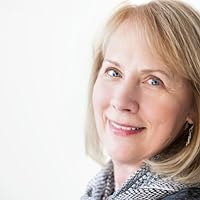
Catana Tully grew up trilingual (German, Spanish, English) in Guatemala where she attended elementary and middle school. In tenth grade she entered a boarding school in Jamaica, WI and received her Advanced Level Higher Schools Certificate from Cambridge University, England. Expecting to become an international interpreter, she continued her studies at the Sprachen und Dolmetscher Institut in Munich, Germany. However, she was called to work in a play and discovered her affinity for the dramatic arts. She became the actress and fashion model Catana Cayetano and appeared in Film and TV work in Germany, Austria, and Italy. In Munich she met and married the American actor Frederick V. Tully and ultimately moved to the United States. They have a son, Patrick. In Upstate New York, she completed the BA in Cultural Studies, an MA in Latin American and Caribbean Literature, and a DA (doctor of Arts) in Humanistic Studies. She held the position of tenured Associate Professor at SUNY Empire State College, from which she retired in 2003. She returned in 2005 for part time work in ESC’s Center for International Programs, where she served as Mentor and instructor in the Lebanon program, and as Interim Program Director for the Dominican Republic. In 2011 she retired completely to dedicate herself to publishing Split at the Root. She is currently preparing an academic version discussing the psychological issues imbedded in the memoir.
After reading this memoir I thought it would be easy to praise this book and move on. Not so.
Even during this busy Christmas season, I feel compelled to do more, say more, about the author's ability to draw me into her story. Her content intrigues me - the quest for personal identity, blended families. Her style has restraint yet moves in poetic waves.
I'm personally interested in 'nature versus nurture' themes. In this book, the author's plight reminds me of a Dickensian character - an 'orphan' raised by a benefactor - in this case 'Mutti' and after a whirlwind life attempts to discover who she really is.
Catana Tully, although a cosmopolitan woman, seems to have a good hold of her values, and has accomplished a tremendous achievement in writing, then re-writing this book.
I feel that every good book has its partner - an appreciative reader - and that I am for this lovely work! If I were back in university, I would eagerly write a paper on this memoir with an in-depth analysis (given my own analytical nature!) But for now, I will spread the word to others who may share in my enthusiasm.
At times this writing was an exotic travelogue, and I love 'locations.' Other times it read like a detective story where I raced to read the mystery of who are the real players, the parents. I found myself in that proverbial state of 'not being able to put the book down' until I had some answers, as the book kept raising more and more questions. Indeed, the narrative tension was filled with conflict and surprise throughout the memoir.
Particularly well-done is Tully's device of portraying her conversations with the psychologist: a wonderful piece of writing in the thoughtful questioning from the professional bringing new insights, breakthroughs, to the author. And we are there!
(A passage)
It was 1991 and I was in Connie's office, again discussing mother issues - when were we not? At times I was critical of Mutti, but I would not be so for long. After all, how could I quibble when she raised me with the best of her intentions and abilities? "She gave me everything in her power to give; only one thing she could not offer me: a White skin," I said softly.
"That's true," Connie agreed and looking at me evenly added, "But she could have given you your Black one."
"Huh?"
"Had she allowed you to know Rosa, you would have become comfortable in the skin you were born with." Connie leaned back in her chair. "Maybe hard to deal with now, but it's that simple," she concluded gently. (p.161)
At times heart-aching and heart-breaking, the book does not dissolve into a puddle of excessive sentimentalism, which is a big plus, and I think hard to do for a writer who attempts to reveal such a personal story.
I would easily have purchased a hard-cover at commercial prices from a large book store chain. This comment is to express my respect and support for the wonderful work of indie authors.
The photographs Catana includes are an added touch, all both gorgeous and poignant. Rosa and Mutti on a swing. The author's two mothers. You must see this beautiful picture.
Which reminds me, this memoir would make a great film with Halle Berry (perhaps?) in the lead.
I am the white, adoptive mother of a soon to be 12 year old Guatemalan girl. I loved this book for the many insights it has provided me. As my daughter begins adolescence and the search of who she is to become in her life, reading this book has given me great insight as to what I can do to help her on her journey of self.
I strongly recommend this book to anyone who has adopted outside their race. I also recommend this book to anyone who has internationally adopted.
Written with great verse and beauty, the story takes you on Catana Tully's journey to discover herself, her roots, the role her adoptive family has played in shaping who she is, as well as her history, her biology, her people and how they shaped her life. It grabbed me at the start and I could not put it down. I know I will read it again, too.
The book was beautifully written. Story about a little black girl that is raised by white German parents. She lives a very sheltered and privileged life. It is not until she is an adult that she realized how she was kept from her knowing her genetic parents and siblings. She realizes later in life how much her birth mother loved her and wanted to be part of her life. Cantana also realizes the types of racial stereotypes there are in the world whether you are black or white. It gave great insight as to how people perceive other cultures and races.
Tully's memoir begins on a pleasant pathway. She is a chosen child, surrounded by love and privilege. But along Tully's reluctant path of self-discovery, she is slowly led into a jungle of shadows. Manipulations, lies and deceits, are revealed around every corner as she wrestles with the truth of her "Mutti's" love and the tragic puzzles of her biological roots. An emotionally moving story, well worth the read.
This is the remarkable story of a little girl born in South America, raised by wealthy Germans including the best schools, onto exciting careers, marriage and family. But it is so much more. It is a microcosm of the world where we live with lessons about so many things, about which we don't even realize. As this little lady grows up and faces a changing world, the lessons she considers and learns from are valid for all of us. After reading her story, I am proud and pleased to be able to call her my friend.
Really good books work on different levels and in different ways. This is the amazing story of a black woman, born in Guatemala in 1940, who lived with Germans and was educated by them, but never adopted. The story of her life would be an amazing read - even without the conflicts. She had a very german upbringing, went to school in Guatemala, later in Jamaica. She was trilingual - german, spanish and english. She had three mothers and two fathers and many names. She was successful in many differant careers - as a model, an actor and a professor. She had a happy marriage with a beautiful and adorable man (with whom I probably was in love at some time, because he took part in the German Karl-May-films) and had a wonderful son. She his lived in many dífferent countries. This alone would make most of us gasp.
In the first part of the book Catana tells about her childhood and her education. And there were a lot of moments, when I went to Google and there is a huge pile of notes about things I never knew about, for example the Germans who went to middle America and worked on the coffee business. Catana tells about her childhood and her upbringing and there are moments where you want to cry out at her, tell her that she is missing something...
It took her until her middle ages, when she was living at the US and was deeply affected by the racial implications - not so much by whites, but by black people who partly resented her for having married a white man and who's culture she didn't understand. This did disturb her .... and is the most disturbing part of the story. But hang on! The tale is darker now. But she will start to look for her real, for her biological family, and under a lot of stress and some laughter and a lot of love we will find out with her who she really is and see the sophisticated, european woman embrace the part of herself she never understood - her dark skin and her roots. Highly recommended - but a bit of a warning: You will put this book aside and still be thinking about it for a long time.
I finished a book the other day, and I’ve had an irresistible urge to talk about it to every person I’ve seen since then. It’s a book about adoption, but then it’s not quite about adoption. Tully was born to a Guatemalan woman of African origin, but she grew up in the household of a German family living in Guatemala. She became a proper German young lady and eventually moved to Germany, where she became a fashion model and movie star. Although many questions arise for the reader about Tully’s background, the girl herself doesn’t question the narrative she has been given by her German mother. Only belatedly does Tully realize there is much to be learned about her origins. Tully moves to the United States where she suffers an identity crisis. She isn’t African-American, although she is a Black woman. Eventually, she realizes the hard truth that she is racist toward African-Americans because she has so absorbed the subtle teachings of her childhood. She studies and ultimately teaches Ethnic Studies and learns that she has been colonized by the German family who raised her. She begins the long struggle to learn who she is and from where she comes. To do so, she must search for her birth mother (who has since passed away) and her birth father. Along the way, she meets her birth siblings and another father who tells her that he is her birth father. Additionally, after years of a difficult relationship, she reunites with the German sister who was old enough to be her mother and helped raised her. All this is necessary for Tully’s identity education. I found Tully’s search to be suspenseful and fascinating. The book reads like a mystery or detective novel in the latter half. The reader learns the truth along with Tully. Split at the Root is a well-written and thoroughly engaging memoir even for those not interested in adoption, and for anybody connected to adoption it is a must read.
Catana, a young Carib child has been torn from her home in an mysterious coastal city.
This is a memoir telling the story of a woman's search to figure out her heritage and eventually, herself. She was raised by a fancy and wealthy white European family, living in Guatemala during World War II. She is privileged and loved by her family, but she can't help but feel like something is missing. She becomes unable to handle the everyday pressures in life, and you'll read how she handles her struggles she deals with it internally.
Being a black skinned woman, she doesn't feel comfortable where she is at. She is being torn between everything she was raised as, and who she really is. So she goes in search of her old family to understand her own cultural background. Travel from Central America to the Caribbean, through Europe and the United States as she reveals her true self and reunites with her family that she left behind.
You'll see how she comes to terms with both of her families and who she is. It takes her awhile for her to make peace with how she was brought up as a black skinned woman.
It was hard to put this book down because I just had to find out what happened next, at the end of each chapter. The characters were so honest and real, I felt I knew everyone and was right along side her as she faced her struggles head on. It was a great memoir worthy of 5/5 rating.
Catana Tully's Split at the Root is a tale that traverses a multicultural landscape spanning two continents and over sixty years. It begins with her idyllic upbringing by affluent, sophisticated, and loving German parents who took her as their own child in 1940s Guatemala. It is a perfect world for her; but eventually Ms. Tully must leave this protective environment and make her way in the world, where she is confronted by bigotry, racism, and anxiety over exactly who she is and where she belongs, and to whom. Her journey eventually culminates in her confronting the most basic of questions: who am I? Ms. Tully tells her story with an endearing honesty, emotion, and touches of humor. In some passages, particularly in describing her childhood, I found her writing to be elegant, her words seeming to ring like fine crystal. And she capably, and movingly, related her feelings throughout her quest for self, along with portraying convincingly the relations, conflicts, rivalries of her families. In addition, she makes insightful and pertinent observations into racism, bigotry, and the struggles faced by persons of mixed racial, national, and ethnic backgrounds. I highly recommend this book for it's moving story and for it's scope, depth, and insight.
In Catana Tully’s evocative memoir, Split at the Root, there are different kinds of Othering. Born in 1940 to a black woman, Catana is raised by white Germans who have decided to spare her natural mother from the stigma of nurturing a product of illegitimacy in less enlightened times. “Mutti” (Mommy) and “Vati” (Daddy) take Catana from Rosa – not least because the baby is female – and bring her up among the white colonial class rather than in the dirt-poor village atmosphere where she would otherwise have been raised. “Vati” is Othered by the Second World War, when compelled due to his German identity to go to an internment camp run by the US government. The sentence has serious health ramifications for this already-quite-elderly, avowedly anti-Nazi man, and when he returns, he is infirm. Rosa, Catana’s natural mother, is herself sidelined by Catana’s white parents. As a precocious child, Catana inadvertently rejects Rosa too, expressing displeasure at her birth-mother’s visits – perhaps subconsciously feeling that her mother abandoned her to be raised among the Germans. Catana herself – known as Möhrle (or Little Moor) to her German family – is Othered in a variety of ways. Her birth name of Adriana is taken from her. Years before launching a career as a model and actress, Mutti tells Catana that she won’t succeed in the entertainment field because the only parts available to her will be housemaids and staff. Even later in life, Catana is compelled to check the Other box when filling out forms to denote racial identity, only specifying her heritage herself in the finer print. Given a private education and a cosseted upbringing, these may seem like minor issues to contend with when millions face starker choices in life, suffering the effects of more pronounced racism or ethnic bias. Yet, as Catana explores her past, her own irrational fears and propensity for Othering are addressed. The profundity of her insights brings about a catharsis and resolution that will keep you reading this memoir to the closing pages.
An extraordinary, shocking and disturbing true story that left me gasping with outrage at times, Split at the Root is the story about a woman who was removed from her Black birth mother and brought up by a White, German-speaking family in Guatemala, and her subsequent identity crisis in middle-age.
Catana grows up in a privileged world where she is treated like a little princess and wants for nothing; a world which is alien and far from the realities of the everyday lives of her Black birth-parents. Undoubtedly, it is a life she would never have had if she had stayed in the village of her birth. But for all the privileges Catana experiences, she is robbed of something which cannot be bought and can never be replaced.
Catana grows up to be a renowned model and actress who fears and despises people of her own colour; through her search for the truth of her upbringing, we discover the reasons why.
‘How dared they?’ was the question I frequently asked of Catana’s parents, that they should be so arrogant as to suppose that their wealth and status meant they could take this little baby, change the name her birth mother had given her, call her their ‘Morhle’ ( little Moor), and bring her up as if she was their possession. They fawn over her, dote on her, provide for her every want and whim, while teaching her to utterly reject not only her own people but her own mother.
My heart broke for Catana’s birth mother who repeatedly made the arduous, hours long journey to Guatemala city to see her little daughter only to be met with the glare of hatred in her daughter’s eyes. While this terrible rejection may not have been openly encouraged by the adoptive family, there was certainly no evidence of it being discouraged.
I confess I began to dislike this spoiled young child who behaved so dreadfully towards her real mother until I thought about how it is that little children are so easily and thoroughly influenced by those who they depend on for their survival, and so make unwitting subjects of indoctrination for those who wish to influence them for their own ends. We’ve all seen children torn apart by divorcing parents; having choices forced upon them whether they are happy about it or not.
Did Catana meet her real mother and embrace her in later life? Did she forgive the German couple who so thoroughly made her despise the colour of her own skin and reject her birth family? (I don’t think I could.) You will have to read this extraordinary story to find out. Real life is certainly often stranger than fiction.
Encased in memories of love and privilege a young woman's world is rocked as she faces the truth that all may not have been as it seemed. Discovering her roots (birth family) and removing the only mother she had ever known from the pedestal she had placed her on and seeing her instead in all her multifaceted and complex ways - begins a period of discovery and recovery. Learning to love her own skin and identify who she was through knowing her family and history and birth place eased the inward lack of self confidence and identity she had always carried despite outward success in multiple arenas.
I engaged with this deeply personal story on multiple levels as questions of identity "who am I?" and "what do I believe?" "What makes me me?" turned my own world upside down in middle age. The fundamental question "If my mother did not love me or want to keep me then am I unworthy?" and the power of the mother child bond and the threat of losing it - to shape and determine patterns and life choices shines through.
Graciously written and without blame this is a powerful story that resonates regardless what race or ethnicity you identify with as the universal question of "who am I?" the power of belonging or not, and feelings of isolation and anxiety are at times within us all.
This book deeply moved me and affirmed for me the resilience of the human spirit by the graciousness and strength and determination of a mother who had no power in this terrible situation but only by her presence could continue to show her love despite facing humiliation. A book that gives voice to the grace of a mother who deserves to be acknowledged.
Brave and Honest Peek into Race, Identity, Adoption and Family Catana Tully's memoir, "Split at the Root, packs a riveting story. Against a lush tropical backdrop, a remarkable story of transracial "adoption" unfolds. As an adoption coach and an adoptive parent, I found her story riveting. It kept me up late into the night. Page after page, the pieces of the truth--the story behind the story-- began to connect and fall into place. Tully's memoir reads like a well-paced mystery played out in lyrical prose, poetic imagery and honest introspective thought. A mesmerizing read for anyone, but especially valuable for anyone connected with adoption.
Tully experienced an amazing blend of rare opportunities. She was raised in luxury, educated and refined to a highly polished, cosmopolitan lustre, and extricated from poverty. In spite of the many material benefits of being loved by her German family, her membership in that family came at an extremely high cost: her identity as a black woman, the richness of her heritage and the security that comes with living among one's own "people" instead of living in fear and judgment of them. Tully's life serves as a cautionary tale of adoption: love alone is not enough. Adoptive families must nurture and teach kids to embrace and celebrate their culture, their heritage and their birth families.To do less is to ask children to deny a part of themselves. It is the ultimate Emperor's New Clothes experience and is a price that is too high for any person to pay.
Reviewing an autobiography is difficult, how do you critique someone’s life story?
In this case, the critique is on the positive side. Catana (or Adriana as her birthname was) was given up by her biological mother to be raised by a German family. Normally, that does not seem unusual, but in this case, the child is a Black child and the family is very white, and they are living in Guatemala.
Growing up, Catana was loved and given the best of everything, never needing to want for anything, but also never knowing her Black heritage and family. Years later, after succeeding in school and becoming a famous model and actress, she was encouraged to write about her life and find out about her biological family and their heritage.
The truths she learned were not as she was led to believe growing up. The secrets and mysteries she uncovered opened her eyes to her true upbringing.
While you travel along with Catana, you will visit numerous locations described in vivid detail and meet her extended family, along with a very loving and supportive husband. This is true determination to discover one’s history. Travel with Catana to discover why her mother gave up her first born. The family has quite the difference in characters and her travels will keep you turning the pages to see if she ever finds the truth.
Hi Everyone I wanted to share my review of Split At The Root : A Memior of Love and Lost Identy by:Catana Tully
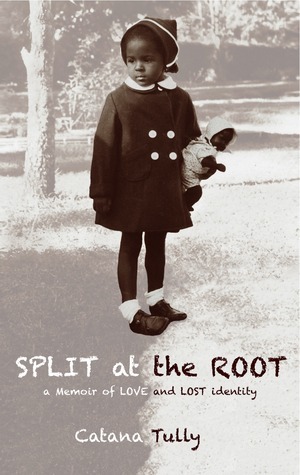
Because at times I have the attention span of a flea I was distracted by the book cover for Split At The Root. After reading the description I became a bit more intrigued and my journey into the life of Catana Tully began.
Raised not by her birth parents, Catana of Guatemalan decent was raised by German parents in a small Guatemalan village where she spent the majority of her youth years (1940's and 1950's) and during a time when racism and prejudiceness was spreading like a virus. A girl of darker skin cocooned for the early years of her life and living as a German. Not to give anything away but imagine the reality check as well as culture shock one would endure when faced with societal truth, reality and realism. For Catana her search for self, truth and insight spans over many tears and several countries.
Now I have to admit, at times I found Catana's lack for a better word ignorance challenging to grasp, often times putting the book down and refusing to continue. But because I became a bit fixated on what the outcome was, I resumed and glad I did. See It takes true courage for a woman to write exactly how she felt regarding ethnicity and how it affected her life personally. With truth comes understanding and I certainly had a better understanding by the end.
Catana Tully's amazing novel "Split at the Root" caught me completely by surprise. I must admit my expectations prior to reading this novel were simple; it would be a race relations book. Split at the Root is so much more than just race. This memoir gives a full circle view on topics of mixed race, multiculturalism, family dis-functionality and much more. Tully provides a very detail account of her life from childhood straight through adulthood. The reader will appreciate Tully's thorough explanation of why she was a confused "German" kid who did not consider herself black. The relationship Tully had with both of her mother's in itself was touching but lead myself and mostly other readers into Tully's psyche, and truly explains her thought process. Split at the Root gives another dimension another insight to how race is perceived from someone who is multiracial. I quite enjoyed this book and the look into Catana Tully's life.
This was an interesting autobiography of a black woman that had lost touch with her identity. Catana was raised to be a young German girl. The only issue was that she was black. Her "adoptive" parents were white Germans, living in Guatemala. Catana knew her birth mother but despised her and it wasn't until later in life that she was able to determine why. The book takes us from the early days of Catana's life through her later life when she realizes she issues she needs to deal with. Through counseling and family, Catana is able to come to grips with her true identity.
I enjoyed the book where I learned a little about German culture, Guatemalan culture. Most importantly I learned what people will do to seemingly protect those they love. Some of the actions of the German family were disturbing but some of the actions of the Guatemalan family were as well. I was pleased to see that Catana had a peace with herself by the end of the book.
Insightful memoir! Those of us who are multi-racial, in my case I am biracial, end up discovering an additional journey we have to embark on in order to figure out who we are in light of differing influences around us. It wasn't until college that I realized that other multi-racial students had struggled with many of the same issues I had with self-identity, worth, and role in society. Though our journey's will differ, we do share the same common need to seek our identity in light of family, cultural influences, and societal influences. There was a comraderie in reading this memoir and a light of understanding and appreciating that there were others too who struggled and needed to seek out who they are. I am grateful and appreciative to this author for sharing her story so candidly with us.
I was completely drawn into Ms. Tully’s rich, vibrant descriptions of her childhood of where, through an adoption, she had gained so much, only to later discover that she had lost even more. Growing up as the beloved child of a woman who would ensure her success, she grew up to be an accomplished young woman working as a translator, an actress and model and later in life, a professor. Still, it wasn’t until after the birth of her own son that she realized the one thing she lacked in life, her own sense of identity. A beautifully and eloquently written memoir.
I'm not sure how I came across this beautiful memoir of a fabulous lady who was raised by a German family. The book helped challenge some of her own perceptions on race, colour and superiority. Worth a read for the insights into racial stereotypes which later turn into understanding of the impact of poor parenting choices. There were a few gaps and confusing moments, hence the 4* rating. Would have been good to understand more about why she was never adopted, explore Ruth's comments about her mother and that she was adopted. What an interesting life Catana has led!
This entire review has been hidden because of spoilers.
A powerful life story of the author's efforts to learn of her parentage, which means she must decolonize her mind before she can love her Black-ness and whole self. Catana Tully reconnects with her siblings and untangles the root work of narrative and silences propagated by her German family. I cannot think of more than a handful of memoirs that conclude with love, forgiveness, and acceptance.
The overall concept of this book was interesting and I'm sure that others will find it riveting. The writing was strong and the characters well-developed, but I just couldn't get into the story. I'm sure that others will enjoy this book a great deal.
We are proud to announce that SPLIT AT THE ROOT: A MEMOIR OF LOVE AND LOST IDENTITY by Catana Tully is a B.R.A.G.Medallion Honoree. This tells a reader that this book is well worth their time and money!
What a powerful story....one I would recommend to everyone, but most fervently, to my friends personally touched by internationa/transracial adoption. Loved it!
Deeply moving memoir of a multi-faceted, multi-cultural, multi-lingual, richly experienced life.
The author did an amazing job of telling her story chronologically, giving the reader the opportunity to "grow up" with her. Mrs. Tully built the characters, places and stories in such a way as to make me, the reader, feel like I was sitting in the parlor hearing her life story and getting to know her in a very intimate, personal way.
As she draws the character of herself, I can feel her calm review of life events, but also the more subtle feelings of her passion for her husband, son, bio family, as well as her child-time love of Mutti and Ruth. It is clear, though, that her feelings about Ruth are a bit more complex and nuanced event by event.
I very much appreciated the way she draws out the racial and class challenges. She tells it in a first person way, a way that allows us to be a fly on the wall watching and understanding the experience, rather than just telling us about it. The use of colloquial language is powerful in the situations she describes, showing the sharp contrast between the African-American of the time and her own experience as a black person.
I love how she shows that black skin does not define a person. It only hints at the challenged experience the person has lived. It is good for all to see that racial assumptions are not always accurate and we cannot define a population based on the color of their eyes, their skin and their hair. The same is true with the classism she describes.
It is brilliant to bring classism into the conversation, as for far too long the powers that be have confused race with class and the time has come for society to understand these are two different identifiers and not all of one race belong to one class. With any given race or ethnicity, there exists a heirarchy of class, which is most easily seen in India, but also exists in virtually every population.
Personally, I was deeply moved by the authors descriptions of and experience of racial struggle and self identity. I'm an in-betweener, too, in a very complicated way. One half of my family came to the New World from England in 1666. In their more recent history, my paternal grandparents were migrant workers, escaping to a permanent homestead just ahead of the dust bowl era. They were every bit the hick, and passed on that class to 3 of their 4 children.
My father was the eldest, the one who stayed close to his parents, but he rose above their class and became and well-respected member of society. I, his only child, felt the outcast at family gatherings, because I was the only dark haired child and my olive skin set me apart, along with my class code of living.
My maternal grandfather, on the other hand, was an immigrant from the Azores Islands. He spoke only Portuguese and my aunt, the eldest of 4, learned the language while sitting at his feet as he passed the time in conversation with friends. My aunt eventually married an immigrant from the Azores and they visited the islands when they could.
My mom was the youngest of the 4 and she did not learn any of the Portuguese her father spoke, nor any of the Spanish her mother spoke. My grandmother was a native of the area, whose roots trace back to a famous Portuguese whaling captain and a converted Native American woman.
When I was old enough, I begged to be taught the language and go on a trip to the Azores, but was repeatedly told that I was an American and didn't need another language nor a visit to the Old Country. I did not get to participate in the rich cultural events of the Portuguese. Many of the Portuguese in my community recognized me as Portuguese, but of a new generation of American children, not children of the Old Country. I could see in their eyes the pride of their heritage and the sadness that this generation will know nothing of the Old Country and the struggle of those who came before and made it possible for this soil under my feet to be my country.
I am, like the author, a child between cultures. An oddity in my father's family and the fulfillment of my maternal grandfather's dream to have an American family. I carry the name of his race, but I am not part of that community.
To bring one more aspect to my complicated existence is the knowledge that I am a product of the Spanish colonization and conversion of the Native Americans. The conquered and the conquerors. Which am I? I am both and none. I have, however, had some deeply spiritual experiences at historical sites where the Spanish and Native peoples were known to work and live. During those times, I felt a connection to the earth and it was almost like I could reach out and touch my acestors.
As an adoptive mom of children from Guatemala, I and my friends will have discussions about which boxes to mark on ethnicity forms, and the dilemma extends to me, as well. Am I White Hispanic? Do I mark the Native American box? For my darkest son it feels wrong to mark "white," and what about my medium brown child? The lightest I guess I could mark as white hispanic, but just because he was born in a Latin American country, does that make him Latino? After all, he is being raised as an American and not as a Latino.
Lastly, Split at the Root became very profound when I learned about the Garifuna. Another adoptive mom had mentioned that my son was of African descent and she mentioned a place in Guatemala where they live, but I never followed through. Now, as my son is working out his identity, this book fills in the blank and validates my son who has been calling himself black for a few years now.
Many, many thank yous to the author for her candid and gifted storytelling. Not only is the book wonderfully written, it has touched me in many, deep and personal ways. It came along at just the right time in my life and in my son's life. A serendipity that is not all that frequent.
Even if none of the above matters to you or touches you, I still encourage you to read the book and get to know the world of the author as she takes you through many marvelous cultures and experiences.
I am always impressed to read someone’s debut novel and find it engaging and well-written as was Split at the Root, a memoir by Catana Tully. Born in Guatemala and raised by people of another class and race, Catana’s journey of self-discovery as she uncovers the truths about her past is both heartbreaking and inspiriting at the same time. The author’s descriptions of the various places and people in her life provide such vivid mental images, it felt like I was right there with her. Tully’s story is a powerful, provocative one that will stay with me for a long time. Kudos to Catana Tully for this memorable read.
An intense journey into identity, motherhood and what labels mean. At times despondent, at time joyful, the author pulls herself apart until she finds her core.