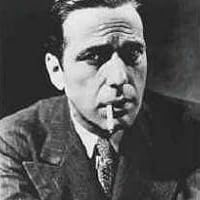
John Davys Beresford was born on 17th March 1873. His life was blighted by infantile paralysis which left him partially disabled.
After an education at Oundle school he trained to be an architect. However, he quickly decided that his life was to be centred on a literary career. His first offerings were in drama and as a journalist.
As well as being a book reviewer for the Manchester Guardian he contributed to New Statesman, The Spectator, Westminster Gazette, and the Theosophist magazine The Aryan Path.
His spiritual journey in early adulthood had claimed him as an agnostic, in defiance of his clergyman father. This view he later abandoned in preference to describing himself as a Theosophist and a pacifist.
As well as many novels, many themed with spiritual and philosophical elements Beresford was also a gifted short story writer particularly across the science-fiction, horror and ghost genres.
All of these elements helped him to obtain a prominent place in Edwardian Literary London.
J D Beresford died on the 2nd February 1947. He was 73.
The MIT Press series 'Radium Age' introduces us to science fiction from the sometimes forgotten period between pioneers such as Wells and Verne and the pulp era. This was relatively easy to do with the introductory collection of short stories, Voices from the Radium Age, as the SF short story was already a fairly polished form by then, but many of the novels of the period were turgid - finding one that is both illustrative and still readable must have been something of a challenge. Although A World of Women has its tedious passages, it is nonetheless an eye-opener.
Of course, the editors must have thought they had struck gold when they saw what it featured - a pandemic (described as a plague) that starts in China then spreads relentlessly around the world. There is particular resonance early on with Covid, when John Davys Beresford gives us a debate between the economics of staying open to the world and the potential benefit of closing borders immediately. But there is one huge difference with a real pandemic - this plague is almost always deadly for men, but spares most women.
This gives Beresford the opportunity in this his second novel, dating back to 1913 (he would go on to write until the 1940s) to pull apart the stuffy attitudes of Edwardian society and to consider ways in which he thought women would do things differently, on top of the usual post-apocalyptic 'how will an industrialised society survive without any of the usual services?' question. We see many dying of starvation before a return to the land and a medieval-level agricultural existence becomes common.
There are some problems. Apart from the boring bits of exposition, despite his relative modernity on such things as sex outside marriage, Beresford is mired in the antisemitism, and class and gender prejudices, of his age. He claims that in the new society the old ideas of class don't matter, describing titled ladies working in the fields alongside farmers' widows - yet his portrayal of the Goslings, the central family in the story, (the book was originally called The Goslings) is riddled with the author's casual disdain for the intelligence of the working class, and the idea that women would find it difficult to understand anything requiring logic, not helped by a painful attempt to spell out a cockneyish accent worthy of Dick van Dyke in the family's speech.
There's also a fudged ending that is distinctly uninspiring. However, this is a genuinely interesting SF novel with what was, for the period, particularly original thinking. It's a real asset to the series.
3.5 stars. Written over one hundred years ago, this novel feels still relevant. The author describes a pandemic that seems to be mostly targeting and killing men, sweeping away all the order, infrastructure and habits of old. To show how some may cope after such a radical set of changes to societies, the author focuses on the Goslings: father, mother and two daughters.
When things start breaking down the father becomes tyrannical with the women, shocking them as they had previously been able to easily cajole and convince him to their ideas. Though he survives the illness, he eventually leaves them, disappearing from their lives, never to be heard from again.
The women each exemplify the typical responses to the huge changes to their lives: the mother cannot wrap her head around the loss of “civilization”, and becomes increasingly despondent and disengages. Younger daughter Millie doesn’t fully embrace the new opportunities to redefine herself and take control of her life, while Blanche, realizing early that the other two will flail and fail without her, steps up and sensibly engages with the new reality, learning and doing whatever she can.
The author had a surprisingly progressive idea of how well women would cope with the horrific scope of losses to their society. He also had a depressingly prescient idea of the way people would rationalize, refuse to believe in the sickness, bargain, and even think of profiting from a pandemic. Considering this was originally published five years before the influenza pandemic of 1918, and years before our own experiences with COVID-19, the author was eerily accurate in characterizing the societal responses to such a fast-moving and incomprehensible illness sweeping the world.
The prose is somewhat dry and my interest held and waned repeatedly while reading, but it’s still an interesting thought experiment.
Thank you to Netgalley and to MIT Press for this ARC in exchange for my review.
This is a story of a new and unexpected plague or disease of some sort, which originates in china and spreads around the world. And how civilization, mainly Britain, react and deal with it.. or don’t deal with it rather.
It feels a bit satirical at first, focusing on one sort of average british family. The middle sections which follow the female members of the family are the strongest and i was really contemplating 4-stars at that point. Although the author is rather hampered by the prejudices of the time and is having to be very circumspect with what he says and how to approach certain topics.
Around the 3/4 mark however it switchs perspectives again and dips a bit. However near the end it raises a really interesting question about the psychological effect of seeing and knowing that civilization is crumbling and that year by year more irreplaceable things will be lost.
Its a very interesting question which the author chooses not to answer. The ending is right out of left field and while one character is very optimistic about the future. Thinking that all of the bad elements of civilization, its prejudices and inequalities, will be left behind.. i think I’d be far more cynical in her place.
Anyway, this one has some merit too it but a bit too slapdash and unfocused to be great. As i said, i was certainly considering 4-stars at one point but overall 3 is fair.
"She's a very good sort. A little rough in her manners, perhaps, and quite mad about the uselessness of the creatures we used to know as men, but a fine, generous, unselfish woman, if she does boast of her three murders. Did she tell you that, by the way?"
This book was ahead of its time and a little behind ours. Bound to his time, JD Beresford imagines a world in which a plague wipes out most men, and very few women. Written just 5 years prior to the Spanish Flu and 1 year before WWI, I'm sure that those who read this back in the day revered it for its future-telling powers.
Set amid 1910s England, a family sets course after a plague ravages London. On the road, they find work, hunger, and plenty of women trying to make their way. With inklings of feminism and plenty of class analysis, Beresford offers plenty of insight to the supply chain, women's fashion, and the necessity of hard work.
At times I found A World of Women a little dry and occasionally humorous where it shouldn't have been (after a year of fending for themselves, women care not for fashion and propriety except for when the Americans come to shore), but mostly I found it fascinating to see what a man thinks of a female-supreme world and what it might have looked like at the time.
I went into A World of Women expecting something bold and unsettling, and while I did find it intellectually interesting, it ultimately landed as a three star read for me. It is impossible not to notice how heavily this novel is influenced by H G Wells. That influence is everywhere, from the writing style to the speculative ideas, and while that is not a bad thing in itself, it often felt as though Beresford was writing in Wells’s shadow rather than fully stepping out on his own. As someone who enjoys Wells, I appreciated the homage, but I also found myself wishing this book had developed a stronger voice of its own.
In terms of concept, the novel is genuinely compelling. A plague wipes out the majority of men, leaving women to navigate a radically altered world. I particularly liked the early sections dealing with the outbreak itself, the public denial, and the reluctance of newspapers to report what was happening. Reading this after living through Covid, those moments felt eerily familiar and surprisingly effective. The book clearly wants to be thoughtful and it often is, especially in its exploration of morality, religion, and social order.
Some of the strongest moments for me came from the quieter ethical questions. Is something wrong if no one is left to witness it. Where does morality come from when society collapses. The religious framework running through the book adds weight to these questions, especially given the time period in which it was written. I also appreciated the way the novel handles nature reclaiming the world, with long passages about the seasons, the land, and the slow irrelevance of machinery. Those sections were genuinely beautiful.
That said, I struggled with the pacing and with emotional engagement. The book often felt dull rather than tense, not because nothing was happening, but because I never felt truly invested in the characters. Even moments that should have felt dramatic or shocking landed flat for me. I found myself waiting for something to click, and when the ending arrived, it felt more underwhelming than revelatory.
The gender dynamics were also a sticking point. While I fully understand that this is a novel written in 1913, the portrayal of women frequently felt simplistic and limiting. There was an underlying sense that women were weaker, slower, or fundamentally incomplete without men, and that frustration never really resolved for me. The book is often described as empowering, but at times it felt more patronising than progressive, even allowing for its historical context.
That said, Blanche stood out as the most compelling character. Her development and internal questioning felt more nuanced than the rest of the cast, and she was the one character whose arc genuinely stayed with me. The novel also deserves credit for its early engagement with mental health, particularly the idea that people can lose the will to live when stripped of purpose and structure.
Overall, I respected this book more than I loved it. It is clever, ambitious, and historically inventive, and I can absolutely see why it was significant for its time. But reading it more than a century later, it never quite came alive for me. A fascinating concept, thoughtful themes, and elegant writing, but ultimately a bit too distant and restrained to fully connect.
I keep thinking I'm zeroing in on having read all of the post-apocalyptic or dystopian literature when I stumble across another story I haven't read. This kind of lit has become known as a "Jenny story" in the inner circles of SFF Audio, the podcast I sometimes participate in, as I did for this novel. A newer audiobook publisher to the scene, Dreamscape has been finding books through HiLo's Radium Age project, and doing audio productions of them. The audio version of this novel is fantastic, with Matthew Brenher doing a great job on all the UK dialects in the pages. (I tried reading a public domain PDF version and it wasn't easy!)
So no complaints on the audio production, but as a novel, I'm not sure I'm sold. The basic story is a deadly virus that takes out most of the men in a group. First it hits China and Russia, then Europe, but still the English don't seem worried. Plagues are for poor people, right? When it hits England and takes out most of the men, society comes to a halt. Women only know how to shop (this is 1913) and the entire infrastructure breaks down.
The Goslings are a representative family unit within this society. Mrs. Gosling never comes to terms with the breakdown of the societal framework, and Mr. Gosling abandons his family (despite the fact that he was one of the few male survivors, or maybe because of this fact!). This leaves the two daughters - Blanche and Millie - to try to find a way to survive. Everyone in London moves to the country, but 70% of the women and children starve to death in the process.
In the end,
Still, it is interesting to read this in the perspective of the 1910s, a world of pending revolution and a rising middle class. I'm looking forward to following this up with a read of Herland, written by a woman two years later.
I'll post the link to the SFF Audio discussion when it goes live.
Thank you to MIT Press for giving me access to this book as an E-ARC via Netgalley. All opinions are my own.
J.D. Beresford’s book “A World of Women” (originally titled “Goslings: A World of Women) was first published back in 1913, just before World War I. It tells of a plague which kills off most of the men leaving the women to salvage the land. We follow the Gosling women as they try to make do with their new reality.
I get that the view of women, their agency and capability, was not the greatest back in 1913 – for example only women in New Zealand (1893), Finland (1906) and Norway (1913) had the right to vote – but I was quite dismayed nevertheless with how the women were portrayed by Beresford. It was like they didn’t know how to do anything without a man.
I can’t really say I was entertained; I can only say that this was an okay book for me as I spent a good deal being annoyed at the characters.
This has been a tough review to get started on. I enjoyed the book and it's still relevant (over 100 years later!), but it was difficult to read, primarily the first half: as news of a terribly fatal disease spreads in the bow wave of transmission, the characters make the same excuses and justifications that we've all heard repeatedly during the last three years-- preventative measures will damage the economy; staying inside is boring; some people might die but as long as I don't know them, it's a reasonable sacrifice for the general running of society. It was tough to read, as a chronically-ill person in year 3 of the pandemic when masks are no longer required, much less stronger measures to help protect the ill and vulnerable.
Although there is a bit of pontificating in the first half of the book, the second half involves more action on the part of all the characters and the style will come across as more "readable" to modern readers. Much more approachable than Herland or The Clockwork Man.
I appreciate the introduction in these MIT editions, but there were additional questions I had. Especially: was there any commentary on this book or in the media during the 1918 flu pandemic? I would be interested in how closely the book's progression through denial, fear, and selfish refusal matched to the timelines of 1918 and 2020, and even to smaller outbreaks like bird flu and swine flu.
Not a comfortable read as history repeats itself because wow, people really are the same, even centuries apart.
The premise of the story is good, well-fleshed out and creepily predicted how humanity would deal with pandemics (as it was written before the 1918 Spanish Flu pandemic).
Plot: I really enjoyed it at first but as the novel progresses, we’re introduced to more female characters and they are all absolutely unlikeable and useless without men. This is a classic case of men writing women.
Prose: Flat, lack of originality and monotonous. The world building is drawn out and tediously descriptive.
It was at first interesting to read this story, since it was written more than a hundred years ago. Their were some resemblances with the current pandemic. So that was funny to read. But the it quickly lost my interest. The characters were not likeable, and quickly I even started to hate them. The second half of the book I just wanted to get it over with and finish the book.
J.D Beresford is greatly disadvantaged by the era he was in. I wonder if he would have had different thoughts of women if we he has written this nowadays. His obvious indifference and arrogance towards women made it a hard read yet he kept making it up by the new changes of point of view from different characters. I think enjoyed the sci fi of it all.
The dialect in this book was really hard to grasp — understandable, since it was written over a hundred years ago. It begins with the onset of a plague eerily similar to COVID, which is unsettling considering it was written more than two centuries ago. It’s meant to be a science-fiction novel, but I struggled to see much “science” in it.
In essence, a plague sweeps the world, mainly targeting men. With no men left, the story explores how different women — some resourceful, others less so — manage to survive (or not).
I can’t say I enjoyed this book. The middle section is a bit more engaging, focusing more on characters, but the beginning — which deals with the early stages of the plague — feels slow. There’s little longevity in the chapters or characters, making it hard to fully invest. The dialect doesn’t help, and overall it ended up feeling like a lot of “nothing.” The final part… well, I won’t spoil it, but it didn’t redeem the experience for me.
A disappointing read overall, but there were small pockets of interest — enough to earn it 2 stars instead of 1.
The World of Women begins as a speculative fiction novel about a world where nearly all men have died out — but what unfolds is far more revealing about the author’s own biases than about any realistic vision of women’s potential.
This book frustrated me. Often. Deeply. And not because it lacked ideas, but because it so often misused them. For much of the story, women are portrayed as hysterical, helpless, irrational — incapable of working together, unable to understand laws, and always at odds with one another. Meanwhile, the few men left are naturally calm, capable, and somehow intuitively know how to operate unfamiliar technology. It’s the worst kind of gender essentialism, and it made my blood boil.
But I stayed with it — and in the last 30 pages, everything changed. Suddenly, there was hope. Cooperation replaced competition. One character said:
“We’d never have understood each other so well if we hadn’t worked together on the same job.” And another moment struck even deeper, when a man recognized a woman not as a possession or an object of fear, but as a human equal: “She had made no advances to him, they were friends, she might have been some delightfully clean, wholesome boy.” Even though comparing woman to a man because of her capabilities is problematic at least.
By the end, the story proposes a radical reimagining of society — not a return to patriarchal norms, but a new world where marriage is no longer a form of ownership, where relationships are based on mutual respect, and where women, finally, are in charge of shaping the future.
That idea redeemed the novel for me — but only barely. The author’s deep-rooted assumptions about gender hold the story back from becoming what it could have been. The characters (especially women like Mrs. Gosling) often feel like pawns of the author’s worldview — made to act irrationally just to prove a point, then suddenly stripped of any qualities they had the moment a man disappears.
Still, despite its misogyny, its contradictions, and its maddening logic, this book made me think. It stirred anger, then curiosity, then — finally — a glimmer of hope. And for that emotional arc alone, I can’t dismiss it.
*3.5 stars*. (From the book blurb): “Imagine a plague that brings society to a standstill by killing off most of the men on Earth. The few men who survive descend into lechery and atavism. Meanwhile, a group of women (accompanied by one virtuous male survivor) leave the wreckage of London to start fresh, establishing a communally run agrarian outpost. But their sexist society hasn't permitted most of them to learn any useful skills--will the commune survive their first winter? This is the bleak world imagined in 1913 by English writer J. D. Beresford--one that has particular resonance for the planet's residents in the 2020s.” I have been on a dystopian/apocalyptic/pandemic phase for a few years now and this is one of the more interesting books that I have read in those genres. Written in 1913 it certainly is full of sexism and attitudes that aren’t as common (at least out loud) today. But the perspective that women would be “good” and men would be “bad” is something to think about, especially when you look at the world and its leaders nowadays and the violence that is all too common. Fascinating look from the past at a future of women controlling society. A book that I would definitely recommend for not only the story but for the time period it was written in.
Naturally, a book written in 1913 about a future where most of the world's men die out and the women have to figure out how to survive without them, is going to feel out of step with the world we now know, and the vocabulary and phrases in it will often seem archaic or stilted. However, if you can get past these issues, this book is historically interesting for seeing how men and women thought about each other in the early 1900's. Men definitely felt superior and entitled, but their cowed women thought they were boors and found ways to manipulate them. After the men died, the women in the cities had to rove across the countryside to forage for food or to find a plot of land they could cultivate. Some of the women were intelligent and resourceful, and some of them were pathetically lazy and dishonest.
This novel would have been more interesting to me if it had been written by a woman and didn’t rely so much on the few remaining men to "rescue" the women.
Interesting overall conceptually. Some of the plague concepts were creepily apt to current times. Such as its origins but also in the trifles of political fallout in response. An interesting thought exercise of a world decended back thousands of years through an apocolyptic event (in this case, the plague). I only had two gripes - one was the obvious sexist portrayals of women by the narrator as "foolish", "hysteric," and downright too stupid to even be taught machinery. But it was written in 1913, so what can I say? My main gripe, therefore, is the last third of the book, which felt rushed and discombobulated from the rest of the text in terms of narration and direction.
Somehow a book about a world of women talked primarily about men. A modern re-write by a woman would have a much different and more accurate ending. Clearly written by a man that thinks men are the only reason society is kept afloat. Also the world-building was a bit lackluster with very few well thought-out reactions to a global pandemic. Character growth was minimal, very surface level or left on a cliffhanger that served no purpose. It was hard to get over the sexism/anti-semitism, but the literal writing was also not great. Anyway, would not recommend. Really cool premise, horrible delivery.
In all his life he had never experienced that sickness of apprehension which dissolves our fiber into a quivering jelly - as though the spirit had already withdrawn from the trembling inertia of the flesh.
Readers beware, this book was written in 1913, and it's clearly a product of the time. Keeping that in mind, this could easily read as sexist and misogynistic - a mirror of how women were regarded in that time. Still, it was an enjoyable read that revealed it's true colors - an important message - in the epilogue.
I wasn't expecting the antisemitism, but perhaps I should have been. On the other hand, I'm not sure how I could have anticipated the inexplicable hostility towards hats. Having been in the sun both with and without a hat, I can assure J.D. Beresford that they really do keep the sun off, it's not just what the mainstream media wants you to believe.
Readable, but mostly of historical interest. I would not recommend it in general.
Started out strong - so prescient in how a government like our would react to a plague. Painfully accurate how political it is. How it is all those in power can think of - how people would deny it. But then it happens and the authors bias against women and Jews comes out and it goes downhill. And the ending is very unsatisfactory and rather insulting to wards women
Still glad ai read it to see how little has changed tho
For a novel entitled, "A world of women" it sure spent a lot of time focusing on the 'greatness' of men. The first half of the book was about the male characters and how safe and sure they felt in society because their government would protect them. While the second half, mostly entailed 3 women roaming around the countryside and complaining about how they weren't going to survive.
Interesting reading sci fi from 1913, as it reflects, in this case, movements towards gender equality and class-free society. It has a great opportunity to imagine a successful world led by women but unfortunately falls back on the necessity of men to make it all work. Thought-provoking work of its time
This entire review has been hidden because of spoilers.
Condescendingly sexist. Gestures towards "equality" at the end but still worships the idea of superior male "ingenuity." I also don't buy the ending. One year of hard labor and toil for the world and return to "nature" is what is needed to teach people to construct a better world? The opposite seems more likely to me. And he can't even commit to his premise with that twist ending.
An interesting read, if only because it's early sf (1913). Here, women come to be in charge because of some virus killing men - does that make it a feminist novel? Of course, it's steeped in its time in many ways, but the thinking is bold and the story holds up.
It's a good enough story, but very much a product of it's time - it's remarkably sexist, anti-semitic and elitist, and doesn't stand the test of time, but kept my attention throughout
This book was written well over a hundred years ago. Different perspective on things, understandable. Now that that's outta the way lemme talk why this book went from 'Okay, kinda interesting' to 'well that was a waste of time'. The story does a great job on setting an apocalyptic world. Britain relied heavily on export and didn't have the means to support a huge population when shit hit the fan. As a result, those without the sufficient knowledge and skills to fend for themselves died of famine or exposure. All that was well written and stuff so the author scores points for that. My main issue is how the story panned out. Book one was about how the plague spread and we got introduced to some characters. (The Gosling family and Jasper.) Book Two was about Blanche and her family on the march. I won't lie, I grew to like how she was changing and wanted to see how different her mindset would be at the end of the novel. Book three is the shit show. All that build up with Blanche maturing as an individual? Yeah throw that out the window. We're gonna focus on Jasper and Eileen. (No hate to this bitch but she came outta nowhere, was cool for a sec, then threw all her shit for a man who thought himself superior). Don't get me started on Marlowe and the committee. It's like, this dude (author) had lots of potential to flesh out how a society of women and how complex it could have been but just didn't. Anyways that's my take on it. (Oh yeah, the writing style is clunky as hell in some parts.)
Fairly well-written and well-plotted, I give it the third star judging it as a sort of time capsule rather then as I would a book written in the last 75-100 years. It would have gotten 1 star if I wasn't forgiving it for it's many period faults.
There is just massive loads of sexism here with antisemitism thrown in for good measure. And then the whole thing resolves with a last minute save swooping in and the main characters look starry eyed off into the distance while making hopeful speeches.
To be honest, I got the feeling that the author didn't get out much and that he was over compensating with his main male character. And he really hated London women. And London. And religion. And sex. And hats. And possibly dancing.
His certainty that men are massively more logical and strong than women was both infuriating and highly amusing at times. He says that on the farm it takes ten women to do the work of one man and implies that one man would be able to defeat 15-20 women in combat. His man is a former journalist but because he's a MAN he's capable of figuring out machinery. That women are able to adapt to changed circumstances because we are less logical and run on intuition. The whole of England is saved because men arrive otherwise all the women would have wasted away. Apparently a community of women would fall into total debilitating depression and die off without male attention.
“The World of Women” is a plague novel that feels especially relevant today, post-Covid, as it must have a hundred years ago, forecasting as it does the devastation of WW I and the Spanish Flu. It soberly details the progress of a deadly plague, and charts the economic and social consequences of societal collapse. At the same time, to leaven the gloom, the novel’s colourful characters are broadly drawn and often absurd. Ultimately, the novel is a terrific read. It is gripping and thoughtful in turns. It also has some lovely grace notes, like when survivors, looking back, remember the weather being overcast on the days leading up to the plague, as if the world was already in distress—when in fact “Nature was in one of her most brilliant moods.” Nature, Beresford is saying, is utterly indifferent to us; the sky will continue to be glorious even during human catastrophes. For fans of fin-de-siècle dystopias, like “Theodore Savage” or “Caesar’s Column”.