

What do you think?

Hothouse: The Art of Survival and the Survival of Art at America's Most Celebrated Publishing House, Farrar, Straus, & Giroux
Farrar, Straus and Giroux is arguably the most influential publishing house of the modern era. Home to an unrivaled twenty-five Nobel Prize winners and generation-defining authors like T. S. Eliot, Flannery O’Connor, Susan Sontag, Tom Wolfe, Joan Didion, Philip Roth, and Jonathan Franzen, it’s a cultural institution whose importance approaches that of The New Yorker or The New York Times. But FSG is no ivory tower—the owner's wife called the office a “sexual sewer”—and its untold story is as tumultuous and engrossing as many of the great novels it has published.
Boris Kachka deftly reveals the era and the city that built FSG through the stories of two men: founder-owner Roger Straus, the pugnacious black sheep of his powerful German-Jewish family—with his bottomless supply of ascots, charm, and vulgarity of every stripe—and his utter opposite, the reticent, closeted editor Robert Giroux, who rose from working-class New Jersey to discover the novelists and poets who helped define American culture. Giroux became one of T. S. Eliot’s best friends, just missed out on The Catcher in the Rye, and played the placid caretaker to manic-depressive geniuses like Robert Lowell, John Berryman, Jean Stafford, and Jack Kerouac. Straus, the brilliant showman, made Susan Sontag a star, kept Edmund Wilson out of prison, and turned Isaac Bashevis Singer from a Yiddish scribbler into a Nobelist—even as he spread the gossip on which literary New York thrived.
A prolific lover and an epic fighter, Straus ventured fearlessly, and sometimes recklessly, into battle for his books, his authors, and his often-struggling company. When a talented editor left for more money and threatened to take all his writers, Roger roared, “Over my dead body”—and meant it. He turned a philosophical disagreement with Simon & Schuster head Dick Snyder into a mano a mano media war that caught writers such as Philip Roth and Joan Didion in the crossfire. He fought off would-be buyers like S. I. Newhouse (“that dwarf”) with one hand and rapacious literary agents like Andrew Wylie (“that shit”) with the other. Even his own son and presumed successor was no match for a man who had to win at any cost—and who was proven right at almost every turn.
At the center of the story, always, are the writers themselves. After giving us a fresh perspective on the postwar authors we thought we knew, Kachka pulls back the curtain to expose how elite publishing works today. He gets inside the editorial meetings where writers’ fates are decided; he captures the adrenaline rush of bidding wars for top talent; and he lifts the lid on the high-stakes pursuit of that rarest commodity, public attention—including a fly-on-the-wall account of the explosive confrontation between Oprah Winfrey and Jonathan Franzen, whose relationship, Franzen tells us, “was bogus from the start.”
Vast but detailed, full of both fresh gossip and keen insight into how the literary world works, Hothouse is the product of five years of research and nearly two hundred interviews by a veteran New York magazine writer. It tells an essential story for the first time, providing a delicious inside perspective on the rich pageant of postwar cultural life and illuminating the vital intellectual center of the American Century.
Boris Kachka deftly reveals the era and the city that built FSG through the stories of two men: founder-owner Roger Straus, the pugnacious black sheep of his powerful German-Jewish family—with his bottomless supply of ascots, charm, and vulgarity of every stripe—and his utter opposite, the reticent, closeted editor Robert Giroux, who rose from working-class New Jersey to discover the novelists and poets who helped define American culture. Giroux became one of T. S. Eliot’s best friends, just missed out on The Catcher in the Rye, and played the placid caretaker to manic-depressive geniuses like Robert Lowell, John Berryman, Jean Stafford, and Jack Kerouac. Straus, the brilliant showman, made Susan Sontag a star, kept Edmund Wilson out of prison, and turned Isaac Bashevis Singer from a Yiddish scribbler into a Nobelist—even as he spread the gossip on which literary New York thrived.
A prolific lover and an epic fighter, Straus ventured fearlessly, and sometimes recklessly, into battle for his books, his authors, and his often-struggling company. When a talented editor left for more money and threatened to take all his writers, Roger roared, “Over my dead body”—and meant it. He turned a philosophical disagreement with Simon & Schuster head Dick Snyder into a mano a mano media war that caught writers such as Philip Roth and Joan Didion in the crossfire. He fought off would-be buyers like S. I. Newhouse (“that dwarf”) with one hand and rapacious literary agents like Andrew Wylie (“that shit”) with the other. Even his own son and presumed successor was no match for a man who had to win at any cost—and who was proven right at almost every turn.
At the center of the story, always, are the writers themselves. After giving us a fresh perspective on the postwar authors we thought we knew, Kachka pulls back the curtain to expose how elite publishing works today. He gets inside the editorial meetings where writers’ fates are decided; he captures the adrenaline rush of bidding wars for top talent; and he lifts the lid on the high-stakes pursuit of that rarest commodity, public attention—including a fly-on-the-wall account of the explosive confrontation between Oprah Winfrey and Jonathan Franzen, whose relationship, Franzen tells us, “was bogus from the start.”
Vast but detailed, full of both fresh gossip and keen insight into how the literary world works, Hothouse is the product of five years of research and nearly two hundred interviews by a veteran New York magazine writer. It tells an essential story for the first time, providing a delicious inside perspective on the rich pageant of postwar cultural life and illuminating the vital intellectual center of the American Century.
448 pages, Kindle Edition
First published August 6, 2013
Ratings & Reviews
Friends & Following
Create a free account to discover what your friends think of this book!
Community Reviews
Displaying 1 - 30 of 118 reviews

February 8, 2017
Excellent history of the publishing firm Farrar, Strauss & Giroux. Along with Knopf, they are the two American publishing houses most synonymous with publishing good books, whether fiction or non-fiction. I have very rarely been let down in reading any book with their imprint on it.
FS&G were home to an unrivaled 25 Nobel Literature prize winners. Quite an achievement. Their list of authors is a virtual who's who of great writers
All in all, it's a very entertaining and interesting book. What goes on behind the scenes is really very intriguing.
Highly recommended for those who line reading books about the book industry, as I do.
FS&G were home to an unrivaled 25 Nobel Literature prize winners. Quite an achievement. Their list of authors is a virtual who's who of great writers
All in all, it's a very entertaining and interesting book. What goes on behind the scenes is really very intriguing.
Highly recommended for those who line reading books about the book industry, as I do.

August 11, 2013
In spring 1968 I looked for a summer job at a publishing house in New York City. I was an English major...I found a job at Farrar Straus and Giroux. While the summer confirmed that the NYC publishing world was not for me, it was nonetheless an amazing experience to see people like Susan Sontag come in the door. This book is a fun read for me from that vantage point, and an extended swim in the waters of the Mad Men-like environment of a remarkable company that shaped much of The literary scene of the twentieth century.
Now that I've finished it, I felt that it dragged on and became bogged down in the power struggle about Roger Straus, Jr. exiting the company. To me the fun had to do with the back stories about people I'd met and the confirmation for me that I would have been a terrible misfit in the cutthroat world of publishing
A good read for people interested in the dynamics of the American literary world.
Now that I've finished it, I felt that it dragged on and became bogged down in the power struggle about Roger Straus, Jr. exiting the company. To me the fun had to do with the back stories about people I'd met and the confirmation for me that I would have been a terrible misfit in the cutthroat world of publishing
A good read for people interested in the dynamics of the American literary world.

January 5, 2017
"And then this happened; then that happened. She slept with him; he then slept with that other guy. Later, this book sold; this didn't; this other one went to a different publisher. Plus the company changed its name--again."
Yawn. Relentlessly chronological; incredibly boring. I made it less than half way through before confining it to the rubbish bin.
Yawn. Relentlessly chronological; incredibly boring. I made it less than half way through before confining it to the rubbish bin.

Did Not Finish
March 3, 2024Did not finish. No rating.
I decided life is too short. I read the intro and first chapter, plus a bit more. Too much personal information about the families, not enough information about the industry or company. And too much irrelevant trivia -- I don’t need to know what’s pictured on the rugs in one of the Guggenheim mansions, thanks. Not worth slogging through 400+ pages.
I decided life is too short. I read the intro and first chapter, plus a bit more. Too much personal information about the families, not enough information about the industry or company. And too much irrelevant trivia -- I don’t need to know what’s pictured on the rugs in one of the Guggenheim mansions, thanks. Not worth slogging through 400+ pages.

August 21, 2023
➊ "The Soviet Union was not a signatory to international copyright law, which meant that when Solzhenitsyn's work leaked out - his novels The First Circle and Cancer Ward preceded August 1914 - publishers around the world considered it public domain, printing editions without even contacting the writer. Harper & Row made a legitimate deal for The First Circle, while FSG bought Cancer Ward, an allegory on Stalin's crimes set in a bleak Soviet hospital. ....unauthorized copies made their way to three other publishers." Dial Press "managed to put out Cancer Ward before FSG did, without paying royalties to the author. This meant that FSG was putting out a book, for which they'd paid roughly $20,000, in direct competition with an edition that had already been out for several months." (p. 182)
➋ FSG author Susan Sontag in 1975 "was diagnosed with stage IV breast cancer and given a very poor prognosis. She had a radical mastectomy in the autumn, followed by more than a year of aggressive chemotherapy and immunotherapy. As she had no health insurance, Bob Silvers at The New York Review of Books headed a committee, which included Straus, to raise funds for Sontag's care. Carlos Fuentes donated a $2,000 prize he'd just won. ...After Sontag improbably recovered, she was put on FSG's health-insurance program.
Straus's storied closeness with Sontag led many to believe that the publisher personally funded her hospitalization." Sontag's son David Rieff denies it: "I spent six months...going around to every rich person Bob Silvers could think of." Much of the money came from the de Menil family of art collector philanthropists in Houston. "Roger was having none of it," Rieff says. He doesn't think Straus even contributed to the NYRB fund." (p. 214)
➌ FSG subsidiary rights director Barbara Neilson "had been caught stealing books en masse and selling them to the Strand, the famous used book emporium down the street. When Roger [Straus] had called her in about it, she'd said, "I'll stop if you give me a raise." " (p. 228)
➍ "Sontag's tastes, like her fiction, favored ideas and atmosphere over narrative - a preference that cost FSG at least one massive opportunity. Straus knew of the author, editor, and professor Umberto Eco from way back, but he deferred to Sontag's judgment on Eco's new book, Il Nome della Rosa." Straus told Sontag she had to pick between Eco's book, and Salvatore Satta's The Day of Judgment. "Then it must be Satta: Sontag not only preferred it, she thought it would sell better." "FSG wound up selling about two thousand copies of" Satta's book, "while The Name of the Rose, eventually picked up by Harcourt Brace Jovanovich, became one of the bestselling books of the century (at least fifty million worldwide). (p. 235)
➎ FSG covers: "Relying on staff for free modeling is an ongoing FSG tradition." "The undulating layers of blond hair" on the cover of The Virgin Suicides "belonged to Galassi's editorial assistant, Phyllida Burlingame."

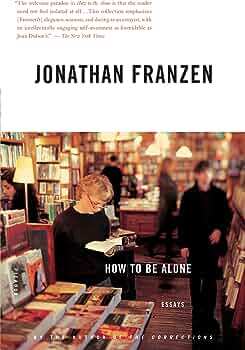
"The girl reading on the cover of [Jonathan] Franzen's nonfiction collection How to Be Alone is its designer, Lynn Buckley, with [FSG publicist] Peter Miller in the background."
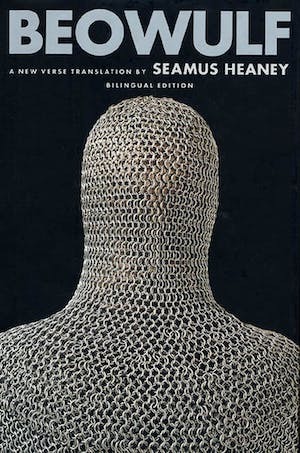
"Inside the chain-mail suit that decorates Seamus Heaney's translation of Beowulf is veteran FSG designer Cynthia Krupat, her graying blonde hair almost visible beneath the armor."

August 7, 2013
Interested in publishing? Want an insiders take on one of the grandest American publishing houses? Looking for a gossipy rag to read on a sunny beach? Then look no further than Boris Kachka’s Hothouse: The Art of Survival and the Survival of Art and America’s Most Celebrated Publishing House, Farrar, Straus & Giroux. Though the extraordinarily long subtitle is somewhat off-putting, the breezy, glib narrative sets the perfect tone for a sunny afternoon of wandering attention, alcoholic digressions, and juicy gossip. Kachka likes to turn a good phrase, as the title indicates, and he tries hard and frequently to do so throughout this tour of the personalities, editors, and authors that have made FSG what it is today.
The two central figures of this narrative are Roger Straus, who started the company against the wishes of his parents, wealthy Jewish-Germans and central figures of “Our Crowd,” and Robert Giroux, who joined the company later in it’s life, after a decade or so at Harcourt, Brace. Straus was the magnetic personality who kept the company going on one side through wealthy connections and shrewd business deals, while Giroux brought in some of our best-known authors. The opposites-attract dynamic worked for a while before it fell apart, as it eventually had to. In Kachka’s rendering, Straus comes across as a larger-than-life personality, the kind that is magnetic but hard to live with in the long run. He was a notorious philanderer and cheapskate who rarely paid his authors the money they needed and his employees the money they deserved. Giroux, on the other hand was quiet, reserved, and worked hard to get his authors their due. Giroux was a Jesuit trained scholarship boy from Columbia, who ended up running the Columbia Review with his best friend and future poet John Berryman. His loyalty to his house and to his authors earned him their respect, and when he finally did break with Harcourt, Brace for their unwillingness to take risks with authors such as J.D. Salinger, he took the likes of T.S. Eliot with him.
While these two men dominate the story of FSG, there are numerous others who hold a vital place in its history. Farrar, who started the company with Straus after being ousted from his own publishing house while recuperating in Algiers after the war; Rose Wachtel, the office supplies manager who was such a tyrant that according to one of the employees, if you wanted a new pencil you had to show her the old one to prove that you really had worn down the nub. There’s also digressions on authors and their scandals, such as the possibility that Susan Sontag slept with Straus (they were a power couple downtown in matching leather jackets, according to Kachka), or Jonathan Franzen’s public spat with Oprah, which gets more pages than it really needs (and is excerpted here, at Slate.com). There are almost too many people populating this little history. To help alleviate the pain of remembering who’s who, there’s a 25-page index, along with endnotes for each chapter and an extended bibliography. Together, these tally 100 or so pages.
Kachka likes to sound good, yet his prose tends toward the bombastic; it starts right there in the subtitle. But who cares whether or not FSG really was the hottest house in publishing, or if it really is the most celebrated publishing house in America? Kachka is out to sell a book and to tell a good, if frequently tangential, yarn full of gossip on titans of publishing and celebrated authors alike. Just yesterday, over at New York Magazine, Kachka was pointing out the ironies of booksellers, readers, and authors bemoaning the impending death of the last brick and mortar book chain, Barnes & Noble, when it had been previously reviled as the death of independent bookstores and a bane to authors everywhere. He of course mentions the mediocre orders for his own book (only 100 copies for 600 stores), blaming Barnes & Noble for bad contract deals with his publisher, Simon & Schuster. If Hothouse had been written in this straight-forward, informative prose, I might have learned a bit more about the creation and maintenance of FSG. But then it wouldn’t have been nearly as fun, nor would it have felt like the unique treat that it is. Books like these don’t come along very often, and when they do, those with even the smallest interest in the publishing world ought to take note. Hothouse may not be the bestseller that Kachka clearly hopes it will be, but it has captured the attention of the entire book world and in that sense hits its mark perfectly.
The two central figures of this narrative are Roger Straus, who started the company against the wishes of his parents, wealthy Jewish-Germans and central figures of “Our Crowd,” and Robert Giroux, who joined the company later in it’s life, after a decade or so at Harcourt, Brace. Straus was the magnetic personality who kept the company going on one side through wealthy connections and shrewd business deals, while Giroux brought in some of our best-known authors. The opposites-attract dynamic worked for a while before it fell apart, as it eventually had to. In Kachka’s rendering, Straus comes across as a larger-than-life personality, the kind that is magnetic but hard to live with in the long run. He was a notorious philanderer and cheapskate who rarely paid his authors the money they needed and his employees the money they deserved. Giroux, on the other hand was quiet, reserved, and worked hard to get his authors their due. Giroux was a Jesuit trained scholarship boy from Columbia, who ended up running the Columbia Review with his best friend and future poet John Berryman. His loyalty to his house and to his authors earned him their respect, and when he finally did break with Harcourt, Brace for their unwillingness to take risks with authors such as J.D. Salinger, he took the likes of T.S. Eliot with him.
While these two men dominate the story of FSG, there are numerous others who hold a vital place in its history. Farrar, who started the company with Straus after being ousted from his own publishing house while recuperating in Algiers after the war; Rose Wachtel, the office supplies manager who was such a tyrant that according to one of the employees, if you wanted a new pencil you had to show her the old one to prove that you really had worn down the nub. There’s also digressions on authors and their scandals, such as the possibility that Susan Sontag slept with Straus (they were a power couple downtown in matching leather jackets, according to Kachka), or Jonathan Franzen’s public spat with Oprah, which gets more pages than it really needs (and is excerpted here, at Slate.com). There are almost too many people populating this little history. To help alleviate the pain of remembering who’s who, there’s a 25-page index, along with endnotes for each chapter and an extended bibliography. Together, these tally 100 or so pages.
Kachka likes to sound good, yet his prose tends toward the bombastic; it starts right there in the subtitle. But who cares whether or not FSG really was the hottest house in publishing, or if it really is the most celebrated publishing house in America? Kachka is out to sell a book and to tell a good, if frequently tangential, yarn full of gossip on titans of publishing and celebrated authors alike. Just yesterday, over at New York Magazine, Kachka was pointing out the ironies of booksellers, readers, and authors bemoaning the impending death of the last brick and mortar book chain, Barnes & Noble, when it had been previously reviled as the death of independent bookstores and a bane to authors everywhere. He of course mentions the mediocre orders for his own book (only 100 copies for 600 stores), blaming Barnes & Noble for bad contract deals with his publisher, Simon & Schuster. If Hothouse had been written in this straight-forward, informative prose, I might have learned a bit more about the creation and maintenance of FSG. But then it wouldn’t have been nearly as fun, nor would it have felt like the unique treat that it is. Books like these don’t come along very often, and when they do, those with even the smallest interest in the publishing world ought to take note. Hothouse may not be the bestseller that Kachka clearly hopes it will be, but it has captured the attention of the entire book world and in that sense hits its mark perfectly.

June 29, 2016
Dishy, well-reported, well-organized. But you have to come to it with a ready-made interest in the behind-the-scenes world of New York book publishing before, during and well after the "Mad Men" years. I find publishing fascinating (having been published); outside of Manhattan, I'm not sure you could convince anyone that they need to read this. Still, though, it was a satisfying read.

September 25, 2013
Enh. I mean, it's well done. It's "exhaustively researched," though this is like saying it uses a lot of verbs, or prepositions, or punctuation marks. The problem is, a publishing house doesn't really have the through story that a biography focusing on a single figure would. Hothouse is billed as a biography, and it reads like one, but there are just too many characters to keep things interesting. There are more names in this thing than in a phone book, and, while this is mostly my fault for not being well enough read, I didn't really care about enough of them to find this book interesting. I mean, sure, the stuff about Sontag (about whom there sure is a lot in here) is interesting, and once we move into the 80s and 90s (and especially so into the aughts, where Franzen gets a lot of attention (ditto Eugenides, who I can't say I'm a fan of)) I started to pay more attention, but by that time we're 2/3 of the way through. Basically I'm not sure who this book is for. Or, rather, I know who I think it's for, which is either someone who knows absolutely nothing about publishing and wants a sort of entre/overview, or else someone who knows basically everything about publishing and wants the inside scoop about FSG in particular. I'm somewhere in the middle—I know a bit about the industry, I have worked and continue to work in publishing in various capacities, and plus I like reading books, so my interest (in publishing) is vested (er, pecuniary, anyway) and personal, but then I don't really care who the acquisitions editor of FSG's children's division was in 1973, and who replaced her after she was fired for X, Y, Z reasons. I mean really, there's just so much nitty gritty and X replacing Y for Z reason and this unheard-of editor courting this obscure author and so on and so forth and so on and so forth and so on. And then, all the gossipy sex and backstabbing seemed to be played up a bit—look under the hood of any company and you're gonna find some scandal. It didn't make things any more interesting when it popped up, and I don't think calling the book Hothouse is accurate. Anyway, well done, well put together, but I can't say I know anyone who would be interested in reading all 350 pages of this. I was interested in reading about the Franzen/Oprah "fracas," but then nothing new was really revealed to me. That's the problem with such a wide-ranging survey-type narrative. There's no time to really dig deep into any one particular story, so all you get is a bunch of little anecdotes. That plus a lot of family history, which to me was frankly boring. Yes, I'd like to hear about Carver's childhood, or Barthelme's, or any author's I admire. But Roger Straus? Or Roger Straus's father? Maybe this just wasn't the book for me.

August 10, 2013
From start to finish, "Hothouse" is a fun, engaging, almost mesmerizing read. This book is part history, part Toto pulling back the curtain on the inner workings of an esteemed publishing house, part "The Devil Wears Prada" grafted onto the New York publishing scene, and part New Orleans style jazz funeral for that once independent house of legends and lovers of the written word.
With the corporatization and hyper-commercialization of the New York publishers that began in earnest a quarter of a century or so ago, and the attendant, insipid primacy of the bottom line that has since so woefully cast its dark shadow on what was once a precious harbor of hope for aspiring authors, we may never again see the kind of nurturing of serious talent that was once upon a time the true bottom line of places like Farrar, Straus, and Giroux. This book was particularly enlightening on a personal level since I submitted a manuscript years ago to someone who was then barely known but is now one of the most powerful literary agents in the country (one of his authors, like FS&G's Jonathan Franzen, had his novel selected by Oprah for her book club). He called me up the morning after receiving it, said he had stayed up almost all night reading my novel, and not only told me that he loved my book but also paid me one of the kindest compliments I have ever received, telling me that I write like Pat Conroy. But although he tried for two years to get a publisher to take my novel, he could not do so, adding that the corporatization of the major publishing houses had resulted in a mania for franchise authors who were not only already known but who were bound in golden handcuffs that resulted in them becoming purveyors of franchise characters who could be packaged into virtually guaranteed annual bestsellers. In retrospect, after reading "Hothouse," I realize that he was telling me that a golden era had passed for aspiring new authors. This wonderful book has now laid out for all to see just how that came to be. For new writers, so many doors have now been slammed that we now have little choice but to follow the yellow brick road of ebooks and cling to a hope eternal that a real life "Glenda" will come along and be our savior.
Gary P. Landry, author of "The Bridge Tender" (a historical murder mystery/romance/courtroom drama shining the spotlight on the utter idiocy of prejudice) and "River of Mist and Light" (a contemporary thriller/murder mystery set in New Orleans and the adjoining river parishes). https://www.facebook.com/GaryPLandry
With the corporatization and hyper-commercialization of the New York publishers that began in earnest a quarter of a century or so ago, and the attendant, insipid primacy of the bottom line that has since so woefully cast its dark shadow on what was once a precious harbor of hope for aspiring authors, we may never again see the kind of nurturing of serious talent that was once upon a time the true bottom line of places like Farrar, Straus, and Giroux. This book was particularly enlightening on a personal level since I submitted a manuscript years ago to someone who was then barely known but is now one of the most powerful literary agents in the country (one of his authors, like FS&G's Jonathan Franzen, had his novel selected by Oprah for her book club). He called me up the morning after receiving it, said he had stayed up almost all night reading my novel, and not only told me that he loved my book but also paid me one of the kindest compliments I have ever received, telling me that I write like Pat Conroy. But although he tried for two years to get a publisher to take my novel, he could not do so, adding that the corporatization of the major publishing houses had resulted in a mania for franchise authors who were not only already known but who were bound in golden handcuffs that resulted in them becoming purveyors of franchise characters who could be packaged into virtually guaranteed annual bestsellers. In retrospect, after reading "Hothouse," I realize that he was telling me that a golden era had passed for aspiring new authors. This wonderful book has now laid out for all to see just how that came to be. For new writers, so many doors have now been slammed that we now have little choice but to follow the yellow brick road of ebooks and cling to a hope eternal that a real life "Glenda" will come along and be our savior.
Gary P. Landry, author of "The Bridge Tender" (a historical murder mystery/romance/courtroom drama shining the spotlight on the utter idiocy of prejudice) and "River of Mist and Light" (a contemporary thriller/murder mystery set in New Orleans and the adjoining river parishes). https://www.facebook.com/GaryPLandry

January 14, 2021
This was excellent! Thoroughly researched, highly entertaining, the right amount of gossipy. I'm unfortunately still at a point where I need most non-fiction to be spoon-fed to me in terms of readability, and I thought Kachka delivered really well. There were an endless list of names to keep track of, so I sometimes muddled what was happening, but it was mostly fine and the narrative was very appealing. It was fun to look at my bookshelf and pick out all of the FSG books and actually understand how they came to be! This definitely portrayed publishing in a fascinating way, equal parts glamorous and a bit...nasty? An impressive glimpse into another world.
March 8, 2021
This book really got me worked up. Some vague frustration, perhaps tinged with grief? What happened to America's literary culture? Was there really a Golden Age? Roger Straus and Susan Sontag in matching leather jackets striding the streets of nightlife Manhattan? Tom Wolfe smirking from an alcove in his white suit? T. S. Eliot having tea with Robert Giroux in 1959, talking about cats (or "Cats")? Gone! Gone!
In my headboard's built-in bookcase I have a few favorite Farrar, Straus & Giroux (FSG) poetry volumes and they are lovely - Philip Larkin, Robert Lowell, John Berryman (Elizabeth Bishop is excluded because original cloth FSG volumes of hers are out of my price range). I keep them close like a security blanket, like exculpatory evidence. Here lieth some of the best of the last great moment in 20th century English-language poetry. Gone! Gone! Well, except for the books. I got them! I got them!
Books. Most of them are forgotten because they are forgettable. Which gives them pathos (or makes me pathetic while gazing upon them, self-importantly). But at one point they were Big Business, something produced - written, wheeler-dealer stuff with agents and publishers, advances large and small, book fairs, editors, proofs, reviews (or not), sales sales sales. It's all here - or at least some of it is here in Boris Kachka's book.
Which is to say this a business book, really. Which is fine - FSG was a business, and to make money it needed to produce books that sold. And to compete in this very tough business, it needed to position itself (as the marketeers used to call it). And FSG positioned itself as...literary quality. But there's a catch - it is hard to make money on the good stuff. In order to establish, then maintain this reputation for quality, and also make some money, there are several kinds of books published by FSG:
*Great Books: These are the books that have endured. Moby Dick, War and Peace, etc. FSG has published some poetry that qualifies (77 Dream Songs, Life Studies, Question of Travel, The Less Deceived) and nonfiction (The Right Stuff, On Photography). I believe Margueritte Yourcenar's Memoirs of Hadrian, one of FSG's first big catches is a great book. But as far as I can tell, nothing else is truly great in fiction. If you don't count Philip Roth, and I don't.
*Great Books That Aren't: These are the books that when first published seemed Great, but they are not. FSG published a lot of Great Books That Aren't, under the impression (or hoping) they are or will become Great Books. Their first one was Carlo Levi's Christ Stopped at Eboli, which was huge at the time, although not discussed much nowadays.
Another example would be Tom Wolfe's Bonfire of the Vanities - that book was huge! It was the 1980s War and Peace, as I recall. Is it read now? Will it be rediscovered ala Moby Dick 50 years from now? Maybe. Solzhenitsyn's August 1914 is another FSG doorstopper. An important Cold War figure, and brave too, but Solzhenitsyn appears to be more of a historical figure than literary. But back in the day, American publishers were brawling and bidding and scheming to sign him up.
The latest version of Not-Great Book Kachka gives us is Jonathan Franzen's The Corrections, is a great example of this - pristine, probably unread copies of this turn up all the time on my local library's discard shelf - not library copies, but from patron donations. I remember the hoopla about Franzen's boorishness towards Oprah's Book Club 20 years ago, but had never read it. I tried a year ago or so and I was right back in Raintree Country. Lots of doors closing and exclamations and tense family dinners - the usual novel stuff rendered novelistically. Kachka spends a lot of time with the Franzen-Oprah fracas of 2001, although I wish he'd interviewed Oprah. I tended to side with her back in the day, but Franzen makes some good, if somewhat self-important, points.
*Best Sellers: FSG liked money as much as anybody, but part of its mystique was to pretend money didn't really matter. And so best sellers were rather downplayed even as the money rolled in. FSG's shoestring beginnings were financed by Francis the Talking Mule and a quack health book by the wonderfully-named Gayelord Hauser. No literary cachet here, to be sure. Perhaps the perfect best seller for FSG was Bonfire of the Vanities, which was indeed Important, if not Great (my efforts to read it 20 years ago were a failure, so I don't know for sure). More problematically, Scott Turow's Presumed Innocent was huge, but genre, alas. Incidentally, Turow comes off quite well in Kachka's book - a lover of literature who was as thrilled as any poet to be picked up by FSG (and lost money staying with them). But FSG seems mostly embarrassed by best sellers, which is part of the firm's charm (and hypocrisy, perhaps).
Thomas Friedman was a best seller - The World Is Flat prognosticator. He also wins the prize for the biggest FSG jerk - a tough distinction to achieve. As with many FSG "important" authors, he demanded a lot of attention and genuflections - "The Mustache of Understanding is coming!" exclaimed the unimpressed, but kowtowing FSG assistants (p. 309). At one point he thinks he's the villain in a Wall Street shark movie:
"Once, when Galassi was unavailable to take his call, he (Friedman) railed at the publisher's assistant, "Do you know who I am? I'm Tom fucking Friedman, and I pay your fucking salary!"" (p. 309).
I love stuff like this because I can feel so secure in the knowledge that I have never been quite this much of a jerk.
*Important Authors Who Never Really Got There: The care and feeding of authors, especially difficult ones, is a big part of the FSG legacy. And it is an admirable legacy. But what happens if your Important Author never actually produces a Great Book, or even an Important Book (not to mention a best seller)? Edmund Wilson, Susan Sontag and Joan Didion are Important Authors (my opinion too), but none of them has one actual book you can point to as Great. Wilson's To the Finland Station was before FSG. Against Interpretation and Slouching Towards Bethlehem are both first/early books by FSG, collections of essays but without a grand slam follow-up. There is a sort of cumulative effect of greatness with these writers, actual careers, but from a business standpoint they had to be disappointing. Sontag tried strenuously - even attempting to "not be Susan" - finally producing a high-toned bodice ripper The Volcano Lover, a best seller of the non-blockbuster sort. I remember reading this with some puzzlement - I was a huge Sontag fan - it was okay, but so square. Not a lot to "interpret," for sure.
Another Important Author in the FSG fold was Philip Roth. I do not get Roth, although I have tried. From reading The Breast in high school because Mike Lester told me it was about a giant boob (Mike was correct) to my final, disgusted effort when I gave up on the odious The Human Stain, I just don't get it, with one exception - "Goodbye, Columbus." I loved that book; I suspect Roth was channeling Salinger at the time; I vaguely recall it being like "Uncle Wiggly in Connecticut." Anyway, Roth's many years at FSG was characterized by hard bargaining, threats to leave, and poor sales. At a certain point, everybody in the Cultural Establishment wanted so badly for him to succeed - as the Zuckerman cycle petered out, each successive novel was hailed as a breakthrough or a masterpiece. But the book-buying public, who ain't as dumb as some think, weren't buying.
Kachka makes some interesting points about Roth's persona, via Sontag's son David Rieff (an FSG editor; wonder how he got that job).
"Roth, in spite of his outlaw reputation, "was interested in the prestige," says Rieff. "He's a very cultivated guy of the Chicago school, like my mother and like Robert Silvers." Roth eventually adopted the persona of a reclusive workaholic, forsaking social obligations to pursue the hard, brilliant truth. But at the time, still married to the actress Claire Bloom, Roth thrived in society..." (p. 233)
Harold Brodkey and Joseph Brodsky were two other Important Authors who never exactly panned out for FSG, or their many enthusiastic supporters. Brodkey was notorious for being the Great Contender who never produced - he was a really big deal in the early '90s, but now he is pretty much forgotten after eking out a couple of huge, bad novels (Kachka does a poor job emphasizing Brodkey's fanfare and failures; I wanted more). Brodsky is one of the great literary personalities, but I am not sure what book it is we are supposed to use to bolster the devotion of Auden, Sontag, etc. Primarily a poet, but I include him here because back in the day it was his big books of essays that got most of the attention. I never got Brodsky - he was brave (he stood up to the Soviets until they finally tossed him out, after various arrests, etc.) and charismatic - Auden, Sontag and others lionized him. There is something sociological going on here - US writers were very taken with Iron Curtain writers who truly suffered for their art rather than angling for tenure or lunch with Roger Straus. But Brodsky's verse is typical Euro-avant-art stuff of the era and his essays are very uneven. In any case, FSG missed the two Great Iron Curtain Poets from that era - Zbiginew Herbert and Wislawa Szymborska. Instead FSG got the personalities: Brodsky and Miloz. This happened a lot; Straus in particular had a weakness for authors who gave good lunches.
***
This book shed some light on how poetry is published by prestige (non-academic) American publishing houses. In the fifties, the poetry stars at FSG were Lowell, Berryman, and, though not talked about as much, Elizabeth Bishop. After Bishop, Berryman and Lowell died (1979, 1972 and 1977 respectively), these slots came open, as if there always had to be a couple of Big Poets in the stable. At the 50th anniversary of FSG in 1996, a celebration was held, with readings of course, and here are the poets:
"The final list of poets reading on September 18, 1996, included John Ashbery, Frank Bidart, James Fenton, Thom Gunn, Seamus Heaney, Paul Muldoon, Robert Pinsky, Derek Walcott, C. K. Williams, Charles Wright and Adam Zagajewski. Bob Giroux, with a wavering voice but precise diction, gave a characteristic stem-winder about the time his old boss, Alfred Harcourt, had rescued Robert Frost from destitution." (p. 281)
Establishment mediocrity incarnate! This is a very helpful list - the biggest names in American Poetry, 1996. All men, all white, except Walcott, which is surprising even for the antediluvian age of 1996. And not a one fit to tie Elizabeth Bishop's shoe. The sad thing is, who else were they going to get? (Note Ashbery was a Knopf poet - they must've let him out for the afternoon).
What surprised me is that Roger Straus - that vulgar, hard-headed businessman - really liked hanging out with poets:
"...Roger's best pals at the time were poets almost his age, Walcott and Heaney and Brodsky, and their friendships were all gruff effusions, macho sentimentalism, Jesus-on-the-Cross jokes at the Russian Samovar or the Union Square Café..." (pp. 273-274).
As with many other places in Kachka's book, an insight is rather spoiled by a bunch of stuff I don't understand, or is unsupported by examples: "gruff effusions," "macho sentimentalism" and the "Jesus-on-the-Cross jokes." So we are left to wonder - why poets? My guess is that FSG is the one place in the world where poets are treated with respect outside the self-perpetrating ghetto of academic creative writing programs or the incestuous overcrowded heavy-bacteria-load hot tub of the Poetry Foundation/Academy of American Poets. FSG, where poets are treated as viable, grown-up people functioning in a viable business in New York City - getting teensy weensy advances but advances all the same, and better yet, getting drunk at lunch with the owner, Roger Straus who wore bespoke suits and, like Scrooge McDuck, sported a silk cravat! All on the company dime! It is a dream come true for any ambitious poet. What Straus got out of these encounters is unalloyed (by crass commercialism) adulation and very clever gouts of flattery and vulgar, yet clever, jokes, some of them at The Passion's expense and some of them in an Irish or Caribbean accent. Unlike the prose guys, the poets never whined about advances or threatened to leave for another firm the way Tom Wolfe or Philip Roth did all the time. The poets never actually expected to make any money at their calling anyway and so, like poets through the ages, they were able to function as courtiers, late 20th century style, grateful for the tidbits and the faux-respect and for having a real commercial press publish them.
How do you tell if a poet is truly great? Try to buy a first edition of a poet's work. Zbigniew Herbert is a great example - I picked up a copy of Mr. Cogito when it was remaindered some 25 years ago for a couple bucks. Wish I'd scooped up ten of them; now on eBay the cheapest copy I can find is $64.85 - for a book published in 1993! Published by HarperCollins, not FSG, by the way. Brodsky, on the other hand - Watermark, also published in 1993 (by FSG) is for sale by an eBay seller with more than 10 copies - $4.09 each. That nine cents is one of the saddest literary things I've seen in a long time. The point is, nobody collects/reads Brodsky anymore, while Herbert is important.
Oh, I almost forgot - Brodsky won the Nobel Prize for Literature. In the short run that's really good for book sales, as FSG was well aware. In the long run, however, it means bupkes.
***
There are omissions; John Chipman Farrar - the F of FSG - is a bit of a cipher. And it is not mentioned that Farrar won one of the first Yale Younger Poets prizes. When it started out, YYP was kind of a Yalie undergrad prize and not at all distinguished, but given its longevity and reputation now, I think this deserved a mention. But Farrar doesn't' get much ink, despite leading off the colophon. He was old and cranky and ill most of the time and didn't seem to do much after lending his editorial expertise to Roger Straus's wheeling and dealing skills and Giroux's truly brilliant ability to recognize talent.
So what is FSG's "legacy"? A long stretch of postwar NYC literary "culture" - again, Susan Sontag and Roger Straus in matching leather jackets, Robert Giraux lunching with T.S. Eliot, with great delicacy and décor. Something vaguely "cultural" and now as extinct as Mick and Bianca and Andy Warhol at Studio 54. And a few great books, which are all that matters, so I tell myself, whistling past the graveyard.
In my headboard's built-in bookcase I have a few favorite Farrar, Straus & Giroux (FSG) poetry volumes and they are lovely - Philip Larkin, Robert Lowell, John Berryman (Elizabeth Bishop is excluded because original cloth FSG volumes of hers are out of my price range). I keep them close like a security blanket, like exculpatory evidence. Here lieth some of the best of the last great moment in 20th century English-language poetry. Gone! Gone! Well, except for the books. I got them! I got them!
Books. Most of them are forgotten because they are forgettable. Which gives them pathos (or makes me pathetic while gazing upon them, self-importantly). But at one point they were Big Business, something produced - written, wheeler-dealer stuff with agents and publishers, advances large and small, book fairs, editors, proofs, reviews (or not), sales sales sales. It's all here - or at least some of it is here in Boris Kachka's book.
Which is to say this a business book, really. Which is fine - FSG was a business, and to make money it needed to produce books that sold. And to compete in this very tough business, it needed to position itself (as the marketeers used to call it). And FSG positioned itself as...literary quality. But there's a catch - it is hard to make money on the good stuff. In order to establish, then maintain this reputation for quality, and also make some money, there are several kinds of books published by FSG:
*Great Books: These are the books that have endured. Moby Dick, War and Peace, etc. FSG has published some poetry that qualifies (77 Dream Songs, Life Studies, Question of Travel, The Less Deceived) and nonfiction (The Right Stuff, On Photography). I believe Margueritte Yourcenar's Memoirs of Hadrian, one of FSG's first big catches is a great book. But as far as I can tell, nothing else is truly great in fiction. If you don't count Philip Roth, and I don't.
*Great Books That Aren't: These are the books that when first published seemed Great, but they are not. FSG published a lot of Great Books That Aren't, under the impression (or hoping) they are or will become Great Books. Their first one was Carlo Levi's Christ Stopped at Eboli, which was huge at the time, although not discussed much nowadays.
Another example would be Tom Wolfe's Bonfire of the Vanities - that book was huge! It was the 1980s War and Peace, as I recall. Is it read now? Will it be rediscovered ala Moby Dick 50 years from now? Maybe. Solzhenitsyn's August 1914 is another FSG doorstopper. An important Cold War figure, and brave too, but Solzhenitsyn appears to be more of a historical figure than literary. But back in the day, American publishers were brawling and bidding and scheming to sign him up.
The latest version of Not-Great Book Kachka gives us is Jonathan Franzen's The Corrections, is a great example of this - pristine, probably unread copies of this turn up all the time on my local library's discard shelf - not library copies, but from patron donations. I remember the hoopla about Franzen's boorishness towards Oprah's Book Club 20 years ago, but had never read it. I tried a year ago or so and I was right back in Raintree Country. Lots of doors closing and exclamations and tense family dinners - the usual novel stuff rendered novelistically. Kachka spends a lot of time with the Franzen-Oprah fracas of 2001, although I wish he'd interviewed Oprah. I tended to side with her back in the day, but Franzen makes some good, if somewhat self-important, points.
*Best Sellers: FSG liked money as much as anybody, but part of its mystique was to pretend money didn't really matter. And so best sellers were rather downplayed even as the money rolled in. FSG's shoestring beginnings were financed by Francis the Talking Mule and a quack health book by the wonderfully-named Gayelord Hauser. No literary cachet here, to be sure. Perhaps the perfect best seller for FSG was Bonfire of the Vanities, which was indeed Important, if not Great (my efforts to read it 20 years ago were a failure, so I don't know for sure). More problematically, Scott Turow's Presumed Innocent was huge, but genre, alas. Incidentally, Turow comes off quite well in Kachka's book - a lover of literature who was as thrilled as any poet to be picked up by FSG (and lost money staying with them). But FSG seems mostly embarrassed by best sellers, which is part of the firm's charm (and hypocrisy, perhaps).
Thomas Friedman was a best seller - The World Is Flat prognosticator. He also wins the prize for the biggest FSG jerk - a tough distinction to achieve. As with many FSG "important" authors, he demanded a lot of attention and genuflections - "The Mustache of Understanding is coming!" exclaimed the unimpressed, but kowtowing FSG assistants (p. 309). At one point he thinks he's the villain in a Wall Street shark movie:
"Once, when Galassi was unavailable to take his call, he (Friedman) railed at the publisher's assistant, "Do you know who I am? I'm Tom fucking Friedman, and I pay your fucking salary!"" (p. 309).
I love stuff like this because I can feel so secure in the knowledge that I have never been quite this much of a jerk.
*Important Authors Who Never Really Got There: The care and feeding of authors, especially difficult ones, is a big part of the FSG legacy. And it is an admirable legacy. But what happens if your Important Author never actually produces a Great Book, or even an Important Book (not to mention a best seller)? Edmund Wilson, Susan Sontag and Joan Didion are Important Authors (my opinion too), but none of them has one actual book you can point to as Great. Wilson's To the Finland Station was before FSG. Against Interpretation and Slouching Towards Bethlehem are both first/early books by FSG, collections of essays but without a grand slam follow-up. There is a sort of cumulative effect of greatness with these writers, actual careers, but from a business standpoint they had to be disappointing. Sontag tried strenuously - even attempting to "not be Susan" - finally producing a high-toned bodice ripper The Volcano Lover, a best seller of the non-blockbuster sort. I remember reading this with some puzzlement - I was a huge Sontag fan - it was okay, but so square. Not a lot to "interpret," for sure.
Another Important Author in the FSG fold was Philip Roth. I do not get Roth, although I have tried. From reading The Breast in high school because Mike Lester told me it was about a giant boob (Mike was correct) to my final, disgusted effort when I gave up on the odious The Human Stain, I just don't get it, with one exception - "Goodbye, Columbus." I loved that book; I suspect Roth was channeling Salinger at the time; I vaguely recall it being like "Uncle Wiggly in Connecticut." Anyway, Roth's many years at FSG was characterized by hard bargaining, threats to leave, and poor sales. At a certain point, everybody in the Cultural Establishment wanted so badly for him to succeed - as the Zuckerman cycle petered out, each successive novel was hailed as a breakthrough or a masterpiece. But the book-buying public, who ain't as dumb as some think, weren't buying.
Kachka makes some interesting points about Roth's persona, via Sontag's son David Rieff (an FSG editor; wonder how he got that job).
"Roth, in spite of his outlaw reputation, "was interested in the prestige," says Rieff. "He's a very cultivated guy of the Chicago school, like my mother and like Robert Silvers." Roth eventually adopted the persona of a reclusive workaholic, forsaking social obligations to pursue the hard, brilliant truth. But at the time, still married to the actress Claire Bloom, Roth thrived in society..." (p. 233)
Harold Brodkey and Joseph Brodsky were two other Important Authors who never exactly panned out for FSG, or their many enthusiastic supporters. Brodkey was notorious for being the Great Contender who never produced - he was a really big deal in the early '90s, but now he is pretty much forgotten after eking out a couple of huge, bad novels (Kachka does a poor job emphasizing Brodkey's fanfare and failures; I wanted more). Brodsky is one of the great literary personalities, but I am not sure what book it is we are supposed to use to bolster the devotion of Auden, Sontag, etc. Primarily a poet, but I include him here because back in the day it was his big books of essays that got most of the attention. I never got Brodsky - he was brave (he stood up to the Soviets until they finally tossed him out, after various arrests, etc.) and charismatic - Auden, Sontag and others lionized him. There is something sociological going on here - US writers were very taken with Iron Curtain writers who truly suffered for their art rather than angling for tenure or lunch with Roger Straus. But Brodsky's verse is typical Euro-avant-art stuff of the era and his essays are very uneven. In any case, FSG missed the two Great Iron Curtain Poets from that era - Zbiginew Herbert and Wislawa Szymborska. Instead FSG got the personalities: Brodsky and Miloz. This happened a lot; Straus in particular had a weakness for authors who gave good lunches.
***
This book shed some light on how poetry is published by prestige (non-academic) American publishing houses. In the fifties, the poetry stars at FSG were Lowell, Berryman, and, though not talked about as much, Elizabeth Bishop. After Bishop, Berryman and Lowell died (1979, 1972 and 1977 respectively), these slots came open, as if there always had to be a couple of Big Poets in the stable. At the 50th anniversary of FSG in 1996, a celebration was held, with readings of course, and here are the poets:
"The final list of poets reading on September 18, 1996, included John Ashbery, Frank Bidart, James Fenton, Thom Gunn, Seamus Heaney, Paul Muldoon, Robert Pinsky, Derek Walcott, C. K. Williams, Charles Wright and Adam Zagajewski. Bob Giroux, with a wavering voice but precise diction, gave a characteristic stem-winder about the time his old boss, Alfred Harcourt, had rescued Robert Frost from destitution." (p. 281)
Establishment mediocrity incarnate! This is a very helpful list - the biggest names in American Poetry, 1996. All men, all white, except Walcott, which is surprising even for the antediluvian age of 1996. And not a one fit to tie Elizabeth Bishop's shoe. The sad thing is, who else were they going to get? (Note Ashbery was a Knopf poet - they must've let him out for the afternoon).
What surprised me is that Roger Straus - that vulgar, hard-headed businessman - really liked hanging out with poets:
"...Roger's best pals at the time were poets almost his age, Walcott and Heaney and Brodsky, and their friendships were all gruff effusions, macho sentimentalism, Jesus-on-the-Cross jokes at the Russian Samovar or the Union Square Café..." (pp. 273-274).
As with many other places in Kachka's book, an insight is rather spoiled by a bunch of stuff I don't understand, or is unsupported by examples: "gruff effusions," "macho sentimentalism" and the "Jesus-on-the-Cross jokes." So we are left to wonder - why poets? My guess is that FSG is the one place in the world where poets are treated with respect outside the self-perpetrating ghetto of academic creative writing programs or the incestuous overcrowded heavy-bacteria-load hot tub of the Poetry Foundation/Academy of American Poets. FSG, where poets are treated as viable, grown-up people functioning in a viable business in New York City - getting teensy weensy advances but advances all the same, and better yet, getting drunk at lunch with the owner, Roger Straus who wore bespoke suits and, like Scrooge McDuck, sported a silk cravat! All on the company dime! It is a dream come true for any ambitious poet. What Straus got out of these encounters is unalloyed (by crass commercialism) adulation and very clever gouts of flattery and vulgar, yet clever, jokes, some of them at The Passion's expense and some of them in an Irish or Caribbean accent. Unlike the prose guys, the poets never whined about advances or threatened to leave for another firm the way Tom Wolfe or Philip Roth did all the time. The poets never actually expected to make any money at their calling anyway and so, like poets through the ages, they were able to function as courtiers, late 20th century style, grateful for the tidbits and the faux-respect and for having a real commercial press publish them.
How do you tell if a poet is truly great? Try to buy a first edition of a poet's work. Zbigniew Herbert is a great example - I picked up a copy of Mr. Cogito when it was remaindered some 25 years ago for a couple bucks. Wish I'd scooped up ten of them; now on eBay the cheapest copy I can find is $64.85 - for a book published in 1993! Published by HarperCollins, not FSG, by the way. Brodsky, on the other hand - Watermark, also published in 1993 (by FSG) is for sale by an eBay seller with more than 10 copies - $4.09 each. That nine cents is one of the saddest literary things I've seen in a long time. The point is, nobody collects/reads Brodsky anymore, while Herbert is important.
Oh, I almost forgot - Brodsky won the Nobel Prize for Literature. In the short run that's really good for book sales, as FSG was well aware. In the long run, however, it means bupkes.
***
There are omissions; John Chipman Farrar - the F of FSG - is a bit of a cipher. And it is not mentioned that Farrar won one of the first Yale Younger Poets prizes. When it started out, YYP was kind of a Yalie undergrad prize and not at all distinguished, but given its longevity and reputation now, I think this deserved a mention. But Farrar doesn't' get much ink, despite leading off the colophon. He was old and cranky and ill most of the time and didn't seem to do much after lending his editorial expertise to Roger Straus's wheeling and dealing skills and Giroux's truly brilliant ability to recognize talent.
So what is FSG's "legacy"? A long stretch of postwar NYC literary "culture" - again, Susan Sontag and Roger Straus in matching leather jackets, Robert Giraux lunching with T.S. Eliot, with great delicacy and décor. Something vaguely "cultural" and now as extinct as Mick and Bianca and Andy Warhol at Studio 54. And a few great books, which are all that matters, so I tell myself, whistling past the graveyard.

July 10, 2013
Catnip for book lovers. And Mad Men of the publishing world, yes, certainly, but I as I note below, I think the Mad Men had considerably more reticence than this randy group. A remarkable story: both a review of the life and times of Roger Straus and a history of his publishing house. Kachka relates in clear and entertaining prose the rise and struggles of FSG, covering the story from the beginning right up through the books published last fall. The sale to Holzbrink is discussed, along the with steady rise of Jonathan Galassi. Lots of gossip, lots of dirty stories, intrigue, failure, success, and so on.
News to me was the critical role played by FSG in the support and publication of mid-century Italian literature:
"The relationship with Levi—and Einaudi—paid enormous dividends. Italians tumbled like pagliacci into Farrar, Straus’s catalogs: Dino Buzzati, Cesare Pavese, Romualdo Romano, and, most crucially, Alberto Moravia, whose books came to epitomize Italian style as Rome crept toward the age of Fellini. Jean-Luc Godard and Bernardo Bertolucci filmed Moravia’s work. The Woman of Rome, his first novel with Farrar, Straus, would be published in 1949. Eleanor Blow, one of the scouts who’d tipped Straus off to Levi, wrote a trend-defining essay in the New York Times Book Review in 1947, describing the Italian movement as “virile, fresh and even exuberant,” especially when compared to the “defeatist spirit” of most other postwar Continental literature."
How could they then have missed out on Italo Calvino? Einaudi is even called out, and yet not a word about Calvino. That's a story that didn't make it into the book, and would surely have been interesting.
Nice to know their heads weren't always in the clouds, though. Recognizing the need to occasionally publish commercial books to pay the bills, I find it surprising that FSG didn't publish sex manuals: they certainly had the expertise there to edit them:
“Everybody was fucking everybody in that office,” says Leslie Sharpe, a former FSG assistant who occasionally slept with Roger after she, too, left the firm. Sharpe had come in as Michael di Capua’s assistant, following someone who’d made a less favorable impression on Roger. “Goddamn it,” he’d half joked to di Capua, “can’t you hire somebody who’s pretty and smart?” At Sharpe’s first outing with the editors, Roger proposed a toast: “Fuck our enemies!” Leslie looked at him and said, “Mr. Straus, shouldn’t we be saying ‘Fuck our allies’?” He was smitten, and so was she. “When I think of Roger,” she says, “I think of the statue of the wonderful bronze Poseidon holding the trident.” He wasn’t, she insists, any kind of run-of-the-mill misogynistic lecher. “Roger loved women as people,” she says. “He was the best lover anybody could ever have, and part of that was that he really understood women, and he understood that every woman was different.”
Clearly a miss on Roger Straus' part, and he didn't miss much.
Marvelous book, full of details of the literary and publishing life, such as it was. Somehow I don't think the business is so much fun anymore.
September 25, 2014
This isn't a bad book. It is clearly exhaustively researched and contains some good and interesting information. But getting through the entire volume is an exhausting slog. It is not entirely the author's fault. The book covers many decades and hundreds of people. After a while, the endless litany of personalities and unconnected anecdotes blur together until a reader ceases caring. I read the book cover to cover, as I always do when reading. But perhaps this book would be more interesting if a reader just opened to a random page, skimmed a few vignettes, and then picked another random page. It is a good reference, perhaps, but not a great read.

Read
January 21, 2014You guys: it turns out that FSG’s publishing history is totally crazy.
How crazy?
You can’t get fifty pages of this book (which is, I should be clear, a nonfiction account of FSG’s publishing history) without running into government agents spying on the Nazis disguised as literary scouts.
(I think we can all agree that that’s crazy.)
How crazy?
You can’t get fifty pages of this book (which is, I should be clear, a nonfiction account of FSG’s publishing history) without running into government agents spying on the Nazis disguised as literary scouts.
(I think we can all agree that that’s crazy.)

Read
July 27, 2013I loved this, but if you don't work in publishing, it may be too much "inside baseball."
Still, if this review makes you want to buy this book, please do so at your local independent bookseller
Still, if this review makes you want to buy this book, please do so at your local independent bookseller

September 16, 2025
not as crazy salacious as some had made it out to me (although there were definitely some wild anecdotes) but it was fun to get some context from someone who clearly desperately wants to be on the fsg list

August 13, 2024
Excellent

June 18, 2013
Reading a history of a business is often like trying to find the beginning of a circle. They never rise from a vacuum; instead, they are a product of a confluence of factors and people you probably have never heard of. Hothouse is no exception. Luckily, Roger Straus was such a magnetic personality and such an important player in 20th century publishing that as long as you pay attention to what was going on with him you're in good hands. Eventually, the pieces start to fit together.
What I liked most about Kachka's take was the gossipy insights into the psyche of Straus, Giroux and their major authors (Sontag, Wolf, Franzen, etc.). It was fascinating to see these iconic figures snipe and schmooze their way through careers. I kept pretending I worked at FSG and was privy to all these great moments! But, I'm kind of glad I didn't work there. From all accounts Straus seemed unbearable—brilliant, but unbearable. Staying focused on Straus was a bit of a double edged sword. He was obviously important and in may ways the story of FSG is the story of Roger Straus, but I would've liked to see more parity for Giroux, who's working class roots and homosexuality are infinitely more appealing to me than Straus' inherited wealth and entirely unsurprising philandering.
Overall, this was a very entertaining and informative read that underscores the larger narrative of how publishing has grown into the multi-national corporate machine it is today. It's also a good reminder that publishing—like everything else—is largely about who you know!
If you liked this, make sure to follow me on Goodreads for more reviews!
What I liked most about Kachka's take was the gossipy insights into the psyche of Straus, Giroux and their major authors (Sontag, Wolf, Franzen, etc.). It was fascinating to see these iconic figures snipe and schmooze their way through careers. I kept pretending I worked at FSG and was privy to all these great moments! But, I'm kind of glad I didn't work there. From all accounts Straus seemed unbearable—brilliant, but unbearable. Staying focused on Straus was a bit of a double edged sword. He was obviously important and in may ways the story of FSG is the story of Roger Straus, but I would've liked to see more parity for Giroux, who's working class roots and homosexuality are infinitely more appealing to me than Straus' inherited wealth and entirely unsurprising philandering.
Overall, this was a very entertaining and informative read that underscores the larger narrative of how publishing has grown into the multi-national corporate machine it is today. It's also a good reminder that publishing—like everything else—is largely about who you know!
If you liked this, make sure to follow me on Goodreads for more reviews!

April 14, 2014
This is a weak four star. I enjoyed the history of the fabled publishing house, which developed from a struggling small firm to a proud powerhouse of famous, award winning authors. The success can be attributed to the larger-than-life Roger Straus, who, despite as irascible and somewhat coarse personality, had an uncanny knack for finding and developing talented authors, as well as editors. The book jumps about a bit (it could use a bit of editing) and gives editor Robert Giroux somewhat short shrift. The book is gossipy and funny, but sometimes assumes you are more familiar with the literary scene than the average reader. I had to look up a number of authors, which was an education in itself. In one instance, Kachka writes about an award winning author and fails to mention the name of the book. You develop a growing admiration for Straus, especially his willingness to stick with struggling authors. His focus was not the bottom line. There is lots of color, and Jonathon Franzen's brush-up with Oprah Winfrey is covered in some detail. Thomas Friedman comes off as a boor. All in all, Hothouse provides an entertaining insider look at the literary world through the story of Ferrar, Straus and Giroux and its literary stars, including Isaac Bashevis Singer, Jack Kerouac, Flannery O'Connnor, Tom Wolfe, Susan Sontag, Seamus Heaney, and Mario Vargas Llosa.

December 27, 2013
I don't know that I can say quite why, but I found this history of the estimable publishing house Farrar Straus & Giroux simply gripping reading. Perhaps because it is a densely packed account of literary culture in the United States (primarily) from, roughly, the post-WWII era until almost yesterday. The main character, the mover and shaker of FSG, Roger Straus, Jr., is an alternately fascinating and repellant character. Then there are anecdotes about the authors published by FSG: T.S. Eliot, Flannery O'Connor, Joan Didion, Susan Sontag (a lot about her), Sontag's son David Rieff, Tom Wolfe, Bernard Malamud, Isaac Bashevis Singer, and then the more recent crowd such as Jonathan Franzen and Jeffrey Eugenides. There is, also, detailed accounts of the musical chairs of editors and publishing houses, who is where when and why, and how they make the rounds sometimes with their authors in tow, sometimes not. It's one publishing house under review but it turns out to be a huge canvas covering many subjects including class and religion (though, one criticism, hardly a word about race). It can be a little over-detailed about contracts and money and who got paid when and how much, but I found largely breezy and captivating.

August 10, 2014
After reading The Silkworm, I thought it would be fun to read a non-fiction account of some of the drama in the publishing world, or at Farrar, Straus & Giroux. Unfortunately, I just found this to be super dry -- it just didn't pull me in at all. On the other hand, the discussion of some of FSG's past successes brought to light books that I'd forgotten about that I'd like to read.

September 1, 2013
Like reading someone else's yearbook.
I finished (mostly because I had to for book club, and if there's anything earning an English degree taught me, it's how to read books I don't like), and bits of it were interesting, but I wish it had been a more accessible story for those of us not in the book industry and less a Leviticus-esque listing of names: author, editor, publisher, repeat.
On the plus side, it certainly reaffirms my view that publishing is not for me.
I finished (mostly because I had to for book club, and if there's anything earning an English degree taught me, it's how to read books I don't like), and bits of it were interesting, but I wish it had been a more accessible story for those of us not in the book industry and less a Leviticus-esque listing of names: author, editor, publisher, repeat.
On the plus side, it certainly reaffirms my view that publishing is not for me.

October 19, 2015
I liked it alot. It's gossipy enough and does give you an enough info about publishing, though I kinda wonder whether it would work now and it comes out of much money. My favorite part is when one of the editors is reading through a slush pile and comes across Wrinkle in Time by Madeleine L'Engle and it sticks in her head. It definitely helps if I have read the author or book they are talking about. Would recommend to people interested in publishing.

April 14, 2015
It is a rare publishing book that goes beyond the gossip and stories of editors to give the nitty gritty details of the publishing world, but Hothouse walks the line of NY publishing gossip and a fascination with minutia. There's even talk of advances for titles and marketing budgets. An interesting read for anyone longing for old New York and the days of personality-driven publishing houses.

April 4, 2016
Been working on a piece that deals with the publishing history and I picked this up for research purposes. The only problem was that I couldn't put it down and it derailed my work. It's a fascinating and fun book, maybe one of the best on the publishing industry I've ever read.

October 23, 2013
Gave up halfway through. Overwritten, gossipy, name-dropping, and badly needed an editor.
July 25, 2014
Very dry.

May 9, 2017
When I see a book published by Farrar, Straus and Giroux I tend to have an automatic reaction that the book is of good literary quality and one that would merit reading. I don't think I have been let down by any FSG books I have read yet. I enjoyed this look into the start and evolution of FSG as well as a tour through the many authors they have supported and published (as well as the ones they missed) and the ways in which they built relationships with their authors. It has made me want to go back through the FSG list and read some of the literary greats I have not yet had a chance to read. If only I had the time to read them all! I did find it interesting that there was so little information on Farrar as one of the initial founders of the publishing house and would have liked a little more information on his role. But, otherwise I really enjoyed the book.
For those worried about the length of the book, the Kindle addition really ends around 69% or so. The rest is notes and a list of referenced books (which is interesting in and of itself but doesn't necessitate a close reading).
For those worried about the length of the book, the Kindle addition really ends around 69% or so. The rest is notes and a list of referenced books (which is interesting in and of itself but doesn't necessitate a close reading).

December 1, 2019
Such an interesting book. I might be a bit biased, because I am obsessed with reading books about the publishing industry, but the story of FSG's founding is endlessly fascinating, and I had such a great time learning about it. The comparison of FSG's working environment to Mad Men is very apt (I never imagined that publishing was such a sex-craved industry back in the day), and reading the stories of so many genius authors was a total joy. If you love the publishing industry, this might be the book for you.

August 4, 2025
much to whet the appetite here—from the CIA involvement & climate around the publication of solzhenitsyn to susan sontag passing on umberto eco, to joan didion's attachment to her editor henry robbins & the drama between jonathan franzen & oprah winfrey, & of course jonathan galassi's shadow—but ultimately i found the writing too blow-by-blow & in the weeds, in need of a lot more broad synthesizing gestures to make this readable. also how wild that lorin stein the predator appears here; i didn't know he used to work at FSG...
Displaying 1 - 30 of 118 reviews