

What do you think?

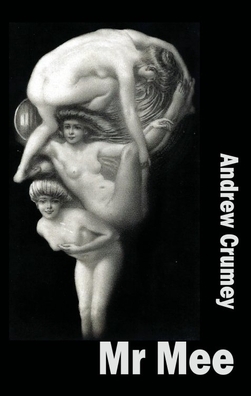
Ο κύριος Μι
Ακολουθώντας τη συμβουλή της πιστής και πολλά υπομένουσας οικονόμου του, ο πρόσχαρος ογδοηκοντούτης κύριος Μι, εγκαταλείπει τα σκονισμένα βιβλία και στρέφεται στο Ιντερνέτ σε αναζήτηση της Εγκυκλοπαίδειας του Ροζιέ, ενός χαμένου βιβλίου το οποίο υπερασπίζεται τη φιλοσοφία ενός εναλλακτικού σύμπαντος. Αντ' αυτού, βρίσκει τη φωτογραφία μιας γυμνής κοπέλας με τη λεζάντα "Φεράν και Μινάρ: Ο Ζαν-Ζακ Ρουσσώ και το Αναζητώντας τον Χαμένο Χρόνο".
Ο Κράμεϋ συνδυάζοντας την επιστημονική του κατάρτιση, τη γνώση του έργου των κλασικών συγγραφέων του 18ου αιώνα, την παιγνιώδη φαντασία του και τις διακειμενικές αναφορές του, μας δίνει ένα διασκεδαστικό φιλοσοφικό θρίλερ, ένα γοητευτικό μωσαϊκό ιστορίας, μυθοπλασίας και διανοητικών παιχνιδιών.
Ο Κράμεϋ συνδυάζοντας την επιστημονική του κατάρτιση, τη γνώση του έργου των κλασικών συγγραφέων του 18ου αιώνα, την παιγνιώδη φαντασία του και τις διακειμενικές αναφορές του, μας δίνει ένα διασκεδαστικό φιλοσοφικό θρίλερ, ένα γοητευτικό μωσαϊκό ιστορίας, μυθοπλασίας και διανοητικών παιχνιδιών.
- GenresFictionLiterature
388 pages, Paperback
First published January 1, 2000
About the author
Andrew Crumey
16 books89 followersAndrew Crumey has a PhD in theoretical physics and is former literary editor of Scotland on Sunday. He won the £60,000 Northern Rock Foundation Writer's Award - the UK's largest literary prize - in 2006. His novels combine history, science, philosophy and humour, and have been translated into fifteen languages. Music, in a Foreign Language won the Saltire First Book Award; Sputnik Caledonia was shortlisted for the James Tait Black Memorial Prize; The Great Chain of Unbeing was shortlisted for the Saltire Fiction Award. He has also been nominated for the Arthur C Clarke Award and longlisted for the Booker Prize.
Ratings & Reviews
Friends & Following
Create a free account to discover what your friends think of this book!
Community Reviews
Displaying 1 - 26 of 26 reviews

June 9, 2025
Video review https://youtu.be/skINg4BKRT8

December 22, 2025
Gotta love a novel where an 18th century "scientist" (or whatever they called themselves in those days) postulates an analogue version of quantum mechanics.
We have 3 separate storylines that dance around each other and are (mostly) tied up neatly together at the end.
A satisfying read.
We have 3 separate storylines that dance around each other and are (mostly) tied up neatly together at the end.
A satisfying read.

April 25, 2011
Mr Mee is an improbably naive octogenarian antiquary, living in Glasgow and writing occasional twee essays for journals like The Scots Magazine. His current obsession concerns two minor players in the life of Jean Jacques Rousseau called Ferrand and Minard. His battleaxe housekeeper suggests he get himself a computer rather than continue trying to research such subjects through his dirty, dusty old books. It's not long before his surfing of the interwebs leads him to the joys of online porn: there's this live webcam, you see, showing a naked woman (in whom Mr Mee has no more than mild interest) boredly reading a book about . . . Ferrand and Minard! Next thing he knows, he's having a torrid affair with a youthful masseuse, Catriona. In another of the three narrative strands making up this book, a middle-aged university lecturer is wishing he could have a torrid, adulterous affair with a youthful student, and believes himself to be playing her as skilfully as any trout angler. The third strand involves the two 18th-century copyists Ferrand and Minard who, through their incompetence, succeed in losing from history all trace of a revolutionary encyclopedia of human knowledge full of speculations and theorems that would have seemed insane to the editors of L'Encyclopédie; various of the lost essays -- as for example the one concerning a philosopher's discovery that the laws of nature can be represented by arrangements of furniture and domestic implements, meaning that arrangements of furniture and domestic implements can be used to generate new laws of nature -- pepper the text, often to very entertaining effect. Such modern concepts as quantum theory, special relativity, social networking, Mendel's Theory of Heredity and the world wide web are prefigured by the various 18th-century French authors. But are these essays really all that they might seem?
Of course, the whole way through I was having to stop myself identifying Mr Mee with Arthur Mee, the editor/author of The Children's Encyclopedia, a compilation that haunted my childhood.
I spent the first 50 or 100 pages enchanted by the conceits of this book, and laughing a lot. After that, though, the sexual elements of the text, which had earlier been just ribald fun (Mr Mee's discovery, looking at the naked woman on his screen, thinking: So that's why Ruskin was so upset!), began to seem instead a bit voyeuristic, or masturbatory, or both; in other words, even while I continued to be entertained by the book's various nat phil fancies, I had the horrid sensation of my skin crawling. Had the novel been porn, I'd have been unruffled; had it been Laurell K. Hamilton, I'd have been either giggling or throwing the book at the wall; as it was, I was just . . . somehow uneasy.
So:
Don't take my word for it. Your reaction to the text might be quite different. You may find yourself slapping your thighs with mirth all through the passages I thought were a bit seedy. But, for me, despite very many good things, this book left a faintly nasty taste.
Of course, the whole way through I was having to stop myself identifying Mr Mee with Arthur Mee, the editor/author of The Children's Encyclopedia, a compilation that haunted my childhood.
I spent the first 50 or 100 pages enchanted by the conceits of this book, and laughing a lot. After that, though, the sexual elements of the text, which had earlier been just ribald fun (Mr Mee's discovery, looking at the naked woman on his screen, thinking: So that's why Ruskin was so upset!), began to seem instead a bit voyeuristic, or masturbatory, or both; in other words, even while I continued to be entertained by the book's various nat phil fancies, I had the horrid sensation of my skin crawling. Had the novel been porn, I'd have been unruffled; had it been Laurell K. Hamilton, I'd have been either giggling or throwing the book at the wall; as it was, I was just . . . somehow uneasy.
So:
Don't take my word for it. Your reaction to the text might be quite different. You may find yourself slapping your thighs with mirth all through the passages I thought were a bit seedy. But, for me, despite very many good things, this book left a faintly nasty taste.

March 21, 2013
A wonderful intellectual entertainment. It weaves together three stories that it would be disingenuous to call unrelated, because you know they̕re going to be related. How they̕re related is the novel̕s mystery, and it is not completely solved until the novel̕s last line.
But it̕s hardly a novel of suspense, and the only murder in the novel is by the way. Clever, well-written, the perfect book to take on a trip, to be stuck with all day at an airport when flights are being canceled.
But it̕s hardly a novel of suspense, and the only murder in the novel is by the way. Clever, well-written, the perfect book to take on a trip, to be stuck with all day at an airport when flights are being canceled.

May 5, 2008
It's been a long time since I read this, so it's hard to accurately rate it. But, if memory serves, it's a high-3/low-4 type of book. A lot of fun, very inventive, but nothing that you're urgently pressing into the hands of friends.

May 27, 2026
Andrew Crumey can be a challenging read, as if you're moving along a Möbius strip, forever encountering characters, stories, books, and events twisting, turning, and merging into one another on what appear to be two sides of a surface but are actually one. This certainly was my experience reading Pfitz and Mobius Dick.
However, Mr Mee is a bit different. We’re given three quite separate narrative threads (more detail below) that, for the most part, flow independently through the first three cycles. Then comes the fourth and final cycle, where the novel turns Crumeyan in the most provocative and intricately woven ways.
FIRST NARRATIVE
Through a series of mishaps, Mr Mee, an eighty-six-year-old scholarly Scotsman, purchases his very first computer to expand and quicken the pace of his current research revolving around an eighteenth-century inventor and encyclopedist by the name of Jean-Bernard Rosier.
Hitting the search button for the first time in his life eventually brings him to a particular site Mr Mee decides to keep on his screen while he retreats from his study for a needed rest. But his housekeeper of thirty years, Mrs B, arrives unexpectedly to drop off groceries. When Mrs B takes a look at what is on Mr Mee's computer screen, she lets out one of her little screams and immediately flees out the front door, never to be seen again.
What did this lady see? In the words of Mr Mee when he returns to his computer: “I found the woman now lying on her back, the book still raised to view. Her pose upon the bed was rather unladylike, resembling that of childbirth, I believe. I might also mention that my serendipitous discovery of so many unclothed women inhabiting the ‘Internet’ has been an educating experience; as well as becoming quite comfortable ‘scrolling’ or ‘zooming’ the image before me, I was also confident that the somewhat hirsute condition of the amply exposed pubes of this unknown woman is a common feature, if not a universal one; a fact whose discovery had at last clarified for me an anecdote which long puzzled me, concerning Ruskin's wedding night in Perth.”
Mr Mee's antiquated but elegant way of expressing himself, along with his naïveté regarding women, sexuality, and the computerized modern world, sets the tone for the entire narrative. And who turns out to be Mr Mee's new housekeeper, helper, and companion? Catriona, an attractive college student studying the life sciences. The naked body has never had a more appreciative audience than this eighty-six-year-old scholar.
Oh, and the book the naked woman on the screen is holding? Two names with a direct connection to Jean-Bernard Rosier.
SECOND NARRATIVE
Tall, thin Ferrand and short, stout Minard are a bookish eighteenth-century French variation of Laurel and Hardy. Ferrand, a failed cleric, and Minard, a failed law-exam taker, meet on a Paris bench and quickly become fast friends, living one notch above squalor in an attic flat and forever on the lookout for work as copyists.
After a few weeks, Ferrand brings home a huge stack of documents in need of copying. He was so hungry for work he didn’t even ask the name of the man who gave him the documents, where the mysterious giver lived, or exactly how much he would be paid for the task.
And the subjects of the documents? The giver told Ferrand their nature must remain absolutely secret. Realizing the potential hazard of their undertaking, the two men examine samples:
“Minard had found an essay which appeared to be on mechanics, but which on closer inspection proved to be concerned with poetry. Ferrand unearthed an article outlining a new theory of sun dials. Both men felt relieved. These papers were learned works of some very obscure and esoteric kind, and could be of no harm to anyone. Ferrand's mysterious friend had merely shown the obsessive secrecy characteristic of inferior artists, who believe their ideas might be worth stealing.”
Through a series of mishaps, a young woman by the name of Jacqueline is murdered, and the mysterious documents appear to be the reason for the crime. Ferrand and Minard conclude they themselves are surely the prime suspects. The pair flee Paris—their destination: Montmorency, Jacqueline’s hometown, where they plan to explain the tragedy to her parents.
Montmorency brings them into contact with none other than Jean-Jacques Rousseau.
THIRD NARRATIVE
A married, childless university literature professor whose specialties are Proust and Rousseau churns through a midlife crisis brought on by alarmingly declining health along with his current infatuation with an alluring student by the name of Louisa.
It is within this narrative that we are given the bulk of Crumey’s reflections on personality and self, identity and society, intellect and desire, history and textuality, Eros and Thanatos.
“When I was younger, my infatuations more abstract and serene, meeting Proust seemed the most wonderful dream imaginable; one to make heaven itself an attractive proposition. I no longer feel quite the same way, now that I can better appreciate the point Proust was making, about this ‘person called “I” who is not always myself’, a character to be found at times in every one of us, and of far wider significance than the narrator of À la recherche du temps perdu (the single unfinished novel to which Proust's comment referred), one who would preoccupy me quite considerably in the coming weeks.”
And it is this professor, whom we later come to know as Dr. Petrie, who is in store for the greatest shocks when certain facts are eventually revealed.
Turning to the philosophic, since this is Andrew Crumey, we are well advised to keep attuned to developing patterns and the ways in which Dr. Petrie’s reflections on various aspects of life play out across all three narratives. Thus, when we arrive at Mr Mee’s letter to the professor (in effect, the fourth cycle) along with the novel’s Epilogue, we are better able to appreciate the subtle connections and intertwining themes underlying the entire novel.
Reading Mr Mee is a delight. Not only are we treated to stimulating ideas, but Crumey’s stellar storytelling abilities are on full display. If what I’ve written sounds appealing, this novel is most certainly for you.

Scottish author Andrew Crumey, born 1961

May 31, 2015
This is a literary novel peppered with literary references which also tries to be funny. Sometimes it is. I can't say that I didn't enjoy it, but ultimately it feels like a dissertation re-written as a novel, with characters who would only exist within a book and with little relevance to the everyday world. That's not to say that such books aren't relevant - even essential - and I invested much time and thought to the book whilst I was reading it. However, if after turning the final page the end result is 'oh, ok', then I feel the work hasn't sufficiently reached its potential. At least, not for me. It also feels like it's trying too hard not to take itself seriously, but actually it does.
There are three interlinking stories: Improbably naive elderly male and his obsession in finding a particular book, two historical characters who might not exist who are connected to the same book, and a hopefully-adulterous lecturer who has written a book about the historical characters. To make the circle complete just use your imagination.
Writing this review I realise that in some respects it resembles Paul Auster's "The Moon Palace" which I also recently read, however there is none of the brilliance and genuine insight to be found in this book as there is in Auster's. It seems a product of the establishment - neither wholly free-flowing nor genuinely funny - and wears it's 'literary' genre firmly sewn onto its sleeve.
There are three interlinking stories: Improbably naive elderly male and his obsession in finding a particular book, two historical characters who might not exist who are connected to the same book, and a hopefully-adulterous lecturer who has written a book about the historical characters. To make the circle complete just use your imagination.
Writing this review I realise that in some respects it resembles Paul Auster's "The Moon Palace" which I also recently read, however there is none of the brilliance and genuine insight to be found in this book as there is in Auster's. It seems a product of the establishment - neither wholly free-flowing nor genuinely funny - and wears it's 'literary' genre firmly sewn onto its sleeve.
January 14, 2019
3 and half - was very original and quite funny, but a little pretentious

February 25, 2020
Another Crumey gem.
Stories within stories and tales about tales; which are 'fact', which are 'fiction', and what is 'truth' anyway?
It's probably down to quantum in the end.
Stories within stories and tales about tales; which are 'fact', which are 'fiction', and what is 'truth' anyway?
It's probably down to quantum in the end.

December 22, 2012
Originally published on my blog here in September 2001.
What is the connection between a sex site on the Internet, Marcel Proust, and two men who make a minor appearance in the Confessions of Jean-Jacques Rousseau? This self-conscious, literary novel concerns all these things, and though it manages at times to be funny, and at others to be interesting intellectually, it never really quite takes off.
There are three narratives, all connected by the eighteenth century Encyclopedia of Rosier, supposedly a dissenting voice to the famous one written by the eminent French philosophers of the time. One of these is a David Lodge-like story of an academic, a specialist in Rousseau, who develops an obsessive crush on one of his students, another is the story of the minor characters from the Confessions, who are portrayed as an eighteenth century Laurel and Hardy. (Neither of these strands is anything like as funny as their influences.)
The most important strand is also the most original. It is the story of an elderly lover of literature, who becomes interested in Rosier after seeing a couple of references to him. This leads him to discover the Internet as a research tool, but the first time he uses it at home, a search for Rosier leads him to a sex site, to his naive delight and the disgust of his housekeeper. (His innocence is the most difficult thing to believe, as he turns out to be ignorant of quite common English phrases.)
To follow this novel, it helps to be familiar with the the important ideas from Remembrance of Things Past (including "the I that is not always I", which I suspect prompted the name of the main character), the Confessions and eighteenth century philosophy generally. Mr Mee is quite an intellectual novel, but left me with the feeling that it requires more effort than it is really worth. This is really because the characters are never sufficiently interesting or believable.
What is the connection between a sex site on the Internet, Marcel Proust, and two men who make a minor appearance in the Confessions of Jean-Jacques Rousseau? This self-conscious, literary novel concerns all these things, and though it manages at times to be funny, and at others to be interesting intellectually, it never really quite takes off.
There are three narratives, all connected by the eighteenth century Encyclopedia of Rosier, supposedly a dissenting voice to the famous one written by the eminent French philosophers of the time. One of these is a David Lodge-like story of an academic, a specialist in Rousseau, who develops an obsessive crush on one of his students, another is the story of the minor characters from the Confessions, who are portrayed as an eighteenth century Laurel and Hardy. (Neither of these strands is anything like as funny as their influences.)
The most important strand is also the most original. It is the story of an elderly lover of literature, who becomes interested in Rosier after seeing a couple of references to him. This leads him to discover the Internet as a research tool, but the first time he uses it at home, a search for Rosier leads him to a sex site, to his naive delight and the disgust of his housekeeper. (His innocence is the most difficult thing to believe, as he turns out to be ignorant of quite common English phrases.)
To follow this novel, it helps to be familiar with the the important ideas from Remembrance of Things Past (including "the I that is not always I", which I suspect prompted the name of the main character), the Confessions and eighteenth century philosophy generally. Mr Mee is quite an intellectual novel, but left me with the feeling that it requires more effort than it is really worth. This is really because the characters are never sufficiently interesting or believable.
December 29, 2010
This reads like Poor Things if it had been influenced by Stephenson.[return]The jokes are generally better than Poor Things. Drawing their source about equally from computer science and a literary even a classical education. The maguffin, Rosiers encyclopedia and its more and more unlikely entries providing most of the humour. The first half went well but when life made me pause in my reading, there was litte to help me back into the story. This was quite bleak for most of the second half. [return][return]Elderly Mr Mee is told by his cleaner that he is sad but this hardly makes him stand out from the rest of the cast.The . The problem is that funny things happening to sad people still boils down to a story about sad people. The Narrative was quite complex with inter weaving viewpoints. of which lecturer's story was the most disapointing thread. His lack of access to Rosiers work meant there was nothing to lighten the mix. while he seemed to exist only to be miserable and provide a different possible more objective view point. [return][return]It was all looking a bit bleak towards the end.but the epilogue managed to brighten it up by providing a decent resolution.[return][return]Mr Mees sexual escapades left me feeling more uncomfortable than I would have thought.[return][return]In my ratings for read it swap it I gave it a 6/10 some nice lines and well plotted with jokes that Flatter ones ones knowledge the telephone egineer caught up in an interminable conversation with Proust for example but I spent too much time feeling sorry for the characters to laugh a very much.

March 2, 2014
I thought this was a good read, very ideas-based and lots to think about, and more accessible than Mobius Dick, with some fantastic moments, and a pleasing feeling of having to work things out and a slow tying together of ideas. There are lots of connections to glean and debates expanded about life and literature, and fantasy and reality: though it steered clear of being overtly metafictional.
However, I did have two small problems with it. Firstly, the chapters alternate between Mr Mee, Ferrand and Minard, and Dr Petrie. The trouble is that with three styles and characters so different, it is almost inevitable that the reader will prefer one narrative over the other two, and therefore rush through the other two chapters.
Also, I found Mr Mee's chapters frustrating as his naivety is entirely unconvincing - it's expressed largely by putting a lot of words in inverted commas, which is both irritating and unnecessary. He's an 81 year old scholar but doesn't know where his towels are kept or how to make tea, which I would almost believe if he learnt booky things quickly - but he couldn't comprehend the internet and was foxed by language itself, which just doesn't seem to add up to me.
Given what the book is about I'm wondering if this was partly Crumey's intention, but making a philosopical point doesn't always make a good story...
But nevertheless it's a v enjoyable read
However, I did have two small problems with it. Firstly, the chapters alternate between Mr Mee, Ferrand and Minard, and Dr Petrie. The trouble is that with three styles and characters so different, it is almost inevitable that the reader will prefer one narrative over the other two, and therefore rush through the other two chapters.
Also, I found Mr Mee's chapters frustrating as his naivety is entirely unconvincing - it's expressed largely by putting a lot of words in inverted commas, which is both irritating and unnecessary. He's an 81 year old scholar but doesn't know where his towels are kept or how to make tea, which I would almost believe if he learnt booky things quickly - but he couldn't comprehend the internet and was foxed by language itself, which just doesn't seem to add up to me.
Given what the book is about I'm wondering if this was partly Crumey's intention, but making a philosopical point doesn't always make a good story...
But nevertheless it's a v enjoyable read

March 6, 2014
Definitely an unusual book. Somewhat chaotic, yet enticing, leaping carelessly from one story to the other, from one uncanny character to the other. One must be quite patient when pushing through the first pages. Afterwards, there is no way back. Ferrand and Minard are quite charming, leaving aside the fact that their idiocy might be rather irritating for those unaccustomed to a certain type of character. Rousseau’s biographic details plus a handful of fictional events, characters and situations turn this novel into one of the strangest reading experiences I’ve had so far. Great epilogue – it closes the circle quite seamlessly, adding to the ridiculous seriousness of an otherwise funny novel (it’s twisted and I meant it. Try reading the book yourselves!)

September 23, 2014
In genere, un roman reflectă în paginile sale înclinațiile și obsesiile autorului: curiozități nesatisfăcute, marote cultivate cu grijă de-a lungul timpului, lumea în care trăiește (mediul social, evoluţia politică), preocuparea pentru un anumit gen de formă/registru șamd. Din acest motiv, am tendința de a recomanda cititorilor să arunce o privire asupra fundalului – viața autorului, plăcerile sale literare și/sau vinovate, vremurile în care scrie. Romanul prinde viață în momentul în care este încadrat într-un context care dezvăluie detalii de subtext ori sensuri aparent absconse.
de la sursă: Andrew Crumey. Domnul Mee, romanul revelațiilor inutile – SemneBune http://semnebune.ro/2014/andrew-crume...
de la sursă: Andrew Crumey. Domnul Mee, romanul revelațiilor inutile – SemneBune http://semnebune.ro/2014/andrew-crume...
March 5, 2016
I read this right after 'Kafka on the Shore,' and it was a peculiar coincidence. They have similarities: intertwined stories, lots of references to philosophers and writers, seemingly disconnected events that eventually connect, and surreal aspects. I enjoyed the 'historical' story the most - the one focused on the French odd couple in search of Rousseau (sort of). The story of Mr Mee himself was strangely homespun and funny (and reminded me very much of Nakata's from 'Kafka on the Shore'), but the third story about the academic had too much hand-wringing obsession with a student for my taste. I did like his thoughts on memory, however.

July 14, 2020
Romanzo anomalo, a volte un po’ furbetto, a volte molto “filosofico”, certo divertente e anche istruttivo. Delle tre trame la più avvincente per me è quella dei due amici Minard e Ferrand, con i dialoghi surreali e gli equivoci che riescono a creare inconsapevolmente, modificando il corso degli eventi. Poi, adesso, so più di Proust e di Rousseau di quanto abbia imparato al liceo, sempre che l’autore non si sia inventato tutto, e il concetto di calcolo delle probabilità forse mi è meno oscuro. Il romanzo di Proust non è un libro di memorie esattamente come Le Confessioni? Non lo so, tanto non li ho letti entrambi!

July 5, 2011
Acá tenemos a un anciano erudito e ingenuo (el Señor Mee del título) que descubre sin querer el internet en su búsqueda de la llamada Enciclopedia de Rosier, que es una Enciclopedia perdida que describe un universo alternativo, que al parecer estaría en mano de una mujer desnuda con la que se obsesion. Esto combinado con las apariciones de Rousseau y Proust y una serie de sinsentidos que nos hacen pensar que estamos leyendo una versión alternativa de Bouvard y Pecuchet, además de tratar de entender qué sucede con la increíble fuerza de voluntad del señor Mee.

January 2, 2012
I enjoyed it, but it got a little dense in places and the author seemed at times to be very proud of how clever he was being. But then he apparently doesn't trust his readers to figure out how clever he is being, so he practically bashes us in the head with it in the epilogue. An interesting read though, with bits that spiraled hilariously into the absurd, and I do intend to read more of this author. Also, I am now curious as to whether or not Rousseau really was such a complete and utter bastard.....

January 18, 2012
I do like Andrew Crumey - "Moebius Dick" was a hugely satisfying read, "Sputnik Caledonia" was great, and "Pfitz" was a really good read. Then I try "Mr Mee" and I stumble into a road block. It's not that I didn't like this book because some great books are intensely unlikable. It is not because I struggled with the book because difficult reads are often rewarding. "Mr Mee" just wasn't very good.
September 9, 2011
Clever book about an unworldly elderly man, Mr Mee, whose introduction to the internet changes his life in many ways. This is quite a confronting book, definitely not for everyone, with strange and unpleasant characters. And yet I enjoyed it.
October 21, 2016
After the first three paragraphs, I was sure I was going to find this unbearably pompous and contrived. I'm so glad I kept going. The complex plot makes me think of Borges, but it's full of funny bits too!

June 20, 2009
I was hoping this book would be as interesting as "Pfitz", by the same author, but it did not hold my attention.

November 5, 2012
ένα πρόσωπο που ονομάζεται ΕΓΩ αλλά δεν είναι πάντα ο εαυτός μας.
one person called ΜΕ but its ΝΟΤ always ourselves.
one person called ΜΕ but its ΝΟΤ always ourselves.

January 6, 2013
Annoying
June 19, 2013
It was OK, altho I had a little trouble following it since it moved between three different time frames. It's the kind of book that if you read it again, would make more sense.
December 6, 2013
Very amusing book about an elderly Scottish bookworm.....who purchases a computer an enters a new world......much fun and laughter......
Displaying 1 - 26 of 26 reviews