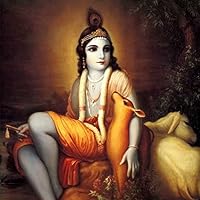
Kṛṣṇa-this sound is transcendental. Kṛṣṇa means the highest pleasure. Each of us, every living being, seeks pleasure. But we do not know how to seek pleasure perfectly. With a materialistic concept of life, we are frustrated at every step in satisfying our pleasure because we have no information regarding the real level on which to have real pleasure. To enjoy real pleasure, one must first understand that he is not the body but consciousness. Not exactly consciousness, for consciousness is actually the symptom of our real identity: we are pure soul, now merged within this material body. Modern material science lays no stress on this; therefore the scientists are sometimes misled in their understanding of spirit soul. But spirit soul is a fact, which anyone can understand by the presence of consciousness. Any child can understand that consciousness is the symptom of the spirit soul.
Now the whole process we are trying to learn from the Bhagavad-gītā (The Song of God) is how to bring ourselves to this level of consciousness. And if we act from that level of consciousness, then we may not be pushed again into the level of this bodily consciousness; then, at the end of this body we shall be free from material contamination, our spiritual life will be revived, and the ultimate result will be that in our next life, after leaving this body, we shall have our full, eternal spiritual life. Spirit, as we have already discussed, is described as eternal. Even after the destruction of this body, consciousness is not destroyed. Rather, consciousness is transferred to another type of body and again makes us aware of the material conception of life. That is also described in the Bhagavad-gita. At the time of death, if our consciousness is pure, we can be sure that our next life will not be material - our next life will be spiritual. If our consciousness is not pure at the point of death, then, after leaving this body, we shall have to take another material body. That is the process which is going on. That is natures law.
We have now a finite body. The body which we see is the gross body. It is just like a shirt and coat: within the coat there is a shirt, and within the shirt there is a body. Similarly, the pure soul is covered by a shirt and coat. The garments are the mind, intelligence and false ego. False ego means the misconception that I am matter, that I am a product of this material world. This misconception makes me localized. For example, because I have taken my birth in India, I think myself Indian Because I have taken my birth in America, I think myself American. But a pure soul, I am neither Indian nor American. I am pure soul. These others are designations. American, or Indian, or German, or Englishman; cat or dog, or bee or bat, man or wife: all these are designations. In spiritual consciousness we become free from all such designations. That freedom is achieved when we are constantly in touch with the supreme spirit, Kṛṣṇa.
Librarian's note: an alternate cover edition ISBN: 0-89213-149-7
His Divine Grace Abhay Charanaravinda Bhaktivedanta Swami Prabhupada (अभय चरणारविन्द भक्तिवेदान्त स्वामी प्रभुपाद)was born as Abhay Charan De on 1 September 1896 in Calcutta, India.
He first met his spiritual master, Srila Bhaktisiddhanta Sarasvati Gosvami, in Calcutta in 1922. Bhaktisiddhanta Sarasvati, a prominent devotional scholar and the founder of sixty-four branches of Gaudiya Mathas (Vedic institutes), liked this educated young man and convinced him to dedicate his life to teaching Vedic knowledge in the Western world. Srila Prabhupada became his student, and eleven years later (1933) at Allahabad, he became his formally initiated disciple.
At their first meeting, in 1922, Srila Bhaktisiddhanta Sarasvati Thakura requested Srila Prabhupada to broadcast Vedic knowledge through the English language. In the years that followed, Srila Prabhupada wrote a commentary on the Bhagavad-gita and in 1944, without assistance, started an English fortnightly magazine.
In the last ten years of his life, in spite of his advanced age, Srila Prabhupada circled the globe twelve times on lecture tours that have took him to six continents. In spite of such a vigorous schedule, Srila Prabhupada continued to write prolifically. His writings constitute a veritable library of Vedic philosophy, religion, literature and culture.
Olen krišnaiitidelt saanud kaks raamatut: ühe umbes viis aastat tagasi Tallinnas, teise sel suvel Tartus. Ei olegi päris kindel, miks, aga mõlemal korral läksin vestlusega kaasa, ei keeldunud pakutud raamatust ja andsin nende eest ka paar münti (kui järgi mõelda, siis väga sümboolse summa, nii et äkki saan oma karmat selle arvustuse tegemisega natuke tasakaalustada? (tagantjärgi: vist mitte…)). Nüüd tulid koolis krišnaiidid teemaks ja mõtlesin, et suvel saadud raamat (pigem pamflett) on piisavalt lühike, et võiks ju päriselt läbi lugeda.
Raamatukesse mahub kokkuvõtlikult Krišnale pühendunute õpetuse tuum, mida pole mõtet üliutreeritult siia ümber kirjutada. Mainimisväärseim oli lugemiskogemuse juures see, et ma pole kunagi varem ühegi raamatuga (vähemalt ühe lehekülje kohta) nii tugevasse dialoogi astunud, kriipsutasin alla ja/või kirjutasin midagi pea igale leheküljele. Miks?
Otsustasin mitte ülemäära isiklikuks minna, aga veidi konteksti peab andma. Nagu osad teavad, oli mul 2019. aasta teises pooles hinduistlik faas, mis lõpes 2020 jaanuaris toimunud ja väga palju (sh mitmeid aastaid vanemaid vaateid ja tõekspidamisi) muutnud eksistentsiaalse kriisiga. Seega olin ma paljude raamatus mainitud mõistete, ideede ja kontseptidega juba tuttav; samuti olin osad teoses välja toodud ideed kunagi isiklikult läbi mõelnud ning hiljem osadest teadlikult loobunud. Palju jäi aga lahtiseks, sest loobusin pärast seda kriisi katsest kõike selgeks ja välja mõelda, lisaks tulid peale igasugused teised globaalsed ja isiklikud kriisid nagu koroona, ajateenistus, ajateenistusest taastumine ja Ukraina sõda, mis ei ole andnud eriti palju ruumi eksistentsiaalseteks rännakuteks. Seega oli mingisugune külaskäik hinduismi aja küsimus.
Ka nii lühikese raamatu puhul ei jõua ma minna kõigesse (tahaks enne hommikut magama minna tegelt), nii et piirdun mõne olulisima asjaga. Ütlen kõigepealt ära, et ma räägin siin raamatust, mitte Hare Krsna liikumise põhimõtetest tervikuna, sest teoses on tegemist on väga lühendatud ja lihtsustatud kujul edasi antud ideedega, lisaks üritan mitte astuda enda kingadest välja, ma ei ole ISKCONi teoloogia teemal ekspert ja ei tea tegelikult filosoofiast (eriti loogika, argumentide konstrueerimine jms) üldse piisavalt. Ja samuti ütlen ära, et toredaid, huvitavaid ideid ja näiteks õigustatud kriitikat tänapäevase materialistliku tsivilisatsiooni suhtes oli ka, mul lihtsalt pole mahti sellele keskenduda.
Raamatu üks peamisi probleeme on see, et ta üritab samal ajal teha kahte vastandlikku asja: 1) tõestada, et “müüdav” kontseptsioon maailmast, reaalsusest, elust, surmast jne on loogiline ja mõistuspärane, ning 2) öelda, et me saame Tõe teada ainult läbi Krišnale alistumise (lk 23). Korduvalt tehakse appeal to authority, nt lk 20 mitu korda, kusjuures üritatakse ka konstrueerida põhjendus, miks appeal to authority on tegelikult täiesti okei ja pädev asi, mida teha (mille põhjendus rõhub jällegi sellele, et lugeja usub dogmana, et Krišna 1) on olemas ja 2) on täiuslik). Üldse räägitakse väga palju ülivõrdes (nt sõnad täiuslik, kindel) seal, kus see ei tundu üldse iseenesestmõistetav? Samuti mainitakse kohe pärast seda autoriteedijuttu üht “täiuslikku” kuningat, kes suutis Jumalaga kohtuda tänu ülimale askeesile, mis sisaldas kolme kuu jooksul vaid kord kuue päeva jooksul veidikese vee joomist ning järgmisel kuul kord kaheteistkümne päeva jooksul veidikese õhu sisse hingamist (vrd Roland Karo parafraas: normaalse intellektiga inimeselt ei saa oodata, et ta usuks Piiblit täiesti sõna-sõnalt, st et maailm loodigi seitsme päevaga, et inimesed elasid vanasti mitmesaja-aastaseks jne). Okei, aga äkki see oligi ka metafoor? Ei tundu nii, sest järgmises lõigus õigustatakse, et selliseid askeese pole enam võimalik praktiseerida. Miks? Mis siis vahepeal muutus? Ei selgitata sõnagagi, aga ennetan ja pakun, et siis oli käimas mingi eelmine yuga, kui muru oli rohelisem ja taevas sinisem, loomad oskasid rääkida ja inimesed lennata, aga noh…
Oeh, eks minu probleem oligi, et ootasin teoselt rohkem pädevust filosoofilises, ideelises argumentatsioonis, aga ei oleks tohtinud unustada, et tegemist on pamfletiga, mille peamine eesmärk on eeldatavasti hoopis inimeste värbamine ISKCONi. Ning, muidugi, et tegemist on religioosse organisatsiooni (kuigi kahtlemata ka filosoofilise) kirjutisega. Seetõttu selguski analüüsi käigus, et ületamatu probleemkoht minu ja raamatu vahel oli dogmade otsa põrkamine. Raamatus toodud tõestused peavad vett ainult siis, kui uskuda nendega käsikäes käivatesse dogmadesse. Seega: ma pigem ei soovitaks seda kirjutist religiooniuuringute tudengitele, kes tahavad saada neutraalset ülevaadet Krišna teadvuse ühingu olemusest ja õpetusest; pigem on see suunatud inimestele, kes otsivad mingit spirituaalset hüve ning ühe süsteemi sees loogilist maailmapilti, või, muidugi, kes lihtsalt tunnevad kutset.
Hare Krishna. All glories to Sri Krishna and the absolute devotee Srila Prabhupada. If there is something to be known then that is present in the beautiful works of Prabhupada. Each of his book is crafted wisely and with pure devotion to help the reader get the feeling of Krsna consciousness. I feel more Conscious towards God while reading his books. Each person blessed with the ability to read should read the books of Srila Prabhupada to know the meaning of life, to know the purpose of his/her existence and to get answers to all the doubts.
Beautiful book with strong philosophical points on why Krishna (God, literally meaning "The All-Attractive" is the source and center of all pleasure. Any pleasure we experience is from Him and through Him, and we can experience increased pleasure by directly forming a relationship with Him. Quick read. I read the whole thing on a single ride home on the MBTA.
A series of talks on the Incarnation (of "God") known as Krishna. Describes the situation of spiritual malaise in which moderns find themselves and how become "god conscious" can help. Similar to many of Srila Prabupada's other works but a quick read.
This book is an excellent introduction to whoever wants to know about spirituality and joins the journey of Krishna consciousness. There are three articles written by Srila Prabhupad maybe during the early days of his magazine, Back to Godhead. I finished this book in one sitting on the Saphala Ekadashi this year.
A quick little read about the cycle of infinite birth and death, or samsara. Some interesting insights about individuals being subordinate consciousnesses of the Supreme Consciousness. Hare Krishna Spirit Soul!
"Kṛṣṇa – The Reservoir of Pleasure" is a concise and engaging book that beautifully narrates the divine pastimes of Lord Krishna. Written in a simple yet profound manner, it highlights Krishna’s enchanting personality, wisdom, and boundless love. The book serves as an excellent introduction to Bhakti (devotion) and offers deep spiritual insights, making it a delightful read for both seekers and devotees
A short brochure. Still suffers from a lack of explanation of its key terms. What is 'constitutional position?' And why use terms of art such as this? Isn't the entire point of ISKCON to spread the message effectively? Why obfuscate it with Sanskrit terminology and barely-recognizable English terms ('Personality of Godhead,' 'the pastimes of Krishna') that get in the way of understanding for the uninitiated?
An exemplar of both: "When we hanker for earning, that is a kind of distress. And when we suffer loss, that is also distress. But if we are situated in brahma-bhuta[?], we will neither be distressed nor will we hanker." [NB: The section this quote comes from is not about brahma-bhuta, and the term goes undefined; it is not a term with wide enough usage to even have any results in a Wikipedia search. It is just flatly used in a passage like this alongside English words straight from the thesaurus, and then we move on in the narrative.]
Okay, material pursuits are temporary and ultimately unfulfilling, I grant you. But to just assert that devotion to Krishna brings one the 'ultimate Answer,' so to speak, without even trying to explain why or how? How does any of this work? What does the part I can actually *do* really mean?
A pamphlet, not a book. Reservoir of Pleasure is a simple restating of the Hare Krishna philosophies, much of it taken straight from Prabhupada's other books. There's little here to enjoy other than the recruitment strategies and stories of a man whose basic tenant is 'my religion is the only right one because Krishna says so".
Oli selline tüüpiline budistlik tekst. Lugesin läbi, aga midagi uut teada ei saanud ja absoluutselt mitte midagi pähe ei salvestunud- nagu vesi oleks minust läbi voolanud...