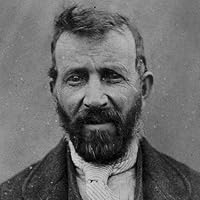
A fascinating memoir from the man who revitalized visual geometry, and whose ideas about fractals have changed how we look at both the natural world and the financial world.
Benoit Mandelbrot, the creator of fractal geometry, has significantly improved our understanding of, among other things, financial variability and erratic physical phenomena. In The Fractalist, Mandelbrot recounts the high points of his life with exuberance and an eloquent fluency, deepening our understanding of the evolution of his extraordinary mind. We begin with his early years: born in Warsaw in 1924 to a Lithuanian Jewish family, Mandelbrot moved with his family to Paris in the 1930s, where he was mentored by an eminent mathematician uncle. During World War II, as he stayed barely one step ahead of the Nazis until France was liberated, he studied geometry on his own and dreamed of using it to solve fresh, real-world problems. We observe his unusually broad education in Europe, and later at Caltech, Princeton, and MIT. We learn about his thirty-five-year affiliation with IBM’s Thomas J. Watson Research Center and his association with Harvard and Yale. An outsider to mainstream scientific research, he managed to do what others had thought impossible: develop a new geometry that combines revelatory beauty with a radical way of unfolding formerly hidden laws governing utter roughness, turbulence, and chaos.
Here is a remarkable story of both the man’s life and his unparalleled contributions to science, mathematics, and the arts.
Benoît B. Mandelbrot, O.L.H., Ph.D. (Mathematical Sciences, University of Paris, 1952; M.S., Aeronautics, California Institute of Technology, 1949) was a mathematician best known as the father of fractal geometry. He was Sterling Professor Emeritus of Mathematical Sciences at Yale University; IBM Fellow Emeritus at the Thomas J. Watson Research Center; and Battelle Fellow at the Pacific Northwest National Laboratory.
Mandelbrot was born in Poland, but his family moved to France when he was a child; he was a dual French and American citizen and was educated in France. He has been awarded with numerous honors, including induction into the Legion d'honneur, as well as the 1986 Franklin Medal for Physics, the 1993 Wolf Prize for Physics, the 2000 Lewis Fry Richardson Medal of the European Geophysical Society, and the 2003 Japan Prize "for the creation of universal concepts in complex systems."
As a memoir I thought it was outstanding but his habit of dropping names became a little annoying. It was as if he was trying to legitimize himself when he didn't need it. He is by far the most interesting and contemporary mathematician I know of and his memoir makes me want to Google all his friends and names he drops.
I thought he paid too little page interest in how he woed his wife and gave his family life little worth until the end. Maybe he wanted to protect their privacy but I wish he had written more about it. Maybe in a book about his life he didn't consider them as important.
I loved the beginning of the book about his early years and looked ahead to find he didn't hardly cover his personal life in the later part.
This memoir is mostly about Benoit Mandelbrot's career and how he developed his geometry. There are some amazing photos in here both having to do with fractals and also about his personal life. The ones about his personal life only making me wish there was some more written about it. I hope his wife writes a memoir of her life with him.
That said, I do love how he developed his career and gives hope to others who go on the road less traveled. He keeps saying how he got his ideas late in life and outside the mainstream of mathematics. He didn't have the research lab like most scientists have. But he did have a lot of help. And I don't think he gives his helpers enough credit. He hardly mentions the computer programmers who helped make fractals possible. And he had a lot of lucky breaks. And a lot of financial help. I don't think he had college loans for instance.
In short, this was a fantastic read about one of today's mathematicians. And it describes clearly how he developed the fractal field. I highly recommend it to anyone interested in geometry, math, fractals or men of science. Or anyone interested in memoir. I loved getting to know Benoit Mandelbrot from this perspective.
He was a gypsy by necessity, maverick by fate, and despite it all had the ability to make deep emotional bonds & love life. Reverberates for me!
Some of the reviewers ask why there isn't more mathematics and talk of "his fractal world view" -- well this is a memoir and as he does it well and tells of his whole life, development, and self -- not just his driving obsession. His papers and books on mathematics and fractals are better places to understand his fractal view of the world! It's nice to know he was a person, a rather interesting one who was curious, patient, observant, and agile-minded enough to see a basic pattern in everything he saw in the world around him (which wasn't a product of a psychologically disturbed mind!) and able to concretize it into understandable rules and processes for generation. What really amazes me is his rules apply to the dynamic world as we know it -- not in small static bits and pieces as is most often used as is most often amenable to our investigations.
That all being said I do wish he'd have talked more ABOUT how and IF his wife and family helped shape his person and thoughts. I am also surprised at no mention of his Jewish heritage/gematria having imprinted him in matters of numbers which was the basic life blood of Mandelbrot!
Quotes that summarize nicely this memoir for me:
p. 16: "...the onus of remaining a foreigner persisted, expanding from countries to fields of science. This did not prevent me from functioning well enough. But even for an accomplished foreigner, repetition does not make uprooting any easier. It carries a heavy price."
p. 208: "Essentially, all I had learned through my otherwise too long and too scattered wandering years gradually changed from a random burden on my memory to a very valuable asset in my work."
p.229: "...values far from the norm are the key to the underlying phenomenon."
p.292: "In due time, it [geometry] turned out to be an elusive point where formula and picture meet on even terms where theory meets the real world, and where mathematics and hard science meet art so that their worth and beauty shine for beyond the narrow world of experts, bringing an element of unity to the worlds of knowing and feeling."
p.297: "Unimaginable privilege, I participated in a truly rare event: pure thought fleeing from reality was caught, tamed, and teamed with a reality that everyone recognized as familiar."
p.303: "Complicated shapes might be easily understood dynamically as processes, not just as objects."
p.307: "Bottomless wonders spring from simple rules...repeated without end."
L'autobiografia di un uomo nato in una famiglia di scienziati, dotato di intelligenza straordinaria, e che ha compiuto una carriera altrettanto straordinaria nei più importanti templi della scienza di allora e di oggi: Parigi, Washington, Ginevra, Princeton, Cambridge MA (sede del MIT), New Haven CO (Yale), Ithaca ecc. Ha conosciuto un numero impressionante di illustri scienziati fra i quali Oppenheimer (uno di padri della bomba atomica) e von Neumann (uno dei padri del computer). Matematico puro, è passato alla storia per i frattali, meravigliose forme geometriche il cui studio ha avuto importanti ricadute applicative. E' interessante, per noi lettori, apprendere che Mandelbrot ha studiato anche la legge di Zipf che riguarda ""la distribuzione sistematica delle parole e la loro socievolezza"". Ho apprezzato soprattutto la prima parte di questa autobiografia, in cui l'autore descrive le sue esperienze scolastiche. Nelle parti seguenti, troppi incontri, personaggi, esperienze. La vita come un frattale.
[..] uno scienziato dimostra il proprio valore identificando problemi che non sono né troppo facili né troppo difficili. La scienza onora di più coloro che pensano in grande di quelli che pensano troppo in grande.
A quite interesting memoir of the father of fractals - Benoit Mandelbrot. It covers his life perturbations and had been written shortly before he passed away. It does not cover his mathematical contributions in any depth, but nevertheless his story and people he met makes for very interesting reading. I never realised that he was born in Poland, as he had been usually referred to as a French-American. In fact, he was born in a Jewish family in Warsaw in 1924. His family emigrated to France in 1936. He survived war in Vichy France under different name and with help of his French friends. He was under influence of his uncle, Szolem, mathematician who emigrated to France in 1920. Mandelbrot varied and complicated life made him a late bloomer. His contribution to finance happened when he was nearing forty, and discovered the Mandelbrot set only when fifty five years of age. He worked for IBM for 35 years and retired when they stopped their involvement in pure science.
Mandelbrot identified himself with the words of George Bernard Shaw: "The reasonable man adepts himself to the world; the unreasonable one persists in trying to adapt the world to himself. Therefore, all progress depends on the unreasonable man."
Benoit Mandelbrot lead a very long and peripatetic life, and unlike most mathematicians, whose major work is done when they are relatively young, his groundbreaking The Fractal Geometry of Nature wasn't published until 1977, when he was 53. Born in Warsaw in 1924 to Lithuanian Jewish parents, he and his family escaped the Nazis to settle in France, where he studied math. He was always interested in applying math to different fields, like economics, fluid dynamics, information theory, many more. He worked at IBM, Princeton, Yale, Harvard, and at universities in France and Switzerland. While his life was interesting, this memoir felt a bit disjointed. He completed it not long before his death in 2010.
El estilo a veces es atropellado, sobre todo en las partes finales (posiblemente porque murió antes de poder hacer una revisión), pero es una lectura fascinante. No puedo por menos que compararla con las memorias de Dawkins, y aunque de ego van los dos igual de sobrados, las historias de Mandelbrot tienen mucho más interés.
Interesting perspective on mathematical life in the 20th century. Don't completely agree with his assessment, but very interesting learning more of the life experiences that accompanied his evolution as a mathematician.
I first became aware of Benoit Mandelbrot and his accomplishments in fractal geometry through reading James Gleik's book "Chaos" back in the early 90's. Mandelbrot's memoir about his upbringing and unconventional career in advanced mathematics is somewhat fractal itself in nature - it seems like details are repeated on smaller and smaller scales as you read through it. His story is told in a non-linear and looping fashion that I found a little hard to follow. If you are afraid that the book delves deeply into the math, fear not - there is only one very simple formula presented. In fact, the mathematical nuts and bolts are avoided to the extent that after reading this book I still don't have a frickin' clue as to what the Mandelbrot Set is...maybe I didn't read closely enough. There is no doubt that Mandelbrot was a genius and he led a fascinating life as he followed his guiding lights. In his many stints at various university he interacted with some of the biggest names in 20th century science: Theodore von Karman, John von Neumann, and Robert Oppenheimer, to name a few. Four out of five stars.
The Mandelbrot set M defined by: P-sub-c: C --> C, where C is the complex plane Where: P-sub-c: z --> z^2+c, for some c in C, typically starting at z=0 (P is a map from the complex plane to itself given by the complex quadratic polynomial z^2+c iterated from z0=0, z1=0^2+c=c, z2=c^2+c, z3=(c^2+c)^2+c and continued to find which values for c cause the iteration to eventually increase unbounded to infinity and which are finitely bounded over infinite iterations. This is all super simple to type into computer software, as in two lines of instruction)
M is the set of complex arguments for c that are bounded. The boundary forms one of the mind-blowing images ever conceived. It is globally self-similar with increasing complexity, and zooming deep into a fractal provides the best visual tool for appreciating and abstracting infinity itself and infinite complexity as well as the beautiful complex order and symmetry hiding inside said complexity. And it arises from a function that is understandable to a large extent to high school students, at least the basics of the complex plane and functions with complex arguments. The resulting complexity has to be seen to believe, and it is this complexity-from-simplicity that in many ways provides deep insight into nature, complex systems and structures, and the universe itself...
Fractals and their applications and implications, as analytical tools for chaotic dynamical systems and nonlinear dynamics, have revolutionized modern scientific thought.
If the entire book was written in the style of the final chapter, then I imagine something that could've been a five-star read. The language and voice is much more organic, thoughtful, reflective, and illuminating. The above description of the now-ubiquitous (rightly so) Mandelbrot set and his discovery and work in the theory of fractal geometry (comprising the latter half of the book) and its innumerable applications defines his deeply influential career. I wanted less of Benoit merely stating these things were major discoveries and more explaining more clearly and descriptively why they matter so much, and the same holds for the many depictions of contemporary geniuses encountered in his life focusing on their personalities and that they did great work but what that work was we are rarely given more than a superficial mention. This is straight-up autobiography, and even though Mandelbrot is one of the most influential (what we would now call) mathematical scientists of the last half-century plus, and he found himself in several fascinating environments surrounded by geniuses, he's simply not very good at writing about them. Memoirs are not a real thing, they are typically bad autobiographies with a supposed slight emphasis on reflection and possibly covering a shorter period of time than a straight historical, event/fact-based narrative. This is too often a boring, literal recounting of the chronological story of someone's life with some ancillary commentary or digression. Granted, his life was incredible and entirely unique, and by all accounts he was a wonderful human being (sadly he passed away recently though remarkably remained active in the scientific community his entire life), so it's frustrating that he frequently makes it dull to read about. Oh well, I've read parts of his "The Fractal Geometry of Nature" and will read the whole thing soon due to transcendent brilliance, and this book is such a quick read that I don't regret picking it up.
It's a shame that Mandelbrot died before he could edit his memoirs better. What I found most interesting of this book was the serendipity of Mandelbrot's research, and how indebted he was to the input and advice of his uncle Szolem. He was lucky to stumble upon Zipf's, Haudorff's, Hurst's, and Julia's works. His true merit is making these works widely known.
I didn't know he was John von Neumann's last postdoc student, and found that bit surprising. However, I would have preferred less namedropping, and fewer pages about office and university politics. Nobody reading this book cares about Benoit's impressions of the administrators at IBM and the universities he visited. These people were long-dead when this book came out.
Mandelbrot is vague when talking about fractal geometry and its place in complexity research.
A thorough discussion about the work that he left unfinished in negative dimensions and lacunarity would have been valuable for future researches. In this book he is too vague when talking about what matters. There's only a passing reference to Kolmogorov-Chaitin complexity and no reference to Bennett's physical complexity/logical depth measure, even though he worked throughout most of his career in IBM Research, alongside Gregory Chaitin and Charles Bennett. It makes no sense that he chose to ignore a discussion about the tradeoffs between fractal dimension and Kolmogorov complexity, but decided to talk at length about administrative officers.
It's not very often that you get to read a genius intelligibly describing to you how he came to be a genius; the first half of this book is Mandelbrot's origin story, pretty much. It's encouraging to read how his early academic promise seemed to his family to stall out into unrealized potential in his midlife, when all the while he was doing the interdisciplinary work which would lead to his most famous work later in life. Also encouraging to read about a mathematician who *hadn't* peaked at thirty and then settled into a staid teaching career, never to make any more field-shaking discoveries. At thirty, Mandelbrot had barely begun to discover! Seeing the influence of his family, their focus on scholarship, and their wisdom in fleeing Poland before they were swept into World War II and how that life-saving pattern-matching ability set the theme for Mandelbrot's interest in studying roughness was also illuminating. The latter bits of the book become somewhat disjointed, perhaps because he's covered so much of the body of his work in his other books. (I also very much liked "The (Mis)behavior of Markets" and really should get around to reading "The Fractal Geometry of Nature" at some point.) So I can see why other readers parsed that as name-dropping, but to me it read like a people-focused collaborator giving credit to all the people in his long life who shared and influenced his work. Mandelbrot is cool enough himself that he doesn't need reflected glory, heh.
This man figured out the geometry Nature has been using. You may have goosebumps reading a quote from Darwin on natural selection. Both fractals and living forms start from primal simplicity going through many interactions to reach marvellous organized complexity. Mandelbrot was such a brave maverick because he had good role models within his family. His close uncle was a known mathematician but he still managed to create his own path, perhaps the hardest one. We are lucky he did it and wrote this book to tell us how things eventually converged to a breakthrough.
Ultimately a likable and interesting autobiography of one of my math heroes. That said, I found the book generally disappointing as it contains almost no math, and is more full of self-congratulation than I like. Mandelbrot was clearly a brilliant man who moved the dial during his lifetime. His writing is an odd mix of humble and self-deprecating, mixed with large doses of ego
I was pulled in by the first few chapters and his incredible survivor skills. Felt short changed that he was unable to tie in the mathematics that was the basis for his fractal geometry. The latter half of the memoir is too consumed with his academic appointments and contacts and would have been better served with a more substantive discussion of his fractal world.
Knížka ja autobiografií otce fraktálů a i když pojednává o matematické "hříčce", je v ní pouze jeden vzoreček. Velmi mě překapil autorův přesah od matematiky přes fyziku a ekonomii (chování trhů). Též mě zaujala pestrost autorova života. Knížka jako taková je velmi čtivá. Autor velmi citlivě, stručně a skromně prochází různé etapy svého života - od "rebela" velmi spořádané!
Empecé a leer estas memorias entusiasmado por una charla Ted del autor pero rápidamente pasé a saltear párrafos y páginas enteras. Primero porque la redacción es algo dura: mucho detalle de ancestros sin mayor interés (salvo su fundamental tío Szolem) deja en evidencia que no hubo un ghost writer de oficio que la puliera e hiciera más fluida. En contraposición la Ted Talk, como buen trailer, ya me había contado la gran mayoría de lo interesante.
Sin embargo en la segunda parte se hace un poco más interesante. Cuenta por ejemplo cómo lo defendieron Oppenheimer y Von Neumann (¡casi nada!) luego de una disertación. Se describe como un eterno outlier que venía de Hungría y se identificaba con Kepler y la revolución elíptica versus los fundamentalistas del statu-quo. Admiraba a Wiener, padre de la cibernética y a Von Neumann con su teoría de los juegos. Le divertía incomodar a los matemáticos y sus figuras geométricas perfectas intentando entender la esquiva forma de la naturaleza. ¿Puede una fórmula sintetizar una nube, una galaxia, una montaña, un árbol? La respuesta de sus fractales es que sí.
Por momentos apabulla con nombres que lo dejan en medio de una élite de pensadores clave del siglo XX: titanes como Lévi-Strauss, Chomsky, Jakobson y Piaget aparecen como docentes cercanos o colaboradores. En esa misma línea no oculta su orgullo por sus muchos logros y la trascendencia de sus trabajos. Menciona anécdotas donde aparece como alumno estrella, docente del año y enumera todos los reconocimientos que recibió. Sería ingenuo pensar que no soñaba con un Premio Nobel siendo que sus logros tardíos no lo ayudaron a conseguir una medalla Fields (vulgarmente conocida como el Nobel de la matemática que se da hasta los 40 años).
Todas las memorias están atravesadas por aquel tío matemático, Szolem, que fue un Norte durante toda su vida; tan así que hasta le tiró el centro para su gran descubrimiento. Destacado matemático por mérito propio con lucidez para transmitir que la matemática no era sólo cálculo sino algo muchas veces más cercano a la poesía y el arte en su búsqueda de la verdad, la belleza e intuición. Esta relación sumada a esas lecturas de libros del siglo XIX con gran cantidad de ilustraciones de formas lo ayudaron a desarrollar esa sensibilidad por la geometría.
Luego de muchas minibiografías -irrelevantes la mayoría- empieza lo más rico cuando desarrolla cronológicamente sus “momentos Kepler”. Así llama a sus aportes significativos que ocurrieron en un período bastante breve (como suele pasarles a artistas y científicos). En general toma un esfuerzo inicial y lo lleva a otro nivel de profundidad o lo enriquece al combinarlo con algo externo. Este fue uno de sus modus operandi recurrente: tomar una herramienta de una disciplina y aplicarla en la otra. Así se terminó metiendo en temas de petróleo, de finanzas, de comunicación, impensables para un matemático. Es la polinización cruzada típica de esas personalidades renacentistas à la Buckminster Fuller o Jean Cocteau.
Tenía muy en claro que quería descubrir un nuevo campo. Pero fue un recorrido que le llevó más de medio siglo en el que previamente desarrolló la ley Zipf-Mandelbrot (para la distribución de la frecuencia de palabras) la que generalizó, corrigió y mejoró en un viaje de tren, según sus palabras. Luego vino su aporte para analizar el precio del algodón, otros commodities y las finanzas. El longtail fue otro gran hallazgo (debo admitir que hasta ahora lo asociaba a Chris Anderson, quien sólo lo popularizó). Y finalmente su evolución del trabajo de Fatou y Julia con el set de Mandelbrot, su gran hit, los fractales. Tres letras y tres símbolos que descubrieron un nuevo universo. Como mucho de su obra empezó como “un juguete” y luego se fue transformando en una herramienta útil y bella. Una de mis próximas lecturas será The Fractal Geometry of Nature que parecería ser su libro más interesante.
En conclusión, tal vez el libro es como su vida: una primera mitad más anodina en grandes corporaciones como Philips e IBM, y en la segunda rompiendo cánones, metiendo su primer hito significativo a los 40 y su home run fractal a los 55, una edad en la que la mayoría se conforma con repetir sus hits.
It's an easy read, but not amazing. Perhaps I should have started with learning about fractal geometry first. Mandelbrot recounts his background, and what stands out most to me is that he never actually had a big plan -- he was a brilliant man who pursued topics that most interested him. It just so happened that, along the way, he effectively created new schools of thought across disciplines ranging from finance to physics. I'm unsure what the key takeaway for the average reader would be—perhaps that passion can take you to unexpected places, even if the road is winding.... non-linear outcomes for non-linear journeys.
- "Good wine or cheese must not be rushed. So why rush good humans by pressing a cookie cutter on a malleable young mind? As that stuff sets in, it preserves for life the shape of the mold." - On his time at IBM, "I stayed because nobody offered a better fit... IBM gave me the base that made everything possible... A paradise IBM's golden age never was. But I always felt that personal freedom, if not priceless, was very expensive. I paid the price and got something in return. Fair bargain." - "A common thread of my work is that values far from the norm are the key to the underlying phenomenon." - "When I turned thirty-five, I questioned my life. Had I, in my dreams of leaving my mark on science, really 'missed the boat'? I am keenly aware that this fear led me to reinvent myself surprisingly late in life, when I did my best-known work. My refoundation of finance was to occur as I neared forty, and the discovery of the Mandelbrot set came at fifty-five. For a scientist, those are unusually--astonishingly--old ages, as many witnesses have noted. And the number of would-be role models I have considered but not followed has been heartbreakingly large."
I did not know 95% (maybe more) of the material in this memoir. Of course, I did not know anything about Mandelbrot’s life, that’s to be expected; however, neither did I have a clue about the influence his work had on real geometry and statistical analysis of economics (or maybe it was just the financial variability aspect). I did not even know enough to keep up with most of his discussions. I think I should have since I have a degree in electrical engineering and one in operations research and statistical analysis (albeit old ones).
He wanted to conquer the mathematical description of “roughness” like mountain ranges and clouds. I never would have thought that there was much future in that; nor, that it would be particularly interesting; wrong on both counts.
An economic physicist?
He talked at length about the many mental giants and physicists that influenced his life and works. It’s kinda humbling in a way.
A mental giant himself, I think it is worth a read and a re-read. I am inspired to go back and look-up a lot of things.
Thoroughly enjoyed this memoir by fractal polymath Benoit Mandelbrot about his life and achievements in math and many other fields.
He lived an awesome array of experiences. Top french schools, toolmaker when hiding his Jewish identity, Cal Tech rubbing elbows with top academics and many future Nobel prizewinners, time French army, Harvard, Yale, and IBM.
It’s crazy that Benoit was so close to death and tragedy during WWII but didn’t actually have to get involved in the fight or tragedy of the holocaust. Some somber lines like neighbors and friends “vanishing” in the holocaust or during his mandatory year of french officer training “I became an excellent sharpshooter, a skill I am glad never had to be tested further.”
Amazing multitude of areas covered in his studies. Geometry, pure math, thermodynamics, quantitative linguistics. Also, an amazing amount of geniuses he collaborated with including De Broglie, Von Neumann, Zipf, Chomsky, Oppenheimer, and many others.
Makes me want to learn French and go back to school for pure math.
I got "The Fractalist" a while ago, but I started reading it recently. An autobiography/memoir of Benoit B. Mandelbrot, it is written in chronological order. As an adolescent, his family had to go into hiding during World War II in order to survive. With luck, he excelled academically, and due to constant moving, he had a very broad education. The rest of the book was more interesting to me, as it covered his academic research: fractals. I wish it went a little bit more into the details, but it was good enough to really interest me. This memoir, in some parts, was boring to read. But I think this may be because I am not used to reading autobiographies, as these parts were technically fine. The only glaring mistake was that less than two pages were given to how Mandelbrot met his future wife, Aliette. I read this book because I was supposed to, but I am not sure if I would have read it on my own. So I would definitely recommend this book, but only if you are interested in fractals and like to read autobiographies.
Ha sido toda una experiencia, seguir a Benoit Mandelbrot en este viaje en el que nos ha convidado un poco de su vida, siempre positivo, siempre disquistivo, cuenta anécdotas, historias, momentos en su vida que le han parecido hitos hacia lo que fue su carrera como Matemático. Teniendo siempre las ganas de avanzar y buscando siempre ese sueño Coperniquiano llegó a lugares, instituciones y personas que jamás logró soñar siquiera. Por lo que denota su libro una persona sencilla, mesurada e inteligente, buscó lo mejor para su familia y para él y obtuvo siempre lo mejor de la vida, tal vez, porque no se amargó nunca de lo que sucedía, aceptaba el cambio, aunque le costaba, esa es una gran enseñanza, quizás todos debemos aprender a hacer eso. Un gran libro, una gran experiencia se run Fractalista!
Born in Warsaw to Jewish parents, Benoit Mandelbrot escaped to Paris in the 1930's, narrowly surviving Nazi occupation as he studied geometry in secret, and became France's top math student after the war.
He went on to study at the Polytechnique, Carva, Caltech and MIT, worked for IBM and of course developed his fractals theory. Used in economics, architecture, and nature, Mandelbrot showed through computer images that patterns in everything repeat themselves down to the smallest scale, using fractal geometry to measure "roughness" the same way past scientists came up with measurements for weight, heat, and sound.
"Roughness is ubiquitous in nature and culture - found in the distribution of galaxies, in the shapes of coastlines, mountains, clouds, trees.. even in the physics of disorder and turbulent flows.. bottomless wonders spring from simple rules, repeated without end.."
Oy! Dr. Mandelbrot created the mathematics of fractals, the geometry of shapes emerging from repetitive formulae. Sadly, he drafted his memoir from a formula as it repeats and repeats the same scenario - yes, formulaic. And there is so much that could have been written if just someone had asked the right questions. For example, he assisted his father in cutting patterns onto cloth with minimal wastage. In this work, did he acquire a perspective on shapes and repetition. It might read to you as simplistic, but a good memoir is reflection with insight. One hopes that others will contribute to understanding born mathematician.
For a mathematician to be a good writer seems beyond the call of duty, but Mandelbrot was. He has a healthy appreciation for his own accomplishments but his style of writing is modest and unsentimental in a way that carries a lot of carefully balanced emotional weight. The early part of the book, covering his parents' tight and painful maneuvers to survive the Depression and two world wars in Europe, and his own survival alone in occupied France, is particularly strong from this point of view. These stories form the backdrop for the later part, where the stakes are very different. The first part of his life were spent in a struggle to survive, his adult years in pursuit of an intellectual dream, but there is complete continuity between the two; the fractal spiral loosens as his footing in life becomes firmer and his discoveries more solid.
"Bottomless wonders spring from simple rules... repeated without end."
Kind of a bummer. He's a brilliant mathematician, but this book is the memoirs of an old man who lived through hiding in France in WWII, and met some of the great minds of his age during his career. However, it doesn't deal with any of his great discoveries, or, really, much math at all. And his humor just doesn't mesh with mine on any level, so I spent the entire book hoping he would at some point talk about what made his work in fractals so ground-breaking, and this is just not the place to find that information.
The writing is very uneven, somewhat repetitious, and often disjoint but gives an interesting insight into the life and work of Benoit Mandelbrot. The internecine and often Machiavellian maneuvering within the academic mathematics community are interestingly and clearly illuminated. Imho, a clear thread of over pridefulness oozes from between the lines. The book is unfortunately devoid of any mathematical thoroughness and discussion.
Although not a literary masterpiece, the book kept me reading for two days until I had finished it. My mathematics education was too early to have included the study of fractals, but over the years I have come to appreciate and enjoy the amazing forms of the Mandelbrot Set. We have all been richly favored by a fate which allowed Benoit Mandelbrot to survive the horrors of World War II and to make a lasting contribution to many fields of study.