

What do you think?

Scene of the Crime #Complete
Scene of the Crime
Sardonic, sentimental detective Jack Herriman has moved in with his Uncle Knut, an award-winning crime-scene photographer. Hes attempting to rebuild his shattered life and career, and put his checkered past behind him. Jack takes on a missing-persons case that quickly turns into a murder investigation, dragging him into the midst of a family scandal and a lasciviousand potentially deadlyNew Age cult.
128 pages, Hardcover
First published July 1, 2000
About the author
Ed Brubaker
1,816 books3,116 followersEd Brubaker (born November 17, 1966) is an Eisner Award-winning American cartoonist and writer. He was born at the National Naval Medical Center, Bethesda, Maryland.
Brubaker is best known for his work as a comic book writer on such titles as Batman, Daredevil, Captain America, Iron Fist, Catwoman, Gotham Central and Uncanny X-Men. In more recent years, he has focused solely on creator-owned titles for Image Comics, such as Fatale, Criminal, Velvet and Kill or Be Killed.
In 2016, Brubaker ventured into television, joining the writing staff of the HBO series Westworld.
Brubaker is best known for his work as a comic book writer on such titles as Batman, Daredevil, Captain America, Iron Fist, Catwoman, Gotham Central and Uncanny X-Men. In more recent years, he has focused solely on creator-owned titles for Image Comics, such as Fatale, Criminal, Velvet and Kill or Be Killed.
In 2016, Brubaker ventured into television, joining the writing staff of the HBO series Westworld.
Ratings & Reviews
Friends & Following
Create a free account to discover what your friends think of this book!
Community Reviews
Displaying 1 - 30 of 220 reviews

September 18, 2024
A struggling detective with a secret gets emotionally involved in a young woman's murder.
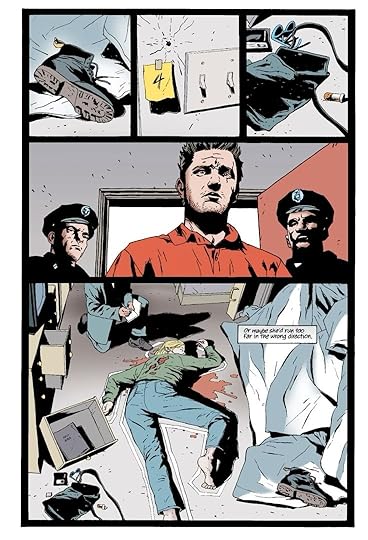
When his father's old police partner comes to him with a missing person's case, he already knows something hinky must be going on. Why not go to the cops?
But he owes him one (maybe more than one) in the way only family-not-family owes so much to each other, so he takes the case.
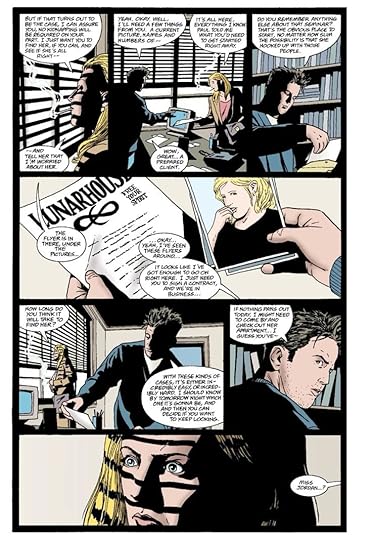
What happens next sets him on the trail of a killer, leads him to an old cult leader who might be up to his old tricks, and opens up a can of worms about family.
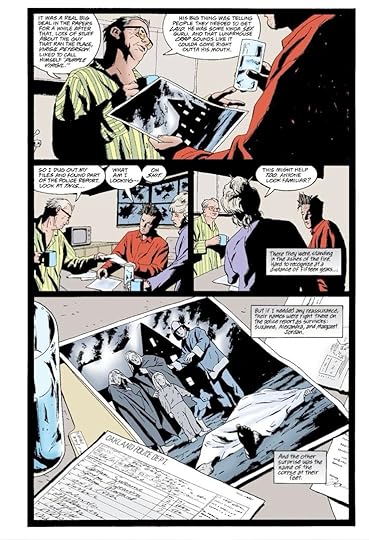
Early Brubaker and Philips is still excellent Brubaker and Philips.
Highly Recommended.
When his father's old police partner comes to him with a missing person's case, he already knows something hinky must be going on. Why not go to the cops?
But he owes him one (maybe more than one) in the way only family-not-family owes so much to each other, so he takes the case.
What happens next sets him on the trail of a killer, leads him to an old cult leader who might be up to his old tricks, and opens up a can of worms about family.
Early Brubaker and Philips is still excellent Brubaker and Philips.
Highly Recommended.

August 25, 2016
Think of a clichéd LA noir plot: missing persons, shady organisations, stake-outs, private dicks with drinking problems, the occasional gun-fight; that’s Scene of the Crime!
This was a miniseries from 1999, early in the careers of Ed Brubaker and Michael Lark and also their first collaboration together - years later they would go on to co-create the celebrated Gotham Central for DC and have a successful run on Daredevil for Marvel. Brubaker’s greenness really shows though and Scene of the Crime is definitely not one of his better books!
There are far too many panels on each page, each one crammed with unwieldy, clunky exposition as our narrator clumsily meanders through this long-winded narrative. Reading a handful of these pages is like wading through sludge and it doesn’t help that you’re not reading anything remarkable besides the standard police procedural crap.
The pacing is ultra-slow and it doesn’t get more exciting or pick up any as the story nears its end – it’s a slooooow drag all the way through! It also has an extremely convoluted plot whose muddled twists and turns I just didn’t care about as it and the characters aren’t at all interesting. It ends unpleasantly probably for “dark” and “gritty” reasons.
Even as a big Ed Brubaker fan, I wouldn’t recommend Scene of the Crime. Though Michael Lark’s art is decent, it’s a boring, overwritten and unrewarding trial to struggle through. Check out Brubaker’s Criminal series for far better crime comics.
This was a miniseries from 1999, early in the careers of Ed Brubaker and Michael Lark and also their first collaboration together - years later they would go on to co-create the celebrated Gotham Central for DC and have a successful run on Daredevil for Marvel. Brubaker’s greenness really shows though and Scene of the Crime is definitely not one of his better books!
There are far too many panels on each page, each one crammed with unwieldy, clunky exposition as our narrator clumsily meanders through this long-winded narrative. Reading a handful of these pages is like wading through sludge and it doesn’t help that you’re not reading anything remarkable besides the standard police procedural crap.
The pacing is ultra-slow and it doesn’t get more exciting or pick up any as the story nears its end – it’s a slooooow drag all the way through! It also has an extremely convoluted plot whose muddled twists and turns I just didn’t care about as it and the characters aren’t at all interesting. It ends unpleasantly probably for “dark” and “gritty” reasons.
Even as a big Ed Brubaker fan, I wouldn’t recommend Scene of the Crime. Though Michael Lark’s art is decent, it’s a boring, overwritten and unrewarding trial to struggle through. Check out Brubaker’s Criminal series for far better crime comics.

October 19, 2015
So before Criminal and Fatale and Fade Out was this, begun in 1998 with Michael Lark pencilling, with whom Brubaker later worked on Gotham Central and Daredevil. Sean Phillips inked this volume, and designed this deluxe edition, the same Phillips with whom Brubaker would team in producing the best graphic crime novels of all time--a project still in progress. I read this a few years ago, a 200o release that was out of print for a decade or so, and yesterday finally bought the actual volume in a comic book store and sat down and reread it.
I had kind of thought I would like this one much less than Criminal or Reckless, since it was just Brubaker starting out with crime graphic fiction, and I do for Brubaker's noir stories prefer the artwork of Phillips, but this story is still very good. I think I can point to places where the dialogue is a little less sharp than it is in Fade Out, where the story seems a little less crisp or the artwork less refined than it might be now, in Reckless, but you know, this is a high quality Brubaker story right off the bat, with lots of twists and turns and surprises. I can say I noticed more dialogue, some blooated dialogue boxes, but it is still great.
It's a missing person case that spins out of control, leading to a sex cult and multiple murders. And moving toward the possible redemption of PI Jack Herriman as well. I like the (famous crime photographer) Weegee connection in it, too.
One worthwhile addition to this reprint edition is an afterword by Brubaker about how it got done and how it led to other stuff he's done.
Like Brubaker? Gotta read it. Like crime novels? Gotta read it.
I had kind of thought I would like this one much less than Criminal or Reckless, since it was just Brubaker starting out with crime graphic fiction, and I do for Brubaker's noir stories prefer the artwork of Phillips, but this story is still very good. I think I can point to places where the dialogue is a little less sharp than it is in Fade Out, where the story seems a little less crisp or the artwork less refined than it might be now, in Reckless, but you know, this is a high quality Brubaker story right off the bat, with lots of twists and turns and surprises. I can say I noticed more dialogue, some blooated dialogue boxes, but it is still great.
It's a missing person case that spins out of control, leading to a sex cult and multiple murders. And moving toward the possible redemption of PI Jack Herriman as well. I like the (famous crime photographer) Weegee connection in it, too.
One worthwhile addition to this reprint edition is an afterword by Brubaker about how it got done and how it led to other stuff he's done.
Like Brubaker? Gotta read it. Like crime novels? Gotta read it.

September 30, 2020
If you enjoyed Criminal and want some more noir from Brubaker, this is worth checking out. One of Brubaker's earliest works, originally published by Vertigo in 1998, Scene of the Crime is a modern day noir set in San Francisco. This is your straight up, traditional hard-boiled detective story. The main character is hired to find a missing sister. It goes wrong and digs deeper into a really messed up story. Michael Lark's and Sean Phillips's fits in great with the setting.

December 16, 2015
Scene of the Crime follows private investigator Jack Herriman as he’s tasked with tracking down Maggie Jordan, a missing person in the California Bay Area. Jack’s efforts lead him to a commune where it's believed Maggie had last been seen. From there, it isn’t long until a trail of clues takes him to a motel in which he locates Maggie alive but heavily under the influence of drugs and alcohol.
Once Maggie sobers up, Jack questions her about her disappearance. After some coffee and conversation, Jack drops Maggie off at her room and heads home for the evening. Events take a turn the following morning when Maggie is found murdered, shot to death in her room, with about ten thousand dollars in cold, hard cash.
Despite only being hired to locate her, Jack is not content to let sleeping dogs lie and begins a second investigation, this time into Maggie’s murder.
Scene of the Crime was Ed Brubaker’s first series with what would become his long-time collaborators Sean Phillips (Incognito, Criminal, The Fade Out) and Michael Lark (Gotham Central, Daredevil) and they clearly quickly developed an undeniable chemistry. The story has plenty of excellent twists and turns that match up perfectly with Lark’s gritty art and Phillips deep, dark inking.
There’s also a short tale tagged on at the end that details Jack heading to Chicago around Christmas to find a material witness in a court case. I liked this one just as much as the main story, so I’m glad it was included. Also inserted as extras are Ed’s notes for pitching the series and an essay that details his love of crime fiction and what attracted him to the genre.
I’ve become sort of a Brubaker/Phillips completest and to date, have yet to read something by them I haven’t liked. This one is definitely worth a look.
Once Maggie sobers up, Jack questions her about her disappearance. After some coffee and conversation, Jack drops Maggie off at her room and heads home for the evening. Events take a turn the following morning when Maggie is found murdered, shot to death in her room, with about ten thousand dollars in cold, hard cash.
Despite only being hired to locate her, Jack is not content to let sleeping dogs lie and begins a second investigation, this time into Maggie’s murder.
Scene of the Crime was Ed Brubaker’s first series with what would become his long-time collaborators Sean Phillips (Incognito, Criminal, The Fade Out) and Michael Lark (Gotham Central, Daredevil) and they clearly quickly developed an undeniable chemistry. The story has plenty of excellent twists and turns that match up perfectly with Lark’s gritty art and Phillips deep, dark inking.
There’s also a short tale tagged on at the end that details Jack heading to Chicago around Christmas to find a material witness in a court case. I liked this one just as much as the main story, so I’m glad it was included. Also inserted as extras are Ed’s notes for pitching the series and an essay that details his love of crime fiction and what attracted him to the genre.
I’ve become sort of a Brubaker/Phillips completest and to date, have yet to read something by them I haven’t liked. This one is definitely worth a look.

January 16, 2021
A reprint of Ed Brubaker's first real crime story! The other half, Sean Phillips, is here as inker, while pencilling is done by Michael Lark.

This new edition also includes a sort-of-Christmas short story set in the Scene setting, which had been published in Vertigo Winter's Edge, a couple of months before this book was originally published.
There's the usual look at process, although I feel it's more interesting here, to see what Phillips added as an inker (I do feel Lark's art misses what Phillips later wil add in spades).
There's an essay-length piece by Ed Brubaker looking back how important this book was to himself as a writer, and to his career. Included are bits of script, character descriptions.
On to the meat of the book - the original story. It is interesting to see how much of Brubaker tropes were already in play, while also indicating how much better a writer he is currently - there is a LOT of dialogue and narration.
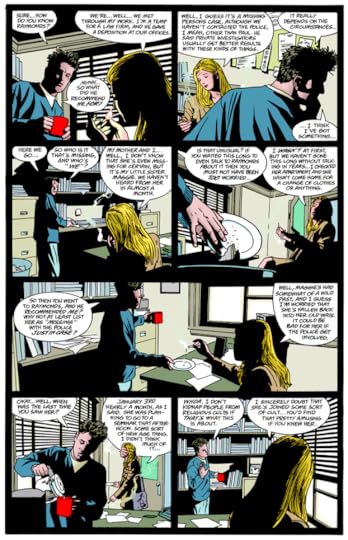
There is so much that it suffocates the page, and for me the experience of reading the book became slow and stodgy. (Interestingly, Brubaker himself mentions in his lookback that he now cringes at seeing how overloaded the word balloons are.)
The story isn't bad, it just lacks in the pacing department. I have wondered whether I am just not a 'crime noir' person, but then I've really enjoyed other Brubaker/Phillips books.
I have to stop using the word 'interesting' so much, but that's what this book is to me; interesting, and just okay.
(Picked up an ARC from Edelweiss)
This new edition also includes a sort-of-Christmas short story set in the Scene setting, which had been published in Vertigo Winter's Edge, a couple of months before this book was originally published.
There's the usual look at process, although I feel it's more interesting here, to see what Phillips added as an inker (I do feel Lark's art misses what Phillips later wil add in spades).
There's an essay-length piece by Ed Brubaker looking back how important this book was to himself as a writer, and to his career. Included are bits of script, character descriptions.
On to the meat of the book - the original story. It is interesting to see how much of Brubaker tropes were already in play, while also indicating how much better a writer he is currently - there is a LOT of dialogue and narration.
There is so much that it suffocates the page, and for me the experience of reading the book became slow and stodgy. (Interestingly, Brubaker himself mentions in his lookback that he now cringes at seeing how overloaded the word balloons are.)
The story isn't bad, it just lacks in the pacing department. I have wondered whether I am just not a 'crime noir' person, but then I've really enjoyed other Brubaker/Phillips books.
I have to stop using the word 'interesting' so much, but that's what this book is to me; interesting, and just okay.
(Picked up an ARC from Edelweiss)

November 19, 2017
Ed Brubaker has written an excellent crime noir tale. The first story, the main story arc, is called the "A Little Piece of Goodnight". Jack Herriman is a P.I. One day he is asked to look into a missing girl. Her mother and sister have not heard from her in awhile and hire Jack to find her. What follows is a detective story set in the late 1960s. More than this I will not say, but this was a good detective story with great noir elements.
The PI is annoying to me- he whines, can't/won't use a gun, can't fight and has issues. So in a nutshell-I wouldn't hire this burnout to deliver my pizza let alone investigate a case. But, he's the one that gets a hold of this complicated mess-and no one is telling the whole truth, not even Jack.
There is another small short story at the end called "Gods and Sinners" which is also good (dark though). But it again shows Jack to be a clod. He seems to be over his head in most situations. Still my disdain for the PI doesn't detract from what a fine example of the crime noir genre this is. Brubaker's story is grim and the all-to-human and all-to-fallible characters do a good job of rounding out this crime tale. The artwork is decent and the story is quite good. I did enjoy this tale and I will look forwards to more of Brubaker's crime-based tales. Highly recommended.
The PI is annoying to me- he whines, can't/won't use a gun, can't fight and has issues. So in a nutshell-I wouldn't hire this burnout to deliver my pizza let alone investigate a case. But, he's the one that gets a hold of this complicated mess-and no one is telling the whole truth, not even Jack.
There is another small short story at the end called "Gods and Sinners" which is also good (dark though). But it again shows Jack to be a clod. He seems to be over his head in most situations. Still my disdain for the PI doesn't detract from what a fine example of the crime noir genre this is. Brubaker's story is grim and the all-to-human and all-to-fallible characters do a good job of rounding out this crime tale. The artwork is decent and the story is quite good. I did enjoy this tale and I will look forwards to more of Brubaker's crime-based tales. Highly recommended.

December 20, 2016
While I didn't enjoy this book very much at all as a piece of storytelling, I DID enjoy it as a sort of academic look at the progress of a writer. This is very early Brubaker & Lark (joined by Sean Phillips on colors, who has become Brubaker's best collaborator), pre-Gotham Central, pre-Daredevil, pre-everything, and the greenness shines through bigtime. But, as a writer myself, I found this pretty uplifting. This book is boring. It's slow, it's predictable, it's overwritten. The narrator tells the reader half the plot points without actually showing them, and manages to get out of scrapes constantly via his deus ex machina uncle (I think?) who seems to be able to talk his way out of everything (though we never actually see him do this). The character development is all forced if it exists at all, and the plot unfolds at a snail's pace. But, it's also the work of one of the best comics writers in the business, who has pushed this exact genre to its limits, so seeing that he had to start somewhere is inspiring. He wasn't born writing perfect crime stories. He had to get better at it, and it's cool to see how far he's come.

October 8, 2020
This was a terrifyingly slow-paced crime noir story with a boring and unimpressive lead character that almost never gave you any good reason to care for the case at hand. While it is still objectively incredibly well-told, it was too wordy for its own good.

February 14, 2022
> For fans of crime noir.
> Lots of plot twists.
> Mature themes.
_____________
It's clear right from the introduction of this book that Scene of The Crime was a pivotal moment for the genre of crime noir comics. It's credited as the book that launched Ed Brubaker onto the career path we're all now very familiar with, and the later partnership with artist Sean Phillips.
... and you can see why.
It wouldn't be unfair to call Scene of The Crime a slow burn, but this is most definitely an advantage here. This books takes its time, slowly revealing layers, timelines and plot twists as we hurtle towards the big reveal in a true detective noir fashion. It's never boring and almost always intriguing - every detail feels like it's important throughout and that's a testament to how good the writing is here.
The art is undoubtedly something we're all very familiar with by now and that must be thanks in part to this book. It's clear that this book captured a visual style that would eventually become synonymous with Brubaker's future noir stories thanks to the eventual partnership with Sean Phillips.
Overall, if you're a fan of crime and noir stories you undoubtedly love this as much as I did. It's gripping, it's edgy, it's pretty much everything you want in a good detective story.
_____________
My score: 8/10
Goodreads: ⭐⭐⭐⭐
_____________
> Lots of plot twists.
> Mature themes.
_____________
It's clear right from the introduction of this book that Scene of The Crime was a pivotal moment for the genre of crime noir comics. It's credited as the book that launched Ed Brubaker onto the career path we're all now very familiar with, and the later partnership with artist Sean Phillips.
... and you can see why.
It wouldn't be unfair to call Scene of The Crime a slow burn, but this is most definitely an advantage here. This books takes its time, slowly revealing layers, timelines and plot twists as we hurtle towards the big reveal in a true detective noir fashion. It's never boring and almost always intriguing - every detail feels like it's important throughout and that's a testament to how good the writing is here.
The art is undoubtedly something we're all very familiar with by now and that must be thanks in part to this book. It's clear that this book captured a visual style that would eventually become synonymous with Brubaker's future noir stories thanks to the eventual partnership with Sean Phillips.
Overall, if you're a fan of crime and noir stories you undoubtedly love this as much as I did. It's gripping, it's edgy, it's pretty much everything you want in a good detective story.
_____________
My score: 8/10
Goodreads: ⭐⭐⭐⭐
_____________

April 5, 2015
Brubaker... Lark... Phillips...
'Nuf said!
'Nuf said!

April 18, 2024
Very good story and very very dark. Content Warning for just about everything.
May 26, 2024
2.5*

September 18, 2020
(4 of 5 for nice "classic Brubaker edition" story but forget the art...)
Going retrospectively after all that Criminal I went for Scene of the Crime. And I'm surprised how good the story is. Yes, it's classic noir-ish Brubaker crime story, but Ed is master of this genre, so I probably will never get bored by him even with hundredth Criminal-like comics.
Scene of the Crime has a nice pace, cleverly processing in the story, lifelike characters and terrific endings. And that is true for both the main story and the short one, which is at the end of this book (and is awesome). I also liked the afterword from Ed, which is unusual because few of the afterwords are actually interesting/funny/that informative.
The art is fine. Well, the pencil & ink is OK, but the colouring is crap. I didn't like it a bit, it's shoddy (James Sinclair missed some colouring, for the example the scotch is transparent and so on...) and the colours feel weird to me. I wish that Sean Phillips wold do the colours, not only helped with the ink. But the content overcomes the art, so it is worth reading, especially for the Criminal fans.
Going retrospectively after all that Criminal I went for Scene of the Crime. And I'm surprised how good the story is. Yes, it's classic noir-ish Brubaker crime story, but Ed is master of this genre, so I probably will never get bored by him even with hundredth Criminal-like comics.
Scene of the Crime has a nice pace, cleverly processing in the story, lifelike characters and terrific endings. And that is true for both the main story and the short one, which is at the end of this book (and is awesome). I also liked the afterword from Ed, which is unusual because few of the afterwords are actually interesting/funny/that informative.
The art is fine. Well, the pencil & ink is OK, but the colouring is crap. I didn't like it a bit, it's shoddy (James Sinclair missed some colouring, for the example the scotch is transparent and so on...) and the colours feel weird to me. I wish that Sean Phillips wold do the colours, not only helped with the ink. But the content overcomes the art, so it is worth reading, especially for the Criminal fans.

March 23, 2013
I've been saying it for years- Ed Brubaker couldn't write a superhero book for one of the Big Two to save his life. But let him pump out a pulp for an indie press and its as close to gold as we can hope for.
This is an earlier work of Brubaker and that point is glaringly obvious by how stiff everything is on the page, from the monologue to the dialogue and even the scripted action. Nothing in it is remotely conversational and it all feels very rigid. Even so, it's a damn good read if you're into pulpy books and the art by Larkin isn't too shabby.
There's nothing phenomenal here. You won't get anything quotable out of this book. In a week or so most of it will feel pretty vague except for a few key story points. But it's strong enough to make for an entertaining read, even if it doesn't demand to ever be re-read.
Writing: B-
Art: B
This is an earlier work of Brubaker and that point is glaringly obvious by how stiff everything is on the page, from the monologue to the dialogue and even the scripted action. Nothing in it is remotely conversational and it all feels very rigid. Even so, it's a damn good read if you're into pulpy books and the art by Larkin isn't too shabby.
There's nothing phenomenal here. You won't get anything quotable out of this book. In a week or so most of it will feel pretty vague except for a few key story points. But it's strong enough to make for an entertaining read, even if it doesn't demand to ever be re-read.
Writing: B-
Art: B

June 18, 2016
For a first book this was pretty darn good. It's a little formulaic but you can't help but be vested into the mystery and I thought I had almost everything figured out but there's still a couple twists I didn't see coming. A private investigator is hired to find a missing girl but uncovers some hidden secrets and it doesn't take long for you to follow along with Jack as he hunts for clues. Everything is narrated by him in captions so you really get to understand not only the investigation but his motivations and feelings. There's also a slow reveal of some events in his background which ties to other people in the story.
There isn't much here that's really new, at this point in time (the story is over 15 years old now) but it's so well done and you can see the beginnings of both Brubaker, Lark and Phillips' careers. It's worth a read, check it out.
There isn't much here that's really new, at this point in time (the story is over 15 years old now) but it's so well done and you can see the beginnings of both Brubaker, Lark and Phillips' careers. It's worth a read, check it out.

February 15, 2021
Originally published in 1999 by Vertigo as a four-issue miniseries, Brubaker’s breakout comic Scene of the Crime gets a new paperback edition with an introduction from Brian Michael Bendis, someone who is no stranger to crime comics and refers to this title as his favorite Brubaker comic. Will it be my favorite from the writer’s bibliography?
Please click here for my full review.
Please click here for my full review.

October 20, 2018
A decent story line. Fairly cliche as far as private eye noir goes, but was still fun and familiar at the same time. Brubaker has managed to master this genre this being his (to my knowledge) his first stab at the crime genre. His most recent series kill or be killed was one of my faves this last year. Still worth a read but might turn off people new to his work.

January 29, 2024
Ed Brubaker at starting line of neo noir/crime run.
It's no so smooth, as his later works, there is a lot of text, and text frames and bubbles are often covering large part of the scene and there are some other minor things now and there. But still, it's pretty good dark story, that goes deeper and darker with each page.
Starting as something banal, it's getting more twisted with each chapter. At the end, the story and twist is not so special (especially when compared to his late work like Night Fever), but that 'civil' tone make it even better as it hits right tones.
Art is not great, but it does the job and helps to hold overall tone.
It's no so smooth, as his later works, there is a lot of text, and text frames and bubbles are often covering large part of the scene and there are some other minor things now and there. But still, it's pretty good dark story, that goes deeper and darker with each page.
Starting as something banal, it's getting more twisted with each chapter. At the end, the story and twist is not so special (especially when compared to his late work like Night Fever), but that 'civil' tone make it even better as it hits right tones.
Art is not great, but it does the job and helps to hold overall tone.

May 8, 2018
I enjoyed the story and the art, a typical detective crime-solving story in art noir style. Nothing I can complain about but it does feel too generic, it’s not that the book is bad, just that it didn’t leave an impression on my mind. With about 120 pages most with very few dialogues, the series is a quick read. I am a fan of Ed Brubaker and Michael Lark and it does feel like it’s one of their earlier works.
The Deluxe edition of the book has a short story at the end of another case by the same detective based in Chicago around Christmas. I found this one to be better than the main story with its unexpected ending.
The Deluxe edition of the book has a short story at the end of another case by the same detective based in Chicago around Christmas. I found this one to be better than the main story with its unexpected ending.

July 23, 2013
This is Vintage Brubaker, but it doesn't stand out from his other stories. The protagonist is fairly standard and the story, while as circuitous as any noir story should be, doesn't really stand up in comparison to his later series. A missing persons case ends with the person found, then killed. Lots of threads come untangled in an unexpected pattern, but it relies a bit too much on coincidence and outside hints to really feel complete. Not bad in any way, just not as good as his other work.

October 12, 2015
"It wasn't a unique tragedy by any means, but it was still a tragedy."
This was a super solid, very well told, self contained, noir story. It had a beginning, middle, and end. I also love seeing how Sean Phillip's art work has evolved from 15 years ago. Highly recommend. Well done Ed Brubaker. Well done.
This was a super solid, very well told, self contained, noir story. It had a beginning, middle, and end. I also love seeing how Sean Phillip's art work has evolved from 15 years ago. Highly recommend. Well done Ed Brubaker. Well done.

September 15, 2024
Recently I’ve read several of Brubaker’s crime graphic novels (the entire “Criminal” and “Gotham Central” series). From what I’ve read elsewhere, this is one of his earlier works (started in 98, originally published by Vertigo). For me, “Scene of the Crime, proves, once again, that he is the king of the crime comics genre.
“Scene of the Crime” follows a haunted PI as he tries to locate a missing woman (with the help of his aged crime scene photographer uncle, Knut). Of course, as these stories go, the narrative takes several wild turns: cults, betrayal, arson, sexual violence, murder etc.
I wouldn’t change a thing about this book. Excellent characters, dialogue, plot, art. It’s the total package.
“Scene of the Crime” follows a haunted PI as he tries to locate a missing woman (with the help of his aged crime scene photographer uncle, Knut). Of course, as these stories go, the narrative takes several wild turns: cults, betrayal, arson, sexual violence, murder etc.
I wouldn’t change a thing about this book. Excellent characters, dialogue, plot, art. It’s the total package.

March 17, 2021
Last year, I picked up a hardcover copy of Pulp, a part-Western, part-noir bit of comic narrative by Ed Brubaker and Sean Phillips. I loved it, and wondered what else these two had done together. This is because I'm an idiot.
I've long been familiar with the two names in comics. Brubaker (along with his partner Michael Lark) did a long run on my favorite comic, Daredevil, and also developed and co-wrote Gotham Central, a street-level look at cops in Batman's city. I loved this guy.
But Brubaker/Phillips had really made their name in semi-independent crime and horror-noir (Fatale, Criminal, Incognito, The Fade Out), and despite this being directly in my wheelhouse, I avoided it all. Why? Well, I'd like to say it's because I wanted to preserve my favorite writers and artists for a rainy day or something. The truth is, even though I'm a sucker for noir, I hate smoking. I just hate it so much. And if a cover features a character smoking, I will not buy it.
It's not that I've mellowed over the years, but The Scene of the Crime - an early 2000s neo-noir written by Brubaker, drawn by Lark, and inked by Phillips - caught me before I could change my mind. I've made a long habit out of rationalizing enjoying art when smoking is involved (being in love with Tarantino films has been a colossal effort), but in Scene of the Crime, my saving grace was that none of the three main characters did it, so I could be safe with them. It's absurd, I know. But it's how my brain has to work to help me like stuff like this.
And I do like it. Quite a lot, actually. It's sort of a boilerplate mystery of missing persons, cults, unbelievable abuse, and a lone-wolf private eye with a Dark Backstory. What makes Scene of the Crime work so well is the characters, as is generally the case with crime fiction. Jack Harriman is a young detective trying to move past his demons; he kind of reminds me of Lawrence Block's Matt Scudder, if he was a lot younger. I liked the color of San Francisco - kind of the prime locus of this kind of fiction (it makes me want to read more crime fiction from the 1940s) - and the fact that in this world, a crime-scene photographer can be famous enough to warrant a small museum dedicated to him. Lark's art reminds me a lot of David Aja's work in Hawkeye, a lot of heavy linework and a xerographic feel that makes everything a little grittier.
I think I'm going to have to work through my phobia to read more work by these two, especially since The Fade Out is about old Hollywood, and oh my am I a sucker for that stuff. I'm really glad this story is back in print (with extras! a bonus story! behind the scenes stuff! a Bendis intro!) and I'm looking forward to a journey of exploration.
I've long been familiar with the two names in comics. Brubaker (along with his partner Michael Lark) did a long run on my favorite comic, Daredevil, and also developed and co-wrote Gotham Central, a street-level look at cops in Batman's city. I loved this guy.
But Brubaker/Phillips had really made their name in semi-independent crime and horror-noir (Fatale, Criminal, Incognito, The Fade Out), and despite this being directly in my wheelhouse, I avoided it all. Why? Well, I'd like to say it's because I wanted to preserve my favorite writers and artists for a rainy day or something. The truth is, even though I'm a sucker for noir, I hate smoking. I just hate it so much. And if a cover features a character smoking, I will not buy it.
It's not that I've mellowed over the years, but The Scene of the Crime - an early 2000s neo-noir written by Brubaker, drawn by Lark, and inked by Phillips - caught me before I could change my mind. I've made a long habit out of rationalizing enjoying art when smoking is involved (being in love with Tarantino films has been a colossal effort), but in Scene of the Crime, my saving grace was that none of the three main characters did it, so I could be safe with them. It's absurd, I know. But it's how my brain has to work to help me like stuff like this.
And I do like it. Quite a lot, actually. It's sort of a boilerplate mystery of missing persons, cults, unbelievable abuse, and a lone-wolf private eye with a Dark Backstory. What makes Scene of the Crime work so well is the characters, as is generally the case with crime fiction. Jack Harriman is a young detective trying to move past his demons; he kind of reminds me of Lawrence Block's Matt Scudder, if he was a lot younger. I liked the color of San Francisco - kind of the prime locus of this kind of fiction (it makes me want to read more crime fiction from the 1940s) - and the fact that in this world, a crime-scene photographer can be famous enough to warrant a small museum dedicated to him. Lark's art reminds me a lot of David Aja's work in Hawkeye, a lot of heavy linework and a xerographic feel that makes everything a little grittier.
I think I'm going to have to work through my phobia to read more work by these two, especially since The Fade Out is about old Hollywood, and oh my am I a sucker for that stuff. I'm really glad this story is back in print (with extras! a bonus story! behind the scenes stuff! a Bendis intro!) and I'm looking forward to a journey of exploration.

February 10, 2020
Scene of the Crime is one of those books that, despite its constant descent into ugly subject matter, is very hard to put down.
I think what Brubaker does really well, is tell these hard hitting and gritty crime stories, but ground the main protagonist enough to make us relate to him directly. So that when he starts delving into dark corridors unknown, we are along the ride with him, even though he has more experience in this type of stuff.
We have the story of a girl who is missing, and her eventual death unfolds a disturbing look into her past, her family, and the crime swirling around her. In his investigation, Jack Harriman begins to find out alot about some pretty shady dealings regarding cults, hippies, and the unknown underground drug scene. Great characterization of not only Jack, but the side characters as well make the setting that much more intriguing and hard hitting. This book is a procedural cop show, except with a PI instead of a cop.
The art is handled very well by Michael Lark and Sean Phillips. The dark shadows convey the world we have stepped into is full of darkness. The realism of the illustration reminds us that this is the real world and stuff like this happens more often that we would think.
This is definetley a story that keeps you turning the page to see what happens next. Recommended for fans of crime books.
I think what Brubaker does really well, is tell these hard hitting and gritty crime stories, but ground the main protagonist enough to make us relate to him directly. So that when he starts delving into dark corridors unknown, we are along the ride with him, even though he has more experience in this type of stuff.
We have the story of a girl who is missing, and her eventual death unfolds a disturbing look into her past, her family, and the crime swirling around her. In his investigation, Jack Harriman begins to find out alot about some pretty shady dealings regarding cults, hippies, and the unknown underground drug scene. Great characterization of not only Jack, but the side characters as well make the setting that much more intriguing and hard hitting. This book is a procedural cop show, except with a PI instead of a cop.
The art is handled very well by Michael Lark and Sean Phillips. The dark shadows convey the world we have stepped into is full of darkness. The realism of the illustration reminds us that this is the real world and stuff like this happens more often that we would think.
This is definetley a story that keeps you turning the page to see what happens next. Recommended for fans of crime books.

December 26, 2017
This is a tough one to give a rating to: it's a five and it's a three. So the 5 is for this re-issue of the first collaboration of Brubaker/Lark/Phillips from 1999. The series didn't continue so this went out of print. But now back in print is the story that launched Brubaker's career, as he describes in the awesome afterward. And that's what really makes this a 5-star: Brubaker sharing the genesis of this project, including samples from his original treatment and scripts. Plus some of the original panels showing Lark's pencil, followed by Phillips inking. This window into Brubaker's early writing world, and especially his thoughts on it now, make this a special edition.
The story is just a three. It's a run-of-the-mill private investigator story, but overwritten and a bit slow. As a comic, way too much text on the panels, and the italic font of the lettering is hard to read with so much text on the pages. In the kindle version you can switch to reading it one panel at a time and that make the text more readable, but I prefer to see the whole page, so the lettering was annoying. The Lark/Phillips art collaboration works well and carries the story.
The story is just a three. It's a run-of-the-mill private investigator story, but overwritten and a bit slow. As a comic, way too much text on the panels, and the italic font of the lettering is hard to read with so much text on the pages. In the kindle version you can switch to reading it one panel at a time and that make the text more readable, but I prefer to see the whole page, so the lettering was annoying. The Lark/Phillips art collaboration works well and carries the story.

January 2, 2017
Hardboiled detective noir, straight out of Hammett. A beautiful woman hires a detective to track down another beautiful woman, ostensibly her sister. He finds her, one of them winds up dead, he gets lied to a lot, suffers a few beatings, gets rained on, gets his drink on, muses cynically, and finally cracks the case. Even winds up with a prominent nose dressing like J.J. Gittes in Chinatown.
One of Brubaker's earliest offerings, and it's far from his best. He uses a lot of words where a few will do. His dialogue lacks the polish that I'm used to from Criminal and Sleeper.
But the plotting is plenty sharp. And Sean Phillips is perfect for the genre, as always. It's interesting to see Brubaker kind of finding his groove here. A decent book that paved the way for better things to come.
One of Brubaker's earliest offerings, and it's far from his best. He uses a lot of words where a few will do. His dialogue lacks the polish that I'm used to from Criminal and Sleeper.
But the plotting is plenty sharp. And Sean Phillips is perfect for the genre, as always. It's interesting to see Brubaker kind of finding his groove here. A decent book that paved the way for better things to come.

June 29, 2011
Apparently if it is written by Ed Brubaker and isn't about superheroes it is worth a read. Not saying his superhero stuff isn't good either it has been, but he excels at telling a real story, a noir story that is purely character driven. Read Criminal, Vol. 1: Coward (any volume), or read Incognito, Vol. 1.
This is about a PI that is asked to hunt down a missing woman, and after finding her, and then her dying but hours later, then the real story starts. It is no longer about finding her, but finding her killer. The ending seemed a little rushed, and would have liked more "clues" to the conclusion, but still a good story.
This is about a PI that is asked to hunt down a missing woman, and after finding her, and then her dying but hours later, then the real story starts. It is no longer about finding her, but finding her killer. The ending seemed a little rushed, and would have liked more "clues" to the conclusion, but still a good story.

May 31, 2021
Tohle byl asi nejukecanější Brubaker jakého jsem zatím četl :D Kniha má "jen" 120 stránek ale cítil jsem jak kdyby měl alespoň dvojnásobek. Ed tady nahodil ohromné množství textu a místy je to na škodu, občas se ve vyprávění extrémně opakuje a klidně někdy mohl jen vyprávět kresbou. On i příběh samotný není nic převratného, tipnout si v průběhu jak to skončí (a správně) není tak obtížné plus to vede tak jednoduše, že nám naznačuje "zvrat" co se stane za 4 stránky. Což vede k tomu co mě mrzí, příběh je rozdělen do cca 20 minikapitol a každá z nich se zaobírá jinou části příběhu. A je to dost škoda, tím, že jsou tak krátké nedávají některým scénám dost prostor který zasluhují ale zase ty nudnější rychle cutnou. No a art? Larka moc nemusím ale budiž ale ty barvy? Místy velký špatný.
Sumec Sumárum přijde ti, že kritizuju takže proč tomu dávám tolik hvězd? Spoiler, přes to všechno jsem se strašně bavil protože Edík je mistr kriminálek. A bonusový short story výborný.
Sumec Sumárum přijde ti, že kritizuju takže proč tomu dávám tolik hvězd? Spoiler, přes to všechno jsem se strašně bavil protože Edík je mistr kriminálek. A bonusový short story výborný.

January 8, 2019
Brubaker, el master del diálogo haciendo algo bueno, mas no su mejor obra.
Scene of the Crime es uno de esos casos en los que es un comic muy bueno, pero comparado con otras obras del mismo autor ya no se ve tan bien, en este caso la comparo con la maravilla que es "Kill or be killed".
Es un thriller super cool, de las cosas que se me hacen atractivas de esta serie es que el protagonista no es un vato en sus 30's o 40's tipo Liam Neeson, que parece ser el persona estandar para una serie de thriller. En este caso el personaje es un morro joven que es un detective decente y que reconoce lo que le falta para ser muy bueno.
Es dificil describir la trama sin spoilers, pero resumiré esto como... un comic con alto contenido de diálogo muy bien usado.
Puntos extra por los super monólogos :P
Scene of the Crime es uno de esos casos en los que es un comic muy bueno, pero comparado con otras obras del mismo autor ya no se ve tan bien, en este caso la comparo con la maravilla que es "Kill or be killed".
Es un thriller super cool, de las cosas que se me hacen atractivas de esta serie es que el protagonista no es un vato en sus 30's o 40's tipo Liam Neeson, que parece ser el persona estandar para una serie de thriller. En este caso el personaje es un morro joven que es un detective decente y que reconoce lo que le falta para ser muy bueno.
Es dificil describir la trama sin spoilers, pero resumiré esto como... un comic con alto contenido de diálogo muy bien usado.
Puntos extra por los super monólogos :P
Displaying 1 - 30 of 220 reviews