A Ligurian town near the sea, thick with alleys and rumors, serves as the stage for Pin, a shoemaker's apprentice with freckles and a throat roughened by wine and cigarettes. He shouts insults at windows, sings obscene songs in taverns, and steals the pistol of a German sailor visiting his sister. From that pistol spins a sequence of humiliations, imprisonments, escapes, and initiations.
Pin drinks with ex-convicts who pound their fists to his songs, hears Commissar Kim muse on why "those men without uniform or flag had fought," trails Dritto and Cugino through the hills, and wanders with hunger through chestnut woods where partisan bravado clashes with human frailty. The story swings between cruel pranks and sudden terror, as when Pin toys with the pistol by pressing it to his temple, or when he skewers spiders in their grass-lined nests, a child's game charged with menace.
Each chapter delivers another turn: a cobbler's bench overflowing with abandoned shoes, tavern men demanding theft, a German reduced to curdled-milk terror at the mention of disease, prison songs echoing in scarred throats, executions by ditch, betrayals by night, hunger gnawing through every hillside skirmish, and Pin's final return to his secret refuge, "the place where spiders make their nests." The storyline carries a boy through the machinery of adult war, from gossip-filled alleys to fire-scorched mountains, and back to a child's path carved in grass.
Calvino's first novel carries the flavor of neorealism filtered through expressionistic exaggeration – grotesque features, dialect, drunken brawls, women's bodies glimpsed through partition cracks, and partisans both heroic and petty.
Written in the present tense because dialect lacked a past, the language has immediacy, clotted with songs like "When I think of the future / And the liberty I've lost / I'd like to kiss her and then die / While she sleeps . . . and never knows."
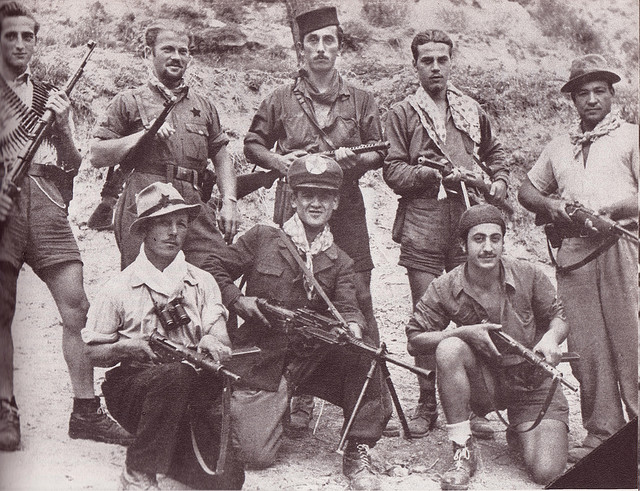
Every page exposes Pin's attempt to bridge childhood and adulthood, from his wish to shock boys by flashing a real pistol to his impulse to show only one true friend the spiders' doors made of dried grass. Shaped in 1947 from war's ashes, the novel embraces what Calvino called the "world of the tramps, the Lumpenproletariat," where bravery smells of sweat, wine, and mud; the Resistance as lived by children and outcasts, where guns weigh more than bodies, and comradeship grows from hunger rather than ideology.
It aligns with Hemingway's For Whom the Bell Tolls in guerilla immediacy, yet its true kin may be Stevenson's Treasure Island, with its boy among pirates, treasure replaced by pistols and spiders' nests. The writing trembles between fairy tale and partisan memoir, with spiders crouched in their grass-tunneled lairs as symbols of secret knowledge and childish sovereignty.
Calvino later claimed the book left him with "remorse," for he twisted his companions' faces into masks, yet that distortion renders wartime Italy's truth more unforgettable. Adolescence is pitched into a partisan carnival where every prank risks death. The novel dares to marry grotesquerie with tenderness, staging fairy-tale secrecy beside real executions, and making a pistol stolen in darkness as weighty as any manifesto.
In 2025, when myths again devour history, this novel teaches how stories form from hunger, betrayal, and childish bravado. Calvino began his career by squandering memory into literature, and what remains is a boy who never escaped the alley, still singing, still jeering, still guarding the path to a nest of spiders.
"...The dreams of the partisans are short and rare, dreams born of nights of hunger, linked to food which is always scarce and always to be divided among so many; dreams about chewing bits of bread and putting them away in drawers. Stray dogs must have dreams like that, about gnawing bones and burying them. Only when the men's stomachs are full, when the fire is lit, and there has not been too much marching the day before, can they dream of women and wake up in the morning with spirits free and soaring, gay as if anchors have been drawn. Then the men lying in the straw begin to talk about their women, about those in the past and those in the future, to make plans for when the war is over, and to pass each other faded yellow photographs. Giglia sleeps by the wall, the other side of her dumpy little bald husband. In the morning she listens to the men talking with so much yearning, and feels their glances slithering towards her like snakes in the straw. Then she gets up and goes out to the spring to wash herself. The men remain in the darkness of the hut, thinking of her opening her shirt and soaping her breasts. Dritto, who has always been silent, gets up and goes out to wash too. The men laugh at Pin for reading their thoughts. Pin feels among them as he felt among the men in the tavern, only this world is more brightly coloured, more savage, with these nights in the hay and these beards crawling with lice. There is something else which attracts and frightens Pin, apart from that absurd fixation about women which is common to all grown-ups; every now and again they return to the hut leading some yellow-faced man whom Pin has not seen before, and who looks around as if incapable of shutting his staring eyes or of unlocking his jaws to ask something he longs to know..."