It's Such A Beautiful Day: Nature had been forgotten in this electronic world of the future. Until one day, quite by accident, a young boy strayed outdoors and discovered what was there.
Breeds There A Man?: THe physicist had arrived at a theory - very interesting, but highly improbable, but something not quite human seemd to be causing a bit of trouble...
The C-Chute: The spaceship had to be recaptured from the aliens, which meant that somebody had to be a hero. But who would that be...and why?
Works of prolific Russian-American writer Isaac Asimov include popular explanations of scientific principles, The Foundation Trilogy (1951-1953), and other volumes of fiction.
Isaac Asimov, a professor of biochemistry, wrote as a highly successful author, best known for his books.
Asimov, professor, generally considered of all time, edited more than five hundred books and ninety thousand letters and postcards. He published in nine of the ten major categories of the Dewey decimal classification but lacked only an entry in the category of philosophy (100).
People widely considered Asimov, a master of the genre alongside Robert Anson Heinlein and Arthur Charles Clarke as the "big three" during his lifetime. He later tied Galactic Empire and the Robot into the same universe as his most famous series to create a unified "future history" for his stories much like those that Heinlein pioneered and Cordwainer Smith and Poul Anderson previously produced. He penned "Nightfall," voted in 1964 as the best short story of all time; many persons still honor this title. He also produced well mysteries, fantasy, and a great quantity of nonfiction. Asimov used Paul French, the pen name, for the Lucky Starr, series of juvenile novels.
Most books of Asimov in a historical way go as far back to a time with possible question or concept at its simplest stage. He often provides and mentions well nationalities, birth, and death dates for persons and etymologies and pronunciation guides for technical terms. Guide to Science, the tripartite set Understanding Physics, and Chronology of Science and Discovery exemplify these books.
Asimov, a long-time member, reluctantly served as vice president of Mensa international and described some members of that organization as "brain-proud and aggressive about their IQs." He took more pleasure as president of the humanist association. The asteroid 5020 Asimov, the magazine Asimov's Science Fiction, an elementary school in Brooklyn in New York, and two different awards honor his name.
A wonderful, entertaining and interesting read that fires the imagination without the need to explain ideas in great detail.
These four short stories all examine the human mind in crisis to a greater or lesser extent and whilst two are worthy of the full five star rating the others are not quite so high but overall it's still a very good collection and one that is from the more obscure end of the Asimov cannon.
My favourite story is most definitely the opener, A Beautiful Day, about a future society that uses transporter doors to travel everywhere and has developed a phobia of "The Outside" and a young boy who finds himself in a strange new world when his Door breaks. This story manages to capture everything that is great about Asimov's writing in just a little over 20 pages and makes finding this collection worth the effort it would no doubt require.
A short collection containing only four stories but generally of a very high standard. There are no unifying themes running through the stories so I will discuss them individually.
"A Beautiful Day" is a story about the future when people no longer need to go outside because everywhere are linked by teleportation doors and have become quite agoraphobic, except for one boy who is forced to go outside after their door temporarilly breaks down.
"Belief" is a very good story about a man's dreams about flying somehow come through to his waking life. As a physists, he struggles to reconcile this new found ability to the laws of gravity. Then he struggles to convince other scientists that his abilities are genuine so that they will help him study it. This story was interesting because of it's consideration of the philosophy of science and why scientists will accept somethings while rejecting others.
"Breeds there a man...?" depicts a cold war scenario in which the Americans are rushing to develop an atomic shield. They need the help though of a scientist who has an uncanny knack of seeing through problems to the solution. Unfortunately, he appears to be cracking up and is proclaiming that humanity is just an alien experiment and that they will cause to wipe themselves out when they get to far advanced. He is captured by the desire to kill himself because he knows too much. Is he just crazy or is there something to his claims? Who cares as long as he helps them with their project...
"C-Chute" is a story exploring themes of alturism and self-interest when a disperate group find themselves prisoners of an intersteller war and need some heroics in order to recapture their ship and escape.
Just when I was wondering whether there was anything else by Asimov worth reading (that I haven't already read) I stumble upon some more good stories by this undeniable master of SF.
A collection of stories from the Good Doctor that talk about how we see the world around us, or each other. The writing feels a little stylised and mannered, as does most writing from seventy years ago, and the stories are largely about men, with women playing incidental characters in them - when they appear at all - but they highlight Asimov’s strong grasp of ideas and how to express them.
FYI - The rating is really "3.5" not "3", but I didn't want to mislead with the "4".
The contents of the book are four longer short stories. All of which can be found in other places (3 in "Nightfall and Other Stories" - which I have also read and probably own.)
What's good about this collection is that it demonstrates the versatility that Asimov brought to his writing. None of the stories are really alike; instead they offer different facets of futuristic development of our science, people, and planet.
As with most of his writing "Dr. A" was not strong on character development, but here in addition to various stereotypes we get some genuinely interesting individuals. Combine his always excellent imagination with some retelling of history and human psychology and you have a decent and entertaining collection.
For a man who wrote hundreds of books (many of which are collections of previously written short fiction, like this one) there will always be uneven appreciation of him. While these stories may not have the instant recognition that his Foundation or Robot stories have, they are beyond "workman-like" - especially when compared against contemporary fiction.
Postscript:
This is a collection that I know I either own or read (borrowed) in the depths of time with exactly this cover. But everybody claims that it was only published in the UK. Hmmm.
Four tightly-plotted, well-written stories doing what sci-fi does so well, using the futuristic as a lens to look at ourselves, and what makes us human. All of a quality, none stand out as better than the others. A great read.
🌄 It's Such A Beautiful Day - 4⭐ - When the family's teleportation Door fails, Dickie decides to walk to school.
☁️ Belief - 3⭐ - Physics Professor Roger wakes up to find himself levitating! He wants to be studied but cannot persuade his wife or other skeptical scientists, that he is telling the truth, until a friend gives him a very good piece of advice.
🧫 Breeds There A Man ... ? - 4⭐ - Ralson, a brilliant physicist, is convinced humanity is a genetic experiment run by aliens.
🚀 C-Chute - 4⭐ - An armed merchantman ship en route to earth is captured by Kloros, who leave behind 2 Kloros to hold the 6 human prisoners to be transported back to their world as prisoners of war. Some of the prisoners aren't going to passively comply.
reread, in effect, having read the stories in other collections. asimov still gets a crack out of me when the normal, non-teleporting door to exit their home is described as "For emergency Use" — probably a bigger one. wit, before any other word, was the constant virtue i recalled of reading his works, getting possibly too snappy, four in this collection from child's rebellion in the face of encroaching artificiality, to academics plagued by a phenomenon simply taken out of dreams, to cosmic horror from the sanatorium and the atomic lab, to a civilian fighting an alien hijacking alone out of the passengers. if i can place it now, an inspiring basis of his writing would be that it is an individual who has a relationship to technology at any given time, people who find a need to understand their problems. the easiest light reading in a while for me.
A short book comprising of four short stories written in Asimov's classic style typical of the 1960'sand 70's. For the length of short stories they pack a lot of story into a few pages, but as typical of the era most of the major characters are male, which in these cases doesn't distract from the stories.
As with most short story collections there some stories are better than others or preferred, but in this case they are all remarkably good. However, of the four, "It's Such a Beautiful Day" in some ways stands out the most as it predicts a common occurrence of modern world, where people have become totally disengaged with the natural world, even from just being outside, which in the 1960's would have been unheard of.
This book brings together a bunch of Isaac Asimov short stories, and I’m pleased to say that they were goodies, although I did miss the usual introductory essays that Asimov is known for.
The first story in particular stood out to me and almost reminded me of The Jaunt by Stephen King. In fact, it’s entirely possible that this is where he got the idea from. It’s about a little kid who’s sick of using Doors to teleport from building to building and who wants to go for a walk out there in the real world. But the other stories were pretty good too.
A collection of 4 novellas. Although slightly dated as SF (especially the technology), the ideas are still interesting and the writing up to the best Asimov standard. One of the stories rings true today in the age of Covid-19 (I am writing this review in April 2020): People never go outside but live in an inner technological world.
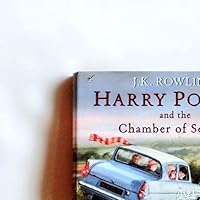
I picked this up some time ago, attracted by the cover to an Asimov collection I had not read. The slim volume is made up of four short early 1950s tales. Despite being almost seventy years old at the time I write this they all still hold up and entertain Think of them as decent episodes of The Outer Limits only with mostly more happier endings.
Four varied stories here from the master, exploring different aspects of the future and the human psyche. It's Such a Beautiful Day has a clear eco message, while belief is a light-hearted (and bodied) what-if, which I'm sure Stephen King recalled when he wrote Elevation. Breeds There a Man is heavy on the science, while The C-Chute combines trad sci-fi with psychology to satisfying effect.
This is good because it packs some pretty interesting ideas into four small packages. Isaac (we’re on a first name basis) writes in a fairly easy to read manner, which made these stories a breeze, not a hard slog like some sci-fi.
I'm not a big fan of Asimov's Foundation. Despite it's big scope and huge influence on sci-fi I find it dry and devoid of interesting ideas. Asimov's short fiction on the other hand kept the old-school sci-fi feeling but was interesting, engaging and full of fun ideas. A nice surprise.
Entertaining collection of short stories from the early 50s - Breeds There A Man? is a definite standout, but they're all enjoyable and thought provoking.
You can't beat classic Asimov stories. He takes the new sf writers to school! 4 great stories from the master - leaves enough to keep you guessing at the end of each.
This was a collection of four long-ish short stories by Dr. Asimov. I'd definitely read one of them before and two of the others seemed to be vaguely familiar, but I enjoyed them all. The stories are typical Asimov, by which I mean that they'll not change your opinion of him either way. They're about ideas, not characters, although the last one, The C-Chute is more character-based than is usual for Asimov. If you like Asimov then you'll probably enjoy these stories, if you don't, this won't change you mind.
A series of four short stories from the 1950's and 60's.
Very classic feel.
My favourite was the the third story, which dealt with nuclear energy. In terms of characters, there was a lot of repeating of scientists, psychiatrists and disbelievers, leading to similar story beats within all four drastically different stories.
Feels very much of the thing that it is: male-centric science-fiction.
Three stars.
(Review originally written in short form in December of 2023, six months after reading, edited and expanded November 2024).
3.5 The four short stories in this book were all brilliant (my favourites being the first and the third) and quick reads. The message behind them were simple enough but important. They were well written throughout.