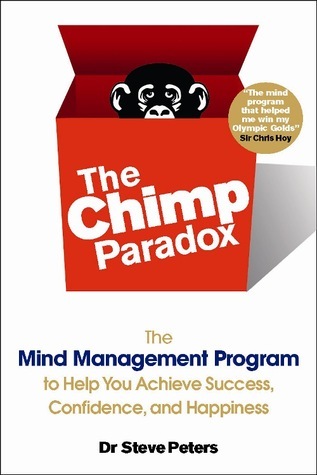
Life-changing is over used hyperbole in the self-help 'new you' book market but that's exactly what this book is. Written in a very simple style it walks us through an intuitive model of how our minds work that's linked to what we know about the physical structure of the brain. If you read it carefully and do the exercises at the back of each chapter it will absolutely change your life.
The genius of the book is that Peters takes complex information about the physical structure of our brain and builds a complementary psychological model that explains how each part contributes to our 'in-mind' experience each and everyday.
The model is made of the following components;
There's our inner Chimp, the emotional part of our brain, designed by evolution to support our survival, it's thinking is characterised by feelings and paranoia, it works on impressions and interpretations, not facts and responds up to fives times faster than our rational brain.
There's our Human mind, which is rational, weighs up evidence and reaches careful and deliberate conclusions using cognition. It is where our highest values of humanity reside, it is where we can strategically plan our actions and think through the consequences of events and arrive at balanced and considered conclusions. It works five times slower than the Chimp.
And then there's the Computer, a bank of a remembered experiences full of automatic habits and responses, some good, some bad, the place where both our Human and our Chimp look for association and similar experiences when processing what's happening to us. The Computer works twenty times faster than our Human and fifteen times faster than the Chimp.
Peters says that the first thing we need to do inside our heads is recognise these three powerful structures in our mind, if we do not we will always be running to catch up with ourselves.
The Chimp is as much a part of us as our Human brain and if we don't learn to manage the Chimp it may keep getting us into trouble again and again and again. The Chimp (emotional brain) is ancient, strong and fast-moving and as it works five times faster than the Human, it will sometimes beat that part of ourselves to responding. The Chimp is always active when we are unsettled or worried, it tends to think in black and white absolute terms, can be paranoid and often catastrophises things. As it was designed to keep us safe in a very dangerous prehistoric past you can see why it has been designed by natural selection to be like this. However it's fast, strong and often vicious responses don't often resolve many of the complex 21st century problems our lives are now full of. In our adolescent children the Chimp is often pumped up on hormones and also, with teenage self-esteem so brittle, the adolescent Chimp may see potential threats and slights much more readily than our more settled adult Chimps does.
Steven Peters recipe for managing the Chimp runs thus;
1. Recognise you have a Chimp and that it will respond sometimes when you are angry, stressed or perceive any kind of threat (physical or psychological or reputational) and it moves much more quickly than the Human part of your brain and it will likely embarrass you with its responses. It might shout and rage, be rude and angry or violent;
2. Watch for Chimp-like responses, these are easy to spot, they are responses which when you reflect later aren't ones you're proud of. They are likely the ones that if you had your time again you'd do differently, or they are the responses that you might, with the benefit of hindsight, think you need to apologise for;
3. Be aware that everyone has a Chimp and managing it is an everyday challenge, when we're tired or stressed our Chimp becomes more difficult to control and can overwhelm us more easily. Observe other people's responses,you can see Chimp behaviour everywhere;
4. Having become aware of your Chimp you can work on boxing your Chimp, ignoring it's instinctive and rapid reaction and giving yourself some thinking time to work out a better, more Human response;
5. We can use the Computer part of our brain, our automated habits, to put in responses faster than the Chimp can react. This takes time and practice, but if we make a conscious effort to put in a different response to the impulsive Chimp one, we can develop what Peters calls an Autopilot, which is a ---script or response that overrides the unhelpful Chimp response before it can be enacted.
________________________________________________________________________
Example of Computer trumping Chimp
Someone pulls in front of you when you're driving and instead of offering them some creative and energetic hand gestures, flashing your lights and standing on your horn you simply imagine that they are having a very difficult day, have an emergency to get to or simply didn't see you. This is an autopilot you had already programmed in over several days in preparation for the inevitable bad behaviour you sometimes see on the road. This means you do not react, drive more aggressively or head out into road-rage and instead arrive at your own destination calm and untrammeled by the experience that could have potentially de-stabilised your mood. (This kind of automated response will take training and practice developing an autopilot because each time it happens your chimp will react and respond very quickly and it's only the Computer part of your mind that can beat it.)
________________________________________________________________________
6. A Chimp response is a natural, if unhelpful response. As it is a prehistoric and simple creature it responds in simplistic, emotional ways. It's responses are not nuanced and complex enough to cope with anything beyond life or death survival. We can never be rid of it, but we can recognise it and circumvent it.
7. Nurture your autopilot responses to events or circumstances that keep recurring so you can ensure that the Chimp response doesn't define you.
8. Reflect on your responses during the day, identify Chimp-like responses and look at alternative ways of responding. You have to take responsibility for your chimp's responses.
9. Anticipate the Chimp, look ahead each day to see the moments when the Chimp might be more likely to react and respond so you can out think it in advance
10. The Chimp needs to be safe and secure in order to be calm, if you keep getting a Chimp response then it will because you are not feeling safe and secure (psychologically or physically or reputationally) and in order to address this repeated Chimp response you will need to address its anxieties regarding safety and security before it will be calm and you can respond with your Human rather than your Chimp.
Heartily recommended.
***** (A Rare five stars)