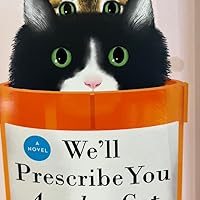
The noted research psychiatrist explores how life's disappointments and difficulties provide us with the lessons we need to become better, bigger, and more resilient human beings.
Adversity is an irreducible fact of life. Although we can and should learn from all experiences, both positive and negative, bestselling author Dr. Norman E. Rosenthal, believes that adversity is by far the best teacher most of us will ever encounter.
Whether the adversity one experiences is the result of poor decision-making, a desire to test one’s mettle, or plain bad luck, Rosenthal believes life’s most important lessons—from the value of family to the importance of occasionally cutting corners—can be best learned from it.
Running counter to society’s current prevailing message that “excellence” must always be aspired to, and failure or mistakes of any sort are to be avoided at all costs, Rosenthal shows that engaging with our own failures and defeats is one of the only ways we are able to live authentic and meaningful lives, and that each different type of adversity carries its own challenges and has the potential to yield its own form of wisdom.
Using stories from his own life—including his childhood in apartheid-era South Africa, his years after suffering a violent attack from a stranger, and his career as a psychiatrist—as well as case studies and discussions with well-known figures like Viktor Frankl and David Lynch, Rosenthal shows that true innovation, emotional resilience, wisdom, and dignity can only come from confronting and understanding the adversity we have experienced. Even when life is hardest, there are meanings to be found, riches to be harvested, and gifts that can last a lifetime.
Rosenthal illustrates his message through a series of compact, memorable chapters, each one drawn from episodes in the lives of his patients, colleagues, or himself, and concluded with a take-away maxim on the lesson learned.
Norman E. Rosenthal is the world-renowned psychiatrist, researcher, and best-selling author, who first described seasonal affective disorder (SAD) and pioneered the use of light therapy as a treatment during his twenty years at the National Institute of Mental Health. A highly cited researcher, he has written over 200 scholarly articles, and authored or co-authored ten popular books. These include Winter Blues, the New York Times bestseller Transcendence, and the national bestsellers The Gift of Adversity, and Super Mind. His latest book is Poetry Rx: How 50 Inspiring Poems Can Heal and Bring Joy to Your Life. Listed as one of the Best Doctors in America, he has practiced psychiatry for over four decades, and has coached people from all walks of life. Rosenthal has conducted numerous clinical trials of medications and alternative treatments, such as Transcendental Meditation, for psychiatric disorders. He and his work have been featured on Good Morning America, The Today Show, NPR and other national media.
Written by a psychiatrist who is responsible for putting S.A.D. in our vocabularies ( Seasonal Affective Disorder)one would expect some insights and uplifting words.. Ahh but he is very smug and self satisfied given to silly aphorisms at the end of each chapter like,"Fortune is fickle.Be generous in victory and dignified in defeat." Though he is Jewish and grew up in South Africa his memories reflect little pain or perception and no literary insight into his life there.He is not someone I would wish to talk too. He seems cold, and relies not on insight or perception but on medicine. He glibly and agreeably quotes William James ,"that we do not cry because we are sad. We are sad because we cry." Really?!!!!! this is an idea he uses when writing the chapter about Mysteries of Moods..What really got to me and made me put this book down was when he wrote about visiting a hospital for black South Africans during the rule of apartheid."It was heartbreaking to see so many daily tragedies of people who could have been saved if only.. if only they had understood the gravity of their situation, if only they had been able to take a few days off to get the problem sorted out sooner." Yeah, right, if only they hadn't been oppressed, robbed on their freedom , if only they hadn't been struggling to feed their families, living a subservient life, if only they did not have to work in the mines, if only they hadn't lived under the racially oppressive government of the ruling white South Africans!
The Gift of Adversity by Norman E. Rosenthal, M.D. is a joy to read. It's like sitting down in conversation with a wise and compassionate new friend, and discovering new ways to look at life's challenges. Adversity will invariably appear, and how you handle it can make all the difference to the outcome.
The book is a collection of true stories that the author has collected throughout his lifetime. There are 52 short chapters divided into four sections: Youth, Adulthood, Heroes, and Farewells. At the end of each chapter is a brief recap followed by, in the spirit of Aesop, the lesson to be learned from each story. For example: "Try to use difficulties, setbacks, and imperfections as a stimulus to creativity whenever they arise. When you feel trapped, like a fly bumping against glass, look for a novel solution. Fly some other way!" And: "Look deeply into what makes you different. Understand that difference and develop it, for it may be your greatest contribution."
The theme of the book is to learn from mistakes, and use adversity as a challenge and an opportunity for growth, rather than considering these events as disempowering setbacks. And to be kinder than necessary, for everyone you meet is fighting some kind of battle.
Thank you to the Goodreads First-Reads Program for sending me an Advanced Reader's Copy of this wonderful book.
I had high expectations from this book. As a reader who is currently going through some difficult times in life, I was hoping to find some tips, some useful information that would help me deal with my situations better and.....here I sit. highly disappointed.
I honestly believe that this book should belong in the Biography section more than Self-Help. I respect and appreciate all the events the Author has experienced, and all the adversities that he has dealt with but with that said, it just seems like a huge chunk of luck was at play for him. From surviving a stabbing to being able to escape an apartheid, everything else just seemed to fall in place for him. Moreover, he speaks at length about how HE dealt with an adversity--he does not discuss what other methods may be employed to overcome such issues. Just because a method worked for him, just because he had the resources (and money, and connections) available to him to help him overcome these adversities, it does not mean that everyone else can cope the same way. The tone was somewhat pompous, really, as if he meant to always paint himself in the best light, in the highest regard in every situation.
With all that said, I cannot disagree that the writing is well done. The sentence structure, the storytelling are well set. This accounts for one star. The second star is out of respect for what the author has endured and chosen to share with the readers.
Other than that, I found the title very misleading (perhaps, "The Gift of Adversity: how Norman E. Rosenthal dealth with adversities through his life" is a more apt title) I think I am more disappointed because as a reader, I did not find a lot of helpful statements or tips in here which is what one usually looked for in a Self Help book. Had I picked this book up anticipating an autobiography, this review may have been different.
I really wanted to like this book. The title alone was enough to propel me through the first quarter of it. But the truth is that the narrator--despite his renown in the world of psychiatry for his work with seasonal affective disorder--comes off as a curmudgeon of a man. It's clear the observations he makes about his life are novel to him. This I took as a clear sign of his social ineptitude. The snapshots at the end of each chapter are condescending and weird--as if to school a 3rd grader.
The book did not fulfill what I expected when I picked up the title. The book was filled with interesting stories and nice reminders, mostly from the author's life, but nothing "unexpected" occurred.
This is a very helpful book that casts a positive spin on how the gain from all the negative things that happen in our lives. The author is a long time psychologist that uses examples from his life, the lives of his patients and people that he has read about to illustrate his points. Dr. Rosenthal is the man who discovered that some people become depressed in the Winter months and has had much success treating them with light therapy. He also lauds the benefits of meditation and St. John's Wort for treating depression. This book is not just for the depressed as it gives valuable lessons for day to day living. I also loved his powerful quotes to illustrate his points at the beginning of each chapter.
I found this to be interesting, no wisdom I have not found elsewhere, however due to the different experiences this author had growing up in South Africa and places he lived, I enjoyed it. Yes there are messages designed to help lift you up when you are going through some difficult and challenging times. Always good to know that others have lived through something difficult or experienced challenging things and to see what message he has pulled from his experiences. It is the sort of book you can read a bit at a time, put it down, pick up again and read the next section. Maybe for some it will earn 4 stars.
Didn't quite get the rave reviews, nor the intention. Author surely writes fluidly, but title promise didn't amount to more than personal anecdotes, grampa-style. With all respect to his family's hardships, due to background and geography: Evoking modern day German train conductors and passengers as Nazis because they--wouldn't speak English?!? Sorry.
Useful, thought-provoking book. Defines adversity broadly and broadly considers the range of ways that it can be approached well. Each of the little chapters is followed by an Aesop's Fable-like moral--which I didn't like--but otherwise well worth it.
If you are looking for how adversity can be a gift for yourself, dear reader, this book is likely to be of only limited interest, since the author is so resolutely focused on drawing insights from his own experience that he does not always do a good job of connecting his own experience to more general ways that adversity can be beneficial to the reader. Obviously, this book will be of most interest to those whose Jewish experience and whose general political liberalism in repressive regimes and whose do-gooder idealism and sometimes naivete lead to one sort of problem or another that ends up having unexpected benefits of insight and wisdom, and less of interest to those who are less sympathetic to the reader for his frequent and sometimes dangerous acts of folly. If the author wanted to write a somewhat touching if fragmentary memoir, he succeeded, but if he wanted to help people realize gains from their adversity in life his book is not nearly as successful. Whether or not you appreciate this book anyway depends on how charitable you are to where the author stands, as is often the case.
This particular book is made up of 52 reflections that are divided into four parts that go on for more than 300 pages and give the reader a good sense of the kind of life and family experiences that the author has had over the course of a very eventful existence. The first twenty-four of the stories that the author shares relate to youth, be it the author's youth himself or that of his own son or that of his own relatives, including the one he is named after. These stories of youth are, admittedly, pretty relatable, and include private schools and stories about humorous projects in class or the fickleness of memory or, more painfully, the long reach of sexual trauma and trouble with parents and the South African police. After that the author has eighteen stories about the problems of adulthood relating to his own job difficulties and moving to a different country as well as the need for responsibility in life and reciprocity in relationships. The third section of the book provides four chapters that look at heroic tales the author relates from his family's experiences and his own meeting Viktor Frankl. Finally, the last few essays look at farewells and show how it is that dealing with death, whether our own or that of friends and family, can help us to understand the gifts of adversity.
Again, this was not quite the book I expected, as I tend to expect more general and theorectical books than personal ones when it comes to a topic like this. Still, even if the author's life is different in many ways to my own, there are still a lot of ways in which the author's struggles with adversity are ones that I can relate to, if only because I have lived a life that is full of many of the same kind of adversities--social difficulties, families with a great deal of suffering and abuse, political problems, and the like. I am not sure how many people can relate to these various matters, as adversity is very common but the specific nature and sources of adversity are not uniform. Admittedly, suffering adversity can (and should) give us the chance to empathize with others who have similarly suffered, but it can be of limited use to write about our own suffering with the goal of giving a general discussion of the subject of adversity, which tends to be deeply personal in terms of what aspects of the subject we can demonstrate a familiarity with, even if we, like the author, happen to be involved in psychology.
This book offers advice--typically in the form of stories from the author's life--on a variety of topics related to adversity. It follows almost the style of a memoir, with stories from the author's childhood appearing in the first part of the book, then adulthood, then some chapters on heroes and then death. The chapters tend to be short, with many being only 5-6 pages long. At the end of each chapter there is a takeaway offered, akin to the moral of the story from Aesop's fables.
While the structure of the book makes it an easy read, I found the stories and takeaway messages rather trite at times because Rosenthal does not elaborate on how you can achieve the suggestions he makes, only that you should do them, which I found unhelpful. For example, if the "moral" of one chapter is something like "Don't worry about things that are outside of your control," there is no advice offered on how to reduce worry in your life if you are a particularly anxious person.
Some of the stories from Rosenthal's life were interesting, but overall I did not find the book particularly enlightening on its ostensible subject of how to view adversity as a gift, so I wouldn't recommend it as a good self-help book in that respect. If you want to read something written by a psychiatrist with some unique life experiences that is memoir-esque, then you might enjoy it.
There were certain chapters that I gleaned a lot from. Most of it though read like an autobiography that was spelled out. You know how when you describe a character, you're not supposed to say how they are but show it? I feel like this book should have just been an autobiography. I skipped all the little lesson boxes at the end-- I felt they were unnecessary.
The title is misleading-- I picked it up thinking that it would be about scientific studies, psychology, etc., and while there was some of that, it was all over the place.
I would recommend it as a lighter read with nice, occasional life lessons. Overall, it's kind of disorganized (I write the same way sometimes, no criticism here!), but it is good for some of the impactful chapters it contains. I also learned more about South Africa than I previously knew, which is neat!
Rosenthal was raised in apartheid South Africa. He pioneered research into SAD (Seasonal Affective Disorder) in the 1980s. This book was written with each chapter highlighting an event and resulting insight into how the adversity depicted had helped shape his response. Divided into three sections (child, young adult, mature adult). Some good messages, but they weren’t always particularly powerful or illuminating. But the basic message of failures/missteps providing you with opportunities to learn from them and forge a more positive future was a good one, instead of wallowing in shame and humiliation and thereby cutting yourself off from a more vibrant future.
I really liked this book for the lessons… but really you can get the gist of the lessons from the chapter headings/ quotes and the little boxes at the end of the chapters.
It was really hard to get through it. By page 200, I was pretty ready for it to be over.
I am giving this book 4 stars because all of the lessons are backed by psychology and many of the anecdotes were enjoyable to read (albeit a little long for my taste).
I’ve read more in-depth, scientific evaluations of adversity from authors like Yunger (Tribe), Holiday (Obstacle is the Way) and Manson (Everything is Fucked) The Gift of Adversity is more of a biographical novel that has a theme of adversity and also sells Rosenthal’s other works. It definitely contains some wonderful nuggets of advice for optimal living, but it’s just a bit superficial in it’s teachings. And Rosenthal has certainly lead a very interesting life, but almost too accessively so to be fully relatable.
This memoir carries much wisdom about how adversity, loss, and grief have abundant lessons to impart to us about the preciousness of life and the people who are special to us.
Dr. Rosenthal’s final quote speaks with much volume:
“If we care about the future of our loved ones and of all humanity, it is important to consider life after death - their life and our death.”
NR was a genius, and this book was so insightful, refreshing, open, honest, and much needed for my life right now! Recommend this to anyone who is going through changes, adversity, or just needs direction...
I only read a few chapters just to get some advice on my own life but it was a good read. It seemed more like a memoir though but the things he overcame put a lot into perspective for me.
It was a pleasant read. Some useful advice but nothing most of us haven’t heard before. I somehow expected more given the title. It wasn’t earth-shatteringly good or even excellent but still decent.
This is very helpful, full of good stories and good advice. It's easy to read and well-structured. My one minor complaint is that the author likes to name-drop and plug his own work.
This is more of autobiographical memoir. Admittedly I did not get past the first 3 chapters as it was difficult to relate to the content and apply it to my own life.
Certain things in life seem to be inevitable. Adversity—whether the result of bad luck encountered, a mistake made, or a risk taken—is one of them. Fortunately, adversity need not be unfortunate.
Reframing adversity as stepping stones for finding meaning and value in life (vs. stumbling blocks leading to suffering and despair), psychiatrist Dr. Rosenthal demonstrates the “sweet uses of adversity.” (p. xii) Using his own experiences as well as those of others he has learned from along the way (including friends, family, patients, and Viktor Frankl!), Dr. Rosenthal helps unwrap the gift of adversity: “I hope you will find the stories in this book interesting in their own right, and that they will stimulate you to think about the adversity you have experienced, what you have learned from it, and how you can use that wisdom going forward. The take-home message of this book is that even when life is at its most painful and difficult, it has meaning and value. Even when things are really awful, some good can come of them. Our times of struggle yield gifts and riches that are worth harvesting, because they continue to nourish us throughout life’s journey.” (pp. xiv-xv)
Talk about making lemonade out of lemons!
Appropriately, this book is a gift. Reading it is like sitting down and having an eye-opening, heart-felt, and mind-shifting conversation with a trusted friend. Each of the short 52 chapters offers gems of wisdom that are simultaneously profound, yet simple. Here’s a sampling: * Most things don’t have to be perfect. So cut corners if you must, as long as you don’t sacrifice the essence or core of the work. (p. 6)
*Your memories make you who you are; if you lose them, you lost part of yourself. So use and enjoy them, for they are among life’s treasures. (p. 23)
*Your brain is unique. The better you understand its special qualities—both good and not so good—the more rewarding and successful your life will be. (p. 29)
*When a person is rude or unkind to you, consider that he or she may be carrying some hidden burden. What you might interpret as a personal affront may very well have nothing to do with you. (p. 63)
* Try to use difficulties, setbacks, and imperfections as a stimulus to creativity whenever they arise. When you feel trapped, like a fly bumping against glass, look for a novel solution. Fly the other way! (p. 71)
* Life is precious but precarious; treat it with the care and respect it deserves. (p. 111)
* Faith is a powerful medication. You can be happy without much in the way of material possessions. And acceptance of one’s lot in life is an important key to happiness. (p. 128)
* Whether you confront them aggressively or gently, it is important to face your fears. By ignoring them, you increase the risk that trouble will come when you least expect it and are least prepared to deal with it. (p. 134)
* Learn to accept reality. It will improve your life and can make the difference between life and death. Be careful neither to deny danger (either within your own body or from the world outside) nor to amplify fears, thereby needlessly distressing yourself. (p. 140)
* Look deeply into what makes you different. Understand that difference and develop it, for it may be your greatest contribution. (p. 146)
* Fortune is fickle. Be generous in victory and dignified in defeat. (p. 152)
* Look within to gauge your worth rather than depending on institutions or the opinions of others, for institutions rise and fall, and fashions come and go, but a good sense of your own value will see you through life’s ups and downs. (p. 171)
* The first step in coping with loss is to realize and accept that it has occurred. Then you can take the necessary measures to cope with it. Each significant choice we make involves both a commitment and a loss; so choose your path carefully at every major fork in the road, for the sum of your choices will shape your life. (p. 179)
* Take responsibility for your actions, including your errors and oversights. Apologize and make amends when appropriate. These practices are conducive to success and to a sense that you are in control of your life, not a victim of fate. (p 217)
* Bad things happen all the time, but even if you are in fact a victim, try not to define yourself as such. Retain as much power over yourself as you can, and cede as little as possible to those who would harm you. (p. 280)
* Whatever you choose to do in life, do it as well as you can. There is great joy to be had in the quest for excellence. But be prepared for the adversity that is bound to arise along the way, and remember that how you deal with that adversity will make all the difference to the outcome. (p. 267)
This is one of those books that can change the way you look at life—both in big and small ways. What a gift to be able to see adversity as a gift!
Book Review: The Gift of Adversity Written by New York Times Best Selling Author Dr. Norman Rosenthal
by Shira Goldberg, BSc., Sober Coach, & Host of The Addiction Show We have all experienced life’s triumphs and tribulations to some extent and Dr. Norman Rosenthal, New York Times Best Selling author of the book, Transcendence: Healing and Transformation Through Transcendental Meditation and Winter Blues imparts once again the value of lessons learned in his most recent offering, The Gift of Adversity. As the title so aptly suggests, the book is about how adversity can be a friend and a teacher if only we are open to learn from it and make ourselves available to carry this accumulated wisdom into all aspects of our lives, which he shows that it is possible with the proper perspective.
How we perceive what happens to us, if we had a role to play in it, or if it was just bad luck such as being at the wrong place at the wrong time are concerns we have all experienced, including Dr. Rosenthal. He cites numerous examples, taken from his own accounts, like his experience of getting stabbed numerous times in a dimly lit parking lot as a medical student intern in South Africa, to his time at the National Institute of Mental Health and his pioneering work with Seasonal Affective Disorder (SAD) that helps us as the reader recognize the value in our experiences, what we distinguish as good and bad and how what we identify as adversity can not only be overcome, but can remain within us as a tool to learn and grow, not in spite of, but because of it.
He writes about his own journey in such a poignant prose and relevant manner about what he has learned personally in such an approachable and engaging way, showing us despite geographical, socioeconomic, or educational differences, how we recognize adversity, even perceived adversaries, how we cope is universal.
By sharing his wealth of experiences Dr. Rosenthal enables the reader to become more fluid in perspective and to include such competences in our own perception of misfortune, making them more appreciated. He explores the topic of adversity in a heartwarming way, sharing personal stories that incorporate his life, the lives of his family, colleagues, and friends, showing how interconnected we all are and the impact of those around us which is only obvious if we chose to pay attention.
The book is filled with “take aways,” shining light on an otherwise abysmal topic of adversity, or so it seems. His thought provoking accounts of how it is not only possible to overcome adversity, but he teaches us that adversity can be one of the most welcomed and essential ways for lessons to be learned.
With an open heart and experiential view, he invites us in through his lens from his struggles as a young child growing up in the midst of racism in apartheid South Africa, to coming to New York City, leaving his country, friends and family, to embark in uncharted territory and the hardships encountered along the way which gives the reader a refreshing look at how what happens to us does not have to define us, but how we deal with the obstacles in our path can shape us by being victims of our fate or architects of our destiny. The Gift of Adversity: The Unexpected Benefits of Life's Difficulties, Setbacks, and Imperfections
[-"Be yourself. Everyone else is already taken." -“To punish me for my contempt for authority, fate made me an authority myself.”- Albert Einstein -Transcendental meditation -Viktor Frankl: No forgiveness, but reconciliation. ]
"He felt the feeling, named the feeling, accepting the feeling, and voila! He felt better...There are many routes to self knowledge and acceptance, but the first step is always the same--simply realizing what is there. There is great value to simply observing experiences, such as your physical feelings, emotions, or thoughts--without judging them. Then you can begin to know your particular brain--how best to use it and enhance it; how to celebrate its beauty and brilliance; and how to understand, accept, and work around its deficiencies." p. 29
Quoting TH Thompson & John Watson: "Be kinder than necessary, for everyone you meet is fighting some kind of battle." p. 63
"If you want to go fast, go alone. If you want to go far, go together." p. 101, old African proverb
"No act of kindness, however small, is ever wasted." p. 115, Aesop
"If you would recognize that life is hard, things would be so much easier for you." p. 135, Louis D Brandeis
"Successful people understand that bad things come at everyone and it is their responsibility to make their lives what they want them to be by successfully dealing with whatever challenges they face." p. 262, Ray Dalio
"This thou perceiv'st, which makes thy love more strong, To love that well which thou must leave ere long." p. 310, Shakespeare's Sonnet 73
This entire review has been hidden because of spoilers.