

What do you think?

Fungi
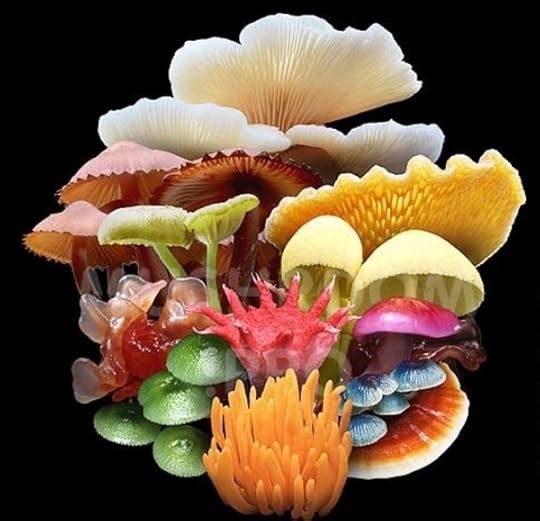
A collection of fungal wonders...and terrors. In this new anthology, writers reach into the rich territory first explored by William Hope Hodgson a century ago: the land of the fungi. Stories range from noir to dark fantasy, from steampunk to body horror. Join authors such as Jeff VanderMeer, Laird Barron, Nick Mamatas, W.H. Pugmire, Lavie Tidhar, Ann K.Schwader, Jesse Bullington, Molly Tanzer and Simon Strantzas through a dizzying journey of fungal tales. Feast upon Fungi.
288 pages, Paperback
First published December 1, 2012
About the author
Orrin Grey
105 books353 followersOrrin Grey is a skeleton who likes monsters. When asked, he claims to mostly write oubliettes.
Ratings & Reviews
Friends & Following
Create a free account to discover what your friends think of this book!
Community Reviews
Displaying 1 - 30 of 69 reviews

June 30, 2020
How could I resist this? With my borderline obsession with Jeff Vandermeer’s city of Ambergris and its strange mushroom inhabitants – plus the promise of stories by some of my very favorite horror writers; this book jumped into my arms and made me stay up past my bedtime, reading story after story.
Like any anthology, it has a couple of stories that made me go “meh”, but more hits than miss, and they are all refreshingly different! There is horror in these pages, but also humour, whimsy and occasional heartbreak.
While this is only a very short visit to Ambergris, but I’ll take all I can get from Mr. Vandermeer until he decides to write a new novel set in that universe (please, Jeff, pretty please with extra cherries on top!). Other very talented story tellers made this collection awesome: the pieces by John Langan, Kristopher Reisz, Nick Mamatas, Simon Strantzas, Ian Rogers and Laird Barron (who gives us a glimpse of his very own brand of strange, sentient beings) are particular stand outs, and while there are a few weaker stories, I wouldn’t call a single of them bad.
If you like mushrooms but also think they are kinda weird, this might be a good collection to sink your teeth into. Personally, I’m going to look at my portobello burgers a little differently from now on.
Like any anthology, it has a couple of stories that made me go “meh”, but more hits than miss, and they are all refreshingly different! There is horror in these pages, but also humour, whimsy and occasional heartbreak.
While this is only a very short visit to Ambergris, but I’ll take all I can get from Mr. Vandermeer until he decides to write a new novel set in that universe (please, Jeff, pretty please with extra cherries on top!). Other very talented story tellers made this collection awesome: the pieces by John Langan, Kristopher Reisz, Nick Mamatas, Simon Strantzas, Ian Rogers and Laird Barron (who gives us a glimpse of his very own brand of strange, sentient beings) are particular stand outs, and while there are a few weaker stories, I wouldn’t call a single of them bad.
If you like mushrooms but also think they are kinda weird, this might be a good collection to sink your teeth into. Personally, I’m going to look at my portobello burgers a little differently from now on.

Want to Read
May 10, 2016TABLE OF CONTENTS: (NOTE: THIS IS the table of contents for the hardcover edition, The TOC for the paperback and e-book is different)
007 - Introduction
011 - John Langan - “Hyphae”
023 - Lavie Tidhar - “The White Hands”
033 - Camille Alexa - “His Sweet Truffle of a Girl”
047 - Andrew Penn Romine - “Last Bloom on the Sage”
067 - Kristopher Reisz - "he Pilgrims of Parthean"
081 - W.H. Pugmire, “Midnight Mushrumps”
089 - Steve Berman, “Kum, Raúl (The Unknown Terror)"
093 - Jeff Vandermeer, “Corpse Mouth and Spore Nose”
105 - Richard Gavin, “Goatsbride”
115 - Molly Tanzer and Jesse Bullington, “Tubby McMungus, Fat From Fungus”
139 - Jane Hertenstein, “Wild Mushrooms”
147 - Paul Tremblay, “Our Stories Will Live Forever”
157 - A.C. Wise, “Where Dead Men Go to Dream”
173 - Daniel Mills, “Dust From a Dark Flower”
199 - Julio Toro San Martin, “A Monster In The Midst”
213 - Lisa M. Bradley, “The Pearl in the Oyster and the Oyster Under Glass”
231 - Polenth Blake, “Letters to a Fungus”
237 - Nick Mamatas, “The Shaft Through The Middle of It All”
245 - Simon Strantzas, “Go Home Again”
253 - Chadwick Ginther, “First They Came for the Pigs”
271 - Ian Rogers, “Out of the Blue”
289 - Laird Barron, “Gamma”
297 - Ann K. Schwader, “Cordyceps zombii” (poem)
301 - E. Catherine Tobler, “New Feet Within My Garden Go”
313 - J.T. Glover, “The Flaming Exodus of the Greifswald Grimoire”
325 - Claude Lalumière, “Big Guy and Little Guy’s Survivalist Adventure”
339 - A Brief List of Fungal Fiction
342 - About The Editors
Cover by Oliver Wetter.
007 - Introduction
011 - John Langan - “Hyphae”
023 - Lavie Tidhar - “The White Hands”
033 - Camille Alexa - “His Sweet Truffle of a Girl”
047 - Andrew Penn Romine - “Last Bloom on the Sage”
067 - Kristopher Reisz - "he Pilgrims of Parthean"
081 - W.H. Pugmire, “Midnight Mushrumps”
089 - Steve Berman, “Kum, Raúl (The Unknown Terror)"
093 - Jeff Vandermeer, “Corpse Mouth and Spore Nose”
105 - Richard Gavin, “Goatsbride”
115 - Molly Tanzer and Jesse Bullington, “Tubby McMungus, Fat From Fungus”
139 - Jane Hertenstein, “Wild Mushrooms”
147 - Paul Tremblay, “Our Stories Will Live Forever”
157 - A.C. Wise, “Where Dead Men Go to Dream”
173 - Daniel Mills, “Dust From a Dark Flower”
199 - Julio Toro San Martin, “A Monster In The Midst”
213 - Lisa M. Bradley, “The Pearl in the Oyster and the Oyster Under Glass”
231 - Polenth Blake, “Letters to a Fungus”
237 - Nick Mamatas, “The Shaft Through The Middle of It All”
245 - Simon Strantzas, “Go Home Again”
253 - Chadwick Ginther, “First They Came for the Pigs”
271 - Ian Rogers, “Out of the Blue”
289 - Laird Barron, “Gamma”
297 - Ann K. Schwader, “Cordyceps zombii” (poem)
301 - E. Catherine Tobler, “New Feet Within My Garden Go”
313 - J.T. Glover, “The Flaming Exodus of the Greifswald Grimoire”
325 - Claude Lalumière, “Big Guy and Little Guy’s Survivalist Adventure”
339 - A Brief List of Fungal Fiction
342 - About The Editors
Cover by Oliver Wetter.

April 17, 2013
Fungi, edited by Orrin Gray and Silvia Garcia-Moreno, collects about two dozen weird and fantastic stories focused on the theme of fungus, including mushrooms, molds and a whole related class of bizarre life forms.
I expected mostly dark tales of decay and derangement, but many of the tales here turn out to be lighthearted, whimsical, even silly. Whatever one's preference in terms of tone, Fungi undeniably contains a healthy measure of strong genre fiction. Whether due to my own predisposition toward more serious horror and dark fantasy, or because the more playful efforts are not as strong, I consider the most successful stories here to be those darkest or most surreal in tone. The work of John Langan, Laird Barron, and E. Catherine Tobler stood apart in my estimation.
Langan's lead-off "Hyphae" is a concentrated dose of nastiness. I dare anyone to read this without at least once letting out a disgusted, shuddering moan. I haven't seen Langan write something so viscerally gruesome until this. So awful, yet wonderful. I loved it.
Laird Barron never disappoints, and his "Gamma," a cynical yet emotionally powerful survey of childhood, adulthood, entropy and decay, balances a boy's recollection of his father killing a lame horse named Gamma against a present-day, adult contemplation of his wife leaving him for another man. The story looks outward to embrace death and human existence more generally, and finally broadens to face horror on a truly cosmic scale.
It's worth noting that E. Catherine Tobler's "New Feet Within My Garden Go," which may well be my favorite piece in the book, is a bonus story present in the hardcover but not the paperback version of Fungi. It's a shame many readers will miss Tobler's tale, which is complex, detail-rich, and overflowing with delicious, poetic weirdness. Beautifully and artfully told.
Another handful of stories deserve mention. Nick Mamatas describes in "The Shaft Through the Middle of It All" an apartment building where fungus growing in a ventilation shaft can bring harm to residents, though another use of fungus brings a kind of retributive power. J.T. Glover's "The Flaming Exodus of the Greifswald Grimoire" tells of two brother sorcerers, adventuring grimoire hunters who find trouble when they try to snatch a tempting tome in a house they assume is empty. Paul Tremblay's "Our Stories Will Live Forever" has the feel of straight realism, until a character dealing with terror of flying undergoes a transformation. Lastly, "The Pilgrims of Parthen," by a writer new to me, Kristopher Reisz, suggests a society taken over by the visionary trips brought on by newly discovered mushrooms, which seem to transport the user into a distinct and transcendent separate reality.
Several more, despite falling short of total success in my judgement, possess strengths of expression or concept sufficient to at least partly recommend them. These include works by W.H. Pugmire, Ian Rogers, Daniel Mills, Jeff VanderMeer and A.C. Wise. Also, one humorous story in Fungi that I think works (by virtue of going way over the top) is Molly Tanzer and Jesse Bullington's "Tubby McMungus, Fat From Fungus," which describes a showdown between rival merkin-makers for fashion-conscious society felines.
Where other stories fell short, lapsing into slightness or forgettability, was often in making a story's entire point nothing more than someone being consumed by mold, or surprised by the druggy effects of mushrooms. Of course, some that miss the mark for one reader may please others looking for different approaches to the subject. Whatever tone the reader prefers, Fungi contains a more than sufficient number of challenging and artful takes on the theme. Readers receptive to the fungal theme, and familiar with at least some of the authors contained here, should find in Fungi a successful weird fiction anthology and an overall satisfying read.
I expected mostly dark tales of decay and derangement, but many of the tales here turn out to be lighthearted, whimsical, even silly. Whatever one's preference in terms of tone, Fungi undeniably contains a healthy measure of strong genre fiction. Whether due to my own predisposition toward more serious horror and dark fantasy, or because the more playful efforts are not as strong, I consider the most successful stories here to be those darkest or most surreal in tone. The work of John Langan, Laird Barron, and E. Catherine Tobler stood apart in my estimation.
Langan's lead-off "Hyphae" is a concentrated dose of nastiness. I dare anyone to read this without at least once letting out a disgusted, shuddering moan. I haven't seen Langan write something so viscerally gruesome until this. So awful, yet wonderful. I loved it.
Laird Barron never disappoints, and his "Gamma," a cynical yet emotionally powerful survey of childhood, adulthood, entropy and decay, balances a boy's recollection of his father killing a lame horse named Gamma against a present-day, adult contemplation of his wife leaving him for another man. The story looks outward to embrace death and human existence more generally, and finally broadens to face horror on a truly cosmic scale.
It's worth noting that E. Catherine Tobler's "New Feet Within My Garden Go," which may well be my favorite piece in the book, is a bonus story present in the hardcover but not the paperback version of Fungi. It's a shame many readers will miss Tobler's tale, which is complex, detail-rich, and overflowing with delicious, poetic weirdness. Beautifully and artfully told.
Another handful of stories deserve mention. Nick Mamatas describes in "The Shaft Through the Middle of It All" an apartment building where fungus growing in a ventilation shaft can bring harm to residents, though another use of fungus brings a kind of retributive power. J.T. Glover's "The Flaming Exodus of the Greifswald Grimoire" tells of two brother sorcerers, adventuring grimoire hunters who find trouble when they try to snatch a tempting tome in a house they assume is empty. Paul Tremblay's "Our Stories Will Live Forever" has the feel of straight realism, until a character dealing with terror of flying undergoes a transformation. Lastly, "The Pilgrims of Parthen," by a writer new to me, Kristopher Reisz, suggests a society taken over by the visionary trips brought on by newly discovered mushrooms, which seem to transport the user into a distinct and transcendent separate reality.
Several more, despite falling short of total success in my judgement, possess strengths of expression or concept sufficient to at least partly recommend them. These include works by W.H. Pugmire, Ian Rogers, Daniel Mills, Jeff VanderMeer and A.C. Wise. Also, one humorous story in Fungi that I think works (by virtue of going way over the top) is Molly Tanzer and Jesse Bullington's "Tubby McMungus, Fat From Fungus," which describes a showdown between rival merkin-makers for fashion-conscious society felines.
Where other stories fell short, lapsing into slightness or forgettability, was often in making a story's entire point nothing more than someone being consumed by mold, or surprised by the druggy effects of mushrooms. Of course, some that miss the mark for one reader may please others looking for different approaches to the subject. Whatever tone the reader prefers, Fungi contains a more than sufficient number of challenging and artful takes on the theme. Readers receptive to the fungal theme, and familiar with at least some of the authors contained here, should find in Fungi a successful weird fiction anthology and an overall satisfying read.

February 7, 2013
I’ve said before that original anthologies are usually a mixed bag, and for the most part that remains the case. Therefore, it’s a special thing when one comes out that manages to be great throughout. Innsmouth Free Press, a Canadian “micro-publisher”, has already produced some quality anthologies. Historical Lovecraft and Future Lovecraft both have a spot on my bookshelf, and were quite satisfying. Fungi, their latest anthology, stands as their best work yet.
The brilliant cover by artist Oliver Wetter blends strangeness and beauty, and gives an idea of what’s to be found within the pages. Fungi itself is such an interesting species, and days could easily be spent reading about different types that are strange enough on their own without having to be fictionalized. Editors Silvia Moreno-Garcia and Orrin Grey wisely saw the potential of such a theme, and have compiled together a variety of tales. The stories themselves range from horror to fantasy. Some are dark, some are silly, some are chilling and some are just plain fun. The paperback edition contains twenty-two stories and a poem, while the deluxe hardcover edition includes three extra stories and ten black and white illustrations by Bernie Gonzalez.
Some (there are many) stories that I particularly enjoyed:
Hyphae, by John Langan, opens the anthology. It’s a good, solid horror story like I’ve come to expect from this author.
Lavie Tidhar is an author who writes beautiful short fiction. The White Hands reads like an excerpt from a weird encyclopedia detailing a mushroom world. Although not a typical, narrative story, it’s quite captivating.
Camille Alexander is an author that I’m not familiar with, but His Sweet Truffle of a Girl showcases her talent. The story is about a man on a “fungal submarine”, on a mission to win over his heart’s desire. It’s a weird, sad tale.
The next story, Last Bloom on The Sage by Andrew Penn Romine, is a fast-paced weird western. This could be one of the weirdest westerns I’ve read, as it seems to add steampunk, magic, and Lovecraftian creatures into the mix. Romine writes a rip-roaring train heist filled with action and strangeness, yet hinting at a much larger world. This is one of my favorite stories, and I’d love to see more stories set in the world Romine has created.
Another favorite is The Pilgrims of Parthen by Kristopher Reisz. It’s a beautiful, chilling tale of a special type of mushroom that causes shared hallucinations. Reisz manages to write a tale that could also work as a metaphor for real life drug addiction, and shows just how obsessed and dependent people can become. Parallels can be seen to Lovecraft’s A Shadow Out of Time and tales by Clark Ashton Smith. All in all, one of the best stories in the anthology.
W.H. Pugmire’s Midnight Mushrumps (my second favorite story title) is typical of Pugmire’s work. The prose is dreamy and decadent and the story is quite haunting. Any fan of weird fiction or eerily beautiful prose should mark Pugmire as a must-read.
No weird, fungal anthology would be complete without a story by Jeff Vandermeer. The author/editor is, without a doubt, the King of Fungi. Corpse Mouth and Spore Nose revisits his fictional city of Ambergris (which is explored in his previous brilliant works: The City of Saints and Madmen, Shriek: An Afterword, and Finch). This short story involves a detective coming to the city of Ambergris on a job, but finding more than he bargained for. The story is weird at its best with some disturbing visuals and elements of body horror.
Goatsbride, by Richard Gavin, is another beautifully written story. Although I found the fungus element to play quite a small role, I loved this story. It explores primal lust in a village reminiscent of a religious, conservative settler town. Gavin is highly talented, and balances fluid prose and brilliant imagery to weave a tale that is not easily forgotten.
Molly Tanzer and Jesse Bullington show what’s possible when two impishly warped minds come together. Tubby McMungus, Fat From Fungus (favorite story title – obviously) is easily the weirdest, funniest, most memorable tale (tail?) in the anthology. Anthropomorphic animals, scheming nobles, fungus, and merkins come together in a story that will not soon be forgotten. Fungal fun for the furry in all of us.
Where Dead Men Go To Dream by A.C. Wise is a dark tale of anguish and loss. There is some beautiful imagery to be found in a tale of mushrooms and dreams.
Daniel Mills recently caught my attention with a brilliant story in A Season in Carcosa. With Dust From a Dark Flower, Mills uses fungus in a more traditional weird horror style. Mills is quickly becoming a new favorite of mine.
Nick Namatas brings us a tale of an urban housing project’s garden, and the hope it brings to the neighborhood before taking a darker turn in The Shaft Through the Middle of It All. Namatas paints a very convincing urban picture in a stand out tale.
Go Home Again showcases Simon Strantzas many talents. The melancholy story is full of beautiful, dark imagery, coming together for a hopeful ending.
And ending the anthology (for the paperback readers) is a powerful tale by Laird Barron. Gamma is a disturbing, spine-chilling tale. It works as an example of how literary, powerful, and brutal Barron’s stories can be, adding another example of how he is the Cormac McCarthy of the weird. A perfect closing story.
There are several other fun stories as well, Julio Toro San Martin spins a steampunk yarn, Lisa M. Bradley writes an intriguing environmental tale where not everything is as it seems, Polenth Blake pens a hilarious little ditty, Ian Rogers brings back his recurring paranormal investigator Felix Renn in a supernatural noir, and Chadwick Ginther brings fungus into the realm of Sword and Sorcery.
Also of note are the three additional stories available in the hardcover edition. Catherine Tobler writes a poetic, gloomy tale of a ruined earth, while J.T. Glover and Claude Lalumière bring light-hearted, funny tales to the table. The three stories together are totally worth the extra money.
Fungi is definitely an anthology any fan of the weird should get ahold of. There is just so much offered in terms of content that it is entertaining throughout. Also, the hardcover is worth dishing out the extra dollars for. Not only would I dub this anthology “highly recommended”, I would even go so far as to say it’s my pick for best original anthology of the year.
Originally appeared on my blog, The Arkham Digest.
The brilliant cover by artist Oliver Wetter blends strangeness and beauty, and gives an idea of what’s to be found within the pages. Fungi itself is such an interesting species, and days could easily be spent reading about different types that are strange enough on their own without having to be fictionalized. Editors Silvia Moreno-Garcia and Orrin Grey wisely saw the potential of such a theme, and have compiled together a variety of tales. The stories themselves range from horror to fantasy. Some are dark, some are silly, some are chilling and some are just plain fun. The paperback edition contains twenty-two stories and a poem, while the deluxe hardcover edition includes three extra stories and ten black and white illustrations by Bernie Gonzalez.
Some (there are many) stories that I particularly enjoyed:
Hyphae, by John Langan, opens the anthology. It’s a good, solid horror story like I’ve come to expect from this author.
Lavie Tidhar is an author who writes beautiful short fiction. The White Hands reads like an excerpt from a weird encyclopedia detailing a mushroom world. Although not a typical, narrative story, it’s quite captivating.
Camille Alexander is an author that I’m not familiar with, but His Sweet Truffle of a Girl showcases her talent. The story is about a man on a “fungal submarine”, on a mission to win over his heart’s desire. It’s a weird, sad tale.
The next story, Last Bloom on The Sage by Andrew Penn Romine, is a fast-paced weird western. This could be one of the weirdest westerns I’ve read, as it seems to add steampunk, magic, and Lovecraftian creatures into the mix. Romine writes a rip-roaring train heist filled with action and strangeness, yet hinting at a much larger world. This is one of my favorite stories, and I’d love to see more stories set in the world Romine has created.
Another favorite is The Pilgrims of Parthen by Kristopher Reisz. It’s a beautiful, chilling tale of a special type of mushroom that causes shared hallucinations. Reisz manages to write a tale that could also work as a metaphor for real life drug addiction, and shows just how obsessed and dependent people can become. Parallels can be seen to Lovecraft’s A Shadow Out of Time and tales by Clark Ashton Smith. All in all, one of the best stories in the anthology.
W.H. Pugmire’s Midnight Mushrumps (my second favorite story title) is typical of Pugmire’s work. The prose is dreamy and decadent and the story is quite haunting. Any fan of weird fiction or eerily beautiful prose should mark Pugmire as a must-read.
No weird, fungal anthology would be complete without a story by Jeff Vandermeer. The author/editor is, without a doubt, the King of Fungi. Corpse Mouth and Spore Nose revisits his fictional city of Ambergris (which is explored in his previous brilliant works: The City of Saints and Madmen, Shriek: An Afterword, and Finch). This short story involves a detective coming to the city of Ambergris on a job, but finding more than he bargained for. The story is weird at its best with some disturbing visuals and elements of body horror.
Goatsbride, by Richard Gavin, is another beautifully written story. Although I found the fungus element to play quite a small role, I loved this story. It explores primal lust in a village reminiscent of a religious, conservative settler town. Gavin is highly talented, and balances fluid prose and brilliant imagery to weave a tale that is not easily forgotten.
Molly Tanzer and Jesse Bullington show what’s possible when two impishly warped minds come together. Tubby McMungus, Fat From Fungus (favorite story title – obviously) is easily the weirdest, funniest, most memorable tale (tail?) in the anthology. Anthropomorphic animals, scheming nobles, fungus, and merkins come together in a story that will not soon be forgotten. Fungal fun for the furry in all of us.
Where Dead Men Go To Dream by A.C. Wise is a dark tale of anguish and loss. There is some beautiful imagery to be found in a tale of mushrooms and dreams.
Daniel Mills recently caught my attention with a brilliant story in A Season in Carcosa. With Dust From a Dark Flower, Mills uses fungus in a more traditional weird horror style. Mills is quickly becoming a new favorite of mine.
Nick Namatas brings us a tale of an urban housing project’s garden, and the hope it brings to the neighborhood before taking a darker turn in The Shaft Through the Middle of It All. Namatas paints a very convincing urban picture in a stand out tale.
Go Home Again showcases Simon Strantzas many talents. The melancholy story is full of beautiful, dark imagery, coming together for a hopeful ending.
And ending the anthology (for the paperback readers) is a powerful tale by Laird Barron. Gamma is a disturbing, spine-chilling tale. It works as an example of how literary, powerful, and brutal Barron’s stories can be, adding another example of how he is the Cormac McCarthy of the weird. A perfect closing story.
There are several other fun stories as well, Julio Toro San Martin spins a steampunk yarn, Lisa M. Bradley writes an intriguing environmental tale where not everything is as it seems, Polenth Blake pens a hilarious little ditty, Ian Rogers brings back his recurring paranormal investigator Felix Renn in a supernatural noir, and Chadwick Ginther brings fungus into the realm of Sword and Sorcery.
Also of note are the three additional stories available in the hardcover edition. Catherine Tobler writes a poetic, gloomy tale of a ruined earth, while J.T. Glover and Claude Lalumière bring light-hearted, funny tales to the table. The three stories together are totally worth the extra money.
Fungi is definitely an anthology any fan of the weird should get ahold of. There is just so much offered in terms of content that it is entertaining throughout. Also, the hardcover is worth dishing out the extra dollars for. Not only would I dub this anthology “highly recommended”, I would even go so far as to say it’s my pick for best original anthology of the year.
Originally appeared on my blog, The Arkham Digest.

July 10, 2020

The Pilgrims of Parthen by Kristopher Reisz ★★★★★
“Users dreamed of a city — always the same city — an alien ruin...”
This story drew me in like nothing else. It reminded me of time we were all obsessed with Myst. Parthen is the clarion call to the argonaut inside us. I could see it happening!
And dear god, the end...
Letters to a Fungus by Polenth Blake ★★★★★
That was short and hilarious. An escalating series of letters to an invading fungus during suburban warfare.

Our Stories Will Live Forever by Paul Tremblay ★★★★☆
That was lovely. What started off as a writer scaring himself on a plane took a sharp turn into the eternal. Definitely too sharp a turn, even for a short story, but I still enjoyed it.
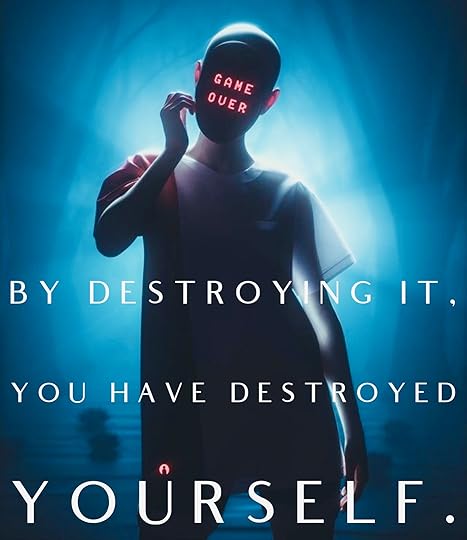
A Monster in the Midst by Julio Toro San Martin ★★★★☆
A robot reveling in schadenfreude, you gotta love it. In a steampunk world where mushrooms have replaced trees, one aristocrat hoped to save the world. His robot knew better, and quietly, maliciously, laughed all the way.
Where Dead Men Go to Dream by A.C. Wise
★★★½☆
I’ve read many Wise short stories and he never fails to get less than three stars. Veiled in magic and symbolism this was a pretty basic story for everyone with a failed relationship - did you really see the other person or just your desires reflected back?

The Shaft Through the Middle of it All by Nick Mamatas ★★★½☆
Never mess with an ol’bruja’s garden.

Hyphae by John Langan ★★★☆☆
“James pulled to the side of the road, shifted the car into Park and screamed until the cords on his neck stood out...”
Creepy story about a son checking up on his estranged hermetic father. What’s left of him in the tunnel under the basement sends the son away screaming...
The White Hands by Lavie Tidhar ★★★☆☆
Writing prompt challenge: write fifty words or less on each fungi. I don’t count this as a story, there is not enough meat. But some of those bites were tasty.
His Sweet Truffle of a Girl by Camille Alexa ★★★☆☆
Sad, but fascinating, story of the very first, doomed, biological submarine. Red Cap October, Red Cap October, do you read me?
Gamma by Laird Barron ★★★☆☆
That was a long suicide note from someone with a terrible childhood, an animal abuser father.
Dust From a Dark Flower by Daniel Mills ★★★☆☆
A fungal horror version of Typhoid Mary.
Kum, Raúl (The Unknown Terror) by Steve Berman ★★½☆☆
Well, that was frustrating. I haven’t spent that much time sussing fact from fiction since The Drowning Girl. While I am now curious to read Lovecraft’s collaborations with Barlow let me save you time (or challenge you to search harder than I did), there is no story call Ignoble Rot and no collection titled Memories of Leng and other Pieces.
The Pearl in the Oyster and the Oyster Under Glass by Lisa M. Bradley ★★½☆☆
That was so odd. Never is it mentioned how, or why, there is a walking, taking, working bear with secret mushroom empathy. The rest of the story is about mushrooms eating oil spills then being eaten by people/bears.
Last Bloom on the Sage by Andrew Penn Romine ★★½☆☆
“Nightmares were mighty difficult to break; most who tried got eaten.”
I’m a fan of weird westerns but I didn’t quite like this one, even with the bits of Lovecraft thrown in. There was not enough plot or world building.
Out of the Blue by Ian Rogers ★★½☆☆
Goofy suburbanites face off against blue vampire fungus. With more cool factor, humor, and violence it could have been a passable episode of Supernatural.
Corpse Mouth and Spore Nose by Jeff VanderMeer ★★☆☆☆
That was a bad dream. Just a messed up bad dream.
Goatsbride by Richard Gavin ★★☆☆☆
I read this twice and still didn’t like it. Village girls are fed moldy wheat and fantasize about a goat lover. The men hang them.
Midnight Mushrumps by W.H. Pugmire ★★☆☆☆
“He had never known starlight to be so intimate and coaxing, as if he could step from the solid ground and walk between the spaces of cold stars until he reached the moon...”
This might be my favorite sentence, it’s lovely and evocative. But that is the last of the good news. This was a pointless hallucinatory dream.
Go Home Again by Simon Strantzas ★★☆☆☆
“Closure was a lie the world wanted to believe.”
I sped through that unpleasant story about a girl returning to her old home and memories of abuse.
Cordyceps Zombii by Ann K. Schwader
A nice poem I won’t rate.
First They Came For the Pigs by Chadwick Ginther DNF
I do not like being thrown into the deep end of high fantasy - skip.
Tubby McFungus, Fat From Fungus by Molly Tanzer and Jessie Bullington DNF
This was about cats making merkins. I could have lived without knowing what merkins were. I let this one go.
I read/reviewed 19/22 stories that averaged out to 3.05, which I will round down to two stars for the DNF’s and my overall disappointment. The best thing about this anthology was the editor using it as experience to write Mexican Gothic, the best fungi story I read this month.

July 12, 2020
✭✭½
“Hyphae”, John Langan ✭✭✭
“The White Hands”, Lavie Tidhar ✭✭✭
“His Sweet Truffle of a Girl”, Camille Alexa ✭✭
“Last Bloom on the Sage”, Andrew Penn Romine ✭✭
“The Pilgrims of Parthen”, Kristopher Reisz ✭✭✭½
“Midnight Mushrumps”, W. H. Pugmire ✭½
“Kum, Raúl (The Unknown Terror)”, Steve Berman ✭
“Corpse Mouth and Spore Nose”, Jeff VanderMeer (2004) ✭✭
“Goatsbride”, Richard Gavin ✭✭½
“Tubby McMungus, Fat from Fungus”, Molly Tanzer & Jesse Bullington ✭✭½
“Wild Mushrooms”, Jane Hertenstein (2008) ✭✭✭✭
“Our Stories Will Live Forever”, Paul Tremblay ✭✭½
“Where Dead Men to Dream”, A. C. Wise ✭✭½
“Dust from a Dark Flower”, Daniel Mills ✭✭✭
“A Monster in the Midst”, Julio Toro San Martin ✭✭
“The Pearl in the Oyster and the Oyster under Glass”, Lisa M. Bradley ✭✭½
“Letters to a Fungus”, Polenth Blake ✭✭✭✭
“The Shaft Through the Middle of It All”, Nick Mamatas ✭✭✭
“Go Home Again”, Simon Strantzas ✭✭
“First They Came for the Pigs”, Chadwick Ginther ✭
“Out of the Blue”, Ian Rogers ✭✭
“Gamma”, Laird Barron ✭✭✭½
“Cordyceps zombii”, Ann K. Schwader ✭✭✭½
All entries published 2012 unless otherwise noted.
“Hyphae”, John Langan ✭✭✭
“The White Hands”, Lavie Tidhar ✭✭✭
“His Sweet Truffle of a Girl”, Camille Alexa ✭✭
“Last Bloom on the Sage”, Andrew Penn Romine ✭✭
“The Pilgrims of Parthen”, Kristopher Reisz ✭✭✭½
“Midnight Mushrumps”, W. H. Pugmire ✭½
“Kum, Raúl (The Unknown Terror)”, Steve Berman ✭
“Corpse Mouth and Spore Nose”, Jeff VanderMeer (2004) ✭✭
“Goatsbride”, Richard Gavin ✭✭½
“Tubby McMungus, Fat from Fungus”, Molly Tanzer & Jesse Bullington ✭✭½
“Wild Mushrooms”, Jane Hertenstein (2008) ✭✭✭✭
“Our Stories Will Live Forever”, Paul Tremblay ✭✭½
“Where Dead Men to Dream”, A. C. Wise ✭✭½
“Dust from a Dark Flower”, Daniel Mills ✭✭✭
“A Monster in the Midst”, Julio Toro San Martin ✭✭
“The Pearl in the Oyster and the Oyster under Glass”, Lisa M. Bradley ✭✭½
“Letters to a Fungus”, Polenth Blake ✭✭✭✭
“The Shaft Through the Middle of It All”, Nick Mamatas ✭✭✭
“Go Home Again”, Simon Strantzas ✭✭
“First They Came for the Pigs”, Chadwick Ginther ✭
“Out of the Blue”, Ian Rogers ✭✭
“Gamma”, Laird Barron ✭✭✭½
“Cordyceps zombii”, Ann K. Schwader ✭✭✭½
All entries published 2012 unless otherwise noted.

May 10, 2023
The stories in this collection are more along the lines of weird fiction (with fungi) than horror. For me, this was an uninspiring collection, with the majority of the stories not particularly working for me. I got the impression that the editors tossed in any old "story" if it included fungi, regardless of how well or complete it was. I love looking at the strange forms and colours fungi have (not so much eating them). I was really expecting to love this collection, but I found it disappointing. There were, however, a few interesting and well written stories.

July 11, 2020
23 stories. Rated each one (I updated as I was reading) and averaged out to 3.11. Some duds, some ones I liked and am glad to have read. Normal anthology.

February 28, 2013
In the interest of full disclosure, I do have a story in this anthology. That aside, I highly recommend picking up a copy. As a physical object, Fungi is gorgeous. Above and beyond the cover art, which initially drew me to the anthology, the hardcover edition has lovely interior illustrations reminiscent of the work of Mike Mignola, and overall there's something very pleasing about the way the book's layout, which is not something I would normally notice. The stories are strong throughout, offering, as the title implies, variation on the theme of mushrooms. I particularly enjoyed Camille Alexa's His Sweet His Truffle of a Girl, Last Bloom on the Sage by Andrew Penn Romaine, Pilgrims of the Parthen by Kristopher Reisz, The Shaft through the Middle of it All by Nick Mamatas, Gamma by Laird Barron, New Feet Within My Garden Go by E. Catherine Tobler, and Big Guy and Little Guy's Survivalist Adventure by Claude Lalumiere

November 23, 2012
A much wider range of stories than I was expecting. You've got some classic fungus/body horror and some sad tales of personal darkness, but there's also Victorian bio-engineering, weird Westerns, dark comedy, science fiction that puts the mushrooms in a very different role from what I was expecting, high fantasy (the old stuff), cross-sections of neighbourhood life that take a dark turn, mind-altering alien invasion, poetry...
I'm sitting here looking over the table of contents, and I really don't think I can do justice to the scope of the stories, here; the variety of style and topic is honestly surprising, even as the quality is consistently high. A couple of them didn't blow me away, but all that means is that when presented with twenty-seven stories, the worst thing I can possibly say about one or two of them is "well-written, not to my personal taste".
(I've made sure the official URL to the book is included in the Goodreads information for all three editions, so you could be reading the ebook in less time than it takes you to finish this review. Just saying.)
Some particular favourites of mine, that make me want to see what else the authors have done:
Last Bloom on the Sage, by Andrew Penn Romine. A dynamic weird Western; I look at what it does for the Wild West and I'm reminded of what Elizabeth Bear and Sarah Monette did for spaceships and space stations with "Boojum" and "Mongoose".
Goatsbride, by Richard Gavin. A rich, dark tale of horror where the fungus meshes with human evil and an ancient monster. Makes me think of the best of what I used to love about the old Pan Book of Horror Stories collections.
Tubby McMungus, Fat From Fungus, by Molly Tanzer and Jesse Bullington. Anthropomorphic cats. And high-fashion merkins. And poor abused rats. And jockeying for favour at court. And fungus!
Where Dead Men Go To Dream by A.C. Wise. A weird story set in an unnamed city, where the mold and mushrooms are not the only strangeness you can find growing from people's flesh. Beautifully written, sad, and dark.
Letters to a Fungus, by Polenth Blake. A deceptively fast read, darkly funny. Very quotable, although I'm avoiding doing so because of possible spoilers.
The Flaming Exodus of the Greifswald Grimoire, by J.T. Glover. A pair of cheerfully dastardly thieving protagonists on the trail of a lost book. Prompted a very odd late-night conversation. (hardcover only)
I really have to say I've trimmed this list down hard--I stopped and went back over it when I realized I was in danger of mentioning half the stories in the anthology. Honestly, there isn't a bad one in the bunch; I think this is the best anthology (for style, quality, and variety) I've seen in ages, and really recommend picking it up.
I'm sitting here looking over the table of contents, and I really don't think I can do justice to the scope of the stories, here; the variety of style and topic is honestly surprising, even as the quality is consistently high. A couple of them didn't blow me away, but all that means is that when presented with twenty-seven stories, the worst thing I can possibly say about one or two of them is "well-written, not to my personal taste".
(I've made sure the official URL to the book is included in the Goodreads information for all three editions, so you could be reading the ebook in less time than it takes you to finish this review. Just saying.)
Some particular favourites of mine, that make me want to see what else the authors have done:
Last Bloom on the Sage, by Andrew Penn Romine. A dynamic weird Western; I look at what it does for the Wild West and I'm reminded of what Elizabeth Bear and Sarah Monette did for spaceships and space stations with "Boojum" and "Mongoose".
Goatsbride, by Richard Gavin. A rich, dark tale of horror where the fungus meshes with human evil and an ancient monster. Makes me think of the best of what I used to love about the old Pan Book of Horror Stories collections.
Tubby McMungus, Fat From Fungus, by Molly Tanzer and Jesse Bullington. Anthropomorphic cats. And high-fashion merkins. And poor abused rats. And jockeying for favour at court. And fungus!
Where Dead Men Go To Dream by A.C. Wise. A weird story set in an unnamed city, where the mold and mushrooms are not the only strangeness you can find growing from people's flesh. Beautifully written, sad, and dark.
Letters to a Fungus, by Polenth Blake. A deceptively fast read, darkly funny. Very quotable, although I'm avoiding doing so because of possible spoilers.
The Flaming Exodus of the Greifswald Grimoire, by J.T. Glover. A pair of cheerfully dastardly thieving protagonists on the trail of a lost book. Prompted a very odd late-night conversation. (hardcover only)
I really have to say I've trimmed this list down hard--I stopped and went back over it when I realized I was in danger of mentioning half the stories in the anthology. Honestly, there isn't a bad one in the bunch; I think this is the best anthology (for style, quality, and variety) I've seen in ages, and really recommend picking it up.
September 18, 2014
While there are a couple of stories in this collection that left me curious as to why (obviously thoughtful and talented) editors included them, the good tales more than compensate. If you are looking for a great access point into the Mythos or are looking for something other than the standard fare your Mythos works, this is a great anthology. I would certainly recommend it.
January 13, 2013
First: look at that cover art. Isn't it amazing?
Second: This is a strong anthology. It would be a lie to say I enjoyed every story, but for each story I disliked there were two other stories I really enjoyed. There is a wide spread of stories from humorous to haunting, fantastic to riffs on alternate realities, and damn near everything else in between.
Third: Look at that cover art. Then get this book and read it.
Second: This is a strong anthology. It would be a lie to say I enjoyed every story, but for each story I disliked there were two other stories I really enjoyed. There is a wide spread of stories from humorous to haunting, fantastic to riffs on alternate realities, and damn near everything else in between.
Third: Look at that cover art. Then get this book and read it.

July 22, 2013
This was very fun to read. It always seems so difficult to rate a collection of various writers, though, because it never fails that there are stories I really love and others that just seem standard, even almost uninteresting, so I think of this as a high three (since we don't have out-of-ten ratings). I liked that a spec poem was included at the end. Overall, I enjoyed reading it and would probably pass it along to someone I thought would like this kind of thing.

February 2, 2015
very entertaining. Will have to look for some more stuff by some of the authors. I particularly liked the Felix Renn story. As well as a few others.

September 23, 2019
(4.5 Stars)

August 30, 2021
This is a great collection of stories that run the gamut of horror, weird, fantasy and everything in between. I enjoyed the bulk of these stories and loved the inventiveness. Definitely recommend!

October 23, 2023
(Note: This review is hastily copied from what I wrote as discussion points in a GoodReads group I moderate titled Weird Fiction. I will need to revise this review at some point in the future to ensure greater accuracy. When I have done that to my satisfaction, I will remove this note.)
Edited by Orrin Grey and Silvia Moreno-Garcia, Moreno-Garcia is the better-known editor given her prominence in the genres of horror and weird fiction. Orrin Grey is less familiar. He writes a lot of short stories, most of which are straight-genre speculative fiction (fantasy and horror mostly), but few longer works such as novels, and those two were in the War Machine series. This is his first (2012) weird fiction anthology. His second (2014) he co-edited with even more editors: Jazz Age Cthulhu. That last anthology looks even more interesting than the anthology currently under review.
Fungi has stories written by many prominent authors, many of whom I consider purely horror genre writers, though admittedly of a literary bent. I wonder how may critics these days conflate literary horror with weird fiction? They are very distinct genres to my mind. Weird fiction often contains fantasy and SF elements. Horror is very often in weird fiction too, but downplayed, never the point. Anyhow, I like horror as well. So I looked forward to reading this anthology
I like to eat most mushrooms, and I think it's sort of cool how fungi are neither plant nor animal, but something in between. (How can this be?) But that's the extent of my interest in the subject. What I don't much care for about fungi is they grow in dark, dank places, turn rotten fast, getting slimy and discolored when they do. They can also be poisonous or hallucinogenic, neither of which interests me.
1) The first short story is "Hyphae" by John Langan. I really liked it--it had me on the edge the entire time. I give it a strong 4-star rating. It's about an estranged son who at his ailing sister's request comes to check up on his aged father who lives alone. What he finds at his father's house is the story. I've never seen odor presented quite that way. John Langan's magnum opus is The Fisherman. It won the 2016 Bram Stoker award. I ordered the book five or six years ago, began it, but wasn't hooked. It starts slow, for sure. In “Hyphae” the fungi symbolizes the deterioration of the father-son relationship. I thought using this a nice touch, foregrounding the result--estrangement--rather than distracting us with its cause. If we knew the cause, we the reader might pick sides based on whatever baggage with our own fathers we bring to the story.
2) The second story, “The White Hands” was okay, except I don't read non-fiction articles for entertainment really, but rather enlightenment. The fact that the subject of the article was fictional, despite its format being non-fictional (biography), made it so that not even meaningful enlightenment could be the result.
3) "His Sweet Truffle of a Girl" by Camille Alexa The writing style and word choices were impressive. Underwater stuff and fungi don’t seem to mix well though. Three stars.
4) The third story bogged me down for a while. It was "Last Bloom on the Sage" by Andrew Penn Romine, and I had a hard time making myself finish it. It's a longish western. Some odd beings have decided to rob a train. My problem with the story is that it takes five e-pages to tell the reader the information that I just placed in the last sentence I wrote. The rest of those same five pages is oddly written background, haphazardly written to try to appear smooth when it's anything but. The entire story is written in this extended slow motion manner: simple plot point surrounded by paragraphs of too much description that isn't needed for the plot, but which I think the author believes makes the story. Once Romine finally gets the background out of the way things move along nicely enough though, and I'm always a sucker for a Weird Western. I give this story 3 stars.
5) "The Pilgrims of Parthen" by Kristopher Reisz. Pilgrims? Four stars. It's about eating hallucinogenic mushrooms as a method of interstellar travel. I really liked the SF angle here while not forgetting this is a weird fiction story. The struggling relationship angle--dude's about to lose his girlfriend and there's nothing much he can do about it--really worked for me too. Clever story.
6) "Midnight Mushrumps" by W. H. Pugmire. Pugmire provides a well-written story, as always. Too well written as far as I'm concerned. There is a decent plot, but it's nevertheless neglected. A man is looking at a moonbeam, finds a house with a dog, eats some magic mushrooms, has a weird experience that may or may not be real. Add a sort of werewolf aspect, but nothing violent; that would be too gauche. And it ends in a bit of confusion as two dudes kiss. Maybe. I don't know. I even read this story twice in order to try to get a better handle on it. Those who value nice writing in terms of thesaurus usage, and don't see it as pretentious, will get better mileage than me with this one. Three stars. Pugmire died in 2019. R.I.P.
7) Kum, Raul (The Unknown Terror) by Steve Berman. Two stars. This is not really a story. It was a synopsis for a novel, it looked like. A proposal one would submit to an agent to send out to would-be publishers for a novel an author wants to write if commissioned to do so. I gave the non-story two stars only because it looked like an outline for a pretty decent novel.
8) Corpse Mouth and Spore Nose by Jeff VanderMeer. Three stars. The story is about a detective who washes up one morning from a river, encounters a mushroom man that's been taken over by fungal matter, and finds himself in a fight with that same fungus. That basic plot wasn't much, but the backdrop and city of Ambergris looked interesting. If you're a fan of City of Saints and Madmen, this story adds to those, I think. At least it’s well-written.
9) Goatsbride by Richard Gavin. Two Stars. Like VanderMeer’s story, this story too would have benefited by some introductory material for the characters and a description of the obstacle the protagonist was going to attempt to overcome, followed by the first hurdle. The end needed to have a climax, a recap, and denouement. These are things chapters may lack that short stories desperately need. Here, we have a character that comes to some place called The Fallows to await the advent of ghostlights. We're dropped into the middle of a complex world and lots of action knowing nothing about the players or the stakes. Had I been able to read what preceded and followed this story, it looks like it might have been interesting. I even went to the trouble of reading "Goatsbride" a second time to see if I was missing something. It made even less sense when I did.
10) In what might be the longest work, "Tubby McMungus, Fat from Fungus" by Jesse Bullington and Molly Tanzer we have a very strange story with an unlikable protagonist cat type person. It looks like one of the authors might like to write in a light-hearted humor style, the other in a heavy dramatic way. The blend sure was strange. 3.5 stars. Set in some weird equivalent of pre-Revolution France, a fashion designer uses an illegal animal to make a fur and is subsequently brought to justice.
11) "Wild Mushrooms" by Jane Hertenstein is in my opinion the second best story of the anthology. 4.5 stars. Funny thing is, it doesn't belong in the anthology. There is no speculative element to the story whatsoever. It's straight fiction. I understand and forgive the anthologists for including the story though. I wouldn't want to have to reject so powerful a story either. It was a touching fictional memoir of a young woman who relates to her immigrant parents in large part through the mushrooms they would find, pick, and cook with.
12) "Our Stories Will Live Forever" by Paul Tremblay was a delight to read at all. I love the humor Tremblay included in so structured a common life event that is the commercial airline flight. Four stars.
13) "Where Dead Men Go to Dream" by A.C. Wise. Two stars. This story was a real disappointment for me. It's like Wise received an assignment, had no idea what to do with it, so just started writing, letting whatever random thought entered his mind go down on paper. I could not tell who the protagonist was or what was being attempted for accomplishment. Early on the writer tells of a cigarette being smoked and the burnt remains being tossed. When a writer can think of nothing more important to tell the reader about than the status of a cigarette, you know you're in trouble with the story.
14) "Dust from a Dark Flower" by Daniel Mills. Three stars. I moderately enjoyed this somewhat overlong story. It's about a fungus, or something, spreading through a village killing people and damaging gravestones, rotting both from the inside out with a darkness consisting of a substance like chipped slate. This darkness needs to be traced and eradicated, obviously. Unfortunately, although it was well told with good atmosphere, there was nothing more to the story. A mysterious plague spreads in 1700s New England, people die from it, others try to stop it and succeed, the end. If there was a point in telling us this tale, I missed it.
15) "A Monster in the Midst" by Julio Toro San Martin gets 4 stars from me. This was an example of the steampunk sub-genre. I'm familiar with it, but not a fan. Sitting on my shelves not yet completed are Cherie Priest's Boneshaker and Jeff VanderMeer's The Steampunk Bible, both of which have cult followings. This steampunk example works well for me, perhaps for being fairly short. An adventurer, who I imagine to be not unlike Captain Nemo of Jules Verne's 20,000 Leagues fame, pens a letter to a person he formerly admired about his encounter with menacing green goo. He and his "clockwork man," in other words an android, try to counter the effects of the goo. But then the protagonist finds out the mechanical man has his own agenda and is not the machine-like servant he took him to be. It's really cool getting all this steampunkish atmosphere from the perspective of a man as complex as Captain Nemo was. Julio Toro San Martin does a good job of keeping his protagonist as ambiguous -- is he on the side of good or evil -- as Verne made Nemo. This reads almost like a sequel and left me wanting more.
16) "The Pearl in the Oyster and the Oyster Under Glass" by Lisa M. Bradley should have been a better story than it was. Two stars. Ms. Bradley clearly has some writing chops. She just doesn't have much to write about here. I loved the setting. I've camped out on the beach in a tent on South Padre Island before, been to Brownsville and crossed over to Matamoras. The author brings the setting out well in her story.
At first it looks like she is going to write an environmental story. Let's all save the oil-spill encrusted wildlife with these new techniques of oil-eating molds and fungi. But the "people" doing the saving are bio-engineered animals for some reason. Our protagonist is a bear-person, for example. Then what they're eating becomes the story's focus. Then coloring by numbers. Then a discussion of whether swimming in a lake is better than salt water, or not. The story just wanders all over like that with some random cool-sounding Spanish words thrown in for ethnic flavor.
The reason the story is a disappointment is because Ms. Bradley's writing form is actually quite good. She blends description and dialogue well, creates interesting characters, has a nice setting. The reader is never wondering what's going on. It's just never clear what the relevance of what we're being told is. What an odd deficiency!
17) "Letters to a Fungus" by Polenth Blake was a clever, witty, short piece of work. 4.5 stars. This story ties for my favorite so far. It's what the title states: a correspondence between a human being and a fungus. They aren't seeing eye to eye on how things should be around their home. Is Polenth a feminine proper name in English? I'd like to read more of her work.
18) "The Shaft Through the Middle of It All" by Nick Mamatas. Another name I've never before heard of. This was a mildly interesting tale, 2.5 stars, set in urban blighted Manhattan. It was about how a woman of few skills got by creating a garden that grew comestibles, maintained her rent control apartment in a weird environment, met arsonist landlord threats, and how she raised her son. I live in a rural setting in the South and can't identify at all with this. Maybe city dwellers would get more from it.
19) "Go Home Again" by Simon Strantzas. Two stars. A woman remembers her parents as she revisits her childhood home. Dad's abusive. Aren't they always? Mom remembers good things about him. House has spores, attacks, and beats protagonist (Ives) down. I suppose the house is a metaphor for Ives' messed up childhood. The story is probably trying to say she's a broken person for it. As a reader I'm left asking, "So what?"
20) "First They Came for the Pigs" by Chadwick Ginther. Three stars. Elaborate world-building in this short story about a man who hires four not-so-trustworthy warriors to guide him through a labyrinth back home. It's okay, but this short story needs to be a completely fleshed out novel with some twists and surprises the short story doesn't contain. This story is like two ounces of a decent quality beer poured into a pint glass. Just pour me a pint.
21) "Out of the Blue" by Ian Rogers. Five stars. Now we're talking! This is a well told story about two men who have been friends a long time exploring a haunted house and what they encounter. I'll leave it at that so as not to spoil anything. I liked it a lot because it was told with humor, had great suspense, and didn't try to be more than it was, which was just a good haunted house story with characters that were fun to read about.
22) "Gamma" by Laird Barron. Okay, I have heard of Laird Barron, fairly frequently back in the day when I was a member of the Evolution of Science Fiction group (before they booted me out). I think of Barron as a second tier (as opposed to first, third, or unknown) SF writer who specializes in the post-apocalyptic sub-genre. He has a very devoted, near-cult following. I've never before read a work of his but have been meaning to. He's been around a long time. I think he got started in the 1970s, maybe earlier, made a big splash right away with some well-regarded novels. Anyhow, I am surprised to see him still writing, and with a new work in this 11-year-old collection. Pleasantly surprised.
There are several stories in this particular short story, it seems to me, all competing for top billing. That doesn't really work in any short story, including here. Nevertheless, I really liked the "Gamma" story about the Dad who had to mercy shoot in front of his kid a horse (named Gamma) he had worked too hard and got injured. The discombobulated style of telling the story, with its non-linear sub-plots and all, almost gets it knocked down to three stars, but I don't just like this story; I love it. So, four stars.
There is something about the fluid writing style I really enjoy. I sense a kindred spirit with this author, one of serious thought when I disengage my sense of humor, speculation over the direction of humanity downward, etc., which like the author would concern me if I hadn't pretty much given up being worried about because powerless to affect it, by now. The author is of my generation and I caught his obscure 20th century references (I think), like to the C.I.A. and its role, others probably would not have. They were just right for the situation and thoughts Barron describes. I'm seriously going to have to get around to reading one of Barron's longer works.
23) Cordyceps zombii by Ann K. Schwader. Three stars. Because short, I didn't mind reading it. But I also didn't get a lot out of it. Like most poetry. It was inoffensive, had some good turns of phrase, but ultimately what does it all mean? IDK.
I get a total of 71 stars spread out over 23 stories for an average of 3.087. Therefore, this anthology gets three stars from me, meaning I liked it.
Oddly, three stories in the hardback edition are not in my e-Book version. ISFDB provides the following in a note: "A special hardcover edition which contains three stories and 10 illustrations not included in the paperback or e-book edition." Sounds like a good reason to get the hardback version instead, doesn't it?
In the back of the e-book is a section titled "A Brief List of Fungal Fiction." I'm not really any more interested in fungal fiction than I was before I read this anthology. Nevertheless, some of the recommendations look very interesting. The William Hope Hodgson story "The Voice in the Night" (1907) and John Wyndham's entry "Spheres of Hell" (1933) from Wonder Stories. The Ray Bradbury and Stephen King recommendation. The Five films from 1957 through 2011. The five television episodes from various series. Worth checking out.
Edited by Orrin Grey and Silvia Moreno-Garcia, Moreno-Garcia is the better-known editor given her prominence in the genres of horror and weird fiction. Orrin Grey is less familiar. He writes a lot of short stories, most of which are straight-genre speculative fiction (fantasy and horror mostly), but few longer works such as novels, and those two were in the War Machine series. This is his first (2012) weird fiction anthology. His second (2014) he co-edited with even more editors: Jazz Age Cthulhu. That last anthology looks even more interesting than the anthology currently under review.
Fungi has stories written by many prominent authors, many of whom I consider purely horror genre writers, though admittedly of a literary bent. I wonder how may critics these days conflate literary horror with weird fiction? They are very distinct genres to my mind. Weird fiction often contains fantasy and SF elements. Horror is very often in weird fiction too, but downplayed, never the point. Anyhow, I like horror as well. So I looked forward to reading this anthology
I like to eat most mushrooms, and I think it's sort of cool how fungi are neither plant nor animal, but something in between. (How can this be?) But that's the extent of my interest in the subject. What I don't much care for about fungi is they grow in dark, dank places, turn rotten fast, getting slimy and discolored when they do. They can also be poisonous or hallucinogenic, neither of which interests me.
1) The first short story is "Hyphae" by John Langan. I really liked it--it had me on the edge the entire time. I give it a strong 4-star rating. It's about an estranged son who at his ailing sister's request comes to check up on his aged father who lives alone. What he finds at his father's house is the story. I've never seen odor presented quite that way. John Langan's magnum opus is The Fisherman. It won the 2016 Bram Stoker award. I ordered the book five or six years ago, began it, but wasn't hooked. It starts slow, for sure. In “Hyphae” the fungi symbolizes the deterioration of the father-son relationship. I thought using this a nice touch, foregrounding the result--estrangement--rather than distracting us with its cause. If we knew the cause, we the reader might pick sides based on whatever baggage with our own fathers we bring to the story.
2) The second story, “The White Hands” was okay, except I don't read non-fiction articles for entertainment really, but rather enlightenment. The fact that the subject of the article was fictional, despite its format being non-fictional (biography), made it so that not even meaningful enlightenment could be the result.
3) "His Sweet Truffle of a Girl" by Camille Alexa The writing style and word choices were impressive. Underwater stuff and fungi don’t seem to mix well though. Three stars.
4) The third story bogged me down for a while. It was "Last Bloom on the Sage" by Andrew Penn Romine, and I had a hard time making myself finish it. It's a longish western. Some odd beings have decided to rob a train. My problem with the story is that it takes five e-pages to tell the reader the information that I just placed in the last sentence I wrote. The rest of those same five pages is oddly written background, haphazardly written to try to appear smooth when it's anything but. The entire story is written in this extended slow motion manner: simple plot point surrounded by paragraphs of too much description that isn't needed for the plot, but which I think the author believes makes the story. Once Romine finally gets the background out of the way things move along nicely enough though, and I'm always a sucker for a Weird Western. I give this story 3 stars.
5) "The Pilgrims of Parthen" by Kristopher Reisz. Pilgrims? Four stars. It's about eating hallucinogenic mushrooms as a method of interstellar travel. I really liked the SF angle here while not forgetting this is a weird fiction story. The struggling relationship angle--dude's about to lose his girlfriend and there's nothing much he can do about it--really worked for me too. Clever story.
6) "Midnight Mushrumps" by W. H. Pugmire. Pugmire provides a well-written story, as always. Too well written as far as I'm concerned. There is a decent plot, but it's nevertheless neglected. A man is looking at a moonbeam, finds a house with a dog, eats some magic mushrooms, has a weird experience that may or may not be real. Add a sort of werewolf aspect, but nothing violent; that would be too gauche. And it ends in a bit of confusion as two dudes kiss. Maybe. I don't know. I even read this story twice in order to try to get a better handle on it. Those who value nice writing in terms of thesaurus usage, and don't see it as pretentious, will get better mileage than me with this one. Three stars. Pugmire died in 2019. R.I.P.
7) Kum, Raul (The Unknown Terror) by Steve Berman. Two stars. This is not really a story. It was a synopsis for a novel, it looked like. A proposal one would submit to an agent to send out to would-be publishers for a novel an author wants to write if commissioned to do so. I gave the non-story two stars only because it looked like an outline for a pretty decent novel.
8) Corpse Mouth and Spore Nose by Jeff VanderMeer. Three stars. The story is about a detective who washes up one morning from a river, encounters a mushroom man that's been taken over by fungal matter, and finds himself in a fight with that same fungus. That basic plot wasn't much, but the backdrop and city of Ambergris looked interesting. If you're a fan of City of Saints and Madmen, this story adds to those, I think. At least it’s well-written.
9) Goatsbride by Richard Gavin. Two Stars. Like VanderMeer’s story, this story too would have benefited by some introductory material for the characters and a description of the obstacle the protagonist was going to attempt to overcome, followed by the first hurdle. The end needed to have a climax, a recap, and denouement. These are things chapters may lack that short stories desperately need. Here, we have a character that comes to some place called The Fallows to await the advent of ghostlights. We're dropped into the middle of a complex world and lots of action knowing nothing about the players or the stakes. Had I been able to read what preceded and followed this story, it looks like it might have been interesting. I even went to the trouble of reading "Goatsbride" a second time to see if I was missing something. It made even less sense when I did.
10) In what might be the longest work, "Tubby McMungus, Fat from Fungus" by Jesse Bullington and Molly Tanzer we have a very strange story with an unlikable protagonist cat type person. It looks like one of the authors might like to write in a light-hearted humor style, the other in a heavy dramatic way. The blend sure was strange. 3.5 stars. Set in some weird equivalent of pre-Revolution France, a fashion designer uses an illegal animal to make a fur and is subsequently brought to justice.
11) "Wild Mushrooms" by Jane Hertenstein is in my opinion the second best story of the anthology. 4.5 stars. Funny thing is, it doesn't belong in the anthology. There is no speculative element to the story whatsoever. It's straight fiction. I understand and forgive the anthologists for including the story though. I wouldn't want to have to reject so powerful a story either. It was a touching fictional memoir of a young woman who relates to her immigrant parents in large part through the mushrooms they would find, pick, and cook with.
12) "Our Stories Will Live Forever" by Paul Tremblay was a delight to read at all. I love the humor Tremblay included in so structured a common life event that is the commercial airline flight. Four stars.
13) "Where Dead Men Go to Dream" by A.C. Wise. Two stars. This story was a real disappointment for me. It's like Wise received an assignment, had no idea what to do with it, so just started writing, letting whatever random thought entered his mind go down on paper. I could not tell who the protagonist was or what was being attempted for accomplishment. Early on the writer tells of a cigarette being smoked and the burnt remains being tossed. When a writer can think of nothing more important to tell the reader about than the status of a cigarette, you know you're in trouble with the story.
14) "Dust from a Dark Flower" by Daniel Mills. Three stars. I moderately enjoyed this somewhat overlong story. It's about a fungus, or something, spreading through a village killing people and damaging gravestones, rotting both from the inside out with a darkness consisting of a substance like chipped slate. This darkness needs to be traced and eradicated, obviously. Unfortunately, although it was well told with good atmosphere, there was nothing more to the story. A mysterious plague spreads in 1700s New England, people die from it, others try to stop it and succeed, the end. If there was a point in telling us this tale, I missed it.
15) "A Monster in the Midst" by Julio Toro San Martin gets 4 stars from me. This was an example of the steampunk sub-genre. I'm familiar with it, but not a fan. Sitting on my shelves not yet completed are Cherie Priest's Boneshaker and Jeff VanderMeer's The Steampunk Bible, both of which have cult followings. This steampunk example works well for me, perhaps for being fairly short. An adventurer, who I imagine to be not unlike Captain Nemo of Jules Verne's 20,000 Leagues fame, pens a letter to a person he formerly admired about his encounter with menacing green goo. He and his "clockwork man," in other words an android, try to counter the effects of the goo. But then the protagonist finds out the mechanical man has his own agenda and is not the machine-like servant he took him to be. It's really cool getting all this steampunkish atmosphere from the perspective of a man as complex as Captain Nemo was. Julio Toro San Martin does a good job of keeping his protagonist as ambiguous -- is he on the side of good or evil -- as Verne made Nemo. This reads almost like a sequel and left me wanting more.
16) "The Pearl in the Oyster and the Oyster Under Glass" by Lisa M. Bradley should have been a better story than it was. Two stars. Ms. Bradley clearly has some writing chops. She just doesn't have much to write about here. I loved the setting. I've camped out on the beach in a tent on South Padre Island before, been to Brownsville and crossed over to Matamoras. The author brings the setting out well in her story.
At first it looks like she is going to write an environmental story. Let's all save the oil-spill encrusted wildlife with these new techniques of oil-eating molds and fungi. But the "people" doing the saving are bio-engineered animals for some reason. Our protagonist is a bear-person, for example. Then what they're eating becomes the story's focus. Then coloring by numbers. Then a discussion of whether swimming in a lake is better than salt water, or not. The story just wanders all over like that with some random cool-sounding Spanish words thrown in for ethnic flavor.
The reason the story is a disappointment is because Ms. Bradley's writing form is actually quite good. She blends description and dialogue well, creates interesting characters, has a nice setting. The reader is never wondering what's going on. It's just never clear what the relevance of what we're being told is. What an odd deficiency!
17) "Letters to a Fungus" by Polenth Blake was a clever, witty, short piece of work. 4.5 stars. This story ties for my favorite so far. It's what the title states: a correspondence between a human being and a fungus. They aren't seeing eye to eye on how things should be around their home. Is Polenth a feminine proper name in English? I'd like to read more of her work.
18) "The Shaft Through the Middle of It All" by Nick Mamatas. Another name I've never before heard of. This was a mildly interesting tale, 2.5 stars, set in urban blighted Manhattan. It was about how a woman of few skills got by creating a garden that grew comestibles, maintained her rent control apartment in a weird environment, met arsonist landlord threats, and how she raised her son. I live in a rural setting in the South and can't identify at all with this. Maybe city dwellers would get more from it.
19) "Go Home Again" by Simon Strantzas. Two stars. A woman remembers her parents as she revisits her childhood home. Dad's abusive. Aren't they always? Mom remembers good things about him. House has spores, attacks, and beats protagonist (Ives) down. I suppose the house is a metaphor for Ives' messed up childhood. The story is probably trying to say she's a broken person for it. As a reader I'm left asking, "So what?"
20) "First They Came for the Pigs" by Chadwick Ginther. Three stars. Elaborate world-building in this short story about a man who hires four not-so-trustworthy warriors to guide him through a labyrinth back home. It's okay, but this short story needs to be a completely fleshed out novel with some twists and surprises the short story doesn't contain. This story is like two ounces of a decent quality beer poured into a pint glass. Just pour me a pint.
21) "Out of the Blue" by Ian Rogers. Five stars. Now we're talking! This is a well told story about two men who have been friends a long time exploring a haunted house and what they encounter. I'll leave it at that so as not to spoil anything. I liked it a lot because it was told with humor, had great suspense, and didn't try to be more than it was, which was just a good haunted house story with characters that were fun to read about.
22) "Gamma" by Laird Barron. Okay, I have heard of Laird Barron, fairly frequently back in the day when I was a member of the Evolution of Science Fiction group (before they booted me out). I think of Barron as a second tier (as opposed to first, third, or unknown) SF writer who specializes in the post-apocalyptic sub-genre. He has a very devoted, near-cult following. I've never before read a work of his but have been meaning to. He's been around a long time. I think he got started in the 1970s, maybe earlier, made a big splash right away with some well-regarded novels. Anyhow, I am surprised to see him still writing, and with a new work in this 11-year-old collection. Pleasantly surprised.
There are several stories in this particular short story, it seems to me, all competing for top billing. That doesn't really work in any short story, including here. Nevertheless, I really liked the "Gamma" story about the Dad who had to mercy shoot in front of his kid a horse (named Gamma) he had worked too hard and got injured. The discombobulated style of telling the story, with its non-linear sub-plots and all, almost gets it knocked down to three stars, but I don't just like this story; I love it. So, four stars.
There is something about the fluid writing style I really enjoy. I sense a kindred spirit with this author, one of serious thought when I disengage my sense of humor, speculation over the direction of humanity downward, etc., which like the author would concern me if I hadn't pretty much given up being worried about because powerless to affect it, by now. The author is of my generation and I caught his obscure 20th century references (I think), like to the C.I.A. and its role, others probably would not have. They were just right for the situation and thoughts Barron describes. I'm seriously going to have to get around to reading one of Barron's longer works.
23) Cordyceps zombii by Ann K. Schwader. Three stars. Because short, I didn't mind reading it. But I also didn't get a lot out of it. Like most poetry. It was inoffensive, had some good turns of phrase, but ultimately what does it all mean? IDK.
I get a total of 71 stars spread out over 23 stories for an average of 3.087. Therefore, this anthology gets three stars from me, meaning I liked it.
Oddly, three stories in the hardback edition are not in my e-Book version. ISFDB provides the following in a note: "A special hardcover edition which contains three stories and 10 illustrations not included in the paperback or e-book edition." Sounds like a good reason to get the hardback version instead, doesn't it?
In the back of the e-book is a section titled "A Brief List of Fungal Fiction." I'm not really any more interested in fungal fiction than I was before I read this anthology. Nevertheless, some of the recommendations look very interesting. The William Hope Hodgson story "The Voice in the Night" (1907) and John Wyndham's entry "Spheres of Hell" (1933) from Wonder Stories. The Ray Bradbury and Stephen King recommendation. The Five films from 1957 through 2011. The five television episodes from various series. Worth checking out.

December 24, 2012
Fungi is a new anthology from Innsmouth Press edited by Orrin Grey and Silvia Moreno-Garcia. First let me compliment the brilliant cover art from Oliver Wetter. He does a very nice job of capturing the spirit of what lies between the covers of this anthology.
As I read the 27 stories in this collection I found my response to be as varied as the stories themselves. There were some I loved, some I was lukewarm about and others that I just didn't care for at all.
The anthology starts with "Hyphae" a tale from John Langan. One of the better stories in Fungi.
After that the stories get more and more out there, including a land of mushrooms, a tale where every character is named for a type of mushroom. There's a fungus western, pychedelic mushrooms. Some of the stories are truly Lovecraftian and then there are stories that just have a fungi theme. There a few familiar names in this anthology and plenty of relative newcomers.
One of my favorite stories is written by Molly Tanzer and Jesse Bullington. "Tubby McMungus, Fat from Fungus', a wonderful, fairy-tale type of story involving cats, rats and of course fungus. There's also the delightful ""Wild Mushrooms" from Jane Herenstein and the clever "Letters To a Fungus" by Polenth Blake. Nick Mamatas makes an appearance with a compelling story of revenge, titled 'The Shaft Through the Middle of It."
When I read an anthonology, I certainly don't anticipate loving every story, but it would be nice to enjoy more than a handful. Thus 3 of 5 Stars. This means I'm glad I read it, but I'm just not crazy about it.
If it sounds interesting to you, read it by all means. The paperback ($15) and e-book ($8) editions of Fungi are identical. However, Fungi is also be available as a hardcover ($28.00, available only via Innsmouth Free Press ) with three extra stories not included in the paperback and ten black-and-white illustrations by Bernie Gonzalez.
As I read the 27 stories in this collection I found my response to be as varied as the stories themselves. There were some I loved, some I was lukewarm about and others that I just didn't care for at all.
The anthology starts with "Hyphae" a tale from John Langan. One of the better stories in Fungi.
After that the stories get more and more out there, including a land of mushrooms, a tale where every character is named for a type of mushroom. There's a fungus western, pychedelic mushrooms. Some of the stories are truly Lovecraftian and then there are stories that just have a fungi theme. There a few familiar names in this anthology and plenty of relative newcomers.
One of my favorite stories is written by Molly Tanzer and Jesse Bullington. "Tubby McMungus, Fat from Fungus', a wonderful, fairy-tale type of story involving cats, rats and of course fungus. There's also the delightful ""Wild Mushrooms" from Jane Herenstein and the clever "Letters To a Fungus" by Polenth Blake. Nick Mamatas makes an appearance with a compelling story of revenge, titled 'The Shaft Through the Middle of It."
When I read an anthonology, I certainly don't anticipate loving every story, but it would be nice to enjoy more than a handful. Thus 3 of 5 Stars. This means I'm glad I read it, but I'm just not crazy about it.
If it sounds interesting to you, read it by all means. The paperback ($15) and e-book ($8) editions of Fungi are identical. However, Fungi is also be available as a hardcover ($28.00, available only via Innsmouth Free Press ) with three extra stories not included in the paperback and ten black-and-white illustrations by Bernie Gonzalez.

July 21, 2013
An enjoyable collection of fungi-themed, weird tales featuring many well-renowned strange fiction writers (Jeff VanderMeer, Molly Tanzer, Laird Barron, among others). What surprised me most, however, were the pieces by authors whose names were a bit less familiar. Two pieces in particular: "Last Bloom on the Sage," by Andrew Penn Romine and "Dust From a Dark Flower," by Daniel Mills stood out to me as exemplar tales of fungal woes.
"Last Bloom" concerns a train heist set in the Weird & Wild West and its bizarre and fully-realized world echoes Miéville in its scope and vision. The story is a feat of imagination and stands out due to not having a central conceit of mushrooms invading a people or a place. Such conceits lie at the heart of most of the stories in Fungi and, however well-told the tale at hand (don't get me wrong - all the tales within are top-notch), it got tiresome to read such Mushroom Attack! stories one after another.
One mushroom invader story did stand out from the rest. Daniel Mills' piece, "Dust From a Dark Flower," is unforgettably creepy and rendered in a period prose so evocative I found myself at story's end having to take a few deep breaths before turning in for the night. I'm not certain how one goes about nominating tales for Best Of awards, but "Dust From A Dark Flower" should vie as a contender wherever such awards may be.
All in all, this is a book worth your time and attention. I recommend reading the stories sparsely rather than in a marathon session. Allow time for each tale to burrow in and colonize your mind space before moving on to another. Here's hoping for a follow-up collection in a few years' time.
"Last Bloom" concerns a train heist set in the Weird & Wild West and its bizarre and fully-realized world echoes Miéville in its scope and vision. The story is a feat of imagination and stands out due to not having a central conceit of mushrooms invading a people or a place. Such conceits lie at the heart of most of the stories in Fungi and, however well-told the tale at hand (don't get me wrong - all the tales within are top-notch), it got tiresome to read such Mushroom Attack! stories one after another.
One mushroom invader story did stand out from the rest. Daniel Mills' piece, "Dust From a Dark Flower," is unforgettably creepy and rendered in a period prose so evocative I found myself at story's end having to take a few deep breaths before turning in for the night. I'm not certain how one goes about nominating tales for Best Of awards, but "Dust From A Dark Flower" should vie as a contender wherever such awards may be.
All in all, this is a book worth your time and attention. I recommend reading the stories sparsely rather than in a marathon session. Allow time for each tale to burrow in and colonize your mind space before moving on to another. Here's hoping for a follow-up collection in a few years' time.

March 18, 2019
I’m fond of “cosmic horror,” and a fungal-themed anthology posted under the horror genre sounded right up my alley. While I enjoyed Fungi (edited by Orrin Grey and Sylvia Moreno-Garcia), it wasn’t entirely what I was expecting. Quite a few stories were more whimsical in nature and seemed to have little of horror to them. As is frequently true of anthologies, which are of necessity put together to someone else’s scheme and preferences, you’re unlikely to enjoy all of the tales equally. Mild content warning for self-harm, all sorts of methods of death, and some slurs.
The book starts off well with John Langan’s Hyphae, in which John goes home to find out how his father is doing now that his mother has left. Though the place seems perfectly clean, it gives off a horrific stench. When John follows this to the basement and a tunnel dug out into the earth, you know things can’t possibly end well. This one was short, bizarre, and creepy, just the way I like ’em. A little later in the book, Kristopher Reisz’s The Pilgrims of Parthen involves a strange mushroom that’s started popping up. It enables people to visit a mysterious, seemingly uninhabited city, and users become obsessed with finding out the city’s secrets. I also liked Goatsbride, by Richard Gavin. It tells the tale of a dying old god and what happens when invaders come to his land. One of my favorites in here was Laird Barron’s Gamma. It’s a very unusual road to telling a tale of the fungal takeover of the world, and it made me shudder. Cordyceps Zombii, by Ann K. Schwader, is an elegant and intriguing poem.
Paul Tremblay’s Our Stories Will Live Forever involves a man who’s afraid of flying who takes an ill-fated flight. The man next to him gives him something, saying, “take this if you want to live.” This is a fascinating story with an intriguing run-on style. A.C. Wise’s Where Dead Men Go to Dream sees Jonah going to a woman who “sells dreams” in order to find out what happened to his missing lover, and the results are fascinating. Daniel Mills’s Dust from a Dark Flower tells us a tale of a 1700s village in which gravestones have started to disintegrate precipitously into spores, and the spores aren’t content to stop there. The Shaft through the Middle of It All, by Nick Mamatas, explores a bit of vengeance wrought by a woman when her community garden gets torn down for a gentrification project. Note that the main character does refer to some characters by slurs, although it seems that this is a case of characterization rather than author editorialization.
The second story, Lavie Tidhar’s The White Hands, totally jarred me. The atmosphere was about as different as you could get from the first tale, and it isn’t my cup of tea. It’s a collection of… maybe encyclopedia entries? It details various organisms and events and places, gradually laying out a strange world in which the “Human-Fungi Accord of 945” seems to have been followed by quite a few years of strange events, like a pirate captain (half-human, half-fungus) called “Scarlet Hood,” and the rise of a deadly empire. It’s… interesting. Camille Alexa’s His Sweet Truffle of a Girl struck me similarly. In it, Morel has created, through the abilities of Dr. Crimini, a living, organic, puffball submersible. His goal is to impress the father of Amanita, the girl he loves–only the maiden voyage doesn’t go as planned. Molly Tanzer and Jesse Bullington wrote Tubby McMungus, Fat from Fungus. The main characters are cats, a rat, and some bats, and Tubby himself is a merkin-maker (a maker of pubic wigs). A wager results in Tubby stealing some strange materials to make the very best merkin out of, resulting in terrible consequences. Yes, cats with pubic wigs. I don’t even know what to say. I’ll give it to the authors–this has to be the most creative tale in here, and that’s saying something.
Andrew Penn Romine’s Last Bloom on the Sage was in-between for me. It’s a depiction of “the spore-changed West”, where Duke Winchester is working with tentacled beyonder Legs McGraw to rob a train. It has a touch of horror to it, but it’s still kind of whimsical and humorous. Jeff VanderMeer’s Corpse Mouth and Spore Nose is another in-between: it’s definitely creepy, but the ending is fairly silly. Still, the writing style drew me in. A Monster in the Midst, by Julio Toro and Sam Martin, involves a man and his automata tracking down the source of a globe-spanning fungal infection. It has a bit of that larger-than-life steampunk vibe to it, and it feels incompatible with the style of horror I was looking for. Chadwick Ginther’s First They Came for the Pigs sees a wealthy man trying to hire people to deal with the fact that all of his people are turning up killed by fungal growths. He goes with several men underneath the city, where he comes face-to-face with something awful. Ian Rogers’s Out of the Blue sees a real estate agent for haunted properties teaming up with a detective who works on supernatural cases. This story is a bit predictable, but fun to read–and it hints at a wider world that I’d like to read about.
Steve Berman’s Kum, Raúl (The Unknown Terror) is a nice tale of a fungal terror in Mexico, but the presentation is dry and straightforward, robbing it of that frisson of horror. I enjoyed the not-so-horrific tale of Wild Mushrooms, by Jane Hartenstein, in which a cancer-stricken mushroom hunter goes into the woods to die, but it felt like it sort of stumbled to a halt. It’s nice and poignant, however. Lisa M. Bradley’s The Pearl in the Oyster and the Oyster Under Glass pulled me in, but I’m still not sure what to make of it. Main character Art is a bear? Or not a bear but wants to be a bear? Or not a bear but a phantom bear? Anyway, the tale involves cleaning up an oil spill using mushrooms. It’s kind of surreal, but it does avoid being excessively random, which tends to be a peril of surreal writing. Go Home Again, by Simon Strantzas, is an odd tale of a young woman coming to terms with her father’s death and her mother’s disappearance. It feels like it could have been pared down a little, but it’s an interesting read.
Some of the stories read like the authors decided to try out some hallucinatory mushrooms before they started writing! Midnight Mushrumps, by W.H. Pugmire, reads this way to me. I don’t even know what to say about it. Polenth Blake’s Letters to a Fungus is a delightfully hilarious piece made up of letters by one of those people who sees themselves as being the neighborhood HOA police, constantly writing letters and making complaints about everything. In this case, she has some complaints about the fungal growths in her garden (although I can’t blame her for making a fuss when they eat Aunt Mabel).
Overall I’m glad I read this anthology, but I’m also glad it wasn’t priced very high. Hopefully now that you’ve read this you have a slightly better idea than I did of whether this would suit your tastes.
Consider my rating a 3.5
Original review posted on my blog: http://www.errantdreams.com/2019/03/r...
The book starts off well with John Langan’s Hyphae, in which John goes home to find out how his father is doing now that his mother has left. Though the place seems perfectly clean, it gives off a horrific stench. When John follows this to the basement and a tunnel dug out into the earth, you know things can’t possibly end well. This one was short, bizarre, and creepy, just the way I like ’em. A little later in the book, Kristopher Reisz’s The Pilgrims of Parthen involves a strange mushroom that’s started popping up. It enables people to visit a mysterious, seemingly uninhabited city, and users become obsessed with finding out the city’s secrets. I also liked Goatsbride, by Richard Gavin. It tells the tale of a dying old god and what happens when invaders come to his land. One of my favorites in here was Laird Barron’s Gamma. It’s a very unusual road to telling a tale of the fungal takeover of the world, and it made me shudder. Cordyceps Zombii, by Ann K. Schwader, is an elegant and intriguing poem.
Paul Tremblay’s Our Stories Will Live Forever involves a man who’s afraid of flying who takes an ill-fated flight. The man next to him gives him something, saying, “take this if you want to live.” This is a fascinating story with an intriguing run-on style. A.C. Wise’s Where Dead Men Go to Dream sees Jonah going to a woman who “sells dreams” in order to find out what happened to his missing lover, and the results are fascinating. Daniel Mills’s Dust from a Dark Flower tells us a tale of a 1700s village in which gravestones have started to disintegrate precipitously into spores, and the spores aren’t content to stop there. The Shaft through the Middle of It All, by Nick Mamatas, explores a bit of vengeance wrought by a woman when her community garden gets torn down for a gentrification project. Note that the main character does refer to some characters by slurs, although it seems that this is a case of characterization rather than author editorialization.
The second story, Lavie Tidhar’s The White Hands, totally jarred me. The atmosphere was about as different as you could get from the first tale, and it isn’t my cup of tea. It’s a collection of… maybe encyclopedia entries? It details various organisms and events and places, gradually laying out a strange world in which the “Human-Fungi Accord of 945” seems to have been followed by quite a few years of strange events, like a pirate captain (half-human, half-fungus) called “Scarlet Hood,” and the rise of a deadly empire. It’s… interesting. Camille Alexa’s His Sweet Truffle of a Girl struck me similarly. In it, Morel has created, through the abilities of Dr. Crimini, a living, organic, puffball submersible. His goal is to impress the father of Amanita, the girl he loves–only the maiden voyage doesn’t go as planned. Molly Tanzer and Jesse Bullington wrote Tubby McMungus, Fat from Fungus. The main characters are cats, a rat, and some bats, and Tubby himself is a merkin-maker (a maker of pubic wigs). A wager results in Tubby stealing some strange materials to make the very best merkin out of, resulting in terrible consequences. Yes, cats with pubic wigs. I don’t even know what to say. I’ll give it to the authors–this has to be the most creative tale in here, and that’s saying something.
Andrew Penn Romine’s Last Bloom on the Sage was in-between for me. It’s a depiction of “the spore-changed West”, where Duke Winchester is working with tentacled beyonder Legs McGraw to rob a train. It has a touch of horror to it, but it’s still kind of whimsical and humorous. Jeff VanderMeer’s Corpse Mouth and Spore Nose is another in-between: it’s definitely creepy, but the ending is fairly silly. Still, the writing style drew me in. A Monster in the Midst, by Julio Toro and Sam Martin, involves a man and his automata tracking down the source of a globe-spanning fungal infection. It has a bit of that larger-than-life steampunk vibe to it, and it feels incompatible with the style of horror I was looking for. Chadwick Ginther’s First They Came for the Pigs sees a wealthy man trying to hire people to deal with the fact that all of his people are turning up killed by fungal growths. He goes with several men underneath the city, where he comes face-to-face with something awful. Ian Rogers’s Out of the Blue sees a real estate agent for haunted properties teaming up with a detective who works on supernatural cases. This story is a bit predictable, but fun to read–and it hints at a wider world that I’d like to read about.
Steve Berman’s Kum, Raúl (The Unknown Terror) is a nice tale of a fungal terror in Mexico, but the presentation is dry and straightforward, robbing it of that frisson of horror. I enjoyed the not-so-horrific tale of Wild Mushrooms, by Jane Hartenstein, in which a cancer-stricken mushroom hunter goes into the woods to die, but it felt like it sort of stumbled to a halt. It’s nice and poignant, however. Lisa M. Bradley’s The Pearl in the Oyster and the Oyster Under Glass pulled me in, but I’m still not sure what to make of it. Main character Art is a bear? Or not a bear but wants to be a bear? Or not a bear but a phantom bear? Anyway, the tale involves cleaning up an oil spill using mushrooms. It’s kind of surreal, but it does avoid being excessively random, which tends to be a peril of surreal writing. Go Home Again, by Simon Strantzas, is an odd tale of a young woman coming to terms with her father’s death and her mother’s disappearance. It feels like it could have been pared down a little, but it’s an interesting read.
Some of the stories read like the authors decided to try out some hallucinatory mushrooms before they started writing! Midnight Mushrumps, by W.H. Pugmire, reads this way to me. I don’t even know what to say about it. Polenth Blake’s Letters to a Fungus is a delightfully hilarious piece made up of letters by one of those people who sees themselves as being the neighborhood HOA police, constantly writing letters and making complaints about everything. In this case, she has some complaints about the fungal growths in her garden (although I can’t blame her for making a fuss when they eat Aunt Mabel).
Overall I’m glad I read this anthology, but I’m also glad it wasn’t priced very high. Hopefully now that you’ve read this you have a slightly better idea than I did of whether this would suit your tastes.
Consider my rating a 3.5
Original review posted on my blog: http://www.errantdreams.com/2019/03/r...

June 30, 2023
I know it took me forever, but sometimes it really is just lack of time. I came into this book expecting weirdness, and crazy stuff and boy, it delivered. There’s some incredible fungi stories here, and all of them cover different genres, so there’s noir, horror, fantasy, sci-fi. There’s even comedy. I found them original, some leaning towards the “this is a plague” kinda story, but most felt unique. I haven’t read anything quite like this that doesn’t end up turning into a zombie story.
And of course I didn’t like all, one I had to skip altogether. But generally they were really good. I also liked that some were heavy on the science behind mushrooms to construct the setting around the story, so they even felt more real and scary. Anthologies like this one truly make my day.
And of course I didn’t like all, one I had to skip altogether. But generally they were really good. I also liked that some were heavy on the science behind mushrooms to construct the setting around the story, so they even felt more real and scary. Anthologies like this one truly make my day.
April 6, 2025
Legal, bem louco. Brincadeiras à parte, esse livro tem uns contos legais, mas não vou mentir que pulei uns e a maioria não é algo muito cativante. Depois de um tempo, só queria terminar logo, mas os que gostei, realmente gostei. A edição é belíssima, lindas ilustrações (poderia ter mais) e projeto gráfico - que foi o que me fez querer ler.

Did Not Finish
April 25, 2025DNFed—The few stories I read were mostly fun, but it just couldn’t keep my interest.

October 13, 2023
This is a solid anthology of weird stories. Most of my ratings were high, with nine 5 stars and six 4 stars. The six 2 stars unfortunately makes it impossible for me to award the anthology with a 5 star rating, but I'm easily giving it 4 stars. Plenty of recommended reads for weird fiction fans.
“Hyphae”. Beautiful and disgusting at the same time. A well-written short story with an emotional tinge of estrangement. Four stars.
The second story, "The White Hands", left me confused with all the different names, and I couldn't get a good sense for the setting. Fungal pirates sounds awesome and I enjoyed the poetry here, but overall, it fell a bit flat due to its form. I had no idea how to evaluate this in the end, but gave it two stars nontheless. Probably a bit too harsh. It was something different, after all.
The third story is "His sweet truffle of a girl". I thought this was inventive, beautiful and somewhat claustrophobic in a good way. An underwater adventure gone wrong. This is how you revolutionize travel! I loved the descriptions of the technology and the creatures. Four stars.
"Last bloom on the sage" was action packed and exciting! The world building aspect here left me craving for more. I mean, mycotic science, gold dust, divination crystals, wardings, counterspells, eldritch weave? Sweet stuff. There's a marvelous marvel movie in here somewhere. It's not a perfect five stars because of the structural issues of the narrative, but four stars.
"The Pilgrims of Parthen" is probably my favorite of the entire anthology. Full of dreams, awe, love, tragedy, hope and terror. Add a bit of cosmic wonder, otherworldly alien culture and a bit of tentacles, and you got the perfect weird story. Five stars!
"Midnight Mushrumps". Some lovely writing about some clandestine purpose, something weird, in a dream-like state of someone sensitive and moon-smitten. It's a trippy experience, so I don't need to understand anything. Wonderful. Five stars.
"Kum, Raúl (The Unknown Terror)". I didn't like this at all. So unfinished and unpolished. I know it's supposed to be, like a synopsis or something, but it fell flat for me. Nice references to Lovecraft and Donald Wandrei, though. Spicy. Two stars.
I'll give "Corpse Mouth and Spore nose" a full five star! It has a basic plot, yes, but it's dystopian in such a vivid way. The city of Ambergris is full of gloomy, oppressive, dangerous, but beautiful potential, even if we only get to witness a fraction of what could happen. I appreciated the prose and feel of the fungus, and the ending was both surprising and delightful.
And hey, I got some more poetry!
"Goatsbride" made very little sense to me. It had its impressive atmospheric moments, but fall flat in just about everything else. There's too much going on. Nonsensical gibberish. Two stars.
"Tubby McMungus, Fat from Fungus" surprised me. In a good way. It definitely stands out in this anthology because of the style and subject manner. It read like a fairy tale and was quite silly in its execution, yet some of the underlying themes were serious. I enjoyed the larger than life characters and their personalities, as well as the curious creatures that are described here. It was enjoyable! Four stars.
"Wild mushrooms" unfortunately gave me very little. I think part of it is it's, like you say, straight fiction, which I'm not in the mood for here. I don't think the fictional memoire genre works for me either. Maybe it's because I feel like it's written as a summary, matter-of-factly and kept on the surface level, and she's jumping too fast from one event to the next, I don't get to feel anything. It's, simply put, boring. Two stars.
"Our Stories Will Live Forever" - Oh man, I love this type of humor. Over-the-top. And I always appreciate alliteration, so there's that. And I mean, the main character was just so absurdly squeamish that you just have to laugh. The ending surprised me. Loved it. Five stars.
"Where Dead Men Go to Dream". I think it's about a woman selling dreams. I thought this one was deep and intricate, full of memories, emotions, meaning, intimacy, possibilities, sex, fear, death, love. Yup, wonderful stuff! Four stars.
"Dust from a Dark Flower". This is a fictional account written by a murderer prior to his execution, where he's explaining what happened and what led to his actions. It's well written, well paced and well-structured. It's a mature kind of short story, I'd say, which has that classic gothic feel to it. I'd call it a page turner, although it's not scary or thrilling as much as it is eerie and ominous. The fungus was strange, creepy and spiritual in nature. An interesting take. Five stars.
"A Monster in the Midst". I loved this one too. Written in an epistolary manner, you get some ambitious and impressive world-building on a grand scale, containing some very cool technology, invasion/war, sophisticated body horror, a mad cult and lots of green stuff. My favorite color is green, so I loved that. Would make an awesome movie to watch too. The ending was amazing. Five stars.
"The Pearl". Birds, colors and bears? What? I didn't get it. Two stars.
"Letters to a Fungus". Wow. That escalated quickly. Very clever and very amusing. Short and brutal. Five stars.
"The Shaft". And again, I just don't like it when time goes by too fast like this. It makes things confusing to me and leaves me with very little to say. I didn't get it either. Something about a mysterious garden and the effect it has on the community. Something about the power of words. I don't know. Two stars.
"Go Home Again". The main character is haunted by memories of her parents when she revisits her childhood home and comes in contact with some very invasive and scary mold. The prose is dark and visceral, with a perfect blend of the abstract and the literal, beauty and dismay and a healthy dose of trauma. Very effective storytelling. Five stars.
"First They Came for the Pigs". This short story is a great example of how difficult world-building might be in short stories. This one feels more like a chapter from a novel, so I feel like a lot of the necessary elements are missing, and everything should have been more fleshed out. It did have potential, but I needed more. Three stars.
"Out of the Blue". It's about a detective who specializes in supernatural cases, who has a friend who is a real estate agent. But this friend only represents haunted houses. And oh, he has a degree in supernatural law or something. There is so much more than meets the eye here in this world. I was very entertained. Also, when I finished reading it, I realized how perfect the title is. Cool stuff. Five stars.
"Gamma". It's basically a sad story about a horse. As much as I despise animal cruelty in stories, I appreciated where the author ended up here. He kept coming back the horse and tug at my heart strings. There is meaning and sense and purpose in the violence. The writing manages to be both concise and profound and manages to make nihilism sound so beautiful. It's a bit all over the place sometimes, though, and several parts could and should be cut. Three stars.
"Cordyceps Zombii". Poetry is poetry; It's difficult to evaluate, and I had to read it several times, but overall, a lovely piece. Four stars.
“Hyphae”. Beautiful and disgusting at the same time. A well-written short story with an emotional tinge of estrangement. Four stars.
The second story, "The White Hands", left me confused with all the different names, and I couldn't get a good sense for the setting. Fungal pirates sounds awesome and I enjoyed the poetry here, but overall, it fell a bit flat due to its form. I had no idea how to evaluate this in the end, but gave it two stars nontheless. Probably a bit too harsh. It was something different, after all.
The third story is "His sweet truffle of a girl". I thought this was inventive, beautiful and somewhat claustrophobic in a good way. An underwater adventure gone wrong. This is how you revolutionize travel! I loved the descriptions of the technology and the creatures. Four stars.
"Last bloom on the sage" was action packed and exciting! The world building aspect here left me craving for more. I mean, mycotic science, gold dust, divination crystals, wardings, counterspells, eldritch weave? Sweet stuff. There's a marvelous marvel movie in here somewhere. It's not a perfect five stars because of the structural issues of the narrative, but four stars.
"The Pilgrims of Parthen" is probably my favorite of the entire anthology. Full of dreams, awe, love, tragedy, hope and terror. Add a bit of cosmic wonder, otherworldly alien culture and a bit of tentacles, and you got the perfect weird story. Five stars!
"Midnight Mushrumps". Some lovely writing about some clandestine purpose, something weird, in a dream-like state of someone sensitive and moon-smitten. It's a trippy experience, so I don't need to understand anything. Wonderful. Five stars.
"Kum, Raúl (The Unknown Terror)". I didn't like this at all. So unfinished and unpolished. I know it's supposed to be, like a synopsis or something, but it fell flat for me. Nice references to Lovecraft and Donald Wandrei, though. Spicy. Two stars.
I'll give "Corpse Mouth and Spore nose" a full five star! It has a basic plot, yes, but it's dystopian in such a vivid way. The city of Ambergris is full of gloomy, oppressive, dangerous, but beautiful potential, even if we only get to witness a fraction of what could happen. I appreciated the prose and feel of the fungus, and the ending was both surprising and delightful.
And hey, I got some more poetry!
"Goatsbride" made very little sense to me. It had its impressive atmospheric moments, but fall flat in just about everything else. There's too much going on. Nonsensical gibberish. Two stars.
"Tubby McMungus, Fat from Fungus" surprised me. In a good way. It definitely stands out in this anthology because of the style and subject manner. It read like a fairy tale and was quite silly in its execution, yet some of the underlying themes were serious. I enjoyed the larger than life characters and their personalities, as well as the curious creatures that are described here. It was enjoyable! Four stars.
"Wild mushrooms" unfortunately gave me very little. I think part of it is it's, like you say, straight fiction, which I'm not in the mood for here. I don't think the fictional memoire genre works for me either. Maybe it's because I feel like it's written as a summary, matter-of-factly and kept on the surface level, and she's jumping too fast from one event to the next, I don't get to feel anything. It's, simply put, boring. Two stars.
"Our Stories Will Live Forever" - Oh man, I love this type of humor. Over-the-top. And I always appreciate alliteration, so there's that. And I mean, the main character was just so absurdly squeamish that you just have to laugh. The ending surprised me. Loved it. Five stars.
"Where Dead Men Go to Dream". I think it's about a woman selling dreams. I thought this one was deep and intricate, full of memories, emotions, meaning, intimacy, possibilities, sex, fear, death, love. Yup, wonderful stuff! Four stars.
"Dust from a Dark Flower". This is a fictional account written by a murderer prior to his execution, where he's explaining what happened and what led to his actions. It's well written, well paced and well-structured. It's a mature kind of short story, I'd say, which has that classic gothic feel to it. I'd call it a page turner, although it's not scary or thrilling as much as it is eerie and ominous. The fungus was strange, creepy and spiritual in nature. An interesting take. Five stars.
"A Monster in the Midst". I loved this one too. Written in an epistolary manner, you get some ambitious and impressive world-building on a grand scale, containing some very cool technology, invasion/war, sophisticated body horror, a mad cult and lots of green stuff. My favorite color is green, so I loved that. Would make an awesome movie to watch too. The ending was amazing. Five stars.
"The Pearl". Birds, colors and bears? What? I didn't get it. Two stars.
"Letters to a Fungus". Wow. That escalated quickly. Very clever and very amusing. Short and brutal. Five stars.
"The Shaft". And again, I just don't like it when time goes by too fast like this. It makes things confusing to me and leaves me with very little to say. I didn't get it either. Something about a mysterious garden and the effect it has on the community. Something about the power of words. I don't know. Two stars.
"Go Home Again". The main character is haunted by memories of her parents when she revisits her childhood home and comes in contact with some very invasive and scary mold. The prose is dark and visceral, with a perfect blend of the abstract and the literal, beauty and dismay and a healthy dose of trauma. Very effective storytelling. Five stars.
"First They Came for the Pigs". This short story is a great example of how difficult world-building might be in short stories. This one feels more like a chapter from a novel, so I feel like a lot of the necessary elements are missing, and everything should have been more fleshed out. It did have potential, but I needed more. Three stars.
"Out of the Blue". It's about a detective who specializes in supernatural cases, who has a friend who is a real estate agent. But this friend only represents haunted houses. And oh, he has a degree in supernatural law or something. There is so much more than meets the eye here in this world. I was very entertained. Also, when I finished reading it, I realized how perfect the title is. Cool stuff. Five stars.
"Gamma". It's basically a sad story about a horse. As much as I despise animal cruelty in stories, I appreciated where the author ended up here. He kept coming back the horse and tug at my heart strings. There is meaning and sense and purpose in the violence. The writing manages to be both concise and profound and manages to make nihilism sound so beautiful. It's a bit all over the place sometimes, though, and several parts could and should be cut. Three stars.
"Cordyceps Zombii". Poetry is poetry; It's difficult to evaluate, and I had to read it several times, but overall, a lovely piece. Four stars.

January 14, 2025
Солидна антология на гъбена тематика. Като че ли очаквах малко повече чудовища, но както си казват съставителите във въведението, има тук-там някое чудовище. Името на Морено-Гарсия дава сериозно обещание. Все пак „Мексиканска готика“ е една от малкото „гъбени“ книги на ужаса.
Hyphae от Джон Ланган – Както може да се очаква от Ланган, добра хорър история. Джеймс решава да посети баща си, с който са се отдалечили през годините. Не е подготвен за това, което ще открие в мазето, въпреки че сигналите са там.
The White Hands от Лави Тидар – Любимата ми история в книгата. Свят където гъбите и хората съжителстват. Гъбени пирати, истории... кеф. Разказът е направен като извадки от гъбена енциклопедия от тази шантава вселена и сякаш има още много, ама много какво да се разкаже тук. Малко прилича на Борхес на... ми на гъби.
His Sweet Truffle of a Girl от Камил Алекса – Добрее, гъбена подводница с проблеми и единственият и пасажер. Повече шантаво, от колкото тъжно и все пак много добро.
Last Bloom on the Sage от Андрю Пен Номини – Последните от нас се сблъсква с Този див, див запад в един от най-стряскащите паранормални уестърни писани изобщо. Би трябвало да кажа, че Номини е пресолил манджата с всичко, което е наблъскал само в 20 страници, ама манджата е доста вкусна. Явно гъбите носят на сол, гъбените зомбита също.
The Piligrims of Parthen от Кристофър Райз – Този разказ го обсъждах с дилъра си и достигнахме до извода, че господин Райз далеч не е незапознат с ефекта на порцеланките. На веселия пазар се появяват нов вид гъби, които предлагат споделена халюцинация. Скоро потребителите съвсем се отнасят в този друг свят, където търсят нещо определено. Развръзката беше супер.
Midnight Mushrums от У.Х. Пюгрим – Изключително написана надрусана история за сатанински гъбени ритуали и глад. През цялото време се чудиш четеш ли, съниваш ли. Явно не е случайна приликата в името на автора с това на Хъджисън.
Kum, Raul от Стив Берман – Много силна Лъвкрафтова вибрация от този, макар и леко насилена. Малко село в южно Мексико, мистериозна пещера и интрига – приключенска класика до някъде.
Corpse Mouth and Spore Nose от Джеф Уандермар – И разказът е точно това, потресаващо точно. До колкото разбрах не е първото произведение на автора в града Амбъргрис (не съм чел достатъчно от него), където странното е нормално. Детектив отива в Амбъргрис да разреши случай, намира нещо съвем друго, което (хау, хау, хау) ще го промени завинаги.
Goatsbride от Ричард Гавин – Има гъби, но в основата си е чудесен фолк хорър, което рядко се среща в литературата или поне по-рядко, от колкото на мен ми се иска.
Tubby McMungus, Fat From Fungus от Моли Танзър и Джеси Булингтън – Приказка, която спокойно можеш да разкажеш на децата си за лека нощ... ако си на гъби, защото е много вероятно да сънуват кошмари с оплешивяващи котки. А за не знаех, че имало такова нещо като перука за пубиса. В Лондон котешкия цар Чешир прави съревнование между двама известни майстори на такива перуки. Тъби се осмелява да вземе материал от последния Трюфелид за своята, това ще докара на котките в цял Лондон юрганна чума.
Wild Mushrooms от Джен Хертънщайн – Тук няма нищо свръхестествено. По-скоро е спомени на авторката, ако са нейни, за семейството ѝ, тяхната любов към дивите гъби и едни доста скъпи смърчулки.
Our Stories Will Live Forever от Пол Трембли – Трембли, за съжаление се е измъкнал тук. Разказът е добре написан, но това не пречи да си е чисто упражнение по наблюдателно писане с малка финална врътка. Става въпрос за едно пътуване със самолет и страховете от летене на автора, пресъздадени до някъде.
Where Dead Men Go to Dream от А. К. Уайз – Този ми дойде малко прекалено имагинерен, повечко претенциозен и леко безсмислен. Иначе красиво написан, но това като самоцел не е ОК, особено в литературата на ужаса.
Dust from a Dark Flower от Даниел Майлс – Много добър разказ, класически епистоларен. Малко напомня за ранния Кинг, когато все още се вдъхновяваше от класиците. Един доктор ще се сблъска със странен случай на разпадане на надгробни камъни, който скоро ще се прехвърли и на хората в забутаното планинско село. Каква точно е причината и кой е виновен? Както казах – мрачна класика.
A Monster in the Midst от Хулио Торо Сан Мартин – Симпатичен стиймпънк, но много прилича на нещо, което вече съм чел или гледал. Отново в епистоларна форма, както е подходящо за епохата, в която се развива действието. Един инженер се впуска да унищожи огромен гъбен остров, без да подозира за последствията.
The Pearl in the Oyster and the Oyster Under Glass от Лиза М. Брадли – Доста прилична екологична фантастика, макар и натокана с неправилен гняв. Все пак доста новаторско, ако ли да лансира политически идеи прекалено директно.
Letters to a Fungus от Полен Блейк – каквото казва заглавието си е. Май е замислено да е забавно, на мен ми дойде леко плоско.
The Shaft Trough the Middle of it All от Ник Маматас – Много добра реалистична градска история с елементи на вуду. Само гъбите не беше ясно за какво са вътре, което доведе до слаб финал.
Go Home Again от Симон Странца – Този не съм сигурен какво прави в тази антология. Може да е добре написан и да кърви лична болка от листа, но писането като терапия го разбирам, публикуването на това писане – не.
First They Came for the Pigs от Чадуик Гинтер – Ебахти якото заглавие. Обаче се оказа епичнбо фентъзи. Да, прилично, доста напомнящо игра на Дънджънс енд драгънс с много добър гейм мастър и все пак. Поне имаше гъбени чудовища, ако не друго. И предателство, даже повече от едно.
Out of the Blue от Ян Роджърс – Явно е част от нещо по-голямо. Окултен детектив и негов приятел, който купува и препродава обитавани къщи ще имат проблеми с един имот. Малко ме издразни щастливия финал, ако го пишех аз, щях да изтрепя всички (като се замисля, имам гъбен разказ в който избивам всички). Ама прощавам романтиката, заради ПОВРЪЩАЩИ ГЪБЕНИ ЗОМБИТА, копеле.
Gamma от Лаирд Барон – Както се очаква от Барон, абсолютно изтрещяло произведение. Подобно на Трембли и това е като упражнение по писане, но пък е толкова добро, че няма как да му се разсърдиш.
Cordyceps Zombie от Ан Швадер – Не обичам поетични изблици в антологии с разкази. Според мен двата жанра са за коренно различно читателско настроение. Класическа поема с шестредна строфа и римувана като италиански сонет. Което прави четенето гладко и приятно. Вдъхновението от Лъвкрафт е очевидно. Бе, бива.
Hyphae от Джон Ланган – Както може да се очаква от Ланган, добра хорър история. Джеймс решава да посети баща си, с който са се отдалечили през годините. Не е подготвен за това, което ще открие в мазето, въпреки че сигналите са там.
The White Hands от Лави Тидар – Любимата ми история в книгата. Свят където гъбите и хората съжителстват. Гъбени пирати, истории... кеф. Разказът е направен като извадки от гъбена енциклопедия от тази шантава вселена и сякаш има още много, ама много какво да се разкаже тук. Малко прилича на Борхес на... ми на гъби.
His Sweet Truffle of a Girl от Камил Алекса – Добрее, гъбена подводница с проблеми и единственият и пасажер. Повече шантаво, от колкото тъжно и все пак много добро.
Last Bloom on the Sage от Андрю Пен Номини – Последните от нас се сблъсква с Този див, див запад в един от най-стряскащите паранормални уестърни писани изобщо. Би трябвало да кажа, че Номини е пресолил манджата с всичко, което е наблъскал само в 20 страници, ама манджата е доста вкусна. Явно гъбите носят на сол, гъбените зомбита също.
The Piligrims of Parthen от Кристофър Райз – Този разказ го обсъждах с дилъра си и достигнахме до извода, че господин Райз далеч не е незапознат с ефекта на порцеланките. На веселия пазар се появяват нов вид гъби, които предлагат споделена халюцинация. Скоро потребителите съвсем се отнасят в този друг свят, където търсят нещо определено. Развръзката беше супер.
Midnight Mushrums от У.Х. Пюгрим – Изключително написана надрусана история за сатанински гъбени ритуали и глад. През цялото време се чудиш четеш ли, съниваш ли. Явно не е случайна приликата в името на автора с това на Хъджисън.
Kum, Raul от Стив Берман – Много силна Лъвкрафтова вибрация от този, макар и леко насилена. Малко село в южно Мексико, мистериозна пещера и интрига – приключенска класика до някъде.
Corpse Mouth and Spore Nose от Джеф Уандермар – И разказът е точно това, потресаващо точно. До колкото разбрах не е първото произведение на автора в града Амбъргрис (не съм чел достатъчно от него), където странното е нормално. Детектив отива в Амбъргрис да разреши случай, намира нещо съвем друго, което (хау, хау, хау) ще го промени завинаги.
Goatsbride от Ричард Гавин – Има гъби, но в основата си е чудесен фолк хорър, което рядко се среща в литературата или поне по-рядко, от колкото на мен ми се иска.
Tubby McMungus, Fat From Fungus от Моли Танзър и Джеси Булингтън – Приказка, която спокойно можеш да разкажеш на децата си за лека нощ... ако си на гъби, защото е много вероятно да сънуват кошмари с оплешивяващи котки. А за не знаех, че имало такова нещо като перука за пубиса. В Лондон котешкия цар Чешир прави съревнование между двама известни майстори на такива перуки. Тъби се осмелява да вземе материал от последния Трюфелид за своята, това ще докара на котките в цял Лондон юрганна чума.
Wild Mushrooms от Джен Хертънщайн – Тук няма нищо свръхестествено. По-скоро е спомени на авторката, ако са нейни, за семейството ѝ, тяхната любов към дивите гъби и едни доста скъпи смърчулки.
Our Stories Will Live Forever от Пол Трембли – Трембли, за съжаление се е измъкнал тук. Разказът е добре написан, но това не пречи да си е чисто упражнение по наблюдателно писане с малка финална врътка. Става въпрос за едно пътуване със самолет и страховете от летене на автора, пресъздадени до някъде.
Where Dead Men Go to Dream от А. К. Уайз – Този ми дойде малко прекалено имагинерен, повечко претенциозен и леко безсмислен. Иначе красиво написан, но това като самоцел не е ОК, особено в литературата на ужаса.
Dust from a Dark Flower от Даниел Майлс – Много добър разказ, класически епистоларен. Малко напомня за ранния Кинг, когато все още се вдъхновяваше от класиците. Един доктор ще се сблъска със странен случай на разпадане на надгробни камъни, който скоро ще се прехвърли и на хората в забутаното планинско село. Каква точно е причината и кой е виновен? Както казах – мрачна класика.
A Monster in the Midst от Хулио Торо Сан Мартин – Симпатичен стиймпънк, но много прилича на нещо, което вече съм чел или гледал. Отново в епистоларна форма, както е подходящо за епохата, в която се развива действието. Един инженер се впуска да унищожи огромен гъбен остров, без да подозира за последствията.
The Pearl in the Oyster and the Oyster Under Glass от Лиза М. Брадли – Доста прилична екологична фантастика, макар и натокана с неправилен гняв. Все пак доста новаторско, ако ли да лансира политически идеи прекалено директно.
Letters to a Fungus от Полен Блейк – каквото казва заглавието си е. Май е замислено да е забавно, на мен ми дойде леко плоско.
The Shaft Trough the Middle of it All от Ник Маматас – Много добра реалистична градска история с елементи на вуду. Само гъбите не беше ясно за какво са вътре, което доведе до слаб финал.
Go Home Again от Симон Странца – Този не съм сигурен какво прави в тази антология. Може да е добре написан и да кърви лична болка от листа, но писането като терапия го разбирам, публикуването на това писане – не.
First They Came for the Pigs от Чадуик Гинтер – Ебахти якото заглавие. Обаче се оказа епичнбо фентъзи. Да, прилично, доста напомнящо игра на Дънджънс енд драгънс с много добър гейм мастър и все пак. Поне имаше гъбени чудовища, ако не друго. И предателство, даже повече от едно.
Out of the Blue от Ян Роджърс – Явно е част от нещо по-голямо. Окултен детектив и негов приятел, който купува и препродава обитавани къщи ще имат проблеми с един имот. Малко ме издразни щастливия финал, ако го пишех аз, щях да изтрепя всички (като се замисля, имам гъбен разказ в който избивам всички). Ама прощавам романтиката, заради ПОВРЪЩАЩИ ГЪБЕНИ ЗОМБИТА, копеле.
Gamma от Лаирд Барон – Както се очаква от Барон, абсолютно изтрещяло произведение. Подобно на Трембли и това е като упражнение по писане, но пък е толкова добро, че няма как да му се разсърдиш.
Cordyceps Zombie от Ан Швадер – Не обичам поетични изблици в антологии с разкази. Според мен двата жанра са за коренно различно читателско настроение. Класическа поема с шестредна строфа и римувана като италиански сонет. Което прави четенето гладко и приятно. Вдъхновението от Лъвкрафт е очевидно. Бе, бива.

January 29, 2013
Excellent anthology from Innsmouth Free Press that centers around fungus great and small. While there are many stories of the Lovecraftian variety, the anthology also includes tales from Steampunk, Western, Fantasy, and other genres I couldn't begin to put a name to. While there were some of the stories that didn't particularly grab me, none of them struck me as a black mark. Personal favorites include "Goatsbride" by Richard Gavin, "Hyphae" by John Langan, and "Dust From A Dark Flower" by Daniel Mills.

April 23, 2013
Yes, I do have a story in this collection, but speaking for everyone else's work, this is simply a stunning anthology. Too many great stories to call out individually, and Bernie Gonzalez's art in the limited edition hardcover is so cool! I'd have read this anthology even if I didn't have a story in it, and I don't even eat mushrooms.

Read
July 31, 2013The vast majority of the stories here are amazing. I found the ones that interested me most were either the ones with fantastical world building or creepy horror. The subtler stories felt like lost opportunities. Several times I was pleasantly surprised by the tone or approach of a story.

February 17, 2013
Not a dud in the bunch, but some stories did stand out. Find out which on my blog.

January 18, 2023
I love anthologies and some of these were just so fun. I think Last Bloom on the Sage was my favorite, it just did sci-fi western so well.
Displaying 1 - 30 of 69 reviews