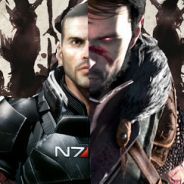
One of the most critically discussed games of 2012, 2K and Yager’s Spec The Line turns a reflexive lens back onto the genre of the military shooters to ask some hard just what is going on in these games? What does it say about us if we enjoy playing such games? Is virtual violence really harmless? Killing is Harmless isn’t an attempt to answer these questions so much as an exploration of just how the game is able to ask them in the first place. It follow’s the lead character, Walker, in his steps across Dubai to discover just how The Line is able to make so many players interrogate their own complicity in virtual acts of violence.
Brendan Keogh, Research Fellow in the School of Communication at Queensland University of Technology, is the author of Killing Is Harmless: A Critical Reading of Spec Ops: The Line.
Not only a highly enjoyable critique of video games (and video game violence in particular), but a great story in its own right, and a fascinating look at the limits and frontiers of what storytelling in video games can be. The author does a great job of taking you through his mental journey as he progresses through the game. Provocative without being fearmongering, and critical without being hysterical, this book is a great example how criticisms of video game violence should be done -- with lots of questions and no simple, pat answers. Highly recommended even if you don't play video games.
Videogames have come into their own as an art form when they can generate criticism like Killing is Harmless. Chapter by chapter, Keogh explores Spec Ops: The Line as a 'high noon' moment, where shooters a genre become aware of themselves, and begin to comment on their tropes. Every inch of the game, and its links to other works (Call of Duty, Apocalypse Now, Bioshock...) are covered in detail. Fortunately, Keogh doesn't pretend to have answers about the causes or consequences of violence in video games, but he is right to note that the game has opened up those questions.
An interesting reading of an interesting game. Certainly thinks about how it all comes to be - perhaps contrived in parts. It's testament to the subject matter that such an in-depth treatment can be undertaken at all, and it's testament to the author that no stone is left unturned. The real criticism I have of the book is that by playing the game for yourself, its themes and intended impact on the player are clear: making much of the book a journey into self-validation territory.
Worth reading if you enjoyed the game a lot, or if you have no interest in playing the game, but have an interest in how storytelling and themes in games are maturing, particularly in terms of genuinely asking questions of the player.
First play the game. Then read this book and everything else you can find about it. I've never read 50k words about a single game before, but I hope more of it keeps coming about even better games in the future.
This book is one big spoiler. It assumes you have played the game at least once and are interested in a critical reading of the text. If you are _sure_ you will never play this, it is a very interesting treatment of one of the best video game works of the past 10 years, Though it'll be a bit like going to Lit class without having done the reading. You'll get something out of it, but not as much as if you'd @teacher-voice("Done your homework!").
If you think you _might_ play it, go play it! Then read this.
Killing is Harmless is a rather poignant look at a game that attempts something that very few games out there have done before, commenting on the motivations and factors that drive us as games to slaughter countless virtual people and never question ourselves. It's an interesting look at how Spec Ops: The Line attempts to address these issues throughout the course of its plot.
Whether or not you agree with the author it makes for an engrossing read. It's well written and presents some interesting observations and is definitely worth a read whether or not you've played the game and especially if you're interested in the gaming medium being taking seriously and addressing issues that it far too often overlooks.
Right after reading Walt Williams’ “Significant Zero”, I knew I had to revisit his magnum opus, Spec Ops: The Line. But the sorry status of my old laptop would not permit it, so I had to do the next best thing: revisit this excellent in-depth analysis of that singular experience.
It’s a read that I had already done some years ago, but found that still stands on its own to this day, and further re-readings only strengthen that first impression. It is likely a combination of the incredibly powerful source material, plus the author’s deep and detailed walk-through it all.
In short, it is both the game that made me think twice about my digital actions, together with the analysis that made me crave for more of these insightful dissections.
Getting this through an e-book bundle is what finally pushed me to play the game Spec Ops: The Line. After having played it, and read the book, I can say two things: First, that the game is very good deconstruction of the modern military shooter, strongly inspired by the book Heart of Darkness and its movie adaptation Apocalypse Now, though I regret knowing so much about the story before going in. And second, that Brendan Keogh's critical reading of the game is excellent; I probably would have gotten more out of the game had I gone in blind, but even so I doubt I would have delved this deeply.
I can recommend the reading book, but I also recommend playing the game first.
Bit difficult to review this, as you're essentially reviewing a review of a 'review' - Spec Ops: the Line essentially reviews through the computer game medium the tropes and methods of modern shooter games - the Call of Duty/Battlefields/Uncharteds of this console generation. If you've played Spec Ops: The Line, you should read this - I tend to only play a game once and then I'm done, but I now want to play Spec Ops again with this by my side, picking out all the points that I missed (for example, the STOP sign at the start of the game!)
No other game has made me want to do this, not for 'fun' but to see what I missed, what I saw and see how my opinion of the game changes because of this.
Finally finished this one up! I enjoyed it, although I think it structurally suffers from the sheer length of it; filling a whole book on a reading Spec Ops was an interesting challenge but the games' themes are so consistently repeating that a close read dragged a little, mostly in the early goings for the game's set up. Plus, such a focus on Spec Ops left me craving some more analysis on other games, as the book is speaking to how Spec Ops comments on the shooter genre so often.
But I enjoyed it a bunch, it was a nice fast read, and I'm glad I finally finished it.
An amazing critique of a video game that went far beyond storytelling clichés. If you have the opportunity, play the game first then read this fantastic book, because it goes deep in the details of every element of this game. A must read, especially if you enjoy this medium.
Man, I sure do love Spec Ops: The Line. It's a game I'm unlikely to ever play again, and it's certainly not a game that's perfect or immune to criticism, but it's an absolutely fascinating artwork. One of the strongest case studies of how videogames are a distinct artform and how that artform can uniquely tell stories and communicate ideas.
Brendan Keogh's "critical reading" of the game was really fun to read through, reminding me of all the reasons why I love The Line. It takes the form of, essentially, a high-level narrated playthrough, but using the assumption that the reader has themselves already played the game and, to some extent, engaged with the discourse around it. Occasionally I thought that sticking to this format wasn't necessarily the strongest way to talk about all the game's ideas. At other moments I couldn't decide whether I was frustrated or fascinated by the ways in which my experiences differed from Keogh's. The famous 'white phosphorous' scene sticks in my head because of, to me, its clear critique and subversion of Modern Warfare's gunship sequences, whereas Keogh describes his experience of the latter as something that already contained a germ of the former. There's a discussion of one of the 'moral choices' that is really interesting to me, but also sort of raises a hyper-specific critique as if it were more applicable. There's other small things, and there's a mistake in interpreting the climax which Keogh does acknowledge and came back to rectify in a footnote (one advantage of an ebook, I suppose).
These are small concerns, though. For most of the book I appreciated the critical reading that Keogh brought to bear, and just as much I enjoyed the chance to revisit this incredible work of art.
Killing Is Harmless it is the homo habalis of it's genre: an early and wonky specimen. It feels wrong judging it in 2021. Keogh chose to blaze a new trail by writing an in depth analysis and interpretation of the underappreciated Spec Ops of 2012, something quite rare at the time of it's publishing.
Keogh has said that looking back on this, he rolls his eyes at his work. I can understand why, but it is still worth reading if you are a fan of the game or shooters in general (though don't feel bad about skipping paragraphs, he walks you through the whole freakin' game). Still, Keogh provides fresh insights to one of the greatest video game narratives of all time. The story of Spec Ops is purposely convoluted, and reading this after a play-through will make sense of both the plot and beyond. I would not recommend reading this before completing the game because of spoilers.
I chose to read this instead of playing through the game again, and I'm fully satisfied with that choice. The real merit of Killing is Harmless is what the author sought to do and accomplished: provide an in depth analysis of a video game, something the genre needs to move forward as an art form and gain the respect already granted to movies, music, and visual mediums.
Just finished reading Killing is Harmless by Brendan Keogh, and I can’t stop thinking about it. This book isn’t just an analysis of Spec Ops: The Line—it’s an exploration of what games can do to us as players. Keogh takes a game often dismissed as just another shooter and reveals its unsettling commentary on violence, complicity, and player agency.
What struck me most is how Keogh treats Spec Ops like a literary text, giving it the same close reading that a great novel might receive. He dissects the game’s narrative, level design, and even mechanics, showing how everything—down to the smallest detail—serves the game’s bigger question: What does it mean to be a player complicit in virtual violence?
The book made me think hard about my own relationship with games: how we sometimes seek power and agency in these virtual worlds, only to be confronted with consequences we can’t control. Keogh’s writing is accessible but layered, balancing academic insights with a genuine passion for the medium.
If you’re curious about how games can challenge us to reflect on our own choices, both in-game and out, this is a must-read. It’s not just about a game—it’s about us.
I stopped reading after "Part of me wanted to hate the troops involved—the way they hope the wounded man curled up in the gutter would pick up a weapon so that they can finish him off; the way they chuckle when US ground troops arrive and a tank runs over a body. But I know that this is unfair. Though I have (thankfully) never experienced a conflict situation personally, I imagine that constructing a barrier between “Us” and “Them” is the only way one could handle consistently having to kill fellow humans." What the fuck do you mean it's unfair to hate those murderers. They chose to be there, they chose to kill those civilians and journalists. They are evil men who should be hated.
A generous 4, more for the fact that as a close critical reading of an interesting videogame its something I'd like to see more of. Some of his arguments and points are the sort of thing I'd bash out to fill up word count as an undergrad but its a good read for those who've played Spec Ops and hope this becomes a more common field of study.
If you played Spec Ops: The Line and wanted an in-depth look at the themes in it, look no further. This should be required reading if you played the game.
Spec Ops: The Line is an underrated and overlooked gem of a game. It's one of those special cases that leave a mark on your psyche and changes how you view videogames as a medium of storytelling, among other things. It's definitely up there with stalwarts such as BioShock and Red Dead Redemption.
Having said that, this game is worthy of tons of discussion of both casual and academic forms. Keogh walks a fine line, discussing the game's narrative in a clear, coherent manner that is easy to read and understand. He takes us through the game's imagery and narrative. Keogh builds up his theories in a convincing manner and acts as a guide to a complex narrative that is rife with imagery.
Some very important points are raised, yet it feels there are multiple layers of analysis and discussion left to do, which is not Keogh's fault, mind you, but goes on to show just how brilliant the game is. When I'd played the game, I knew immediately it was something that I'd never forget, yet I'd overlooked many of its narrative techniques and imagery.
If you've played The Line and thought it was special, this book is definitely for you. For those of who haven't played the game yet, buy it right now. Its price has been reduced to almost nothing, and trust me when I say this: you will not regret it.
"To kill for yourself is murder. To kill for your country is heroic. To kill for entertainment is harmless." But is it really? Are shooters really conceived and consumed in a vacuum? These are not questions which either the game at hand or the book answer, but ones which they posit and ponder in different ways. All in all, this is a solid analysis, not to mention the first of its kind, and it actually did shine some light on different symbolic and narrative elements and possible interpretations of the game I missed in my playthrough. It was sparsely written, but there were some unnecessary stylistic motions and repetitions whose absence would have made the book even better. A must read for anyone interested in a broader AND deeper reading of the events and symbolism of this remarkable game. In the end, it does take a strong man to deny what's right in front of him and to deny that this book is a well-thought out product of a very cerebral game would be cognitive dissonance on par with the one alluded to in the game's loading screens. Neither the analysis, nor the game are perfect, but the mere fact that the medium is starting to reach this level of introspectivity and interrogativity should be cause for celebration.
If you enjoy close reading or a thorough analysis of video games as thought-provoking literature, get this. Playing "Spec Ops: The Line" first (or a few times) is ideal. You wouldn't get the same thing out of reading a well-written analysis of Shakespeare in isolation compared to reading it after you'd already formed your own impressions of the original work.
The book is not without flaws: erroneous information is (sometimes) presented or things that I saw were missed, but that doesn't mean the author's interpretation as a whole is invalid. There are verb tense and word choice errors that make it seem a little raw, but the reader-response, structuralist, and New Critical techniques makes it a five-star read. Numerous links to other works in the same vein are included.
The game this book dissects encourages contemplation, and the author was up to the challenge. I want to see more books like this, so five stars.
The guy who wrote this I must say is really, really sensible. I wasn't that much drawn into all the conflicts and contradictions as the author was, but it's a good thing since he's really noticing a lot of interesting stuff, and, with that, he even take a step back to his interpretations mentioned it's might be overthinking the elements of the game. Amazing read for anyone interested in Spec Ops The Line, Heart of darkness and Apocalypse now. And anyone interested in the complicated reality of conflicts and violence. I must add : the guy really is into some concept I'm not into, I don't believe in. Like we're animals and during conflicts all that's beginning with violence ends in violence. It's like a determinism simplifying reality. Still, really interesting read with good links and references.
While Keogh probably gives Spec Ops: The Line waaaay too much credit and overanalyses it almost to a fault, there's no denying that this critical reading is a good example of how video games can be experienced in a more analytic fashion. Obviously, The Line lends itself to such analysis far more than some other games, but if Keogh's work was is meant to be a starting point for "real commercial criticism", it's a pretty good starting point, all things considered.
That said, this book is worth much more to the reader if he actually played the game first. At least from my perspective, it allowed me to appreciate Spec Ops more, and I don't think I would've understood the book well enough to take anything of value away from it have I not played the game first.
The value you will find in this book depends in a large part on the value that you would find in the game Spec Ops: The Line. Since the game's narrative depends on the player being familiar with the various tropes of shooter gameplay, so does this book with its reader. However, being in the correct category, although not having played the game itself, I found this to be a very powerful piece of writing. Easily more affecting than most books I've read this year. Come to think of it, I'm now really curious of the opnion non-gamers would have of this book.
The idea of 'critical-readings' of video games has always been a compelling idea to me and It's great to find a work that executes on this so well. Spec Ops: The Line is a hell of a game and Killing is Harmless deconstructs exactly why this squad-based shooter is so very unique and important in a 'post-Bioshock world'. The book itself is very well written and while Keogh makes no claim that his is the definitive interpretation of Spec Ops, Killing is Harmless is the most compelling and well explored I've seen.
One of the most engaging in depth examinations of a video game that is available. Not only does Keogh bring critical analysis to the narrative, mechanics and themes of the game but he does so with a well written and enjoyable style. It's tempting to class it as an academic text but the accessible writing style makes it a good read for anyone.
Hopefully it prompts more writers to look in depth at games, going beyond the usually found couple of thousand words. Well worth while at such a low price and a must read for anyone interested in games.
Aside from a few grammatical errors, Brendan Keogh's analysis of a game so understated in its intelligence is a great entry into games writing at large. His chapter-by-chapter breakdown unearths ideas and comparisons one wouldn't make without reading his thoughts, and its presented in a long-form format that digs much deeper than any online publication would allow. After reading Killing is Harmless, I hope he inspires others to try their hand at longer critical pieces like this.
I read this a few years ago, but i think my thoughts are still applicable:
i appreciated the intent of book - it puts forth some important ideas, ideas that hold a lot of promise in the world of videogames - both in the development of them and the experiencing of them- however the writing does feel like it's struggling with some of the more abstract concepts that are rolling around in the author's head. He probably could've used a more thoughtful editor at the time.
Reading this intensified the impact of Spec Ops: The Line. Read it after you play through the game, you'll gain a lot more as far as contemplating what the game is saying.
This was very useful in singling out a lot of the important events and dissecting the lines and symbols that appear throughout. Keogh caught a lot of the things I missed through a quick run through the game, but also didn't pick up (or at least didn't mention) on some of the things that I did.