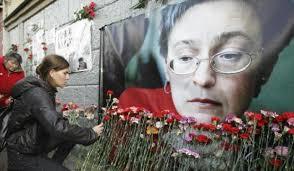
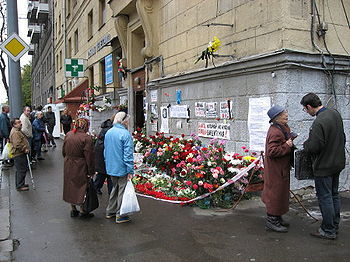
Dated. Very dated. The discussion about army (though not only Russian army should have been mentioned but the whole post-Soviet block) and its extreme hardships very well done and true but dated by about a decade. Which is only expected, since the author, sadly, was killed in 2006. Today it's gotten reformed, even if not to the Switzerland or Israel standards.
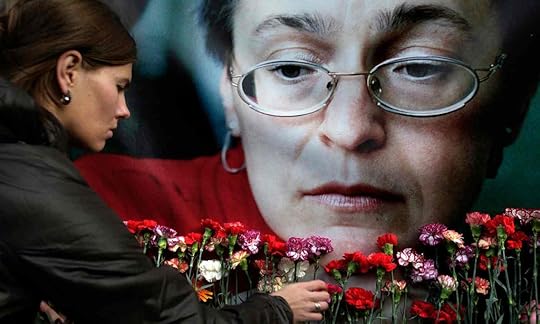
The author's death is sad. Extremely sad. May God rest her soul in a world better than what Russia was in 1990s and early 2000s. It was a very sad place, with lots of violence, lawlessness, terrorism and pretty much free-for-all anarchy. It has improved since, a lot, even though it's still not the paradise we all seem to want to inhabit. Anyway, people often prefer to criticize it outright anyway, even though the perspective and the improvement trends are there and are pretty much obvious. Concerning Putin, it seems that no matter what the guy does, people will criticize him for it. Karma bitch? Likely.
The urban legend says she was killed on Putin's birthday. I've no idea if it's true and don't care about it enough to factcheck. But, if it's true, then I think it's the best proof that someone somewhere needed to make of her a martyr of the new regime of the Mordorous Russia. Which is sad, since democracy shouldn't kill. I don't think anyone sane should really believe that ex-spy would be this obvious about killing some critical journalist. Seriously, a birthday? Some people should definitely read/watch less thrillers.
The book was written without grammatical mistakes, which is well enough to earn it +1 star. In Russian, I mean. The English version is quite heavy-handedly translated.
Very inconsistent fabula, overall this reads as a bunch of journalist vignettes written on the topic of 'What else is wrong about Russia? Let's take it out of context and twist it all beyond recognition and pin it on Putin!'. +/-1 star, since it's storytelling at its best and worst.
At best, because, for example, I actually felt for the story of ex-military Rinat who seemed to be incapable of having life other than in the Chechen-wars army. Lots of other stories also rang true and devastating. Still, this issue is not unique to Russia and wasn't caused by Putin but rather by human nature. We get easily traumatized: by everything but particularly by wars. So, this leads us to a new understanding that this book simultaneously illustrated storytelling at its worst: it deals with anecdotal instances without paying attention to the big picture. Do we know how many ex-military worldwide have these issues? No, we don't, we don't pay attention to that. What we do is love, LOVE, ADORE stigmatizing Russia. We get our kicks out of kicking the underdog, right? All the while, the only sane way to deal with this issue worldwide is not to have wars, at all, anywhere on this frigging planet we have the misfortune to share with each other.
Beslan... Seriously, Beslan is the responsibility of the jihadis who got there with all that weapons and explosives shit. How do you free a school chockful of young, terrified and brutalized kids, their parents and teachers, all suffering of heat, extreme dehydration, hunger and brutality? Think 1972 massacre of Munich. Think of all the hostage situations ever gone horribly wrong. This was one of them. Actually, a bunch of soldiers/civilians died saving people out there.
Chechnya? How about asking where it got its weaponry and military training, in the first place? Qui bono? -1 star
Also, how about realising that Chechen wars started before Putin? He got to become the leader of a country in shambles and he's actually doing well, to compare things, just look at Ukraine, where it got with its.... uh... so-called democratic leaders?
The rest is a pointless rant on how Putin single-handedly hasn't made life the living paradise for the good people of Russia. Where are the action plans for getting Russia better, for dealing with corruption and everything else?-1 star I haven't seen a single word here of how this gal suggests improving things.-1 star Criticizing is easy, doing things is not. What should be done and how - these questions have been left, sadly, unaswered.
Q: When the Fascists entered Denmark, the Jews were ordered to sew yellow stars on their clothing so they could be easily recognized. The Danes promptly sewed on yellow stars, both to save the Jews and to save themselves from turning into Fascists. Their king joined with them. (c) This, very inspiring. +1 star for this.
Q:
This political line is wholly neo-Soviet: human beings do not have independent existences, they are cogs in the machine whose function is to implement unquestioningly whatever political escapades those in power dream up. Cogs have no rights. (c) This, not so inspiring. Where are Maria Butina's human rights in the US of 2018? The gal's getting treated like a rabid dog, all because someone decided she's too active a political acivist and her libido's too oversized?




 This is definitely THE book to browse before the 9th May extravaganza in Red Square. All those shiny new tanks - all those poor bullied soldiers.