

What do you think?

A Magia das Estrelas
Estamos no Inverno de 1867, em Ryazan, uma cidade nas margens do rio Oka, na Rússia Central. Konstantin tem dez anos e os dias cheios de sonhos de voo — até Moscovo, até às estrelas distantes. Um dia, apanha uma constipação nos bosques gelados, perto de casa, e todo o seu mundo se torna silencioso. Surdo depois da escarlatina, as perspectivas de futuro parecem desesperadas. Apenas o seu encantamento pela nova era de mecanização e as suas extraordinárias visões acerca do futuro da humanidade parecem fazer chegar-lhe alguma esperança.
Para fugir à Terra, Konstantin aprende que tem de viajar a uma velocidade dez vezes superior à de uma bala de espingarda, e oitocentas vezes maior do que a de um comboio expresso. Mas como atingir tão incrível velocidade?
Tom Bullough, dá-nos a conhecer o ambiente de um país no final do século XIX. Das florestas infestadas de lobos, aos bordéis de Moscovo, dos confins da vida na aldeia, ao deslumbramento da Era do Vapor, de uma terrível tragédia à maravilhosa descoberta de um grande amor, A Magia das Estrelas, o brilhante e inspirador romance de Tom Bullough, conta-nos a história extraordinária, e real de Konstantin Tsiolkovsky, o primeiro homem a acreditar que viajar no espaço iria ser uma realidade. A história de um homem, da natureza e do ilimitado poder da imaginação.
Para fugir à Terra, Konstantin aprende que tem de viajar a uma velocidade dez vezes superior à de uma bala de espingarda, e oitocentas vezes maior do que a de um comboio expresso. Mas como atingir tão incrível velocidade?
Tom Bullough, dá-nos a conhecer o ambiente de um país no final do século XIX. Das florestas infestadas de lobos, aos bordéis de Moscovo, dos confins da vida na aldeia, ao deslumbramento da Era do Vapor, de uma terrível tragédia à maravilhosa descoberta de um grande amor, A Magia das Estrelas, o brilhante e inspirador romance de Tom Bullough, conta-nos a história extraordinária, e real de Konstantin Tsiolkovsky, o primeiro homem a acreditar que viajar no espaço iria ser uma realidade. A história de um homem, da natureza e do ilimitado poder da imaginação.
212 pages, Paperback
First published January 1, 2012
Ratings & Reviews
Friends & Following
Create a free account to discover what your friends think of this book!
Community Reviews
Displaying 1 - 23 of 23 reviews

March 18, 2020
I have a friend at my local poetry group to thank for recommending this author. A beautifully written novel which I highly recommend. The writing is poetic but not over-florid, just evocative and clear.
My father once played in a stage production of Crime and Punishment, and the critic Bernard Levin said that his Marmeladov "stepped living and entire from the pages of Dostoyevsky". I felt in reading this book that Tom Bullough had done something similar for Konstantin Tsiolkovsky and other characters - brought them to life, for me anyway, in a captivating and wholly convincing way.
This was a library book borrow, but if I come by a copy of my own it will go on my shelves next to another dearly-loved novel set in Russia by a British author: Penelope Fitzgerald's The Beginning of Spring. I look forward with keen anticipation to reading the rest of Tom Bullough's work.
My father once played in a stage production of Crime and Punishment, and the critic Bernard Levin said that his Marmeladov "stepped living and entire from the pages of Dostoyevsky". I felt in reading this book that Tom Bullough had done something similar for Konstantin Tsiolkovsky and other characters - brought them to life, for me anyway, in a captivating and wholly convincing way.
This was a library book borrow, but if I come by a copy of my own it will go on my shelves next to another dearly-loved novel set in Russia by a British author: Penelope Fitzgerald's The Beginning of Spring. I look forward with keen anticipation to reading the rest of Tom Bullough's work.

December 3, 2012
Fictionalised Biography
A paperback with a dustcover - Neat!
Dedication: For Edwyn
Front Quote:
Dreams of Earth and Sky(1895)
Opening: December 1867
Kostya hurried down the bank towards the frozen Oka, fine and light in his heavy sheepskin coat as a sparrow in its winter plumage.
A fictionalised biography of the man who first thought of space travel.
Verst: A verst (Russian: верста, versta) is an obsolete Russian unit of length. It is defined as being 500 sazhen long, which makes a verst equal to 1.0668 kilometres
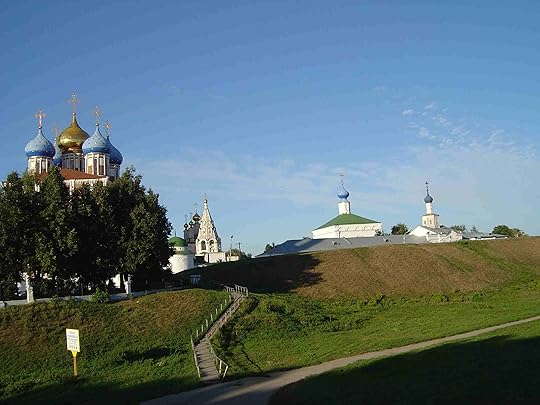 Ryazan
From wiki: Konstantin Eduardovich Tsiolkovsky (17 September [O.S. 5 September] 1857 – 19 September 1935) was an Imperial Russian and Soviet rocket scientist and pioneer of the astronautic theory. Along with his followers, the German Hermann Oberth and the American Robert H. Goddard, he is considered to be one of the founding fathers of rocketry and astronautics. His works later inspired leading Soviet rocket engineers such as Sergey Korolyov and Valentin Glushko and contributed to the success of the Soviet space program.
Tsiolkovsky spent most of his life in a log house on the outskirts of Kaluga, about 200 km (120 mi) southwest of Moscow. A recluse by nature, he appeared strange and bizarre to his fellow townsfolk.
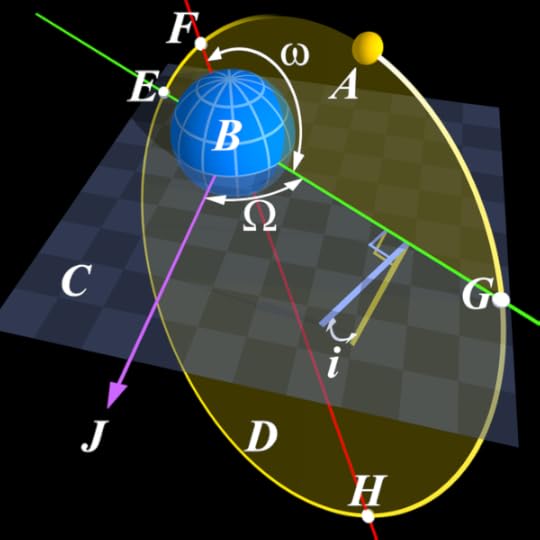
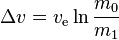
WORRY NOT - you can skip the mathematical equations as they are not needed to enjoy this book.
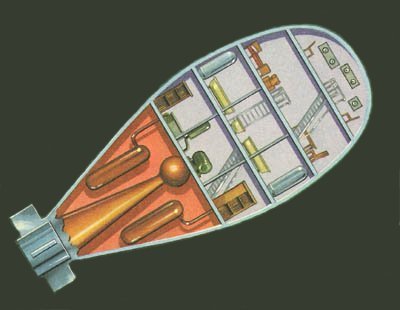
This was rather a limp-wristed attempt to tell a very interesting story - so many sleeping policeman when all I wanted was information. Still, I have come away knowing far more about the father of rocketry than I did purely because this book made me look at online sources for something concrete.
A paperback with a dustcover - Neat!
Dedication: For Edwyn
Front Quote:
Konstantin Tsiolkovsky
The greater man's progress,
the more he replaces
the natural
by what is artificial
Dreams of Earth and Sky(1895)
Opening: December 1867
Kostya hurried down the bank towards the frozen Oka, fine and light in his heavy sheepskin coat as a sparrow in its winter plumage.
A fictionalised biography of the man who first thought of space travel.
Verst: A verst (Russian: верста, versta) is an obsolete Russian unit of length. It is defined as being 500 sazhen long, which makes a verst equal to 1.0668 kilometres
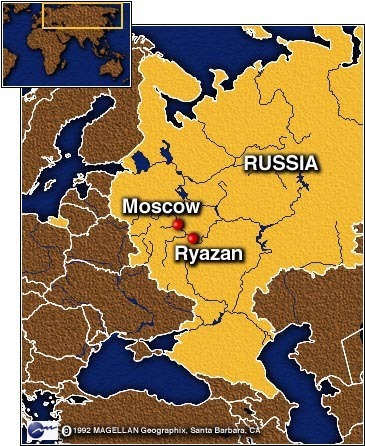
RyazanFrom wiki: Konstantin Eduardovich Tsiolkovsky (17 September [O.S. 5 September] 1857 – 19 September 1935) was an Imperial Russian and Soviet rocket scientist and pioneer of the astronautic theory. Along with his followers, the German Hermann Oberth and the American Robert H. Goddard, he is considered to be one of the founding fathers of rocketry and astronautics. His works later inspired leading Soviet rocket engineers such as Sergey Korolyov and Valentin Glushko and contributed to the success of the Soviet space program.
Tsiolkovsky spent most of his life in a log house on the outskirts of Kaluga, about 200 km (120 mi) southwest of Moscow. A recluse by nature, he appeared strange and bizarre to his fellow townsfolk.
WORRY NOT - you can skip the mathematical equations as they are not needed to enjoy this book.
This was rather a limp-wristed attempt to tell a very interesting story - so many sleeping policeman when all I wanted was information. Still, I have come away knowing far more about the father of rocketry than I did purely because this book made me look at online sources for something concrete.

October 9, 2025
Fazit in einem Satz: Ich bin erleichtert, dass ich dieses Buch endlich beenden konnte. Es war mehr ein Ausdauertest als ein Lesevergnügen.
Details für die Leidensgenossen:
Der Anfang war... sagen wir durchaus vielversprechend. Die ersten Kapitel flogen nur so dahin und ich dachte wirklich, ich hätte einen kleinen Geheimtipp entdeckt. Ich war voller Hoffnung, wie jemand, der im Flugzeug sitzt und glaubt, dass die Turbulenzen gleich aufhören werden.
Tja. Die Hoffnung starb langsam, aber sicher.
Irgendwann kippte die ganze Sache und das Buch wurde zu einem zähen Ringen, bei dem ich nur noch die Seiten umgeblättert habe, weil ich wissen wollte, wann es endlich vorbei ist. Man könnte sagen, ich habe es aus reiner Completionist-Pflicht fertig gelesen, nicht aus Lust. Ich habe die ganze Zeit gewartet, dass der Funke zurückkehrt – der, der am Anfang so hell loderte – aber er blieb leider aus. Stattdessen gab es Stillstand, Ungereimtheiten und eine Menge Momente, in denen ich mich fragte, ob ich die letzten 30 Seiten nicht einfach überspringen sollte. (Ich hab's nicht getan, aber es war knapp!).
Kurz gesagt: Wenn dieses Buch ein Essen wäre, wäre es ein trockenes Brot, bei dem man hofft, dass die nächste Scheibe mit dick Nutella bestrichen ist – aber es bleibt einfach nur trocken.
Details für die Leidensgenossen:
Der Anfang war... sagen wir durchaus vielversprechend. Die ersten Kapitel flogen nur so dahin und ich dachte wirklich, ich hätte einen kleinen Geheimtipp entdeckt. Ich war voller Hoffnung, wie jemand, der im Flugzeug sitzt und glaubt, dass die Turbulenzen gleich aufhören werden.
Tja. Die Hoffnung starb langsam, aber sicher.
Irgendwann kippte die ganze Sache und das Buch wurde zu einem zähen Ringen, bei dem ich nur noch die Seiten umgeblättert habe, weil ich wissen wollte, wann es endlich vorbei ist. Man könnte sagen, ich habe es aus reiner Completionist-Pflicht fertig gelesen, nicht aus Lust. Ich habe die ganze Zeit gewartet, dass der Funke zurückkehrt – der, der am Anfang so hell loderte – aber er blieb leider aus. Stattdessen gab es Stillstand, Ungereimtheiten und eine Menge Momente, in denen ich mich fragte, ob ich die letzten 30 Seiten nicht einfach überspringen sollte. (Ich hab's nicht getan, aber es war knapp!).
Kurz gesagt: Wenn dieses Buch ein Essen wäre, wäre es ein trockenes Brot, bei dem man hofft, dass die nächste Scheibe mit dick Nutella bestrichen ist – aber es bleibt einfach nur trocken.

October 4, 2020
Barely made it to two stars (And it still feels as if I am too generous). I had such high hopes for this book, however it left me quite disappointed. The chapters felt mostly imcomplete and left me emotionally detachted. I found all but nothing of that poetic, atmospherically dense story the blurb had promised. You'll learn little about Tsielkowsky's life as the books ends when he's only 24, adding a chapter that is an unseccuessful attempt at illustrating his significance for (russian) rocket science.

August 27, 2013
Fiquei, contudo, desiludida com a parte final. A parte referente a Kostya acabou sem mais nem menos e o epílogo que ocorre em 1965 começou e terminou de forma igualmente abrupta. Julgo que ambas as partes careciam de mais algumas páginas para o terminar em condições ou que o autor poderia ter escrito um novo livro acerca do que aconteceu em 1965. Assim sendo, acabei o livro com um travo amargo.
Opinião na íntegra em: http://paginasencadernadas.wordpress....
Opinião na íntegra em: http://paginasencadernadas.wordpress....

Read
January 24, 2019Growing up in India, I'd heard of Konstantin Tsiolkvosky; but after over a decade of living in the United States, I'd forgotten about him. This book was a beautifully written reminder of the life and work of a scientist who came up with an equation that's considered the first theoretical proof of the viability of space travel. It focuses on primarily on male characters and left me wondering about the contributions made by his "daughter and assistant" Lyubov. I'd have liked to hear more about her.

August 13, 2013
I thought it might have lost something in translation but was written by a Welshman. I wanted to give it more stars but it ended with too many lose ends
1 of 20 books for $10.
1 of 20 books for $10.
March 18, 2021
Konstantin Tsiolkovsky is universally recognised as one of the fathers of space travel, the first person to prove theoretically the possibility of putting men into space. Born in 1857 he lived until 1935 and his numerous works inspired the leading Soviet space scientists and helped towards the success of the Soviet space programme. Tom Bullough's novel is a fictionalised account of Konstantin's childhood and follows him until he is in his mid-twenties.
This is a well written story rich in description bringing to life the living conditions in Russia at the time with the stark contrasts between rich and poor, and the harsh living conditions created by the long cold winters. We follow Konstantin through his childhood, his close friendship with his brother, the tragedy of the scarlet fever which leaves him partially deaf, his fascination with mathematics, steam power, locomotives and fast travel. Leaving home at a surprisingly young age to study he eventually returns and among other things begins to make sense of the theories that he has been working on since his youth.
The novel is really a series of episodes from Konstantin's life as Tom Bullough imagines it, it regularly jumps in time by the month and occasionally by several years. While very descriptive Bullough does not patronise his readers, he does not spell everything out, so the reader is often left inferring what has happened from the current narrative.
Konstantin is a fascinating and very human account of a notable historic character with a brilliant mind. It also paints a very vivid picture of life in Russia in the second half of the Nineteenth Century.
This is a well written story rich in description bringing to life the living conditions in Russia at the time with the stark contrasts between rich and poor, and the harsh living conditions created by the long cold winters. We follow Konstantin through his childhood, his close friendship with his brother, the tragedy of the scarlet fever which leaves him partially deaf, his fascination with mathematics, steam power, locomotives and fast travel. Leaving home at a surprisingly young age to study he eventually returns and among other things begins to make sense of the theories that he has been working on since his youth.
The novel is really a series of episodes from Konstantin's life as Tom Bullough imagines it, it regularly jumps in time by the month and occasionally by several years. While very descriptive Bullough does not patronise his readers, he does not spell everything out, so the reader is often left inferring what has happened from the current narrative.
Konstantin is a fascinating and very human account of a notable historic character with a brilliant mind. It also paints a very vivid picture of life in Russia in the second half of the Nineteenth Century.

September 13, 2017
I am torn about this book. I could have given it more stars but I struggled with it at times. A highly poetic and descriptive book about a young, scientific mind. An unusual mixture, but because of that not your cookie-cutter kind of novel, a reason why I might have given it more stars. A few sentences didn't seem to make any sense, even after having several goes at them - poor editing or proof-reading or awkward writing, but so few of them in a whole book of beautiful and original writing that they can be forgiven. On the other hand, although Konstantin has interesting and harrowing experiences and I admired him for what he achieved, he never feels like a fully fleshed out character. I found it easier to read the less descriptive passages where Konstantin was explaining scientific matters to other people or was engaged in experimentation. More of that would have been nice, and the chapter about the two Russian astronauts in 1965 was very compelling.

April 14, 2020
I really struggled to get interested in this book. I didn't find the lead character engaging and didn't like the way the story leapt from one bit of story to another . As with all stories based in Russia, you obviously get a lot of Russian names, both places, and characters and as I don't speak Russian I kind of make up my own pronunciation but I find I forget which place or street was which and I find that tiresome.
I didn't warm to the place descriptions either and struggled to really get to grips with a feel for what was going on. One minute his mother was alive and then she died and the father died out of the story and was merely given a passing mention that he died sometime later on as a kind of afterthought so the continuity failed for me.
The characters didn't come to life and I found I couldn't empathize with any of them so all in all, I would not recommend this one unless you really like novels set in Russia!
I didn't warm to the place descriptions either and struggled to really get to grips with a feel for what was going on. One minute his mother was alive and then she died and the father died out of the story and was merely given a passing mention that he died sometime later on as a kind of afterthought so the continuity failed for me.
The characters didn't come to life and I found I couldn't empathize with any of them so all in all, I would not recommend this one unless you really like novels set in Russia!

September 23, 2020
Konstantin by Tom Bullough is a moving and an evocative tale of ambition, adversity and the beauty of science. Spanning from his childhood to the birth of his first child, we follow Konstantin’s life and the moments which shaped him; which propelled his desire to unpick the seemingly impossible task of travelling into space.
Bullough’s choice to structure the novel episodically means although the events are heavily fictionalised, it felt more biographical than invested storytelling. At first, I struggled with the pace of this but each episode is so beautifully and purposefully written that I soon enjoyed Konstantin regardless of how quickly the years of his life seem to flash by.
The structure made particular sense by the end, which I won’t spoil, but Bullough successfully captures a moment the dedication and life’s work of Konstantin undoubtedly led to.
Overall, Konstantin is an enjoyable read.

March 27, 2022
Jedna od knjiga koja vas inspiriše da sanjate. Nebeska mehanika je zakon koji objašnjava letenje od aviona do svemirskih letelica. Ovo je predivno pripovedana priča o dečaku koji je zaljubljen u zvezde, Na trenutak i mi prestajemo biti ovozemaljska bića i postajemo srazmerni snovima. Kad smo mali hteli da budemo astronauti, kao odraslima nestalo je nadahnuće. Možda, da je više ovako bajkovitih knjiga bezanih za nauku, predivno smeštenih u zagrljaj zime, više bismo se okretali ka ostvarenju snova.

April 7, 2024
2,75 ⭐️

March 3, 2012
You can also find my review of Konstantin on my book blog.
I'd been keenly awaiting this book thanks to hearing snippets of it at a reading.
Konstantin is a book inspired by a real historical character. It isn't quite a biography, but rather a novel that takes known data, and fleshes it out with plenty of imagination and details and narrative flair.
Now, I am not entirely sure how much to give away of the historical role Konstantin would play. I realised near the end of the novel that I may have known far too much before I started reading it: I knew something about the nature of his work, I had heard a scene from the book (which, in the text, is actually about 80% into the book, i.e. rather close to its end), and I had assumed this would be a traditional biography, with a hefty focus on the man's work.
It is not. It is the tale of a boy, growing up in Russia, and becoming an interesting young man. The narrative ends before his main body of work really starts - only a final chapter that is far removed from Konstantin tries (ineffectively) to give us a glimpse of the relevance of his work. We get (exciting) glimpses of embryonic ideas, but we never get the full picture.
So, for the sake of this review, I will try to imagine that I knew nothing of Konstantin at all before reading the book. (Sorry for not using his surname - I really, really struggle with Russian names, and, at any rate, it is different in the book from the historical figure, presumably to indicate narrative freedoms that were taken).
Konstantin is a boy with a huge imagination, and a fascination with technical things. Falling ill, he nearly dies and loses most of his hearing. As a result, he spends the rest of his life a bit removed, a bit of an outcast, a bit different from everybody else - and struggling to find his place.
This is not a misery book - rather the opposite. Konstantin is full of infectious enthusiasm, permanently fascinated, and brave, even foolhardy. He can be headstrong (it is as if everyone else is not entirely sure what to do with him, but he somehow has a sense of his purpose, even if no one else can see it, and even if he cannot really put a name to it himself). He has that peculiar tunnel vision that great minds often have, where his imagination takes him away from the immediate surroundings. He is never boring.
Reading this novel is a joy: the writing is confident and not afraid to draw attention to itself. It allows itself dramatic, poetic, aesthetically stunning sentences (the most fanciful of which is at the end of the very first scene, gloriously announcing: this book will not be afraid to dazzle), and almost every scene is like a beautifully crafted little gem of its own. This is not a book where each scene ends on a cliffhanger, or a harbinger of the next scene. Rather, each scene finds a perfectly crafted, beautiful ending for itself, and, if the reader so chose, he/she could read the book one scene at a time, slowly, and enjoy it immensely, without ever feeling a need to speed-read, to reach desperately for the next scene before turning out the lights...
All that said, there are some areas where this particular reader felt a little let down: I felt the book does not really show the lasting impact of Konstantin. Here is a man whose thinking was years, perhaps decades ahead of his time, and yet, if all I had to go on was just this novel, I don't think I would have got a sense of the full scope of his genious. But to be fair, the novel consciously chooses to be about a boy growing into a man, rather than about a man growing into a shaper of history. (I have never seen the Motorcycle Diaries, but I have heard criticisms that it is basically a movie about two young men - they could be any young men, and the fact that they would later become revolutionaries is almost incidental. I felt reminded of this comment when reading Konstantin.)
The other main criticism is that, for me, the descriptions were a bit unbalanced: huge focus on details, but often revealing the bigger picture so slowly (or sparsely) that I felt a bit disoriented. It's as if the book had been written by a photographer with a macro lense, always a few centimetres away from Konstantin's hands, but rarely stepping back for a wide angle view.
Despite those minor niggles, I would heartily recommend this novel for its beautiful writing, its infectious energy, its loving portrait of a young person coming of age - it is a joy to read. But I would also recommend checking out Wikipedia after reading it, to find out a bit more about Konstantin's body of work...
I'd been keenly awaiting this book thanks to hearing snippets of it at a reading.
Konstantin is a book inspired by a real historical character. It isn't quite a biography, but rather a novel that takes known data, and fleshes it out with plenty of imagination and details and narrative flair.
Now, I am not entirely sure how much to give away of the historical role Konstantin would play. I realised near the end of the novel that I may have known far too much before I started reading it: I knew something about the nature of his work, I had heard a scene from the book (which, in the text, is actually about 80% into the book, i.e. rather close to its end), and I had assumed this would be a traditional biography, with a hefty focus on the man's work.
It is not. It is the tale of a boy, growing up in Russia, and becoming an interesting young man. The narrative ends before his main body of work really starts - only a final chapter that is far removed from Konstantin tries (ineffectively) to give us a glimpse of the relevance of his work. We get (exciting) glimpses of embryonic ideas, but we never get the full picture.
So, for the sake of this review, I will try to imagine that I knew nothing of Konstantin at all before reading the book. (Sorry for not using his surname - I really, really struggle with Russian names, and, at any rate, it is different in the book from the historical figure, presumably to indicate narrative freedoms that were taken).
Konstantin is a boy with a huge imagination, and a fascination with technical things. Falling ill, he nearly dies and loses most of his hearing. As a result, he spends the rest of his life a bit removed, a bit of an outcast, a bit different from everybody else - and struggling to find his place.
This is not a misery book - rather the opposite. Konstantin is full of infectious enthusiasm, permanently fascinated, and brave, even foolhardy. He can be headstrong (it is as if everyone else is not entirely sure what to do with him, but he somehow has a sense of his purpose, even if no one else can see it, and even if he cannot really put a name to it himself). He has that peculiar tunnel vision that great minds often have, where his imagination takes him away from the immediate surroundings. He is never boring.
Reading this novel is a joy: the writing is confident and not afraid to draw attention to itself. It allows itself dramatic, poetic, aesthetically stunning sentences (the most fanciful of which is at the end of the very first scene, gloriously announcing: this book will not be afraid to dazzle), and almost every scene is like a beautifully crafted little gem of its own. This is not a book where each scene ends on a cliffhanger, or a harbinger of the next scene. Rather, each scene finds a perfectly crafted, beautiful ending for itself, and, if the reader so chose, he/she could read the book one scene at a time, slowly, and enjoy it immensely, without ever feeling a need to speed-read, to reach desperately for the next scene before turning out the lights...
All that said, there are some areas where this particular reader felt a little let down: I felt the book does not really show the lasting impact of Konstantin. Here is a man whose thinking was years, perhaps decades ahead of his time, and yet, if all I had to go on was just this novel, I don't think I would have got a sense of the full scope of his genious. But to be fair, the novel consciously chooses to be about a boy growing into a man, rather than about a man growing into a shaper of history. (I have never seen the Motorcycle Diaries, but I have heard criticisms that it is basically a movie about two young men - they could be any young men, and the fact that they would later become revolutionaries is almost incidental. I felt reminded of this comment when reading Konstantin.)
The other main criticism is that, for me, the descriptions were a bit unbalanced: huge focus on details, but often revealing the bigger picture so slowly (or sparsely) that I felt a bit disoriented. It's as if the book had been written by a photographer with a macro lense, always a few centimetres away from Konstantin's hands, but rarely stepping back for a wide angle view.
Despite those minor niggles, I would heartily recommend this novel for its beautiful writing, its infectious energy, its loving portrait of a young person coming of age - it is a joy to read. But I would also recommend checking out Wikipedia after reading it, to find out a bit more about Konstantin's body of work...
November 17, 2015
Konstatin is a fictionalised account of the child- and young adulthood of the real life Konstantin Tsiolkovsky, father of Russian/Soviet rocket science. The narrative is discontinuous, being told through a series of episodes, sometimes separated by weeks, months and frequently years. This gives the book the feel of a set of photographs pinned to a noticeboard.
Through these still lives from a life we learn of Kostya catching scarlet fever and losing his hearing, of various boyhood scrapes and adventures, of his moving to Moscow to study, his frustrated love for an heiress and the loss of his virginity. In the final section Kostya comes to true adulthood, marrying and settling down to life as an eccentric teacher.
Perhaps, for me, the greatest value of the book is in bringing attention to Tsiolkovsky, a figure of whom I was previously unaware. The names of other pioneers are spaceflight, most notably Von Braun are better known, but if author Bullough is to be believed, Tsiolkovsky was a true visionary, for example in the use of gyroscopes to steer spacecraft. This is nicely brought to life in the final chapter where the idea is turned into practical use on the Voskhod capsule, used for the first spacewalk.
Overall this is an ambitious work, both in its subject matter, and in its structure, and I guess I wanted to like it more than I did. It is a book which aims high, but doesn’t quite get there. The episodic structure is a nice way of covering a great deal of time efficiently, but in themselves the chapters feel incomplete. At one point Kostya and his family are in a carriage under attack by wolves with one of the horses seemingly about to be brought down. The chapter finishes, and the next begins some time later, with no explanation of how they escaped.
It is a book heavy on symbolism, but that symbolism is frequently on the heavy side. Just before Kostya is nearly killed by scarlet fever, he is confronted by a wolf, its jaws red with the blood of a recent kill. As a boy, Kostya, the future rocket scientist, climbs to the highest point of a church and kicks at the stonework, damaging the fabric of the church. In fact, the wolf, as a symbol of peril and death is a constant and repeating motif throughout.
In addition to the somewhat unsubtle symbolism, the writing didn’t excite me. Early on, Kostya and one of his brother are described as being inseparable, and from that point on, I found myself on the look out for the clichéd turn of phrase, which sadly was too easy to spot. Furthermore the speech patterns often didn’t ring true. Too often characters seemingly speak using the antipodean interrogative, with statements of fact ending with a question mark.
Finally the overall concept is slightly frustrating. Author Boughton has taken an historical character and certain facts about his upbringing, and used that as a framework to for creating a picture of what might constitute the making of a scientist. Actually, having learnt about Tsiolkovsky, I found myself wanting to know more about the man himself than about an imagined early life.
Through these still lives from a life we learn of Kostya catching scarlet fever and losing his hearing, of various boyhood scrapes and adventures, of his moving to Moscow to study, his frustrated love for an heiress and the loss of his virginity. In the final section Kostya comes to true adulthood, marrying and settling down to life as an eccentric teacher.
Perhaps, for me, the greatest value of the book is in bringing attention to Tsiolkovsky, a figure of whom I was previously unaware. The names of other pioneers are spaceflight, most notably Von Braun are better known, but if author Bullough is to be believed, Tsiolkovsky was a true visionary, for example in the use of gyroscopes to steer spacecraft. This is nicely brought to life in the final chapter where the idea is turned into practical use on the Voskhod capsule, used for the first spacewalk.
Overall this is an ambitious work, both in its subject matter, and in its structure, and I guess I wanted to like it more than I did. It is a book which aims high, but doesn’t quite get there. The episodic structure is a nice way of covering a great deal of time efficiently, but in themselves the chapters feel incomplete. At one point Kostya and his family are in a carriage under attack by wolves with one of the horses seemingly about to be brought down. The chapter finishes, and the next begins some time later, with no explanation of how they escaped.
It is a book heavy on symbolism, but that symbolism is frequently on the heavy side. Just before Kostya is nearly killed by scarlet fever, he is confronted by a wolf, its jaws red with the blood of a recent kill. As a boy, Kostya, the future rocket scientist, climbs to the highest point of a church and kicks at the stonework, damaging the fabric of the church. In fact, the wolf, as a symbol of peril and death is a constant and repeating motif throughout.
In addition to the somewhat unsubtle symbolism, the writing didn’t excite me. Early on, Kostya and one of his brother are described as being inseparable, and from that point on, I found myself on the look out for the clichéd turn of phrase, which sadly was too easy to spot. Furthermore the speech patterns often didn’t ring true. Too often characters seemingly speak using the antipodean interrogative, with statements of fact ending with a question mark.
Finally the overall concept is slightly frustrating. Author Boughton has taken an historical character and certain facts about his upbringing, and used that as a framework to for creating a picture of what might constitute the making of a scientist. Actually, having learnt about Tsiolkovsky, I found myself wanting to know more about the man himself than about an imagined early life.

December 30, 2012
Confesso que antes da leitura deste livro, desconhecia completamente quem havia sido Konstantin Tsiolkovsky, aliás, nem nunca havido falar dele.
No entanto, numa pesquisa prévia à leitura do livro, constatei tratar-se de um cientista russo pioneiro no estudo da cosmonáutica, alias, ele simplesmente estabeleceu os princípios da propulsão das modernas naves espaciais, sendo considerado um dos mais importantes cientistas do mundo, concebendo, entre outros, o elevador espacial.
No entanto Konstantin tinha uma particularidade física que o estigmatizou na infância. Era praticamente surdo devido a ter tido escarlatina quando criança e, tal facto, levou com que as escolas primárias não o tivessem aceite, efectuando-se a sua educação em casa até aos 16 anos.
A presente obra é a narrativa do seu percurso até à sua formação em matemática, altura em que começa a estabelecer como uma figura de referência e, mais importante, onde começa a ganhar o respeito dos seus pares.
Incidindo praticamente toda a obra na infância, o autor traça-nos a infância dura e agreste de Konstantin, numa Rússia imperial e gelada.
Independentemente da história em si, o que gostei especialmente foi a forma viva e realista com que o autor me consegui transmitir e situar no contexto, na época, conseguindo com que sentisse e visualizasse as condições duras e as dificuldades daquela família. Para além disso gostei como o autor foi traçando, com pequenos e interessantes pormenores, o percurso intelectual de Konstantin, o seu despertar para a ciência e a forma lógica com que o pequeno Konstantin via as situações e os factos que o rodeavam.
Um livro muito interessante que descreve a vida de um importante cientista que está por detrás da moderna ciência espacial o que, por si só, já é bem interessante.
Nota final para a capa e a qualidade de encadernação a cargo da Matéria-Prima Edições. Extremamente interessante e que logo nos transporta para a magia e fascínio do Cosmos.
No entanto, numa pesquisa prévia à leitura do livro, constatei tratar-se de um cientista russo pioneiro no estudo da cosmonáutica, alias, ele simplesmente estabeleceu os princípios da propulsão das modernas naves espaciais, sendo considerado um dos mais importantes cientistas do mundo, concebendo, entre outros, o elevador espacial.
No entanto Konstantin tinha uma particularidade física que o estigmatizou na infância. Era praticamente surdo devido a ter tido escarlatina quando criança e, tal facto, levou com que as escolas primárias não o tivessem aceite, efectuando-se a sua educação em casa até aos 16 anos.
A presente obra é a narrativa do seu percurso até à sua formação em matemática, altura em que começa a estabelecer como uma figura de referência e, mais importante, onde começa a ganhar o respeito dos seus pares.
Incidindo praticamente toda a obra na infância, o autor traça-nos a infância dura e agreste de Konstantin, numa Rússia imperial e gelada.
Independentemente da história em si, o que gostei especialmente foi a forma viva e realista com que o autor me consegui transmitir e situar no contexto, na época, conseguindo com que sentisse e visualizasse as condições duras e as dificuldades daquela família. Para além disso gostei como o autor foi traçando, com pequenos e interessantes pormenores, o percurso intelectual de Konstantin, o seu despertar para a ciência e a forma lógica com que o pequeno Konstantin via as situações e os factos que o rodeavam.
Um livro muito interessante que descreve a vida de um importante cientista que está por detrás da moderna ciência espacial o que, por si só, já é bem interessante.
Nota final para a capa e a qualidade de encadernação a cargo da Matéria-Prima Edições. Extremamente interessante e que logo nos transporta para a magia e fascínio do Cosmos.

March 22, 2012
The novelised life of the father of space flight: not a biography, since it's mostly imaginary, and not truly a novel either, since it takes almost all its inspiration from real lives and events. It's a constant surprise, a short work that packs a tremendous punch, small parcels of writing that unfold with such richness and intensity of language. Utterly engaging, the interest never flags, I was unable to put it down; for three days, I took it everywhere with me, even into the X ray room when I broke my foot.
The only disappointment was the ending. It ends... oddly. I'm still not sure what the author was trying to say or where he was going with it, but I found the last two chapters mystifying. Aside from the fact that one of the astronauts came from Konstantin's home town, I wasn't entirely sure where these particular characters, this particular drama, fitted in the context of Konstantin's story. It felt superfluous; I would have been more satisfied with something from the end of Konstantin's own life, rather than this strange tangential leap into the future.
That one (very small) niggle aside, this book is a constant delight; Konstantin is a remarkable character who lives a gently eventful life. A quiet tale of small dramas, beautifully written and highly recommended.
The only disappointment was the ending. It ends... oddly. I'm still not sure what the author was trying to say or where he was going with it, but I found the last two chapters mystifying. Aside from the fact that one of the astronauts came from Konstantin's home town, I wasn't entirely sure where these particular characters, this particular drama, fitted in the context of Konstantin's story. It felt superfluous; I would have been more satisfied with something from the end of Konstantin's own life, rather than this strange tangential leap into the future.
That one (very small) niggle aside, this book is a constant delight; Konstantin is a remarkable character who lives a gently eventful life. A quiet tale of small dramas, beautifully written and highly recommended.

November 20, 2012
Konstantin
Author: Tom Bullough
What a beautiful story. Well told. The story of a poor boy, Konstantin Tsiolkovsky, stricken with disease which left him deaf. The story of would be scientist, an astronomer growing up in Russia in the eighteen hundreds. Hard to believe it a novel and not a biography.
I have one problem with this book. Russian, it’s not an easy language. I was constantly on translator, what is an izvozchiki? Names like Alexei Ilyich Rednikov or Vasily Vasilyevich, sounds like cartoon characters, but once I got to know them, and realized where I was, those names became very appropriate. Preobrazhenskaya Street! I know where that is. I can see the gold domes of Trifonov. See, once you get into it, it gets easier.
I’m not quite up on my Russian, words and names like that don’t roll off your tongue that easily. I stumbled with them, trying to say them like a Russian, but failed miserably. Those big words that don’t look like words at all, do slow down the reading at first.
Besides all the funny words. I truly enjoyed this book. It took me somewhere, a place I’ve never been, in a time I can hardly imagine. I give it five stars and highly recommend it.
Dog Brindle
dogbrindleblogspot.ca
Author: Tom Bullough
What a beautiful story. Well told. The story of a poor boy, Konstantin Tsiolkovsky, stricken with disease which left him deaf. The story of would be scientist, an astronomer growing up in Russia in the eighteen hundreds. Hard to believe it a novel and not a biography.
I have one problem with this book. Russian, it’s not an easy language. I was constantly on translator, what is an izvozchiki? Names like Alexei Ilyich Rednikov or Vasily Vasilyevich, sounds like cartoon characters, but once I got to know them, and realized where I was, those names became very appropriate. Preobrazhenskaya Street! I know where that is. I can see the gold domes of Trifonov. See, once you get into it, it gets easier.
I’m not quite up on my Russian, words and names like that don’t roll off your tongue that easily. I stumbled with them, trying to say them like a Russian, but failed miserably. Those big words that don’t look like words at all, do slow down the reading at first.
Besides all the funny words. I truly enjoyed this book. It took me somewhere, a place I’ve never been, in a time I can hardly imagine. I give it five stars and highly recommend it.
Dog Brindle
dogbrindleblogspot.ca

August 5, 2012
Tom Bullough's prose is so rich in description of landscapes, sensations, and feelings that it reads like poetry. It's impossible not to relish the beauty of the sentences and paragraphs that roll across the page. The book wasn't at all what I expected, though. I thought it would focus more on Tsiolkovsky's inventions and his place in the history of rocket science. Instead, the book is highly impressionistic, painting the scenes of the young Konstantin's early bout with scarlet fever, his terribly difficult youth, and his struggle to get access to the education he needed in order to reach his full potential. This is a wonderful book for those who are more interested in an impressionistic, poetic look at life in Russia in the mid 19th century. For those who are really interested in Tsiolkovsky and his scientific inspirations and evolution, it might be somewhat disappointing.

May 5, 2013
Konstantin existiu, de facto: o homem que sonhou com as viagens ao espaço, e delineou a forma de o homem chegar onde nunca chegara antes. Com um pormenor, especial: Konstantin era surdo, consequência de uma grave doença na infância. Uma corneta acústica, desenhada por ele próprio, ajudava-o a ouvir. Pobre, sem grandes possibilidades, aprendeu quase tudo com a ajuda de um bibliotecário muito especial, em Moscovo. É uma história notável, daquelas que nos enriquecem.

January 26, 2015
I read Konstantin while I was at work and THANK GOD my job is so boring, because this book almost seemed mildly interesting. Almost.
I'm only giving it two stars because while the writing was bad and the story telling less exciting than reading the news, there wasn't anything problematic or distasteful in the book. I mean, it's a safe book, it's ok to enjoy it, but I didn't.
I'm only giving it two stars because while the writing was bad and the story telling less exciting than reading the news, there wasn't anything problematic or distasteful in the book. I mean, it's a safe book, it's ok to enjoy it, but I didn't.
September 13, 2016
Interesting choice of subje t but marred by thin and fragmented narrative.

April 14, 2017
Konstantin was a serendipitous find at the library. It’s a fairly simple story, but beautifully written, and there are some heart-stopping moments to propel the narrative along.
Based on the real life story of the Russian/Soviet scientist Konstantin Tsiolkovsky, this novella tells the story of the emergence of his interest in rocketry and astronautics, and how he overcame all manner of difficulties to become one of the founders of space travel. But the book is not a fictionalised biography, it is slices of an imagined life, focussing on the childhood, adolescence, and early adulthood of its subject. And Russia, with its magnificent landscapes and brutal weather, is almost a character too.
The book begins with Kostya’s childhood in Ryazan on the river Oka where his father Eduard Ignatyevich is a forester. He is an adventurous child with an enquiring mind but he falls victim to scarlet fever and is left with residual deafness. Because he cannot hear properly and his mother Maria Ivanova fusses over him, he is teased by his cousin and almost drowns in the frozen river. It would have been a loss to the world if he had.
To read the rest of my review please visit https://anzlitlovers.com/2017/04/14/k...
Based on the real life story of the Russian/Soviet scientist Konstantin Tsiolkovsky, this novella tells the story of the emergence of his interest in rocketry and astronautics, and how he overcame all manner of difficulties to become one of the founders of space travel. But the book is not a fictionalised biography, it is slices of an imagined life, focussing on the childhood, adolescence, and early adulthood of its subject. And Russia, with its magnificent landscapes and brutal weather, is almost a character too.
The book begins with Kostya’s childhood in Ryazan on the river Oka where his father Eduard Ignatyevich is a forester. He is an adventurous child with an enquiring mind but he falls victim to scarlet fever and is left with residual deafness. Because he cannot hear properly and his mother Maria Ivanova fusses over him, he is teased by his cousin and almost drowns in the frozen river. It would have been a loss to the world if he had.
To read the rest of my review please visit https://anzlitlovers.com/2017/04/14/k...
Displaying 1 - 23 of 23 reviews