Jump to ratings and reviews
Rate this book

A State of Denmark by Derek Raymond

Rate this book

"Raymond's novel is rooted firmly in the dystopian vision of Orwell and Huxley, sharing their air of horrifying hopelessness."-Sunday Times

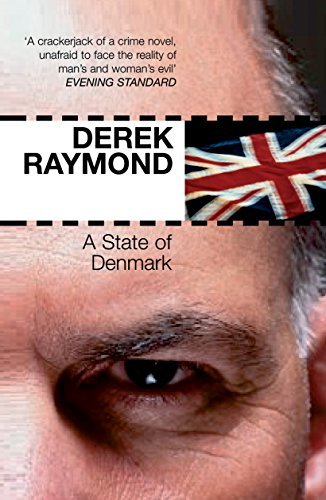
It is the 1960s. England has become a dictatorship, governed by a sly, ruthless politician called Jobling. All non-whites have been deported, The English Times is the only newspaper, and ordinary people live in dread of nightly curfews and secret police. Derek Raymond's skill is to make all too plausible the transition from complacent democracy to dictatorship in a country preoccupied by consumerism and susceptible to media spin.


Mass Market Paperback

First published January 1, 2005

7 people are currently reading
242 people want to read

About the author

Derek Raymond

19 books138 followers
Aka Robin Cook.

Pen name for Robert William Arthur Cook. Born into privilege, Raymond attended Eton before completing his National Service. Raymond moved to France in the 50's before eventually returning to London in the 60's. His first book, 'Crust on its Uppers,' released in 1962 under his real name, was well-received but brought few sales. Moving through Italy he abandoned writing before returning to London. In 1984 he released the first of the Factory Series, 'He Died With His Eyes Open' under the name Derek Raymond. Following 'The Devil's Home On Leave' and 'How The Dead Live' he released his major work 'I Was Dora Suarez' in 1990. His memoirs were released as 'The Hidden Files'.

Ratings & Reviews

What do you think?
Rate this book

Friends & Following

Create a free account to discover what your friends think of this book!

Community Reviews

5 stars
43 (28%)
4 stars
49 (32%)
3 stars
44 (29%)
2 stars
8 (5%)
1 star
5 (3%)
Displaying 1 - 21 of 21 reviews
Profile Image for Paul.
581 reviews24 followers
May 28, 2021
3.5*
Reminiscent of '1984' by George Orwell and 'Brave New World' by Aldous Huxley.

A bit slow at the beginning, but worth persevering.
Profile Image for Simon.
176 reviews9 followers
March 26, 2012
A State Of Denmark By Derek Raymond

This book is an essential read for anyone who is
worried by the direction the current british
government is heading in. Written in 1970 Derek
Raymond conjoures up an post democratic England
ruled by a dictator called Jobling who is a
monomaniacal figure who will have you disappeared
for daring to disagree with him. The book is
narrated by Richard Watts an ex journalist who
was the last person to give Jobling a hard time
in a TV interview just before he is elected and
assumes to become a dictator and then tells how
he is exiled to Italy since becoming persona non
grata and then how he is eventually brought back
to be sent to an internment camp.
Well this book has too many echoes with now not
to be frightening although Derek's vision didn't
have Extraordinay Rendition it manages something
similar and he was spot on with the meaningless
statements that sound like they mean something.
This book is a must read and I must also read far
more of Derek Raymonds book as that's only the
second one I've read!
Profile Image for Philip.
419 reviews21 followers
March 30, 2013
Absolutely chillingly brilliant - murderous banality triumphs over the human spirit.
Profile Image for Guy Salvidge.
Author 15 books43 followers
October 10, 2015
Very interesting and the first non-Factory novel of Raymond's I've read. The first half is really evocative of the provincial Italian landscape, and the second half is an Orwellian tale of a fascist England. I preferred the first half. The one thing I'll say against Raymond is that in every one of his books the main character spends a lot of time telling people off, at length, and providing what a hard bastard he is both mentally and physically. This really grates after a while, especially when it's in each of his books. Otherwise, this was a very interesting and pretty much unique dystopian novel.
Profile Image for Dan.
Author 9 books14 followers
August 31, 2016
Read this over a decade ago - great book. Wish I hadn't given my copy away.
Profile Image for Liz.
427 reviews1 follower
April 2, 2022
A gut-wrenching read about the rise of fascism in England and the ways in which individuals are crushing under the capricious ways of authoritarianism. A cautionary tale for Trump partisans: be careful what you wish for.
Profile Image for Marcus Wilson.
237 reviews2 followers
April 4, 2019
It is the 1960s. England has become a dictatorship, governed by a sly, ruthless politician called Jobling. All non-whites have been deported, The English Times is the only newspaper, and ordinary people live in dread of nightly curfews and secret police. Richard Watt is a former journalist living in exile in Italy, having tried to expose Jobling before he came to power. His remote rural idyll is shattered by the arrival of a government emissary from London, and he is forced to return home to an England which has become a crumbling, dreary dictatorship annexed from the rest of the United Kingdom, in order to face trumped up charges of tax irregularities.

Raymond skilfully makes it all too plausible the transition from complacent democracy to dictatorship, in a country preoccupied by consumerism and susceptible to media spin. Despite being published in 1970 it seems to predict Thatcherism and Blairism , and more recently Brexit. In this sense it is a novel firmly rooted in the dystopian vision of Orwell, and shares the same horrifying air of hopelessness present in 1984. However I found that the novel sort of falls apart under the weight of its own ambition, it’s far too talky and low on action making it a bit of a chore to read (given the subject matter it was never going to be pleasurable). The conclusion and fate of the protagonist is inevitable, but still devastating when it happens. A good book to read in these troubled times, especially living in a United Kingdom which is seemingly without leadership or direction. Where is the real life Jobling hiding? Will we be able to spot him? And if we do will we want to stop him or simply go along with his pans?
Profile Image for Stephen Cardie.
59 reviews
June 16, 2019
Political drama set in a contemporary England as it slides into dictatorship under the sly leadership of racist demagogue who passes himself off as a 'man of the people'. Sound familiar? This was written in the late 1960s, but is amazingly pertinent. Grim and gruelling read that ends badly for everyone, but easily the best book I've read this year so far.
218 reviews6 followers
November 11, 2025
A gripping story which imagines the rise of a dictatorship in Britain during the 1960s, told in an unusual and quite effective way. The first half of the novel is set in Tuscany, where the narrator, a journalist, is living in self-imposed exile, watching events unfold from a distance through the increasingly alarming scraps of news coming out of Britain. The strongman Jobling has deported all black people, abolished democracy and put everyone under a kind of Stasi-like surveillance. In response, Scotland and Wales have split off from England.

The first half is brilliant and realistic. The tension builds up as we wonder what will happen to the narrator, will he fall into Jobling's clutches and be deported from Italy?

But as things go on the novel gets more frustrating. It is never made clear how Jobling has come to power: which forces backed him and why? What does America think? He is compared with the Stalinists of Eastern Europe, at other times seems like more of a fascist. Raymond keeps things deliberately vague. The novel is partly an attack on the English population, who allowed Jobling to rise, it implies, without any real opposition.

Profile Image for Carolyn Drake.
896 reviews13 followers
July 23, 2020
A sharp satirical take on the people of Britain 'falling over sideways' as they sleepwalk into letting a dictator take over their country, this book - although written in the 60s - is a prescient warning about the dangers of populist politicians eroding our rights today. Cynical journalist Richard Watt, living in exile in Tuscany, is wrenched from his 'safe' life in retribution for the clear-eyed disdain and hatred he expressed in print years ago against Jobling, a politician who has since risen to become a Hitler-like tyrant. We never get to see Jobling - just his diminished, cowed and fractured country, an isolationist England from which Wales and Scotland have seceded, now a Kafkaesque state propped up by the seedy small men who carry out his orders, in their grubby uniforms and threadbare collars, puffed up and chilling in their petty, deadly, jobsworth ordinariness.
Profile Image for Rachel Stevenson.
438 reviews17 followers
June 9, 2016
This is a novel about a dictator who takes over the UK, Hitler style, in the late '60s and the media saturated public rolling over and accepting it as socialism: presumably a nod to the South American. South East Asian, and African fauxialists who formed their own dictatorships of personality in the years after the war.

Why, then, set the first half of the book in Tuscany? Answer: Because Raymond spent some time there and presumably wanted to use that experience in a novel. Problem is, although we see what fascism did as the village folk remember the bad old days of Mussolini, the two parts of the book read like two different novels. If you write about the rise of fascism though the eyes of a political journalist, surely it is expedient to set it in England? There is a contrast between the white heat of Italy and the vicious drizzle of England, but when the strongest passage in the book is a memory of the time that the locals, as Mussolini toppled, strung up the local teenage fascisti commandante, you wonder if Raymond should've written another book.

The details of the new England are precise (the petty bullying, the ruins, the lack of food or maintenance, new car registration plates), but some of the dialogue is poor. e.g:
"I don't think you'd be at all wise to go home Ricardo."
"Don't worry, I’m not going"
"That's right. All your friends are here. We're all very fond of you and your wife here. You work hard and you don't put on any airs."
"We're both fine here. We're very happy."
"That's right. Another drink? On me."
"No thanks. I've got the shopping to do."
"Be seeing you then."

This is like a GCSE English student’s use of dialogue to move a scene forward. The protagonist, Richard, is also quite annoying with his macho ways, hatred of gays and bizarre misogyny. His girlfriend is a total flat character, wanting only a baby, which Richard refuses to 'give' to her and he writes an unpleasant scene of a holidaying Englander who has the temerity to squeeze her operation-scarred 50-something body into a bikini. Winston Smith is a far better flawed hero. By the end, Richard is similarly beaten by the system but there are no gas chambers here, it's far more English and refined. The book remains a warning against fascist wannabes, Lidl dictators, Donald Trump, people who are voted in by fools, and inadvertently supported by people who leave it too late to do anything about them.
Profile Image for Jeff Howells.
767 reviews4 followers
February 11, 2017
We live in troubling times, so I've decided to pick up a few novels that fall into the 'dystopian future' genre but which in their different ways have relevance today. I chose this book after listening to the Backlisted podcast where it was discussed at length. It was published at the start of the 70s and deals with the story of a journalist who has fled Britain after upsetting its prime minister, a man called Jopling (often referred to but who never actually makes an appearance). Jopling was initially a socialist politician with populist tendencies but who eventually becomes a crypto fascist dictator. (Think two parts Oswald Mosley to one part Nigel Farage). He deports minorities & puts his enemies into Labour Camps. The narrator initially has escaped all this and lives on a farm in Italy - he's clashed with Jopling in his previous life but it becomes evident that some people have long memories. It's message is simple:
democracy is precious, it can crack and all it needs for it to crumble completely is for us to sit back and think that what happens to others can't happen to us if we decide either to turn a blind eye or to tacitly (or even overtly) endorse a creeping move into authoritarianism. Given that our tabloid newspapers are increasingly trying to encourage an 'us and them' mentality within the country ('Enemies of the People' anyone?) then the ideas espoused in this book look as close today as at any time since it originally appeared.
Profile Image for Andrew.
Author 120 books58 followers
September 26, 2012
This is a book about a dystopian Britain which has fallen into the hands of a politician by the name of Jobling who is a fascist posing as a socialist. The story is told through ex-journalist Richard Watt, currently living in exile in Italy, who had voiced his opinions about the rise of Jobling vociferously prior to leaving the UK and who is now running a vineyard. Seemingly safe in his new role, Jobling's forces reach across the continent and return him to an England that has changed beyond recognition.

The book works well in its description of Italy and the background to Watts' life to that point, however when the action transfers to England the characters become caricatures and reality falters. This is a pity, as the vividness of the opening half of the book sets up what could be a stunning finale. Hackneyed English dialogue (even for the 60s when this was written) and faceless characterisation renders England's transformation ineffective - and as we get very little first hand information of what England is like from Watts point of view once he is there or much reason as to how everyone has capitulated to the new regime then the book falls down under the weight of its own ambition.

The ending is as chilling as it is expected. Recommended for dystopian future lovers, this is a warning of what England could easily become should certain newspaper readers have their way!
Profile Image for Three.
8 reviews1 follower
September 29, 2008
Derek Raymond's A state of Denmark is split into two distinctive halves, both set in an imagined 1970s, one in a small town in Italy, the other in a totalitarian England.

Unfortunately only one half convinces. While the story is set in Italy Raymond is brilliant. His depiction of small town life avoids all the glossy romanticism that characterises most non-Italian writing about the country, and has a sharp insight into Italian post-war politics. That is to say he portrays the struggle to deal with a fascist past perfectly.

His juxtaposition of Italy and his imagined totalitarian England is also a master-stroke. Now, as when the novel was first published (in the 1960s), placing England as a likely victim of totalitarianism rather than Italy shocks the reader, turning on its head various assumptions about democracy.

The novel falls though when actually examining this totalitarian regime. Its rise to power is credible - based on media manipulation and exploitation of public fears (long before Tony Blair) - but the main character's confrontation with the state rings hollow. Place it up against the obvious comparison of Orwell's 1984 and it falls flat.

Well worth reading nonetheless.
Profile Image for A.B. Patterson.
Author 15 books85 followers
March 13, 2016
I found Derek Raymond's work through his hard-boiled crime, which is first-rate. And then I found this dystopian novel. After hard-boiled crime my next favourite genre is dystopian and post-apocalyptic.
This novel, published in 1970, is up there with 1984, in my opinion. It's clearly influenced heavily by Orwell's masterpiece, but it speaks in its own way about the nature of despotism and bureaucratic tyranny, but still from a very British standpoint. This novel is one of those few which is now etched in my mind forever.
If only I'd been able to meet Derek Raymond!

Profile Image for arjuna.
485 reviews8 followers
January 26, 2012
Glad I stuck with it this time round; I think the first chapter put me off last time, being set outside England and a bit slow to get into the meat of things, but well worth the time and effort. A logical, chilling, sensible story of just how easily things can change, firmly rooted in contemporary history and politics. An an unsentimental deconstruction of knowledge and privilege and inaction and fear and responsibility. Recommended.
Profile Image for Leonard Pierce.
Author 15 books35 followers
May 12, 2008
A really surprising find -- a minor little Brit-noir take on "1984" that sort of falls apart under the weight of its own ambition, but when it works, it fires on all guns, with some brutal realistic dialogue and some finely drawn situations and characters.
Profile Image for Backlisted Podcast.
11 reviews92 followers
Read
January 18, 2017
In a bid to get our fear and creeping dread about the state of the world in early for 2017, author Travis Elborough (A Walk in The Park, The Bus We Loved, and The Long Player Goodbye) joins us to discuss A State of Denmark, the dystopian vision of England by Derek Raymond (a/k/a Robin Cook). Worst. Happy New Year. Programme. Ever. Enjoy! https://soundcloud.com/backlistedpod/...
Profile Image for Gady Munz.
9 reviews
April 13, 2017
Depressing. In today's world might become a reality. Very well written.
Profile Image for Alice.
1,694 reviews27 followers
April 23, 2018
Mlle Alice, pouvez-vous nous raconter votre rencontre avec Quelque Chose de Pourri au Royaume d'Angleterre ?
"Il suffit généralement que le mot Angleterre figure dans le titre pour que je sois perdue. En voilà un nouvel exemple."

Dites-nous en un peu plus sur son histoire...
"Richard Watt, ancien journaliste politique, a perdu son emploi après avoir ridiculisé le nouveau premier ministre Jobling aux tendances dictatoriales. Il s'est installé depuis en Italie avec sa compagne, regardant sombrer son pays de loin, à moins que Jobling n'est la rancoeur tenace..."

Mais que s'est-il exactement passé entre vous?
"J'aime beaucoup ce genre de livre même si je suis à peu près sûre qu'il ne fait pas autant réfléchir le lecteur que ce qu'on pourrait penser. À mon avis, chacun y trouvera la confirmation de ce qu'il veut croire et passera à côté des indices qui tendent à prouver le contraire, moi y compris certainement. Malgré tout, dans cette époque d'incertitude, il n'est pas inintéressant de se pencher sur cette fiction des années 70, mais toujours tristement actuelle, dépeignant une Angleterre basculant dans le totalitarisme. Ce que j'ai regretté en revanche, ce sont les longueurs et les langueurs des cents premières pages durant lesquelles je me suis plutôt ennuyée. Mais passé ce cap, pas de doute, on peut difficilement abandonné le héros avant de savoir enfin à quelle sauce il sera mangé, même si plus l'histoire avance, plus l'impact est difficile à supporter pour moi."

Et comment cela s'est-il fini?
"L'auteur nous explique que sans espoir, l'homme n'est rien, ce en quoi je suis on ne peut plus d'accord avec lui et du coup, franchement, je ne comprends pas bien cette fin qui me pousserait plutôt, finalement, à déconseiller cette lecture."


http://booksaremywonderland.hautetfor...
Displaying 1 - 21 of 21 reviews

Can't find what you're looking for?

Get help and learn more about the design.