

What do you think?

The Three Nations Trilogy #1
The Luck of the Weissensteiners
In the sleepy town of Bratislava in 1933 a romantic girl falls for a bookseller from Berlin. Greta Weissensteiner, daughter of a Jewish weaver, slowly settles in with the Winkelmeier clan just as the developments in Germany start to make waves in Europe. The political climate in the multifaceted cultural jigsaw puzzle of disintegrating Czechoslovakia becomes more complex and affects relations between the couple and the families.
The story follows their lot through the war with its predictable and also its unexpected turns and events and the equally hard times after.
From the moment that Greta Weissensteiner enters the bookstore where Wilhelm Winkelmeier works, and entrances him with her good looks and serious ways, I was hooked. But this is no ordinary romance; in tact it is not a romance at all, but a powerful, often sad, Holocaust story. What makes The Luck of the Weissensteiners so extraordinary is the chance Christoph Fischer gives his readers to consider the many different people who were never in concentration camps, never in the military, yet who nonetheless had their own indelible Holocaust experiences. Set in the fascinating area of Bratislava, this is a wide-ranging, historically accurate exploration of the connections between social location, personal integrity and, as the title says, luck. I cared about every one of this novel's characters and continued to think about them long after I'd finished reading.
-- Andrea Steiner, University of California Santa Cruz
The Luck of the Weissensteiners is an epic saga set in wartime Eastern Europe. It follows the lives of two families - one Jewish, one Catholic - and their entwined survival amidst the backdrop of the second world war; first the fascist then the communist invasion and occupation of Slovakia, and the horror of the consequences of war. The reader is transported to a world of deception, fear, distrust and betrayal, alongside enduring love and family drama. The characters are vividly painted in the mind of the reader as we follow their journey across Europe at a time of unimaginable challenge and trauma. Weissensteiners is a magnificent tale of human survival. I wish I hadn't read it already so that I may repeat the pleasure of discovering and becoming lost in the story once again.
The story follows their lot through the war with its predictable and also its unexpected turns and events and the equally hard times after.
From the moment that Greta Weissensteiner enters the bookstore where Wilhelm Winkelmeier works, and entrances him with her good looks and serious ways, I was hooked. But this is no ordinary romance; in tact it is not a romance at all, but a powerful, often sad, Holocaust story. What makes The Luck of the Weissensteiners so extraordinary is the chance Christoph Fischer gives his readers to consider the many different people who were never in concentration camps, never in the military, yet who nonetheless had their own indelible Holocaust experiences. Set in the fascinating area of Bratislava, this is a wide-ranging, historically accurate exploration of the connections between social location, personal integrity and, as the title says, luck. I cared about every one of this novel's characters and continued to think about them long after I'd finished reading.
-- Andrea Steiner, University of California Santa Cruz
The Luck of the Weissensteiners is an epic saga set in wartime Eastern Europe. It follows the lives of two families - one Jewish, one Catholic - and their entwined survival amidst the backdrop of the second world war; first the fascist then the communist invasion and occupation of Slovakia, and the horror of the consequences of war. The reader is transported to a world of deception, fear, distrust and betrayal, alongside enduring love and family drama. The characters are vividly painted in the mind of the reader as we follow their journey across Europe at a time of unimaginable challenge and trauma. Weissensteiners is a magnificent tale of human survival. I wish I hadn't read it already so that I may repeat the pleasure of discovering and becoming lost in the story once again.
360 pages, Kindle Edition
First published November 30, 2012
About the author
Christoph Fischer
50 books468 followersChristoph Fischer was born in Germany, near the Austrian border, as the son of a Sudeten-German father and a Bavarian mother. Not a full local in the eyes and ears of his peers he developed an ambiguous sense of belonging and home in Bavaria. He moved to Hamburg in pursuit of his studies and to lead a life of literary indulgence. After a few years he moved on to the UK where he now lives in a small town in West Wales. He and his partner have three Labradoodles to complete their family.
Christoph worked for the British Film Institute, in Libraries, Museums and for an airline. ‘The Luck of The Weissensteiners’ was published in November 2012; 'Sebastian' in May 2013 and 'The Black Eagle Inn' in October 2013 - which completes his 'Three Nations Trilogy'. "Time to Let Go", his first contemporary work was published in May 2014, and “Conditions”, another contemporary novel, in October 2014. The sequel “Conditioned” was published in October 2015. His medical thriller "The Healer" was released in January 2015 and his second thriller “The Gamblers” in June 2015. He published two more historical novels “In Search of a Revolution” in March 2015 and “Ludwika” in December 2015.
He has written several other novels which are in the later stages of editing and finalisation.
Christoph worked for the British Film Institute, in Libraries, Museums and for an airline. ‘The Luck of The Weissensteiners’ was published in November 2012; 'Sebastian' in May 2013 and 'The Black Eagle Inn' in October 2013 - which completes his 'Three Nations Trilogy'. "Time to Let Go", his first contemporary work was published in May 2014, and “Conditions”, another contemporary novel, in October 2014. The sequel “Conditioned” was published in October 2015. His medical thriller "The Healer" was released in January 2015 and his second thriller “The Gamblers” in June 2015. He published two more historical novels “In Search of a Revolution” in March 2015 and “Ludwika” in December 2015.
He has written several other novels which are in the later stages of editing and finalisation.
Ratings & Reviews
Friends & Following
Create a free account to discover what your friends think of this book!
Community Reviews
Displaying 1 - 30 of 256 reviews

May 9, 2014
“In the end we are all gambling with our lives in this war : Killed by the Germans, raped by the Russians or shot by friendly fire.”
The luck of the Weissensteiners is certainly better than most, but when the world goes mad even the best of luck can become tattered and frayed. The Weissensteiners are Jewish, not practicing Jewish. They even occasionally finding themselves sitting with the congregation of the Catholic Church. They are weavers, but Jonah is much more than an artisan making rugs. He is an artist creating masterpieces. It turns out to be the very thing that buys him some more luck.
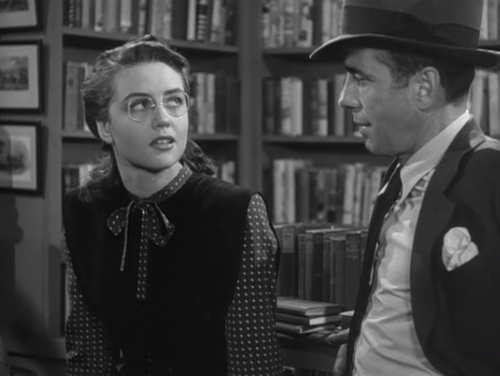
Bookstores in my opinion are the best place to meet your next girlfriend or boyfriend. Dorothy Malone and Humphrey Bogart in The Big Sleep. Don’t let those glasses fool you. There is a passionate tiger lurking behind those window panes.
The story begins in 1933 in a bookshop in Bratislava when Greta Weissensteiner begins buying books from the bookstore in which Wilhelm Winkelmeier is working. Wilhelm is a rather good looking young man, well aware of his attractiveness to the female species, but he has never met a girl quite like Greta. She not only reads, but she reads literature and philosophy. She reads the authors he reads. The pursuit is on. By 1935 they are married and their son Karl has been born.
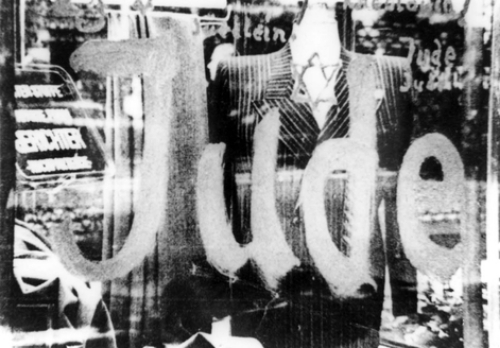
Everybody is watching with various degrees of trepidation and in some cases jubilation at the rise of the Nazi party. There are a lot of German nationalists living in Slovakia and the Winkelmeier family are among them. As more and more propaganda makes its way from Germany it begins to have an affect not only on the Germans living in countries outside of Germany, but also on Wilhelm. Suddenly his beautiful wife who was a feather in his cap becomes a detriment to his future. He sees her as corrupted genetically and he is thankful that Karl looks as Aryan as he does.
People start to make decisions about how to best position themselves properly for the upcoming war. Some Germans move back to Germany and Wilhelm is no exception. He doesn’t take his “tainted” wife who is now pregnant with their second son. Ernst when he arrives shows the “mixed” heritage. His grandmother in particular has a hard time with it.
”To many people this strange combination seemed cute or adorable but to her it was a little
unsettling and disgusting. To see the handsome Winkelmeier features disfigured in such an ugly way was too much for her.”
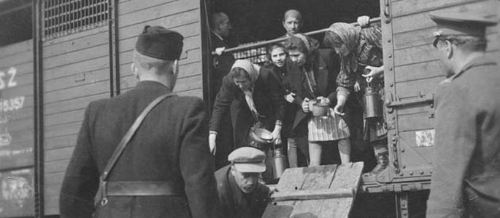
Jews from Slovakia being sent to their deaths in 1942.
Until the rise of Nazism looking Jewish was not something anyone thought about. Now it was all anyone thought about. Egon, Greta’s brother joins the army in an attempt to protect his parents, but they need more than that. Fortunately Jonah has a benefactor in the Countess. She has bought many of his works of art and helped commission many more with her friends. When the Germans insist on lists of Jews they can use in the work camps the Weissensteiner luck holds once again.
”Jonah’s names was listed but a friendly, corrupt and heavily bribed pen crossed the Weissensteiners off all lists.”
Many Jews try to convert, but the Catholic church in many cases is unsympathetic.
”The conversion of opportunistic Jews who just wanted to escape the persecution – which they deserved in his eyes - was out of the question.”
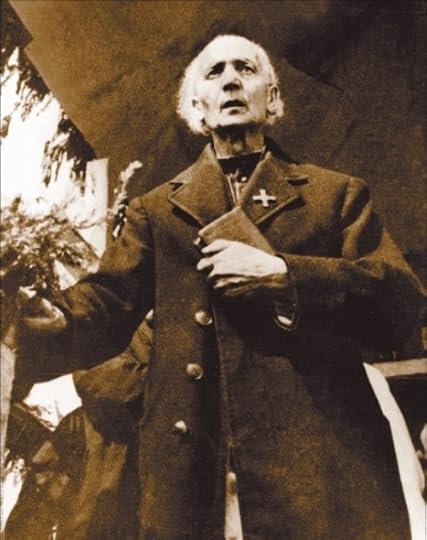
Andrej Hlinka. You might be asking yourself if that is a Catholic Priest collar, yes indeed it is.
The Hlinka Guards named after Andrej Hlinka was formed in 1938, trained by the SS in Germany, and in charge of deporting Jews from Slovakia to Auschwitz starting in 1942. This was really just a state sponsored shake down. They stripped the Jews of all their money, jewels, and other valuables before sending them off to die. There was over 15,000 Jews in Bratislava alone and most did not survive the war.
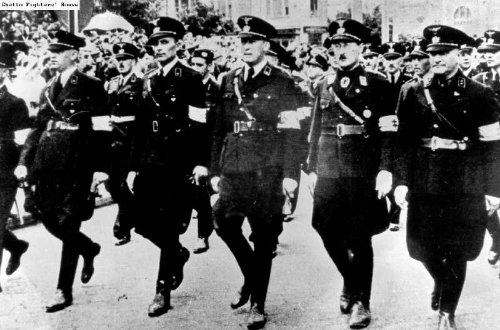
Hlinka Guard well trained by the SS.
How long can the Weissensteiner luck prevail?
So Christoph Fischer follows these two families the Weissensteiners and the Winkelmeier families and how the changing winds of political favor affects each family. The Winkelmeier’s do very well early on in the war acquiring more and more land that used to belong to Jews, but what happens when the war starts turning against the Axis Powers? What happens if the Czechs take the area back over? How about the Russians? The Weissensteiners purchase German documentation made by one of the numerous blackmarket artists disenfranchised by the war which of course works fine as long as the Germans maintain control.
As the Russians and the Americans advance everyone including the once secure Germans are unsure of what to do? Where to go to be safe? Ideally they want to land in the hands of the Americans. The Russians are like a raging pestilence, killing and raping everybody who is unfortunate enough to fall in their path. Even people like the Countess whose money has insulated them from the ravages of war finds herself in the wind with no safety net.
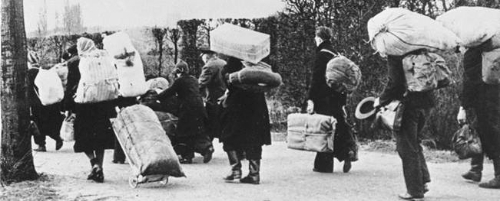
The roads are choked with refugees for mile after mile. Food is scarce. Tempers are frayed.
These are conditions where good people find themselves becoming someone they don’t want to be in order to survive. Some of the more fragile go crazy. The stress and strain on everyone is tremendous. People who used to own farms and businesses suddenly find themselves refugees. People are shot for some unknown reason or no reason at all. There are no distinctions between Jews, Germans, Czechs, Hungarians, Austrians or Slovakians now that the whole region is destabilized. Civilians are caught in a vortex of uncontrolled violence. There are no rules.
Death doesn’t play favorites. It is stalking everyone.
I had no idea that Slovenia provided troops to the German army. One of the many historical facts that Fischer liberally doses this novel with. His writing style is going to drive some people crazy. As a reader you feel like you are reading a historical nonfiction book for some sections and then your Slovakian great aunt’s diary in the next moment. As the tension mounts, and I was starting to wonder how anyone lived to reproduce in Central Europe, I became the relative in America waiting for that letter that so matter-of-factly tells me that Great Uncle Jonah didn’t make it or Greta was sent to a camp in Germany.
Luck plays such a factor in who survived and who died. Yes, some people are naturally more feral and have an increased chance of surviving the war, but frankly there is no way to predict that things would get this bad or that you’d suddenly be up to your eyeballs in pissed off Russian troops or desperate Germans. In many ways it showed the worst of humanity, but there are also those moments when someone does the unexpected and reaches out a hand when someone needs it most. People who when living in a sane world would never even consider hurting another human being or demeaning themselves for a piece of bread are forced to be killers, beggars, and whores. This book reinforced for me the absolute need to maintain civilization. It is the only chance we have to continue to evolve into more benevolent and peaceful creatures.
This is the first of The Three Nations Trilogy. The second one is Sebastian and the third one is the The Black Eagle Inn. I’m in for a penny and in for a pound.
If you wish to see more of my most recent book and movie reviews, visit http://www.jeffreykeeten.com
I also have a Facebook blogger page at:https://www.facebook.com/JeffreyKeeten
The luck of the Weissensteiners is certainly better than most, but when the world goes mad even the best of luck can become tattered and frayed. The Weissensteiners are Jewish, not practicing Jewish. They even occasionally finding themselves sitting with the congregation of the Catholic Church. They are weavers, but Jonah is much more than an artisan making rugs. He is an artist creating masterpieces. It turns out to be the very thing that buys him some more luck.

Bookstores in my opinion are the best place to meet your next girlfriend or boyfriend. Dorothy Malone and Humphrey Bogart in The Big Sleep. Don’t let those glasses fool you. There is a passionate tiger lurking behind those window panes.
The story begins in 1933 in a bookshop in Bratislava when Greta Weissensteiner begins buying books from the bookstore in which Wilhelm Winkelmeier is working. Wilhelm is a rather good looking young man, well aware of his attractiveness to the female species, but he has never met a girl quite like Greta. She not only reads, but she reads literature and philosophy. She reads the authors he reads. The pursuit is on. By 1935 they are married and their son Karl has been born.

Everybody is watching with various degrees of trepidation and in some cases jubilation at the rise of the Nazi party. There are a lot of German nationalists living in Slovakia and the Winkelmeier family are among them. As more and more propaganda makes its way from Germany it begins to have an affect not only on the Germans living in countries outside of Germany, but also on Wilhelm. Suddenly his beautiful wife who was a feather in his cap becomes a detriment to his future. He sees her as corrupted genetically and he is thankful that Karl looks as Aryan as he does.
People start to make decisions about how to best position themselves properly for the upcoming war. Some Germans move back to Germany and Wilhelm is no exception. He doesn’t take his “tainted” wife who is now pregnant with their second son. Ernst when he arrives shows the “mixed” heritage. His grandmother in particular has a hard time with it.
”To many people this strange combination seemed cute or adorable but to her it was a little
unsettling and disgusting. To see the handsome Winkelmeier features disfigured in such an ugly way was too much for her.”

Jews from Slovakia being sent to their deaths in 1942.
Until the rise of Nazism looking Jewish was not something anyone thought about. Now it was all anyone thought about. Egon, Greta’s brother joins the army in an attempt to protect his parents, but they need more than that. Fortunately Jonah has a benefactor in the Countess. She has bought many of his works of art and helped commission many more with her friends. When the Germans insist on lists of Jews they can use in the work camps the Weissensteiner luck holds once again.
”Jonah’s names was listed but a friendly, corrupt and heavily bribed pen crossed the Weissensteiners off all lists.”
Many Jews try to convert, but the Catholic church in many cases is unsympathetic.
”The conversion of opportunistic Jews who just wanted to escape the persecution – which they deserved in his eyes - was out of the question.”

Andrej Hlinka. You might be asking yourself if that is a Catholic Priest collar, yes indeed it is.
The Hlinka Guards named after Andrej Hlinka was formed in 1938, trained by the SS in Germany, and in charge of deporting Jews from Slovakia to Auschwitz starting in 1942. This was really just a state sponsored shake down. They stripped the Jews of all their money, jewels, and other valuables before sending them off to die. There was over 15,000 Jews in Bratislava alone and most did not survive the war.

Hlinka Guard well trained by the SS.
How long can the Weissensteiner luck prevail?
So Christoph Fischer follows these two families the Weissensteiners and the Winkelmeier families and how the changing winds of political favor affects each family. The Winkelmeier’s do very well early on in the war acquiring more and more land that used to belong to Jews, but what happens when the war starts turning against the Axis Powers? What happens if the Czechs take the area back over? How about the Russians? The Weissensteiners purchase German documentation made by one of the numerous blackmarket artists disenfranchised by the war which of course works fine as long as the Germans maintain control.
As the Russians and the Americans advance everyone including the once secure Germans are unsure of what to do? Where to go to be safe? Ideally they want to land in the hands of the Americans. The Russians are like a raging pestilence, killing and raping everybody who is unfortunate enough to fall in their path. Even people like the Countess whose money has insulated them from the ravages of war finds herself in the wind with no safety net.

The roads are choked with refugees for mile after mile. Food is scarce. Tempers are frayed.
These are conditions where good people find themselves becoming someone they don’t want to be in order to survive. Some of the more fragile go crazy. The stress and strain on everyone is tremendous. People who used to own farms and businesses suddenly find themselves refugees. People are shot for some unknown reason or no reason at all. There are no distinctions between Jews, Germans, Czechs, Hungarians, Austrians or Slovakians now that the whole region is destabilized. Civilians are caught in a vortex of uncontrolled violence. There are no rules.
Death doesn’t play favorites. It is stalking everyone.
I had no idea that Slovenia provided troops to the German army. One of the many historical facts that Fischer liberally doses this novel with. His writing style is going to drive some people crazy. As a reader you feel like you are reading a historical nonfiction book for some sections and then your Slovakian great aunt’s diary in the next moment. As the tension mounts, and I was starting to wonder how anyone lived to reproduce in Central Europe, I became the relative in America waiting for that letter that so matter-of-factly tells me that Great Uncle Jonah didn’t make it or Greta was sent to a camp in Germany.
Luck plays such a factor in who survived and who died. Yes, some people are naturally more feral and have an increased chance of surviving the war, but frankly there is no way to predict that things would get this bad or that you’d suddenly be up to your eyeballs in pissed off Russian troops or desperate Germans. In many ways it showed the worst of humanity, but there are also those moments when someone does the unexpected and reaches out a hand when someone needs it most. People who when living in a sane world would never even consider hurting another human being or demeaning themselves for a piece of bread are forced to be killers, beggars, and whores. This book reinforced for me the absolute need to maintain civilization. It is the only chance we have to continue to evolve into more benevolent and peaceful creatures.
This is the first of The Three Nations Trilogy. The second one is Sebastian and the third one is the The Black Eagle Inn. I’m in for a penny and in for a pound.
If you wish to see more of my most recent book and movie reviews, visit http://www.jeffreykeeten.com
I also have a Facebook blogger page at:https://www.facebook.com/JeffreyKeeten

October 25, 2013
Christoph Fischer makes his mark with "The Luck Of The Weissensteiners", an intensely woven family drama driven by the twin tides of history and politics. His story revolves around the Weissensteiners, a non-religious Jewish family leading their lives in Bratislava, Slovakia, before and throughout WWII. Fischer demonstrates a masterly grip on history, politics, and the constant ebb and flow of human relationships. Multiple intertwined dramas unfold in the story as Europe marches toward war, Hitler annexes Czechoslovakia, allows the establishment of a free Slovak Republic, and the Nazi's Jewish policies are gradually imposed upon the new nation. Throughout these events, the Weissensteiner family struggles to survive, and fate and luck leads them down a winding path of human drama. Fischer's historical knowledge and keen insight into human conflict make for a dramatic and intense read.
August 8, 2013
It's not often that you read a book about the time just prior to, during and just after the Second World War that is based outside of either Britain or America. That's the first thing about The Luck of the Weissensteiners - it is unlike any other WWII fiction I have ever read, based on the experiences of a Jewish and Catholic family from Eastern Europe and the friends they make along the way.
This is an absolutely riveting read from Christoph Fischer, one in fact that I lost sleep over because I just couldn't put it down. It all starts with a young Jewish girl, Greta, falling in love over books with the store clerk Wilhelm and turns into the most excellently told story about what happens to them and their loved ones.
Fischer does not to go into the full horrors of Holocaust Europe, and he surely should be applauded for that, but there is enough there to put the reader firmly in mind and place, glimpsing the evil that men (and women) carried out. To have written it in such a way seems somehow more powerful, packs more of a punch to the emotions and senses.
Rich in plot, with vibrant characters and wonderful storytelling, I really enjoyed this book and would certainly pick up another from the author.
This is an absolutely riveting read from Christoph Fischer, one in fact that I lost sleep over because I just couldn't put it down. It all starts with a young Jewish girl, Greta, falling in love over books with the store clerk Wilhelm and turns into the most excellently told story about what happens to them and their loved ones.
Fischer does not to go into the full horrors of Holocaust Europe, and he surely should be applauded for that, but there is enough there to put the reader firmly in mind and place, glimpsing the evil that men (and women) carried out. To have written it in such a way seems somehow more powerful, packs more of a punch to the emotions and senses.
Rich in plot, with vibrant characters and wonderful storytelling, I really enjoyed this book and would certainly pick up another from the author.

August 12, 2013
This story takes an original angle in depicting a Jewish family who were lucky enough to escape the death camps. Their luck came via their connections with a few, rare, non-Jewish people who refused to be blinkered by the anti-Semitic propaganda of the time; and the fact that they were non-practicing Jews meant their Jewishness went unnoticed by local people prior to the escalation of Nazi propaganda. All through this story, while the Weissensteiner family were saved from arrest on different occasions, I found myself thinking of all those who were not so lucky.
The author powerfully portrays the insidious, corrosive influence of the dehumanizing Nazi propaganda, showing how it manipulated people’s deepest fears. The story begins with an ordinary love-story between Greta, a young, Jewish, Slovakian girl who is the daughter of a weaver and a young, German bookseller, Wilhelm. They had their hopes and dreams for the future but, like millions of others, their lives were torn asunder by Hitler’s rise to power. The propaganda was so relentless and all-pervading that, sadly for Greta, even Wilhelm’s mind is turned by it, with tragic consequences for her and their young son.
As a writer, I am always interested in the choices other author’s make. Outside of Greta’s immediate family, there is a large cast of characters woven through the fragile fabric of their lives. Often, when there is a large cast of characters in a book, we don’t get to know any of them well enough to become emotionally engaged. This book is quite unique in that the detached, omniscient narrative style combined with dialogue and realistic, detailed portrayals of the main characters led me to feel I was reading a biographical account of a real family’s tribulations rather than a work of fiction.
Added to the above mix was an outstanding and extraordinary amount of detailed information regarding the events happening outside the death camps at that time. The author also explores, in detail, the aftermath of the war and the immense difficulties faced by the surviving Jewish families, including; the displacement of refugees; the pervasive mistrust between both sides; and the reprisals and revenge wreaked on those who had been collaborators or who had any German connections.
There is one issue with this book which for me meant the difference between 4 and 5 stars. This is a long book and it has approximately twenty-five pages per chapter with no scene breaks within those chapters. This makes for very long blocks of unbroken text which some readers will find off-putting and hard-going at times.
It is, however, a worthwhile read and it has greatly broadened my knowledge of this tragic and devastating time in history. The extensive research undertaken by the author is second to none and admirable. A recommended read.
The author powerfully portrays the insidious, corrosive influence of the dehumanizing Nazi propaganda, showing how it manipulated people’s deepest fears. The story begins with an ordinary love-story between Greta, a young, Jewish, Slovakian girl who is the daughter of a weaver and a young, German bookseller, Wilhelm. They had their hopes and dreams for the future but, like millions of others, their lives were torn asunder by Hitler’s rise to power. The propaganda was so relentless and all-pervading that, sadly for Greta, even Wilhelm’s mind is turned by it, with tragic consequences for her and their young son.
As a writer, I am always interested in the choices other author’s make. Outside of Greta’s immediate family, there is a large cast of characters woven through the fragile fabric of their lives. Often, when there is a large cast of characters in a book, we don’t get to know any of them well enough to become emotionally engaged. This book is quite unique in that the detached, omniscient narrative style combined with dialogue and realistic, detailed portrayals of the main characters led me to feel I was reading a biographical account of a real family’s tribulations rather than a work of fiction.
Added to the above mix was an outstanding and extraordinary amount of detailed information regarding the events happening outside the death camps at that time. The author also explores, in detail, the aftermath of the war and the immense difficulties faced by the surviving Jewish families, including; the displacement of refugees; the pervasive mistrust between both sides; and the reprisals and revenge wreaked on those who had been collaborators or who had any German connections.
There is one issue with this book which for me meant the difference between 4 and 5 stars. This is a long book and it has approximately twenty-five pages per chapter with no scene breaks within those chapters. This makes for very long blocks of unbroken text which some readers will find off-putting and hard-going at times.
It is, however, a worthwhile read and it has greatly broadened my knowledge of this tragic and devastating time in history. The extensive research undertaken by the author is second to none and admirable. A recommended read.
January 27, 2013
I was recommended this book by a close friend whose judgment in these matters I trust completely. I'm not a fan of dry fact-laden historical novels, but I can say that this book does not fall into this category so please don't be put off by any preconceptions you may have towards this genre. I'm certainly glad I followed my friend's advice, and was richly rewarded by the author's complex and multifaceted characters, his deft use of prose, and his clean and clear writing style.
It would be easy to fall into the trap of melodramatic and hysterical writing when dealing with the horrors of war and human suffering; the author never takes this easy option, he maintains that clear and concise style throughout the novel allowing his characters to tell their own stories.
Having the standard English schoolboy knowledge of both World Wars, I thought I new with crushing inevitability the ultimate outcome that would befall the characters. A naive ignorance had got the better of me, and as I read I was swept up in a story and a world I realised I new nothing about. It was a humbling and quite profound experience, learning and understanding details of the lives that people like these were living and struggling with on a day to day basis throughout the war years, and it's a testament to the author's skill that even now, some weeks after finishing the book, the characters are alive in my mind and almost feel like family.
This is not a light fluffy read: it's a deeply engaging and complex story, sections of which I had to read several times to get the maximum benefit.
I can highly recommend this book, both for fans of the genre and also for those who like solid well written novel, regardless of genre.
It would be easy to fall into the trap of melodramatic and hysterical writing when dealing with the horrors of war and human suffering; the author never takes this easy option, he maintains that clear and concise style throughout the novel allowing his characters to tell their own stories.
Having the standard English schoolboy knowledge of both World Wars, I thought I new with crushing inevitability the ultimate outcome that would befall the characters. A naive ignorance had got the better of me, and as I read I was swept up in a story and a world I realised I new nothing about. It was a humbling and quite profound experience, learning and understanding details of the lives that people like these were living and struggling with on a day to day basis throughout the war years, and it's a testament to the author's skill that even now, some weeks after finishing the book, the characters are alive in my mind and almost feel like family.
This is not a light fluffy read: it's a deeply engaging and complex story, sections of which I had to read several times to get the maximum benefit.
I can highly recommend this book, both for fans of the genre and also for those who like solid well written novel, regardless of genre.

December 31, 2013
Have you ever traveled a long, winding and seemingly endless road such as the Eyre Highway in Australia? It is one of the longest straight roads in the world, covering a monotonous landscape of nonstop hot, harsh, dry, scenery for a few thousand kilometers. All the traveler does is drive, stop for fuel, sleep, drive, stop for fuel and drive until it finally comes to an end, if you are lucky to survive at all with no brain damage!
This is the tone of this book. Sadly. What could have been a powerful, dramatic, tale, turned out to be a linear, monotonous journey beginning in Bratislavia in 1933 and going through to 1945. The story is about a Jewish family trying to survive the fascist developments in European countries and the cruel conditions surrounding the holocaust in all its ugliness.
Long, uninterrupted paragraphs of a biographical memoir are thrown together with no highs or lows, no change of pace, no emotional interruptions, no nothing new.
Yet, all the elements are there that could have made this story as memorable as , and I am only going to mention but a few of the latest offerings in the millions of books in the Holocaust Fiction genre:
Schindler's List - Thomas Keneally
The Boy in the Striped Pajamas - John Boyne
The Book Thief - Markus Zusak
Those Who Save Us - by Jenna Blum
Blessings on the Moon - Joseph Skibell
The Kommandant's Girl - Pam Jenoff
The Devil's Arithmetic - Jane Yolen
Someone Named Eva - Joan M. Wolf
Thousands of heart-wrenching, profoundly shocking, and deeply-disturbing tales of an event that ripped the heart out of the world forever are exposed in these books.
Writing a book in this genre has become a challenge for any author. There are literary millions of books, with a few hundred best sellers to top it of, which must be competed with! Not only for sales, but also for uniqueness, plot and style.
That makes me wonder how a book such as The Luck of the Weissensteiners will be able to survive when excellence were claimed by too many predecessors? Was this book a memoir, yet not officially declared as such, and thus not to be compared to other prose in this genre? What was the purpose of the book?
I imagine this writing style suitable when a person would like to write down a life story for future generations. It is the kind of writing style to be expected when an old aunt's diaries are discovered in the attic. If a 'dear Annie' was added, it could have been a perfect epistolary tale. Much tell with little show and keeping to the basics. A story of hatred and hardships, of family cruelty, of political madness, and psychological mayhem mixed into one cocktail of death and destruction. A cocktail, yes, prepared for the refined, the suaved, the controlled, the mediocre. It is not a barrel of beer for the boisterous, for the overly-excited and the emotionally unstable where tempers could fly, furniture could be thrown around, guns could be pulled and shot off into the ceiling and testosterone could burst open the latent Neanderthal bubble in the brain.
No, The Luck of the Weissensteiners does not do that. It just tells a story of Greta Weissensteiner who fell in love with a bookshop assistant, Wilhelm Winkelmeier
from Berlin, who relocated to Czechoslovakia just when the winds of war started ripping through the Eurasian landscape and how the two families had to cope with a hostile environment. It is an already well-known tale told to an audience who probably already walked this long road more than once before in other books.
But to stay on the road of this story required lots of sleeping in between and persistence to finish. It is not a romantic tale. It is not a fantasy. It is an ugly, almost too clinical reality that once again commemorate the horror of WWII on people.
The historical information is valuable. The bad family relationships with the cruelty and meanness of Johanna Winkelmeier, in particular, and her family in general, towards the young, inexperienced Jewish woman Greta Weissensteiner, the betrayal and lies, the dangerous political milieu and everything else that is needed to make this a great book, is filling up the pages, yet, the bang just did not happen for me. I was constantly wondering when the hell ever was this book going to end and should I keep driving this long tedious road without abandoning the challenge. The facts are too realistic to be real fiction. An enormous amount of research went into this book.
All books relating to WWII have always ripped my guts open to the bare bone. Every single one of them have me upset for days on end. My first awareness and curiosity with the Jewish history started off with the musical play, turned into a movie ' Fiddler on the Roof''1971, which was written by Joseph Stein and was set in Tsarist Russia in 1905. I was a young girl then. I still cry when I hear the actor Chaim Topol's deep voice sadly reverberating though his village singing 'If I were a rich man'. Remember that?
Since then I was on a personal mission to learn more about the Jewish fate. And like millions of other non-Jewish people, I educated myself as much as possible in anyway possible.
David Mikics, a professor of English at the University of Houston, said: “Everything is legitimate if it helps you understand,” with the caveat that, “mythologizing can obscure reality in a problematic way.”
But of course when it comes to WWII there is probably another million horror stories waiting to be told in either print or film and not all of them are about the Holocaust. A quick recall is 'Captain Corelli's Mandoline', written by Louis de Bernières which was one of my recent all-time favorite books that has been filmed. A brilliant movie, with an equally horrifying tale translated into visual effects that had me sleepless for days. So many millions of people suffered.
But that's just for interest' sake. I am disappointed with this book. I expected a lot more. Yet, given my own interest in the subject, and the literary archive from which I am judging this story , I will be lenient. The style did not work for me. The plot rolled out a long, harrowing road through harshness with not enough points of relief in between. There was no passion behind the words, only linear facts used to build a tale.
Two stars, but one additional star added for the research well done.
"The road that leads to nowhere for others might just be the road that leads to somewhere for you!” ― Mehmet Murat ildan, writer.
For this reason, you might want to read this book.
This is the tone of this book. Sadly. What could have been a powerful, dramatic, tale, turned out to be a linear, monotonous journey beginning in Bratislavia in 1933 and going through to 1945. The story is about a Jewish family trying to survive the fascist developments in European countries and the cruel conditions surrounding the holocaust in all its ugliness.
Long, uninterrupted paragraphs of a biographical memoir are thrown together with no highs or lows, no change of pace, no emotional interruptions, no nothing new.
Yet, all the elements are there that could have made this story as memorable as , and I am only going to mention but a few of the latest offerings in the millions of books in the Holocaust Fiction genre:
Schindler's List - Thomas Keneally
The Boy in the Striped Pajamas - John Boyne
The Book Thief - Markus Zusak
Those Who Save Us - by Jenna Blum
Blessings on the Moon - Joseph Skibell
The Kommandant's Girl - Pam Jenoff
The Devil's Arithmetic - Jane Yolen
Someone Named Eva - Joan M. Wolf
Thousands of heart-wrenching, profoundly shocking, and deeply-disturbing tales of an event that ripped the heart out of the world forever are exposed in these books.
Writing a book in this genre has become a challenge for any author. There are literary millions of books, with a few hundred best sellers to top it of, which must be competed with! Not only for sales, but also for uniqueness, plot and style.
That makes me wonder how a book such as The Luck of the Weissensteiners will be able to survive when excellence were claimed by too many predecessors? Was this book a memoir, yet not officially declared as such, and thus not to be compared to other prose in this genre? What was the purpose of the book?
I imagine this writing style suitable when a person would like to write down a life story for future generations. It is the kind of writing style to be expected when an old aunt's diaries are discovered in the attic. If a 'dear Annie' was added, it could have been a perfect epistolary tale. Much tell with little show and keeping to the basics. A story of hatred and hardships, of family cruelty, of political madness, and psychological mayhem mixed into one cocktail of death and destruction. A cocktail, yes, prepared for the refined, the suaved, the controlled, the mediocre. It is not a barrel of beer for the boisterous, for the overly-excited and the emotionally unstable where tempers could fly, furniture could be thrown around, guns could be pulled and shot off into the ceiling and testosterone could burst open the latent Neanderthal bubble in the brain.
No, The Luck of the Weissensteiners does not do that. It just tells a story of Greta Weissensteiner who fell in love with a bookshop assistant, Wilhelm Winkelmeier
from Berlin, who relocated to Czechoslovakia just when the winds of war started ripping through the Eurasian landscape and how the two families had to cope with a hostile environment. It is an already well-known tale told to an audience who probably already walked this long road more than once before in other books.
But to stay on the road of this story required lots of sleeping in between and persistence to finish. It is not a romantic tale. It is not a fantasy. It is an ugly, almost too clinical reality that once again commemorate the horror of WWII on people.
The historical information is valuable. The bad family relationships with the cruelty and meanness of Johanna Winkelmeier, in particular, and her family in general, towards the young, inexperienced Jewish woman Greta Weissensteiner, the betrayal and lies, the dangerous political milieu and everything else that is needed to make this a great book, is filling up the pages, yet, the bang just did not happen for me. I was constantly wondering when the hell ever was this book going to end and should I keep driving this long tedious road without abandoning the challenge. The facts are too realistic to be real fiction. An enormous amount of research went into this book.
All books relating to WWII have always ripped my guts open to the bare bone. Every single one of them have me upset for days on end. My first awareness and curiosity with the Jewish history started off with the musical play, turned into a movie ' Fiddler on the Roof''1971, which was written by Joseph Stein and was set in Tsarist Russia in 1905. I was a young girl then. I still cry when I hear the actor Chaim Topol's deep voice sadly reverberating though his village singing 'If I were a rich man'. Remember that?
Since then I was on a personal mission to learn more about the Jewish fate. And like millions of other non-Jewish people, I educated myself as much as possible in anyway possible.
David Mikics, a professor of English at the University of Houston, said: “Everything is legitimate if it helps you understand,” with the caveat that, “mythologizing can obscure reality in a problematic way.”
But of course when it comes to WWII there is probably another million horror stories waiting to be told in either print or film and not all of them are about the Holocaust. A quick recall is 'Captain Corelli's Mandoline', written by Louis de Bernières which was one of my recent all-time favorite books that has been filmed. A brilliant movie, with an equally horrifying tale translated into visual effects that had me sleepless for days. So many millions of people suffered.
But that's just for interest' sake. I am disappointed with this book. I expected a lot more. Yet, given my own interest in the subject, and the literary archive from which I am judging this story , I will be lenient. The style did not work for me. The plot rolled out a long, harrowing road through harshness with not enough points of relief in between. There was no passion behind the words, only linear facts used to build a tale.
Two stars, but one additional star added for the research well done.
"The road that leads to nowhere for others might just be the road that leads to somewhere for you!” ― Mehmet Murat ildan, writer.
For this reason, you might want to read this book.

January 21, 2013
With much research behind it, as well as the personal experience of growing up in the region, Christoph Fischer’s work of historical fiction provides insight into the psyche beneath the levels of destruction in WWII-era Europe. If you are someone who wonders how such atrocities could have occurred prior to, and during WWII on the continent, you will want to read The Luck of the Weissensteiners.
The setting is Czechoslovakia, though it could have been almost any country in the region. Ethnic disrespect, hate, and violence have gone on for centuries in central and eastern Europe. Until reading this book, though, I did not understand how finely differentiated these forces were. Indirectly, the book also helped me to better understand how the dark side of nationality has wiped out countless human beings during various periods in the Middle East, Africa, and Asia—and for that matter, North and South America.
The Luck of the Weissensteiners follows two families and their circles of life, as they try to navigate the virulent events of their time. The story begins with the romance of a German bookseller and a young, beautiful woman of Jewish heritage. They will soon be caught in the whirling winds of their time. The author depicts how nearly impossible it is for the characters of this saga to avoid the propaganda machines around them, the pressures to conform, often in a chameleon fashion due to sudden changes in governance, and most unfortunately, the programming in ethnic bias from the time they were children. Despite the serious subjects, there is much warmth in this story. Some of the characters do find ways to stay true to the best in their natures or even redeem themselves, just as real individuals did then, and have always done on the plains of human existence.
If you enjoy well drawn characters whose lives and choices so deftly represent the themes of a book, The Luck of the Weissensteiners provides a rich read. In some ways, this book reminds me of classics I read long ago like The Canterbury Tales, or even The Odyssey, due to the diversity of personalities and the theme of journeys. From ethnic origin to talents and occupations, physical descriptions to sexual preferences, and economic status to political leanings, we see a cross section of humanity. Through their eyes and reactions, we can appreciate the full range of real outcomes and experiences, happy to sad or shocking, that occurred to real individuals during this era. By the way, the title of the book was an outstanding choice.
The Luck of the Weissensteiners would be tremendous in an audio version. For now, consider reading it out loud with a few friends who are interested in what life was like for those who lived the events of the novel’s time. Though some critics might question the generous use of adverbs and adjectives in his narrative voice and in the dialogue tags, Christoph Fischer deftly weaves his tapestry of history and fiction, with a grace not unlike Jonas, one of his primary characters. For me, the author’s choice of narrative style brought economy to the complex story being told, as well as a kind of mesmerizing rhythm.
The setting is Czechoslovakia, though it could have been almost any country in the region. Ethnic disrespect, hate, and violence have gone on for centuries in central and eastern Europe. Until reading this book, though, I did not understand how finely differentiated these forces were. Indirectly, the book also helped me to better understand how the dark side of nationality has wiped out countless human beings during various periods in the Middle East, Africa, and Asia—and for that matter, North and South America.
The Luck of the Weissensteiners follows two families and their circles of life, as they try to navigate the virulent events of their time. The story begins with the romance of a German bookseller and a young, beautiful woman of Jewish heritage. They will soon be caught in the whirling winds of their time. The author depicts how nearly impossible it is for the characters of this saga to avoid the propaganda machines around them, the pressures to conform, often in a chameleon fashion due to sudden changes in governance, and most unfortunately, the programming in ethnic bias from the time they were children. Despite the serious subjects, there is much warmth in this story. Some of the characters do find ways to stay true to the best in their natures or even redeem themselves, just as real individuals did then, and have always done on the plains of human existence.
If you enjoy well drawn characters whose lives and choices so deftly represent the themes of a book, The Luck of the Weissensteiners provides a rich read. In some ways, this book reminds me of classics I read long ago like The Canterbury Tales, or even The Odyssey, due to the diversity of personalities and the theme of journeys. From ethnic origin to talents and occupations, physical descriptions to sexual preferences, and economic status to political leanings, we see a cross section of humanity. Through their eyes and reactions, we can appreciate the full range of real outcomes and experiences, happy to sad or shocking, that occurred to real individuals during this era. By the way, the title of the book was an outstanding choice.
The Luck of the Weissensteiners would be tremendous in an audio version. For now, consider reading it out loud with a few friends who are interested in what life was like for those who lived the events of the novel’s time. Though some critics might question the generous use of adverbs and adjectives in his narrative voice and in the dialogue tags, Christoph Fischer deftly weaves his tapestry of history and fiction, with a grace not unlike Jonas, one of his primary characters. For me, the author’s choice of narrative style brought economy to the complex story being told, as well as a kind of mesmerizing rhythm.

September 4, 2013
Following Greta from pre-WWII Bratislava through Carlsbad through Aschaffenburg and ultimately to post-war Frankfurt is a well-written journey. Fischer's The Luck of the Weissensteiners had me hooked into the journey, turning pages and asking the same question Greta stumbles upon frequently, “Where were friends or enemies?”
The novel is a historically sound piece dealing with loyalty, stigma, love, loneliness and oppression set against a backdrop of Eastern Europe's turmoil. The characters' lives were confounded at so many intersections by the results of a powerful anti-Semetic propaganda campaign. They don't go to an Auschwitz or Buchenwald, but you quickly see that avoiding the camps was not freedom for the articulately drawn and likeable characters. You want to see what happens next to them and can feel the tension Fischer relays so well.
Chapters 3, 10 and 13 capture Greta's emotion, tragedies and near-misses so intensely I went back for a welcome re-read. The book accomplishes a lot in covering more than a decade and a half without making a reader feeling rushed or missing something in the timeline. It's paced that well … and the Epilogue cleanly tied together the themes and characters of the entire novel as a great exhibit of Fischer's talent.
The novel is a historically sound piece dealing with loyalty, stigma, love, loneliness and oppression set against a backdrop of Eastern Europe's turmoil. The characters' lives were confounded at so many intersections by the results of a powerful anti-Semetic propaganda campaign. They don't go to an Auschwitz or Buchenwald, but you quickly see that avoiding the camps was not freedom for the articulately drawn and likeable characters. You want to see what happens next to them and can feel the tension Fischer relays so well.
Chapters 3, 10 and 13 capture Greta's emotion, tragedies and near-misses so intensely I went back for a welcome re-read. The book accomplishes a lot in covering more than a decade and a half without making a reader feeling rushed or missing something in the timeline. It's paced that well … and the Epilogue cleanly tied together the themes and characters of the entire novel as a great exhibit of Fischer's talent.

July 8, 2013
The Luck of the Weissensteiners by Christoph Fischer is nothing short of pure genius. I fell in love with the writing the moment I flipped the first page. The author's exquisite sense of style combines intricate historical facts with dramatic family turmoil that shocked the whole world when first revealed back in 1945. This beautifully crafted novel is filled with desperation and sheer determination to survive against insurmountable odds.
Greta Weissensteiner falls in love with the young man who sneaks books from his library and uses them to see her. Wilhelm Winkelmeier does not care she is a Jew and marries her. They live on his parents' farm where Greta is subjected to harsh living conditions and has to forget her love of books to take care of their son, Karl. Slowly, she wins the respect of Wilhelm's parents, but a storm is racing across the horizon in the shape of Nazi hatred of all things Jewish.
Then the unthinkable happens - the world turns a blind eye as Germany invades Austria and then Sudetenland bordering their home country of Czechoslovakia. It is only a matter of time before the terror begins.
The Weissensteiners have always believed in their own brand of luck that has kept them in good stead, but once the Jewish question is implemented that luck is needed time and again. And yet their luck seems to protect them, but at what cost.
This wonderful novel handles a difficult subject matter with style and grace, showing a close-knit family fighting injustice and never losing their dignity in the face of bigotry and hatred.
I must admit I was often brought to tears with several scenes so poignant and tender. This book deserves to be in every library as a reminder of man's inhumanity to man and how easily society can ignore such cruelty.
This FIVE STAR masterpiece should be read by every teenager as part of their school curriculum. I LOVE IT.
Greta Weissensteiner falls in love with the young man who sneaks books from his library and uses them to see her. Wilhelm Winkelmeier does not care she is a Jew and marries her. They live on his parents' farm where Greta is subjected to harsh living conditions and has to forget her love of books to take care of their son, Karl. Slowly, she wins the respect of Wilhelm's parents, but a storm is racing across the horizon in the shape of Nazi hatred of all things Jewish.
Then the unthinkable happens - the world turns a blind eye as Germany invades Austria and then Sudetenland bordering their home country of Czechoslovakia. It is only a matter of time before the terror begins.
The Weissensteiners have always believed in their own brand of luck that has kept them in good stead, but once the Jewish question is implemented that luck is needed time and again. And yet their luck seems to protect them, but at what cost.
This wonderful novel handles a difficult subject matter with style and grace, showing a close-knit family fighting injustice and never losing their dignity in the face of bigotry and hatred.
I must admit I was often brought to tears with several scenes so poignant and tender. This book deserves to be in every library as a reminder of man's inhumanity to man and how easily society can ignore such cruelty.
This FIVE STAR masterpiece should be read by every teenager as part of their school curriculum. I LOVE IT.

June 25, 2013
Absorbing and utterly convincing.
This is a tour de force from a writer completely confident in his material and research. The opening had me so gripped that I started to fall in love with Greta Weissensteiner and wanted to elbow Wilhelm aside and rescue her from his dusty bookshop. But as I have already read so much about this period I felt the tentacles of dread reaching out to throttle me as the inevitable approached and despatching Wilhelm would only have removed the Weissenteiners luck!
I've always struggled to comprehend the control Hitler exerted over his volk. There is no doubt that he was charismatic but there must have been something buried deep within the German psyche which allowed him to perpetrate such horrors on his people for what he perceived as their own good. Stalin was a simple gangster in comparison.
There have been many books written about the treatment of Jews in Europe before and during the war but few authors have succeeded in shining such a bright spotlight on the cancer of anti-Semitism as Christoph.
Ben Elton tried recently with 'Two Brothers' but, in comparison, that is a jumbled unfocussed account.
True, some readers might find the long explanatory passages challenging but this is such a complex subject that these are essential for clarity and to cement the various strands of the Weissenteiners' story together.
Christoph is meticulous in his approach and has the gifts of a natural story teller. I suspect that this is only the first in a long line of must read books.
This is a tour de force from a writer completely confident in his material and research. The opening had me so gripped that I started to fall in love with Greta Weissensteiner and wanted to elbow Wilhelm aside and rescue her from his dusty bookshop. But as I have already read so much about this period I felt the tentacles of dread reaching out to throttle me as the inevitable approached and despatching Wilhelm would only have removed the Weissenteiners luck!
I've always struggled to comprehend the control Hitler exerted over his volk. There is no doubt that he was charismatic but there must have been something buried deep within the German psyche which allowed him to perpetrate such horrors on his people for what he perceived as their own good. Stalin was a simple gangster in comparison.
There have been many books written about the treatment of Jews in Europe before and during the war but few authors have succeeded in shining such a bright spotlight on the cancer of anti-Semitism as Christoph.
Ben Elton tried recently with 'Two Brothers' but, in comparison, that is a jumbled unfocussed account.
True, some readers might find the long explanatory passages challenging but this is such a complex subject that these are essential for clarity and to cement the various strands of the Weissenteiners' story together.
Christoph is meticulous in his approach and has the gifts of a natural story teller. I suspect that this is only the first in a long line of must read books.
March 26, 2013
Though we journey through this work with fictional characters, it is evident early on that this piece is comprehensively researched – the thoroughness of detail in no way detracts from the story told through the different personalities the author has created and placed within such a turbulent time in history. I particularly enjoyed tracing after the protagonist Greta as she evolved (like the other cast members were forced to do so through their rapid changing lives) through her sweet, simple, early romance, then downward through the complex unveiling of the hate, intolerance, and abuse ramped during the Second World War, into painstakingly sacrificial, full-sprung womanhood.
The author writes a clean-line prose that is comfortable to read and easily exports the reader (within the first few sentences) to another time and place, another level of desperation and despair – and most important of all, divulges to the reader the true depths hope can take when faced with hardships such as the ones the characters created by Christoph Fischer must overcome in The Luck of the Weissensteiners.
The author writes a clean-line prose that is comfortable to read and easily exports the reader (within the first few sentences) to another time and place, another level of desperation and despair – and most important of all, divulges to the reader the true depths hope can take when faced with hardships such as the ones the characters created by Christoph Fischer must overcome in The Luck of the Weissensteiners.

August 30, 2013
The Luck of the Weissensteiners is an epic tale about a Jewish family living in Bratislava, and the environs in the years running up to WW2 and beyond. It is much more than a holocaust story – it is an account of how Hitler’s Nazi propaganda came to be regarded as the truth, how people started to behave as a result and the total upheaval which accompanied the war and the aftermath.
Fischer gives an account of the history and this is mirrored by the actions of the characters. This provides a powerful undercurrent of bullying, helplessness and cruelty – making a strong impression for the reader - which lingers. But there are moments of joy and extreme bravery as we learn about the risks that people took to help each other, as the protagonists journey across Europe.
The book has a real feeling of the period, and this is down to the depiction of the characters, their speech and they way they think. There is also just the right amount of historical detail to inform the reader of the context and bring the story to life - a story which educates and raises questions about morality and decency in everyday life.
Definitely recommended for lovers of historical fiction.
Fischer gives an account of the history and this is mirrored by the actions of the characters. This provides a powerful undercurrent of bullying, helplessness and cruelty – making a strong impression for the reader - which lingers. But there are moments of joy and extreme bravery as we learn about the risks that people took to help each other, as the protagonists journey across Europe.
The book has a real feeling of the period, and this is down to the depiction of the characters, their speech and they way they think. There is also just the right amount of historical detail to inform the reader of the context and bring the story to life - a story which educates and raises questions about morality and decency in everyday life.
Definitely recommended for lovers of historical fiction.

January 13, 2015
I have been slogging my way through this for almost three months. It is a very well-researched account of another spot on the map invaded by the Nazi's, Czechoslavakia. I learned a lot as a result, but it was kind of like learning in school. Not entertaining. Too clinical. Stilted, monotone conversations that felt like I was reading a translation from another language. I did like Greta a great deal as she always seemed to bring out the best in people, but not many other characters were as likeable. Nor was the book, sorry.

February 12, 2013
This book, a historical romance came as a pleasant surprise.
The plot line is simple, can Jews stay out of the hands of Nazi Germany when anti Semitism is at a high? The subplot was amazing. The author plays off prejudice against a continent in a constant state of change with their people a diaspora group of settlers. In such a Europe, where do you turn to? The fact that you were born Jewish but are not a practicing Jew must count for something, must it not? Surely it will. But in a world where your neighbor on the one side is German and the other is for now, Romanian, who can you trust?
Cleverly woven into the plot and the main subplot is yet another prejudice, this one based on sexual preference and how do you trust your neighbors, not with only your familial heritage but with a sexual preference that in the day saw practitioners as much persecuted as the Jews!
I loved that toward the end of the book the salvation as perceived by the persecutors at times against the protagonists and at others, it is the persecutors that turns into the role of savior. Seldom, it seems, are things the way they seem.
The author then brilliantly introduces another prejudice although this one is used to the advantage of the family and friends fleeing so it may go unnoticed. The author brings in mental illness in one of his protagonists and the prejudice that might bring. This is never over played so that it takes away from the main plot line; instead it serves to highlight the main plot line.
The only problem I have with the book is that the author did not show any real emotional growth in his main positive role players while characters such as Wilhelm digress soon and to such a degree that I found him extremely distasteful. This is true for many other negative protagonists within this book.
The amount of research this author had to do to bring this book to publication is mind blowing, the lines of diaspora communities in a time that was notorious for corrupt officials and inaccurate record keeping is amazing.
I have one more thing to mention about the very distasteful Wilhelm, in the beginning of the book we meet him as a young romantic, well educated and well read young man. The epitaph of the scholar armed to rationally stand against irrational prejudice. He soon gets swayed by really ridiculous propaganda… which got me thinking. If real evil flourish when good men stand by and do nothing, does evil sprout from intellectuals that stand for no principles?
The irony of the title was not lost on me; it is one of those titles that will bring something different to each reader as they read along. For me the irony was seated in the principle that luck when once is persecuted due to a birthright and nothing more, may not be luck at all.
The plot line is simple, can Jews stay out of the hands of Nazi Germany when anti Semitism is at a high? The subplot was amazing. The author plays off prejudice against a continent in a constant state of change with their people a diaspora group of settlers. In such a Europe, where do you turn to? The fact that you were born Jewish but are not a practicing Jew must count for something, must it not? Surely it will. But in a world where your neighbor on the one side is German and the other is for now, Romanian, who can you trust?
Cleverly woven into the plot and the main subplot is yet another prejudice, this one based on sexual preference and how do you trust your neighbors, not with only your familial heritage but with a sexual preference that in the day saw practitioners as much persecuted as the Jews!
I loved that toward the end of the book the salvation as perceived by the persecutors at times against the protagonists and at others, it is the persecutors that turns into the role of savior. Seldom, it seems, are things the way they seem.
The author then brilliantly introduces another prejudice although this one is used to the advantage of the family and friends fleeing so it may go unnoticed. The author brings in mental illness in one of his protagonists and the prejudice that might bring. This is never over played so that it takes away from the main plot line; instead it serves to highlight the main plot line.
The only problem I have with the book is that the author did not show any real emotional growth in his main positive role players while characters such as Wilhelm digress soon and to such a degree that I found him extremely distasteful. This is true for many other negative protagonists within this book.
The amount of research this author had to do to bring this book to publication is mind blowing, the lines of diaspora communities in a time that was notorious for corrupt officials and inaccurate record keeping is amazing.
I have one more thing to mention about the very distasteful Wilhelm, in the beginning of the book we meet him as a young romantic, well educated and well read young man. The epitaph of the scholar armed to rationally stand against irrational prejudice. He soon gets swayed by really ridiculous propaganda… which got me thinking. If real evil flourish when good men stand by and do nothing, does evil sprout from intellectuals that stand for no principles?
The irony of the title was not lost on me; it is one of those titles that will bring something different to each reader as they read along. For me the irony was seated in the principle that luck when once is persecuted due to a birthright and nothing more, may not be luck at all.

April 11, 2014
War. A word at the centre of a vortex of anger, despair and random acts of cruelty. The Weissensteiners are caught up on the outer edges of the Second World War but the consequences are still devastating. Set mainly in Bratislava, Christoph Fischer's intense book views this conflict from an Eastern European perspective.
As the Weissensteiner family discover, in a war zone all choices are between disaster or catastrophe. Everyone is terrified and fighting for survival. Rumour and suspicion create a toxic atmosphere and betrayal can come at any moment, even from a neighbour who once counted as a friend. The Weissensteiners make a journey across Eastern Europe, a bid for freedom, where the rules of survival change daily. Pretending to be German may help at first , then guarantees internment. As the German Reich collapses the oppressed turn into oppressors. In the middle of all this torment my favourite character Jonah Weissensteiner acts as an inspirational figure, the one person whose focus remains centred on love.
The suffering of gay people under the Nazis and in general, is often ignored. In the final part of 'The Luck of the Weissensteiners' Christoph Fischer introduces a gay character, freed from a concentration camp, but still imprisoned by the prejudice of others. Heartbreaking.
An epic book, 'The Luck of the Weissensteiners' reads like a true story, a documentary film in words. It also raises the question, how would any of us survive such treacherous times?
As the Weissensteiner family discover, in a war zone all choices are between disaster or catastrophe. Everyone is terrified and fighting for survival. Rumour and suspicion create a toxic atmosphere and betrayal can come at any moment, even from a neighbour who once counted as a friend. The Weissensteiners make a journey across Eastern Europe, a bid for freedom, where the rules of survival change daily. Pretending to be German may help at first , then guarantees internment. As the German Reich collapses the oppressed turn into oppressors. In the middle of all this torment my favourite character Jonah Weissensteiner acts as an inspirational figure, the one person whose focus remains centred on love.
The suffering of gay people under the Nazis and in general, is often ignored. In the final part of 'The Luck of the Weissensteiners' Christoph Fischer introduces a gay character, freed from a concentration camp, but still imprisoned by the prejudice of others. Heartbreaking.
An epic book, 'The Luck of the Weissensteiners' reads like a true story, a documentary film in words. It also raises the question, how would any of us survive such treacherous times?

April 27, 2013
This was a fantastic book. I was enthralled all the way through. I felt as if I were actually part of the action. The characters were all drawn so vividly. This book is full of history. It was so well researched, and yet it reads like a thriller, twisting its way through the horrors of World War II and its awful impacts on individuals, families, and cultures. As I read, I literally felt I was part of the action. I wanted to hide in terror at times, scream in anger at times, and even laugh at times. It was almost as if I were immersed in a time bubble. I was there! Everything one can imagine being in a historical romance, set amid the terror of the Nazi occupation of Europe, and its immediate aftermath, appears in this book. All I can say is this: get yourself a copy because this guy can write!

December 11, 2013
It is fitting that the central characters in Christoph Fischer's “Luck of the Weissensteiners” are a family of weavers who create beautiful, finely-crafted tapestries. This book is also a beautiful, finely-crafted tapestry chronicling the plight of one family of Eastern European non-practicing Jews as they struggle to survive the storm of hatred ravaging their country during WWII. It's depiction of the most magnificent and the most vile of human nature during the collapse of civilization is epic in scale.
The central character is Greta, a beautiful young woman who falls in love with and marries a local Catholic farmer's son, Wilhelm. Both families accept the marriage, especially after the couple have a baby. But soon the Nazis flex their muscles and life and relationships become strained to the breaking point. Only through the intervention of a rich countess neighbor, who is also a patron of the arts, are the Weissensteiners able to escape Jewish persecution.
Through meticulous research, Fischer has painted a vivid picture of a life that became unendurable for legions of simple, hard-working people. Yet the life force of the Weissensteiners is very strong and they endure many deprivations while clinging to it. To Jonah, the patriarch, preservation of the family is all-important. In one of the most powerful scenes, a protegee of the countess commits suicide. Instead of sympathy for the gifted artist, his small group of friends are angry and disgusted at him for throwing away that which they were all so desperately fighting for every day – life.
This story of horror and devastation is incomprehensible to most Americans. We know through are history books that it happened, but Fischer takes our fingers and puts them firmly on the wrists of the poor souls who endured it so that we can feel their pulse. He also allows us to see the glowing embers of hope burning in their hearts.
This is a masterfully written book that despite its dark subject matter, is a compelling story of love and triumph. You'll be rooting for Greta and the whole Weissensteiner family every step of the way. Highly recommended.
The central character is Greta, a beautiful young woman who falls in love with and marries a local Catholic farmer's son, Wilhelm. Both families accept the marriage, especially after the couple have a baby. But soon the Nazis flex their muscles and life and relationships become strained to the breaking point. Only through the intervention of a rich countess neighbor, who is also a patron of the arts, are the Weissensteiners able to escape Jewish persecution.
Through meticulous research, Fischer has painted a vivid picture of a life that became unendurable for legions of simple, hard-working people. Yet the life force of the Weissensteiners is very strong and they endure many deprivations while clinging to it. To Jonah, the patriarch, preservation of the family is all-important. In one of the most powerful scenes, a protegee of the countess commits suicide. Instead of sympathy for the gifted artist, his small group of friends are angry and disgusted at him for throwing away that which they were all so desperately fighting for every day – life.
This story of horror and devastation is incomprehensible to most Americans. We know through are history books that it happened, but Fischer takes our fingers and puts them firmly on the wrists of the poor souls who endured it so that we can feel their pulse. He also allows us to see the glowing embers of hope burning in their hearts.
This is a masterfully written book that despite its dark subject matter, is a compelling story of love and triumph. You'll be rooting for Greta and the whole Weissensteiner family every step of the way. Highly recommended.

August 27, 2013
This epic tale covers the period from the 1930s to the end of World War Two and is initially centred in Bratislava in Czechoslovakia and on a romance between Greta, a Jewish woman who is something of a bookworm, and Wilhelm, a German bookshop assistant. When Greta falls pregnant, they get married, and then the perspective of the story changes. It is no longer a love affair viewed against a historical background of cataclysmic world events, but becomes the intricate recording of the fate and fortune of the various members of two extended families, the Weissensteiner and the Winkelmeier families, during the course of the tragic unfolding of the horrors of the Sudetenland problem, Jewish pogroms, and the ebb and flow of war. We are witness to the break-up of marriages and families, and the blind throw of the dice in whether individuals attain survival or extinction. From small beginnings the novel extends into a vast canvas. The author keeps a firm grip on the multifarious characters and events of a novel that can only be termed epic, and we are intimately involved in discovering what happens to each and every individual amidst those momentous events. Check it out.

November 22, 2015
I'm originally from Bratislava and I was very intrigued to read this book. Second World War has been penned many times over, but not very often from the Central part of Europe, especially Slovakia. I grew up with war stories from our grandparent's generation and I was happy to see that finally someone told stories not only about the Nazis but the lovely Red army as well, and the brutal revenge of people after the war. The author showed a great knowledge about the racial politics of that era.
The book is a true historical novel about the war, and it's effect on people. Struggling with ethnicity divisions, religion, loyalty and ultimate survival. Characters are tested not only on moral but mostly human grounds.
Mr. Fisher did a great amount of research, but the story was very slow and the lack of character development made it hard to connect to them. His 'as a matter of fact' style takes the action out. It reads more like a factual story, not a novel.
THE LUCK OF THE WIESSENSTEINERS shined a light on the many times forgotten part /like Slovakia/ during World War II. The history is fascinating, the characters are not. It's worthy rather than exciting read.
The book is a true historical novel about the war, and it's effect on people. Struggling with ethnicity divisions, religion, loyalty and ultimate survival. Characters are tested not only on moral but mostly human grounds.
Mr. Fisher did a great amount of research, but the story was very slow and the lack of character development made it hard to connect to them. His 'as a matter of fact' style takes the action out. It reads more like a factual story, not a novel.
THE LUCK OF THE WIESSENSTEINERS shined a light on the many times forgotten part /like Slovakia/ during World War II. The history is fascinating, the characters are not. It's worthy rather than exciting read.

July 24, 2013
The pre-World War II Europe was a most fascinating time and place from a historian's point of view. The unresolved tensions remaining from the first World War, new tensions created as a result of it have been gradually building in Germany and surrounding countries. The people's perception of who they are as nations and nationalities became more astute due to a sizable amount of emigration that followed the events of the beginning of the century.
The book starts with an unlikely, as it might appear to a modern reader, but quite commonplace at the time, courtship and consequent marriage of one Gretta Weissensteiner, from a relatively well-off working Jewish family and Wilhelm Winkelmeier, a German, whose family emigrated from Berlin to Bratislava, in a newly formed Czechoslovakia in 1931 following the Great Depression.
Gretta's character is very likable--a lover of books, especially the "Romantics," but the one who can appreciate almost anything well-written. She longs for connections with people who share her passion for books and with whom she can have an intelligent conversation. That was one of the reasons she was attracted to Wilhelm--he worked in a book store and was extremely well-read. He was also handsome, gently spoken, yet confident, and persistent.
That seems like a match made in Heaven. Gretta's father also approved--his daughter has found a suitor she liked, who could hold a job, and, very important, was a pure-blood German. If she married him, she and her children would be safe from any possible prosecution in the future. Little he knew of the changes in the public minds that were to come.
What follows is the historically accurate depiction of racism and antisemitism of that time. Jewish families, while not fully accepted, were still able to live and work rather successfully in the pre-war Western Europe. That, of course, changed drastically when Hitler and the Nazi party came to the power in Germany. The Jewish people became prosecuted, hunted down, and exterminated. This novel describes this escalation and its consequences. Great focus is brought to the subject by concentrating the narrative mostly on Weissensteiner and Winkelmeier families.
What this book reminds us of, is that the "quiet" and "acceptable" racism, just like the veiled racism we can often see just by looking outside of the window, is NOT acceptable. All it takes is one crazy ideology or an opportunistic politician, and we could still relieve the horrors of concentration camps and mass graves. Still, this is not a political book. It's a human story, with love, betrayals, and hope. I don't want to give away the spoilers, so do pick up this book and read it. You won't be disappointed.
The book starts with an unlikely, as it might appear to a modern reader, but quite commonplace at the time, courtship and consequent marriage of one Gretta Weissensteiner, from a relatively well-off working Jewish family and Wilhelm Winkelmeier, a German, whose family emigrated from Berlin to Bratislava, in a newly formed Czechoslovakia in 1931 following the Great Depression.
Gretta's character is very likable--a lover of books, especially the "Romantics," but the one who can appreciate almost anything well-written. She longs for connections with people who share her passion for books and with whom she can have an intelligent conversation. That was one of the reasons she was attracted to Wilhelm--he worked in a book store and was extremely well-read. He was also handsome, gently spoken, yet confident, and persistent.
That seems like a match made in Heaven. Gretta's father also approved--his daughter has found a suitor she liked, who could hold a job, and, very important, was a pure-blood German. If she married him, she and her children would be safe from any possible prosecution in the future. Little he knew of the changes in the public minds that were to come.
What follows is the historically accurate depiction of racism and antisemitism of that time. Jewish families, while not fully accepted, were still able to live and work rather successfully in the pre-war Western Europe. That, of course, changed drastically when Hitler and the Nazi party came to the power in Germany. The Jewish people became prosecuted, hunted down, and exterminated. This novel describes this escalation and its consequences. Great focus is brought to the subject by concentrating the narrative mostly on Weissensteiner and Winkelmeier families.
What this book reminds us of, is that the "quiet" and "acceptable" racism, just like the veiled racism we can often see just by looking outside of the window, is NOT acceptable. All it takes is one crazy ideology or an opportunistic politician, and we could still relieve the horrors of concentration camps and mass graves. Still, this is not a political book. It's a human story, with love, betrayals, and hope. I don't want to give away the spoilers, so do pick up this book and read it. You won't be disappointed.

April 20, 2013
A very poignant and sorrowful tale of Greta, a young Jewish girl falling for Wilhelm, a German boy in pre and during the WWII Czechoslovakia. Her family did not practice the Judaism and due to many different circumstances in the political, economical and national, they managed to slip under Nazi's radar. However, unlike Biblical Ruth who waited patiently for her Boaz,Greta settled for his relative lyin'-az and he did not respect her az. He kind of married her because he got her pregnant and in many scenes I wanted to shake Greta and slap her across her face to get her to wake up. Yeah, it's bad for Jews and they're getting treated worse and worse by day, but hiding on a German owned farm, hoping her name wouldn't come up, proved as no solution. Wilhelm's family booted her out all the same.
The writing style at first bothered me, but once I got into the core of the story and the flow, I didn't pay much of attention. Though, I could see some readers finding the constant head hopping and telling a slow read. The story itself reads more like a memoir, at least that was my impression. There's very little dialogue and for the most part the author re-told the events of two families thorough this difficult and turbulent times. The dire circumstances drove people to radical decisions (e.g. Wilhelm sneaking off to Germany with their first born son and leaving his pregnant wife on the farm with his German relatives who treated her as a second class citizen, lying about not being able to get her a fake passport when he - or rather the wife of his relative convinced him it was way too expensive - yet he never even tried, then once in Germany secretly divorcing Greta) and now we can judge them by it all and maybe even hate them, but we never walked a mile in their shoes, and I hope we never do. Some may find the passages where the author describes the political scene a bit lengthily or as a page from a history textbook. I like history when presented in an engaging and interesting concept. All in all, I enjoyed reading this book, and was compelled to find out what happened to all of the characters through it and for how long The Luck of the Weissensteiners would hold on.
The writing style at first bothered me, but once I got into the core of the story and the flow, I didn't pay much of attention. Though, I could see some readers finding the constant head hopping and telling a slow read. The story itself reads more like a memoir, at least that was my impression. There's very little dialogue and for the most part the author re-told the events of two families thorough this difficult and turbulent times. The dire circumstances drove people to radical decisions (e.g. Wilhelm sneaking off to Germany with their first born son and leaving his pregnant wife on the farm with his German relatives who treated her as a second class citizen, lying about not being able to get her a fake passport when he - or rather the wife of his relative convinced him it was way too expensive - yet he never even tried, then once in Germany secretly divorcing Greta) and now we can judge them by it all and maybe even hate them, but we never walked a mile in their shoes, and I hope we never do. Some may find the passages where the author describes the political scene a bit lengthily or as a page from a history textbook. I like history when presented in an engaging and interesting concept. All in all, I enjoyed reading this book, and was compelled to find out what happened to all of the characters through it and for how long The Luck of the Weissensteiners would hold on.

May 18, 2013
The Luck of the Weissensteiners is a very poignant tale about Greta Weissensteiner, a beautiful Jew living in Bratislava. It follows her and her family throughout World War II as they struggle to escape the oppressive Germans and the deportation lists.
Like I said, The Luck of the Weissensteiners was very moving. Christoph Fischer gave us a compelling plot and characters that tugged at my heart strings. What I really liked about this was how the author wrote black and white characters. The characters weren’t perfect and they certainly weren’t all good. I liked how Johanna, the Aryan wife of a farmer, was portrayed. She was cold, mean and closed off during the first half but we gradually got to see her tender side. I also loved how the Countess’ personality was kept ambiguous. I couldn’t exactly figure out if her interest in the Weissensteiners stemmed from good-hearted intentions or more sinister ones.
I didn’t really enjoy the writing style. It was textbook-y and seemed more of a history book than an actual fictional novel. It was a bit difficult to read the book as it focused more on the historical aspect of the war instead of the development of the characters. I also got lost on some parts of the novel since it frequently alternated between the fiction and the fact without much of a polished transitioning.
I loved how the author tied up loose ends at the end of the book. All my “What about?” questions were answered. It was refreshing not to think about how the characters ended up.
I thought that The Luck of the Weissensteiners had a very promising concept and was an impressive tale. Even with the textbook writing style, I immensely enjoyed reading the book. I look forward to Christoph Fischer’s future works.
Fun Facts:
-I read this while touring Eastern Europe. I went to 8 countries including Germany, Austria, Czech Republic, Slovakia, Poland, Hungary, Slovenia and Italy
-Some of these countries were mentioned in the book especially Prague, which I went to
-It was really nice for the settings in the book to really come alive as I was experiencing them
-I learned about the difference between Czechoslovakia, Slovakia and the Czech Republic while on tour
-My tour guide mentioned Bratislava once and I shrieked “OH MY GOD”
Like I said, The Luck of the Weissensteiners was very moving. Christoph Fischer gave us a compelling plot and characters that tugged at my heart strings. What I really liked about this was how the author wrote black and white characters. The characters weren’t perfect and they certainly weren’t all good. I liked how Johanna, the Aryan wife of a farmer, was portrayed. She was cold, mean and closed off during the first half but we gradually got to see her tender side. I also loved how the Countess’ personality was kept ambiguous. I couldn’t exactly figure out if her interest in the Weissensteiners stemmed from good-hearted intentions or more sinister ones.
I didn’t really enjoy the writing style. It was textbook-y and seemed more of a history book than an actual fictional novel. It was a bit difficult to read the book as it focused more on the historical aspect of the war instead of the development of the characters. I also got lost on some parts of the novel since it frequently alternated between the fiction and the fact without much of a polished transitioning.
I loved how the author tied up loose ends at the end of the book. All my “What about?” questions were answered. It was refreshing not to think about how the characters ended up.
I thought that The Luck of the Weissensteiners had a very promising concept and was an impressive tale. Even with the textbook writing style, I immensely enjoyed reading the book. I look forward to Christoph Fischer’s future works.
Fun Facts:
-I read this while touring Eastern Europe. I went to 8 countries including Germany, Austria, Czech Republic, Slovakia, Poland, Hungary, Slovenia and Italy
-Some of these countries were mentioned in the book especially Prague, which I went to
-It was really nice for the settings in the book to really come alive as I was experiencing them
-I learned about the difference between Czechoslovakia, Slovakia and the Czech Republic while on tour
-My tour guide mentioned Bratislava once and I shrieked “OH MY GOD”

May 13, 2014
The Luck of the Weissensteiners written by Christoph Fischer chronicles the struggles of one Jewish family to survive WWII in Bratislava. The tale begins in 1933 with Greta, the family’s eldest daughter, falling in love and marrying a scholarly German, Wilhelm. Greta moves in with her in-laws and helps work their farm. As time passes, more and more anti-semantic policies spread across the border from Germany into Slovakia. Eventually Wilhelm is so poisoned by the propaganda that he returns to Berlin taking their oldest son Lukas with him but leaving the pregnant Greta behind. When Greta discovers that Wilhelm had quietly divorced her she returns to her family and their weaving business. With the stepping up of the deportation of Jews from Bratislava, Greta and her family go into hiding on the estate of a Hungarian Countess until the treat of the approaching Soviet Army sends all of the estate fleeing westward into the arms of the American Army.
The book is rich with details on life in Bratislava during WWII and given Christoph Fischer’s constant switching of the narrative point of view (which was very disturbing at first) one gets a feel for the war from different perspectives. An avid German and a Jewish sympathizer might describe the same situation.
The Weissensteiners are a family that most people could identify with. They only want to make their carpets and be left in peace. But fate had dealt them a losing hand and they had to rely on more than luck to survive.
So, I would recommend the book to someone interesting in historical fiction in the WWII time period provided that they are not afraid to tackle the slightly unorthodox style of Christoph Fischer.
The book is rich with details on life in Bratislava during WWII and given Christoph Fischer’s constant switching of the narrative point of view (which was very disturbing at first) one gets a feel for the war from different perspectives. An avid German and a Jewish sympathizer might describe the same situation.
The Weissensteiners are a family that most people could identify with. They only want to make their carpets and be left in peace. But fate had dealt them a losing hand and they had to rely on more than luck to survive.
So, I would recommend the book to someone interesting in historical fiction in the WWII time period provided that they are not afraid to tackle the slightly unorthodox style of Christoph Fischer.

February 21, 2013
The story is set in three European countries, each affected by war and political intrigue.
It starts in Bratislave in 1933, when the heroine, Greta Weissensteiner meets and is immediately attracted to a young bookseller. The writer's skill is evident this early on when he successfully depicts the difference in these two lovers. Two quite different characters, she a serious, quite old fashioned young lady, he a mischievous, devil may care romantic. Christoph Fischer captures the differences beautifully, together with the internal battles of each character to overcome them.
But such minor conflicts pale into insignificance as the full story takes over. It is, effectively, an incredibly powerful holocaust story, a tale which throws two families, one Jewish, one catholic, into turmoil.
Enduring love is challenged by the horrors of war, and the writer makes you care about each and every character.
It is not so much about the victims of the holocaust itself, as those on the edge of it, experiencing the heartache of it all, without the actual physical contact.
The Luck of the Weissensteiners is the first of a planned trilogy, the complete work looking set to become a classic of our time.
This is not a book that you will read and immediately forget. The effects of it will linger on, and that is the mark of a truly talented author.
It starts in Bratislave in 1933, when the heroine, Greta Weissensteiner meets and is immediately attracted to a young bookseller. The writer's skill is evident this early on when he successfully depicts the difference in these two lovers. Two quite different characters, she a serious, quite old fashioned young lady, he a mischievous, devil may care romantic. Christoph Fischer captures the differences beautifully, together with the internal battles of each character to overcome them.
But such minor conflicts pale into insignificance as the full story takes over. It is, effectively, an incredibly powerful holocaust story, a tale which throws two families, one Jewish, one catholic, into turmoil.
Enduring love is challenged by the horrors of war, and the writer makes you care about each and every character.
It is not so much about the victims of the holocaust itself, as those on the edge of it, experiencing the heartache of it all, without the actual physical contact.
The Luck of the Weissensteiners is the first of a planned trilogy, the complete work looking set to become a classic of our time.
This is not a book that you will read and immediately forget. The effects of it will linger on, and that is the mark of a truly talented author.

December 5, 2012
Christoph Fischer’s The Luck of the Weissensteiners , was an epic and impressive read. The amount of research the author must have put into writing this story was evident by the well thought out and described times in time when geography was redirected by reigns of terror in Germany, in Russia, in the hearts of others that could watch nations of peoples, families torn apart and displaced. What starts out as a love story, a metaphor beginning in the spring of a young couple lives moves into the dark themes of our human shadow, where love turns to distrust and betrayal. This is a story of intolerance at its worst, but is also a story of the strength of the human spirit to help and do good at great risk. While parts were too overly narrative for my taste the story and oppression of the time were never lost on the read, which kept me involved in this story, that by the time I was half way into the story I wanted to take time off to sit and finish it, to find out what happened to all the characters in their struggle to escape and survive. Sadly, like all of life there is much sorrow and loss, reality, but there is also survival and hope. I will not forget this read for a while to come.

January 4, 2013
The Luck of the Weissensteiners – Book 1 of the Three Nations Trilogy by Christoph Fischer
A story that needs be told; ‘lest we forget’.
I give Christoph Fischer’s The Luck of the Weissensteiners – Book 1 of the Three Nations Trilogy 5 Stars.
Here is a powerful story of the fate of Eastern Europe through the years of tragedy that was World War II. The author shows us, through the eyes of the Weissensteiner family, the disintegration of the whole of human experience from the pressures exerted upon the population from the Nazi way of conquest. All decency (as well as loyalty, friendship, even the ties of family) implodes upon itself driven to extremes by hate, prejudice, fear and propaganda.
We see the innocence of youth evolve into desperation as Nazism begins to strangle Eastern Europe. We see its effects harden and sour all it touches for victim and victor alike as the war progresses to its fated end and beyond into the unsettled peace that followed. Christoph’s powerful writing style makes you feel the lives and struggles, even the fates, of his characters. Readers will remember why this story needs to be embraced – not only so we not forget but so we not condemn ourselves to relive these tragedies.
A memorable literary event.
A story that needs be told; ‘lest we forget’.
I give Christoph Fischer’s The Luck of the Weissensteiners – Book 1 of the Three Nations Trilogy 5 Stars.
Here is a powerful story of the fate of Eastern Europe through the years of tragedy that was World War II. The author shows us, through the eyes of the Weissensteiner family, the disintegration of the whole of human experience from the pressures exerted upon the population from the Nazi way of conquest. All decency (as well as loyalty, friendship, even the ties of family) implodes upon itself driven to extremes by hate, prejudice, fear and propaganda.
We see the innocence of youth evolve into desperation as Nazism begins to strangle Eastern Europe. We see its effects harden and sour all it touches for victim and victor alike as the war progresses to its fated end and beyond into the unsettled peace that followed. Christoph’s powerful writing style makes you feel the lives and struggles, even the fates, of his characters. Readers will remember why this story needs to be embraced – not only so we not forget but so we not condemn ourselves to relive these tragedies.
A memorable literary event.

May 30, 2013
The Luck of the Weissensteiners is a powerful and satisfying historical novel, its many characters trapped at the center of Europe in the years before, during and after the worst conflagration the world has ever seen. Those early conversations between the lovers Greta, a beautiful Jewish girl, and Wilhelm, a handsome German boy, are full of charm and innocence. And yet for anyone with the slightest knowledge of history they are tinged with foreboding. As the stories of Greta and Wilhelm and their respective families unfold, Christoph Fischer demonstrates a deep and intimate knowledge of the history, culture and social currents of the region and the time, along with a remarkable understanding of Jewish life, especially surprising since the author is not Jewish. This is a writer who has done the research, assimilated the plethora of facts, and managed the comprehension of a remarkably diverse collection of people to make a great swath of history and human drama his own. In the process he proves he is deeply in touch with the vagaries of the human soul. A compelling story and an impressive debut. Highly recommended.

May 14, 2014
although the author claims that the book is fiction, this is a story told in such a way that the reader walks away with the feeling of having read someone's retelling of personal and family experiences during wwII. i suppose, compared to some, the weissensteiners considered themselves "lucky" in how they had to endure the war, and while times and conditions continued to get worse, they felt that "luck" was on their side. i enjoyed the characters -- i felt what they felt, hoped their hopes, and cried their tears. despite their optimism, they suffered indignities and losses and "lucky" is still an ironic way to perceive what they endured during the war. i enjoyed the book immensely, found the conclusion sad and satisfying at the same time, and i look forward to reading the remaining books in this trilogy.

November 13, 2013
As an avid history buff, I was excited to read The Luck of the Weissensteiners on the recommendation of a friend. Christoph Fischer delivers a powerful and intense look into the lives of several connected families living in Czechoslovakia before, during, and after WWII. There were several factors that made this novel particularly enjoyable to me. First was the author’s writing style, which presented itself as though it was being told by a great storyteller to its listeners around a fire, much in the same way family stories were passed on from generation to generation in the days before widespread literacy. Fischer wove the stories of each of the story’s characters together seamlessly in such a way that I could truly feel how closely connected their lives became as the narrative progressed. However, what I found most captivating was the beautiful way Fischer told the stories of the people who are never mentioned in a typical Holocaust account. Movies, documentaries, and other novels are quick to share the bold tales of families dragged to concentration camps and soldiers on the front lines. Very rarely have I encountered a story that so poignantly portrays the realities of those people who were simply ordinary citizens attempting to live peacefully in the small rural communities throughout Europe. I found myself wondering how I would have reacted in the characters’ situations as they were forced to live through circumstances that were many times beyond their control. What I would have initially deemed as unforgivable, when perceived from a different perspective, became far more understandable. To initiate this level of self-reflection is a testament to Fischer’s ability as an author. I am looking forward to reading more novels by this author and would highly recommend Luck of the Weisensteiners to anyone who enjoys great historical fiction.

January 14, 2013
It is not easy to write about history if one has not lived in the moment, since what one writes is colored by the opinions of others. It is even more difficult to write historical fiction based on events that were some of the most momentous in the last eighty odd years.
Christoph Fischer pulls it off in The Luck of the Weissenteiners.
This is the story of Greta Weissensteiner and the Weissensteiner family, a Jewish family in Bratislava in war torn Europe. The scope of the book is immense, covering Bratislava in the 1930s to Germany after the World War. The characters' looming sense of dread in the build up to the war and how they navigate life during the war is real, palpable and believable. Fischer avoids the easy tear jerking sentimentality often used by lesser writers when narrating tales of Jews in the Second World War. His sparse prose hammers home that shameful period in history that much more effectively.
The Luck of the Weissensteiners is the tale of a family. But it is also a tale about us. About some of us being evil, some of us cowards, some of us brave, but most of us innately good.
Francis Bacon said some books are to be tasted, some to be swallowed... The Luck of the Weissensteiners is to be chewed and digested.
Christoph Fischer pulls it off in The Luck of the Weissenteiners.
This is the story of Greta Weissensteiner and the Weissensteiner family, a Jewish family in Bratislava in war torn Europe. The scope of the book is immense, covering Bratislava in the 1930s to Germany after the World War. The characters' looming sense of dread in the build up to the war and how they navigate life during the war is real, palpable and believable. Fischer avoids the easy tear jerking sentimentality often used by lesser writers when narrating tales of Jews in the Second World War. His sparse prose hammers home that shameful period in history that much more effectively.
The Luck of the Weissensteiners is the tale of a family. But it is also a tale about us. About some of us being evil, some of us cowards, some of us brave, but most of us innately good.
Francis Bacon said some books are to be tasted, some to be swallowed... The Luck of the Weissensteiners is to be chewed and digested.
Displaying 1 - 30 of 256 reviews