

What do you think?

Rambo: First Blood #1
First Blood
Nobody in the small Kentucky town knew his name was Rambo; all they knew was that he was a stranger . . . and that he looked like trouble. Rambo was trouble. The army had trained him in the art of killing, and now he did not know how to stop.
256 pages, Mass Market Paperback
First published January 1, 1972
About the author
David Morrell
230 books1,716 followersDavid Morrell is a Canadian novelist from Kitchener, Ontario, who has been living in the United States for a number of years. He is best known for his debut 1972 novel First Blood, which would later become a successful film franchise starring Sylvester Stallone. More recently, he has been writing the Captain America comic books limited-series The Chosen.
Ratings & Reviews
Friends & Following
Create a free account to discover what your friends think of this book!
Community Reviews
Displaying 1 - 30 of 1,166 reviews

June 18, 2015
I'm ashamed to admit that I didn't know that the movie "First Blood" was based on this book. So when my friend 11811 (Eleven) reviewed this book I put in a request for it immediately.
Rambo shows up in a small town in Kentucky. The local sheriff doesn't like "his kind" being in his town so he takes him and dumps him out at the end of town. Rambo comes back. Then sheriff Teasle does it again. A couple of times. Rambo takes offense to being told that he can't be in town. He also takes offense to Sheriff Teasle wanting to shave his beard and cut his hair.
So Rambo goes a bit bat-shit crazy on the town. He ends up in the mountains of the area.

That pisses off the sheriff so he and his men go after Rambo.

That does not end very well. For the sheriff's men.
So then let's call in the state police, national guard and everybody else.
"He's an expert in guerrilla fighting, he knows how to live off the land, so he doesn't have the problem that you do of bringing up food and supplies for your men. He's learned patience, so he can hide somewhere and wait out this fight all year if he has to. He's just one man, so he's hard to spot. He's on his own, doesn't have to follow orders, doesn't have to synchronize himself with other units, so he can move fast, shoot and get out and hide some place else, then do the same all over again."

That doesn't end so well either.
I remember watching this movie when I was in about the seventh grade. My household was super religious so we didn't get to watch movies like this at home. One of my teachers at school actually brought in his copy for us to watch one day. I was glued to my seat. Rambo was the shiznit.
Now, I do get forced to watch it every time it comes on TV by my fanboy husband but usually I ignore it while I read.
The movie is a tad different as Rambo is a poor misunderstood hero. I thought in the book he was just a tad nutso and was tired of anyone pushing him around and he pushed back. Hard.
He is not very like-able in the book. The sheriff isn't either though. So I didn't mind that they just wanted to shoot the hell out of each other.
Rambo shows up in a small town in Kentucky. The local sheriff doesn't like "his kind" being in his town so he takes him and dumps him out at the end of town. Rambo comes back. Then sheriff Teasle does it again. A couple of times. Rambo takes offense to being told that he can't be in town. He also takes offense to Sheriff Teasle wanting to shave his beard and cut his hair.
So Rambo goes a bit bat-shit crazy on the town. He ends up in the mountains of the area.
That pisses off the sheriff so he and his men go after Rambo.
That does not end very well. For the sheriff's men.
So then let's call in the state police, national guard and everybody else.
"He's an expert in guerrilla fighting, he knows how to live off the land, so he doesn't have the problem that you do of bringing up food and supplies for your men. He's learned patience, so he can hide somewhere and wait out this fight all year if he has to. He's just one man, so he's hard to spot. He's on his own, doesn't have to follow orders, doesn't have to synchronize himself with other units, so he can move fast, shoot and get out and hide some place else, then do the same all over again."
That doesn't end so well either.
I remember watching this movie when I was in about the seventh grade. My household was super religious so we didn't get to watch movies like this at home. One of my teachers at school actually brought in his copy for us to watch one day. I was glued to my seat. Rambo was the shiznit.
Now, I do get forced to watch it every time it comes on TV by my fanboy husband but usually I ignore it while I read.
The movie is a tad different as Rambo is a poor misunderstood hero. I thought in the book he was just a tad nutso and was tired of anyone pushing him around and he pushed back. Hard.
He is not very like-able in the book. The sheriff isn't either though. So I didn't mind that they just wanted to shoot the hell out of each other.

November 3, 2025
Rambo is trying to hitchhike and he’s minding his own business, when Teasle, the chief of the local police, picks him up and tries to get him out of his town.
Rambo doesn’t care about Teasle’s attempts to get him out of town. He’s not doing anything wrong, so he ignores Teasle’s warnings.
I like that Teasle is a point of view character, he is a complex and interesting person. He’s not a bad person per se. He abuses his power, but he does it for what he considers a good reason. And at first, he doesn’t go too far. It’s only when Rambo starts standing up for himself and his human rights that Teasle is willing to cross the line. Because Teasle is a man and he knows that a man should never back down from a fight. He thinks he’s become soft over the years. This is his chance to prove himself, to show both to himself and to the people in his town what kind of man he is. And his resolve is strengthened by his power of authority.
Rambo is not as sympathetic here as he is in the movies. He is definitely a victim of stereotypes and abuse of power. He also gets into trouble because he stands up to the abuse, but he never tries to stop the fighting. Once he’s forced into violence, there is no turning back. It’s kill or be killed. And war has turned him into a killing machine.
There are a few important themes worth mentioning here. How power corrupts is definitely one of them. As are the psychological scars that wars leave behind. Though it’s all part of something bigger. This is a book about masculinity. You can see that in the conflict between Rambo and Teasle. They both have very big egos. This is how they were shaped as men by society and by the wars they fought in. They see things very black and white. When someone pushes you, you push back. In a war, there is one winner and one loser. Nothing in between is considered an option for either of them. The winner takes it all, no matter the cost. And violence is the answer, no matter the question.
I like that the author doesn’t shy away from portraying them both as flawed and even unlikeable characters who go too far, but he doesn’t put the blame for this solely on them. They are a consequence of society’s expectations of men. Both characters embody some of the stereotypes attributed to what some people might call the ideal man. And this story shows how harmful those stereotypes can be. Because both Rambo and Teasle are not allowed to be vulnerable in the world they live in. That’s what leads to a lack of communication and empathy, and steers them towards conflict and violence.
People might be more familiar with the movie, but the original book is absolutely worth a read too. There are a couple of small but interesting differences.
Rambo doesn’t care about Teasle’s attempts to get him out of town. He’s not doing anything wrong, so he ignores Teasle’s warnings.
I like that Teasle is a point of view character, he is a complex and interesting person. He’s not a bad person per se. He abuses his power, but he does it for what he considers a good reason. And at first, he doesn’t go too far. It’s only when Rambo starts standing up for himself and his human rights that Teasle is willing to cross the line. Because Teasle is a man and he knows that a man should never back down from a fight. He thinks he’s become soft over the years. This is his chance to prove himself, to show both to himself and to the people in his town what kind of man he is. And his resolve is strengthened by his power of authority.
Rambo is not as sympathetic here as he is in the movies. He is definitely a victim of stereotypes and abuse of power. He also gets into trouble because he stands up to the abuse, but he never tries to stop the fighting. Once he’s forced into violence, there is no turning back. It’s kill or be killed. And war has turned him into a killing machine.
There are a few important themes worth mentioning here. How power corrupts is definitely one of them. As are the psychological scars that wars leave behind. Though it’s all part of something bigger. This is a book about masculinity. You can see that in the conflict between Rambo and Teasle. They both have very big egos. This is how they were shaped as men by society and by the wars they fought in. They see things very black and white. When someone pushes you, you push back. In a war, there is one winner and one loser. Nothing in between is considered an option for either of them. The winner takes it all, no matter the cost. And violence is the answer, no matter the question.
I like that the author doesn’t shy away from portraying them both as flawed and even unlikeable characters who go too far, but he doesn’t put the blame for this solely on them. They are a consequence of society’s expectations of men. Both characters embody some of the stereotypes attributed to what some people might call the ideal man. And this story shows how harmful those stereotypes can be. Because both Rambo and Teasle are not allowed to be vulnerable in the world they live in. That’s what leads to a lack of communication and empathy, and steers them towards conflict and violence.
People might be more familiar with the movie, but the original book is absolutely worth a read too. There are a couple of small but interesting differences.

June 17, 2022
David Morrell published his novel First Blood in 1972, as a response to the Vietnam War and was inspired by some of his students returning from the war. The author’s work began in 1968.
While most folks will recognize the Rambo character from the Stallone films, this began as an allegory about war experiences and about martial training, as well as an exploration of the connection between generations of fighting men.
Most noteworthy is that the character of Sherriff Teasle, portrayed in the film by actor Brian Dennehy, is much more important in the book than in the film, every other chapter is from his perspective, and Morrell uses Teasle as a foil, or simply a juxtaposition with Rambo, as Teasle was also a veteran, a decorated Marine who saw action in the Korean War. Some may see this as a father-son metaphor, but I saw it more of older and younger brother.
The character of Col. Sam Trautman may be seen as an embodiment of Uncle Sam, the government who trained both men and sent both off to war and now has conflicting emotions about the result that came home.
Another demonstration of how the book is usually better than the movie, this is an important work in this genre.

While most folks will recognize the Rambo character from the Stallone films, this began as an allegory about war experiences and about martial training, as well as an exploration of the connection between generations of fighting men.
Most noteworthy is that the character of Sherriff Teasle, portrayed in the film by actor Brian Dennehy, is much more important in the book than in the film, every other chapter is from his perspective, and Morrell uses Teasle as a foil, or simply a juxtaposition with Rambo, as Teasle was also a veteran, a decorated Marine who saw action in the Korean War. Some may see this as a father-son metaphor, but I saw it more of older and younger brother.
The character of Col. Sam Trautman may be seen as an embodiment of Uncle Sam, the government who trained both men and sent both off to war and now has conflicting emotions about the result that came home.
Another demonstration of how the book is usually better than the movie, this is an important work in this genre.
May 8, 2017
His name was Rambo, and he was just some nothing kid for all anybody knew, standing by the pump of a gas station at the outskirts of Madison, Kentucky. He had a long heavy beard, and his hair was hanging down over his ears to his neck, and he had his hand out trying to thumb a ride from a car that was stopped at the pump. To see him there, leaning on one hip, a Coke bottle in his hand and a rolled-up sleeping bag near his boots on the tar pavement, you could never have guessed that on Tuesday, a day later, most of the police in Basalt County would be hunting him down.
I'm not a big fan of Silvester Stallone, in fact I believe he's a hack, but "First Blood" is arguably the best he ever did on the silver screen. I only saw the film version once, back in the late eighties when the video players and small colour TV's were sprouting like mushrooms all over the country to fill in the gap left by increasing censure in official cinema houses. Yet I remember the story, 30 years later, and that made me wonder where this enduring appeal comes from. Turns out it is mostly the merit of the original story, penned by David Morell at the tail end of the sixties, a time when the American nation was torn apart by an unjust and inhumane war. Watching the news on TV this debut author had a stroke of inspiration that turned into a cultural icon:
... made me decide to write a novel in which the Vietnam War literally came home to America. There hadn't been a war on American soil since the end of the Civil War in 1865. With America splitting apart because of Vietnam, maybe it was time for a novel that dramatized the philosophical division in our society, that shoved the brutality of the war right under our noses.
The major difference between the book and the movie is this very attitude towards violence. Most viewers, my own twenty-something self included, saw only the underdog Rambo fighting the system and kicking a$$ in a spectacular way. Yes, this is part of the story, but the themes run much deeper in the novel and Morell finds a way to paint in between the black & white, right & wrong, good guys & bad guys easy assumptions. Both Rambo and Sheriff Teasle have more depth and more nuance than the movie I remember.
Rambo is clearly dealing with a split personality and post-traumatic shock (this being one of the first novels to explore the condition in detail). He has his pride and his anger, yet he is not a blind killing machine and would have liked to be able to fit in, if only the 'squares back home could look beyond his hippie appearance and engage him in a respectful manner.
Teasle is the product of an older generation and of a previous war (Korea), one war when the Americans still could pretend to be the knights in white saving the world from anarchy and terror. Teasle feels threatened by the new world order and by the younger generation with their protests, their drugs, long hair and free love. He takes refuge in a conservative, paternalistic worldview that will ultimately set him on a collision course with the drifter Rambo.
"And let him do this to somebody else? Screw. He has to be stopped.
"What? That's not why you're doing this? Admit you wanted all this to happen. You 'asked' for it – so you could show him what you knew, surprise him when he found you were the wrong guy to try and handle. You 'like' this"
"I didn't ask for anything. But damn right I like it. That bastard is going to pay."
I found the level of explicit violence in the novel surpasses the movie version but it is not gratuitous : it serves the declared purpose of making the horrors of war on distant shores real for the sheltered people back home. A lesson that is sadly already forgotten in this third millennium when new war hawks seem only to eager to start new conflicts in Syria, Korea or Iran.
—«»—«»—«»—
I'm not a big fan of Silvester Stallone, in fact I believe he's a hack, but "First Blood" is arguably the best he ever did on the silver screen. I only saw the film version once, back in the late eighties when the video players and small colour TV's were sprouting like mushrooms all over the country to fill in the gap left by increasing censure in official cinema houses. Yet I remember the story, 30 years later, and that made me wonder where this enduring appeal comes from. Turns out it is mostly the merit of the original story, penned by David Morell at the tail end of the sixties, a time when the American nation was torn apart by an unjust and inhumane war. Watching the news on TV this debut author had a stroke of inspiration that turned into a cultural icon:
... made me decide to write a novel in which the Vietnam War literally came home to America. There hadn't been a war on American soil since the end of the Civil War in 1865. With America splitting apart because of Vietnam, maybe it was time for a novel that dramatized the philosophical division in our society, that shoved the brutality of the war right under our noses.
The major difference between the book and the movie is this very attitude towards violence. Most viewers, my own twenty-something self included, saw only the underdog Rambo fighting the system and kicking a$$ in a spectacular way. Yes, this is part of the story, but the themes run much deeper in the novel and Morell finds a way to paint in between the black & white, right & wrong, good guys & bad guys easy assumptions. Both Rambo and Sheriff Teasle have more depth and more nuance than the movie I remember.
Rambo is clearly dealing with a split personality and post-traumatic shock (this being one of the first novels to explore the condition in detail). He has his pride and his anger, yet he is not a blind killing machine and would have liked to be able to fit in, if only the 'squares back home could look beyond his hippie appearance and engage him in a respectful manner.
Teasle is the product of an older generation and of a previous war (Korea), one war when the Americans still could pretend to be the knights in white saving the world from anarchy and terror. Teasle feels threatened by the new world order and by the younger generation with their protests, their drugs, long hair and free love. He takes refuge in a conservative, paternalistic worldview that will ultimately set him on a collision course with the drifter Rambo.
"And let him do this to somebody else? Screw. He has to be stopped.
"What? That's not why you're doing this? Admit you wanted all this to happen. You 'asked' for it – so you could show him what you knew, surprise him when he found you were the wrong guy to try and handle. You 'like' this"
"I didn't ask for anything. But damn right I like it. That bastard is going to pay."
I found the level of explicit violence in the novel surpasses the movie version but it is not gratuitous : it serves the declared purpose of making the horrors of war on distant shores real for the sheltered people back home. A lesson that is sadly already forgotten in this third millennium when new war hawks seem only to eager to start new conflicts in Syria, Korea or Iran.
—«»—«»—«»—

November 6, 2018
David Morrell leads a writing workshop in delivering stomach-churning on-the-body sensation. So good I stole the bat cave sequence for We Sold Our Souls.

November 4, 2025
A fantastic anti-war novel full of both thrills and emotion. It's the kind of novel that makes you feel for both sides ("good guy" and "bad guy").
This is the novel that inspired the Rambo film franchise.
Highly recommended.
This is the novel that inspired the Rambo film franchise.
Highly recommended.

May 27, 2023
Why read a book when they've already made a movie?
I came into this read with a little trepidation since I loved the movie so much. Would this be a pile of dogmeat, or would it somehow be better than the movie? The movie captured all the great scenes of the book, but also added a few and even changed the ending. The book, however, gave all the characters a little more depth, a little more three-dimensionality, with backgrounds and histories fleshed out for the police, as well.
When I initially watched First Blood, I don't think I really understood what it was about until the wonderful monologue at the end, but in the book it was apparent throughout the text that Rambo was a broken man. A man who literally brought the war home with him.
The book, as well as the movie, is a warning. Not about the evils of war, but about the evils of man. Be careful who you decide to antagonize, as you might start a war.
If you love the movie, you need to read the book. If you love the book, how have you not seen the movie? Highly recommended in either case.
I came into this read with a little trepidation since I loved the movie so much. Would this be a pile of dogmeat, or would it somehow be better than the movie? The movie captured all the great scenes of the book, but also added a few and even changed the ending. The book, however, gave all the characters a little more depth, a little more three-dimensionality, with backgrounds and histories fleshed out for the police, as well.
When I initially watched First Blood, I don't think I really understood what it was about until the wonderful monologue at the end, but in the book it was apparent throughout the text that Rambo was a broken man. A man who literally brought the war home with him.
The book, as well as the movie, is a warning. Not about the evils of war, but about the evils of man. Be careful who you decide to antagonize, as you might start a war.
If you love the movie, you need to read the book. If you love the book, how have you not seen the movie? Highly recommended in either case.
November 20, 2017
Most people will come to First Blood having seen the film first, as well as the three sequels. While the book does contain the thriller aspect and some of the action of the film, it is also a kind of dark character study into how a person can be affected by military training and the traumas of war.
In terms of the influence of this novel on me as an author, I would say that the protagonist, J. Rambo, has a number of similarities to my own John Kennedy character. These will become even more apparent as The Drug Gang Series continues.
First Blood is both a fascinating and an exciting read, probably more reminiscent of the film The Deer Hunter, in many ways, than the actual Rambo movies.
In terms of the influence of this novel on me as an author, I would say that the protagonist, J. Rambo, has a number of similarities to my own John Kennedy character. These will become even more apparent as The Drug Gang Series continues.
First Blood is both a fascinating and an exciting read, probably more reminiscent of the film The Deer Hunter, in many ways, than the actual Rambo movies.
November 11, 2022
First Blood by David Morrell is an urban, action, adventure, war thriller from 1972 involving a Vietnam veteran named John Rambo and a local small-town Sheriff Teasle whose wife has left him and is looking for a reason to stay away from his empty home.
The novel takes a bold look at military veterans of the time period returning from Vietnam (of whom Teasle is a member). The long hair and the unwashed homeless lifestyle is considered a choice as opposed to a necessity and the lack of compassion for those who served their purpose and were discarded like refuse is astounding. Teasle is symbolic of a mindset that self-righteously holds expectations of our military without providing resources for a successful transition to civilian life.
Rambo is a trained killer. He has limited skills, and it really strikes me that a society that trains a man to kill, must take responsibility for training the man NOT to kill, when the war is over. That training did not happen, and when Teasle provokes Rambo, he does not understand that he has provoked a rabid dog.
I must confess that I felt more sympathy toward the soldier than for law enforcement, because law enforcement was targeting a profiled (innocent?) man. If the men would have paused in the middle of measuring phalluses, the story would have been far different. This was a socially relevant commentary of the time period and a classic in my eyes due to longevity, paradigm creating, and exceptionalism.
The novel takes a bold look at military veterans of the time period returning from Vietnam (of whom Teasle is a member). The long hair and the unwashed homeless lifestyle is considered a choice as opposed to a necessity and the lack of compassion for those who served their purpose and were discarded like refuse is astounding. Teasle is symbolic of a mindset that self-righteously holds expectations of our military without providing resources for a successful transition to civilian life.
Rambo is a trained killer. He has limited skills, and it really strikes me that a society that trains a man to kill, must take responsibility for training the man NOT to kill, when the war is over. That training did not happen, and when Teasle provokes Rambo, he does not understand that he has provoked a rabid dog.
I must confess that I felt more sympathy toward the soldier than for law enforcement, because law enforcement was targeting a profiled (innocent?) man. If the men would have paused in the middle of measuring phalluses, the story would have been far different. This was a socially relevant commentary of the time period and a classic in my eyes due to longevity, paradigm creating, and exceptionalism.
April 24, 2019
On a warm fall day in the small Kentucky town of Madison, Rambo (unlike the movie, there is no first name given here) arrives carrying a sleeping bag and a few meager possessions. Given his unkempt state (long hair, unshaven), he’s fingered for vagrancy and quickly picked up by Wilfred Teasle, the local sheriff, driven to the edge of town and issued a warning – don’t let Wilfred see him around these parts again. Undeterred, Rambo walks back into town as the whole ordeal plays out a second time.
You would think this would be the end of it but Rambo is refusing to be shoved around any longer. A decorated veteran of the Vietnam War, he has felt rejected by his country since returning home. With both Rambo and Wilfred refusing to back down from one another, it isn’t long until Rambo finds himself in a jail cell. What happens next leads to a lot of death and buckets of blood.
My first dose of the Rambo character came in 2008 when I went to the theatre to check out the fourth film in the movie franchise, aptly named RAMBO. Up to that point, it had been the most violent movie I’d ever seen (I believe it had held the record for on-screen body count at one point with two hundred and thirty six deaths). I joked with a friend of mine that after its release on blu-ray, the disc would probably be covered in blood when you unwrapped it. It wasn’t until I would go back and watch the first film that I realized that the series had gone off the rails following First Blood. Rather than a commentary on the mistreatment of war veterans and the growing problem of post-traumatic stress disorder, the character would become this symbol of the might and righteousness of the American military.
Even more so than the film (which isn’t a surprise), David Morrell’s First Blood remains focused more on the aforementioned issues facing those returning from war. Morrell really gets inside Rambo’s head as he struggles to think of anything else other than the horrors of war and straight up murdering people. The cop – and Korean War veteran – that essentially lights the fuse for Rambo’s powder keg in the film, William Teasle, isn’t portrayed the same in the novel. He’s more complicated and certainly more honorable than his on-screen depiction. Morrell’s choice to go back and forth between the viewpoints of Rambo and Teasle through alternating chapters goes a long way to present a deeper, richer version of the story.
As expected, like the movies, this is an extremely violent story. Rambo is a former US Special Forces Green Beret, and being trained well in the art of guerilla warfare, he’s able to repeatedly hold off a literal army of men tasked with bringing him down. He does this by being able to effectively disappear into the Kentucky wilderness and pick off his adversaries from afar. There are a few scenes that depict grizzly animal deaths, so keep that in mind before you pick it up.
As you read through David Morrell’s First Blood, you’ll recognize the skeleton of the movie in the original novel, but to be honest, it’s two entirely different stories. I’m not sure which I prefer over the other, so I plan to watch the movie while the book is still fresh in my mind.
You would think this would be the end of it but Rambo is refusing to be shoved around any longer. A decorated veteran of the Vietnam War, he has felt rejected by his country since returning home. With both Rambo and Wilfred refusing to back down from one another, it isn’t long until Rambo finds himself in a jail cell. What happens next leads to a lot of death and buckets of blood.
My first dose of the Rambo character came in 2008 when I went to the theatre to check out the fourth film in the movie franchise, aptly named RAMBO. Up to that point, it had been the most violent movie I’d ever seen (I believe it had held the record for on-screen body count at one point with two hundred and thirty six deaths). I joked with a friend of mine that after its release on blu-ray, the disc would probably be covered in blood when you unwrapped it. It wasn’t until I would go back and watch the first film that I realized that the series had gone off the rails following First Blood. Rather than a commentary on the mistreatment of war veterans and the growing problem of post-traumatic stress disorder, the character would become this symbol of the might and righteousness of the American military.
Even more so than the film (which isn’t a surprise), David Morrell’s First Blood remains focused more on the aforementioned issues facing those returning from war. Morrell really gets inside Rambo’s head as he struggles to think of anything else other than the horrors of war and straight up murdering people. The cop – and Korean War veteran – that essentially lights the fuse for Rambo’s powder keg in the film, William Teasle, isn’t portrayed the same in the novel. He’s more complicated and certainly more honorable than his on-screen depiction. Morrell’s choice to go back and forth between the viewpoints of Rambo and Teasle through alternating chapters goes a long way to present a deeper, richer version of the story.
As expected, like the movies, this is an extremely violent story. Rambo is a former US Special Forces Green Beret, and being trained well in the art of guerilla warfare, he’s able to repeatedly hold off a literal army of men tasked with bringing him down. He does this by being able to effectively disappear into the Kentucky wilderness and pick off his adversaries from afar. There are a few scenes that depict grizzly animal deaths, so keep that in mind before you pick it up.
As you read through David Morrell’s First Blood, you’ll recognize the skeleton of the movie in the original novel, but to be honest, it’s two entirely different stories. I’m not sure which I prefer over the other, so I plan to watch the movie while the book is still fresh in my mind.

March 23, 2013
A classic. I first read this novel in 1982. It was very exciting at the time.I was fourteen.
It's been (probably) a couple decades since I last read First Blood. It's showing it's age a little more now. Still not a bad read, but it's really nothing more than a glorified chase story. A product of it's time. Make no mistake about it there were many folks in the early seventies who were nervous about the returning veterans. Many truly believed that we were going to have warfare erupt ,on a large scale, within the United States and the vets were going to be at the forefront. I suppose it seemed inevitable. The country was already experiencing social upheaval and violence thanks to the anti-war movement and the civil rights movement.Now the vets were returning home and they weren't being treated very well. Americans knew this and they were worried.It's almost as if they thought that John Rambo and his fictional counterparts were the retribution that they deserved. Of course I'm probably being melodramatic.
First Blood wasn't even the first of the genre when it was published. Already there had been at least two movies Welcome Home, Soldier Boys (1971) and Targets(1968) in which veterans were shown as being dangerous and very deadly.But this book has survived and gone on to become a modern classic.
A few difference between the literary Rambo and the cinematic Rambo. This Rambo isn't necessarily a nice man. There isn't really anything heroic about him. After all you don't look at a rifle and think that it's admirable do you? You might admire the skill that went into it's design and manufacturing and you might appreciate it's accuracy, but ultimately it's just a tool. That's how Rambo comes across to me. He's dangerous and very effective, but not heroic.He's no great loss. The cops are assholes and get what they deserve as well. So there are no tears shed for them either.
When it comes right down to it I found myself wondering what I was supposed to think about the characters and the plot. Am I supposed to feel that the whole situation is just one giant screw up and throw my hands up in disgust? A thinly veiled analogy about the waste of war in general and the stupidity of the Vietnam War specifically?
Well......perhaps.
It's a pretty fair chase story with some skillfully written action sequences. A good strong debut novel by a young writer. Morrell would go on to to write stronger novels, but John Rambo is his creation and this is the book where Rambo first appeared. Even at the age of forty-two it's a good beach read. Helps to be a little older though. I believe many readers under thirty might find it boring and/or unoriginal. It definitely helps to be old enough to at least remember the aftermath of Vietnam.
I'll leave the rest of the deeper meaning "stuff" for you, the reader ,to figure out.
It's been (probably) a couple decades since I last read First Blood. It's showing it's age a little more now. Still not a bad read, but it's really nothing more than a glorified chase story. A product of it's time. Make no mistake about it there were many folks in the early seventies who were nervous about the returning veterans. Many truly believed that we were going to have warfare erupt ,on a large scale, within the United States and the vets were going to be at the forefront. I suppose it seemed inevitable. The country was already experiencing social upheaval and violence thanks to the anti-war movement and the civil rights movement.Now the vets were returning home and they weren't being treated very well. Americans knew this and they were worried.It's almost as if they thought that John Rambo and his fictional counterparts were the retribution that they deserved. Of course I'm probably being melodramatic.
First Blood wasn't even the first of the genre when it was published. Already there had been at least two movies Welcome Home, Soldier Boys (1971) and Targets(1968) in which veterans were shown as being dangerous and very deadly.But this book has survived and gone on to become a modern classic.
A few difference between the literary Rambo and the cinematic Rambo. This Rambo isn't necessarily a nice man. There isn't really anything heroic about him. After all you don't look at a rifle and think that it's admirable do you? You might admire the skill that went into it's design and manufacturing and you might appreciate it's accuracy, but ultimately it's just a tool. That's how Rambo comes across to me. He's dangerous and very effective, but not heroic.He's no great loss. The cops are assholes and get what they deserve as well. So there are no tears shed for them either.
When it comes right down to it I found myself wondering what I was supposed to think about the characters and the plot. Am I supposed to feel that the whole situation is just one giant screw up and throw my hands up in disgust? A thinly veiled analogy about the waste of war in general and the stupidity of the Vietnam War specifically?
Well......perhaps.
It's a pretty fair chase story with some skillfully written action sequences. A good strong debut novel by a young writer. Morrell would go on to to write stronger novels, but John Rambo is his creation and this is the book where Rambo first appeared. Even at the age of forty-two it's a good beach read. Helps to be a little older though. I believe many readers under thirty might find it boring and/or unoriginal. It definitely helps to be old enough to at least remember the aftermath of Vietnam.
I'll leave the rest of the deeper meaning "stuff" for you, the reader ,to figure out.

November 29, 2011
I think this is a must read for fans of the movie. There are as many similarities as there are differences but I enjoyed both equally. I loved the movie when I was 10. I need to watch it again to see how it has held up all these years.
Fantastic read. Goes on the favorites shelf.
Fantastic read. Goes on the favorites shelf.

August 1, 2020
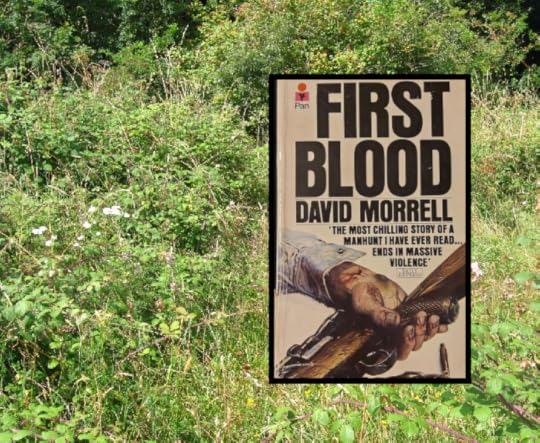
No review can do FIRST BLOOD justice; it speaks for itself and is simply one of the five best novels published. 5 star rating. Read it and be amazed.
In 2025, it's been 53 years since FIRST BLOOD was published and it's never been out of print. More info about it and David Morrell on https://davidmorrell.net/. Follow David on Goodreads and experience FIRST BLOOD all over again. Or draw FIRST BLOOD on the quintessential thriller.
** 25th reading of FIRST BLOOD**

May 20, 2010
First Blood, a first read 40 years too late in reading for many. The author starts the story with introducing a name, Rambo and having the reader build an image of this character in mind, he successfully paints the portrait partly introducing Rambo, the long hair, the rough looking image, his sleeping carry sack on the road drifting wondering and then loads us with confrontation a police officer that seems to have issues with his hair, his wondering, his smarts and his look of a man that can take care of himself. Imagine you never saw Stallone and the movie and so far we are slowly introduced to Rambo and who he is.
We start to learn some more of Rambo when he reaches a situation involving water in an uncompromising situation and then the memories with water and a hole involving bamboo come flooding back and we now start to build a better understanding of the darkness, the shadows that haunt him. I love the way he slowly introduces us to a scene of confrontation and slowly reels us to learn the ways that John behaves. You feel for John he is being treated unfairly almost a victim of discrimination in the beginning as a kind racial issue in a way, as if he was someone from another country, a people that the officer hated, maybe a person he once fought against, the officer seems to not like his looks, but he will learn that deep down what he doesn't like is maybe that could be another version of him walking around somebody he may have been or could have been and gone loose in the wilderness taking heads out killing and fighting a war in his own backyard. He could be scared of his own image in this man and wanted to rip and drive him to the ground and that was the biggest upset, Rambo was no vagrant to be meddled with. This was no enemy, a man like himself both fought in wars, he is all American Rambo, he should have been left alone to his own devices but alas our dear author David Morrell chooses to use this bullying officer to bring out his worst but most skilled ability to kill he shows us an unforgettable Rambo, a name, a character who would did take the world by storm and be engraved in every book reader and moviegoers mind across the world.
Rambo a veteran back from a brutal war that took probably the best of himself away in another hemisphere and now the person left behind having to assimilate back to society with vivid memories, terrible nightmares, for only a brief experience can bring back all the pain, all traumatic experiences, bring about fear, a rash behavior, unflinching and with no prisoners. Sheer Craftsmanship in telling this very human tale of the evil that men do and see coming home to roost, told in a way that only David could have told it. Getting you off to a good start is the key of great storytelling, introducing parts and a name of the character stuff of great stories, you only have to read Lolita or Moby Dick or Metamorphosis to see great examples of first sentences, then after aperture he has you fully encompassed and captivated to the very end of this train ride going of the rails destined for a explosive climax.
Below is what i asked this author in an interview I hosted, I asked a few questions on this book and the movie adaptation, to read the rest of the interview on writing and his new Victorian London mystery Murder as a Fine Art visit it on my webpage> http://more2read.com/review/interview-with-david-morrell/

(Courtesy of Carolco Pictures)
Lou Pendergrast:
What inspired you to write First Blood?
David Morrell:
I was a graduate student at Penn State in the late 1960s. I taught composition classes there, and many of my students were Vietnam veterans. They told me about their difficulty adjusting to peace time—sweats, nightmares, reaction to loud noises, difficulties relying to people. We now call this post-traumatic stress disorder. Back then it was called battle fatigue. I decided to write First Blood, about a returned veteran who was trying to adjust to the disturbing knowledge that he was skilled at killing. At the time, the United States was ravaged by hundreds of riots, many of which were against the Vietnam War. It was as if a different kind of war was happening at home. Basically, First Blood became an antiwar allegory about a version of the Vietnam war occurring in the U.S.
Lou Pendergrast:
What did the movie adaptation of your novel First Blood do for you creation of Rambo?
David Morrell:
The character in my novel is extremely angry and bitter. The character in the film adaptation is portrayed as a victim. The plot is mostly the same, but the interpretation is different. On some Blu-Ray DVDs of First Blood, I provided a full-length audio commentary about the differences between the novel and the film.
Lou Pendergrast:
What was the popularity of your book like after the movie adaptation of your book was out?
David Morrell:
The novel was published 41 years ago, and it’s never been out of print. The Rambo films brought attention to the novel, of course, but even before the release of the first film in 1982, First Blood was taught in high schools and colleges across the United States.
We start to learn some more of Rambo when he reaches a situation involving water in an uncompromising situation and then the memories with water and a hole involving bamboo come flooding back and we now start to build a better understanding of the darkness, the shadows that haunt him. I love the way he slowly introduces us to a scene of confrontation and slowly reels us to learn the ways that John behaves. You feel for John he is being treated unfairly almost a victim of discrimination in the beginning as a kind racial issue in a way, as if he was someone from another country, a people that the officer hated, maybe a person he once fought against, the officer seems to not like his looks, but he will learn that deep down what he doesn't like is maybe that could be another version of him walking around somebody he may have been or could have been and gone loose in the wilderness taking heads out killing and fighting a war in his own backyard. He could be scared of his own image in this man and wanted to rip and drive him to the ground and that was the biggest upset, Rambo was no vagrant to be meddled with. This was no enemy, a man like himself both fought in wars, he is all American Rambo, he should have been left alone to his own devices but alas our dear author David Morrell chooses to use this bullying officer to bring out his worst but most skilled ability to kill he shows us an unforgettable Rambo, a name, a character who would did take the world by storm and be engraved in every book reader and moviegoers mind across the world.
Rambo a veteran back from a brutal war that took probably the best of himself away in another hemisphere and now the person left behind having to assimilate back to society with vivid memories, terrible nightmares, for only a brief experience can bring back all the pain, all traumatic experiences, bring about fear, a rash behavior, unflinching and with no prisoners. Sheer Craftsmanship in telling this very human tale of the evil that men do and see coming home to roost, told in a way that only David could have told it. Getting you off to a good start is the key of great storytelling, introducing parts and a name of the character stuff of great stories, you only have to read Lolita or Moby Dick or Metamorphosis to see great examples of first sentences, then after aperture he has you fully encompassed and captivated to the very end of this train ride going of the rails destined for a explosive climax.
Excerpts
"Sure you'll fight. Sure. What a laugh. Take a look at yourself. Already you know what this place reminds you of. Two days in that cramped cell and you'll be pissing down your pant-legs. 'You've got to understand I can't stay in there.' He could not stop himself. 'The wet. I can't stand being closed in where it's wet.' The hole, he was thinking, his scalp alive. The bamboo grate over the top. Water seeping through the dirt, the walls crumbling, the inches of slimy muck he had to try sleeping on. Tell him, for God's sake. Screw, you mean beg him."
" 'Green beret?' Lester said. The voice was starting to repeat, broke up, never came back again. It started to rain, light drops speckling the dust and dirt, spotting Teasle's pants and soaking in, pelting cool on his bare back. The black clouds shadowed over. Lighting crackled and lit up the cliff like a spotlight, and as fast as the spotlight came on, it went off and the shadows returned, bringing with them shock waves of exploding thunder. 'Medal of Honor?' Lester said to Teasle. 'Is that what you brought us after? A war hero? A f*****g Green Beret?' "
Below is what i asked this author in an interview I hosted, I asked a few questions on this book and the movie adaptation, to read the rest of the interview on writing and his new Victorian London mystery Murder as a Fine Art visit it on my webpage> http://more2read.com/review/interview-with-david-morrell/

(Courtesy of Carolco Pictures)
Lou Pendergrast:
What inspired you to write First Blood?
David Morrell:
I was a graduate student at Penn State in the late 1960s. I taught composition classes there, and many of my students were Vietnam veterans. They told me about their difficulty adjusting to peace time—sweats, nightmares, reaction to loud noises, difficulties relying to people. We now call this post-traumatic stress disorder. Back then it was called battle fatigue. I decided to write First Blood, about a returned veteran who was trying to adjust to the disturbing knowledge that he was skilled at killing. At the time, the United States was ravaged by hundreds of riots, many of which were against the Vietnam War. It was as if a different kind of war was happening at home. Basically, First Blood became an antiwar allegory about a version of the Vietnam war occurring in the U.S.
Lou Pendergrast:
What did the movie adaptation of your novel First Blood do for you creation of Rambo?
David Morrell:
The character in my novel is extremely angry and bitter. The character in the film adaptation is portrayed as a victim. The plot is mostly the same, but the interpretation is different. On some Blu-Ray DVDs of First Blood, I provided a full-length audio commentary about the differences between the novel and the film.
Lou Pendergrast:
What was the popularity of your book like after the movie adaptation of your book was out?
David Morrell:
The novel was published 41 years ago, and it’s never been out of print. The Rambo films brought attention to the novel, of course, but even before the release of the first film in 1982, First Blood was taught in high schools and colleges across the United States.
May 19, 2025
Heutzutage wird Rambo belächelt und ist ein Synonym für einen rücksichtlosen Kämpfer-Typ im Law-and-Ordner-Stil. Dabei ist First Blood, also die Romanvorlage für den Film Rambo I, alles andere als ein seichter Actionroman. Genauso wenig, wie die filmische Umsetzung, die letztlich sogar noch besser als das Buch ist. Die Romanvorlage stammt aus dem Jahr 1971 und auch hier wird Rambo als gebrochener Mensch, der heimatlos und gesellschaftlich ausgegrenzt sich einen Weg in ein neues Leben sucht, dargestellt. Er wird von der Polizeigewalt drangsaliert, die den Krieg gegen ihn anfängt, also das erste Blut vergießt, was den Originalbuchtitel erklärt.
Der Film weicht an mehreren Stellen vom Roman ab und alle Punkte hierfür sind gerechtfertigt. Stallone bringt im Film eigentlich keine einzige Person um bei seiner Flucht aus der Polizeistation und anschließender Verfolgung durch die Wälder Kentuckys. Ein Polizist stützt aus einem Hubschrauber, der einzige Tote im Film. Im Buch sterben dagegen reihenweise Menschen. John Rambo kennt bei David Morrell keine Gnade und hat deutlich mehr Waffengewalt. Dagegen ist der Film mit der One-Man-Army von Stallone eher ein Survival-Film mit Messern und Schlingen. Das, was uns als Teenager auch so fasziniert hat an dem Film. Er war der Beginn eines neuen Genres von Actionfilmen.
Trotz der viel größeren Gewalttätigkeit im Buch hat mir der Roman gefallen, denn auch hier kommen die Traumata des Vietnamkriegers gut zum Ausdruck. Es ist ein Thriller mit mehr Tiefgang als man denkt. Einzig der Schluss ist nicht nach meinem Geschmack. Da bin ich vielleicht auch wieder zu sehr durch den Film vorbelastet.
Der Film weicht an mehreren Stellen vom Roman ab und alle Punkte hierfür sind gerechtfertigt. Stallone bringt im Film eigentlich keine einzige Person um bei seiner Flucht aus der Polizeistation und anschließender Verfolgung durch die Wälder Kentuckys. Ein Polizist stützt aus einem Hubschrauber, der einzige Tote im Film. Im Buch sterben dagegen reihenweise Menschen. John Rambo kennt bei David Morrell keine Gnade und hat deutlich mehr Waffengewalt. Dagegen ist der Film mit der One-Man-Army von Stallone eher ein Survival-Film mit Messern und Schlingen. Das, was uns als Teenager auch so fasziniert hat an dem Film. Er war der Beginn eines neuen Genres von Actionfilmen.
Trotz der viel größeren Gewalttätigkeit im Buch hat mir der Roman gefallen, denn auch hier kommen die Traumata des Vietnamkriegers gut zum Ausdruck. Es ist ein Thriller mit mehr Tiefgang als man denkt. Einzig der Schluss ist nicht nach meinem Geschmack. Da bin ich vielleicht auch wieder zu sehr durch den Film vorbelastet.
February 3, 2026
I love the first Rambo movie, so it's a little embarrassing that I had no idea it was actually based on a novel until just a few days ago... And now I find myself liking the novel even more than the movie!
Published in 1972, "First Blood" is a well-written, gritty and violent thriller following John Rambo, a troubled, young Vietnam veteran who ends up in a one-man war against a small-town sheriff, after being wrongfully(?) arrested for vagrancy. Things quickly spiral out of control when he escapes jail, leading to a deadly manhunt through the woods, hills, and caves of rural Kentucky - and ending in utter carnage.
I especially liked that the novel alternates equally between the POV of Rambo and the sheriff. And as opposed to the movie, it's never clear who (or if any of them) is actually the good guy or the bad guy. They're both at fault, but I actually found myself sympathizing much more with the sheriff as the story progressed. Rambo is definitely not the "innocent" PTSD-suffering hero we all know from the movie version, that's for sure.
Both men are however victims of wounded pride, arrogance, and loss of purpose. Both are also struggling with alienation and rejection from society, the cycle of violence, and the horrors of war. Unsurprisingly, nobody wins in the end...
Published in 1972, "First Blood" is a well-written, gritty and violent thriller following John Rambo, a troubled, young Vietnam veteran who ends up in a one-man war against a small-town sheriff, after being wrongfully(?) arrested for vagrancy. Things quickly spiral out of control when he escapes jail, leading to a deadly manhunt through the woods, hills, and caves of rural Kentucky - and ending in utter carnage.
I especially liked that the novel alternates equally between the POV of Rambo and the sheriff. And as opposed to the movie, it's never clear who (or if any of them) is actually the good guy or the bad guy. They're both at fault, but I actually found myself sympathizing much more with the sheriff as the story progressed. Rambo is definitely not the "innocent" PTSD-suffering hero we all know from the movie version, that's for sure.
Both men are however victims of wounded pride, arrogance, and loss of purpose. Both are also struggling with alienation and rejection from society, the cycle of violence, and the horrors of war. Unsurprisingly, nobody wins in the end...

September 24, 2021
“His name was Rambo, and he was just some nothing kid for all anybody knew, standing by the pump of a gas station at the outskirts of Madison, Kentucky.”
[3.5/5]
First of all, I’d like to start by saying I’ve never seen First Blood (1982) in my life, the movie which is supposed to be based on this book. Besides, I didn’t have any idea what I would find inside this story. I mean, I know it’s quite common that people read this novel after they have seen the film adaptation, but my case was a little different.
First Blood was a compelling and fascinating story, and I can tell that I was really into the novel quite a bit – at least, the first and second parts were actually like a page-turner.
Rambo was definitely my favorite character because he portrays that kind of antihero whose backstory is quite sad and dark at the same time. Somehow his behavior and his thoughts are understandable throughout the story; however, it’s possible to think that Rambo is carrying out his plans in a completely wrong way. Well, at least this idea was on my mind while I was reading the novel.
My only problem with this book was the last part, which was a little bit disappointing, boring and “different” to the rest of the book. I’m not sure if this was my own impression, but I felt like the author had lost the rhythm of the story and the interest for the characters, as though the compelling events in the book had just disappeared. On the other hand, the ending part was a good way to finish the Rambo’s story, even though it was a bit predictable, and certainly I was expecting something more. This wasn’t a big problem for me though.
As I said at the beginning of my review, I’ve not seen the film yet, but I was really curious about it that I decided to look for a video which was related to the movie and watch it. That video was Top Scenes from Rambo: First Blood which is on YouTube and, to be quite honest, I was able to identify so many differences between the book and the film in just twenty minutes, which is approximately the video length. Even now, I’m really curious to know why this movie is so famous and if this is one of those unusual cases where the movie is better than the book. We’ll see.
[3.5/5]
First of all, I’d like to start by saying I’ve never seen First Blood (1982) in my life, the movie which is supposed to be based on this book. Besides, I didn’t have any idea what I would find inside this story. I mean, I know it’s quite common that people read this novel after they have seen the film adaptation, but my case was a little different.
First Blood was a compelling and fascinating story, and I can tell that I was really into the novel quite a bit – at least, the first and second parts were actually like a page-turner.
Rambo was definitely my favorite character because he portrays that kind of antihero whose backstory is quite sad and dark at the same time. Somehow his behavior and his thoughts are understandable throughout the story; however, it’s possible to think that Rambo is carrying out his plans in a completely wrong way. Well, at least this idea was on my mind while I was reading the novel.
My only problem with this book was the last part, which was a little bit disappointing, boring and “different” to the rest of the book. I’m not sure if this was my own impression, but I felt like the author had lost the rhythm of the story and the interest for the characters, as though the compelling events in the book had just disappeared. On the other hand, the ending part was a good way to finish the Rambo’s story, even though it was a bit predictable, and certainly I was expecting something more. This wasn’t a big problem for me though.
As I said at the beginning of my review, I’ve not seen the film yet, but I was really curious about it that I decided to look for a video which was related to the movie and watch it. That video was Top Scenes from Rambo: First Blood which is on YouTube and, to be quite honest, I was able to identify so many differences between the book and the film in just twenty minutes, which is approximately the video length. Even now, I’m really curious to know why this movie is so famous and if this is one of those unusual cases where the movie is better than the book. We’ll see.

May 8, 2022
Growing up in the 80s, if you hadn’t watched First Blood multiple times, you weren’t allowed to fly the Stars and Stripes on the 4th of July. John Rambo was as American as mom and apple pie. But before he was portrayed as superhuman robo-soldier by Stallone, David Morrell gave us a gritty, early 70s Vietnam vet that was tired of being fucked with. No cheesy one-liners. No impossible sideshow trick shots with a bow and arrow from five miles away. No dodging a hail of bullets from an army of soldiers that couldn’t shoot straight.
Right off the bat, we’re shown some subtle differences. We open with Rambo hitchhiking in a small Kentucky town, not Washington. Yes, Sheriff Teasle is a judgmental horses ass of a cop, but we learn of his backstory, particularly using his Korean War experiences in his pursuit of Rambo. Rambo’s character also has much more depth… and flaws. This gives the story a nice three-dimensional feel. You may not always agree with their motives, but you can sympathize with them more. You don’t always root for Rambo. You can see where he makes his missteps. His PTSD is more subtle here. Touched upon, but not overtly beating you over the head. For me, it made the story more believable and enjoyable. The only character that seemed out of place was Captain Trautman. He literally had the personality of a wet dish cloth, and I’m not sure why he was even there. But, that’s a minor gripe. First Blood is full of that wonderful 70s grittiness, and relies on the simplicity of not judging a book by its cover.
4.5 Kill Shots out of 5
Right off the bat, we’re shown some subtle differences. We open with Rambo hitchhiking in a small Kentucky town, not Washington. Yes, Sheriff Teasle is a judgmental horses ass of a cop, but we learn of his backstory, particularly using his Korean War experiences in his pursuit of Rambo. Rambo’s character also has much more depth… and flaws. This gives the story a nice three-dimensional feel. You may not always agree with their motives, but you can sympathize with them more. You don’t always root for Rambo. You can see where he makes his missteps. His PTSD is more subtle here. Touched upon, but not overtly beating you over the head. For me, it made the story more believable and enjoyable. The only character that seemed out of place was Captain Trautman. He literally had the personality of a wet dish cloth, and I’m not sure why he was even there. But, that’s a minor gripe. First Blood is full of that wonderful 70s grittiness, and relies on the simplicity of not judging a book by its cover.
4.5 Kill Shots out of 5

April 2, 2010
Allow me to introduce John Rambo. He's a little surly since coming home from Vietnam, so please forgive his outbursts. It doesn't help that Sheriff Teasle is constantly trying to throw my friend out of the small, back-wooded town of Madison, Kentucky. You see, the good old sheriff has a problem when someone doesn't take his words to heart. Rambo just happens to be that someone. I tried talking to Rambo, but all he kept saying was "Adrian! Adrian!" I know…I was just as confused. Anyways, Teasle pushed Rambo too far; he wanted Rambo to get a haircut and a shave, thus making my buddy have flashbacks to his days as a POW. Rambo escaped from his tiny cell, killing and maiming a considerable amount of boys that I dare say were merely placed in the setting and situation for a higher body count for the story.
........STOP READING IF YOU HAVE ONLY WATCHED THE MOVIE.......
.................REAL ENDING GIVEN AWAY.......................
So Rambo goes off into the woods, like he's some type of Hansel and fends off National Guardsman and police officers and civilians that are probably so loaded that they don't even really know what end of the rifle is supposed to be pointed away from them. The body count really starts to soar at this point. Oh, I should tell you that my name is Captain Sam Trautman, and I've been hired to hunt Rambo. For the most part, I'm happy watching these yokels get off-ed by one of the best. But there is only so much carnage that I'll allow, so when the sheriff and Rambo exchange some thoughts in the form of lead, hitting each other in the process, I felt I owed it to my employers to kill Rambo myself. Granted, I used a shotgun and shot him in the head, but that's what you're supposed to do when a wild dog is on the loose. I tried to tell the sheriff, but it seems he has an important appointment in Valhalla that he can't be late for.
I guess in one way or another, this story is supposed to be about the denigration of our boys that came home from Vietnam. Perhaps we should have given them a parade or even said "we're proud of you, thank you." I guess Rambo never heard that. Well, pal, sorry for what I had to do; it was never personal. And, one more thing, thanks for all you did for us over there.
VERY HIGHLY RECOMMENDED
........STOP READING IF YOU HAVE ONLY WATCHED THE MOVIE.......
.................REAL ENDING GIVEN AWAY.......................
So Rambo goes off into the woods, like he's some type of Hansel and fends off National Guardsman and police officers and civilians that are probably so loaded that they don't even really know what end of the rifle is supposed to be pointed away from them. The body count really starts to soar at this point. Oh, I should tell you that my name is Captain Sam Trautman, and I've been hired to hunt Rambo. For the most part, I'm happy watching these yokels get off-ed by one of the best. But there is only so much carnage that I'll allow, so when the sheriff and Rambo exchange some thoughts in the form of lead, hitting each other in the process, I felt I owed it to my employers to kill Rambo myself. Granted, I used a shotgun and shot him in the head, but that's what you're supposed to do when a wild dog is on the loose. I tried to tell the sheriff, but it seems he has an important appointment in Valhalla that he can't be late for.
I guess in one way or another, this story is supposed to be about the denigration of our boys that came home from Vietnam. Perhaps we should have given them a parade or even said "we're proud of you, thank you." I guess Rambo never heard that. Well, pal, sorry for what I had to do; it was never personal. And, one more thing, thanks for all you did for us over there.
VERY HIGHLY RECOMMENDED
October 4, 2021
Where to begin with this one. Let’s see…
First off I don’t usually read action thriller type stories because they typically personify ex military geniuses or washed up cops battling their own ego’s… wow I just summed up the whole book… lol.
Okay, why did I read it then? Because the original First Blood movie was filmed in my hometown, Hope British Columbia, and it seemed like a novel choice (no pun intended…). The first movie was really good (the sequels were totally meh and definitely Hollywood cash grabs; I won’t get too into it here but I feel the first movie more appealed to the psychological where the second appealed to the raging hormones of gun and action loving man-childs lol).
Back to the novel though, it was surprisingly well written and I was also surprised by how complete it seemed. It would have been totally fine on its own though I’m aware there were some sequels to the book (again, I blame Hollywood…). There was some psychological and survival aspects to the story that made me sympathize with the characters (Even though Rambo was way more brutal than his movie portrayal).
I gave it 3 stars because I thought it was worth a read but not worth going back and reading again, I don’t think there is anything to be deciphered or analyzed from the book and I will not be hunting down the sequels or any other books by this author anytime soon, though I won’t rule any of the books out if they come across my path…
First off I don’t usually read action thriller type stories because they typically personify ex military geniuses or washed up cops battling their own ego’s… wow I just summed up the whole book… lol.
Okay, why did I read it then? Because the original First Blood movie was filmed in my hometown, Hope British Columbia, and it seemed like a novel choice (no pun intended…). The first movie was really good (the sequels were totally meh and definitely Hollywood cash grabs; I won’t get too into it here but I feel the first movie more appealed to the psychological where the second appealed to the raging hormones of gun and action loving man-childs lol).
Back to the novel though, it was surprisingly well written and I was also surprised by how complete it seemed. It would have been totally fine on its own though I’m aware there were some sequels to the book (again, I blame Hollywood…). There was some psychological and survival aspects to the story that made me sympathize with the characters (Even though Rambo was way more brutal than his movie portrayal).
I gave it 3 stars because I thought it was worth a read but not worth going back and reading again, I don’t think there is anything to be deciphered or analyzed from the book and I will not be hunting down the sequels or any other books by this author anytime soon, though I won’t rule any of the books out if they come across my path…
June 28, 2025
4☆
“𝙍𝙖𝙢𝙗𝙤. 𝘾𝙤𝙢𝙥𝙡𝙞𝙘𝙖𝙩𝙚𝙙, 𝙩𝙧𝙤𝙪𝙗𝙡𝙚𝙙, 𝙝𝙖𝙪𝙣𝙩𝙚𝙙, 𝙩𝙤𝙤 𝙤𝙛𝙩𝙚𝙣 𝙢𝙞𝙨𝙪𝙣𝙙𝙚𝙧𝙨𝙩𝙤𝙤𝙙. 𝙄𝙛 𝙮𝙤𝙪’𝙫𝙚 𝙝𝙚𝙖𝙧𝙙 𝙖𝙗𝙤𝙪𝙩 𝙝𝙞𝙢 𝙗𝙪𝙩 𝙝𝙖𝙫𝙚𝙣’𝙩 𝙢𝙚𝙩 𝙝𝙞𝙢 𝙗𝙚𝙛𝙤𝙧𝙚, 𝙝𝙚’𝙨 𝙖𝙗𝙤𝙪𝙩 𝙩𝙤 𝙨𝙪𝙧𝙥𝙧𝙞𝙨𝙚 𝙮𝙤𝙪.”
For those that know me personally, they know one of my secrets…and it’s that I’m a huge Rambo fan! I’ve watched all the movies many times, and they never fail to captivate me. In fact just last year, when I was sick, I watched all 5 movies in the course of one single day! It was so comforting! I’m embarrassed to say though that it took me the longest time to learn Rambo actually originated from a book! When I did, I absolutely had to get my hands on it and experience what started it all.
↬ EXPECT
● High body count
● Fast-paced action thriller
● A manhunt
● Small town police chief vs dangerously skilled war veteran (whose side will you be on?)
● A significantly different ending than the movie*
RAMBO
What I love about Rambo is how complex his character is. Rambo embodies the darker side of human nature, and the fear of rejection that’s nestled inside of us all. Designed to be the ultimate highly trained killer, he’s also deeply troubled and disaffected even if completely unhinged. The story sheds light on the result of the mishandling and mistreatment of a war veteran.
“Christ, he thought. Six months back from the war and still he had the urge to destroy what was left of what he had eaten so he would not leave a trace of where he had been.”
“Or kill yourself. You were trained to do that too. If things became too much.”
Movie vs. Book
Whereas the movie version focuses more on the “root for the underdog theme,” the book focuses on the true internal terror that can ensue as a result of a provoked veteran suffering from PTSD. How could someone like Rambo possibly reintegrate into a normal society abandoning years of trauma, torture, murder, and war? Both versions of the story barely take place when the world came to recognize what PTSD was, let alone understand it.
“But you saw he wasn’t acting normally, and you didn’t try very hard to find out why. He was a vagrant, you said. What the hell else could he have been? He gave up three years to enlist in a war that was supposed to help his country, and the only trade he came out with is how to kill. Where was he supposed to get a job that needed experience like that?”
Now, I may be tainted from watching the movie first, but I’m going to have to say this is a clear case where I’m deeming the movie far more superior to the book. That powerful monologue at the end of the movie gets me every single time. It makes me sob my soul out. Stallone flawlessly nailed it. The anguish and the pain in his breakdown is so realistic!
Hands down, I also very much prefer the movie ending to the book ending.
*The book ending was beyond depressing, and I am so glad they altered the movie. Though I understand what the author was striving for, as expressed in his introduction, I don’t agree it was the best course of action. I naturally found myself rooting for Rambo the entire time even though the author tried hard to represent the police chief’s side just as well to conflict reader’s views on who the villain vs the hero is.
It could just be my undying attraction to siding with and defending the weak, the misunderstood, the mistreated, the mentally ill, the unrepresented, and the victims in this life…but it has always felt right to me to side with Rambo. Like countless others drafted into the Vietnam war, he never asked to become what he was trained to become. He never asked to fight another man’s war. And all for what? Only to return to be met with a divided nation that showered them with hostilities, shame, and ungratefulness.
“I don’t kill for a living.”
“Of course not. You tolerate a system that lets others do it for you. And when they come back from the war, you can’t stand the smell of death on them.”
Now Playing: It’s a Long Road by Dan Hill 🎶
“𝙍𝙖𝙢𝙗𝙤. 𝘾𝙤𝙢𝙥𝙡𝙞𝙘𝙖𝙩𝙚𝙙, 𝙩𝙧𝙤𝙪𝙗𝙡𝙚𝙙, 𝙝𝙖𝙪𝙣𝙩𝙚𝙙, 𝙩𝙤𝙤 𝙤𝙛𝙩𝙚𝙣 𝙢𝙞𝙨𝙪𝙣𝙙𝙚𝙧𝙨𝙩𝙤𝙤𝙙. 𝙄𝙛 𝙮𝙤𝙪’𝙫𝙚 𝙝𝙚𝙖𝙧𝙙 𝙖𝙗𝙤𝙪𝙩 𝙝𝙞𝙢 𝙗𝙪𝙩 𝙝𝙖𝙫𝙚𝙣’𝙩 𝙢𝙚𝙩 𝙝𝙞𝙢 𝙗𝙚𝙛𝙤𝙧𝙚, 𝙝𝙚’𝙨 𝙖𝙗𝙤𝙪𝙩 𝙩𝙤 𝙨𝙪𝙧𝙥𝙧𝙞𝙨𝙚 𝙮𝙤𝙪.”
For those that know me personally, they know one of my secrets…and it’s that I’m a huge Rambo fan! I’ve watched all the movies many times, and they never fail to captivate me. In fact just last year, when I was sick, I watched all 5 movies in the course of one single day! It was so comforting! I’m embarrassed to say though that it took me the longest time to learn Rambo actually originated from a book! When I did, I absolutely had to get my hands on it and experience what started it all.
↬ EXPECT
● High body count
● Fast-paced action thriller
● A manhunt
● Small town police chief vs dangerously skilled war veteran (whose side will you be on?)
● A significantly different ending than the movie*
RAMBO
What I love about Rambo is how complex his character is. Rambo embodies the darker side of human nature, and the fear of rejection that’s nestled inside of us all. Designed to be the ultimate highly trained killer, he’s also deeply troubled and disaffected even if completely unhinged. The story sheds light on the result of the mishandling and mistreatment of a war veteran.
“Christ, he thought. Six months back from the war and still he had the urge to destroy what was left of what he had eaten so he would not leave a trace of where he had been.”
“Or kill yourself. You were trained to do that too. If things became too much.”
Movie vs. Book
Whereas the movie version focuses more on the “root for the underdog theme,” the book focuses on the true internal terror that can ensue as a result of a provoked veteran suffering from PTSD. How could someone like Rambo possibly reintegrate into a normal society abandoning years of trauma, torture, murder, and war? Both versions of the story barely take place when the world came to recognize what PTSD was, let alone understand it.
“But you saw he wasn’t acting normally, and you didn’t try very hard to find out why. He was a vagrant, you said. What the hell else could he have been? He gave up three years to enlist in a war that was supposed to help his country, and the only trade he came out with is how to kill. Where was he supposed to get a job that needed experience like that?”
Now, I may be tainted from watching the movie first, but I’m going to have to say this is a clear case where I’m deeming the movie far more superior to the book. That powerful monologue at the end of the movie gets me every single time. It makes me sob my soul out. Stallone flawlessly nailed it. The anguish and the pain in his breakdown is so realistic!
Hands down, I also very much prefer the movie ending to the book ending.
*The book ending was beyond depressing, and I am so glad they altered the movie. Though I understand what the author was striving for, as expressed in his introduction, I don’t agree it was the best course of action. I naturally found myself rooting for Rambo the entire time even though the author tried hard to represent the police chief’s side just as well to conflict reader’s views on who the villain vs the hero is.
It could just be my undying attraction to siding with and defending the weak, the misunderstood, the mistreated, the mentally ill, the unrepresented, and the victims in this life…but it has always felt right to me to side with Rambo. Like countless others drafted into the Vietnam war, he never asked to become what he was trained to become. He never asked to fight another man’s war. And all for what? Only to return to be met with a divided nation that showered them with hostilities, shame, and ungratefulness.
“I don’t kill for a living.”
“Of course not. You tolerate a system that lets others do it for you. And when they come back from the war, you can’t stand the smell of death on them.”
Now Playing: It’s a Long Road by Dan Hill 🎶
↻ ◁ II ▷ ↺
0:00 ㅇ─────── 3:26

January 23, 2022
Most readers are likely coming to this novel after having seen the Sylvester Stallone “Rambo” movie many years previously. That’s certainly the case for me. While movies are always different from their source material, that is especially true in this case. Yes, we still have the basic former Green Beret fighting solo as an underdog against an army of forces against him. He’s been pushed around and told to get out-of-town even though he’s done nothing wrong other than have long hair and a beard. It’s hard for anybody to be bullied like that. But whereas the movie focused on a single hero character, the novel offers two: Rambo (no first name given in the book) and Wilfred Teasle, the local sheriff. Whether or not either one is a hero is open to debate.
In the author’s forward, he discusses his motivations for writing the book and what he wanted to achieve by creating these two characters and what they represented in American culture. The forward in my copy of the book was written years after the movie and I would strongly urge readers to avoid reading it until after completing the novel itself. Major spoilers are included, even the ending, which is far different from the movie.
The novel is told from both main characters’ points of view, alternating chapters for the most part and offering us plenty of insight into their thoughts, motivations, and personal history. Rambo is clearly suffering from what today we call PTSD. The sheriff is a former decorated soldier from the Korean War and a competent sheriff. When these two clash, it’s unclear who will have the upper hand: the highly trained Green Beret with all of his skills or the sheriff who can bring to bear a vast array of government resources to hunt down his prey. Here again, the movie greatly differs. Here, Rambo is not a near-super-powered being but rather, an entirely human character who gets hurt, bleeds, and suffers tremendously. The violence is far greater than in the movie. Sometimes it's brutal and sometimes it’s almost a simple off-hand comment about another good friend being gunned down but it always drives the narrative as well as the two characters.
After completing the book’s final pages and closing the cover I realized I had just read one of the greatest chase novels I’ve ever encountered. And a fascinating character study at the same time.
In the author’s forward, he discusses his motivations for writing the book and what he wanted to achieve by creating these two characters and what they represented in American culture. The forward in my copy of the book was written years after the movie and I would strongly urge readers to avoid reading it until after completing the novel itself. Major spoilers are included, even the ending, which is far different from the movie.
The novel is told from both main characters’ points of view, alternating chapters for the most part and offering us plenty of insight into their thoughts, motivations, and personal history. Rambo is clearly suffering from what today we call PTSD. The sheriff is a former decorated soldier from the Korean War and a competent sheriff. When these two clash, it’s unclear who will have the upper hand: the highly trained Green Beret with all of his skills or the sheriff who can bring to bear a vast array of government resources to hunt down his prey. Here again, the movie greatly differs. Here, Rambo is not a near-super-powered being but rather, an entirely human character who gets hurt, bleeds, and suffers tremendously. The violence is far greater than in the movie. Sometimes it's brutal and sometimes it’s almost a simple off-hand comment about another good friend being gunned down but it always drives the narrative as well as the two characters.
After completing the book’s final pages and closing the cover I realized I had just read one of the greatest chase novels I’ve ever encountered. And a fascinating character study at the same time.

September 18, 2017
I read this book when I was 14 and thumbing through it now I seem to remember most of it, so it really must've impressed a lot. The Swedish title, (back translated "The Duel") actually improves upon the book (but had to stand back after the success of the movie, of course). Already then, I was so envious of my friend, who had a very nice earlier hardback without the movie tie-in cover. Superficially small, the differences between book and film actually makes this quite a different story and if you liked (or disliked) the film, I can recommend this read. The returning Vietnam soldier John gets off on the wrong foot with a sheriff of a small town and their quarrel goes onto the aforementioned duel, which escalates into deadly horror as none of the men are capable of downing even a small helping of pride - or even slowing down. Brutal pace, a manhunt, a war between two sides of which you're not inclined to take either.

April 26, 2020
A different story, theme and ending than the movie. In fact, the two might be considered diametrically opposed once you absorb the messages. It is perhaps ironic that a novel that covers the effect of war on the psyche turns into the buzz word for militarism. As a Special Forces veteran I found the treatment of SF interesting. We are not all who we appear to be.

January 23, 2022
Never realized the movie was based off a book. Yes, it’s Rambo. Yes, the book is better than the movie.

March 27, 2017
I'm ashamed to say that I had no idea First Blood was a book before it was a movie. Glad to have this error corrected and was equally glad to have gotten the chance to read this amazing book. Now, there were some drastic changes from film to print or print to film more like. And that's okay. I never expect the movie to be just like the film. There have to be differences, so long as the essence remains intact. And for the most part, the essence of First Blood, be it Sylvester Stallone or just the imaginative projection from hearing how David Morrell describes John Rambo, is beautifully captured, more so I would say in the book because we are given the characters internal thoughts. The director and Stallone for his part did a great job conveying through action and struggle Rambo's internal conflicts, but in the book, it becomes, even more, clearer. Did you know that when Rambo arrived in that pinewoods mountain town, he had been kicked out, or "pushed," as he calls it, at least a dozen times? That is where the "pushed" thing comes from during the movie that doesn't make much sense, but in the book it does.
No spoilers here, but the end is veeerrryyy different, and I'm not sure which one I like the most. I feel for Rambo in both scenarios, and I love that end scene monolog he was with his old unit commander in the movie. But in the book...dang...it's just... I've said enough.
As far as veteran issues go, both film and book appealed to me and wrung the gauntlet of emotions. Perhaps more so in the movie than here, despite the benefit of reading Rambo's internal thoughts. In the book, I did enjoy the added polar conflicts between the sheriff, a Korean War veteran, and Rambo, a Vietnam veteran, and how each of them refuses to surrender to the other, more so than in the movie. In the movie, the sheriff is more of a chump and doesn't know what he's walking into, and just seems to be a dick for no reason. In the book, he is more clearly defined. Especially with what happens during the first hunting party. DAMN! is all I can say about that!
Overall, if you're a fan of the movie, you may want to check out the book. I have few doubts you'll be disappointed.
No spoilers here, but the end is veeerrryyy different, and I'm not sure which one I like the most. I feel for Rambo in both scenarios, and I love that end scene monolog he was with his old unit commander in the movie. But in the book...dang...it's just... I've said enough.
As far as veteran issues go, both film and book appealed to me and wrung the gauntlet of emotions. Perhaps more so in the movie than here, despite the benefit of reading Rambo's internal thoughts. In the book, I did enjoy the added polar conflicts between the sheriff, a Korean War veteran, and Rambo, a Vietnam veteran, and how each of them refuses to surrender to the other, more so than in the movie. In the movie, the sheriff is more of a chump and doesn't know what he's walking into, and just seems to be a dick for no reason. In the book, he is more clearly defined. Especially with what happens during the first hunting party. DAMN! is all I can say about that!
Overall, if you're a fan of the movie, you may want to check out the book. I have few doubts you'll be disappointed.

September 9, 2022
This of course is the novel that First Blood, the movie starring Sylvester Stallone, was based on. The book was published in 1972, at the height of the Vietnam War. It tells the story of a Vietnam vet named Rambo who had served as a Green Beret and was hitchhiking through Kentucky. His hair is long, he has a long beard, and is unkempt and unwashed. As he arrives in Madison, Kentucky, the local sheriff, Teasle, sees him and promptly gives him a ride to the other side of town and tells him to keep moving. Rambo doesn't appreciate being told what to do so he returns to town and is again escorted back to the town line. He returns again and Teasle arrests him for vagrancy and resisting arrest. He is strip searched, showered, and Teasle wants his hair and beard cut. But as the deputies try to shave him, Rambo rebels and escapes naked into the streets, steals a motorcycle and heads into the surrounding mountains. Thus starts the conflict between Teasle and Rambo which doesn't bode well for either of them.
After reading this, I decided to rewatch the movie version which I hadn't seen since it came out in the 1980s.

Although I had always considered it a really good action yarn, the book was much better in my opinion. There were quite a few differences between the two. First the movie takes place in Washington State rather than Kentucky. I felt that although Rambo was violent in the movie, in the book he was a much deadlier person who killed with little compunction. The book also gave a much better insight into the minds of both Rambo and Teasle alternating chapters describing their thought processes. Neither was very likable but overall the book was a really terrific thriller. And the ending to the story was different from the movie. I have read several other Morrell novels and I'm glad I finally got around to this one which has been on my shelves for several years.
After reading this, I decided to rewatch the movie version which I hadn't seen since it came out in the 1980s.
Although I had always considered it a really good action yarn, the book was much better in my opinion. There were quite a few differences between the two. First the movie takes place in Washington State rather than Kentucky. I felt that although Rambo was violent in the movie, in the book he was a much deadlier person who killed with little compunction. The book also gave a much better insight into the minds of both Rambo and Teasle alternating chapters describing their thought processes. Neither was very likable but overall the book was a really terrific thriller. And the ending to the story was different from the movie. I have read several other Morrell novels and I'm glad I finally got around to this one which has been on my shelves for several years.

October 30, 2022
Dit boek is prima, maar niets voor mij. Ik vond het gebrek aan vrouwen in dit boek zorgwekkend en de schrijfwijze was 'testosteron-schrijven' (de manier waarop werd beschreven hoe het ging donderen toen Teasle zijn geweer pakte), ook is vrijwel het hele boek in Amerikaanse spreektaal geschreven. Dit boek gaat, samengevat, over twee mannen die elkander achtervolgen. Rambo, een getraumatiseerde oorlogsveteraan, komt net terug uit Vietnam. Hij wordt zonder duidelijke reden opgepakt, door Teasle, ook een getraumatiseerde oorlogsveteraan (uit Korea).
In dit boek wordt beschreven hoe de mannen elkaar achtervolgen en achternajagen. Soms kwam er wat psychologische diepgang in voor, dat is de reden dat ik de motivatie kreeg om het uit te lezen, maar dat was iets dat zelden gebeurde. De schrijver gaat niet diep in op de trauma, historische context of achtergrond van de karakters, het blijft vrij oppervlakkig. Ik vond het erg vreemd dat wij dit voor Engels moesten lezen. Ik was blij dat ik het uit had, en heb in ieder geval geleerd wat voor boeken ik minder vind.
Als je zin hebt in een boek met actie en veel mannelijkheid, is het ongetwijfeld iets voor jou. Maar het is niet echt iets voor je als je liever literatuur leest.
In dit boek wordt beschreven hoe de mannen elkaar achtervolgen en achternajagen. Soms kwam er wat psychologische diepgang in voor, dat is de reden dat ik de motivatie kreeg om het uit te lezen, maar dat was iets dat zelden gebeurde. De schrijver gaat niet diep in op de trauma, historische context of achtergrond van de karakters, het blijft vrij oppervlakkig. Ik vond het erg vreemd dat wij dit voor Engels moesten lezen. Ik was blij dat ik het uit had, en heb in ieder geval geleerd wat voor boeken ik minder vind.
Als je zin hebt in een boek met actie en veel mannelijkheid, is het ongetwijfeld iets voor jou. Maar het is niet echt iets voor je als je liever literatuur leest.

November 11, 2009
Not baddly written I was torn between the 3 or 4 and finally went with 3, but it may be some better than that. Sad in its own way...seen the movie but not read the book? Read the book.

March 23, 2014
Ha - picked this up as a lark in a half-price bookstore in Seattle, but not only was this a surprisingly good book, the original Rambo (or "the kid" as he's called through most of the story) makes Stallone's character in the film actually look like a total puss! None of the fancy booby traps to hurt-but-not-kill; no, this Rambo is a psychologically shattered killer who turns the tables and intentionally hunts his pursuers. And yes, he is ultimately a sympathetic character - but sympathetic like a pitbull who was trained to kill children: it's not really the dog's fault...but still, someone better still put him down before he does any more damage.
Biggest surprise of all was the slow realization that it's Sheriff Teasle here who is the real hero of the story, although Morrell does an excellent job of alternating chapters between Rambo's and Teasle's points of view so that you come away with a close - if sometimes too close - understanding of both characters. I went into this book knowing nothing about it other than remembering that someone had said it was "good," but have since read that it did in fact receive very strong reviews when it came out (over 40 years ago) and has since been taught in a number of college lit classes. Surprisingly, it was also Morrell's first book - and he was also later talked into writing the novelizations of both the second and third Rambo movies, since contractually no one else was allowed to write about the Rambo character, (and both these books also differ dramatically from their film versions).
So, a strong recommendation for all action/thriller fans - although I wish I'd had a different edition with a different cover, as it was pretty embarrassing reading this in the Embassy cafeteria!
Biggest surprise of all was the slow realization that it's Sheriff Teasle here who is the real hero of the story, although Morrell does an excellent job of alternating chapters between Rambo's and Teasle's points of view so that you come away with a close - if sometimes too close - understanding of both characters. I went into this book knowing nothing about it other than remembering that someone had said it was "good," but have since read that it did in fact receive very strong reviews when it came out (over 40 years ago) and has since been taught in a number of college lit classes. Surprisingly, it was also Morrell's first book - and he was also later talked into writing the novelizations of both the second and third Rambo movies, since contractually no one else was allowed to write about the Rambo character, (and both these books also differ dramatically from their film versions).
So, a strong recommendation for all action/thriller fans - although I wish I'd had a different edition with a different cover, as it was pretty embarrassing reading this in the Embassy cafeteria!
Displaying 1 - 30 of 1,166 reviews