We do not need another revival. We need a Holy Renaissance. We are in a Holy Renaissance. A revival without a renaissance makes only converts. A renaissance, however, invites us to become life-long students of Jesus, to become Christ-like.
A renaissance is when new vision and vitality rush into old truths and traditions. People see themselves as part of something bigger and more beautiful. They start to care, really care, about God and what it means to be human. People wake up. Minds and hearts come alive. History is changed.
American singer/songwriter and author Tyler Blanski believes that we are on the cusp of another renaissance, but a God Renaissance, a Holy Renaissance. We do not need to obsess over what is new, or how to "reach the culture." Renaissances don't happen that way. Renaissances happen when people look back to what is good, true, and truly beautiful, and then live it in the present-tense, live it in their own unique way.
The Holy Spirit is stirring a hunger in Christians today for orthodoxy, tradition, and spaces where they can become disciples of Jesus. They want to serve the poor, tend the sick, care for the earth, and they want to do so in community. God's activity on earth, "ever old, and ever new," is a continuous stream of one salvation story after another, and we can be a part of it.
So Tyler Blanski has set out on a Holy Pilgrimage to rediscover the saints, stars, and beauty of Christianity for the twenty-first century. Rich with deep application for living in the modern world, When Donkeys Talk is an invitation to become enchanted again with Christ and his world. Tyler reminds us that God works in unexpected, unusual, and miraculous ways and that he inhabits and speaks through the wondrous world he has made. Blanski redefines 'magical' to help us see that the world is guided by a hand greater than science and materialism. Using scripture, the wisdom of the church fathers, and respected theologians and Christian thinkers from centuries past, as well as a creative and humorous narrative, you will find the wonder of our ancient faith still alive and well.
A beautiful, fresh, different look at Christian faith. When Donkeys Talk describes Christianity it is not in mundane terms, but strange, different, alive, with humour, taking us from the medieval perspective to today’s mechanical ways in Atomland. We realize God is God. He is not part of our world; we are part of His world, the world He created.
Do we not believe in miracles anymore in Atomland?
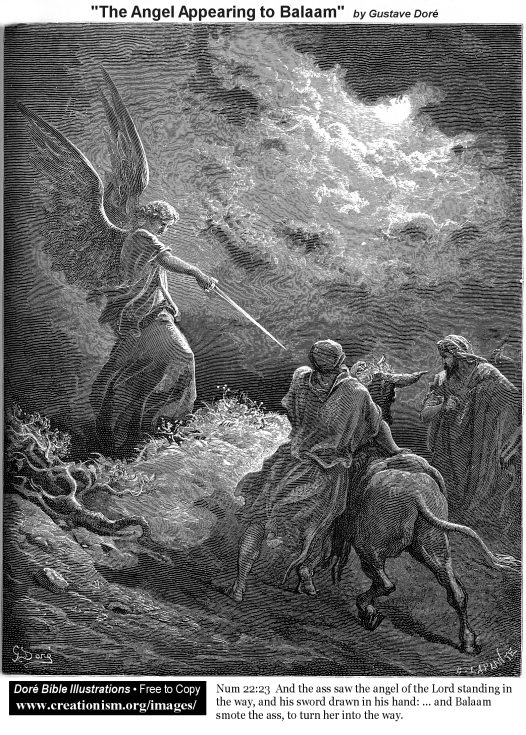
"I could not help but wonder: is a talking donkey a divine portent or a dental problem? Everything about our modern presuppositions is pitted against the possibility of miracles. If Balaam were a modern scientist and he heard his donkey talk, he would probably study the donkey’s vocal cords."
When I read the pictures painted of heaven filled with stars, of how the early church and medieval Christians understood Christianity and Sacraments, the knight in me is stirred to the rescue –to the rescue of worshipping God in awe, not meaningless rituals.
"The idolatry of Atomland says, “Because I think, therefore I exist.” It says this because godlessness naturally leads to nihilism, narcissism, and inflated self-love. In Atomland, I come first; I decide what is truth. Students in the Kingdom of God, however say, “I am because God is. I love because he loves me. Because I love, I think; and because I am sinful, sometimes I think idolatrous thoughts like, ‘I think, therefore I am,’ as if I were God.” When we live in the love of God, allowing Jesus to renew our hearts and our minds, our loves are reoriented. We are no longer the harbingers of truth. We live in the trail of God’s salvation stories, of his love. When we apprentice ourselves to Jesus, we are enrolling in a class of love."
God is even in the little things. Tyler Blanski reminds us that the Jesus was the one who coined phrases such as ‘den of thieves,’ ‘signs of the times,’ ‘salt of the earth’, and ‘pearls before the swine’. We use these phrases glibly and forget who said them. Sometimes we perceive God in the same way. We forget He is in the little things. Perhaps it is time to go back to the Source. The message I received from reading When Donkeys Talk, is - Jesus is not only a story; Jesus entered real history and changed real lives, and He is still doing it today. The depth of His love and grace is not measurable.
I highly recommend When Donkeys Talks. It is truly a quest to rediscover the mystery and wonder of Christianity.
Zondervan Publishers as part of their media review bloggers program provided this eBook to me for free in exchange for this honest review.
Tyler Blanski doesn't think much of the modern way of looking at the world. That is, he doesn't like the Enlightenment rationalist way of seeing nature as nothing more than a collection of moving atoms bouncing off of each other (in scientific terms) and people as nothing more than isolated individuals doing basically the same thing. He thinks we need to have a radical transformation in our worldview that brings back the enchantment and magic of existence, that views people and society as connected organisms rather than biological machines, and that has a theology that allows a donkey to talk. (Not all the time, of course, but in that special category of event known as a "miracle.") This is the older and better worldview held by Christians in the early church and Middle Ages (Blanski himself studied the Middle Ages at Oxford).
The Good
There's much that is good in the book. It is well written, fast paced, and interesting. While it's a bit full of personal vignettes for my taste ("we were out camping looking at the stars and I thought..." sorts of things as springboards to the discussion), Blanski used them well and kept the book moving forward at a decent clip.
Moreover, the author is clearly well-read, thoughtful, and creative. His artful blend of theology, history, and cultural criticism is always interesting and occasionally even a delight to read.
In terms of the book's substance, Blanski does an excellent job of reminding us of several things that we as Christians in the technological age are particularly prone to forget. Among others, these include:
That we are saved into a community. This community (the church) is not a community of isolated individuals willing to endure each other for an hour a week, it is a living organism onto which we are grafted. This organism is defined by the covenant and is as much a reality as the physical universe.
That conversation is a critical part of Christian (even of human) life. This is not so much explicitly stated as it is implicit in the way Blanski goes about writing his book. Most of his theological reflections begin with the relation of a conversation of dialogue he has had with his friends. In the past I have criticized other authors for exclusively relying on conversation as a means of discovering truth rather than approaching Scripture. However, Blanski goes about this in the right way. He clearly knows his Bible already and has several good relationships with those who do as well. Even his conversations with non-Christians are good models of how and what we may learn from those who do not share the faith.
That we should wonder at the mystery and grandeur of creation and of the Creator it reveals. It is all too easy for us to forget to be amazed that anything exists at all, so say nothing of how that existence is full of Beauty. We should have a continuously growing sense of delight in life. Our modernist tendencies to think of the world as a giant machine and of ourselves as independent and autonomous agents within it squelch this sense of delight and wonder, and offer as substitutes only the unsatisfying parodies of pop culture and momentary cheap thrills. One of the ways we (especially as Christians) can find, nurture, and develop this wonder is through a proper understanding of liturgy and sacramentalism. In the sacraments of baptism and communion, we see a picture of human life as it should be and salvation as it is offered to us in Christ. And through those pictures we discover that, in a sense, all of life is itself sacramental and liturgical.
None of these arguments are particularly new-- Blanski's criticisms of modernity are basically contemporary criticisms of modernity wrapped up in the language informed by Medieval Christianity. Which means that there is something of substance here worth the attention of a thoughtful Christian trying to think carefully about how to live in the modern world.
The Less Good
Despite these strengths (and they are strengths), I think I'd still hesitate to endorse this book or recommend it as any kind of go-to text for a Christian. The three things listed above are important, but Blanski raises them to such levels (perhaps in an over-correction of modern ills) that they run the danger of becoming unhelpful, and even borderline inappropriate- though not, perhaps, openly heretical. What seems to have happened is that Blanski has elevated his love for creation and existence to the point where the reality of sin and, consequently, the nature and necessity of atonement are lost.
If we think of salvation as involving a balance between the God's completed present work and God's future recreation of the world, Blanski has too much of the "already" and not enough "not yet." Don't get me wrong, I very much prefer this kind of imbalance to the fundamentalist approach that would swing the other direction and disdain the current world with a kind of spiteful anticipation of the world to come. But that said, the focus here is entirely too much on the Creation and Incarnation, and not nearly enough on the Crucifixion and Resurrection as well. Modern Christians do need to be reminded to delight in existence; but we equally need to be reminded of the deep reality of sin, the necessity for the forgiveness that comes through the cross, and the promise of resurrection into a new creation.
This over-emphasis leads to the sorts of other over-emphases one would expect. For example, Blanski has entirely too high a view of liturgy and sacrament. In declaring the whole world to be "sacramental" and all of life to be "liturgical", the result is that he pushes the actual sacraments and liturgy to inappropriately high levels. In his chapter on baptism, for example, one gets the impression that Blanski believes in baptismal regeneration (as in, dipping someone in water is what saves them, rather than faith in the Gospel). It may be that Blanski is just pushing the symbolic language a bit too hard and that he does not actually embrace that particular Romanist heresy, but the language remains unclear and at times suggestive that he might.
I've already mentioned the biggest problem, but it bears repetition. In a sense, despite the title and continual references through the book, Blanski ignores one of the major lessons of Balaam. It's not just amazing that a donkey could speak (though that is certainly true), it's likewise amazing that a man who had heard a donkey speak and who was himself a prophet was still more in love with the created order than he was with God. Merely having a sense of wonder and delight in creation did not help Balaam. He still assisted the wicked king in enticing Israel to sin, and earned himself eternal condemnation in the pages of Scripture. We should delight in creation and wonder at God and His universe, but we should also understand how deep sin runs, how desperately we need atonement, and how much we have to look forward to in the re-creation of the world. This whole view of the Gospel is the only way to correct our modernist tendencies, recover our lost sense of wonder, develop good theology through conversation, and grow in the community of the church. When Donkeys Talk offers a partial-but-skewed correction to our problems, and in doing so ends up being much less useful than it could have been.
In sum, I'd say this is certainly not the worst book you could pick up, but it's not the best either. I'm not completely convinced that it's weaknesses outweigh its strengths- though I am convinced that you'd be better served to read older Christian critiques of modernity(those by Jonathan Edwards, Abraham Kuyper, or J. Gresham Machen, for example). And I suspect that so far as I am saying that you should be reading older books than his, Mr. Blanski would agree.
This book was provided for free by the publisher on the condition that I review it. I was not required to write a positive review.
Wow. Not what I expected at all. (exceeded expectations) Although not always an easy read, this book was an in depth study of modern Christianity and falling in love with an everlasting God. He spotlights "magical," God-filled moments in ordinary days upon a donkey, carry a "crazy-ass theory." ❤️ Great stuff. Humorous. Insightful. Rich. Just plain old ordinary good stuff.
Blanski brings reflection to the perception of church, being a Christian, and the belief and faith of Jesus. He provides, what he sees as, the majority's view; then talks to the reader about another perspective which he sees.
I enjoyed reading about the past history and what went on during that time and era. It was very enjoyable to see how life was so many years ago and the different beliefs which were formed at that time.
I did not find this to be an easy read. Starting out, it was hard to digest all that Blanski was offering up. This truly was not a page-turner for me. In addition, I did not feel drawn in by the words of Blanski, rather I felt distanced by them. I am not sure that I completely agree with all of Blanski's perceptions and beliefs. (Something just did not feel right with me while I was reading it.) There were many areas where it was hard for me to see where he was headed.
In Blanski's writings, he mentions being a part of an Anglican church. Through the online source of Wikipedia (not such a reliable source, but an easy to understand source) I found the definition of Anglicanism.
Anglicanism, in its structures, theology and forms of worship, is commonly understood as a distinct Christian tradition representing a middle ground between what are perceived to be the extremes of the claims of 16th century Roman Catholicism and theLutheran and Reformed varieties of Protestantism of that era. As such, it is often referred to as being a via media (or "middle way") between these traditions. The faith of Anglicans is founded in the Scriptures and the Gospels, the traditions of theApostolic Church, the historical episcopate, the first seven ecumenical councils and the early Church Fathers. Anglicans understand the Old and New Testaments as "containing all things necessary for salvation" and as being the rule and ultimate standard of faith. Anglicans understand the Apostles' Creed as the baptismal symbol and the Nicene Creed as the sufficient statement of the Christian faith. Anglicans believe the catholic and apostolic faith is revealed in Holy Scripture and the Catholic creeds and interpret these in light of the Christian tradition of the historic church, scholarship, reason and experience. Anglicans celebrate the traditional sacraments, with special emphasis being given to the Holy Eucharist, also called Holy Communion, the Lord's Supper or the Mass. The Eucharist is central to worship for most Anglicans as a communal offering of prayer and praise in which the life, death and resurrection of Jesus Christ are proclaimed through prayer, reading of the Bible, singing, giving God thanks over the breadand wine for the innumerable benefits obtained through the passion of Christ, the breaking of the bread, and reception of the bread and wine as representing the body and blood of Christ as instituted at the Last Supper. While many Anglicans celebrate the Eucharist in similar ways to the predominant western Catholic tradition, a considerable degree of liturgical freedom is permitted, and worship styles range from the simple to elaborate. Unique to Anglicanism is the Book of Common Prayer (BCP), the collection of services that worshippers in most Anglican churches used for centuries. It was called common prayer originally because it was intended for use in all Church of England churches which had previously followed differing local liturgies. The term was kept when the church became international because all Anglicans used to share in its use around the world. In 1549, the first Book of Common Prayer was compiled by Thomas Cranmer, who was then Archbishop of Canterbury. While it has since undergone many revisions and Anglican churches in different countries have developed other service books, the Prayer Book is still acknowledged as one of the ties that bind the Anglican Communion together - (Anglicanism, n.d.).
This is not a book that I feel compelled to recommend. I would say it is completely up to the individual on this one.
BookSneeze® has provided me with a complimentary copy of this book.
Have you wondered why donkeys don't talk and miracles are a thing of the past? Maybe donkeys still talk but unlike Balaam, who couldn't see what was before him, our ears are closed to God and His word to us.
We have thrown God out and replaced Him with science, what was once theory we now embrace as fact and the all governing law of the universe. We have shoved God into a small box of Sunday entertainment, not realizing that we, ourselves, have in fact crawled into the box and pulled it shut behind us. We live in doubt of God's abilities and instead trust in our abilities because we have divorced God from science and science has become our religion of discovery and our exultation of self. We no longer seek after the Glory of God but rather we are on a quest for possessions and accolades. We have become the wolves in sheep's clothing - secularists parading as Christians with hearts hardened against God. We've turned Church into a big business selling soul-insurance.
We've removed the wonder and the supernatural from the world around us, thus limiting our understanding of God's creation to facts and laws that are without personality. Creation is the embodiment of God's words and His voice has given speech to donkeys, won't you open your eyes and ears and receive the wonder of God into your heart? We need to turn from the revolution of materialistic individualism and return to the renaissance of wonder and awe of God. We must forsake the worship of me, myself, and I and return to our first love and enter into the eternal body of Jesus and HIS Church.
To truly have an intimate relationship with our Lord and Savior we must die by a Baptism of water and die to self. To hear donkeys talk we must return to the innocence of childlike wonder of the world around us. We must open our hearts and minds to belief in a Savior who created us and the world around us and then placed Himself into His creation on our level and died for us.
When Donkeys Talk is a book I'd highly recommend to any and all believers who want to recapture the belief of the first believers. This book takes an honest look at where we've gone wrong and helps steer us back on the path to true joyous awe-filled worship. This is not a book that you just breeze through, it makes you stop and really think.
The publisher has provided me with a complimentary copy of this book through BookSneeze.
I love this book by this Anglican housepainter and musician Tyler Blanski! Someone referred to it as "apologetics..." well, sort of, but not in any systematic way: it's more of a romp through the author's mind, heart, and daily pathways that reveals his passion for scripture, sacraments, Jesus, liturgy, and tradition; it also chronicles a few of his conversations with friends. Not only is it not systematic, the book doesn't seem to have any kind of organizing principle, but that's absolutely fine for a volume of fewer than 200 5" x 8" pages that's set in an easily readable sized font. I could discern no obvious "organizing principle," yet maybe there is one, after all, since according to Tyler, we need to reclaim and celebrate the mysterious, the magical, the miraculous, the unexpected, and the unexplainable, and thus we need to listen to, harken to, and hear the voice of the divine "when donkeys talk," (Balaam's ass in Numbers 22) or whenever various other less credible happenings occur in our midst.
The only real trouble I have is his frequent use of "Christendom," a word most contemporary Christians have obliterated from their consciousness and their vocabulary. Yes, I get it's about the domain of the Christ, but to me Christendom still evokes empire rather than grace, justice, and love. Lately we've been seeing, reading, and hearing "Kingdom" a lot, too... again, the realm ruled by Christ the King, but that one I can live with a little more easily.
Tyler Blanski himself comes alive on these pages! I hope you'll read When Donkeys Talk, so I won't spoil it for you by revealing any more.
I have to admit that I have mixed feelings concerning this book. I always enjoy Christian books that take a somewhat less traditional view, and this book certainly lives up to that sentiment. The story of Balaam and his donkey always brings a smile to my face. The author took this idea and ran with it, and sometimes I found myself quite interested in what he had to say. Being challenged to think through my Christian walk in a bit different way is a hallmark of this book, and so sometimes I enjoyed this book immensely.
However, this book does come across a bit too off-beat and somewhat out there. I found myself rolling my eyes way too often. Part of the problem is that the author comes from a mainline denominational viewpoint. I am of more an evangelical persuasion, so our theology differs. I'm not saying this isn't a Christian book. I never questioned the author's faith. In addition to all of this, I would have preferred a little less use of the Biblical word used for a donkey. I felt that the author took advantage of this figure of speech several times too many.
The best thing about the book is the brevity of the chapters. I say this because this was a book that I could look forward to reading as a semi-devotional at the end of a long, hard day. I can't say I would choose to read this author again, but he was easy to read and often quite humorous to read.
I was sent a copy of this book in exchange for my honest review. I was not financially compensated and all opinion are 100 percent mine.
In his book, When Donkeys Talk, Blanski makes the argument that we need to return to the reasoning of the Middle Ages, which he sees not as a dark period of history, but rather a time when people saw the wonder, majesty and magic of God in everything around them. The reasoning he describes is not a matter of blind and unreasoned faith, but is the clear, classic and logical thought of ancient and respected scholars such as Origen and Augustine, who believed God and not man is the center of all. His thinking brings to mind the work of writers such as Tolkien and Lewis, who not only revered God personally but whose writing reflects the magic of God’s power in the universe. Although Blanksi’s style took a little getting used to, it is clear he is an author who will only get better with time. Definitely a book you will want to reread (especially if you are a Christian involved in the arts); definitely a writer to watch.
I must say I requested the book, because the title caught my attention. I really enjoyed parts of the book and other parts were a little bit confusing. What I did leave after reading the book is anytime anyone is on the quest to seek the meaning of life is too seek God. There are two types of Christians and they are those who believe in God, and those who have a personal relationship with God. The word of God points to Jesus. He is the only way to God. If you would like to read about the miracles of God and how true Christianity is not for the light hearted pick up the book. I received this book for free from NetGalley.com and did not have any influence on my review
In our day, we are so rushed we don't take time to see the ways that God is speaking to us, do we? I loved the title, says a lot. We miss out on so many miracles in our every day lives, too busy with so many other things.
One of my favorite things from the book was, He is the Lord of time.
Wow. Read this book. Read it again, and again. Keep it on your shelf. Read it every time you get a chance. Pass it on to others. It can only bless.
"Atomland" went over my head a bit, but I am sure if I re-read and go a bit slower, I will come to understand. Either way, read it!
What a great book to re-think our journey. Mr. Blanski, I thoroughly enjoyed my crazy donkey ride with you. This book reminded me of Mere Christianity by CS Lewis (curiously also an Anglican) for its fresh perspective and challenge to refresh my perspective and rise above the day to day ordinary-ness of what I can see and touch. Thank you again, Mr. Blanski.