

What do you think?
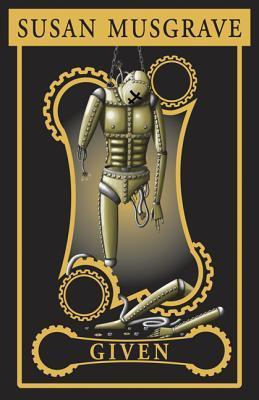
Given
*Shortlisted for the 2014 ReLit Award for Fiction
The characters from Susan Musgrave’s Cargo of Orchids are back in this brilliantly engaging novel. Rainy, the Mexican-American woman, and Frenchy, the African-American, along with Musgrave’s narrator X have returned and insist their story is not done. Once inmates on death row, now reunited and hanging out at an old house in a BC outport, they create a grand new afterlife adventure.
Readers are shuttled along an energetic storyline in an old hearse, through gated communities in Vancouver to BC’s First Nations island outposts, to bear witness to the transformation of lives on the slopes of purgatory.
Musgrave’s trademark undercurrents of lurking peril and unexpected havoc play out against murder, drug encounters, and sexual tension, but Given is a novel with its own rules of engagement. Musgrave’s comic gifts and ability to transcend this earthly plane create a ghost story that becomes a masterful allegory for personal loss and the potency of love.
The characters from Susan Musgrave’s Cargo of Orchids are back in this brilliantly engaging novel. Rainy, the Mexican-American woman, and Frenchy, the African-American, along with Musgrave’s narrator X have returned and insist their story is not done. Once inmates on death row, now reunited and hanging out at an old house in a BC outport, they create a grand new afterlife adventure.
Readers are shuttled along an energetic storyline in an old hearse, through gated communities in Vancouver to BC’s First Nations island outposts, to bear witness to the transformation of lives on the slopes of purgatory.
Musgrave’s trademark undercurrents of lurking peril and unexpected havoc play out against murder, drug encounters, and sexual tension, but Given is a novel with its own rules of engagement. Musgrave’s comic gifts and ability to transcend this earthly plane create a ghost story that becomes a masterful allegory for personal loss and the potency of love.
268 pages, Paperback
First published January 1, 2012
About the author
Susan Musgrave
80 books45 followersSusan Musgrave is a Canadian poet and children's writer. She was born in Santa Cruz, California to Canadian parents, and currently lives in British Columbia, dividing her time between Sidney and Haida Gwaii.
Musgrave was married to Stephen Reid, a writer, convicted bank robber and former member of the infamous band of thieves known as the Stopwatch Gang. Their relationship was chronicled in 1999 in the CBC series Life and Times.
She currently teaches creative writing in the University of British Columbia's Optional Residency Master of Fine Arts Program.
Recognizing a life in writing, the Writers' Trust presented Susan Musgrave with the 2014 Matt Cohen Award for her lifetime of work.
Musgrave was married to Stephen Reid, a writer, convicted bank robber and former member of the infamous band of thieves known as the Stopwatch Gang. Their relationship was chronicled in 1999 in the CBC series Life and Times.
She currently teaches creative writing in the University of British Columbia's Optional Residency Master of Fine Arts Program.
Recognizing a life in writing, the Writers' Trust presented Susan Musgrave with the 2014 Matt Cohen Award for her lifetime of work.
Ratings & Reviews
Friends & Following
Create a free account to discover what your friends think of this book!
Community Reviews
Displaying 1 - 4 of 4 reviews

April 7, 2015
Whoa...Susan Musgrave...I wonder what it would be like to be in your head for a few days in a row. Probably crazy and comfortable all at once!
Oh I hope I meet you one day.
A quote from GIVEN:
"...the women believed that when a child dies his soul becomes a drop of dew in a hummingbird's eye, one that wells up, like a tear, then wanders the world looking for a woman who has lost a baby and wants to have another of her own."
Another quote:
"What's the difference between erotic sex and kinky sex?"
"Erotic sex you use a feather, kinky sex you use the whole chicken."
So many unexpecteds in this book..
Thankx SM
Oh I hope I meet you one day.
A quote from GIVEN:
"...the women believed that when a child dies his soul becomes a drop of dew in a hummingbird's eye, one that wells up, like a tear, then wanders the world looking for a woman who has lost a baby and wants to have another of her own."
Another quote:
"What's the difference between erotic sex and kinky sex?"
"Erotic sex you use a feather, kinky sex you use the whole chicken."
So many unexpecteds in this book..
Thankx SM

February 19, 2024
Books that use dream sequences for major chunks of the narrative have always ticked me off because they appear to be slick devices to explain the unexplainable and a cop-out on the part of the author. However, in this book, they seem to work because we are completely unaware of the “dreams within a dream” device.
The unnamed narrator, X, is on a prison transfer somewhere in California for a retrial, after spending 12 years on Death Row, because new DNA evidence has revealed that she may be innocent of the murder of her infant child, Angel. En route, the prison vehicle meets with a highway accident and this story takes off.
X unexplainedly escapes unhurt while the driver and guard perish, and hops a flight to Vancouver to be met by long-suffering husband Vernal who takes her to his cabin within an indigenous community on a Gulf Island of B.C. Vernal is an on-again, off-again alcoholic, a lawyer who represents drug traffickers and addicts, and he has many clients in his island domicile. X, herself a reformed addict (every drug but heroin) is suffering the eternal guilt and loss of her child who, from the fragmented description, appears to have died in Desaguadero (I located it on the border of Peru and Bolivia) under the treatment of a curandero (medicine man). Details about why she was convicted for her son’s death are fuzzy.
On the gulf island, we enter the world of addicts, and Musgrave describes them with compassion. Pregnant Gracie and her useless boyfriend Al who is forever drunk. Gracie’s brother Hooker (who has gone clean), and his caretaker friend I-5 who is never short of stashes of drugs and whom Vernal has cleared of a murder charge, are some of the inhabitants.
When the ghosts of X’s two executed Death Row cell mates, African-American Frenchy and Mexican Rainy, and their murdered children appear (visible only to X) and take up residence with her on the island, the story gets into higher gear and gives us a clue of what this narrative is all about. When a fragmented news flash says that six commercial aircraft have crashed into Hollywood, Las Vegas, Disneyland, the Vatican, the Eiffel Tower, and the Giza Pyramids, that suspicion is clarified.
After a while, the incessant prattling and antics of the ghosts get a bit annoying and distract from the main storyline, and yet they serve to voice universal truths to the living that we, the living, tend to ignore. And there are universal truths galore in this novel. A few I picked up were:
1. For Erotic Sex you use a feather. For Kinky Sex you use the whole chicken.
2. Whiskey does not make you drunk. It just gives you a higher level of lucidity.
3. Normal people burn with a blue flame. Heroin addicts burn with a green flame.
4. We are born alone and die alone, and in between there is only isolation.
The plot accelerates with Vernal falling off the wagon and falling into an open grave. Gracie OD’s and has to be hospitalized and the baby ends up in X’s custody through a confluence of bizarre events that includes a murder, an escape, and a cover-up. Even Hooker reveals his true colours to X who had been nursing a secret desire for him now that Vernal was yesterday’s news. For the coup de grace and to cover up all traces of X’s footprints, we have an extremist suicide bombing thrown into the mix, a first for peaceful Vancouver.
X now has a second chance to right all the things she did wrong before going to prison: releasing her husband from their hopeless marriage, sorting out her mother’s house and disposing of the old lady’s ashes, and caring for another infant whom she has been “given” by providence – hence the title of the novel. But all this comes at a personal cost, for the remarkably composed and compassionate X who does not display any hard edges from incarceration (my one peeve about this book), succumbs to her old addiction and goes on a cocaine bender, while slinging the newborn close to her breast. “For many years I had stopped wanting cocaine. From that point, it had wanted me.”
Of course, all’s well that ends well when the “dreams within a dream” device is revealed and the inconsistencies start to make sense. I shook my head and said, “Shucks, I should have seen that coming.”
Musgrave’s writing is visceral, funny, and in-your-face, and she displays great compassion for the fallen.
The unnamed narrator, X, is on a prison transfer somewhere in California for a retrial, after spending 12 years on Death Row, because new DNA evidence has revealed that she may be innocent of the murder of her infant child, Angel. En route, the prison vehicle meets with a highway accident and this story takes off.
X unexplainedly escapes unhurt while the driver and guard perish, and hops a flight to Vancouver to be met by long-suffering husband Vernal who takes her to his cabin within an indigenous community on a Gulf Island of B.C. Vernal is an on-again, off-again alcoholic, a lawyer who represents drug traffickers and addicts, and he has many clients in his island domicile. X, herself a reformed addict (every drug but heroin) is suffering the eternal guilt and loss of her child who, from the fragmented description, appears to have died in Desaguadero (I located it on the border of Peru and Bolivia) under the treatment of a curandero (medicine man). Details about why she was convicted for her son’s death are fuzzy.
On the gulf island, we enter the world of addicts, and Musgrave describes them with compassion. Pregnant Gracie and her useless boyfriend Al who is forever drunk. Gracie’s brother Hooker (who has gone clean), and his caretaker friend I-5 who is never short of stashes of drugs and whom Vernal has cleared of a murder charge, are some of the inhabitants.
When the ghosts of X’s two executed Death Row cell mates, African-American Frenchy and Mexican Rainy, and their murdered children appear (visible only to X) and take up residence with her on the island, the story gets into higher gear and gives us a clue of what this narrative is all about. When a fragmented news flash says that six commercial aircraft have crashed into Hollywood, Las Vegas, Disneyland, the Vatican, the Eiffel Tower, and the Giza Pyramids, that suspicion is clarified.
After a while, the incessant prattling and antics of the ghosts get a bit annoying and distract from the main storyline, and yet they serve to voice universal truths to the living that we, the living, tend to ignore. And there are universal truths galore in this novel. A few I picked up were:
1. For Erotic Sex you use a feather. For Kinky Sex you use the whole chicken.
2. Whiskey does not make you drunk. It just gives you a higher level of lucidity.
3. Normal people burn with a blue flame. Heroin addicts burn with a green flame.
4. We are born alone and die alone, and in between there is only isolation.
The plot accelerates with Vernal falling off the wagon and falling into an open grave. Gracie OD’s and has to be hospitalized and the baby ends up in X’s custody through a confluence of bizarre events that includes a murder, an escape, and a cover-up. Even Hooker reveals his true colours to X who had been nursing a secret desire for him now that Vernal was yesterday’s news. For the coup de grace and to cover up all traces of X’s footprints, we have an extremist suicide bombing thrown into the mix, a first for peaceful Vancouver.
X now has a second chance to right all the things she did wrong before going to prison: releasing her husband from their hopeless marriage, sorting out her mother’s house and disposing of the old lady’s ashes, and caring for another infant whom she has been “given” by providence – hence the title of the novel. But all this comes at a personal cost, for the remarkably composed and compassionate X who does not display any hard edges from incarceration (my one peeve about this book), succumbs to her old addiction and goes on a cocaine bender, while slinging the newborn close to her breast. “For many years I had stopped wanting cocaine. From that point, it had wanted me.”
Of course, all’s well that ends well when the “dreams within a dream” device is revealed and the inconsistencies start to make sense. I shook my head and said, “Shucks, I should have seen that coming.”
Musgrave’s writing is visceral, funny, and in-your-face, and she displays great compassion for the fallen.
August 12, 2020
Well that was a wild, literary ride! Although I didn't love the subject matter....it was an easy read; well written, richly descriptive and really enticing characters. This was book #2 and I haven't read book #1 but it definitely stood on it's own.

November 23, 2013
Musgrave's wicked sense of humour kept me chuckling through this morbid, clever, and not-very-uplifting book. (Incidentally, I learned only after reading it that it's the second in a trilogy. But it stands alone quite well. I am living proof that you don't need to read the first to appreciate the second.)
Displaying 1 - 4 of 4 reviews