Silas Stillman Soule, who grew up in the decades just before the Civil War, created an unforgettable legacy in his tragically short life. This courageous young man transported slaves via the Underground Railroad, aided in the jailbreak of a doctor accused of aiding slaves, participated in an attempt to rescue John Brown's men after Harpers Ferry, and fought for the Union at the little-known but very important Battle of the Glorieta Pass. Most significantly, he refused to take part in the slaughter of Native American women and children during the Sand Creek Massacre, one of the blackest moments in U.S. history, and was the first to testify against the man who led the assault, Col. John Chivington.Historian Tom Bensing chronicles for the first time a comprehensive look at Silas' life, combining historical fact with human elements. The result is a fascinating snapshot of U.S. history rich with intensely researched details. Born in 1838 to an ardent abolitionist father, Silas eventually moved to Coal Creek in the Kansas Territory. His family home became a well-used stop on the Underground Railroad in Kansas, which straddled the line between free and slave states. Silas, known for his wit and charm, also showed strength of character, becoming a true hero on the frontier. Time spent in the Union army in Colorado - when he took his stand against the brutal Indian massacre - only strengthened his resolve.Those who only know Silas for his heroic stance at Sand Creek will be astonished at everything this Jayhawker/adventure-seeker/soldier accomplished in his 26 years. The Cheyenne and Arapaho tribes continue to honor Silas today, holding a peace run each Thanksgiving. The book also reveals, in never before published detail, the life and final fate of Charles Squier, the man who ended Silas' life in a shootout. Squier, a decorated veteran, ironically received a hero's burial himself four years later.
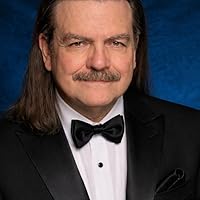
AUTHOR BIO Tom Bensing, who earned history degrees from Penn State and Millersville (Pa.) universities, has studied Sand Creek and Native American/white relations for the past seven years. That research led to his interest in Silas Soule’s story.
The writing style isn't brilliant, but the research is great, and anyway the subject makes this a Must Read. Silas Soule was a Real Life hero, one of two officers who refused to let their men do any harm during the Sand Creek Massacre. While his men made this a relatively easy mutual decision, it still must have been difficult to bear witness to such events and maintain level heads in the midst of this mob madness and violence. Afterwards, Soule was the first witness heard when the matter was investigated, giving days of testimony against a commanding officer he had used to admire.
Sand Creek and its consequences was the most significant event in his life, but there's more, too. Soule's father was an ardent abolitionist. Their family home was one of the stops in the Underground Railway, and Soule was also involved in a couple of jail breaks or rescue attempts for men of their cause imprisoned in pro-slavery states.
Soule was a charming, outgoing, fun-loving guy, always ready to burst into song, and a bit of a prankster. After the Massacre and the hearings, he met a woman who seems a great match for him. He and Hersa Coberly married on April Fools Day in 1865. Three weeks later, at the age of 26, he was dead, gunned down while investigating shots being fired in the night-time streets of Denver.
Soule and his fellow officer Joseph Cramer are still honoured by the Cheyenne and Arapaho peoples today. And I honour them all.
Every year at Thanksgiving, some Arapaho kids run from the site of the Sand Creek Massacre in eastern Colorado, to the state capitol in Denver, in commemoration of what happened at Sand Creek and to honor the memory of Silas Soule, a military man who commanded his troops not to participate in the slaughter of the Native Americans all around them.
I wanted to know more about him because I wanted to know how and why he made a firmly moral choice in the face of the wanton killing going on all around him, in the deep frenzy of hate that prompted the others to kill everyone--man, woman, and child.
Why do some people take the high road, when taking it is as costly as it was for Silas Soule.
The book doesn't answer that question, but I'm not sure it can be answered.
Still, I enjoyed reading the story of this fascinating young man who lived at such an incredible time and participated in the fights over the abolition of slavery, in the Civil War, and then in "the Indian wars."
Not really the type of book I normally, but a Christmas gift with an interesting name. I think it’s very likely Kiki is related to the focus of this biography just based on where he grew up. I struggled with the listing of names and military ranks when discussing his early life but enjoyed hearing about his role (or lack there of in Sand Creek) and learning how historians try to piece together confusing crimes from long ago. I imagine I would have enjoyed meeting the other Silas
Interesting story about an admirable and tragically short lived historical figure. Raised a devout Christian and abolitionist in New England, Soule took part in Bleeding Kansas, the Civil War in the Far West, and even resisted the Sand Creek Massacre and then testified against Colonel John Chivington. A short biography of a short life.
Boeiend, soms wat taaie biografie van Silas Soule. Zijn leven laat zien dat de veronderstelde tijdsgeest van de 19e eeuw niet vanzelfsprekend racistisch was (tov Native Americans) en dat dezelfde ethische en morele overwegingen die we als verdiensten zien van het post-WO II tijdperk, ook gewoon toen bestonden.
For readers looking for a well-researched, informational book regarding the short life of Silas Soule, this book fits the bill. Silas Soule only lived 26 years, but Tom Bensing, the author has been able to dig out and put together facts that share quite the story. He begins by telling us that Silas “seems to have coped by using his wits, comedic ability, and an uncanny knack to mimic and adapt.” An interesting piece of his family’s history was that one weekly event in their lives was that of his mother reading the serialized Uncle Tom’s Cabin to the whole family. It took most of a year for the book to be completed in the National Era newspaper. This was just one of the influences for Silas’s father, Amasa, to have zealous abolitionist tendencies, which lead to their family’s participation in the Underground Railroad.
Silas Soule fought for the Union working with several companies: at times being a temporary commander. He showed his potential to his superiors. He later was named Acting Assistant Adjutant General to the District Commander. This position opened doors for him to meet many influential people. At one point in his career, he became a recruiter and created recruiting posters. Author Bensing states: “His new job was a match made in heaven for him. It allowed him to tap the outgoing, charming side of his personality as he tried to convince people to see things his way.” He was later promoted to captain in the First Colorado Division.
I cannot sum up the book better than Tom Bensing states in the epilogue: “Silas Stillman Soule experienced much of what engulfed the nation during his lifetime. The turmoil over slavery, the bloody fight in Kansas…, the fallout and sparks from John Brown’s audacious raid, the excitement of a gold rush, the warfare that would change the lives of an entire country…and the beginning of the plains war with the Native Americans…Through all of it, Silas never lost his sense of humor, his outgoingness, or the moral compass that guided his decisions throughout his brief life.”
For this 150-page book, Author Bensing includes 50 pages of endnotes and bibliography. He certainly has done the research to put together a very interesting telling of the life and times of Silas Stillman Soule. I particularly enjoyed the fact that Bensing brought in many personal facts, stories, and insights because it makes my “pill” of history go down much better. Those who follow my reviews have learned that it is only in my recent years of life that history is finally becoming palatable. Thank you, Tom Bensing, for giving me another dose of history in a form that increased my knowledge and which I was so easily able to swallow.
As I read “Silas Soule: A Short, Eventful Life of Moral Courage” by Tom Bensing I was thinking who would be a good audience for this book? The answers were found in the pages of the book. The book will appeal to a diverse group of readers. The person with an interest in United States history during the 1850s to mid 1860s will walk through those years with snapshots of selected events of the time. The Civil War buff will enjoy a different perspective on the battle of Gloreita. Those with an interest in Colorado before it was a state will get an interesting look at the state.
You get a look at abolition and the Underground Railroad. You see how a passion for abolishing slavery motivated Silas Soule’s family to move to Kansas. You experience what it is like and what happens to people who aided slaves. You will relive the days of bloody Kansas and see firsthand the fallacy of the Stephen Douglas compromise allowing Kansas to decide if it was to be or not to be a slave state.
John Brown is brought to life as we see his actions in Kansas and later at Harper’s Ferry and how Silas Soule participated in an attempt to rescue John Brown’s men after Harpers Ferry.
We see a friendship between Soule and the poet Walt Whitman as well as learning of an interesting connection between Brown and Whitman. We go gold prospecting to Colorado and also get a good picture of the state during the late 1850s to mid 1860s. We make the trek with Silas and the Pike’s Peakers as the head to Glorieta Pass to fight the Texans in the Confederate Army who invaded New Mexico.
We see his moral courage when he not only refused to take part in the massacre of Native American women and children during the Sand Creek Massacre, but was the first to testify against Colonel John Chivington who led the attack. Surprisingly to me, the author gives great detail of Silas Soule’s killer, Charles Squier life.
The book was well researched. It started slow for me, but I’m glad I stuck with it. After making it through the family history and finally getting to Silas Soule, I found a well presented and interesting story. Yes, I recommend the book. Historian Tom Bensing did a good job of presenting “Silas Soule: A Short, Eventful Life of Moral Courage”. The publisher is Dog Ear Publishing.
This entire review has been hidden because of spoilers.
I was so excited when I got this book for Christmas. My senior year of high school my National History Day project was on the short life of Silas Soule, and finally he had a book about his life. While the book was well researched and didn't miss a beat of Silas' many heroic deeds. For me the book just felt dry and very to the point. Silas was such a character. Not just a hero, but a hero full of laughter. Felt the book could have related that more. Though, for anyone wanting to read a book on a real American hero, I suggest this book as a place to start.
I really enjoyed this book. I thought it was well-researched and a very informative narrative about a little-known character of American history. Silas Soule's story is not one I learned about in history class, but I wish it would have been.
A nice little book about Silas Soule. A who's who of the abolitionist movement, Bleeding Kansas, the Civil War and the Sand Creek Massacre. A tale of what happens to a principled man in an unprincipled time.